Category Archives: Daily Readings

Daily Readings for Monday, February 23, 2026

FIRST MONDAY OF LENT – CLEAN MONDAY

ABSTAIN FROM MEAT, FISH, DAIRY, EGGS, WINE, OLIVE OIL

Polycarp the Holy Martyr & Bishop of Smyrna, Proterios, Archbishop of Alexandria, Gorgonia the Righteous, sister of Gregory the Theologian, Damian the New Martyr of Mount Athos, Boswell, Abbot of Melrose Abbey, John the Harvester of Calabria

ISAIAH 1:1-20

The vision of Isaiah the son of Amoz, which he saw concerning Judah and Jerusalem in the days of Uzzi'ah, Jotham, Ahaz, and Hezeki'ah, kings of Judah. Hear, O heavens, and give ear, O earth; for the Lord has spoken: "Sons have I reared and brought up, but they have rebelled against me. The ox knows its owner, and the ass its master's crib; but Israel does not know, my people does not understand.
Ah, sinful nation, a people laden with iniquity, offspring of evildoers, sons who deal corruptly! They have forsaken the Lord, they have despised the Holy One of Israel, they are utterly estranged.
Why will you still be smitten, that you continue to rebel? The whole head is sick, and the whole heart faint. From the sole of the foot even to the head, there is no soundness in it, but bruises and sores and bleeding wounds; they are not pressed out, or bound up, or softened with oil.
Your country lies desolate, your cities are burned with fire; in your very presence aliens devour your land; it is desolate, as overthrown by aliens. And the daughter of Zion is left like a booth in a vineyard, like a lodge in a cucumber field, like a besieged city.
If the Lord of hosts had not left us a few survivors, we should have been like Sodom, and become like Gomor'rah.
Hear the word of the Lord, you rulers of Sodom! Give ear to the teaching of our God, you people of Gomor'rah! "What to me is the multitude of your sacrifices? says the Lord; I have had enough of burnt offerings of rams and the fat of fed beasts; I do not delight in the blood of bulls, or of lambs, or of he-goats.
When you come to appear before me, who requires of you this trampling of my courts? Bring no more vain offerings; incense is an abomination to me. New moon and sabbath and the calling of assemblies — I cannot endure iniquity and solemn assembly. Your new moons and your appointed feasts my soul hates; they have become a burden to me, I am weary of bearing them. When you spread forth your hands, I will hide my eyes from you; even though you make many prayers, I will not listen; your hands are full of blood. Wash yourselves; make yourselves clean; remove the evil of your doings from before my eyes; cease to do evil, learn to do good; seek justice, correct oppression; defend the fatherless, plead for the widow.
Come now, let us reason together, says the Lord: though your sins are like scarlet, they shall be as white as snow; though they are red like crimson, they shall become like wool. If you are willing and obedient, you shall eat the good of the land; But if you refuse and rebel, you shall be devoured by the sword; for the mouth of the Lord has spoken.

GENESIS 1:1-13

In the beginning God created the heavens and the earth. The earth was without form and void, and darkness was upon the face of the deep; and the Spirit of God was moving over the face of the waters.
And God said, "Let there be light"; and there was light. And God saw that the light was good; and God separated the light from the darkness. God called the light Day, and the darkness he called Night. And there was evening and there was morning, one day.
And God said, "Let there be a firmament in the midst of the waters, and let it separate the waters from the waters." And God made the firmament and separated the waters which were under the firmament from the waters which were above the firmament. And it was so. And God called the firmament Heaven. And there was evening and there was morning, a second day.
And God said, "Let the waters under the heavens be gathered together into one place, and let the dry land appear." And it was so. God called the dry land Earth, and the waters that were gathered together he called Seas. And God saw that it was good. And God said, "Let the earth put forth vegetation, plants yielding seed, and fruit trees bearing fruit in which is their seed, each according to its kind, upon the earth." And it was so. The earth brought forth vegetation, plants yielding seed according to their own kinds, and trees bearing fruit in which is their seed, each according to its kind. And God saw that it was good. And there was evening and there was morning, a third day.

PROVERBS 1:1-20

The proverbs of Solomon, son of David, king of Israel:
That men may know wisdom and instruction, understand words of insight, receive instruction in wise dealing, righteousness, justice, and equity; that prudence may be given to the simple, knowledge and discretion to the youth — the wise man also may hear and increase in learning, and the man of understanding acquire skill, to understand a proverb and a figure, the words of the wise and their riddles. The fear of the Lord is the beginning of knowledge; fools despise wisdom and instruction.
Hear, my son, your father's instruction, and reject not your mother's teaching; for they are a fair garland for your head, and pendants for your neck. My son, if sinners entice you, do not consent. If they say, "Come with us, let us lie in wait for blood, let us wantonly ambush the innocent; like Sheol let us swallow them alive and whole, like those who go down to the Pit; we shall find all precious goods, we shall fill our houses with spoil; throw in your lot among us, we will all have one purse" — my son, do not walk in the way with them, hold back your foot from their paths; for their feet run to evil, and they make haste to shed blood. For in vain is a net spread in the sight of any bird; but these men lie in wait for their own blood, they set an ambush for their own lives. Such are the ways of all who get gain by violence; it takes away the life of its possessors.
Wisdom cries aloud in the street; in the markets she raises her voice.

Beginning of Great Lent
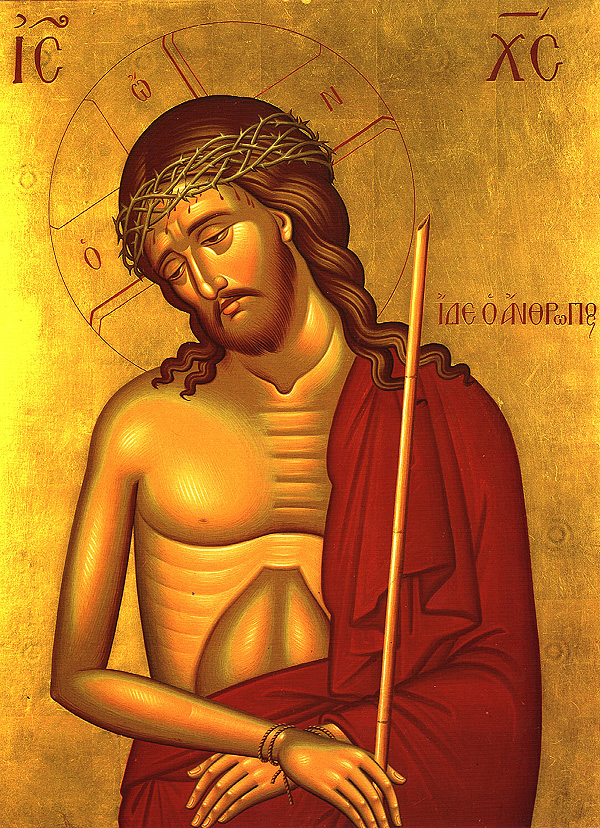
In the Orthodox Church, the last Sunday before Great Lent—the day on which, at Vespers, Lent is liturgically announced and inaugurated—is called Forgiveness Sunday. On the morning of that Sunday, at the Divine Liturgy, we hear the words of Christ:

“If you forgive men their trespasses, your heavenly Father will also forgive you, but if you forgive not men their trespasses, neither will your Father forgive your trespasses…” (Mark 6:14-15).

Then after Vespers—after hearing the announcement of Lent in the Great Prokeimenon: “Turn not away Thy face from Thy child, for I am afflicted! Hear me speedily! Draw near unto my soul and deliver it!”, after making our entrance into Lenten worship, with its special melodies, with the prayer of Saint Ephraim the Syrian, with its prostrations—we ask forgiveness from each other, we perform the rite of forgiveness and reconciliation. And as we approach each other with words of reconciliation, the choir intones the Paschal hymns, filling the church with the anticipation of Paschal joy.

What is the meaning of this rite? Why is it that the Church wants us to begin the Lenten season with forgiveness and reconciliation? These questions are in order because for too many people Lent means primarily, and almost exclusively, a change of diet, the compliance with ecclesiastical regulations concerning fasting. They understand fasting as an end in itself, as a “good deed” required by God and carrying in itself its merit and its reward. But the Church spares no effort in revealing to us that fasting is but a means, one among many, towards a higher goal: the spiritual renewal of man, his return to God, true repentance and, therefore, true reconciliation. The Church spares no effort in warning us against a hypocritical and pharisaic fasting, against the reduction of religion to mere external obligations. As a Lenten hymn says:

“In vain do you rejoice in not eating, O soul!
For you abstain from food,
But from passions you are not purified.
If you persevere in sin, you will perform a useless fast!”

Now, forgiveness stands at the very center of Christian faith and of Christian life because Christianity itself is, above all, the religion of forgiveness. God forgives us, and His forgiveness is in Christ, His Son, whom He sends to us so that by sharing in His humanity we may share in His love and be truly reconciled with God. Indeed, Christianity has no other content but love. And it is primarily the renewal of that love, a growth in it, that we seek in Great Lent, in fasting and prayer, in the entire spirit and the entire effort of that season. Thus, truly forgiveness is both the beginning of, and the proper condition for, the Lenten season.

One may ask, however: Why should I perform this rite when I have no “enemies?” Why should I ask forgiveness from people who have done nothing to me, and whom I hardly know? To ask these questions is to misunderstand the Orthodox teaching concerning forgiveness. It is true that open enmity, personal hatred, real animosity may be absent from our life, though if we experience them, it may be easier for us to repent, for these feelings openly contradict Divine commandments. But the Church reveals to us that there are much subtler ways of offending Divine Love. These are indifference, selfishness, lack of interest in other people, of any real concern for them—in short, that wall which we usually erect around ourselves, thinking that by being “polite” and “friendly” we fulfill God’s commandments. The rite of forgiveness is so important precisely because it makes us realize—be it only for one minute—that our entire relationship to other men is wrong, makes us experience that encounter of one child of God with another, of one person created by God with another, makes us feel that mutual “recognition” which is so terribly lacking in our cold and dehumanized world.

On that unique evening, listening to the joyful Paschal hymns we are called to make a spiritual discovery: to taste of another mode of life and relationship with people, of life whose essence is love. We can discover that always and everywhere Christ, the Divine Love Himself, stands in the midst of us, transforming our mutual alienation into brotherhood. As I advance towards the other, as the other comes to me—we begin to realize that it is Christ who brings us together by His love for both of us.

And because we make this discovery—and because this discovery is that of the Kingdom of God itself: the Kingdom of Peace and Love, of reconciliation with God and, in Him, with all that exists—we hear the hymns of that Feast, which once a year “opens to us the doors of Paradise.” We know why we shall fast and pray, what we shall seek during the long Lenten pilgrimage.

Forgiveness Sunday: the day on which we acquire the power to make our fasting—true fasting; our effort—true effort; our reconciliation with God—true reconciliation.

—Father Alexander Schmemann

Hieromartyr Polycarp, Bishop of Smyrna

Saint Polycarp, Bishop of Smyrna, who was “fruitful in every good work” (Col. 1:10), was born in the first century, and lived in Smyrna in Asia Minor. He was orphaned at an early age, but at the direction of an angel, he was raised by the pious widow Kallista. After the death of his adoptive mother, Polycarp gave away his possessions and began to lead a chaste life, caring for the sick and the infirm. He was very fond of and close to Saint Bucolus, Bishop of Smyrna (February 6). He ordained Polycarp as deacon, entrusting to him to preach the Word of God in church. He also ordained him to the holy priesthood.

The holy Apostle John the Theologian was still alive at this time. Saint Polycarp was especially close to Saint John, and sometimes accompanied him on his apostolic journeys.

Shortly before his death, Saint Bucolus expressed his wish that Polycarp be made Bishop of Smyrna. When Saint Polycarp was consecrated as a bishop, the Lord Jesus Christ appeared to him. Saint Polycarp guided his flock with apostolic zeal, and he was also greatly loved by the clergy. Saint Ignatius the God-Bearer of Antioch (December 20) also had a high regard for him. Setting out for Rome where execution awaited him, he wrote to Saint Polycarp, “This age is in need of you if it is to reach God, just as pilots need winds, and as a storm-tossed sailor needs a port.”

The emperor Marcus Aurelius (161-180) came to the Roman throne and started up a most fierce persecution against Christians. The pagans demanded that the judge search for Saint Polycarp, “the father of all the Christians” and “the seducer of all Asia.”

During this time Saint Polycarp, at the persistent urging of his flock, stayed in a small village not far from Smyrna. When the soldiers came for him, he went out to them and invited them in to eat. He asked for time to pray, in order to prepare himself for martyrdom. His suffering and death are recorded in the “Epistle of the Christians of the Church of Smyrna to the Other Churches,” one of the most ancient memorials of Christian literature.

Having been brought to trial, Saint Polycarp firmly confessed his faith in Christ, and was condemned to be burned alive. The executioners wanted to nail him to a post, but he declared that God would give him the strength to endure the flames, so they could merely tie him with ropes. The flames encircled the saint but did not touch him, coming together over his head in the shape of a vault. Seeing that the fire did him no harm, the pagans stabbed him with a dagger. So much blood flowed from this wound that it extinguished the flames. The body of the hieromartyr Polycarp was then cremated. The Christians of Smyrna reverently gathered up what remained of his holy relics, and each year they celebrated the day of his martyrdom.

A story has been preserved about Saint Polycarp by his disciple, Saint Irenaeus of Lyons, which Eusebius cites in his ECCLESIASTICAL HISTORY (V, 20):

“I was still very young when I saw you in Asia Minor at Polycarp’s,” writes Saint Irenaeus to his friend Florinus, “but I would still be able to point out the place where Blessed Polycarp sat and conversed, and be able to depict his walk, his mannerisms in life, his outward appearance, his speaking to people, his companionable wandering with John, and how he himself related, together with other eyewitnesses of the Lord, those things that he remembered from the words of others. He also told what he heard from them about the Lord, His teachings and miracles….

“Through the mercy of God to me, I then already listened attentively to Polycarp and wrote down his words, not on tablets, but in the depths of my heart. Therefore, I am able to bear witness before God, that if this blessed and apostolic Elder heard something similar to your fallacy, he would immediately stop up his ears and express his indignation with his usual phrase: ‘Good God! That Thou hast permitted me to be alive at such a time!’”

During his life the holy bishop wrote several Epistles to the flock and letters to various individuals. The only one that has survived to the present day is his Epistle to the Philippians which, Saint Jerome testifies, was read in the churches of Asia Minor at divine services. It was written by the saint in response to the request of the Philippians to send them some letters of the hieromartyr Ignatius (December 20) which Saint Polycarp had in his possession.

The composer H.I.F. Bibier (1644-1704) has written a Sonata “Scti Polycarpi” for eight trumpets in honor of the holy martyr.

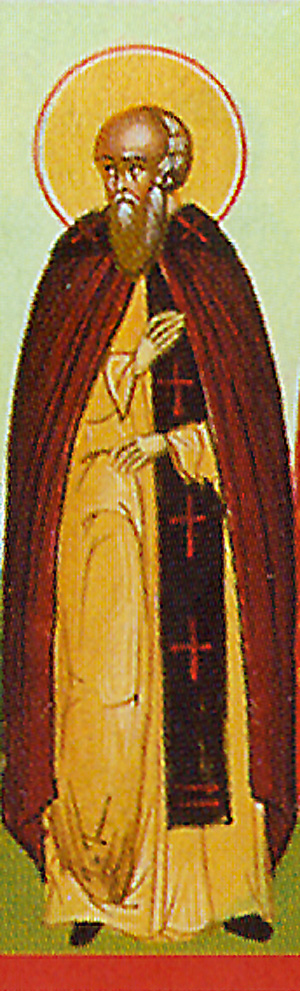
Venerable Polycarp of Briansk

Saint Polycarp of Briansk, in the world, was Prince Peter Ivanovich Boryatinsky, a descendant of Saint Michael, Prince of Chernigov (September 20). This supposition has been put forward because Boryatinsky is connected with the destiny of the Briansk Savior Transfiguration monastery.

The name of Prince Peter Boryatinsky is often encountered in documents of the sixteenth century. Thus, he was among those sent off to wage war against the Swedish king at the river Sestra. In 1576, he was named voevod at Tula. In 1580, Boryatinsky, having been appointed voevod at Kholm, was captured by the Lithuanians under a siege headed by Panin. Upon his release from captivity under Boris Godinov, Boryatinsky returned home in disgrace.

In 1591 he was named voevod at Tiumen, but after several years he left the world, settled at Briansk and received monastic tonsure with the name Polycarp. From his means the monk built a monastery of the Transfiguration of the Lord and established in it a Rule of strict ascetical life. Saint Polycarp was the first Superior of this monastery. He died and was buried there in 1620 or 1621.

Venerable John, Ascetic of the Syrian Deserts
Saint John, disciple of Saint Limnaeus (February 22), lived in Syria in the fifth century, and chose for himself the ascetic struggle of “a shelterless life.” He settled on a hill, sheltered from the wind on all sides, and lived there for twenty-five years. He ate only bread and salt, and he exhausted his body under heavy chains. When one of the nearby ascetics planted an almond tree on the hill so that Saint John could enjoy its shade and get out of the vicious heat, the saint told him to cut it down. This he did in order to deny his body any respite.

Venerable Antiochus and Antoninus, ascetics of the Syrian Deserts

Saints Antiochus and Antoninus also lived in asceticism with Saint John. They continued their ascetical struggles until they reached an advanced age, offering an example of spiritual strength, and overcoming every obstacle.

Venerable Moses, Ascetic of the Syrian Deserts

Saint Moses lived in Syria in the fifth century. Imitating Saint John, he settled on a high mountain near the village of Rama. He was a disciple of Saint Polychronius, and lived with him. Emulating his Elder in everything, Saint Moses was the very model of an austere ascetical life.

Saint Moses died in Syria in the fifth century.

Venerable Zebinas, Ascetic of the Syrian Deserts
Saint Zebinas lived in Syria during the fifth century. He lived an ascetical life on the same mountain as Saint Moses. He never sat down during his Rule of prayer, but sometimes he leaned on his staff. The neighboring inhabitants venerated Saint Zebinas, and they received great help in their sorrows and needs through his prayers.

He reached a great old age, then departed to the Lord.

Venerable Polychronius, Ascetic of the Syrian Deserts

Saint Polychronius lived in Syria in the fifth century. He was the disciple of Saint Zebinas, and imitated the life of his Elder, spending both day and night in fasting and vigil. Saint Polychronius had no chains, but he dug up a heavy oaken root from the earth and carried it on his shoulders when he prayed. Saint Polychronius asked God to send rain during a drought, and he filled up a stone vessel with oil for the needy.

Venerable Damian, Ascetic of the Syrian Deserts

Saint Damian lived in Syria in the fifth century. He withdrew to a monastery named Ieros and lived there in asceticism. In his cell he had only a small box of lentils from which he ate.

Venerable Alexander, founder of the Monastery of the “Unsleeping Ones”
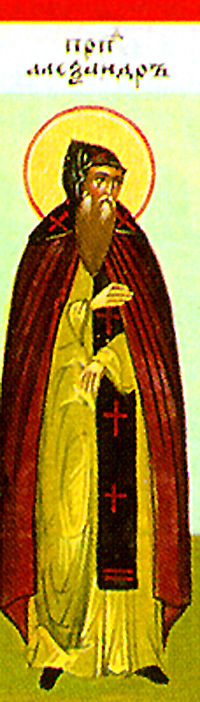
Saint Alexander, Founder of the Monastery of the “Unsleeping Ones,” was born in Asia and received his education at Constantinople. He spent some time in military service but, sensing a calling to other service, he left the world and received monastic tonsure in one of the desert monasteries near Antioch under the guidance of Igumen Elias.

Having advanced through all the degrees of monastic obedience, he received a blessing from the igumen to dwell in the wilderness. The saint lived an ascetical life in the wilderness, taking only the Holy Gospel with him. Afterwards, the Lord summoned him to preach to pagans. He converted to the faith the local city-head Rabbul, who afterwards prospered in the service of the Church, attaining the rank of bishop, and for thirty years, he occupied the bishop’s cathedra in the city of Edessa.

Finally, Saint Alexander settled not far from the Euphrates River. Monks gathered around him, attracted by the loftiness of his prayerful asceticism and spiritual experience. A monastery of 400 monks eventually sprang up there.

Then the holy igumen in his prayerful zeal decided to offer never-ceasing praise to the Lord at the monastery both by day and by night. For three years the holy abba prayed that God might reveal to him whether it was pleasing to Him to establish such a monastic rule. He received an answer by divine revelation. All the monks were divided into twenty-four watches of prayer. Changing shifts each hour, two choirs sang the holy Psalms both day and night, except when divine services were celebrated in church. Hence the name “Monastery of Unsleeping Ones,” since the ascetics offered unceasing praise to God.

Saint Alexander guided the monastery on the Euphrates for twelve years. Thereafter, having left the experienced Elder Trophimus as igumen, he set off with some chosen brethren through the cities bordering on Persia, to preach the Gospel. Having arrived at Constantinople, capital of the Byzantine Empire, he also established a monastery there with his Rule of unceasing praise. The abba died at a great old age after fifty years of monastic struggles. His death occurred in the year 430.

Saint Alexander is also commemorated on July 3.

Venerable Damian of Esphigmenou of Mount Athos

Saint Damian lived in the thirteenth century. He was a hesychast on Mt. Athos, and struggled in the skete of Esphigmenou monastery, on a mountain called Samareia, between the monasteries of Hilandar and Esphigmenou, and also in one of the caves where the Father of Russian Monasticism, Saint Anthony of the Caves (July 10), had lived in asceticism.

Known for his ascetic life and for the miracles he performed, he was truly obedient and kept the injunctions of the Fathers.

Saint Damian reposed in his cell in the year 1280, and a miraculous fragrance issued from his grave for forty days. His Life was written by his friend Saint Cosmas of Zographou Monastery (September 22).

Monastic Martyr Damian of Philotheou

Saint Damian of Philotheou was a disciple of Saint Dometius (August 7). He was from the village of Richovon (Merichovon) near Agrapha. He went to Mt. Athos when he was quite young, and received the monastic tonsure at Philotheou Monastery. After spending some time there, he withdrew to a hermitage under the guidance of an Elder named Dometius.

After three years, he heard a voice telling him to go forth and teach. He obeyed these instructions, preaching in many areas of Greece. He urged his fellow Christians to repent of their sins, to abstain from all vices, to obey God’s commandments, and to devote themselves to God-pleasing works.

As he was on his way to a village, Saint Damian was arrested by the Turks and thrown into prison. After fifteen days of torture, he was hanged and then thrown into a fire.

Saint Damian received the crown of martyrdom on February 23, 1568.

New Hieromartyr Nicholas (Dmitrov) of Tver

No information available at this time.

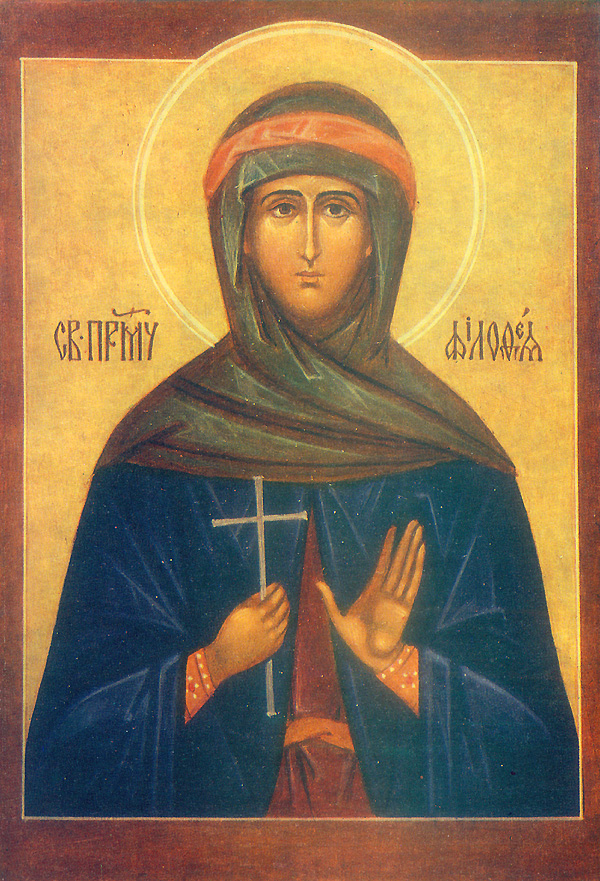
Saint Gorgonia, Sister of Saint Gregory the Theologian

Most of the information about Saint Gorgonia (Γοργονία) comes from her brother, Saint Gregory the Theologion (January 25) in his Oration VIII, "On his Sister Gorgonia," which was delivered sometime after their brother Saint Caesarius (March 9) went to the Lord in 369, and before the repose of their father, the elder Saint Gregory Nazianzus, in 374.

She was the daughter of Saint Gregory Nazianzus (January 1) and Saint Nonna (August 5), and was named for her maternal grandmother Gorgonia. Saint Gregory the Theologian tells us that she derived her existence and her reputation from their parents, because they sowed in her the seeds of piety.

In praising her virtues, Saint Gregory states that her modesty surpassed those of her own time, and those who lived before her. She blended the excellence of the married state with that of the unmarried state, avoiding the disadvantages of each, while combining all that is best in both. Thus, Saint Gorgonia proved that "neither of them absolutely binds us to, or separates us from, God or the world." It is the mind which nobly presides over marriage and virginity, arranging and working on them as "the raw material of virtue."

Saint Gorgonia had consecrated herself to God, and also won her husband Alypios to her side. He was from the city of Iconium, where Faustinus was the bishop. She made Alypios "a good fellow servant, instead of an unreasonable master." This pious couple had five children; two sons who became bishops, and three daughters: Alypianḗ, Eugenia, and Nonna. Moreover, she made her children and their children's children the fruit of her spirit, dedicating to God not only her soul, but also her entire family and household. As long as she lived, she showed herself as an example of all that is good. Her devoted brother even compared her to King Solomon's virtuous woman (Proverbs 31:10-31).

This daughter of a saintly family took both her natural and spiritual parents as her models of virtue, and they were the source of her goodness. She did not wear fine clothes or expensive jewelry, nor did she use pigments to enhance her beauty. The only red coloring dear to her was the blush of modesty; and her only white coloring was the tint of temperance.

She adorned the churches with offerings, and thereby presented herself to God as a living temple. She opened her house to members of her family who were in want, and even to strangers. She was sympathetic to those in trouble, and compassionate toward widows. She "dispersed abroad" and "gave to the poor" (Psalm 111/112:9). The only wealth she left to her children was the excellence of her example.

In her fasting, her chanting of the Psalms, her vigils, her tears, and her prayers, she surpassed not only women, but also the most devout men, thereby demonstrating that the distinction between male and female is one of body, not of soul.

One day, as Saint Gorgonia was riding in her carriage, the mules bolted and the carriage was overturned. She was dragged over the ground and suffered serious injury. Those who were not Christians were scandalized that God would permit such a thing to happen to this righteous woman. Although she was bruised in her bones and limbs, she would not allow a physician to examine her, in order to preserve her modesty. She trusted that God would heal her, and He did. Seeing her unexpected recovery, people concluded that the accident had occurred so that by her patient endurance and her miraculous healing, God would be glorified.

Saint Gorgonia longed for death, preferring to be with Christ rather than remain on earth. She had a vision in which the day of her death was revealed to her so that she might prepare herself. As that time drew near she took to her bed, and spent her last day giving instructions to her husband, her children, and her friends. After discoursing about spiritual matters, she reposed in the year 370 at the age of thirty-eight. Her last words were, “I will both lie down in peace and sleep” (Psalm 4:8).
Daily Readings for Sunday, February 22, 2026

FORGIVENESS SUNDAY

ABSTAIN FROM MEAT

Forgiveness Sunday, The Finding of the Precious Relics of the Holy Martyrs in the Quarter of Eugenius, Our Righteous Fathers Thalassius and Baradatus, Anthousa the Martyr & her 12 Servants

ST. PAUL’S LETTER TO THE ROMANS 13:11-14; 14:1-4

Brethren, salvation is nearer to us now than when we first believed; the night is far gone, the day is at hand. Let us then cast off the works of darkness and put on the armor of light; let us conduct ourselves becomingly as in the day, not in reveling and drunkenness, not in debauchery and licentiousness, not in quarreling and jealousy. But put on the Lord Jesus Christ, and make no provision for the flesh, to gratify its desires.
As for the man who is weak in faith, welcome him, but not for disputes over opinions. One believes he may eat anything, while the weak man eats only vegetables. Let not him who eats despise him who abstains, and let not him who abstains pass judgment on him who eats; for God has welcomed him. Who are you to pass judgment on the servant of another? It is before his own master that he stands or falls. And he will be upheld, for God is able to make him stand.

MATTHEW 6:14-21

The Lord said, "If you forgive men their trespasses, your heavenly Father also will forgive you; but if you do not forgive men their trespasses, neither will your Father forgive your trespasses.
And when you fast, do not look dismal, like the hypocrites, for they disfigure their faces that their fasting may be seen by men. Truly, I say to you, they have received their reward. But when you fast, anoint your head and wash your face, that your fasting may not be seen by men but by your Father who is in secret; and your Father who sees in secret will reward you.
Do not lay up for yourselves treasures on earth, where moth and rust consume and where thieves break in and steal, but lay up for yourselves treasures in heaven, where neither moth nor rust consumes and where thieves do not break in and steal. For where your treasure is, there will your heart be also.

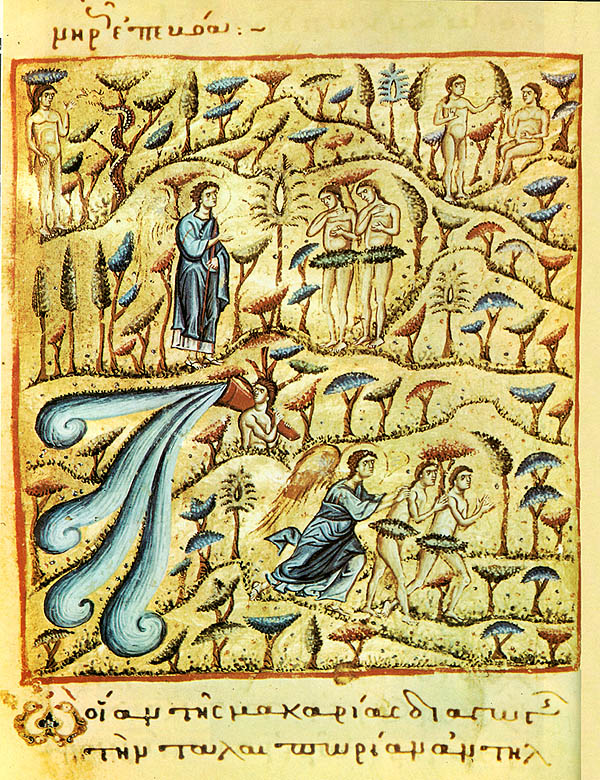
Sunday of Cheesefare: Expulsion of Adam from Paradise

As we begin the Great Fast, the Church reminds us of Adam’s expulsion from Paradise. God commanded Adam to fast (Gen. 2:16), but he did not obey. Because of their disobedience, Adam and Eve were cast out of Eden and lost the life of blessedness, knowledge of God, and communion with Him, for which they were created. Both they and their descendents became heirs of death and corruption.

Let us consider the benefits of fasting, the consequences of disobedience, and recall our fallen state. Today we are invited to cleanse ourselves of evil through fasting and obedience to God. Our fasting should not be a negative thing, a mere abstention from certain foods. It is an opportunity to free ourselves from the sinful desires and urges of our fallen nature, and to nourish our souls with prayer, repentance, to participate in church services, and partake of the life-giving Mysteries of Christ.

At Forgiveness Vespers we sing: “Let us begin the time of fasting in light, preparing ourselves for spiritual efforts. Let us purify our soul, let us purify our body. As we abstain from food, let us abstain from all passion and enjoy the virtues of the spirit….”

Uncovering of the relics of the Holy Martyrs at the Gate of Eugenius at Constantinople

During the persecutions against Christians the relics of these Holy Martyrs were usually buried by the faithful in hidden places. Thus, at Constantinople, near the Eugenios Gate and tower, the incorrupt relics of several Martyrs were found. Their names are not known, but they are written in the Book of Life.

Wishing to glorify His servants, God began healing people of their infirmities at the place where the relics of the Martyrs were found. They were transferred to a church with great honor by a certain Hierarch. After the fragrant relics were revealed, there were more miracles of healing, and demons were cast out of those who were possessed.

It was revealed to a devout clergyman, Nicholas the Calligrapher, that among the relics discovered at the Eugenios gate were the relics of the holy Apostle Andronikos of the Seventy and his helper Junia (May 17), whom the Apostle Paul mentions in his Epistle to the Romans (Romans 16:7). In the XII century, a large domed church was built at the place where the relics of the Holy Martyrs were discovered. This work was undertaken by Emperor Andronikos (1183-1185), whose patron Saint was the Holy Apostle Andronikos.

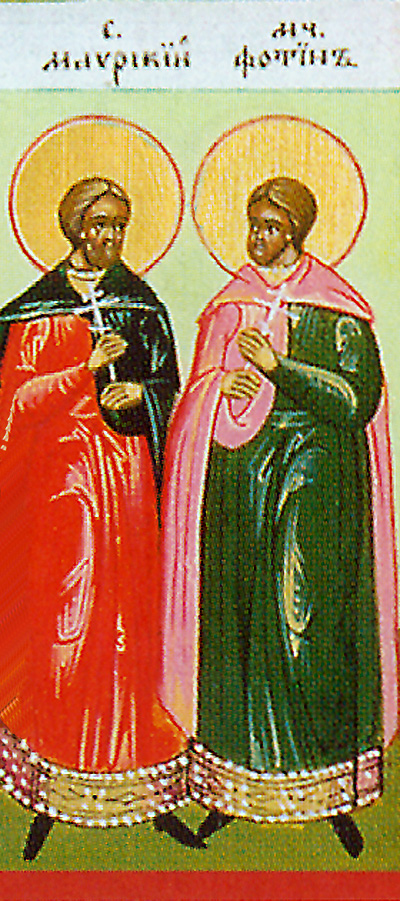
Martyrs Maurice and his son, Photinus, and Martyrs Theodore, Philip, and 70 soldiers, at Apamea in Syria

Saint Maurice, a military commander of Syrian Apamea, suffered in the year 305 under the emperor Maximian Galerius (305-311) together with his son Photinus and seventy soldiers under his command (only two of the soldiers’ names are known, Theodore and Philip).

During a persecution, pagan priests reported to the emperor that Saint Maurice was spreading the faith in Christ. Brought to trial, Saint Maurice, his son and his soldiers firmly confessed their faith and they yielded neither to entreaties nor to threats. They were then beaten without mercy, burned with fire and raked with iron hooks. Young Photinus, having endured the tortures, was beheaded by the sword before the very eyes of his father. But this cruel torment did not break Saint Maurice, who was happy that his son had been vouchsafed the martyr’s crown.

They then devised even more subtle tortures for the martyrs: they led them to a swampy place full of mosquitoes, wasps and gnats, and they tied them to trees, having smeared their bodies with honey. The insects fiercely stung and bit the martyrs, who were weakened by hunger and thirst.

The saints endured these torments for ten days, but they did not cease praying and glorifying God until finally the Lord put an end to their sufferings. The wicked torturer gave orders to behead them and leave their bodies exposed without burial, but Christians secretly buried the venerable relics of the holy martyrs by night at the place of their horrible execution.

In Slavic usage Saint Maurice and the Theban Legion are commemorated on February 22; but on December 27 in Greek usage.

Venerable Thalassius, Hermit of Syria

Saint Thalassius of Syria lived during the fifth century. At a young age he withdrew to a hill near the village of Targala and passed 38 years there in monastic deeds, having neither a roof over his head, nor any cell nor shelter.

For his simple disposition, gentleness and humility he was granted by the Lord the gift of wonderworking and healing the sick. Many wanted to live under his guidance, and the saint did not refuse those coming to him. He himself built cells for them. He died peacefully, granted rest from his labors.

Venerable Limnaeus, Hermit of Syria

Saint Limnaeus began his efforts under the guidance of Saint Thalassius and dwelt with him for a sufficient time to acquire the virtues of his teacher: simplicity of manner, gentleness and humility. Then Saint Limnaeus joined Saint Maron (February 14).

On a hill he built a small stone enclosure without a roof, and through a small aperture, he conversed with those who came to see him. His heart was full of compassion for people. Wanting to help all the destitute, he built a wanderers’ home on the hillside with the help of his admirers, a dwelling for the poor and the crippled, and he fed them with what pious people brought him.

The holy ascetic even sacrificed his own quiet and solitude for these poor brethren, and took upon himself the responsibility for for their spiritual nourishment, inducing them to pray and glorify the Lord. For his holy life he was granted the gift of wonderworking. He once cured himself of a snakebite through prayer.

Venerable Baradates, Hermit of Syria

Saint Baradates the Syrian began to live as a desert-dweller in a hut near Antioch. He then built a stone cell upon a hill, so cramped and low that the ascetic could stand in it only in a stooped position. It had neither window nor door, and the wind, rain and cold came in through the cracks, and in summer he was not protected from the heat.

After many years Patriarch Theodoretos of Alexandria urged the monk to leave the cramped hut. Then the saint withdrew into a new seclusion: covered in leather from head to foot with a small opening for his nose and mouth, he prayed standing with hands upraised to heaven. The grace of God strengthened him in his works and purified his heart from passions. People began to flock to him for spiritual counsel, and Saint Baradates with deep humility guided them. Having acquired many spiritual gifts, Saint Baradates departed to the Lord in peace in 460.

Saint Athanasius the Confessor of Constantinople

Saint Athanasius the Confessor was born in Constantinople of rich and pious parents. From his childhood he dreamed of devoting himself entirely to God, and having reached maturity, he settled in one of the Nicomedia monasteries, called the Pavlopetrios (i.e., in the names of the holy Apostles Peter and Paul), and became a monk there.

The loftiness of his ascetic life became known at the imperial court. During the reign of the iconoclast emperor Leo the Armenian (813-820), Saint Athanasius was subjected to torture for venerating icons, and then underwent exile, grief and suffering. Confessing the Orthodox Faith until the very end of his life, Saint Athanasius died peacefully in the year 821.

9 Martyred brothers of Kola: Guram, Adarnerse, Baqar, Vache, Bardzim, Dachi, Juansher, Ramaz, and Parsman

Many centuries ago, the village of Kola was located at the source of the Mtkvari River. There Christians and pagans dwelt together as neighbors. Christian and pagan children would play together, but when the Christian children heard church bells ringing, they recognized the call to prayer and dropped their games. Nine pagan children—Guram, Adarnerse, Baqar, Vache, Bardzim, Dachi, Juansher, Ramaz, and Parsman—would follow the Christian children to church.

But the Christians always stopped them near the gates of the church and reprimanded them, saying, “You are children of pagans. You cannot enter God’s holy house.” They would return sorry and dejected.

One day the nine pagan children tried to enter the church forcibly, but they were cast out and scolded. “If you want to enter the church, you must believe in our Lord Jesus Christ and be baptized in the name of the Father and of the Son and of the Holy Spirit,” they were told. “You must receive Holy Communion and join the community of Christian believers.”

With great joy the youths promised the Christians that they would receive Holy Baptism. When the Christians of Kola related to their priest the good news of the pagan boys’ desire, he recalled the words of the Gospel: He that loves father or mother more than Me is not worthy of Me: and he that loves son or daughter more than Me is not worthy of Me. And he that takes not his cross, and follows after Me, is not worthy of Me. (Matt. 10:37-38).

He was not afraid of the anger that would follow from the pagan community, but rather took the boys on a cold winter night and baptized them in the icy river. A miracle occurred while the Holy Sacrament was being celebrated: the water became warm and angelic hosts appeared to the youths. Greatly encouraged in their faith, the children decided to remain in the Christian community rather than return to their parents.

When their parents learned that they had been baptized in the Christian Faith, they dragged their children away from the church, abusing and beating them into submission all the way home. The heroic children endured the abuses and, though they went hungry and thirsty for seven days, repeated again and again, “We are Christians and will not eat or drink anything that was prepared for idols!”

Neither gentle flattery, nor costly clothing, nor promises of good things to come could tempt the God-fearing youths. Rather they asserted, “We are Christians and want nothing from you but to leave us alone and allow us to join the Christian community!”

The enraged parents went and reported to the prince everything that had happened. But the prince was of no help—he simply told them, “They are your children, do with them as you wish.” The obstinate pagans asked the prince permission to stone the children. So a large pit was dug where the youths had been baptized, and the children were thrown inside.

“We are Christians, and we will die for Him into Whom we have been baptized!” proclaimed the holy martyrs, the Nine Children of Kola, before offering up their souls to God.

Their godless parents took up stones, and then others joined in, until the entire pit had been filled. They beat the priest to death, robbed him, and divided the spoils among themselves.

The martyric contest of the Nine Righteous Children of Kola occurred in the 6th century, in the historical region of Tao in southern Georgia.

Finding of the Relics of Saint Tikhon of Moscow

name file
February 22, 1992: Patriarch Aleksy presides at the opening of St. Tikhon's recovered relics.

As widely reported, 2017 marked the 100th Anniversary of the Election and Enthronement of Saint Tikhon as Patriarch of Moscow during the All-Russian Church Council. His Beatitude, Metropolitan Tikhon and a delegation representing the Orthodox Church in America departed for Moscow on Thursday, November 30, 2017 to participate in the celebration of this ever-memorable occasion that directly relates to the life of the Church in Russia and America, inasmuch as Saint Tikhon served as Bishop and later Archbishop of North America from 1898 until 1907, when he returned to his homeland.

2017 also marked the 25th Anniversary of the discovery and recovery of the relics of Saint Tikhon, which were secured after his death in Moscow's Donskoy Monastery.

Saint Patriarch Tikhon fell asleep in the Lord on April 7, 1925. He had suffered greatly during the years of turmoil and persecution that followed the Russian Revolution. He was laid to rest in the monastery's small "winter" cathedral. Subsequently the monastery was closed and repurposed, and the relics of Saint Tikhon were moved for safe keeping.

The Donskoy Monastery subsequently was returned to the Church and has been restored. It was on Saturday, February 22, 1992, that Saint Tikhon's relics were discovered, hidden deep beneath the floor of the small cathedral.

Just weeks before this joyous event, Protopresbyter Daniel Hubiak, together with Matushka Dunia, had arrived in Moscow as the Orthodox Church in America's first Representative to the Russian Orthodox Church. Little did they realize at the time that they would be witnesses to the recovery of Saint Tikhon's relics on that cold February afternoon.

Both Father Daniel and Matushka Dunia wrote first-hand accounts of the discovery of Saint Tikhon's relics, now enshrined in the Donskoy Monastery's main cathedral.

In conjunction with the Anniversary of Saint Tikhon's Enthronement in 1917, we offer the Hubiaks' accounts of the discovery of Saint Tikhon's relics.

Account of Matushka Dunia Hubiak

It is Saturday, February 22, 1992, in Moscow. Father Dan and I are living at the Danilovsky Hotel. We arrived in Moscow a month ago for Father Dan to begin his new assignment as Representative of the Orthodox Church in America to the Russian Orthodox Church (The Moscow Patriarchate).

Because no church was yet designated as our Representation Church, Father Dan would call Father Matfey Stadniuk on Saturday mornings to be told where he was to be for the Vigil and Divine Liturgy that weekend (usually at the Patriarchal Cathedral). This Saturday morning (February 22) Father Matfey could not be reached. Finally, around noon he answered the phone and told Father Dan to be at the Donskoy Monastery for a special service at 2:00 p.m.

The receptionists at the hotel (who were always very helpful) ordered a car and driver for us, and off we were to the Donskoy Monastery. Upon our arrival at the main gate of the monastery, a mass of people, including clergy of all ranks, was gathering. A sense of excitement permeated the scene.

What could all of this mean?

We arrived at the winter church and saw more people, clergy and TV cameras! Father Dan was separated from me to join the clergy – I was left behind. At that time, a month after arriving in Moscow, my linguistic ability was almost nonexistent, so I was unable to ask anyone anything. So I stood there, trying to not get squeezed trying to see. We were standing around what looked like a crypt in the vestibule.

Patriarch Aleksy entered and began the service. More and more people crowded into the space, and again I was pushed to the side, unable to see. However, I could still hear, and to my astonishment I discovered that we were standing at the tomb of the recently canonized Saint Tikhon, Patriarch of Moscow and All Russia – in many ways OUR Patriarch whom we commemorate as “the Enlightener of North America.”

The Molieben service began and the coffin was opened. I made my way to a side of the area and found a chair on which I stood. When the reality dawned on me as to what was taking place, I was very much moved and could hardly see because of my tears.

After most of the crowd had pushed and shoved its way to the side, I was able to look down and found the Mantia still intact with the eagles on the shoulders and at the hem.

Father Dan was given a piece of wood from the casket.

Just think! If Father Dan had not reached Father Matfey, who was in his office all of two minutes, we would have missed this once in a lifetime experience!

Account of Father Daniel Hubiak

At the end of the meeting of the Permanent Synod of the Russian Orthodox Church, His Holiness, Patriarch Aleksy was informed that the grave of Saint Tikhon had been found in the smaller Cathedral of Our Lady of the Don in the Donskoy Monastery. The Patriarch immediately went to the site and arranged for the opening of the casket at a special service at 3:00 p.m. on Saturday, February 22, 1992.

The top of the simple wooden casket was removed, revealing the mantia which covered the body of the saint. Two gold brocaded emblems on the mantia were shining as new. His Holiness said that the green patriarchal mantia was special in that it was one of only three made with that material and special style. The stones in the cross of the Saint’s miter glistened as camera lights flashed.

A Molieben was sung. Patriarch Aleksy spoke of the significance of this discovery and stated that a crypt will be made for the Saint’s relics.

The discovery of the Saint’s grave was miraculous. Three different rumors pointed to the improbability of ever finding the remains of the Saint. One version had it that the remains of the Saint had been cremated, another that he was buried in an unmarked grave in one cemetery, another that his remains were in another, unidentified cemetery. The Church had no plans of trying to find the grave.

A fire at the smaller Cathedral of Our Lady of the Don made it necessary to undertake an extensive renovation of the church. In the process of this renovation, a grave marker was found, but there was no body under the stone. It was thought that perhaps the burial place was to one side or another of the stone. A search of the area proved fruitless. But under the stone was a large heating pipe that appeared to be intact. An archeological expert examined the site and noticed that in fact the pipe, not detectable to the untrained eye, had indeed been disturbed. The pipe was removed and beneath it, covered by earth, was a grave vault. The vault was opened and the casket of Saint Tikhon was discovered there. On the casket was a plaque identifying it as the casket of the Saint. Those who buried the Saint took special pains to keep his body and his burial place secure and safe.

The finding of the Saint’s grave was a miracle. The presence of the Representative of the OCA at the opening of the grave was another sign of God’s providence. By chance I had called Father Matrfey Stadniuk to discuss the schedule of services for the weekend. He was in his office for only for a few minutes – and that was when I called. He told me to be at the Donskoy Monastery for a Molieben. It appears that the person who was to have informed me simply forgot to do so.

An Act of the Opening of the Grave was signed by the Patriarch, the hierarchs, clergy and lay persons present. My name and my wife’s name appear on the document. I obtained a piece of wood from the top of the Saint’s casket.

O Holy Father Patriarch Tikhon, pray unto God for us!

Daily Readings for Saturday, February 21, 2026

CHEESEFARE SATURDAY

ABSTAIN FROM MEAT

Cheesefare Saturday, Timothy the Righteous, John III, Patriarch of Constantinople, Eustathius, Bishop of Antioch, Zachariah, Patriarch of Jerusalem

ST. PAUL’S LETTER TO THE GALATIANS 5:22-26; 6:1-2

Brethren, the fruit of the Spirit is love, joy, peace, patience, kindness, goodness, faithfulness, gentleness, self-control; against such there is no law. And those who belong to Christ Jesus have crucified the flesh with its passions and desires. If we live by the Spirit, let us also walk by the Spirit. Let us have no self-conceit, no provoking of one another, no envy of one another. Brethren, if a man is overtaken in any trespass, you who are spiritual should restore him in a spirit of gentleness. Look to yourself, lest you too be tempted. Bear one another’s burdens, and so fulfill the law of Christ.

MATTHEW 6:1-13

The Lord said, "Beware of practicing your piety before men in order to be seen by them; for then you will have no reward from your Father who is in heaven.
Thus, when you give alms, sound no trumpet before you, as the hypocrites do in the synagogues and in the streets, that they may be praised by men. Truly, I say to you, they have received their reward. But when you give alms, do not let your left hand know what your right hand is doing, so that your alms may be in secret; and your Father who sees in secret will reward you.
And when you pray, you must not be like the hypocrites; for they love to stand and pray in the synagogues and at the street corners, that they may be seen by men. Truly, I say to you, they have received their reward. But when you pray, go into your room and shut the door and pray to your Father who is in secret; and your Father who sees in secret will reward you.
And in praying do not heap up empty phrases as the Gentiles do; for they think they will be heard for their many words. Do not be like them, for your Father knows what you need before you ask him. Pray then like this:
Our Father who are in heaven, Hallowed be your name, Your kingdom come, Your will be done, On earth as it is in heaven. Give us this day our daily bread, And forgive us our debts, As we also have forgiven our debtors; And lead us not into temptation, But deliver us from evil. For yours is the kingdom and the power and the glory, for ever. Amen.

Saturday of Cheesefare Commemoration of all our God-bearing Fathers and Mothers who shone forth in asceticism

On this day, we commemorate all the righteous and God-bearing Fathers and Mothers, both known and unknown, who shone forth in asceticism. With these two weeks of Meatfare and Cheesefare, the Church gradually eases us into the full fasting which begins on Monday.

The holy acetics are virtuous men and women who contended against the devil and their own passions. By examining their lives and their struggles against the Enemy, we take courage from the victory they have achieved, and are inspired to imitate their God-pleasing conduct. They also teach us that fasting is not merely abstinence from food, but involves refraining from inappropriate speech and unseemly actions.

Since these holy ascetics share the same human nature that we have, their example is an encouragement to us as we embark on our own spiritual struggles. Their lives are a model for us to follow as we seek to acquire and practice the various virtues and to turn away from everything evil. If we undertake these same struggles of prayer, fasting, and good works, we shall receive from God the same reward they did.

Most of the holy ascetics commemorated today have their own separate Feast Day during the year, while some are remembered only on this day.

Venerable Timothy of Symbola in Bithynia

Saint Timothy of Symbola was of Italian descent. He became a monk at a young age and pursued asceticism at a monastery called “Symbola”, in Asia Minor near Mount Olympus. At that time Theoctistus was the archimandrite of the monastery. Saint Timothy was the disciple of Theoctistus and also of Saint Platon of the Studion Monastery (April 5).

Attaining a high degree of spiritual perfection, he received from God the gift of healing the sick and casting out unclean spirits. He spent many years as a hermit, roaming the wilderness, the mountains and forests, both day and night offering up prayer to the Lord God. He died at a great old age, in the year 795.

Saint Eustathius, Archbishop of Antioch

Saint Eustathius, Archbishop of Antioch (323-331) was born in Side, Pamphylia in 324. He was Bishop of Beroea (modern Aleppo), and enjoyed the love and esteem of the people, and at the request of his flock he was elevated by the Fathers of the First Ecumenical Council (325) to the See of Antioch.

Saint Eustathius was a learned theologian, and was also distinguished by his broad knowledge in secular sciences. When the heresy of Arius began to spread in the East (Arianism denied the consubstantiality of the Son of God with the Father), Saint Eustathius struggled zealously for the purity of the Orthodox Faith through his words and his writings.

The First Ecumenical Council was convened in the year 325 by the holy God-crowned Emperor Constantine the Great (306-337). The first to preside over this Council was Saint Eustathius. The Council condemned the heretical teachings of Arius and incorporated the Orthodox confession into the Symbol of Faith (the Nicene Creed).

But the mad Arius, as Saint Eustathius called him, refused to renounce his errors. He and those who shared his opinion were excommunicated from the Church by the Council. Among the bishops who signed the Nicene Symbol of Faith were some who sympathized with the heresy of Arius, but signed the Acts of the Council through fear of excommunication.

After the Council, his enemies plotted against Saint Eustathius. With great cunning they gained his consent to convene a local Council at Antioch. Having bribed a certain profligate woman, they persuaded her to appear at the Council with an infant at her breast, and falsely declare that Saint Eustathius was the father of the infant.

The Arians declared Saint Eustathius deposed, violating the Apostolic Rule that accusations against the clergy must be substantiated by two witnesses. Without a trial he was sent off into exile in Thrace. But the lie was soon unmasked: the woman repented after falling grievously ill. She summoned the clergy, and in the presence of many people, she confessed her sin.

Saint Constantine the Great died around this time, and his son Constantius (337-361), who shared the heretical views of Arius and favored the Arian bishops, succeeded his father on the throne. Even in exile, Saint Eustathius struggled for Orthodoxy with the same zeal. He died in exile, in the city of Philippi or Trajanopolis, in the year 337.

Convened in the year 381 at Constaninople, the Second Ecumenical Council confirmed the Orthodox Symbol of Faith, which Saint Eustathius had so vigorously defended. The Arian heresy was once again anthematized.

In the year 482 the relics of Saint Eustathius were reverently transferred from Philippi to Antioch, to the great joy of the people of Antioch, who had not ceased to honor and love their patriarch.

Saint Eustathius was esteemed by the great hierarchs of the fourth century: Basil the Great, John Chrysostom, Athanasius of Alexandria, Epiphanius of Cyprus, Anastasius of Sinai, and Jerome of Stridonia. The renowned church historian Bishop Theodoret of Cyrrhus calls Saint Eustathius a pillar of the Church and a man of piety, of equal stature with Saint Athanasius of Alexandria and the other bishops at the forefront of the struggle for Orthodoxy.

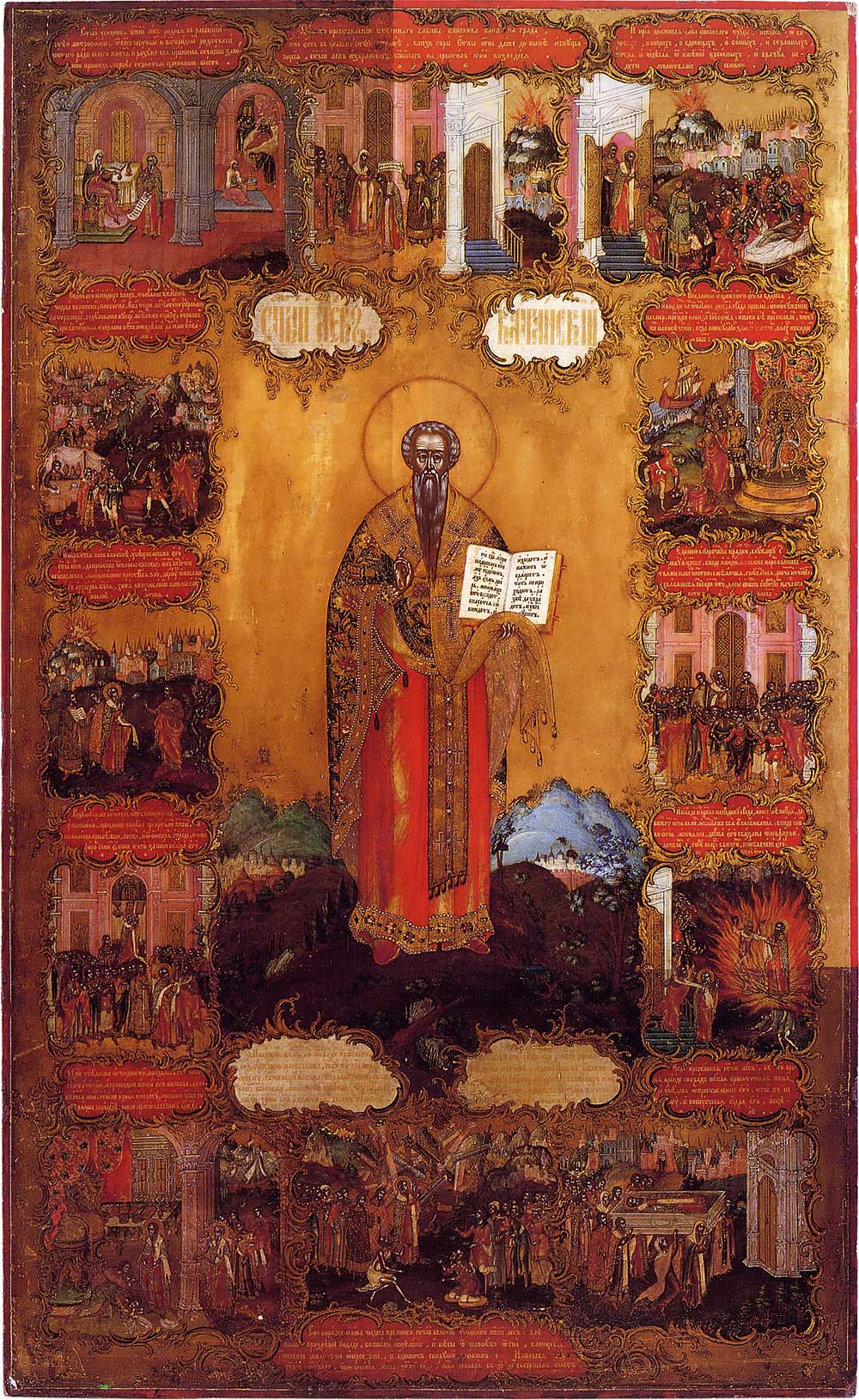
Saint George, Bishop of Amastris on the Black Sea

Saint George was born at Kromne near Amastris in Paphlagonia on the Black Sea in 750. He was the son of pious parents, Theodosios and Megethousa. After completing his primary studies in his homeland, he left for the mountain of Syrikēs, or Sērikḗs (Συρίκης ή Σηρικής). There he found an old ascetic who taught him about the solitary life and tonsured him.

After the repose of his Elder, George went to Vonitsa in Akarnania, where he continued his ascetical struggles.

In 788, the Bishop of Amastris fell asleep in the Lord, and the Church rewarded George's virtues. Against his will, he was elected as the Bishop of that city, but in the end he submitted to this as God's will. He was consecrated at Constantinople by Patriarch Tarasios (February 25).

Upon his return to Amastris, Saint George was like a lamp which is not placed under a bushel, but put on a lampstand, so that it gives light to all those in the house (Matthew 5:15). He instructed his flock, he beautified several churches, defended widows and orphans, and fed the poor. In all things, he was an example of a God-pleasing life.

By the power of his prayers he drove away the Saracens who were ravaging the countryside near Amastris. He also rescued some Amastrian merchants who had been wrongfully condemned to death in the city of Trebizond.

He also composed several Canons in honor of the Saints, which are sung on February 7 and 26; April 13; August 1; October 8, etc.

Saint George went to the Lord peacefully in 805, during the reign of Emperor Nikēphoros I, after shepherding the flock which had been entrusted to him by Christ in a God-pleasing manner. He performed many miracles, both during his lifetime, and after his blessed repose.

In Slavic usage, Saint George is commemorated on February 21. In Greek usage he is commemorated on October 25.

“Kozel'shchansk” Icon of the Mother of God

This Icon is one of the latest of the wonderworking icons of the Mother of God to be glorified, and one of the most revered. The event which glorified this Icon received the widest publicity, and produced the deepest impression. This was not some ancient tradition which might be denied, but it happened, so to speak, before the eyes of the people who lived at that time. Many people saw, for the first time, how miraculous grace flowed from this Icon. Eminent doctors who examined the hopelessly afflicted girl declared that she could not be cured, but the healing grace of the Most Pure Virgin was felt, and a miracle took place.

The Kozel'shchansk Icon was the family icon of Count Vladimir Ivanovich Kapnist and was kept on his estate, in the village of Kozelshchyna. This icon is very old, and the style of the letters bespeaks its Italian origin. In this extraordinarily beautiful Icon, the faces of the Divine Child and the Mother of God are filled with consolation.

In the XVIII century the Icon belonged to the wife of Siromakh, a records clerk of the Zaporozhsky-Cossack army, who signed the act of Little Russia's final annexation to Russia in 1764, and he was granted lands for this. By the order of Empress Elizabeth Petrovna, he married an Italian woman, one of her ladies-in-waiting.

Count Kapnist had a daughter named Maria Vladimirovna, who was brought up at the Poltava Institute. In 1880, during Cheesefare week, the girl dislocated some bones in her foot, causing it to become twisted. Doctor Meyer of Poltava thought the damage was minor. The famous Kharkov surgeon Grube said the same. He applied a plaster bandage, and recommended that a special shoe be made according to his own design, with steel springs gripping the leg above the knee, to reduce the pain in her foot when walking. He also prescribed warm baths and iron supplements. All of his instructions were followed to the letter, yet Maria received no relief. At Pascha her other foot became twisted. Professor Grube told the Count to take Maria to the Caucasus and treat her with the mineral waters. There new injuries were found: dislocations of her shoulder joints and her left hip, and very painful sensitivity along her entire spinal column. They tried everything – electricity, warm baths, mineral waters – but nothing helped.

The Count took his daughter to Moscow in October, where she was examined by the renowned neurologists, Professors Kozhevnikov and Korsakov, the surgeon Sklifasovsky, and the therapists Professors Pavlinov, Mitropolsky, and Caspari. They could not help her, so they recommended the European specialists Gutera and Charcot. The family was already in Moscow waiting for the arrival of Charcot, who was summoned by the famous capitalist Lyamin. Since it would be a long time before Charcot arrived in Moscow, and Maria wanted to go home, Count Kapnist let his wife and daughter return to their village, urging them to come to Moscow as soon as they received his wire. The Count stayed behind in Moscow to wait for Charcot.

On February 21, 1881, the Count sent a telegram to his wife saying that Charcot had left for Moscow. The Countess decided to go the next day, and she told her daughter to pray before their family Icon and to polish the metal riza. This was a custom in their family. The mother decided to leave the next day, and pointing to the family Icon of the Mother of God, she said to her daughter: "Masha, tomorrow we go to Moscow, take the Icon and polish the riza, and pray even harder before our Intercessor. Ask her to help us make the trip safely, and to cure your illness."

The afflicted girl had lost hope in earthly doctors, but she placed all her hope in God and entrusted herself to Heaven. Their Icon had long been known as miraculous. According to tradition, the Mother of God especially helped girls who turned to her in prayer and asked that she grant them a happy family. At the same time, it was customary for a girl to polish the Icon's riza, wiping it with cotton, wool, or a towel. Pressing the holy Icon to her bosom, Maria polished it, with her mother's help, and all the heaviness of her affliction, and all the sorrow and despair of her soul was poured out before the Theotokos.

The young Countess embraced the Icon with her feeble hands. As she held it, she prayed fervently, and her prayer was heard. All at once, she felt strength in her arms and legs, and she cried aloud,: "Mama, Mama, I can feel my legs, I can feel my hands!"

Then she removed eight pounds of metal and the bandages from her feet. Her mother thought her daughter had lost her mind. Her face was radiant, and her joyous squeals seemed to be those of a mad woman. Finally, she realized that her daughter had been healed. There were many guests in the house. When they heard her scream they ran into the room, there they saw the young Countess walking normally, and they knew that Maria had been healed. Then the parish priest was asked to come at once and serve a Moleben of thanksgiving.

Despite her daughter's full recovery, the Countess decided to bring her to Moscow, and they left the next day, taking the Icon with them. In Moscow, the Count set up a meeting with some doctors. Charcot said that if it were not for such reliable witnesses as the Moscow Professors, he would have regarded the whole incident as a hoax. The Count stayed at the Loskutna Inn, and rumors of Maria's healing quickly spread throughout Moscow, and people began to flock first to their hotel room, and then to the church, where the Icon had been moved, and where there was a large crowd.

At the end of March, the Kapnist family went back to their village with the Icon. Then a blind maiden came to the manor, who told them that in a dream the Mother of God ordered her to go to her Icon. The Countess took her to the Icon, before which she prayed for a long time. A few days later, she returned with her sight restored in both eyes. First, a chapel was built in the Count's garden, and then a church. Miracles were recorded, and twenty-one miracles were examined by a commission from Poltava. A certain boy was healed before the commission. In 1885, a women's community with a hospital was opened in Kozel'shchyna, with a school and an orphanage for cripples.

The Divine Child on the Kozel'shchansk Icon rests in the lap of the Mother of God, holding a cross. On the table is a bowl and a spoon, perhaps to symbolize that the Mother of God brought joy to all the world. This may have been inspired by the Akathist to the Mother of God, Ikos 11: "Rejoice, O cup which drawest up joy."

There is a venerated copy of this Icon in Moscow, in the church of the Kazan Icon by the Serpukhov Gate. During Passion Week of 1885 in Astrakhan, the maiden Gitsevich was healed by a copy of the Kozel'shchansk Icon.

In 1882, a church was built, and by the decision of the Holy Synod on March 1, 1885, a women's community was established, On February 17, 1891, it became a convent dedicated to the Nativity of the Theotokos.

When the Monastery was closed in 1929, the Icon was taken by the nuns to a hermitage in the village of Obitok, and after its closure in 1932 it was kept hidden in the town of Kobelyaki, in 1941-1949 it was in the Kozel'shchyna Monastery again. Then it was brought to Lebedinsky Monastery in the Cherkasy region. From 1961 the Icon was in the Kiev apartment of the former Kozel'shchyna nuns, and it was returned to Kozel'shchyna on February 23, 1993.

A Church Service has been composed for the Kozel'shchansk Icon of the Mother of God, as well as an Akathist.

Saint John “Scholasticus”, Patriarch of Constantinople

Saint John Scholasticus, Patriarch of Constantinople, was born in Sirimion near Antioch, and studied law. He was ordained a priest because of his great holiness and piety. Later he was elevated to the patriarchal throne, where he spent the years 565 to 577.

While still a presbyter, he compiled a collection of Church Rules in Fifty Chapters, and later during his time as patriarch he made a Codex of civil laws relating to the Church. From these collections was compiled the Nomocanon (i.e. “Law-canon”), used in church administration. Saint John also composed the “Cherubic Hymn”, and “Of Thy Mystical Supper.”

Saint Zacharias, Patriarch of Jerusalem

Saint Zacharias, Patriarch of Jerusalem, lived from the end of the sixth to the early seventh centuries. He became Patriarch of Jerusalem in 609. In the year 614 the Persian emperor Chosroes fell upon Jerusalem, looted it, and led many Christians into captivity, including Saint Zacharias.

Chosroes also captured the Life-Creating Cross of Christ. During the invasion, as many as 90,000 Christians perished. Afterwards Chosroes was compelled to sue for peace with the Byzantine Emperor Heraclius (610-641). The Cross of the Lord was returned to Jerusalem. The Christian captives who remained alive also were returned, among them Patriarch Zacharias, who died peacefully in the year 633.

Saint Makarios of Glinsk Hermitage

The holy Elder Hieromonk Makarios (Matthew Terent'evich Sharov in the world) was born in 1802, and came from a wealthy bourgeois family in the city of Ephraimov in Tula Province. His mother was particularly devout, always walking with a prayer rope in her hands, and she raised her children in the fear of God. Following the example of his parents, Matthew Terent'evich was also devout, humble, and led a restrained life: he did not eat quickly, he read spiritual books, avoided worldly fuss, diligently visited the temple of God and often prayed to God at home. In 1822, when he was twenty years old, he finally decided to forsake the world and enter the Glinsk Hermitage under the guidance of the ever-memorable Igoumen Philaretos (Danielevskii), a man known for the sanctity of his life.

He arrived at Glinsk Hermitage when its ever-memorable restorer, Igoumen Philaretos, was the Superior. In 1828, he was enrolled in the monastery's brotherhood. As is well-known, Father Philaretos kept a close watch over the newcomers. To him, a newcomer was a child who needed spiritual milk (I Cor. 3:2; Heb. 5:12; I Peter 2:2), and the Igoumen supplied it in abundance. Into this school of piety came Matthew Sharov. In the person of Father Philaretos he found a knowledgeable spiritual guide, who had learned through personal experience, the difficulty of the path to salvation. He had studied this path to such a degree that the person under his guidance was fully assured of reaching his goal. Matthew soon felt this and entrusted himself to the wise instructor in absolute obedience. After learning Matthew's capabilities, this spiritual guide assigned him to various obediences, which did not correspond to his abilities or spiritual needs, and the young novice carried them out in a zealous manner.

At first, he was appointed to work in the monastery's apiary, where Father Igoumen often visited and watched the newcomer closely, paternally instructing him in the monastic life. His ardent performance of his duties, and his humble and willing obedience to his Elder's will predisposed Father Philaretos toward him, and he often spoke to the young struggler in a paternal way. In a short time he was so prepared that he made his monastic vows on December 16, 1833, fully aware of what he was doing. He was tonsured by his great Elder and was named Makarios.

While still a novice, he kept watch over his soul, and after becoming a monk his vigilance increased. His humility was shown in his every word, as well as in his actions, his appearance, his clothing, and in every movement. In other words, he became an image of humility in a short time. By keeping watch over his heart, he blocked the passions from entering therein with the weapon of noetic prayer. Elder Philaretos rejoiced exceedingly over his spiritual child and taught him how a true warrior of Christ must do battle with the Enemy of our salvation. The attentive disciple of this wise instructor was quickly perfected in the virtues, reaching such a level that Father Philaretos deemed him worthy of ordination.

Father Makarios tried to cleanse his heart of all earthly matters, and those things which are displeasing to God, so that he might become worthy of the grace which was given to him at his ordination. He always served with special reverence, which was noticed by those around him, even though he tried to hide it from everyone. His serving was distinguished by a profound feeling of humility, with fear and trembling before the greatness of Almighty God, before Whose altar he now stood.

Father Philaretos, seeing his disciple and spiritual son rapidly ascending the steps of perfection, wished to see him in the rank of a priest during his lifetime. Father Makarios was ordained on February 29, 1839, and his elevation to the priesthood served to make him more attentive in his spiritual life. He had it very well under the protection of his wise teacher, Father Philaretos, who always had the correct solution, his clairvoyant counsels, and his timely and necessary directives. However, on March 31, 1841, Glinsk Hermitage was deprived of its Superior, and Hieromonk Makarios lost his earthly guardian angel. But the seeds the Elder had sown were watered by his prayers from Heaven, and were strengthened by his disciple's zeal for salvation here below. Not only were these seeds not lost, but they also bore fruit a hundredfold.

Soon Hieromonk Makarios became an example for all the monks to emulate. He studied the Holy Scriptures; he had great knowledge of the exalted Christian virtues, and of the monastic virtues. He tried to put these into practice in his own life in order to be filled with the virtues indicated to us by our Lord Jesus Christ: love of God and love for one's neighbor, strict reclusion, and mortifying the body through fasting and prayer. By God's grace these became so strong in him that he wished to embrace the whole world, and to lead everyone to God. This same ardent love drew him to the service of the salvation of many people.

Father Makarios was appointed as Dean of the monastery in 1844, despite the fact that not so long ago this zealous doer of the Lord's commandments was enrolled with the state because of illness.

After assuming the difficult position of Dean of the monastery, Father Makarios devoted himself to the performance of his duty. Only his humility and his Christian love toward all led him to accept this heavy and burdensome duty, but he gave his all to it. While he was Dean, there was exemplary behavior in the monastery. Relying on the Dean's vigilance, the Superior was at peace because he knew that for the sake of holy obedience Father Makarios was ready to sacrifice his own comfort for that of all the brethren; and he also knew that they would maintain their good conduct out of respect for Father Makarios. How did Father Dean act? He divided his love in half, as it were: one half was for the Superior, whose orders he regarded as sacred; giving the other half, and himself, to the brethren. Of course, some of them did not always conduct themselves as the Superior required.

Some refused to carry out their assigned obediences out of stubbornness or self-love. Father Makarios tried to carry out their obediences himself. For example, he often made the dough for bread at night, and did other heavy work. Father Makarios tried to conceal the weakness of some of the monks from the Superior, and often he got into trouble because of this.

While covering up for the others, Father Makarios was deeply grieved by their weaknesses. He begged and begged them to correct themselves, and tried to counsel them. His instructions, coming from a heart aflame with love for God and for his neighbor, were so effective that those toward whom they were directed involuntarily gave way before the power of his words, and submitted themselves to holy obedience. Once they corrected themselves, Father Makarios was at peace concerning them. He knew that those who had been corrected would not permit any conduct which was contrary to the rules of the monastery, because they did not wish to grieve him.

Because of his position, he was obliged to come into contact with worldly people, and found ways to converse with them and to be useful to them. Beginning with the usual topics, imperceptibly he would lead the conversation toward the soul's salvation. Then he would become inspired and, as if from a pure spring, he would give spiritual drink to his listeners. Enthralled by the power of his words, they listened attentively to the ascetic and many learned the science of Christian life through him. However, while caring for the salvation of others, Father Makarios did not neglect his own. He knew how to conduct himself so that his contact with worldly people did not have an adverse effect upon him. He was rewarded abundantly when he saw that a human soul, under the influence of his tender paternal counsels, recognized its Creator.

In his cell, Father Makarios had only a few icons and books, and that was all. He did not acquire anything else. So that he would not be distracted, he glued paper over the windows of his cell, or painted them over, so that nothing could be seen through them. Prayer and solitude were his only food. Weakened by illness, he lay down on a rug and read the Psalter. At night the Elder got up to pray, supported by two crutches, and read the Holy Gospels, conversing with God for such a long time that one could not understand how he could do this, since he was ill. But God's "power is perfected in weakness" (2 Cor. 12:9).

It is said that sometimes the Elder would take a book and go into the forest. Then he would sit down somewhere to read or to pray. Finding a suitable tree stump, the ascetic would place the book on it and kneel down before it. Then his pure soul would fly to Heaven on the wings of prayer. Once, Father Makarios, as usual, went for one of these strolls in the woods, and became very tired. He sat down by the side of the road in order to rest a little, but he was so deep in meditation that he did not hear a peasant's horse-drawn wagon approaching. Suddenly, as the wagon came closer, he stood up. The horse became frightened and veered to the side. Father Makarios said, "Forgive me, brother," and bowed to him.

The peasant smiled and said, "If it were anyone else… but, since it is Father Makarios, then we shall say nothing."

This little incident shows just how much Father Makarios was respected, not only by the brethren of the monastery, but also by those who lived outside its gates.

His great ascetical labors finally caused his already fragile health to deteriorate. So, in June of 1848, he was relieved of his duties at his own request. After this, he did not leave his cell, except to go to church, and for infrequent solitary walks in the woods. At such times he was seen in the cemetery, where there was much that his humble and attentive soul knew and loved. Even though his solitary retreat in his cell was not full reclusion, all his ascetical labors were truly those of a real recluse.

One evening, two monks were going to his cell together in order to speak with him. Among the other things they mentioned about Father Makarios, one of them said, "He has locked himself in. It is easy to be saved in reclusion, because one does not behold any temptations. If he lived as we do, however, having temptations before his eyes, and if he could live as if he did not have them, then that would be a great ascetic feat indeed!"

Later, one of them had to pass by the cell of Father Makarios in order to get to his own. Father Makarios opened his door and asked him to come in. "Brother," he said, "forgive me, a sinner, and a weak one, who is unable to struggle as you do, but hides from worldly temptations in his cell. For the sake of God, forgive me."

The monk was stricken, not so much by the Elder's humility, but by the very words which the monk himself had spoken only a few moments before, and were now repeated by the Elder. This monk who had judged others made a prostration before the humble ascetic, and sincerely asked to forgiven.

The many admirers of Father Makarios, who were deprived of the great benefit of his counsels after he had locked himself in his cell, tried to come to him now in his cell, but they were turned away. Then some of them, having great faith, and who loved the Elder, asked the Superior to order Father Makarios to receive those who came to him, for the sake of obedience. As usual, the humble Elder now preferred the benefit and the will of others to his own solace, and so he opened the door of his cell to everyone. They had been waiting for a long time to hear his grace-filled words, and now that his door was open, they came to him often, and at all times, knowing that Father Makarios would always give them just the right advice and the necessary help from God. His cell was a place where many of their spiritual needs were met, and many questions were answered. From early morning until the evening, many people disclosed to him the thoughts of their hearts, weeping many warm and salvific tears of repentance. They vowed to correct themselves, and their perplexities were resolved.

The Elder’s calmness when counseling people was amazing. He listened to both the nonsensical superstitions of the common folk, and the disbelief and the foolish freethinking of educated persons. He heard the senseless complaints of a peasant woman, and the fanciful curiosity of a wealthy woman, as well as the simple stories of a peasant, and the deceitfully elegant conversations of the wise of this world. Nothing could disturb his Christian patience and his complete spiritual peace, however. He conquered all by his most profound humility. Pure joy shone on his radiant countenance, reflecting the purity of his heart. His eyes expressed his angelic meekness and inner peace. Those who entered his cell in sadness emerged in a state of happiness. The sorrowful received comfort; the despairing came out with the hope of repentance; the self-confident became humble.

As for his great piety, many people wrote to ask him for advice and guidance in the spiritual life, or about their doubts and sorrows. The loving Elder, who was always ready to help his neighbor, did not refuse to reply. As someone who had received only the most elementary education at home, he was not learned in worldly wisdom, but he attained great perfection by obeying Christ’s commandments, by his attentive study of the Holy Scriptures, and the writings of the Holy Fathers.

Many of those who came to Father Makarios with faith noticed that he had the gift of clairvoyance. One hieromonk tells us: “When I entered the monastery, I was given a cell not far from that of Father Makarios. He always had so many people waiting to see him that they stood at his door from Matins until Vespers. I often saw Father Makarios open the door, and those who were closest would fall to the floor before him. He, as though he did not notice them, would call out to someone far in the back: “John,” or “Anna, come here.” When people made their way through the crowd with difficulty, he would ask them to tell him their name, something about their life, and their reason for coming to him. Then after giving advice, he would let the person go forth in peace, and then he would call the next person in the same way. Sometimes it happened that a person who had traveled a great distance, perhaps thousands of miles, never got to see the Elder. Later, it was noticed that those he called had a greater need for his godly-wise conversation than the others.”

“Invited and blessed by Father Makarios, I often came to help out in his cell. Once, as a reward for my efforts, the Elder blessed me with a Priest’s Service Book and said, ‘Do not be proud or judge others; humble yourself and you will be a good monk. Later, you will bless others.’

“These words seemed impossible to me, because at that time I was barely able to read. Later, events revealed the truth of the Elder’s clairvoyant words, foretelling that I would become a priest.

“About two weeks after he took up residence in the tower located in the ‘Bishop’s Garden,’ I went to see him. I came to his tower and saw that there were no crowds waiting for him, only one woman who tossed some white object on the Elder’s steps as I approached. I had just reached the door, and before I had time to say the prayer, I heard the Elder’s voice: ‘Timothy, Timothy, hurry and open the door.’ The Elder could not have seen me because at the time he was lying down on his little rug with the Psalter in his hand. ‘Why do you come to me so seldom now?’ he asked.

‘Forgive me, Batushka,’ I replied. ‘I don’t have the time, because of my obedience.’

‘It is good that you have come,’ he said. Pointing to a jar of ointment in the window he said, ‘You can rub me with that. My chest hurts, and it is hard to breathe.’

“Because of his illness, the Elder’s chest was swollen. As I rubbed him I, the sinful one, thought: ‘The Elder still has some fat on him.’

“He replied to my thoughts on the spot: ‘Timothy, do you see how smooth I am? I eat so much; you can see how fat I am.’

‘Forgive me, Batushka,’ I said, struck by his clairvoyance.

“Then he said, ‘Go out and bring what is on the steps. Didn’t you see anything?’

“I forgot that I had witnessed the woman’s actions and replied, ‘No, Batushka, I did not, but bless me and I will see if there is something there, and if so, I shall bring it.’

‘No,’ he said, ‘don’t go. It isn’t necessary.’

“After finishing some of the chores which needed to be done, I said, ‘Batushka, perhaps you will bless me to go home now?’

‘God will bless you,’ he said, ‘but come to see me more often. When you go out, you will see a man and a woman standing on the ground. They are married, and live very much in harmony. His name is John, and hers is Eudokia. Tell them to come in.’

‘Bless me,’ I said.

“I went down the steps thinking: ‘Is someone here now? When I came in, there was no one around, and one cannot see from the cell because the windows are facing the forest, and besides, the Elder could not get up from the floor.’

“I went down the steps with these thoughts, and I saw a man and a woman. I thought I should ask them their names.

‘Are you here to see Father Makarios?’ I asked.

‘Yes, to see Father Makarios,’ they replied.

“I asked the man his name, and he said, ‘John.’

‘And yours?’ I asked the woman.

“She said, ‘Eudokia.’

“I asked them how they were related, and they said, ‘We are husband and wife.’

‘Go on up,’ I said.

“Then I understood the Elder’s wondrous gift of clairvoyance. I went back to my cell, not understanding why the Elder was so open with me this time. He knew, however, that this would be my last visit to him, and so he did not conceal his gift. Soon after this, he became ill. When I went to see him at the infirmary, he was unable to speak, because of his weakness. He gestured feebly for me to come close to him. Even then, when he was ill and close to death, and in pain, he still kept me in prayerful remembrance.”

Receiving those who came to him, Father Makarios with his spiritual eyes knew their future destiny, and often revealed it to them. A certain devout monk tells us the following:

“One day, my mother, my brother, and I came to Glinsk to receive Father Makarios’s blessing. As he was blessing us the Elder pointed to me and said to my mother, ‘Give this child to the Queen of Heaven, and keep this one (pointing to my brother) for yourself.’ In her simplicity, and because of her sincere faith in God’s will, as expressed to her through the Elder, she said that she was prepared to leave both of us with him. The Elder, however, repeated what he had just said.”

Later, as it happened, the older of the two boys, who had a sincere disposition toward monasticism, was proficient in that capacity. The other one, because of his leanings, could not endure monastic life.

Hieromonk A. said, “I came to Glinsk Hermitage from the Maloyaroslavets-St. Nicholas Monastery. The late Father Archimandrite Innocent, for special reasons, did not usually accept monks from other monasteries into his. When I requested to be accepted into the Hermitage, the Archimandrite refused, although he did not set a time limit on my stay at the monastery guesthouse. I lived there for three months without leaving the monastery, which had become so dear to me. In the end, I decided to go to Father Makarios for advice. The ever-memorable Elder was already sick in bed when I went to see him. Bowing to the ground before him, I described my sorrow because I could not stay and work there, since the Superior would not accept me.

“Go and ask him,” Batushka said, “and he will take you in.”

“I did as I was told, and contrary to all expectation, Father Innocent made an exception for me and took me in. Of course, it was through the prayers of Father Makarios that he accepted me.”

A certain elderly nun, a disciple of Father Makarios, describes how she entered the monastery which he indicated to her by his clairvoyance.

“Once, when I was young, I was at Glinsk Hermitage on a certain Feast Day, and attended a solemn Moleben. Among those who were serving, I saw a tall, thin Hieromonk with sunken eyes. I wanted to see his face, and just as I had that thought, he turned and looked straight at me. This, as I found out later, was Father Makarios. On another occasion, I was at Glinsk Hermitage with a little girl. I had heard a great deal about Father Makarios, but I was afraid to go see him. After the Divine Liturgy, I went back to our room in the guesthouse, and the little girl disappeared without me noticing. After a short time, she returned with a booklet: Brief Instructions for Monks. ‘I was told to give this to you,’ she said, handing me the booklet.

“After that, I wanted to see Father Makarios in person, and I asked the monk in the guesthouse to find out if he would receive me. I received this reply: ‘She must go to the monastery, and when they accept her, she may come to me for a blessing.’

“When I arrived back home, I became quite bored with everything, and could find no relief in anything I did, so I was forced to go back to Glinsk Hermitage to see Father Makarios. He received me very kindly, comforting me and ordering me to enter a monastery. When I asked which one, and where, he replied that God Himself would arrange everything.

“Returning home to my family, I regarded myself as a stranger with them. Life in the world had lost all its meaning for me. Through some acquaintances, I asked Father Makarios what I should do. He ordered them to tell me that when the time came for me to enter the monastery, I would not remain at home for even a moment. I traveled, wishing to distract myself from my terrible boredom. I visited one maiden’s monastery to pray, but did not want to enter. When I received the blessing of the Igoumeness, however, I suddenly asked to be accepted into the monastery, and she took me in. After that, I went to see Father Makarios. He received me as a father would meet a beloved child. He opened the door to his cell and told me to look things over.

“Look here, look at everything,” he said.

“In his cell he had only an Icon of the Mother of God “Of the Passion” (August 13), a cross, a few books, a table, a chair, and a simple wooden bench upon which was placed an old peasant’s coat. On the table there was an apple. After showing me his cell, he sat on the steps and instructed me about humility, patience, non-acquisitiveness, and in general, how a nun must live. After this, he embraced my head and kissed it, like a loving mother.1 Then he said, ‘Do you want your sister to die?’

“He was asking about my younger sister who was always sick, and whom I loved very much. I did not wish to be separated from her, however. I did not answer, and the Elder asked me again. Then, as if he was replying to my thoughts, he said, ‘You do not desire this, but it would be better if she did die. Pray about it.’ But I could not pray for my sister’s death.

“Eventually, she got better and grew up, but she had a very unhappy life. Now I regret that she did not die back then. After a year, I wanted to leave the monastery. There were many sorrows, and I did not have the patience to bear them. So, I went to Father Makarios again. He ordered me to go to another monastery and to remain there for a while. I asked to be accepted there, and I was. But I went to Father Makarios in order to find out where I must live. I returned to Batushka and he told me to go back to the first monastery, saying that God Himself had decreed that this is where I must live.

“When I returned and told Matushka Igoumeness about my trip, she would not let me go, and ordered me to make prostrations for a week (probably at trapeza) as a punishment for my willful absence. I was comforted by Father Makarios in this sorrow, and I received his wise counsel until the end of his life.”

There was a certain nun (Mother Agnes) who had money, and a nice cell; the Igoumeness loved her, and all the sisters respected her. This, however, was not good for the salvation of her soul, because "it is through many tribulations that we must enter into the Kingdom of God" (Acts 14:22).2 The Elder prayed and arranged for her to bear these saving sorrows. As a wise instructor, he did not leave her to face these sorrows without warning her ahead of time. He prepared her for all this in advance, foretelling the grief, persecution, and want that she would face. "Weep a little, weep a little! It doesn't matter why you weep," he said, "it is better than being happy."

She did not believe any of this, thinking that the Elder was joking with her. She did not realize the wisdom of the Elder's predictions until she returned to the monastery and discovered that her position had changed. His prophecy came true, exactly as he said it would. Even then, he did not leave her without help. He sent her comforting letters, saying that all this would pass, and that she would live as before. This also came true, but it was no longer harmful for her soul, because she had passed through the fire of temptation, and knew the value of worldly goods, and the fickleness of human love.

In general, the Elder consoled some people by offering a better outlook for the future; others were warned of troubles to come, preparing them in time, so that their sorrow would be easier to bear.

Large crowds of people were drawn to Father Makarios by his counsels, which came from his gift of grace, his admonitions, and by his healing of bodily infirmities. Because of this, it was sometimes difficult to move in the monastery courtyard, or near its gates, or by the cell of Father Makarios. On one occasion, people were waiting to be received, each in his turn, by the godly Elder. Hieromonk Joseph, a disciple of Father Makarios, had to make his way through the crowd. Because of the great multitude, his progress was very slow, and he was displeased. He thought, “Look at the crowd the old man has brought here. Why does he care for them? They will not let me by.”

When he walked by the Elder’s cell, he heard a tapping on the window. He went in and asked him, “Did you call me?”

“Yes, I did call you,” he replied. “Please tell me, for God’s sake, what am I to do with the people? You see how many have come and I, a wretched old man, must care for them, and they will not let me go by.”

Father Joseph then understood that the Elder had discerned his thoughts and called him in to ask him what to do with all the people. Stricken by this, Hieromonk Joseph asked for forgiveness. The Elder forgave him and said that he, “a sinner,” was not acting on his own, but in obedience to the command of the Queen of Heaven, and was doing her will. We do not know how this will was expressed: in a vision, or by the Superior’s blessing for him to receive visitors. In any case, a certain vision may have had something to do with it. Father Makarios himself told some nuns that he once had a vision on his way to church. In the monastery courtyard, and all around him, many swallows were flying. Some of them landed on his hands, and others on his shoulders, and he was able to hold them in his hands and blow on them. After that, when he was returning from church, he was carrying a cross on his head. On the roof of the cells there were many crows cawing at him. He understood that the vision of the swallows meant that he should not refuse to receive women who sought his advice. The vision where he was carrying the cross meant that this was a difficult task. The crows which cawed at him represented the brethren who complained because he received women.

Among his many spiritual gifts, Father Makarios received the gift of healing human sickness. Once, a possessed person was brought to him. He was calm, but as soon as his companions turned toward the cell of Father Makarios, the possessed man became frantic. They dragged him to the Elder by force, and Christ’s true follower laid his hands on him and healed the man by his powerful prayer to God.

His words did not have the elegance of the learned people of the world, but they were permeated with wisdom from on high, and were fervent because of his meekness and love, and so they were vibrant and effective. His words were filled with spiritual rationality, which the Fathers call the highest of all virtues.

Beyond any doubt, we know that everyone who followed the Elder’s advice received not only spiritual benefit, but they also became more successful in their worldly affairs. There are so many examples of this that it is superfluous to mention all of them here.

Sometimes the Elder’s many visitors succeeded in getting him to accept some small gift (which did not happen often). He sent all of these to the Superior, however, without pausing for a moment. Upon his death, only a small coin was in found in one of his books, because he used it as a bookmark and then forgot about it. The Elder only kept incense and candles, which he used in his cell.

In return the visitors often asked Father Makarios for some small thing as a blessing and memento. The Elder gave away everything he received to the pilgrims, and when he had nothing left, he would say, "What can I give you? I have nothing left but a few crusts of bread left over from trapeza."

His visitors were happy to receive even these crusts and accepted them with sincere reverence. By God's grace, these were more precious to them than gold or silver. Faith in the power of the Elder's prayer gave his things, even a crust of bread, similar power. According to the testimony of those who received them, they healed people of their illnesses.

Father Makarios, who helped everyone in their inner renewal, did not forget his closest fellow ascetics in the monastery. In all circumstances, and the attacks of the Enemy, the brethren ran to Batushka. Once, when Hieromonk Moses was stricken with spiritual sorrow, he hoped to receive comfort from Heaven by speaking with the Elder. But Father Makarios was so exhausted from receiving visitors that he could hardly breathe, so he asked Father Moses to come back to him in the morning. Father Moses left the Elder's cell with a heavy heart, and silently turned to Heaven, and his prayer was heard.

The next morning, as dawn was breaking, Father Makarios sent for Father Moses. When he came to the Elder's cell Father Makarios bowed before him and said, "Forgive me, a sinner, Father and brother, for refusing you yesterday. Last night I suffered terribly because of it." From that time forward, the Elder devoted himself completely to his disciples. They were able to come to him at any time without having to wait. They only had to say the customary Jesus Prayer at the door. After this they no longer were afraid of coming at inconvenient times, or of disturbing the Elder. His peace was in the spiritual peace of his disciples. Truly, one could say that Father Makarios was a worthy disciple of a worthy teacher: the ever-memorable Igoumen Philaretos. He in his turn became a worthy spiritual guide for others.

Among the brethren of Glinsk Hermitage, with whom Father Makarios was on especially friendly terms, was the nearly one-hundred-year-old Monk Theodotos. Elder Makarios was also the spiritual brother of the strict ascetic and Elder, Father Schema-Archimandrite Heliodoros (1797-1879). Even between these great spiritual men, however, there arose spiritual discontentment. Father Makarios, filled with love for everyone, had yielded to the requests of his many admirers, and he agreed to have some photographic visiting cards made.

Elder Heliodoros was deeply offended by this, and when Father Makarios came to visit him, he told him so. He believed that this decision of Father Makarios was inconsistent with monastic humility, and he criticized him harshly, "You are not an Elder, but an old man with a basket" (the Russian word he used refers to a large basket which peasants use to carry things). Then he explained the reason for his unusual words. Father Makarios explained that he did not act as he had from a desire to glorify himself, but because he didn't want to scorn the love of others. Father Heliodoros, however, refused to listen to Father Makarios. He said, "You did not do this according to God’s will. Bishops are luminaries, but who are you? This is the sort of thing which is done by those who do not care about a heavenly reward.

What had been done could not be changed, and this is the only reason we have the Elder's portrait. Father Makarios, however, took the stern disapprobation of Elder Heliodoros to heart. Hieromonk Pankratios, who was loved by Elder Makarios, and who learned much from him about his ascetical life, and himself had witnessed many signs of God's grace by the Elder's prayers, kept a secret journal about these things. Somehow, Father Makarios found out about it. Recalling Father Heliodoros's stern criticism, and through fear of eternal damnation, he ordered Father Pankratios to destroy all his notes. The latter did so, though much against his will.

This tireless worker for the glory of God, and for the salvation of his neighbor, did not spare his own health, sacrificing everything for the sake of others. After a time, although the inner man continued to grow, the temple of his body became weaker and weaker. He received some sort of revelation concerning his approaching death. As the Elder said later, he wished to "depart to live with the Angels in Heaven," and he desired to be tonsured into the Great Schema. He was tonsured on June 1, 1863 with the same name. To the repetition of his monastic vows he added even more to his former great works.

He attended all the lengthy services at the Hermitage as usual. Standing at the kleros3 and leaning on his crutch, he stood until the end of the service, ignoring the swelling of his legs and the festering wounds which covered his body, causing him to suffer a great deal. Just as before, he wore the mantiya and klobuk, with the Great Schema beneath. It was only rarely that he wore all the garments pertaining to the Great Schema. That is because after Elder Heliodoros was tonsured into the Great Schema, he wore all the garments of the Great Schema when he came to church. These, as we know, are adorned with many crosses. In their simplicity, some commoners made the Sign of the Cross and made prostrations before him. This disturbed and grieved the humble Elder so much that he never wore the garments of the Schema before the people again, but only the mantiya and klobuk. Elder Makarios imitated the example of Elder Heliodoros.

Disregarding his weakness, Elder Makarios served the Divine Liturgy with the same reverence as before. He slept very little now, sitting in the chair which had served him as a bed for seventeen years. After his tonsure into the Schema, he stopped corresponding with people by mail, but he received those who wished to see him and to receive his blessing, although not as many as before. Now he received almost no women. This continued until he was forced to take to his bed.

The cause of his last illness was a cold. As long as he was able, the Elder read all the Church Services in his cell (alone, or with the help of others), and when he was confined to bed by his illness, he listened attentively to the prayers being read by others. Now he began to partake of the Holy Mysteries of Christ more frequently, knowing full well that soon he would be separated from the bonds of his body. Provided with the Church’s Mysteries, and with his disciples weeping over him, he surrendered his soul peacefully and quietly on February 21, 1864, at the age of sixty-three.

As a good and faithful servant, Father Makarios did not sever his ties with the world below after he had passed into the joy of his Lord. There are several testimonials about this. The aforementioned woman Eudokia, who told the Elder all the circumstances of her life, was experiencing great sorrow. She often remembered Father Makarios and thought, “If only he were still alive, he would console me with his grace-filled words.”

That night, after she had fallen into a light sleep, she beheld a beautiful bower covered with greenery, and Father Makarios was inside. She rushed toward him, intending to tell him of her grief, but before she could do so, the Elder gave her an icon of Christ the Savior, and a small bottle of olive oil, and then he disappeared. In this case, the bottle of oil represented the oil of consolation, because by the Elder’s prayers, her sorrow soon passed away.

Here is another case. In a certain village, about four miles from Glinsk Hermitage, there lived a poor peasant with his wife and children. He became ill, so that he was not only unable to work, but he could not even walk. This sickness lasted for four years. His poor wife labored beyond her strength so that they would not all die from starvation. The man was not helped by village medications, and under the circumstances, they could not even think of getting a doctor to treat him. They were so poor that a dry crust of bread was regarded as a great mercy from God. She often bowed down before the holy Icon, broken-hearted and in tears, beseeching the Mother of God to heal her husband. One day, after praying in this manner, she fell asleep and saw a majestic Elder standing before her. “Why do you weep?” he asked.

“How can I not weep, Batushka?” and the unfortunate woman told him of her sorrow.

“Do not weep,” he told her, “but go to Glinsk Hermitage and ask the Superior to serve a Moleben to the Mother of God with a procession to the Skete, and your husband shall be healed.”4

“But how shall I do this?” the woman asked. “I have no money, not even a kopek.”

The Elder said, “You go to the Superior. He is kind, and he will do it without payment.”

Then she asked, “What is your name, Batushka?”

“Makarios,” he replied, and then he vanished.

This unusual dream made such an impression on the woman that she went to the Hermitage at once without saying anything to anyone. The first person she met was Father Gurios, the vestment-keeper, and she told him everything she had seen. Father Gurios related all this to Igoumen Innocent, who blessed for a Moleben to be served without any payment. The Moleben for the sick man’s health began, and at the end of the Akathist, the man himself entered the church and prayed with great fervor.

All those who heard the woman’s account of her husband’s hopeless illness were astonished when he came in, most of all, the wife herself. As he recounted later, the man had seen Father Makarios, whom he had known personally, in his dream. The Elder came and took him by the hand saying, “Why do you lay there? Get up and go to Glinsk Hermitage. Your wife will pray at the Skete, and you must pray as well.”

When he awoke, the man felt his strength returning, and he was able to move, but only with difficulty. Even so, he was able to get to the Skete before the end of the Moleben. Everyone who has experienced something similar will understand how great the joy of these poor peasants was. Even now, many people who knew Father Makarios, or who have only heard about him, take dust and leftover rain water from his grave stone with faith. Because of their faith, and the prayers of the ever-memorable ascetic, they receive help, by the grace of God.

On August 16, 2008, at the Glinsk Nativity of the Mother of God Hermitage, Saint Makarios was glorified for local veneration, along with the holy venerable Elders of Glinsk. His name was added to the Menaion of the Russian Orthodox Church by the decision of the Council of Bishops in 2017.


1 This unusual gesture, kissing a person on the head the way one would venerate a saint’s relic, indicates the wish that the person might also become a saint.

2 However: "Many are the afflictions of the righteous, but out of all of them the Lord will deliver them" (Psalm 33/34:19). [FrJF]

3 The area at the front of the church where the Readers and singers stand. The right and left choirs. The name is derived from κλήρος, which means "the drawing of lots." In the earlier times the Readers and singers were chosen by lots. (A Manual of the Orthodox Church's Divine Services, by Archpriest D. Sokolof. New York and Albany, 1899. Pages 18-19.)

4 At Glinsk Hermitage, on several days during the summer, there is a procession from the monastery to the Skete with the wonderworking Icon of the Nativity of the Theotokos.

Daily Readings for Friday, February 20, 2026

CHEESEFARE FRIDAY

ABSTAIN FROM MEAT

Leo, Bishop of Catania, Agathus, Pope of Rome, Bessarion the Great, Sadok the Bishop and the 128 other Martyrs of Persia, Plotinus

ZECHARIAH 8:7-17

Thus says the Lord of hosts: Behold, I will save my people from the east country and from the west country; and I will bring them to dwell in the midst of Jerusalem; and they shall be my people and I will be their God, in faithfulness and in righteousness.
Thus says the Lord of hosts: "Let your hands be strong, you who in these days have been hearing these words from the mouth of the prophets, since the day that the foundation of the house of the Lord of hosts was laid, that the temple might be built. For before those days there was no wage for man or any wage for beast, neither was there any safety from the foe for him who went out or came in; for I set every man against his fellow. But now I will not deal with the remnant of this people as in the former days, says the Lord of hosts. For there shall be a sowing of peace; the vine shall yield its fruit, and the ground shall give its increase, and the heavens shall give their dew; and I will cause the remnant of this people to possess all these things. And as you have been a byword of cursing among the nations, O house of Judah and house of Israel, so will I save you and you shall be a blessing. Fear not, but let your hands be strong.
For thus says the Lord of hosts: "As I purposed to do evil to you, when your fathers provoked me to wrath, and I did not relent, says the Lord of hosts, so again have I purposed in these days to do good to Jerusalem and to the house of Judah; fear not. These are the things that you shall do: Speak the truth to one another, render in your gates judgments that are true and make for peace, do not devise evil in your hearts against one another, and love no false oath, for all these things I hate, says the Lord.

ZECHARIAH 8:19-23

Thus says the Lord of hosts: The fast of the fourth month, and the fast of the fifth, and the fast of the seventh, and the fast of the tenth, shall be to the house of Judah seasons of joy and gladness, and cheerful feasts; therefore love truth and peace.
Thus says the Lord of hosts: Peoples shall yet come, even the inhabitants of many cities; the inhabitants of one city shall go to another, saying, 'Let us go at once to entreat the favor of the Lord, and to seek the Lord of hosts; I am going.' Many peoples and strong nations shall come to seek the Lord of hosts in Jerusalem, and to entreat the favor of the Lord. Thus says the Lord of hosts: In those days ten men from the nations of every tongue shall take hold of the robe of a Jew, saying, 'Let us go with you, for we have heard that God is with you.'

Saint Leo, Bishop of Catania in Sicily

Saint Leo was born in Ravenna, Italy, of pious and noble parents. He was famed for his benevolence and charity, as well as his Christian love for the poor and wanderers. After completing his studies, he was ordained as a priest at Ravenna, and later, because of his purity and his most spiritual life, he was consecrated as Bishop of Catania in Sicily. He became the protector of orphans and widows, teaching and shepherding his flock.

The Saint was also distinguished for his struggles against heretics, whom he defeated and shamed, not only by his words, but also through his writings. The Lord honored him with the charisms of healing people from various diseases, and of working miracles.

During Saint Leo's episcopate, there was a sorcerer named Heliódoros who lived in Catania and deceived people with his fraudulent miracles. He was once a Christian, but then he denied the Savior and became a servant of the devil. Saint Leo urged Heliódoros to refrain from his evil deeds and return to God, but all in vain. One day Heliódoros audaciously entered the church where the bishop was performing the Divine Services, and tried to create a disturbance, sowing confusion and temptation with his sorcery.

Seeing the people beset by demons under the sorcerer's spell, Saint Leo knew that the time for meek exhortation had passed. He came out of the altar and tied his omophorion around the sorcerer's neck, leading him out of the church and into the city square. There he forced Heliódoros to confess all his wicked deeds. Then he commanded that a fire be lit, and jumped into the flames with the sorcerer. There they stood until Heliódoros was consumed by the fire. Saint Leo, by God's grace, remained unharmed. This miracle brought the Hierarch great renown during his lifetime, therefore, the Saint was invited to visit Constantinople by Emperors Leo IV (775 – 780) and Constantine VI (780 – 798), where he received many honors. Saint Leo reposed peacefully in 785.

After his death, a woman with an issue of blood received healing at his grave. The Saint's body was placed in the church of the holy Martyr Lucy (December 13), which he himself had built. Later on, his relics were transferred to the church of Saint Martin, the Bishop of Tours (November 11) in Rome.

Venerable Agathon, Wonderworker of the Kiev Caves

Saint Agathon of the Kiev Caves was a great ascetic, and he healed the sick by a laying his hands upon them. He also possessed the gift of prophecy and foretold the time of his own death. His memory is celebrated also at the Synaxis of the Monks of the Far Caves on August 28.

Beheading of Venerable Cornelius, Abbot of the Pskov Caves

The Hieromartyr Cornelius of the Pskov Caves was born in the year 1501 at Pskov into the noble family of Stephen and Maria. In order to give their son an education, his parents sent him to the Pskov Mirozh monastery, where he worked under the guidance of an Elder. He made candles, chopped wood, studied his letters, transcribed and adorned books, and also painted icons. Having finished his studies, Cornelius returned to his parental home with the resolve to become a monk.

Once, the government clerk Misiur Munekhin took Cornelius with him to the Pskov Caves monastery in the woods. The solemnity of services in the cave church produced such a strong impression on Cornelius that he left his parental home forever and received monastic tonsure at the Pskov Caves monastery.

In 1529, at the age of twenty-eight, Saint Cornelius was made igumen and became head of the monastery. While he was igumen, the Pskov Caves monastery reached its prime. The number of brethren increased from 15 to 200 men. This number of monks was not surpassed under any subsequent head of the monastery.

The activity of Saint Cornelius extended far beyond the bounds of the monastery. He spread Orthodoxy among the Esti [Aesti] and Saeti people living around the monastery, he built churches, hospices, homes for orphans and those in need. During a terrible plague in the Pskov region Saint Cornelius walked through the plague-infested villages to give Communion to the living and to sing burial services for the dead.

During the Livonian war Saint Cornelius preached Christianity in the occupied cities, built churches, and distributed generous aid from the monastery storerooms to the Esti and Livonians suffering from the war. At the monastery he selflessly doctored and fed the injured and the maimed, preserved the dead in the caves, and inscribed their names in the monastery Synodikon for eternal remembrance.

In the year 1560, on the Feast of the Dormition of the Mother of God, Saint Cornelius sent a prosphora and holy water as blessing for the Russian armies besieging the city of Thellin. On that very day the Germans surrendered the city.

In 1570 when a See was established in Livonian Yuriev, a certain igumen Cornelius was appointed as Bishop of Yuriev and Velyansk (i.e., Thellin). Some have identified him with Saint Cornelius, but this does not correspond with actual events.

Saint Cornelius was a great lover of books, and at the monastery there was quite a collection of books. In 1531 his work entitled, “An Account of the Origin of the Pechersk Monastery” appeared. In the mid-sixteenth century the Pskov Caves monastery took over the tradition of writing chronicles from the Spaso-Eleaszar monastery.

At the start of the chronicles were accounts of the first two Pskov chronicles from 1547 to 1567. Besides this, Igumen Cornelius left behind a great monastery Synodikon for remembering the deceased brothers and benefactors of the monastery, and from the year 1588 he began to maintain the “Stern Book” [“Kormovaya kniga”: since the rear of a ship is called the stern, the sense of the title is “looking back in remembrance”]. He also compiled a “Description of the Monastery” and a “Description of the Miracles of the Pechersk Icon of the Mother of God.”

Saint Cornelius expanded and beautified the monastery, he further enlarged the monastery caves, he moved the wooden church of the Forty Martyrs of Sebaste beyond the monastery enclosure to the monastery gate, and on its site he built a church in the name of the Annunciation of the Most Holy Theotokos in the year 1541. In 1559, he constructed a church dedicated to the Protection of the Most Holy Theotokos.

The Caves monastery, on the frontier of the Russian state, was not only a beacon of Orthodoxy, but also a bulwark against the external enemies of Russia.

In 1558-1565, Saint Cornelius built a massive stone wall around the monastery, and over the holy gates, he built a stone church dedicated to Saint Nicholas, entrusting the protection of the monastery to him. In the church was a sculpted wooden icon of “Nicholas the Warrior.”

In the chronicle compiled by the hierodeacon Pitirim, the martyric death of Saint Cornelius was recorded: “This blessed Igumen Cornelius … was igumen forty-one years and two months. Not only as a monk, but also by his fasting and holy life, he was an image of salvation … in these times there was much unrest in the Russian land. Finally, the earthly Tsar (Ivan the Terrible) sent him from this corruptible life to the Heavenly King in the eternal habitations, on February 20, 1570, in his 69th year.” (This information is on a ceramic plate, from the ceramics covering the mouth of the tomb of Saint Cornelius).

In the ancient manuscripts of the Trinity-Sergiev Lavra it was written that Igumen Cornelius came out from the monastery gates with a cross to meet the Tsar. Ivan the Terrible, angered by a false slander, beheaded him with his own hands, but then immediately repented of his deed, and carried the body to the monastery. The pathway made scarlet by the blood of Saint Cornelius, along which the Tsar carried his body to the Dormition church, became known as the “Bloody Path.” Evidence of the Tsar’s repentance was the generous recompense he made to the Pskov Caves monastery after the death of Saint Cornelius. The name of the igumen Cornelius was inscribed in the Tsar’s Synodikon.

The body of Saint Cornelius was set into the wall of “the cave formed by God,” where it remained for 120 years without corruption. In the year 1690, Metropolitan Marcellus of Pskov and Izborsk, had the relics transferred from the cave to the Dormition cathedral church and placed in a new crypt in the wall.

On December 17, 1872 the relics of Saint Cornelius were transferred from the former tomb into a copper-silver reliquary. They were placed into a new reliquary in 1892. It is presumed that the service to the martyr was composed for the Uncovering of the Relics in the year 1690.

Hieromartyr Sadoc (Sadoth), Bishop of Persia, and 128 Martyrs with him

The Hieromartyr Sadoc, Bishop of Persia, and 128 Martyrs with him suffered in Persia under Sapor II. Saint Sadoc was successor of the hieromartyr Simeon (April 17). He once had a dream, in which Saint Simeon told him of his own impending martyric death. Standing in great glory atop a ladder reaching up to Heaven, Saint Simeon said, “Ascend to me, Sadoc, and be not afraid. Yesterday I ascended, and today you will ascend.”

Soon the emperor Sapor, renewing the persecution against Christians, ordered that Saint Sadoc be arrested with his clergy and flock. In all, 128 people were arrested, including nine virgins. They were thrown into prison, where they were cruelly tortured for five months. They were told to renounce the Christian Faith and instead to worship the sun and fire. The holy martyrs bravely answered, “We are Christians and worship the One God.” They were sentenced to beheading by the sword.

Saint Agathon, Pope of Rome

Saint Agathon, Pope of Rome, was the son of pious Christian parents, who provided him an excellent education. After their death, Saint Agathon distributed his inheritance to the poor and became a monk. His virtuous life could not remain concealed from people. In 679, he was elected as the Bishop of Rome, and he remained in this position until his death in 682.

Monastic Martyrs of Valaam Monastery

In the course of its centuries-old history, Valaam Monastery, located near the border of Great Novgorod with Sweden, was repeatedly ravaged by the Swedes. The latter were attracted both by a desire for profit and by a desire to plant the Latin faith in the surrounding lands.

Under King Gustav Vasa (1523-1560), the Reformation took place in Sweden. During the reign of his son John III, a military detachment of Lutheran converts, who, according to St. Ignatius (Brianchaninov), " still breathed a fanatical predilection for their newborn faith," pursued the Orthodox King, crossed the ice from the mainland to the island and attacked the Monastery. February 20, 1578 " 18 old men and 16 novices were martyred for their steadfastness in the Orthodox Faith." Their names with the note "beaten by the Germans on Valaam elders and servants" were entered into the Synodikon, which later ended up in Vasiliev Monastery: Hieromonk Titus, Schema-monk Tikhon, Monk Gelasios, Monk Sergius, Monk Barlaam, Monk Savva, Monk Konon, Monk Sylvester, Monk Cyprian, Monk Pimen, Monk John, Monk Samon, Monk Jonah, Monk David, Monk Cornelius, Monk Niphon, Monk Athanasios, Monk Serapion, Monk Barlaam, the novices Athanasios, Anthony, Luke, Leóntios, Thomas, Dionysios, Philip, Ignatius, Basil, Pakhomios, Basil, Theophilos, John, Theodore, and John.

According to legend, in the XIX century, one of the Valaam monks near the Hermitage of Igoumen Nazarius was vouchsafed a vision of some unknown black-robed monks: "they marched in two rows from a green grove flooded with sunlight and sang the ancient Znamenny funeral hymns. They walked with their hands folded on their breasts, but their appearance was bright, and their eyes revealed an unspeakable meekness. Only when the procession approached the monk did he see that all the black robes were sprinkled with blood and covered with wounds. Where they passed, the grass was not bent. They disappeared just as they had appeared, into the green thicket, and the quiet echoes of the funeral hymns were in the air for a long time."

With the blessing of Igoumen Damascene, every year on February 20, the day of the martyrdom of the 34 monks, Valaam Monastery served the Divine Liturgy "for their eternal rest," and the cathedral panikhida was also sung.

At the Jubilee Council of Bishops of the Russian Orthodox Church, held on August 13-16, 2000, the 34 Monastic Martyrs were canonized for Church-wide veneration.

Daily Readings for Thursday, February 19, 2026

CHEESEFARE THURSDAY

ABSTAIN FROM MEAT

The Holy Apostles of the Seventy Philemon, Apphia, Archippus, and Onesimus, Philothei the Righteous Martyr of Athens, Niketas the Younger

ST. JUDE’S FIRST UNIVERSAL LETTER 1:11-25

Beloved, woe to the ungodly, for they walk in the way of Cain, and abandon themselves for the sake of gain to Balaam's error, and perish in Korah's rebellion. These are blemishes on your love feasts, as they boldly carouse together, looking after themselves; waterless clouds, carried along by winds; fruitless trees in late autumn, twice dead, uprooted; wild waves of the sea, casting up the foam of their own shame; wandering stars for whom the nether gloom of darkness has been reserved for ever.
It was of these also that Enoch in the seventh generation from Adam prophesied, saying, "Behold, the Lord came with his holy myriads, to execute judgment on all, and to convict all the ungodly of all their deeds of ungodliness which they have committed in such an ungodly way, and of all the harsh things which ungodly sinners have spoken against him." These are grumblers, malcontents, following their own passions, loud-mouthed boasters, flattering people to gain advantage.
But you must remember, beloved, the predictions of the apostles of our Lord Jesus Christ; they said to you, "In the last time there will be scoffers, following their own ungodly passions." It is these who set up divisions, worldly people, devoid of the Spirit. But you, beloved, build yourselves up on your most holy faith; pray in the Holy Spirit; keep yourselves in the love of God; wait for the mercy of our Lord Jesus Christ unto eternal life. And convince some, who doubt; save some, by snatching them out of the fire; on some have mercy with fear, hating even the garment spotted by the flesh.
Now to him who is able to keep you from falling and to present you without blemish before the presence of his glory with rejoicing, to the only God, our Savior through Jesus Christ our Lord, be glory, majesty, dominion, and authority, before all time and now and for ever. Amen.

LUKE 23:1-31, 33, 44-56

At that time, the chief priests, the scribes, and elders of the people brought Jesus before Pilate. And they began to accuse him, saying, "We found this man perverting our nation, and forbidding us to give tribute to Caesar, and saying that he himself is Christ a king." And Pilate asked him, "Are you the King of the Jews?" And he answered him, "You have said so." And Pilate said to the chief priests and the multitudes, "I find no crime in this man." But they were urgent, saying, "He stirs up the people, teaching throughout all Judea, from Galilee even to this place.
When Pilate heard this, he asked whether the man was a Galilean. And when he learned that he belonged to Herod's jurisdiction, he sent him over to Herod, who was himself in Jerusalem at that time. When Herod saw Jesus, he was very glad, for he had long desired to see him, because he had heard about him, and he was hoping to see some sign done by him. So he questioned him at some length; but he made no answer. The chief priests and the scribes stood by, vehemently accusing him. And Herod with his soldiers treated him with contempt and mocked him; then, arraying him in gorgeous apparel, he sent him back to Pilate. And Herod and Pilate became friends with each other that very day, for before this they had been at enmity with each other.
Pilate then called together the chief priests and the rulers and the people, and said to them, "You brought me this man as one who was perverting the people; and after examining him before you, behold, I did not find this man guilty of any of your charges against him; neither did Herod, for he sent him back to us. Behold, nothing deserving death has been done by him; I will therefore chastise him and release him." Now he was obliged to release one man to them at the festival.
But they all cried out together, "Away with this man, and release to us Barabbas" — a man who had been thrown into prison for an insurrection started in the city, and for murder. Pilate addressed them once more, desiring to release Jesus; but they shouted out, "Crucify, crucify him!" A third time he said to them, "Why, what evil has he done? I have found in him no crime deserving death; I will therefore chastise him and release him." But they were urgent, demanding with loud cries that he should be crucified. And their voices prevailed. So Pilate gave sentence that their demand should be granted. He released the man who had been thrown into prison for insurrection and murder, whom they asked for; but Jesus he delivered up to their will.
And as they led him away, they seized one Simon of Cyrene, who was coming in from the country, and laid on him the cross, to carry it behind Jesus. And there followed him a great multitude of the people, and of women who bewailed and lamented him. But Jesus turning to them said, "Daughters of Jerusalem, do not weep for me, but weep for yourselves and for your children. For behold, the days are coming when they will say, 'Blessed are the barren, and the wombs that never bore, and the breasts that never gave suck!' Then they will begin to say to the mountains, 'Fall on us'; and to the hills, 'Cover us.' For if they do this when the wood is green, what will happen when it is dry?
And when they came to the place which is called The Skull, there they crucified him, and the criminals, one on the right and one on the left.
It was now about the sixth hour, and there was darkness over the whole land until the ninth hour, while the sun's light failed; and the curtain of the temple was torn in two. Then Jesus, crying with a loud voice, said, "Father, into your hands I commit my spirit!" And having said this he breathed his last. Now when the centurion saw what had taken place, he praised God, and said, "Certainly this man was innocent!" And all the multitudes who assembled to see the sight, when they saw what had taken place, returned home beating their breasts. And all his acquaintances and the women who had followed him from Galilee stood at a distance and saw these things.
Now there was a man named Joseph from the Jewish town of Arimathea. He was a member of the council, a good and righteous man, who had not consented to their purpose and deed, and he was looking for the kingdom of God. This man went to Pilate and asked for the body of Jesus. Then he took it down and wrapped it in a linen shroud, and laid him in a rock hewn tomb, where no one had ever yet been laid. It was the day of Preparation, and the sabbath was beginning. The women who had come with him from Galilee followed, and saw the tomb, and how his body was laid; then they returned, and prepared spices and ointments.
On the sabbath they rested according to the commandment.

Apostles of the Seventy Archippus and Philemon, and Martyr Apphia

Saints Archippus, Philemon and Apphia, Apostles of the Seventy were students and companions of the holy Apostle Paul. In the Epistle to Philemon, the Apostle Paul names Saint Archippus as his companion, and mentions him again in the Epistle to the Colossians (Col. 4:17).

Saint Archippus was bishop of the city of Colossae in Phrygia. Saint Philemon was an eminent citizen of this city, and the Christians gathered in his home to celebrate church services. He was also made a bishop by Saint Paul and he went about the cities of Phrygia, preaching the Gospel. Later on, he became archpastor of the city of Gaza. Saint Apphia, his wife, took the sick and vagrants into her home, zealously attending to them. She was her husband’s co-worker in proclaiming the Word of God.

During the persecution against Christians under the emperor Nero (54-68), the holy Apostles Archippus and Philemon and Apphia were brought to trial by the ruler Artocles for confessing faith in Christ. Saint Archippus was brutally slashed with knives. After torture, they buried Saints Philemon and Apphia up to the waist in the ground, and stoned them until they died.

Saint Archippus is also commemorated on November 22.

Martyrs Maximus, Theodotus, Hesychius, and Asclepiodota, of Adrianopolis

The Holy Martyrs Maximus, Theodotus, Hesychius and Asclepiodota suffered for the Faith at Adrianopolis, during the persecution under the emperor Maximian (305-311). The holy martyrs endured many sufferings. At first they tied them to a tree and tore them with iron hooks. After this, they led them from city to city, and then gave them to be eaten by wild beasts.

Kept safe by the grace of God, the holy martyrs remained unharmed. Finally, they received a martyr’s death at the hands of the torturers. Saint Asclepiodota was thrown to the ground and beaten, and then they tied her to a tree and threw stones at her. Finally, she was beheaded.

Presbyters and Confessors Eugene and Macarius, at Antioch

The Holy Confessors Eugene and Macarius were presbyters of the Antiochian Church. During the reign of Julian the Apostate (361-363) they were brought to the emperor for trial for their refusal to participate in pagan orgies. The presbyters boldly denounced him for his apostasy and they were given over to fierce tortures, which they underwent with prayer and spiritual rejoicing.

After the tortures, they sent them off to exile at Oasim, an oasis in the Arabian desert, and they intended to settle there upon a hill. The local people warned the saints that they should immediately abandon the place, since an enormous snake lived there. The holy martyrs asked them to point out this place, and through their prayer a lightning bolt struck the cave, reducing the monster to ashes.

Saints Eugene and Macarius began to live in this cave. The confessors prayed that they might die together. The Lord heard their prayer, and they died in 363 at the same time.

Venerable Dositheus of Palestine, disciple of Venerable Abba Dorotheus

Saint Dositheus, a disciple of Saint Abba Dorotheus (June 5), lived during the sixth-seventh centuries, and was raised in a rich and renowned family. Young Dositheus listened to tales of the holy city of Jerusalem from the servants of his grandfather, a military commander, and this kindled within him the desire to go there. Soon his wish came true.

At Gethsemane, he gazed for a long time at a picture of the Dread Last judgment. Suddenly he saw beside him a woman, who explained to him what was depicted in the image. The youth asked, “How is it possible to avoid the eternal torments?”

She replied, “Fast, do not eat meat, and pray constantly to God.” After this, his strange guide suddenly became invisible. She who conversed with him had been the Most Holy Theotokos. The appearance of the Mother of God produced a strong impression on the youth, and he decided to enter a monastery headed by Abba Seridus (August 13), and populated by such great ascetics as Saints Barsanuphius (February 6) and John (June 19).

Dositheus, asking to be accepted among the brethren, was sent to the Elder Dorotheus. Saint Dositheus fulfilled his obedience in the monastery infirmary, caring for all the sick. Saint Dorotheus trained his disciple in abstinence and fasting, gradually decreasing the quantity of food he consumed each day.

He also weaned the youth from vexation and anger, by constantly reminding him that every unkind word said to a sick person, is said to Jesus Christ Himself. By revealing his thoughts to the Elder and through unhesitating obedience, Saint Dositheus liberated his soul from passions. After five years of tending the sick and obeying his Elder, Saint Dositheus fell into serious sickness. Patiently enduring his sufferings, he prayed constantly and never complained.

Not long before his death he asked a message be sent to Saint Barsanuphius: “Father, grant me pardon, I cannot live much longer.” He replied, “Have patience, my son, for the mercy of God is near.” After several days Saint Dositheus again sent this message to the Elder: “My master, I cannot live any longer.” Then Saint Barsanuphius blessed him to depart to God, and he asked the dying one to pray for all the brethren when he stood before the Holy Trinity.

The brethren were astonished that the great Abba Barsanuphius would ask the prayers of a monk who had lived at the monastery for only five years without any great ascetic accomplishments (they had not seen his vigils and his abstinence). But after the death of the young monk, a certain experienced ascetic was praying that the final resting place of the departed fathers of the monastery might be revealed to him, and in a dream he saw young Dositheus among these saints. Saint Dositheus was given great glory in the Kingdom of Heaven for his perfect obedience to his Elder and for cutting off his own will.

In Greek usage, both Saints are commemorated on August 13.

Saint Rabulas of Samosata

Saint Rabulas was born in the Syrian city of Samosata and he received an excellent education. While still young, he became a monk and struggled in the deserts and on the mountains, following the example of the holy Prophet Elias (July 20) and Saint John the Baptist of the Lord (January 7, February 24, May 25, June 24, August 29, September 23, October 12).

Somewhat later, Saint Rabulas went to Phoenicia, where for a long while he lived in asceticism and was glorified by spiritual gifts. The emperor Zeno gave Saint Rabulas monetary help to build a monastery, built with the assistance of Bishop John of Beruit.

Around the new monastery lived many pagans, who were gradually converted to Christianity through the efforts of the monks. Under Xeno’s successor Anastasius (491-518), Saint Rabulas came to Constantinople, and having received financial help from the emperor, he built several more monasteries in various places. One of them was named after the holy ascetic.

Saint Rabulas spent all his life at work, and he was gentle and kind and well-disposed towards people. He was also a man of great prayer. He lived to be eighty, and before his death he heard a voice: “Come unto Me all ye who labor and are heavy laden” (Mt. 11:28).

Saint Rabulas fell asleep in the Lord around the year 530 after a short illness.

Venerable Theodore of Sanaxar

Saint Theodore was born near the town of Romanov in the province of Yaroslavl in 1719, the son of Prince Ignatius Ushakov and his wife Paraskevḗ (or Irene). At his Baptism, he was named John.

As a young man, John Ushakov enlisted in the Preobrazhensky Guard Regiment in Petersburg, and attained the rank of sergeant. Life in the capital was fraught with great spiritual danger for a young person, but God delivered John from the wrong path.

When John was twenty, at a drinking party with his friends, one of them suddenly collapsed and died. They all experienced fear and sadness, but this seemed to affect John more than the others.This incident is remarkably similar to the circumstances surrounding the death of Major Andrew Petrov, the husband of Blessed Xenia of Saint Petersburg (January 24), but it may be only coincidental.

In any case, John decided to leave Saint Petersburg and live in the wilderness, dedicating himself to God. While walking near the city of Yaroslavl disguised as a laborer, he saw his uncle out with his servants. His uncle did not recognize him because of his poor clothing, but John was reminded of his former life of luxury and ease. He soon banished this thought and resolved to dwell in the wilderness.

While walking in the forests near the White Sea, John came upon an abandoned cell, so he decided to remain there in solitude and pray to God. He lived there for three years in great hardship and affliction. Government regulations of the time enjoined citizens not to permit monks to live in the forests. When John came to the village for supplies, he was beaten within an inch of his life, and was forced to flee.

John eventually came to the region south of Kiev, reaching the Ploschansk Monastery. He begged the igumen to accept him, saying that he was the son of a priest. He could not admit to being a sergeant of the Guard, since legal obstacles would have made it very difficult for him to enter monastic life.

The igumen would not accept him for a long time, since he did not have the proper identification papers. Finally, he did accept John and assigned him to read in church. After hearing him read, the igumen realized that John was not from a priestly family, but probably belonged to the nobility. Fearing trouble with the authorities, he ordered John to live in the forest near the monastery where other ascetics were living. He found an empty cell and received the blessing of these Fathers to remain there.

When a team of investigators came to the forest looking for monks living there illegally, John was caught. Since he had no documents and admitted to being a sergeant in the Guard, he was brought to Saint Petersburg and taken to the empress Elizabeth. When he was taken to the empress, she asked, “Why did you desert my regiment?”

John explained that he had done so in order to save his soul. Elizabeth forgave him and was willing to restore him to his former rank, but John said that he did not want his former life or rank.

The empress then asked why he had snuck away in secret instead of asking to be discharged. John replied, “If I had troubled Your Majesty with such a request, you would not have believed that a young man such as I could have borne such a burden. I have now been tested in the spiritual life, and I ask Your Majesty to bless me to continue in it until my death.”

Elizabeth agreed to this, but stipulated that he should remain in the Saint Alexander Nevsky Lavra in Saint Petersburg. Soon, at her express command, John was tonsured in August of 1748 at the age of twenty-nine. Archbishop Theodosius, who then governed the monastery, ordered that he be named Theodore, in honor of Saint Theodore of Yaroslavl (September 19).

While Father Theodore was in the Lavra, people would visit and ask him about how to please God while living in the world. He tried to tell them that there were older, wiser monks there who would be able to instruct them better than he could. Still, they insisted, so he tried to help them. He found, however, that he could not always answer their questions or find solutions to their problems, so he began to read patristic books, especially the works of Saint John Chrysostom, asking God to enlighten him so he could understand the Scriptures and the teachings of the Fathers. He learned many things from his reading, and he was able to instruct people for their spiritual profit. This caused jealousy among some of the older monks, who complained to the archbishop that this young monk was attracting people to himself and disturbing the tranquility of the monastery. The hierarch ordered that no visitor requesting to see Father Theodore should be admitted.

Father Theodore went to the steward of the monastery, asking him why people could not see him. He was told that because he presumed to instruct people, attracting many visitors, that the routine of the monastery was disrupted.

“If there is something in my teaching which seems unlawful to His Eminence,” Father Theodore responded, “then he should question me. It is sinful, however, to cause unnecessary sorrow to those seek spiritual profit.”

The archbishop was furious, but he ordered that people should be allowed to see Father Theodore again. The jealousy and difficulties continued for ten years, and Father Theodore endured his trials with patience. In 1757, he wanted to transfer to Sarov Monastery, and when the brethren of the Lavra found out about this, they insisted that he submit a written request for transfer.

Obtaining his release, Father Theodore left Saint Petersburg with many of his disciples, male and female. Along the way they stopped at Saint Nicholas Convent in Arzamas, where he settled his women disciples. Soon they moved to the vacant Alexeyevsky Convent. The male disciples went with him to Sarov.

In 1759, after two years at Sarov, Father Theodore asked Igumen Ephraim to let him have the Sanaxar Monastery, because the number of his disciples had increased. Sanaxar had been founded in 1659, but was closed by Tsar Peter I in the first half of the eighteenth century, and the property was administered by the Sarov Monastery. After moving to Sanaxar Hermitage, Father Theodore began the work of building cells and storerooms. Bishop Pachomius of Tambov appointed Father Theodore as the Superior. He also ordained the reluctant Father Theodore to the holy priesthood on December 13, 1762. Father Theodore began setting things in order, establishing a Rule for the reverent, unhurried celebration of the services. He also set down a cell Rule for the monks to follow. Everyone shared in the work (except those who were too old or too sick), including the Superior.

The number of monks at Sanaxar continued to increase, but not all of them had been tonsured. It was necessary to obtain permission to have them tonsured, for the number of monks allowed to live in a monastery was regulated by law. On April 23, 1763 Empress Catherine II decreed that all of Father Theodore’s monks should be tonsured. The following year, she issued a decree limiting the number of monasteries, those not specifically approved would be closed.

Sanaxar Hermitage was among the monastic institutions scheduled to be closed, but it remained open through Father Theodore’s efforts. Father Theodore was raised to the rank of igumen in October of 1764, and Sanaxar was reclassified as a Monastery on March 7, 1765.

Because of the number of brethren, it became necessary to build a larger stone church to replace the small wooden one. A foundation was dug and a Molieben served at the site. Suddenly, a swarm of bees came and settled on the spot where the altar would be. This was taken as a sign of an increase in the number of brethren, and an abundance of grace in the monastery.

According to N. Subbotin’s 1862 book on Archimandrite Theophanes of the Saint Cyril of New Lake Monastery (who was a novice at Sanaxar at the same time that Saint Herman was), Igumen Theodore ordered a monk named Herman to brush the bees into a hive. It is probable that this was the future Saint Herman of Alaska (December 13). In another edition of the book, the brother’s name is given as Gerasimus. After this account, Subbotin mentions “Father Herman, who is now in America.” The discrepency in names may be explained if Saint Herman’s name before his tonsure was Gerasimus. Saint Herman, in one of his letters to Father Nazarius, says that he had friends at Sarov and Sanaxar, so Saint Theodore may have been one of Saint Herman’s early instructors.

Saint Theodore once visited Saint Tikhon (August 13) at the Zadonsk Monastery. It is not known how long the two had known one another, but the retired bishop received him with love. This visit was providential, because Saint Tikhon also knew what it was to suffer offenses from superiors, from worldly-minded monks, and from laymen. Perhaps he even advised Father Theodore on how to endure the trials which lay ahead of him.

When Father Theodore returned to Sanaxar a royal edict was delivered to him by a courier. It ordered him to be sent as an exile to Solovki Monastery as a troublemaker. He was deprived of the rank of Igumen and Hieromonk, and the Superior of Solovki was ordered to keep a close eye on him. Father Theodore remained there for nine years (1774-1783).

His release came about thanks to his disciple Archimandrite Theophanes (Sokolov), who found himself assigned as cell attendant to Metropolitan Gabriel of Saint Petersburg. Desiring to help his Elder, Father Theophanes made the Metropolitan aware of Father Theodore’s situation. His Eminence asked Father Theophanes to prepare a memorandum setting forth the facts of the case in detail. As a result, Metropolitan Gabriel asked Empress Catherine II to release Father Theodore and permit him to return to Sanaxar.

On April 18, 1783 she issued a decree authorizing his release. Because of his weakened condition from the cold and fumes from smoky stoves, it took him a long time to make his way back to Sanaxar. He arrived at Arzamas Monastery on October 9, 1783 where he was greeted by the sisters, and by two hieromonks from Sanxar. Others were also on hand to meet the Elder: superiors from other monasteries, respected nobles, merchants, and ordinary men and women. He stayed about a week, instructing the nuns each day. Finally, he prepared to return to Sanaxar. The entire brotherhood came to meet him at the ferry on the Moksha River. After receiving his blessing, they accompanied him on the walk to Sanaxar. Father Theodore thanked the brethren for their continued love, and for completing the church without him.

Within a few days after his return, Father Theodore faced renewed persecution. Hierodeacon Hilarion accused him of being “a heretic and an atheist,” and placed these accusations before the Holy Synod. They determined that Hierodeacon Hilarion was at fault and should be punished. He later asked Father Theodore’s forgiveness in front of the whole community.

The Superior of the Monastery, Father Benedict, was jealous of Father Theodore because of the crowds of visitors who came to see him. He complained to the local bishop, saying that the quiet of the monastery was being disturbed by so many people. Investigators were sent, but they did not interview anyone who might have said anything favorable to Father Theodore. As a result, Father Theodore was forbidden to receive visitors.

Once again, Father Theophanes brought the Elder’s plight to the attention of Metropolitan Gabriel. His Eminence sent a note saying that he was well-disposed toward Father Theodore. As a result, he was given a bit more freedom, but his disciples could only seek his advice by writing letters.

Father Benedict became ill, and Father Theodore went to his cell to ask his forgiveness. Father Benedict turned his face to the wall and refused to speak to the Elder. After suffering for a while, Father Benedict died on December 27, 1778.

After the Superior’s death, Father Theodore was once again permitted to visit the nuns of the Alexeyevsky Convent at Arzamas. After delivering a moving homily on Psalm 136 (“By the rivers of Babylon”) he left Arzamas and stopped at the monastery in Sarov. There he asked forgiveness of everyone, then rushed back to Sanaxar. He arrived on Wednesday of Cheesefare Week and spoke to his disciples in his cell around noon. Then he dismissed them to return to their cells.

Two noble disciples of Saint Theodore remained behind to ask his advice. Suddenly his expression changed and he began to weep for about fifteen minutes, lamenting how he had sinned in his youth. Then he ordered them to their cells, saying that he was feeling weak.

It was not rare for the Elder to be ill, but this weakness seemed unusual. His two disciples left and returned to their cells. Soon after this, his cell attendant knocked on the door with the customary prayer, but received no reply. He entered the cell and found Father Theodore lying on his bed and praying, so he left and told the brethren about this. They all came to see him, but he would not speak.

About five hours later, around nine o’clock on the evening of February 19, 1791, Saint Theodore surrendered his soul to God.

Saint Theodore’s relics were uncovered on April 21, 1999, and he was glorified for local veneration on June 28, 1999. He was glorified for national veneration by the Orthodox Church of Russia in 2004.

Saint Theodore of Sanaxar, who is also commemorated on April 21 (the uncovering of his relics in 1999), should not be confused with his famous relative Saint Theodore (Ushakov), Admiral of the Russian Fleet (October 2).

Icon of the Mother of God of Cyprus

The Cyprus Icon of the Mother of God. In this icon the Mother of God is depicted sitting on a throne with the Divine Infant in Her arms. There is an angel on either side of Her.

The prototype of this holy icon manifested itself in the year 392 on the island of Cyprus at the tomb of Righteous Lazarus, the friend of Christ (October 17), and is kept there in a monastery. Renowned copies of the Cyprus Icon are at the Moscow’s Dormition Cathedral, and in the Nikolo-Golutvin church in the village of Stromyn, Moscow diocese (Commemorated on the Sunday of Orthodoxy).

During the week of the Triumph of Orthodoxy, the Greek Synaxarion has an account of an icon which is probably the Cyprus Icon. On the island of Cyprus a certain Arab was passing by a church dedicated to the Most Holy Theotokos. In order to display his hatred for Christianity, the man shot an arrow at an icon of the Mother of God which hung by the gate. The arrow struck the Virgin’s knee, from which blood began to flow. Overcome with fear, the Arab spurred his horse and rode for home, but was struck dead before he could get there. In this way, he was punished for his impiety.

Other days commemorating the Cyprus Icon are the Day of the Holy Spirit, April 20, and July 9. Some copies of the Cyprus Icon have additional names such as “Cleansing,” “Knife,” and “Hawk.”

The “Stromyn” Cyprus Icon became famous in 1841. An eighteen-year-old girl from Stromyn, a village not far from Moscow, was close to death from an illness. In a dream she saw the Cyprus Icon standing over the entrance to the church, and a voice came from the icon: “Take me into your home and have the priest serve a Molieben with the Blessing of Water, and you will be cured.”

The sick girl was brought to the church and finally located the icon after a long search. The girl obeyed the command of the Most Holy Theotokos, and after the Molieben she felt strong enough to carry the icon back to the church herself. Shortly thereafter, she was completely healed. The “Stromyn” Cyprus Icon continued to work miracles of healing, which the rector of the church reported to the holy Metropolitan Philaret of Moscow (November 19).

Venerable Conan, Abbot of the Pethukla Monastery

Saint Conan was born in Cilicia. While still at an early age he became a monk at the Pethukla monastery near the Jordan River, where he was ordained presbyter. Archbishop Peter of Jerusalem learned about the strict ascetic and sent people to him for Baptism. Saint Conan baptized those who came and anointed them with holy chrism, but he would not baptize women. Saint John the Forerunner appeared to him, promising to help him in his struggle with temptations.

A girl came from Persia seeking Baptism. She was so beautiful that Saint Conan could not anoint her with the holy chrism, since she was naked. For two days the girl remained without being baptized or anointed with the holy chrism. Saint Conan wanted to find a pious woman to anoint her, but it was difficult to find such a woman, since the area was so remote.

The ascetic decided to leave the monastery, but on the way Saint John the Forerunner again appeared to him and said, “Return to your monastery, for I shall relieve you of your conflict.” Saint Conan tried to argue and to refuse, saying that when Saint John the Forerunner had appeared before, he had promised to free him from temptation.

Saint John the Baptist then signed the ascetic with the Sign of the Cross and said that he would receive a reward for his struggle with temptations. Then he commanded him to return to the monastery and to have no further doubts.

Saint Conan obediently fulfilled the advice of Saint John, and he anointed the Persian maiden with chrism without even noticing that she was a woman. After this the ascetic lived at the monastery for twenty years. Having achieved perfect dispassion, he peacefully fell asleep in the Lord about the year 555.

Martyr Philothea the Monastic

The Monastic Martyr Philothea was born in Athens in 1522. Her parents, Syriga and Angelos Benizelos, were renowned not only for being eminent and rich, but also deeply devout. Often the kind-hearted Syriga had implored the Most Holy Theotokos for a child. Her fervent prayers were heard, and a daughter was born to the couple. They named her Revoula.

The parents raised their daughter in deep piety and right belief, and when she was twelve years old they gave her away in marriage. Her husband turned out to be an impious and crude man, who often beat and tormented his wife. Revoula patiently endured the abuse and she prayed to God, that He might bring her husband to his senses.

After three years Revoula’s husband died, and she began to labor in fasting, vigil and prayer. The saint founded a women’s monastery in the name of the Apostle Andrew the First-Called (November 30 and June 30). When the monastery was completed, the saint was the first to accept monastic tonsure, with the name Philothea.

During this time Greece was suffering under the Turkish Yoke, and many Athenians had been turned into slaves by their Turkish conquerors. Saint Philothea utilized all her means to free her fellow countrywomen, ransoming many from servitude. Once, four women ran away from their Turkish masters, who demanded that they renounce their Christianity, and took refuge in the monastery of Saint Philothea.

The Turks, having learned where the Greek women had gone, burst into the saint’s cell, and beat her. They took her to the governor, who threw the holy ascetic into prison. In the morning, a mob of Turks had gathered, and they led her out of the prison. The governor said that if she did not renounce Christ, she would be hacked to pieces.

Just when Saint Philothea was ready to accept a martyr’s crown, a crowd of Christians assembled by the grace of God. They pacified the judges and freed the holy ascetic. Returning to her monastery, Saint Philothea continued with her efforts of abstinence, prayer and vigil, for which she was granted the gift of wonderworking. In Patesia, an Athens suburb, she founded a new monastery, where she struggled in asceticism with the sisters.

During the Vigil for Saint Dionysius the Areopagite (October 3), the Turks seized Saint Philothea and tortured her. Finally, they threw her down on the ground half-dead. The sisters tearfully brought the holy martyr, flowing with blood, to Kalogreza, where she died on February 19, 1589. Shortly thereafter, the relics of the holy Monastic Martyr Philothea were brought to the Athens cathedral church.

Daily Readings for Wednesday, February 18, 2026

CHEESEFARE WEDNESDAY

ABSTAIN FROM MEAT

Leo the Great, Pope of Rome, Agapetus the Confessor, Bishop of Sinai, Flavian the Confessor, Patriarch of Constantinople

JOEL 3:12-21

Let the nations bestir themselves, and come up to the valley of Jehosh'aphat; for there I will sit to judge all the nations round about.
Put in the sickle, for the harvest is ripe. Go in, tread, for the wine press is full. The vats overflow, for their wickedness is great.
Multitudes, multitudes, in the valley of decision! For the day of the Lord is near in the valley of decision. The sun and the moon are darkened, and the stars withdraw their shining.
And the Lord roars from Zion, and utters his voice from Jerusalem, and the heavens and the earth shake. But the Lord is a refuge to his people, a stronghold to the people of Israel.
So you shall know that I am the Lord your God, who dwell in Zion, my holy mountain. And Jerusalem shall be holy and strangers shall never again pass through it.
And in that day the mountains shall drip sweet wine, and the hills shall flow with milk, and all the stream beds of Judah shall flow with water; and a fountain shall come forth from the house of the Lord and water the valley of Shittim.
Egypt shall become a desolation and Edom a desolate wilderness, for the violence done to the people of Judah, because they have shed innocent blood in their land. But Judah shall be inhabited for ever, and Jerusalem to all generations. I will avenge their blood, and I will not clear the guilty, for the Lord dwells in Zion."

JOEL 2:12-26

Yet even now, " says the Lord, "return to me with all your heart, with fasting, with weeping, and with mourning; and rend your hearts and not your garments." Return to the Lord, your God, for he is gracious and merciful, slow to anger, and abounding in steadfast love, and repents of evil. Who knows whether he will not turn and repent, and leave a blessing behind him, a cereal offering and a drink offering for the Lord, your God?
Blow the trumpet in Zion; sanctify a fast; call a solemn assembly; gather the people. Sanctify the congregation; assemble the elders; gather the children, even nursing infants. Let the bridegroom leave his room, and the bride her chamber.
Between the vestibule and the altar let the priests, the ministers of the Lord, weep and say, "Spare thy people, O Lord, and make not thy heritage a reproach, a byword among the nations. Why should they say among the peoples, 'Where is their God?'
Then the Lord became jealous for his land, and had pity on his people. The Lord answered and said to his people, "Behold, I am sending to you grain, wine, and oil, and you will be satisfied; and I will no more make you a reproach among the nations.
I will remove the northerner far from you, and drive him into a parched and desolate land, his front into the eastern sea, and his rear into the western sea; the stench and foul smell of him will rise, for he has done great things.
Fear not, O land; be glad and rejoice, for the Lord has done great things! Fear not, you beasts of the field, for the pastures of the wilderness are green; the tree bears its fruit, the fig tree and vine give their full yield.
Be glad, O sons of Zion, and rejoice in the Lord, your God; for he has given the early rain for your vindication, he has poured down for you abundant rain, the early and the latter rain, as before.
The threshing floors shall be full of grain, the vats shall overflow with wine and oil. I will restore to you the years which the swarming locust has eaten, the hopper, the destroyer, and the cutter, my great army, which I sent among you.
You shall eat in plenty and be satisfied, and praise the name of the Lord your God, who has dealt wondrously with you. And my people shall never again be put to shame.

Saint Leo the Great, Pope of Rome

Saint Leo I the Great, Pope of Rome (440-461), received a fine and diverse education, which opened for him the possibility of an excellent worldly career. He yearned for the spiritual life, however, and so he chose the path of becoming an archdeacon under holy Pope Sixtus III (432-440), after whose death Saint Leo was chosen as Bishop of Rome in September 440.

These were difficult times for the Church, when heretics assaulted Orthodoxy with their false teachings. Saint Leo combined pastoral solicitude and goodness with an unshakable firmness in the confession of the Faith. He was in particular one of the basic defenders of Orthodoxy against the heresies of Eutyches and Dioscorus, who taught that there was only one nature in the Lord Jesus Christ. He was also a defender against the heresy of Nestorius.

He exerted all his influence to put an end to the unrest by the heretics in the Church, and by his letters to the holy emperors Theodosius II (408-450) and Marcian (450-457), he actively promoted the convening of the Fourth Ecumenical Council, at Chalcedon in 451, to condemn the heresy of the Monophysites.

At the Council at Chalcedon, at which 630 bishops were present, a letter of Saint Leo to the deceased Saint Flavian, Patriarch of Constantinople (447-449) was read. Saint Flavian had suffered for Orthodoxy under the “Robber Council” of Ephesus in the year 449. In the letter of Saint Leo the Orthodox teaching about the two natures [the divine and the human] in the Lord Jesus Christ was set forth. All the bishops present at the Council were in agreement with this teaching, and so the heretics Eutyches and Dioscorus were excommunicated from the Church.

Saint Leo was also a defender of his country against the incursions of barbarians. In 452, by the persuasive power of his words, he stopped Attila the Hun from pillaging Italy. Again in the year 455, when the leader of the Vandals [a Germanic tribe], Henzerich, turned towards Rome, he persuaded him not to pillage the city, burn buildings, nor to spill blood.

He knew the time of his death beforehand, and he prepared himself, with forty days of fasting and prayer, to pass from this world into eternity.

He died in the year 461 and was buried at Rome. His literary and theological legacy is comprised of 96 sermons and 143 letters, of which the best known is his Epistle to Saint Flavian.

Venerable Cosmas of Yakhrom

Saint Cosmas of Yakhrom was the servant of a certain Boyar, whom he comforted during his long illness by reading to him from books. And so, travelling from town to town, they happened to stop at the Yakhrom River. Exhausted by their long journey, they fell into a sound sleep. Suddenly, Cosmas was awakened by a vision of extraordinary light. In a tree, Cosmas saw an icon of the Dormition of the Most Holy Theotokos, and he heard a mysterious voice say: "Pay attention, Cosmas, and understand the words of life. Lead a God-pleasing life and seek the joy of the righteous, so that you may receive eternal blessings.”

The voice also commanded him to become a monk and to build a monastery.

Reverently, he took the Icon of the Mother of God and brought it to his sick master. As soon as it was placed on the old man, he was healed of his infirmity. When his term of servitude expired, Saint Cosmas went to the Kiev Caves Lavra. After giving the Icon to the brethren, he was tonsured in that Monastery. After he was tonsured, he astonished even experienced monks by his asceticism. The Saint contested there for many years, and then he had a vision of an Angel telling him to leave the Lavra and to take with him the Icon of the Mother of God which had appeared to him.

He asked the monks for the Icon, and left Kiev, arriving at the place where the wonderworking Icon had appeared to him. There, with the help of some pious donors, he built a temple dedicated to the Dormition of the Mother of God. He remained at the church, engaging in various monastic struggles which he had imposed on himself. Disciples began to gather around the Saint, a Monastery was established, and Saint Cosmas was chosen as its Igoumen. During this time, word of his ascetic struggles even reached the ears of the Great Prince.

Saint Cosmas reposed at an advanced age on February 18, 1492, and was buried in the Monastery which he founded. He is also commemorated on October 14, the Feast of the Yakhrom Icon of the Mother of God.1


1 Many sources indicate that it was an icon of the Dormition of the Most Holy Theotokos which appeared to Saint Cosmas, but only a reputed copy of the Icon has been preserved, which depicts the Mother of God according to the "Tenderness" category of Russian icons.

Saint Agapitos the Confessor and Wonderworker, Bishop of Synnada in Phrygia

Saint Agapitos came from Cappadocia and was the son of pious and God-loving parents. He lived during the time of the emperors Diocletian (284-305) and Maximian (285-305). At a young age he departed for a monastery near Synnada in Phrygia, where he became a monk. He was loved by the Igumen because of his virtuous life and so he was taught how to read and write. He also received from God the gift of working miracles, performing over a hundred of them. By his prayers he killed a great dragon, which had appeared near the monastery, carrying off both people and animals. This was a great benefit for those who had turned to him for help.

Later on, during the reign of Licinius (308-323) Saint Agapitos was recruited into the army against his will. There he saw the victorious Martyrs Victor, Dorotheos, Theodoulos, Agrippa and many others, being tortured for their faith in Christ. Right away he wanted to join them in their martyrdom. Though they were perfected in Christ by the sword, he was preserved and, by God's providence, he suffered no harm, even though they wounded him with a spear. His life was spared so that he might lead many to salvation.

The holy Emperor Constantine the Great (May 21) heard that Saint Agapitos could heal people by his prayers. The emperor sent him a sick servant, and he was cured. Saint Constantine wished to reward Saint Agapitos, but he asked only that he be discharged from military service and be permitted to return to his monastery. His request was granted, and so he went back to the monastery.

Saint Agapitos devoted himself to the study of the Holy Gospel, and the Bishop of Synnada ordained him to the holy priesthood. After the bishop reposed, Saint Agapitos was chosen to succeed him in this position by the common consent of the clergy and the people.

After governing his flock in a God-pleasing manner, instructing them in the Orthodox Faith, and in virtuous living, Saint Agapitos reposed in peace

Saint Flavian the Confessor, Patriarch of Constantinople

Saint Flavian the Confessor, Patriarch of Constantinople, occupied the patriarchal throne of Constantinople under the holy Emperor Theodosius the Younger (408-450) and his sister the holy Empress Pulcheria (September 10).

At first he was a presbyter and caretaker of church-vessels in the cathedral. He became Patriarch after the death of holy Patriarch Proclus (November 20). During this time, various disturbances and heresies threatened church unity.

In the year 448, Saint Flavian convened a local Council at Constantinople to examine the heresy of Eutyches, which admitted only one nature (the divine) in the Lord Jesus Christ. Persisting in his error, the heretic Eutyches was excommunicated from the Church and deprived of dignity, but Eutyches had a powerful patron in the person of Chrysathios, a eunuch close to the emperor.

Through intrigue Chrysathios brought Bishop Dioscorus of Alexandria over to the side of Eutyches, and obtained permission from the emperor to convene a church council at Ephesus, afterwards known as the “Robber Council.”

Dioscorus presided at this council, gaining the acquittal of Eutyches and the condemnation of Patriarch Flavian by threats and force. Saint Flavian was fiercely beaten up during the sessions of this council by impudent monks led by a certain Barsumas.

Even the impious president of the Robber Council, the heretic Dioscorus, took part in these beatings. After this heavy chains were put upon Saint Flavian, and he was sentenced to banishment at Ephesus. The Lord, however, ended his further suffering, by sending him his death (+ August 449). The holy Empress Pulcheria withdrew from the imperial court. Soon the intrigues of Chrysathios were revealed. The emperor dismissed him, and restored his sister Saint Pulcheria. Through her efforts, the relics of holy Patriarch Flavian were reverently transferred from Ephesus to Constantinople.

Saint Nicholas, Catholicos of Georgia

Nicholas Batonishvili was the son of Levan I, King of Kakheti (1520-1574). He lived during the grievous period of the Persian invasion of eastern Georgia. The young prince chose the path of monastic life and bravely helped his elder brother, King Alexandre II (1574-1605).

Despite his royal blood, he preferred the monk’s habit and the sweet, light yoke of Christ to the glamour and opulence of his inheritance.

According to God’s will, Nicholas was enthroned as Catholicos of All Georgia. The Georgian chronicle Life of Kartli (Kartlis Tskhovreba) relates the date of his enthronement as Saturday, February 28, 1584.

Armed with the highest hierarchical rank, royal blood, and personal integrity, Catholicos Nicholas was an exemplary leader for the Georgian nation. He struggled to plant the seeds of Christian love between countries of like faith.

He corresponded with Patriarch Job of Russia (1586-1590) and even sent him a horse. He also donated a leather-bound illuminated manuscript of the Gospels, copied in 1049, to the Metekhi Church of the Theotokos.

In his book Pilgrimage, the renowned eighteenth-century historian Archbishop Timote (Gabashvili) reports that there is an icon of Holy Catholicos Nicholas hanging in the refectory at the Ivḗron Monastery on Mt. Athos. Bishop Timote also describes another refectory, built by Ashotan Mukhran-Batoni, and notes, “There, I believe, Catholicos Nicholas Batonishvili reposed.”

Saint Theodore (Komogovin) of Serbia

No information available at this time.

Saint Colman of Lindesfarne

No information available at this time.

Daily Readings for Tuesday, February 17, 2026

THEODORE THE TYRO, GREAT MARTYR

ABSTAIN FROM MEAT

Theodore the Tyro, Great Martyr, Mariamne, Sister of Apostle Philip, and Equal to the Apostles, Righteous Auxentius, The Pious Rulers Marcian and Pulcheria, Theodore the New Martyr of Byzantium, Hermogenes (Germogen), Patriarch of Moscow

ST. PAUL’S SECOND LETTER TO TIMOTHY 2:1-10

Timothy, my son, be strong in the grace that is in Christ Jesus, and what you have heard from me before many witnesses entrust to faithful men who will be able to teach others also. Share in suffering as a good soldier of Christ Jesus. No soldier on service gets entangled in civilian pursuits, since his aim is to satisfy the one who enlisted him. An athlete is not crowned unless he competes according to the rules. It is the hardworking farmer who ought to have the first share of the crops. Think over what I say, for the Lord will grant you understanding in everything.
Remember Jesus Christ, risen from the dead, descended from David, as preached in my gospel, the gospel for which I am suffering and wearing fetters like a criminal. But the word of God is not fettered. Therefore I endure everything for the sake of the elect, that they also may obtain salvation in Christ Jesus with its eternal glory.

LUKE 20:46-47; 21:1-4

The Lord said to his disciples, “Beware of the scribes, who like to go about in long robes, and love salutations in the market places and the best seats in the synagogues and the places of honor at feasts, who devour widows’ houses and for a pretense make long prayers. They will receive the greater condemnation.” He looked up and saw the rich putting their gifts into the treasury; and he saw a poor widow put in two copper coins. And he said, “Truly, I tell you, this poor widow has put in more than all of them; for they all contributed out of their abundance, but she out of her poverty put in all the living that she had.” Having said this, he proclaimed, “He who has ears let him hear.”

Great Martyr Theodore the Tyro (Recruit)

The Holy Great Martyr Theodore the Recruit1 was a soldier in the city of Amáseia in Pontus (Asia Minor) on the coast of the Euxine (Black) Sea, under the command of the Praepositus (regimental commander) Brincus. Saint Theodore was ordered to offer sacrifice to idols, but he proclaimed his faith in Christ the Savior in a loud voice. Brincus gave him a few days to think it over, during which time the Saint prayed.

Theodore was accused of setting a pagan temple on fire and destroying the idol of Rhea, and so he was thrown into prison to be starved to death. The Lord Jesus Christ appeared to him there, comforting and encouraging him. When he was brought before the Governor Publius, Theodore boldly confessed his faith, for which he was subjected to new torments and condemned to be burnt alive. The Great Martyr Theodore mounted an enormous pyre, and after he made the Sign of the Cross, the wood was lit, but the Holy Spirit cooled the flames. Saint Theodore stood in the flames, praising and glorifying God. Then he gave his holy soul into God's hands, and the onlookers saw his soul ascending to Heaven, according to the author of his Life, who was also an eyewitness.

This occurred in about the year 306 under the Roman Emperor Galerius (305-311). Unharmed by the fire, Saint Theodore's body was buried under a widow's house in the city of Eukháϊta, not far from Amáseia. Later, his relics were transferred to Constantinople, to the church which bears his name. His head is in the city of Gaeto, Italy.

Fifty years after the Saint Theodore's martyrdom, Emperor Julian the Apostate (reigned 361-363), planned to commit an outrage upon the Christians during the first week of Great Lent. He ordered the city magistrate of Constantinople to sprinkle all the food in the marketplaces with blood which had been offered to idols. Saint Theodore appeared to Archbishop Eudoxios in a dream, and told him to inform all the Christians that no one should buy anything in the marketplaces, but to eat boiled wheat with honey (kolyva) instead.

In remembrance of this occurrence, the Orthodox Church commemorates the holy Great Martyr Theodore the Recruit each year on the first Saturday of Great Lent. On Friday evening, at the Divine Liturgy of the Presanctified Gifts, after the prayer at the Ambo, the Canon to the Holy Great Martyr Theodore, composed by Saint John of Damascus, is sung. After this, kolyva is blessed and distributed to the faithful. The celebration of the Great Martyr Theodore on the first Saturday of Great Lent was established by Patriarch Nektarios of Constantinople (381-397).

The Troparion to Saint Theodore is very similar to the Troparion for the Prophet Daniel and the Three Holy Youths (on the Sunday Before the Nativity of the Lord). The Kontakion to Saint Theodore, who suffered martyrdom by fire, reminds us that he also had faith as his breastplate (see I Thessalonians 5:8).
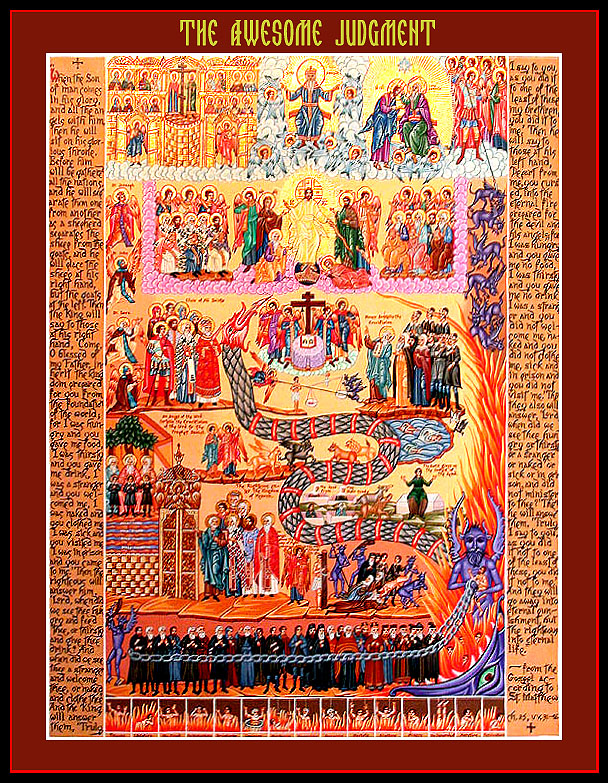
In iconography, Saint Theodore the Recruit is depicted in four different ways: either alone in military garb, battling a large snake, or together with Saint Theodore the Commander, standing upright or riding horses. He always wears his military uniform.

We pray to Saint Theodore the Recruit for the recovery of stolen articles.


1 His title comes from the Latin word tiro, because he was a newly-enlisted recruit, not because he came from the city of Tyre, as some misinformed persons imagine.

Hieromartyr Hermogenes, Patriarch of Moscow, Wonderworker of All Russia

The Hieromartyr Hermogenes, Patriarch of Moscow and all Rus, was born in Kazan around 1530, and was descended from the Don Cossacks. According to the Patriarch’s own testimony, he served as priest in Kazan in a church dedicated to Saint Nicholas (December 6 and May 9), near the Kazan bazaar. Soon he became a monk, and from 1582 was archimandrite of the Savior-Transfiguration monastery at Kazan. On May 13, 1589 he was consecrated bishop and became the first Metropolitan of Kazan.

While he was the priest at Saint Nicholas, the wonderworking Kazan Icon of the Mother of God (July 8) was discovered in Kazan in 1579. With the blessing of Archbishop Jeremiah of Kazan, he carried the newly-appeared icon from the place of its discovery to the Church of Saint Nicholas. Having remarkable literary talent, the saint in 1594 compiled an account describing the appearance of the wonderworking icon and the miracles accomplished through it. In 1591 the saint gathered newly-baptized Tatars into the cathedral church and for several days he instructed them in the Faith.

The relics of Saint Germanus, the second archbishop of Kazan (September 25, November 6, and June 23), who died at Moscow on November 6, 1567 during a plague, were transfered and buried in Saint Nicholas Church in 1592. With the blessing of Patriarch Job (1589-1605), Saint Hermogenes reburied the relics at the Sviyazhsk Dormition monastery.

On January 9, 1592 Saint Hermogenes addressed a letter to Patriarch Job, in which he asked for permission to commemorate in his See of Kazan those Orthodox soldiers who gave their lives for the Faith and the nation in a battle against the Tatars. In the past, it was customary to enter into the diptychs the names of all Orthodox warriors who had fallen in battle, and to commemorate them.

At the same time he mentioned three martyrs who had suffered at Kazan for their faith in Christ, one of whom was a Russian named John (January 24) born at Nizhny Novgorod and captured by the Tatars. The other two, Stephen and Peter (March 24), were newly-converted Tatars.

The saint expressed regret that these martyrs were not inserted into the diptychs read on the Sunday of Orthodoxy, and that “Memory Eternal” was not sung for them. In answer to Saint Hermogenes, the Patriarch issued a decree on February 25, which said: “to celebrate at Kazan and throughout all the Kazan metropolitanate a panikhida for all the Orthodox soldiers killed at Kazan and the environs of Kazan, on the Saturday following the Feast of the Protection of the Most Holy Theotokos (October 1), and to inscribe them in the great Synodikon read on the Sunday of Orthodoxy,” and also ordered that the three Kazan martyrs be inscribed in the Synodikon, leaving it to Saint Hermogenes to set the day of their memory. Saint Hermogenes circulated the Patriarchal decree throughout his diocese, and required all the churches and monasteries to serve Liturgies, Panikhidas and Lityas for the three Kazan martyrs on January 24.

Saint Hermogenes displayed zeal in the faith and firmness in the observance of Church traditions, and he devoted himself to the enlightenment of Kazan Tatars with the faith of Christ.

In 1595, with the active participation of the Saint Hermogenes, the relics of the Kazan Wonderworkers Saint Gurias, the first archbishop of Kazan (October 4, December 5, June 20), and Saint Barsanuphius bishop of Tver (October 4, April 11) were discovered and uncovered. Tsar Theodore Ioannovich (1584-1598) had given orders to erect at the Kazan Savior-Transfiguration monastery a new stone church on the site of the first one, where the saints were buried.

When the graves of the saints were discovered, Saint Hermogenes came with a gathering of clergy. He commanded the graves to be opened and, when he saw the incorrupt relics and clothing of the saints, he notified the Patriarch and the Tsar. With the blessing of Patriarch Job and by order of the Tsar, the relics of the newly-appeared wonderworkers were placed in the new church. Saint Hermogenes himself compiled the lives of hierarchs Gurias and Barsanuphius.

Having been found worthy of the patriarchal throne, Metropolitan Hermogenes was elected to the primatial See, and on July 3, 1606 he was installed as Patriarch by the assembly of the holy hierarchs at Moscow’s Dormition cathedral. Metropolitan Isidore handed the Patriarch the staff of the holy hierarch Peter, Moscow Wonderworker (October 5, December 21, August 24), and the Tsar gave as a gift to the new Patriarch a panagia, embellished with precious stones, a white klobuk and staff. In the ancient manner, Patriarch Hermogenes made his entrance riding upon a donkey.

The activity of Patriarch Hermogenes coincided with a difficult period for the Russian state: the appearance of the false Tsarevich Demetrius and the Polish king Sigismund III. The first hierarch devoted all his powers to the service of the Church and the nation.

Patriarch Hermogenes was not alone in this exploit: his self-sacrificing fellow-countrymen followed his example and assisted him. With special inspiration His Holiness the Patriarch stood up against the traitors and enemies of the nation, who wanted to spread Uniatism and Western Catholicism throughout Russia and to wipe out Orthodoxy, while enslaving the Russian nation.

When the imposter arrived at Moscow and settled himself at Tushino, Patriarch Hermogenes sent two letters to the Russian traitors. In one of them he wrote: “…You have forgotten the vows of our Orthodox Faith, in which we are born, baptized, nourished and raised. You have violated your oath and the kissing of the Cross to stand to the death for the house of the Most Holy Theotokos and for the Moscow realm, but have fallen for your false would-be Tsarevich … My soul aches, my heart is sickened, all within me agonizes, and all my frame shudders; I weep and with sobbing I lament: Have mercy, have mercy, brethren and children, on your own souls and your parents departed and living … Consider, how our nation is devastated and plundered by foreigners, who offer insult to the holy icons and churches, and how innocent blood is spilled, crying out to God. Think! Against whom do you take up arms: is it not against God, Who has created you? Is it not against your own brothers? Do you not devastate your own country?… I adjure you in the name of God, give up your undertaking, there is yet time, so that you do not perish in the end.” In the second document the saint appeals: “For the sake of God, come to your senses and turn around, gladden your parents, your wives and children; and we stand to pray God for you…”

Soon the righteous judgment of God fell upon the Brigand of Tushino: he was killed by his own close associates on December 11, 1610. But Moscow continued to remain in peril, since the Poles and traitors, loyal to Sigismund III, remained in the city. The documents sent by Patriarch Hermogenes throughout the cities and villages, exhorted the Russian nation to liberate Moscow from the enemies and to choose a lawful Russian Tsar.

The Muscovites rose up in rebellion, and the Poles burned the city, shutting themselves up in the Kremlin. Together with Russian traitors they forcefully seized Patriarch Hermogenes from the patriarchal throne and imprisoned him in the Chudov monastery.

On Bright Monday in 1611, the Russian militia approached Moscow and began the seige of the Kremlin, which continued for several months. Besieged within the Kremlin, the Poles often sent messengers to the Patriarch with the demand that he order the Russian militia to leave the city, threatening him with execution if he refused.

The saint firmly replied, “What are your threats to me? I fear only God. If all our enemies leave Moscow, I shall bless the Russian militia to withdraw from Moscow; but if you remain here, I shall bless all to stand against you and to die for the Orthodox Faith.”

While still in prison, the hieromartyr Hermogenes sent a final epistle to the Russian nation, blessing the liberating army to fight the invaders. The Russian commanders could not come to an agreement over a way to take the Kremlin and free the Patriarch. He languished more than nine months in dreadful confinement, and on February 17, 1612 he died a martyr’s death from starvation.

The liberation of Russia, for which Saint Hermogenes stood with such indestructible valor, was successfully achieved. The body of the hieromartyr Hermogenes was buried in the Chudov monastery, but in 1654 was transferred to the Moscow Dormition cathedral. The glorification of Patriarch Hermogenes as a saint occurred on May 12, 1913.

Venerable Theodore the Silent of the Kiev Caves

Saint Theodore the Silent of the Caves chose the exploit of silence, in order to dwell constantly in remembrance of God, and to safeguard himself from temptation even by a word. He was glorified by the Lord with the gift of wonderworking. His memory is celebrated also on August 28.

Saint Mariamne the sister of the Apostle Philip

Righteous Mariamne “The Apostolic Virgin” and sister of the holy Apostle Philip (November 14), made a vow of virginity and became the companion of her brother Philip and the holy Apostle Bartholomew (June 11), actively assisting them in their apostolic work.

The Church historian Nikēphóros Callistus describes their successful preaching in the Phrygian city of Hieropolis, where they were arrested and locked up in prison. They put the Apostle Philip to death on a cross, but Saint Mariamne and Saint Bartholomew were set free. Saint Bartholomew went to preach the Gospel in India. Saint Mariamne, after burying the body of Saint Philip, preached the Gospel at Lykaonia (Asia Minor). She died there in peace.

Uncovering of the relics of the Martyr Menas of Alexandria

The Holy Martyr Menas Kallikelados (Well Speaking), an Athenian, died as a martyr with Saints Hermogenes and Eugraphus in about the year 313 (December 10). During the reign of Emperor Basil the Macedonian (867-886), the military commander Marcian discovered the saint’s relics after Saint Menas appeared to a certain pious man in a dream to reveal where they were.

Weeping “Tikhvin” Icon of the Mother of God on Mount Athos

The Weeping Tikhvin Icon of Mt. Athos is to be found behind the altar in the Prophet Elias Skete. On February 17, 1877 (Thursday of the Second Week of Lent) seven monks remained in the church after the Hours had been read. They were astonished to see tears flowing from the right eye of the icon, and collecting on the frame. Then a single large tear came from the left eye.

The monks wiped the tears from the icon’s face, then left the church and locked the doors behind them. Three hours later, they returned for Vespers and saw traces of tears on the icon, and a single tear in the left eye. Again they wiped the tears from the icon, but they did not reappear.

Regarding this manifestation of tears as a sign of mercy from the Mother of God, the monks established an annual commemoration of the icon on February 17. The weeping Tikhvin Icon of Mt. Athos is not to be confused with the original wonderworking Tikhvin Icon (June 26).

Saint Joseph of Dionysiou

Saint Joseph was a monk of Dionysiou Monastery on Mt. Athos, where he shone forth with the virtues of monastic life. He was an iconographer, and he painted the icon of the holy Archangels on the iconostasis of Dionysiou’s main church.

In obedience to the instructions of Igumen Stephen, Saint Joseph traveled to Constantinople with Eudocimus, who had apostasized from Orthodoxy to become a Moslem. Eudocimus repented, and wished to wipe out his sin through martyrdom.

When faced with torture and death, however, the unfortunate Eudocimus denied Christ again, blaming Joseph for turning him from Islam.

Saint Joseph was arrested and threatened with death. In spite of many tortures, he refused to convert to Islam. This holy martyr of Christ was hanged on February 17, 1819, and so he obtained an incorruptible crown of glory.

Some sources list his commemoration on February 17, while others list him on September 14 or October 26.

Saint Auxibius Bishop of Soli, Cyprus

Saint Auxibius was born at Rome in a rich family. He was raised with his brother Tempstagoras, and from an early age he displayed remarkable talents. In the schools of Rome he easily learned the secular sciences. His parents wanted their son to marry. Learning of this, the youth secretly left Rome and journeyed to the East.

Arriving upon the island of Cyprus, he settled in the environs of Limnitis, not far from the city of Soli. By God’s dispensation, he encountered the holy Apostle and Evangelist Mark (September 27, October 30, January 4, April 25), preaching the Word of God at Cyprus. Saint Mark established Auxibius as bishop in the city of Soli, and himself went to preach at Alexandria.

Saint Auxibius went toward the western gates of the city and settled near the pagan temple of Zeus. Gradually he converted the local pagan priest and other idol-worshippers to Christianity. Once, Saint Heraklides (September 17) came to Saint Auxibius. He had been made a bishop in Cyprus earlier by Saint Mark, and he consulted with Saint Auxibius to preach the Gospel of Christ.

One day, Saint Auxibius arrived at the marketplace and began to preach to the people about Christ. Many, seeing the miracles and the signs worked by the saint, believed in Christ. Among the converted were many people from the surrounding villages. One man, by the name of Auxinios, remained with Saint Auxibius and assisted him until the end of his days.

After a certain while Tempstagoras, the brother of Saint Auxibius, came from Rome. He was baptized with his wife, became a priest, and served in one of the churches. Saint Auxibius guided his diocese for fifty years and died peacefully in the year 102, leaving his disciple Auxinios upon the cathedra.

New Martyr Theodore

The Holy New Martyr Theodore was born of pious parents in Neochorion near Constantinople in 1774. He worked in the palace of the Sultan, where he converted to Islam.

When a plague broke out in Constantinople, he realized the gravity of his sin and returned to Christianity. He went to Chios and then to Mytilene, where he confessed Christ before the Moslem authorities. He was imprisoned, tortured, then hanged by the Turks in 1795.

Saint Theodosius the Bulgarian, with his disciple Romanos

Saint Theodosius the Bulgarian and his disciple Romanus. Saint Theodosius began his exploit in the city of Viddino, at the Nikolaev monastery. After the death of the igumen Job he settled near Trnovo, then the capital city of Bulgaria, at the Holy Mountain monastery of the Most Holy Theotokos in search of a spiritual guide.

He left the Holy Mountain monastery and for a long time went from monastery to monastery. Finally, he learned about the desert monastery called “Concealed” where in pursuit of asceticism Saint Gregory of Sinai (August 8) had moved from Athos. Saint Theodosius found in him an experienced guide of the contemplative life. Saint Gregory taught, “Before death we lay in Hades; whoever does not recognize sincerely that he is a sinner, and that the beasts and cattle are more pure, is more wicked than the demons, having become their obedient slave.”

The wilderness monastery of Saint Gregory of Sinai suffered often from robbers. The abbot sent Saint Theodosius to the emperor Alexander with a request to defend the monastery. The pious Bulgarian Tsar, at the request of the ascetic, provided him with the means to surround the monastery with strong walls with towers, and made the monastery secure with land and cattle.

During his final journey to Trnovo on an errand for the abbot to the Tsar, a nobleman asked Saint Theodosius to take him along to the monastery. The holy ascetic brought him to Saint Gregory of Sinai. This was Romanus, who became the sincere and beloved disciple of Saint Theodosius.

After the death of Saint Gregory of Sinai (November 27, 1347), Saint Theodosius refused to become head of the monastery, and he left the monastery with his disciple Romanus for solitary struggles. They founded a monastery on a hill near Trnovo, afterwards called Theodosiev.

Saint Theodosius was famous as a zealous defender of Orthodoxy against many heresies, especially the Bogomils, Judaizers and Messalians. Their false teachings were especially pernicious. The Patriarch and the Tsar rendered great help to Saint Theodosius in the struggle with the heretics. In addition to this, the holy ascetic translated Greek writings into Slavonic.

In 1360, he became grievously ill. Wishing to see his friend Saint Callistus once more, he went to him at Constantinople, entrusting the direction of the monastery to his disciple Romanus.

Saint Theodosius died at Constantinople on February 17, 1362. His disciple Saint Romanus became head of the monastery.

Saint Nicholas Kandaurov

No information available at this time.

Saint Finan of Lindisfarne

No information available at this time.

Hieromartyr Theodore of Atchara

Holy Hieromartyr Theodore of Atchara belongs to the glorious multitude of Atcharan faithful who were martyred at the hands of the Ottomans.

Saint Theodore was born in the late 18th century. At that time the Ottoman invaders had nearly completed the forced Islamization of the Atcharan region. They had already annihilated those who resisted the conversion and were beginning to evict those who, in spite of their apparent acceptance of Islam, continued to “arouse suspicions.” Some abandoned their native region and fled to foreign lands.

Saint Theodore was born to a family that had been forced into exile. From his childhood he watched his fellow countrymen, who had been forcibly converted to Islam, secretly retain their Christian way of life. It is unclear how the saint’s family settled in Trebizond (modern Trabzon). It is known, however, that Saint Theodore managed to free himself from Islam, receive Christianity, and find refuge at a Georgian monastery in Smyrna (now Izmir). There he was tonsured a monk and later raised to the rank of proigoumenos (deputy abbot). It is also known that Saint Theodore converted his nephew to Christianity during that time.

In 1822 Saint Theodore set out on a pilgrimage to Mt. Athos. But at the same time the Ottomans were attempting to crush the Greek independence movement, and the Holy Mountain was surrounded by Ottoman soldiers. They captured the faithful pilgrim and killed him. Then they tossed the holy martyr’s body into the sea.

The Holy Synod of the Georgian Apostolic Orthodox Church canonized Holy Martyr Theodore on October 17, 2002.

Daily Readings for Monday, February 16, 2026

CHEESEFARE MONDAY

ABSTAIN FROM MEAT

Cheesefare Monday, Pamphilus the Martyr & his Companions, Flavianos, Patriarch of Constantinople, Romanos the Younger

ST. JOHN’S THIRD UNIVERSAL LETTER 1:1-15

The elder to the beloved Gaius, whom I love in the truth.
Beloved, I pray that all may go well with you and that you may be in health; I know that it is well with your soul. For I greatly rejoiced when some of the brethren arrived and testified to the truth of your life, as indeed you do follow the truth. No greater joy can I have than this, to hear that my children follow the truth.
Beloved, it is a loyal thing you do when you render any service to the brethren, especially to strangers, who have testified to your love before the church. You will do well to send them on their journey as befits God's service. For they have set out for his sake and have accepted nothing from the heathen. So we ought to support such men, that we may be fellow workers in the truth.
I have written something to the church; but Diotrephes, who likes to put himself first, does not acknowledge my authority. So if I come I will bring up what he is doing, prating against me with evil words. And not content with that, he refuses himself to welcome the brethren, and also stops those who want to welcome them and puts them out of the church.
Beloved, do not imitate evil but imitate good. He who does good is of God; he who does evil has not seen God. Demetrios has testimony from every one, and from the truth itself; I testify to him too, and you know my testimony is true.
I had much to write to you, but I would rather not write with pen and ink; I hope to see you soon, and we will talk together face to face.
Peace be to you. The friends greet you. Greet the friends, every one of them.

LUKE 19:29-40; 22:7-39

At that time, when Jesus drew near to Bethphage and Bethany, at the mount that is called Olivet, he sent two of the disciples, saying, "Go into the village opposite, where on entering you will find a colt tied, on which no one has ever yet sat; untie it and bring it here. If any one asks you, 'Why are you untying it?' you shall say this, 'The Lord has need of it.'" So those who were sent went away and found it as he had told them. And as they were untying the colt, its owners said to them, "Why are you untying the colt?" And they said, "The Lord has need of it." And they brought it to Jesus, and throwing their garments on the colt they set Jesus upon it. And as he rode along, they spread their garments on the road. As he was now drawing near, at the descent of the Mount of Olives, the whole multitude of the disciples began to rejoice and praise God with a loud voice for all the mighty works that they had seen, saying, "Blessed is the King who comes in the name of the Lord! Peace in heaven and glory in the highest!" And some of the Pharisees in the multitude said to him, "Teacher, rebuke your disciples." He answered, "I tell you, if these were silent, the very stones would cry out.
Then came the day of Unleavened Bread, on which the passover lamb had to be sacrificed. So he sent Peter and John, saying; "Go and prepare the passover for us, that we may eat it." They said to him, "Where will you have us prepare it?" He said to them, "Behold, when you have entered the city, a man carrying a jar of water will meet you; follow him into the house which he enters, and tell the householder, 'The Teacher says to you, Where is the guest room, where I am to eat the passover with my disciples?' And he will show you a large upper room furnished; there make ready." And they went, and found it as he had told them; and they prepared the passover.
And when the hour came, he sat at table, and the apostles with him. And he said to them, "I have earnestly desired to eat this passover with you before I suffer; for I tell you I shall never eat it again until it is fulfilled in the kingdom of God." And he took a cup, and when he had given thanks he said, "Take this, and divide it among yourselves; for I tell you that from now on I shall not drink of the fruit of the vine until the kingdom of God comes." And he took bread, and when he had given thanks he broke it and gave it to them, saying, "This is my body which is given for you. Do this in remembrance of me." And likewise the cup after supper, saying, "This cup which is poured out for you is the new covenant in my blood. But behold the hand of him who betrays me is with me on the table. For the Son of man goes as it has been determined; but woe to that man by whom he is betrayed!" And they began to question one another, which of them it was that would do this.
A dispute also arose among them, which of them was to be regarded as the greatest. And he said to them, "The kings of the Gentiles exercise lordship over them; and those in authority over them are called benefactors. But not so with you; rather let the greatest among you become as the youngest, and the leader as one who serves. For which is the greater, one who sits at table, or one who serves? Is it not the one who sits at table? But I am among you as one who serves.
You are those who have continued with me in my trials; and I assign to you, as my Father assigned to me, a kingdom, that you may eat and drink at my table in my kingdom, and sit on thrones judging the twelve tribes of Israel.
Simon, Simon, behold, Satan demanded to have you, that he might sift you like wheat, but I have prayed for you that your faith may not fail; and when you have turned again, strengthen your brethren." And he said to him, "Lord, I am ready to go with you to prison and to death." He said, "I tell you, Peter, the cock will not crow this day, until you three times deny that you know me.
And he said to them, "When I sent you out with no purse or bag or sandals, did you lack anything?" They said, "Nothing." He said to them, "But now, let him who has a purse take it, and likewise a bag. And let him who has no sword sell his mantle and buy one. For I tell you that this scripture must be fulfilled in me, 'And he was reckoned with transgressors'; for what is written about me has its fulfillment." And they said, "Look, Lord, here are two swords." And he said to them, "It is enough.
And he came out, and went, as was his custom, to the Mount of Olives; and the disciples followed him.

Martyrs Pamphilius the Presbyter, Valens the Deacon, and those with them, at Caesarea in Palestine

The Holy Martyrs Pamphίlios the Presbyter, Valens the Deacon, Paul, Porphyrios, Séleukos, Theódoulos, Julian, Samuel, Elias, Daniel, Jeremiah, and Isaiah suffered martyrdom during the reign of Emperor Diocletian (284 – 305) at Caesarea in Palestine.

The holy Martyr Pamphίlios, a native of the city of Beirut, was educated at Alexandria, after which he was ordained as a priest at Caesarea. He devoted much labor to collating manuscripts and correcting the copyists' errors in the manuscripts of the New Testament. These texts were copied and distributed to anyone who wanted them. Thus, many pagans were converted to Christ by them.

His works were gathered into the extensive library of spiritual books available for the enlightenment of Christians. Saint Jerome (IV-V century) had deep respect for Saint Pamphίlios and considered himself fortunate to have located and acquired several of his manuscripts.

Actively assisting Saint Pamphίlios in proclaiming the faith in Christ were Saint Valens, a Deacon of the Church, and Elias, a man stooped with age and well-versed in the Holy Scriptures, and Saint Paul, ardent in his faith and love for Christ the Savior. All three were imprisoned for two years by Urban, the governor of Palestinian Caesarea.

During the rule of his successor Firmilian, 130 Christians were sentenced in Egypt and sent to Cilicia (Asia Minor) to work in the gold mines. Five young brothers accompanied them to the place of exile. On their return to Egypt they were detained at Caesarea and thrown into prison for confessing Christ.

These young men appeared before Firmilian, together with those previously imprisoned incarcerated: Saints Pamphίlios, Valens and Paul. The five Egyptian youths took the names of Old Testament Prophets, Elias, Jeremiah, Isaiah, Samuel, and Daniel. Asked where they were from, the youths said that they were citizens of Jerusalem, meaning the heavenly Jerusalem. Firmilian knew nothing of such a city, since Jerusalem had been razed to the ground by Emperor Titus in the year 70. Emperor Hadrian (117-138) built a new city on the site, which was called Aelia Capitolina.

Firmilian tortured the youths for a long time, trying to learn the location of this unknown city, and he tried to persuade them to apostatize. Accomplishing nothing, the governor sentenced them to be beheaded with a sword, along with Pamphίlios, Valens, and Paul.

Before this took place, one of Pamphilios' servants endured suffering. This was the eighteen-year-old youth Porphyrios, who was meek and humble. He had heard the death sentence for the condemned martyrs, and asked the governor for permission to bury the bodies after their execution. Because of this he was also sentenced to death, and was thrown into a fire.

A pious Christian named Séleukos, a former soldier, praised the deeds of the Martyrs. He went to Pamphίlios and told him of the martyric death of Saint Porphyrios. He was arrested by soldiers and, on Firmilian’s orders, he was beheaded with a sword, together with the others.

One of the governor’s servants, Theódoulos, was a man of venerable age, and a secret Christian. He met the Martyrs as they were being led to execution. He embraced them and asked them to pray for him. Soldiers brought him before Firmilian, at whose orders he was crucified.

The young Julian, a native of Cappadocia who had come to Caesarea, saw the bodies of the Saints which had been thrown to wild beasts without burial. Julian knelt down and venerated the bodies of the sufferers. Soldiers apprehended him and took him to the governor, who condemned him to be burnt alive. The bodies of all twelve Martyrs remained unburied for four days, but neither beasts nor birds would touch them. Embarrassed by this situation, the pagans permitted the Christians to take the bodies of the martyrs and bury them.

Although these twelve Martyrs came from various places, they were also united by their love for Christ, and from Him they received unfading crowns of glory.

Saint Maruthas, Bishop of Martyropolis in Mesopotamia

Saint Maruthas was Bishop of Tagrith (Martyropolis), a city which he founded between the Byzantine Empire and Persia. He was famed for his knowledge and his piety, he wrote about the martyrs, and he suffered for his faith in Christ under the Persian emperor Sapor. He also left behind other works in the Syrian language, among which the most famous are: “Commentary on the Gospel,” “Verses of Maruthas,” “Liturgy of Maruthas” and “The 73 Canons of the Ecumenical Council at Nicea” (325) with an account of the acts of the Council.

In the year 381 Saint Maruthas participated in the Second Ecumenical Council at Constantinople, convened against the heresy of Macedonius. In 383, he attended the Council of Antioch against the Messalians.

During the years 403-404 Saint Maruthas set off to Constantinople to plead with the emperor Arcadius to protect Persian Christians. He was twice sent by the emperor Theodosius the Younger to the Shah Izdegerd to secure the peace between the Empire and Persia.

In the year 414 Saint Maruthas, having done his duty as envoy to the court of Izdegerd, persuaded the Shah to a favorable disposition towards Christians, and he assisted greatly in the freedom of Christians in Persia. He rebuilt Christian churches razed during the persecution by the Persian ruler Sapor. He also located relics of saints who had suffered martyrdom and transferred them to Martyropolis. He died there in 422. The relics of Saint Maruthas were later transferred to Egypt and placed in a skete monastery of the Mother of God.

Persian Martyrs in Martyropolis in Mesopotamia

No information available at this time.

Saint Flavian, Archbishop of Antioch

Saint Flavian, Archbishop of Antioch, was a contemporary of Saint John Chrysostom. He attempted to obtain from the emperor Theodosius (379-395) a pardon for the citizens of Antioch, who had angered the emperor by destroying his statue. Saint Flavian’s death was peaceful and without illness. He is also commemorated on September 27.

New Martyr Elias

The Holy New Martyr Elias (Nikolayevich) was born in a Moscow village in the XIX century. He studied at the Moscow Theological Academy and married a devout woman named Eugenia. Then he was then ordained as a priest and served in the small church of a poorhouse, and in the parish of Saint Nicholas Tolmachev in Moscow, before the October revolution of 1917 broke out.

Saint Elias was a most pious priest. His church was a beacon of spiritual light for many believers. He was married, but he lived an ascetical life. In 1932 the Soviet secret police arrested and imprisoned him. He was exiled to the Krasnaya Visera River region. Matushka Eugenia spent the entire night in prayer and tears. But in the morning she fell asleep and then she saw the Theotokos in a dream, who told her not to be afraid.

Two years later, Matushka Eugenia visited him at his place of exile and brought him a Gospel and a small vial of holy water. The guards confiscated the Gospel. When they asked her what was in the vial, she replied that for them it was plain water, but for herself and her husband it was sacred, their medicine. The Saint looked as if he had been tortured. They did not allow him to serve, and this caused him immeasurable grief. He began to tell Eugenia of his martyrdom. When they brought him and many others to the place of exile, they were forced to walk on the surface of the melting snow. The thin layer of ice was breaking up beneath their feet and the "convicts" were sinking in the snow up to the waist. Wet to the bone, with nothing to eat or drink all day, they were forced to spend the night inside a hut. The exhausted men immediately fell to the floor and fell asleep as if dead. Only the Saint stayed awake. Around midnight he cried from the depths of his heart: "Lord, why have you forsaken me? I have served you so faithfully. I devoted my entire life to You. How many times have I read the Akathist Hymn and the Canons? I served in the church with reverence. Why, O Lord, have You forsaken me, and why do I suffer so much? O Most Holy Theotokos, Holy Hierarch Nicholas, Holy Father Seraphim, and all the Saints of God! After all my prayers to you, why am I tormented so much?"

Suddenly a divine visitation, like a flame, touched his aching soul and flooded it with otherworldly consolation. The light of faith secretly illumined his heart and ignited in him an inexpressible and irresistible love for Christ, which, as the Apostle Paul says, "he heard unspeakable words which no man may utter."1 When dawn came, he was a young man, born again as if he had been baptized in fire.

As he bade farewell to Matushka Eugenia, the Saint said to her: "You know, my heart is ablaze for Christ. I think I came here to understand that there is absolutely nothing better, nothing more wonderful than He. I wish to die for Him!"

When Matushka arrived back in Moscow, she learned that there had been a fire in the concentration camp and that Saint Elias was burned along with eleven other Christians.


1 2 Corinthians 12:4.

Daily Readings for Sunday, February 15, 2026

JUDGMENT SUNDAY (MEATFARE SUNDAY)

NO FAST

Judgment Sunday (Meatfare Sunday), Onesimus the Apostle of the 70, Our Righteous Father Anthimus the Elder of Chios, Onesimos, Patriarch of Constantinople, Eusebius the Righteous of Syria, Major the Martyr

ST. PAUL’S FIRST LETTER TO THE CORINTHIANS 8:8-13; 9:1-2

Brethren, food will not commend us to God. We are no worse off if we do not eat, and no better off if we do. Only take care lest this liberty of yours somehow become a stumbling block to the weak. For if any one sees you, a man of knowledge, at table in an idol's temple, might he not be encouraged, if his conscience is weak, to eat food offered to idols? And so by your knowledge this weak man is destroyed, the brother for whom Christ died. Thus, sinning against your brethren and wounding their conscience when it is weak, you sin against Christ. Therefore, if food is a cause of my brother's falling, I will never eat meat, lest I cause my brother to fall.
Am I not free? Am I not an apostle? Have I not seen Jesus our Lord? Are not you my workmanship in the Lord? If to others I am not an apostle, at least I am to you; for you are the seal of my apostleship in the Lord.

MATTHEW 25:31-46

The Lord said, “When the Son of man comes in his glory and all the holy angels with him, then he will sit on his glorious throne. Before him will be gathered all the nations, and he will separate them one from another as a shepherd separates the sheep from the goats, and he will place the sheep at his right hand, but the goats at the left. Then the king will say to those at his right hand, ‘Come, O blessed of my Father, inherit the kingdom prepared for you from the foundation of the world; for I was hungry and you gave me food, I was thirsty and you gave me drink, I was a stranger and you welcomed me, I was naked and you clothed me, I was sick and you visited me, I was in prison and you came to me.’ Then the righteous will answer him, ‘Lord, when did we see you hungry and feed you, or thirsty and give you drink? And when did we see you a stranger and welcome you, or naked and clothe you? And when did we see you sick or in prison and visit you?’ And the King will answer them, ‘Truly, I say to you, as you did it to one of the least of these my brethren, you did it to me.’ Then he will say to those at his left hand, ‘Depart from me, you cursed, into the eternal fire prepared for the devil and his angels; for I was hungry and you gave me no food, I was thirsty and you gave me no drink, I was a stranger and you did not welcome me, naked and you did not clothe me, sick and in prison and you did not visit me.’ Then they also will answer, ‘Lord, when did we see you hungry or thirsty or a stranger or naked or sick or in prison, and did not minister to you?’ Then he will answer them, ‘Truly, I say to you, as you did it not to one of the least of these, you did it not to me.’ And they will go away into eternal punishment, but the righteous into eternal life.”

Sunday of Meatfare of the Last Judgment

Today’s Gospel reading is Matthew 25:31-46, the parable of the Last Judgment. It reminds us that while trusting in Christ’s love and mercy, we must not forget His righteous judgment when He comes again in glory. If our hearts remain hardened and unrepentant, we should not expect the Lord to overlook our transgressions simply because He is a good and loving God. Although He does not desire the death of a sinner, He also expects us to turn from our wickedness and live (Ezek. 33:11). This same idea is expressed in the prayer read by the priest after the penitent has confessed his or her sins (Slavic practice).

The time for repentance and forgiveness is now, in the present life. At the Second Coming, Christ will appear as the righteous Judge, “Who will render to every man according to his deeds” (Rom. 2:6). Then the time for entreating God’s mercy and forgiveness will have passed.

As Father Alexander Schmemann reminds us in his book GREAT LENT (Ch. 1:4), sin is the absence of love, it is separation and isolation. When Christ comes to judge the world, His criterion for judgment will be love. Christian love entails seeing Christ in other people, our family, our friends, and everyone else we may encounter in our lives. We shall be judged on whether we have loved, or not loved, our neighbor. We show Christian love when we feed the hungry, give drink to the thirsty, clothe the naked, visit those who are sick or in prison. If we did such things for the least of Christ’s brethren, then we also did them for Christ (Mt.25:40). If we did not do such things for the least of the brethren, neither did we do them for Christ (Mt.25:45).

Today is the last day for eating meat and meat products until Pascha, though eggs and dairy products are permitted every day during the coming week. This limited fasting prepares us gradually for the more intense fasting of Great Lent.

Apostle Onesimus of the Seventy

Saint Onesimus, Apostle of the Seventy in his youth was a servant of Philemon, a Christian of distinguished lineage, living in the city of Colossae, Phrygia. Guilty of an offense against his master and fearing punishment, Saint Onesimus fled to Rome, but as a runaway slave he wound up in prison. In prison he encountered the Apostle Paul, was enlightened by him, and was baptized.

In prison Saint Onesimus served the Apostle Paul like a son. Saint Paul was personally acquainted with Philemon, and wrote him a letter filled with love, asking him to forgive the runaway slave and to accept him like a brother. He sent Saint Onesimus with this letter to his master, depriving himself of help, of which he was very much in need.

After he received the letter, Saint Philemon not only forgave Onesimus, but also sent him back to Rome to the apostle. Saint Philemon (January 4, February 19, and November 22) was afterwards consecrated bishop of the city of Gaza.

After the death of the Apostle Paul, Saint Onesimus served the apostles until their end, and he was made a bishop. After the death of the holy apostles he preached the Gospel in many lands and cities: in Spain, Carpetania, Colossae, Patras. In his old age, Saint Onesimus occupied the bishop’s throne at Ephesus, after the Apostle Timothy. When they took Saint Ignatius the God-Bearer (December 20) to Rome for execution, Bishop Onesimus came to meet with him with other Christians, as Saint Ignatius mentions in his Epistle to the Ephesians.

During the reign of the emperor Trajan (89-117), Saint Onesimus was arrested and brought to trial before the eparch Tertillus. He held the saint in prison for eighteen days, and then sent him to prison in the city of Puteoli. After a certain while, the eparch sent for the prisoner and, convincing himself that Saint Onesimus maintained his faith in Christ, had him stoned, after which they beheaded the saint with a sword. A certain illustrious woman took the body of the martyr and placed it in a silver coffin. This took place in the year 109.

Venerable Paphnutius the Recluse of the Kiev Caves

Saint Paphnutius had the gift of tears, which Saint John of the Ladder says (Step 6:1) is preceded by the remembrance of death. For worldly people, this remembrance may lead to fear and distress, but for Saint Paphnutius it led to constant prayer and the guarding of his mind.

By remembering the hour of death and God’s judgment, Saint Paphnutius was able to free himself from worldly distractions and passions through prayer, repentance and fasting. This, in turn, led to tears.

Venerable Paphnutius and Euphrosynē of Alexandria

Our venerable Mother Euphrosynē was born at the beginning of the fifth century in the city of Alexandria. She was the only child of illustrious and wealthy parents. When she was twelve years old, her mother reposed, and so the girl was raised by her Father, Paphnutios, who was a very devout Christian. He was in the habit of visiting a certain monastery, where the Igoumen was his Spiritual Father.

When Euphrosynē turned eighteen, her father wanted her to marry. He went to the monastery to obtain the Igoumen's blessing for his daughter's wedding. The Igoumen talked with her and gave her his blessing, but Saint Euphrosynē longed for the monastic life. One day, she gave away her possessions to the poor, and then she snuck out of the house.

The Saint had decided to enter a monastery in order to spend her life in solitude and prayer, but she was afraid that her father was apt to find find her in a women’s monastery. Therefore, she disguised herself as a man and entered the same men's monastery which she had visited with her father from her childhood, calling herself Smaragdos. The monks did not recognize Euphrosynē dressed in men’s clothes, and so they received her into the monastery. The monks were impressed by her spiritual struggles and by her willingness to serve everyone.

There in a solitary cell, Saint Euphrosynē spent 38 years in spiritual endeavors, fasting and prayer, thereby attaining a high level of spiritual accomplishment.

Paphnutios was deeply saddened by the loss of his beloved daughter; more than once, on the advice of his Spiritual Father, he spoke to the "monk" Smaragdos, disclosing his grief and receiving spiritual comfort. Before her death, Saint Euphrosynē revealed her secret to her grieving parent and insisted that no one but he should prepare her body for burial. After he buried his daughter, Paphnutios distributed all his wealth to the poor and to the monastery, and then he was tonsured. For ten years, until the time of his own repose, he labored in his daughter's cell.

By her life, Saint Euphrosynē reminds us that we must renounce "worldly passions and live soberly, uprightly, and devoutly" (Titus 2:12). That is, after rejecting the desires of this vain and sinful world, we ought to live abstemiously, with justice toward our fellow human beings, and with piety toward God.

Saint Euphrosynē and her father are also commemorated on September 25.

Venerable Eusebius the Hermit of Syria

Saint Eusebius the Hermit lived in the fourth century and lived in asceticism on a mountain near the village of Asicha in Syria. He led a very strict life under the open sky, patiently enduring the summer heat and winter cold. He wore skins for clothing, and nourished himself on the pods of peas and beans.

Though he was elderly and infirm, he ate only fifteen figs during the Great Forty day Fast. When many people began to flock to Saint Eusebius, he went to a nearby monastery, built a small enclosure at the monastery walls and lived in it until his death.

Saint Eusebius died at the age of ninety, sometime after the year 400.

Vil'na Icon of the Mother of God

Today's celebration commemorates the transfer of the Icon from Moscow to Vil'na (Vilnius), Lithuania. According to local tradition, this Icon (of the Hodēgḗtria type) was painted by the Holy Evangelist Luke, and was brought from Palestine to Constantinople. For many years it belonged to the family of the Byzantine emperors. Later, they sent the Icon to the rulers of Galicia and Chervona Rus'.

After the fall of the Galician principality, the Icon became the property of the Great Princes of Moscow. It did not stay In Moscow very long, however. In 1495, Grand Duke Ivan III (1462-1505), blessed his daughter Elena with the Icon before giving her in marriage to the Lithuanian Grand Duke Alexander. Thus, the Icon came with her to the Lithuanian capital of Vil'na, where it remains today.

According to another legend, which is more credible, this Icon was brought to Moscow by Princess Sophia Palaiologina in 1472 when she married Ivan III. Both legends converge in all other details.

When Princess Elena died, the holy Icon of the Mother of God was placed above her tomb in the Cathedral of the Most Holy Theotokos.

After the relationship between the courts of Moscow and Lithuania came to an end, Ivan the Terrible (1530-1584) tried to bring the wonderworking Icon back to Moscow, offering Grand Duke Sigismund II of Lithuania (1520-1572) fifty noble Lithuanian prisoners in exchange, but Sigismund strongly opposed this, because all the clergy, both the Orthodox and the Uniates, did not want to lose this treasure.

The Icon remained In the Cathedral of the Mother of God until the XVIII century, Later, it was moved to the church of Saint John the Forerunner. Afterward, the Icon was transferred to Vil'na's Holy Trinity Monastery, which was then in possession of the Uniates, and the Cathedral of the Mother if God was also given to them.

Only in 1839 were Holy Trinity Monastery and the Hodēgḗtria Icon returned to the Orthodox. Since that time, the Icon of the Mother of God has been there with other local icons, and was honored by all the Orthodox. It has replaced her lost Ostro Bram (the Dawn Gates) Icon (which is commemorated on December 26 and April 14).

The Hodēgḗtria Icon is painted on four boards which have been joined together. Some are made of cypress wood, and the others of birch. It was restored in 1864.

In a monastery on the outskirts of Vil'na, there is another Vil'na Icon, which appeared in 1341. It is not unlike the Hodēgḗtria Icon. It is a full length depiction of the Mother of God, who stands on a crescent moon, and Holy Angels hold a crown over her pure head. In some variations of this Icon she stands on clouds, surrounded by Angels, and is wearing a crown.

The Vil'na Icon is also commemorated on April 14.

Icon of the Mother of God of Dalmatia

In Perm Gubernia, Shadrinsk county, on the banks of the Iseti River, is the Dalmatian Monastery of the Dormition. In the cathedral church of this monastery is a wonderworking Icon of the Dormition of the Mother of God, which belonged to Father Dalmatios (Δαλμάτιος), the founder of this monastery.

In the first half of the XVII century, a certain resident of Tobolsk, a nobleman by the name of Demetrios Mokrinsky, left his wife and children, and went to the Nev'yan Monastery (Tobolsk Diocese), where he was tonsured with the name Dalmatios, in honor of the fourth century ascetic Saint Dalmatios of Constantinople (August 3).

Since Father Dalmatios was known for his exalted life of asceticism and virtue, the brethren of the Nev'yan Monastery wanted to choose him as their Igoumen, but out of humility, the Elder would not accept such an august position with all its responsibilities. He left the monastery, taking with him an Icon of the Dormition of the Mother of God.

In 1644 he arrived in Perm Gubernia, where he settled in a cave on land owned by the Tyumen Tatar Ilegei. When Iligei discovered that a monk had settled on his property, and even intended to establish a monastery there, he was indignant. Gathering his relatives, he went with the intention of expelling Dalmatios. Iligei spent the night near the cave, beyond the River Iseti, waiting for dawn to make an unexpected attack on the recluse.

Father Dalmatios seemed to be in imminent danger of death, if he tried to resist or defend himself. He could not expect help from anyone anywhere, nor could he flee, since he did not know that an enemy lurked beyond the river in the darkness of night, ready to spill his blood at any moment. The monk did not require any human protection, however, for his protector was the Queen of Heaven.

When Iligei was asleep, the Mother of God appeared to him in a dream, wearing a crown and dressed in a crimson robe, holding a flaming sword in her hands. The Most Holy Theotokos strictly forbade him to harm Father Dalmatios, and ordered Iligei to give the monk some land for a monastery. Awakened by this terrible vision, the Tatar went to Father Dalmatios, accompanied by all his companions, and gave him a piece of land on which to build a monastery.

The Queen of Heaven's wondrous protection of Dalmatios occurred in 1646. In that same year, the Dalmatian Monastery was founded.

At the end of 1646, the newly-established monastery was attacked by the Kalmyks. They set fire to the monastery's buildings; some of the monks who fled were killed, and some were taken captive. During this time, only Dalmatios, the founder of the monastery, escaped death, saved by the wonderworking Icon. This was the same Icon of the Dormition of the Mother of God which he brought with him from the Nev'yan Monastery. When the Kalmyks went away, Elder Dalmatios returned to the same site and began working alone to rebuild the monastery. A few years later, because of his diligence, a wooden church was already standing on the site of the ruined monastery, and nearby there were also cells for monks. Pilgrims began to visit and made donations for the adornment of the monastery and the temple. From that time, word of the monastery quickly spread all over, not only in the places close by, but also in very remote places.

In 1651, less than twenty years after the founding of the Dalmatian Monastery, it was attacked again. This time it was attacked by the Siberian Prince Devlet-Girei. He ransacked and burned the monastery. The Icon of the Mother of God, however, remained unscathed, although the church completely burned down. In just one place, on the back of the board, there was a scorched spot where a certain Muslim had put his hand.

In 1702, the icon was restored by the Tobolsk iconographer Ivan Nikitin.

The monastery was restored by Archimandrite Isaac, the son of Father Dalmatios. He built a stone church in 1707, and in it he placed the wonderworking Icon of the Dormition of the Mother of God.

During the reign of Empress Catherine II, the monastery withstood a three-day siege by the troops of Emelian I. Pugachev, while the monks prayed before the Dalmatian Icon.

In 1800 the Icon was adorned with a gilded riza with silver crowns and precious gems, by order of Igoumen Gideon. In 1864 Archimandrite Methodios ordered a new silver and gilded riza from Moscow, decorated with precious stones. The Icon was in a special kiot, decorated with carvings, and was covered with a colorful silk curtain, which could be opened when necessary.

On April 19, 1852, many of the Monastery buildings, including the upper church, were destroyed by fire.

Once again, the Dalmatian Icon remained undamaged.

Every year on February 15th, and again on August 15th, the Monastery's Altar Feast, great crowds would travel to the Dalmatian Monastery in order to venerate the wonderworking Icon. The sick receive healing, according to their faith, from this wonderworking Icon of the Mother of God. This custom continued until 1917.

In the early 1920s, after the monastery was abolished, the monks went to other monasteries, taking the Dalmatian Icon with them. At present, there is no information about the location of the Icon.

Those who experience physical or spiritual suffering pray before the Dalmatian Icon of the Most Holy Theotokos for deliverance.

Saint Anthimus of Chios

Saint Anthimos (Argyrios K. Bagianos) was born on July 1, 1869 in the vicinity of Saint Luke at Livadion, Chios. His righteous and virtuous parents, Constantine and Argyro, took care to give their child a Christian education. The young Argyrios was endowed by the Holy Spirit with the spirit of wisdom; he was foreordained by God to shine forth as a chosen vessel and to become a great guide who would lead others to Christ. His entire childhood development and upbringing was apparently due to the strong and profound influence of his Christian family environment.

On Sundays Argyrios and his family attended services at the Monastery of Nea Moni.1 When he was eight years old he met Saint Nektarios, who was a Deacon at the time. After conversing with young Argyrios, he said to Igumen Pachomios, "Elder, do you see that child? Someday he will become a Saint."

Argyrios had little formal education, and was limited to simple elementary school knowledge. So with no theoretical knowledge of worldly acclaim, but with a good disposition, spiritual discernment, and with a particularly intense desire for the spiritual life, he advanced unwaveringly in the virtuous life with the precious gift of unshakable faith.

Divine love led him to renounce the world and its noisy turmoil, and to enter the monastic state where his virtues shone forth. The starting point for him to follow the path of monasticism was his visit to the Skete of the Holy Fathers of Chios for the restoration of his own wonderworking icon of the All Holy Virgin the Helper (Παναγία Βοηθεία), which he had received from his mother. Since that time, this icon remained an integral part of his entire life. The Theotokos became a source of inexhaustible strength for him in his later difficult struggles, and she was also a fount of refreshment and respite.

His guide in the ascetical life was the venerable Elder Pachomios of Sketis, by whom he was tonsured into the small Schema, and who renamed him Anthimos.

He submitted to Elder Pachomios and through unceasing prayer and fasting, and by the harsh struggles which he undertook with God’s good will, he grew great in asceticism and in virtue. His physical and spiritual struggles left him exhausted and ill. So, with the blessing of Father Pachomios, he returned to his home in order to recuperate. Saint Anthimos, however, did not abandon his struggles. Once his health was partially restored he retired to a small isolated cell on his father’s estates in Livadia, Chios, and continued his spiritual contests. At the same time he worked as a shoemaker in order to help his poor parents, and to show mercy to those who were afflicted.

In his cell, by unceasing prayer, and by studying the lives of the great ascetics, he was strengthened and he made progress in his spiritual formation, but he also provoked the demonic rage of the Evil One. He struggled severely and effectively, conducting multifaceted and victorious contests against the Evil One with ardent prayer, and each day he ascended the blessed Ladder of virtues and holiness. In 1909, at the age of forty, he was tonsured into the Great Schema by Hieromonk Andronikos, the successor of Father Pachomios.

The virtuous ascetic Anthimos was a chosen vessel and was ready for the office of the priesthood, but the local bishop refused to ordain him because of his lack of education. In 1910, he was invited to Adramyttium in Asia Minor by his godfather, Stephen Diomataris, for this purpose. The saint’s ordination by the Bishop of Smyrna was not a typical event.

In his case, there were signs of divine approval following the ordination. Earthquake, lightning, thunder, and a cataclysmic rainfall occurred at that sacred hour. The vigil lamps swayed, and one of them fell down. After the ordination there was calm, stillness, and joy from God. These physical phenomena revealed and bore witness to the fact that God was pleased by his ordination.

As long as he remained in Adramyttium, he shone forth in a dazzling way because of his virtue and holiness, by which he healed those in the region who were possessed by demons, something his fellow priests were unable to do. His spiritual radiance stirred up the passion of jealousy in his concelebrants. Wishing to free them from this passion, the Saint left Adramyttium in 1911 and went to Mount Athos, where the Hagiorite monks freely bestowed many honors upon him.

Returning to Chios, he was assigned as the priest for the home for lepers, which became a new setting for his virtues and charitable activities. The icon of the Panagia Ypapanti (the Meeting of the Lord), the protectress of the hospital for lepers, focuses on all her acts of kindness.

The Lady Theotokos, through the prayers of Saint Anthimos, performed countless miracles of healing the infirmities of the faithful, both those whose names are known and those who remain anonymous. This institution for unfortunate lepers became a spiritual center of physical and mental health. His entire ministry at the home for lepers shows his deepest faith and his very valuable contributions.

Here the greatness of the Saint is revealed. As the priest of that church, Saint Anthimos was always found with the lepers: he ate with them, he talked to them, and he communed them with the Spotless Mysteries. After the Divine Liturgy he rested.

In that hallowed atmosphere, he envisioned the establishment of a Monastery to shelter nuns who had fled there from Asia Minor following the exchange of populations (1922-1924).2 So his dreams moved forward toward their fulfillment. In 1927, after he had a vision of the Theotokos, he received permission to build such a monastery. He also built the magnificent temple dedicated the icon of the Mother of God the Helper (Παναγία Βοηθεία) in 1930. From that time he settled in the Monastery filled with devotion to the Most Holy Theotokos, and there he advanced in his life of asceticism, filled with a multitude of virtues and holiness through the intercession and help of the Theotokos, and he shepherded his flock with great affection and love, strengthening and consoling them with his sweet and simple speech, healing the sicknesses and afflictions of those who had recourse to him.

After his life-long ministry, now at the age of 90, fully ripe and full of days, with a dignity which was reminiscent of the great ascetics of the desert, he celebrated his last Divine Liturgy on January 27, 1960. A few days later he reposed in peace.

Saint Anthimos was glorified by the Church of Constantinople on August 13, 1992.


1 The monastery was dedicated to Saints Nikḗtas, John, and Joseph.

2 At that time many Greeks in Asia Minor were sent to Greece, and many Turks in Greece went to Turkey.

Daily Readings for Saturday, February 14, 2026

SATURDAY OF SOULS

NO FAST

Saturday of Souls, Holy Father Auxentius of the Mountain, Cyril, Equal-to-the-Apostles & Teacher of the Slavs, Nicholas the New Martyr of Corinth, Abraham, Bishop of Carrhes in Mesopotamia

ST. PAUL’S FIRST LETTER TO THE THESSALONIANS 4:13-17

But we would not have you ignorant, brethren, concerning those who are asleep, that you may not grieve as others do who have no hope. For since we believe that Jesus died and rose again, even so, through Jesus, God will bring with him those who have fallen asleep. For this we declare to you by the word of the Lord, that we who are alive, who are left until the coming of the Lord, shall not precede those who have fallen asleep. For the Lord himself will descend from heaven with a cry of command, with the archangel’s call, and with the sound of the trumpet of God. And the dead in Christ will rise first; then we who are alive, who are left, shall be caught up together with them in the clouds to meet the Lord in the air; and so we shall always be with the Lord.

LUKE 21:8-9, 25-27, 33-36

The Lord said, “Take heed that you are not led astray; for many will come in my name, saying, ‘I am he!’ and, ‘The time is at hand!’ Do not go after them. And when you hear of wars and tumults, do not be terrified; for this must first take place, but the end will not be at once. And there will be signs in sun and moon and stars, and upon the earth distress of nations in perplexity at the roaring of the sea and the waves, men fainting with fear and with foreboding of what is coming on the world; for the powers of the heavens will be shaken. And then they will see the Son of man coming in a cloud with power and great glory. Heaven and earth will pass away, but my words will not pass away. But take heed to yourselves lest your hearts be weighed down with dissipation and drunkenness and cares of life, and that day come upon you suddenly like a snare; for it will come upon all who dwell upon the face of the whole earth. But watch at all times, praying that you may have strength to escape all these things that will take place, and to stand before the Son of man.”

Memorial Saturday of Meatfare

On the day before Meatfare Sunday, on which we remember the Last Judgment, the Orthodox Church prays for those of its members who may have died unexpectedly because of wars, plagues, starvation, or any other sort of death while they were in a foreign country, or while they were traveling by sea, by land, or by air. The Church also prays for the poor, or for those who may not have received a proper burial, or who had no one to request Memorial Services to be offered for them.

We pray for the departed on this Saturday because the Orthodox Church has established Saturday as the proper day of the week for remembering the dead. On this day before we hear the Gospel about the Last Judgment, we should pause to recall our own inescapable death when we shall appear before Christ to give an account of our lives. May we have "an acceptable defense before His dread Judgment Seat."

As we prepare for the spiritual struggles of the Great Fast, we should remember that we have been given this present life for repentance and for entreating God's mercy. When Christ comes in glory to judge the world, it will be too late then to say that we repent, or to ask for mercy. Therefore, we should make the most of the time that has been given us in order to struggle against every sinful impulse which separates us from God, to confess our sins, to correct ourselves, and to pursue a life of virtue and holiness.

During the week leading up to Meatfare Sunday, we do not sing "Alleluia" in place of "God is the Lord," at Matins. "Alleluia" is appointed to be sung on the Wednesday and Friday of Cheesefare Week, and also during Great Lent. See the TYPIKON or the OCA rubrics book for information about the structure of the pre-Lenten and Lenten services.

Venerable Auxentius of Bithynia

Saint Auxentius, by origin a Syrian, served at the court of the emperor Theodosius the Younger (418-450). He was known as a virtuous, learned and wise man, and he was, moreover, a friend of many of the pious men of his era.

Distressed by worldly vanity, Saint Auxentius was ordained to the holy priesthood, and then received monastic tonsure. After this he went to Bithynia and found a solitary place on Mount Oxia, not far from Chalcedon, and there he began the life of a hermit (this mountain was afterwards called Mt. Auxentius). The place of the saint’s efforts was discovered by shepherds seeking their lost sheep. They told others about him, and people began to come to him for healing. Saint Auxentius healed many of the sick and the infirm in the name of the Lord.

In the year 451 Saint Auxentius was invited to the Fourth Ecumenical Council at Chalcedon, where he denounced the Eutychian and Nestorian heresies. Familiar with Holy Scripture and learned in theology, Saint Auxentius easily bested those opponents who disputed with him. After the end of the Council, Saint Auxentius returned to his solitary cell on the mountain. With his spiritual sight he saw the repose of Saint Simeon the Stylite (459) from a great distance.

Saint Auxentius died about the year 470, leaving behind him disciples and many monasteries in the region of Bithynia. He was buried in the Monastery of Saint Hypatius at Rufiananas, Syria.

Repose of Saint Cyril, Equal of the Apostles and Teacher of the Slavs

Saint Cyril Equal of the Apostles, Teacher of the Slavs (Constantine in the schema), and his older brother Methodius (April 6), were Slavs, born in Macedonia in the city of Thessalonica.

Saint Cyril received the finest of educations, and from the age of fourteen he was raised with the son of the emperor. Later, he was ordained as a priest. Upon his return to Constantinople, he worked as a librarian of the cathedral church, and as a professor of philosophy. Saint Cyril successfully held debates with iconoclast heretics and with Moslems.

Yearning for solitude, he went to Mount Olympos to his older brother Methodius, but his solitude lasted only a short while. Both brothers were sent by the emperor Michael on a missionary journey to preach Christianity to the Khazars in the year 857. Along the way they stopped at Cherson and discovered the relics of the Hieromartyr Clement of Rome (November 25).

Arriving at the territory of the Khazars, the holy brothers spoke with them about the Christian Faith. Persuaded by the preaching of Saint Cyril, the Khazar prince together with all his people accepted Christianity. The grateful prince wanted to reward the preachers with rich presents, but they refused this and instead asked the prince to free and send home with them all the Greek captives. Saint Cyril returned to Constantinople together with 200 such captives set free.

In the year 862 began the chief exploit of the holy brothers. At the request of Prince Rostislav, the emperor sent them to Moravia to preach Christianity in the Slavic language. Saints Cyril and Methodius by a revelation from God compiled a Slavonic alphabet and translated the Gospel, Epistles, the Psalter and many Service books into the Slavonic language. They introduced divine services in Slavonic.

The holy brothers were then summoned to Rome at the invitation of the Roman Pope. Pope Adrian received them with great honor, since they brought with them the relics of the Hieromartyr Clement. Sickly by nature and in poor health, Saint Cyril soon fell ill from his many labors, and after taking the schema, he died in the year 869 at the age of forty-two. Before his death, he expressed his wish for his brother to continue the Christian enlightenment of the Slavs. Saint Cyril was buried in the Roman church of Saint Clement, whose own relics also rest there, brought to Italy from Cherson by the Enlighteners of the Slavs.

Venerable Isaac the Recluse of the Kiev Near Caves

Saint Isaac was the first person in northern lands to live as a fool for Christ. His name in the world was Chern. Before becoming a monk, he was a rich merchant in the city of Toropets in the Pskov lands. Having distributed all his substance to the poor, he went to Kiev and received the monastic tonsure from Saint Anthony (July 10).

He led a very strict life of reclusion, eating only a single prosphora and a little water at the end of the day. After seven years as a hermit, he was subjected to a fierce temptation by the devil. Having mistaken the Evil One for Christ, he worshipped him, after which he fell down terribly crippled. Saints Anthony and Theodosius took care of him and nursed him. Only after three years did he begin to walk and to speak. He did not wish to attend church, but he was brought there by force.

Upon his return to health he took upon himself the exploit of holy foolishness, enduring beatings, nakedness and cold. Before his death he went into seclusion, where again he was subjected to an onslaught of demons, from which he was delivered by the Sign of the Cross and by prayer.

After his healing he spent about twenty years in asceticism. He died in the year 1090. His relics rest in the Caves of Saint Anthony, and part of them were transferred to Toropets by the igumen of the Kudin monastery in the year 1711. The Life of the Blessed Isaac was recorded by Saint Nestor in the Chronicles (under the year 1074). The account in the Kiev Caves Paterikon differs somewhat from that of Saint Nestor. In the Great Reading Menaion under April 27 is the “Account of Saint Isaac and his Deception by the Devil.”

12 Greeks who built the Dormition Cathedral in the Kiev Caves, Far Caves, Lavra

The Kiev Caves Icon of the Dormition of the Most Holy Theotokos (May 3) is one of the most ancient icons in the Russian Orthodox Church. The Mother of God entrusted it to four Byzantine architects, who in 1073 brought the icon to Saints Anthony and Theodosius of the Caves. The architects arrived at the monks’ cave and asked, “Where do you want to build the church?” The saints answered, “Go, the Lord will point out the place.”

“How is it that you, who are about to die, have still not designated the place?” the architects wondered. “And they gave us much gold.”

Then the monks summoned all the brethren and they began to question the Greeks, saying, “Tell us the truth. Who sent you, and how did you end up here?”

The architects answered, “One day, when each of us was asleep in his own home, handsome youths came to us at sunrise, and said, ‘The Queen summons you to Blachernae.’ We all arrived at the same time and, questioning one another we learned that each of us had heard this command of the Queen, and that the youths had come to each of us. Finally, we beheld the Queen of Heaven with a multitude of warriors. We bowed down to Her, and She said, ‘I want to build Myself a Church in Rus, at Kiev, and so I ask you to do this. Take enough gold for three years.’”

“We bowed down and asked, ‘Lady Queen! You are sending us to a foreign land. To whom are we sent?’ She answered, ‘I send you to the monks Anthony and Theodosius.’”

“We wondered, ‘Why then, Lady, do You give us gold for three years? Tell us that which concerns us, what we shall eat and what we shall drink, and tell us also what You know about it.’”

“The Queen replied, ‘Anthony will merely give the blessing, then depart from this world to eternal repose. The other one, Theodosius, will follow him after two years. Therefore, take enough gold. Moreover, no one can do what I shall do to honor you. I shall give you what eye has not seen, what ear has not heard, and what has not entered into the heart of man (1 Cor.2:9). I, Myself, shall come to look upon the church and I shall dwell within it.’”

“She also gave us relics of the holy martyrs Menignus, Polyeuctus, Leontius, Acacius, Arethas, James, and Theodore, saying, ‘Place these within the foundation.’ We took more than enough gold, and She said, ‘Come out and see the resplendent church.’ We went out and saw a church in the air. Coming inside again, we bowed down and said, ‘Lady Queen, what will be the name of the church?’”

“She answered, ‘I wish to call it by My own name.’ We did not dare to ask what Her name was, but She said again, ‘It will be the church of the Mother of God.’ After giving us this icon, She said, ‘This will be placed within.’ We bowed down to Her and went to our own homes, taking with us the icon we received from the hands of the Queen.”

After hearing this account, everyone glorified God, and Saint Anthony said, “My children, we never left this place. Those handsome youths summoning you were holy angels, and the Queen in Blachernae was the Most Holy Theotokos. As for those who appeared to be us, and the gold they gave you, the Lord only knows how He deigned to do this with His servants. Blessed be your arrival! You are in good company: the venerable icon of the Lady.” For three days Saint Anthony prayed that the Lord would show him the place for the church.

After the first night there was a dew throughout all the land, but it was dry on the holy spot. On the second morning throughout all the land it was dry, but on the holy spot it was wet with dew. On the third morning, they prayed and blessed the place, and measured the width and length of the church with a golden sash. (This sash had been brought long ago by the Varangian Shimon, who had a vision about the building of a church.) A bolt of lightning, falling from heaven by the prayer of Saint Anthony, indicated that this spot was pleasing to God. So the foundation of the church was laid.

The icon of the Mother of God was glorified by numerous miracles.

Translation of the Relics of Martyrs Michael and his councilor, Theodore, of Chernígov

The Right-believing Prince Michael of Chernigov and his Boyar Theodore were put to death by Batu of the Golden Horde on September 20, 1244. At first, some devout Russian Christians secretly took their relics. Later, the relics of the holy wonderworkers were transferred to the city of Vladimir, then to Chernigov, after Chernigov was ceded to the Poles in the year 1572. On February 14, 1578 Tsar Ivan the Terrible transferred their relics to a church which was dedicated to them in Moscow, with the blessing of Metropolitan Anthony.

In 1770 the relics of Saints Michael and Theodore were transferred to the Meeting of the Lord (Сретенский) cathedral, Since November 21,1774, they have been kept in a hidden place in Moscow's Holy Archangels Cathedral in the Kremlin.

The Holy Martyrs and Confessors Michael and Theodore are commemorated on September 20 (the day of their martyric death); on February 14 (the Translation of their Holy Relics in 1578; and on the Sunday before August 26 (Synaxis of the Moscow Saints).

Venerable Maron the Hermit of Syria

Saint Maron was born in the fourth century near the city of Cyrrhus in Syria. He spent almost all his time beneath the open sky in prayer, vigil, ascetical works and strict fasting. He obtained from God the gift of healing the sick and casting out demons. He counselled those who turned to him for advice to be temperate, to be concerned for their salvation, and to guard against avarice and anger.

Saint Maron, a friend of Saint John Chrysostom, died before 423 at an advanced age.

Some of Saint Maron’s disciples were James the Hermit (November 26), Limnius (February 23), and Domnina (March 1). Saint Maron founded many monasteries around Cyrrhus, and converted a pagan temple near Antioch into a Christian church.

Saint Abraham, Bishop of Charres, Mesopotamia

Saint Abraham, Bishop of Charres, lived during the mid-fourth and early fifth centuries, and was born in the city of Cyrrhus. In his youth he entered a monastery. Later he became a hermit in Lebanon, a place where many pagans lived.

Saint Abraham suffered much vexation from the pagans, who wanted to expel him from their area. He once saw tax-collectors beating those who were unable to pay. Moved to pity, he paid the taxes for them, and those people later accepted Christ.

The Christian inhabitants of this village built a church and they fervently besought Saint Abraham to accept the priesthood and become their pastor. The monk fulfilled their wish. Having encouraged his flock in the faith, he left them another priest in place of himself, and he again retired to a monastery.

For his deep piety he was made bishop of Charres; the saint constantly taught his pastors by his God-pleasing life. From the time of his accepting of the priesthood, he never used cooked food. The emperor Theodosius the Younger wanted to meet the bishop and made him an invitation. After he arrived in Constantinople, Saint Abraham soon died. His remains were solemnly transferred to the city of Charres and there given over to burial.

Saint Hilarion the New of Georgia

Holy Hiero-schema monk Hilarion the Georgian (Ise Qanchaveli in the world) was born in 1776 in the village of Losiantkhevi, in the Shorapani district of Kutaisi. His parents, Khakhuli and Mariam Qanchaveli, were pious and God-fearing nobles.

According to God’s will, Ise’s uncle, the hermit Hierodeacon Stepane, took his six-year-old nephew into his care. When Stepane reposed, Ise moved to Tabakini Monastery, but learning that a seminary had opened in Tbilisi, he set off for it. On his way he visited a certain Bishop Athanasios of Nikozi to receive his blessing, but the bishop, delighted by the youth’s fervent prayers, advised him to return home to his family: “My son, you will learn much more in the wilderness than you ever could in the classroom. Return home, and the Lord, having instructed you in prayer, will lead you on a path that will serve your people and the Church.”

Ise returned to the bosom of his family, and his father took him to Kutaisi to be raised in the court of the Imeretian king. King Solomon II (1789-1815) soon recognized that the young Ise stood above all the other courtiers in piety, and he appointed him to be his personal spiritual adviser and instructor. At the king’s suggestion, Ise married the Princess Mariam. Soon after his marriage, the humble nobleman was ordained to the priesthood and appointed confessor of the court church. Only two years later Princess Mariam reposed, leaving Fr. Ise a widower.

After the Russian annexation of Kartli-Kakheti, the imperial court of the tsar increased diplomatic correspondence with the court of King Solomon II. The king was urged likewise to unite the Imeretian Kingdom to Russia. Solomon summoned a council of noblemen, and it was decided that Imereti would remain independent, while maintaining friendly relations with Russia until the king’s death. However, it was agreed that since King Solomon had no heir, after his repose the court of the imperial tsar would acquire jurisdiction over the region.

But the political climate in Georgia became increasingly tense, and the ability of the Imeretian court to govern was severely undermined.

The court was suddenly besieged with cases of envy and treason, and it became necessary for the king to flee to Turkey. Protopresbyter Ise Qanchaveli accompanied King Solomon II to his place of exile and remained with him to the end of the king’s life.

After the king’s death in 1815, Fr. Ise received an amnesty from Tsar Alexander I (1801-1825) on behalf of the king and his court. Ise himself planned to go into reclusion in the village where he was born, but King Solomon’s widow, Queen Mariam, summoned him to Moscow where she was being held in “honorable captivity.” Fr. Ise brought to her a piece of the Life-giving Cross of our Lord, which had belonged to King Solomon, and the queen preserved her husband’s treasure in the court church.

But life at the imperial court was tiresome for the God-fearing Fr. Ise, so he exchanged his clothing for beggars’ rags and set off for Mt. Athos in the year 1819.

Fr. Ise appeared before the holy fathers of Mt. Athos as an unknown pilgrim, who had come to venerate the holy places. He first visited Ivḗron Monastery and from there crossed over the peninsula to Dionysiou Monastery.

In 1821 Ise was tonsured a monk and given the name Hilarion. He was presented with new monastic garments for the tonsure service, but asked permission to remain dressed in his own rags.

Fr. Hilarion fulfilled his every obedience with love. He was dispirited only by his ignorance of the Greek language, which prevented him from hearing and understanding the Word of God during the divine services. Finally he received permission from the abbot of Dionysiou to borrow some of the Georgian books from the large collection of sacred manuscripts at Ivḗron Monastery.

Upon arriving at the monastery, Fr. Hilarion went to venerate the Ivḗron Icon of the Mother of God. While praying on his knees before the icon, a Greek archimandrite whom he knew from Moscow saw and recognized him. He bowed before him, kissed his hands and cried out: “Fr. Ise! Holy Shepherd! Confessor of the king!”

Soon the news spread through all the monasteries of Mt. Athos that the spiritual father of the king had concealed himself as a beggar.

Everywhere the monks greeted him with great reverence. But Fr. Hilarion, ashamed of the attention, withdrew to the wilderness not far from the monastery.

At that time, in retaliation for the Greek Insurrection of 1821, the Turks were pillaging Greece and slaughtering the Christians. In 1822 a certain Abdul Robut-Pasha surrounded the Holy Mountain with an enormous army and commanded the abbots of all the monasteries to submit to his authority. Representatives of all the monasteries, including Fr. Hilarion and two others from Dionysiou were sent to Chromitsa to petition the pasha. Fr. Hilarion stood boldly before the pasha, burning with a desire to be martyred at the hands of an unbeliever.

Having learned that Fr. Hilarion was a Georgian, Robut-Pasha was overjoyed: he himself was also Georgian by descent but had been kidnapped by the Turks in his early adolescence.

The pasha proposed that Saint Hilarion leave the monastery and move to his palace in Thessalonica, promising him every kind of material wealth. But Fr. Hilarion refused and condemned the ruler’s unbelief. The furious pasha began to curse the Orthodox believers and all the Christian saints, among them the Most Holy Theotokos. The holy father was allowed no opportunity to reply to the pasha’s blasphemous remarks; instead they released him and took the other monks captive.

Having returned to the monastery, Fr. Hilarion regretted that he had not properly rebuffed the blasphemous pasha. His suffering was aggravated when the unbeliever continued to martyr and massacre other Christians. Finally he asked the abbot for his blessing and set off for the Turkish court in Thessalonica. There he stood before the pasha and fearlessly trampled upon his false teachings: “You sought to deny the virginity of the Most Holy Mother of God,” he charged. “Even your prophet Muhammad admits that Jesus was born without seed of a Virgin and that the mystery of the birth of God is necessarily beyond human comprehension. He is the True God, Who took on flesh for the salvation of mankind, to rescue fallen man from the curse of sin and death!”

The pasha began to argue, but Saint Hilarion told him, “You, the son of Christian parents, are on such a brutal rampage that you have deadened the pangs of conscience calling you back to the true Faith!”

The pasha laughed and answered that he was glad to have been delivered from the “ridiculous” Christian Faith. “I am indebted to the man who kidnapped me from my parents and sold me to the Turks,” he said, “and I have since rewarded him generously for his deed. If your Faith is indeed true, why have you fallen into the hands of the invaders? Why has your beloved God punished you so?”

“You misunderstand everything, Pasha,” answered Saint Hilarion.

“Does not a loving father take up the rod when his beloved son runs wild? Truly he does this not out of hatred but out of love, desiring to save the ignorant from grave misfortune. When the father sees that his child has corrected his behavior, he casts the rod into the fire. The Lord has permitted these sorrows to befall us because of our sins. You are a staff in the hands of the Lord: when He sees that we have mended our ways, He will cast you into the fire as well!”

For three consecutive days Saint Hilarion confronted the pasha in his palace, desiring to infuriate him to the point that he would order his execution. On the fourth day Saint Hilarion arrived at the palace and began to speak about the falseness of Muhammad and the Islamic faith.

Then the pasha provoked him even further, demanding, “What do you think—where will we go after death?”

Standing amidst believers of divers faiths, Saint Hilarion boldly answered that only those who truly believe in God, who are found in the bosom of the Orthodox Faith of Christ, will be saved. The enraged bystanders demanded that the insolent monk be executed, and Abdul Robut-Pasha finally ordered his death. Saint Hilarion prepared to meet death with joy, but a pair of the pasha’s servants, Georgians by descent, requested that the pasha repeal his death sentence, since it would be shameful for them to murder their fellow countryman.

They intended to send him in secret to Mt. Athos, but instead Saint Hilarion began to minister to the sick prisoners held in Thessalonica, and he selflessly dedicated himself to their service for six months. Then, according to God’s will, he set off again for Mt. Athos. Having returned to his monastery, Fr. Hilarion labored for three years as a hermit and afterwards withdrew to the tower of New Skete (a dependency of the Monastery of Saint Paul) to lead a life of strict asceticism.

On Fridays he kept a strict fast, and on other days he ate only tiny pieces of dried bread. These he would place in a narrow-mouthed jar and eat only what he was able to draw out with his hand. He drank just one glass of water a day. Throughout the period of his reclusion in the tower, demons tempted Saint Hilarion with terrible visions.

Once a group of faithful Christians desired to visit the hermit. As the elder received no one, they were not admitted. The pilgrims therefore decided to form a human ladder, standing one on top of the other in order to reach the small window of his cell. Fearing for their lives but not wanting to break his vow of reclusion, Saint Hilarion temporarily abandoned his cell and fled to the forest.

After some time, Saint Hilarion became physically weak from his strict ascetic labors and was forced to leave behind the solitary life. With the help of his faithful friend Benedict the Georgian, he gradually regained some of his strength and moved to the Ivḗron Monastery.

At the Ivḗron Monastery he took charge of the Georgian library, organized a catalog, and compiled twelve volumes of Lives of the Saints, which he entitled The Flower Garden. He presented the twelve volumes to the abbot of Zographou Monastery before the latter departed for Russia. In Russia the abbot published the twelve volumes in the Georgian language—without mention of the name of their compiler.

Saint Hilarion reposed at Saint Panteleimon Monastery, known as the Russikon, in a cell named for Great-martyr George, on February 14, 1864. Though he was desperately ill, Saint Hilarion continued to thank the Lord sincerely until his last day. “Glory to God!” he would say. “I desired martyrdom, but God did not grant it to me. Instead He sent me an illness which will be equal in merit to martyrdom if I am able to bear it!”

Prior to his death he asked his disciple, Father Savva, to bury his body in secret, but circumstances later required that his burial place be revealed. In 1867, during the vigil for the feast of the Ascension of our Lord, a group of monks opened Saint Hilarion’s burial vault and immediately sensed a sweet fragrance issuing forth from his body. At that moment one of the hermits saw a brilliant sphere of light shining like the sun over Fr. Hilarion’s cell.

The Holy Synod of the Georgian Apostolic Orthodox Church canonized Hieroschemamonk Hilarion (Qanchaveli) on October 17, 2002, and to differentiate him from Saint Hilarion the Georgian (commemorated November 19), called him “Hilarion Kartveli, Akhali” or “Hilarion the Georgian, the New.”