Monthly Archives: November 2025

Daily Readings for Tuesday, November 18, 2025

TUESDAY OF THE 9TH WEEK

ABSTAIN FROM MEAT, DAIRY, EGGS

Plato the Great Martyr of Ancyra, Holy Martyr Romanus, Zaccheus the Deacon, Holy New Martyr Anastasius of Paramythia, Martyr Romanos the Deacon, Anastasios the New Martyr

ST. PAUL’S FIRST LETTER TO THE THESSALONIANS 3:8-13

Brethren, if you stand fast in the Lord, what thanksgiving can we render to God for you, for all the joy which we feel for your sake before our God, praying earnestly night and day that we may see you face to face and supply what is lacking in your faith? Now may our God and Father himself, and our Lord Jesus, direct our way to you; and may the Lord make you increase and abound in love to one another and to all men, as we do to you, so that he may establish your hearts unblamable in holiness before our God and Father, at the coming of our Lord Jesus with all his saints.

LUKE 14:25-35

At that time, great multitudes accompanied Jesus; and he turned and said to them, "If any one comes to me and does not hate his own father and mother and wife and children and brothers and sisters, yes, and even his own life, he cannot be my disciple. Whoever does not bear his own cross and come after me, cannot be my disciple. For which of you, desiring to build a tower, does not first sit down and count the cost, whether he has enough to complete it? Otherwise, when he has laid a foundation, and is not able to finish, all who see it begin to mock him, saying, 'This man began to build, and was not able to finish.' Or what king, going to encounter another king in war, will not sit down first and take counsel whether he is able with ten thousand to meet him who comes against him with twenty thousand? And if not, while the other is yet a great way off, he sends an embassy and asks terms of peace. So therefore, whoever of you does not renounce all that he has cannot be my disciple. Salt is good; but if salt has lost its taste, how shall its saltness be restored? It is fit neither for the land nor for the dunghill; men throw it away. He who has ears to hear, let him hear.

Martyr Platon of Ancyra

The Holy Martyr Platon, brother of the holy Martyr Antiochus the Physician (July 16), was born at the city of Ancyra in Galatia. While still a youth he left home and went through the cities, preaching the Word of God to pagans, amazing his audience with the persuasiveness and beauty of his speech, and his profound knowledge of Greek learning.

Because of his preaching he was arrested and brought for trial to the temple of Zeus before the governor Agrippinus. At first, the judge attempted to persuade the saint to turn away from Christ by flattery. He assured the youth that he might be on a par of intellect with the greatest of the philosophers Plato, if only he worshipped also the pagan gods. To this Saint Platon answered, that the wisdom of the philosopher, although great, was but ephemeral and limited, whereas the true, eternal and unbounded wisdom comprised the Gospel teachings. Then the judge promised to give him his beautiful niece for his wife if he would deny Christ. He also threatened him with torture and death if he refused. Saint Platon replied that he chose a temporal death for the sake of eternal life. The patience of the governor was exhausted, and he gave orders to mercilessly beat the martyr, and then send him off to prison.

When they led Saint Platon off to prison, he turned to the people gathered about the temple, and he called on them not to forsake the Christian Faith. Seven days later they again led the Martyr Platon for trial before Agrippinus in the temple of Zeus, where they had the implements of torture already prepared: boiling cauldrons, red-hot iron and sharp hooks. The judge offered the martyr a choice: either to offer sacrifice to the pagan gods, or to feel the effects of these implements of torture on his body. Again the saint steadfastly refused to worship idols, and after his tortures they threw him in prison for eighteen more days without bread or water. But seeing that this did not shake the martyr, they offered him his life and freedom if he would only say, “Great is the god Apollo.” The martyr refused to deny Christ or to sacrifice to the idols. Therefore, Agrippinus ordered the holy Martyr Platon to be beheaded.

Martyr Romanus the Deacon of Caesarea

Information concerning Saint Romanus is found in Books 3 and 12 of the Church History of Eusebius. Saint Romanus was born in Palestine, and served as a deacon in Caesarea. At the time of the persecution against Christians, he was living in Antioch. Through his preaching, he encouraged the faithful to stand firm in their confession of Christ when the Eparch Asclypiades wanted to raze the church to its foundations. Saint Romanus told the people that they must fight to prevent the destruction of the house of God, assuring them that even if they died in their efforts they would sing a hymn of victory in heaven.

At that time there a festival was being celebrated in honor of the idols, and Saint Romanus went to the pagan temple to upbraid the Eparch and the unbelievers for their impiety. As Asclypiades was about to enter the temple, Saint Romanus fearlessly proclaimed that the idols were not gods, and that only Jesus Christ was truly God.

Asclypiades ordered the saint to be beaten, and even tried to persuade him to deny Christ. When this failed, the Eparch ordered that Saint Romanus be tortured. He was suspended and beaten, and his sides were scraped with metal blades. Bravely enduring these torments, Saint Romanus confessed Christ, and chastised Asclypiades for his obstinate refusal to see the truth.

Then Saint Romanus was condemned to death by fire. As soon as the fire was lit, however, a rain fell and put it out. Then the Eparch ordered the saint’s tongue to be cut out, because he still confessed Christ and reviled the idolaters. Even after his tongue was cut out, the saint continued to speak as before.

Finally, Saint Romanus was nailed to a keg, and he was strangled in his prison cell. Having completed his contest for Christ, he was found worthy of the heavenly Kingdom, where he continuously glorifies the Father, the Son, and the Holy Spirit throughout all ages.

Martyr Barulas the Youth of Caesarea

Saint Barulas was a child in the crowd of people who witnessed the torture of Saint Romanus. Christ’s holy martyr told the Eparch Asclypiades that the young child was wiser than he was, because he knew the true God, while the Eparch did not.

Asclypiades asked the boy what gods he worshiped, and he replied that he worshiped Christ. “Your gods are demons,” the child stated, “and they have not created anything.”

With these and other words, the young child put the idolaters to shame. Seeing that he could not convince Saint Barulas to worship the false gods, he had the boy tortured. His mother stood by, encouraging him to remain faithful to the Savior Christ. “Do not be afraid of death, my son,” she told him. “You shall not die, but shall live forever. When you are beheaded, you will behold Christ’s glory, and you will dwell with Him in unspeakable joy.”

After the child was executed, his mother took his body and buried it, rejoicing because he had shed his blood for Christ.

New Martyr Anastasius of Epirus

Saint Anastasius and his sister were mid-18th century peasants living in Epirus during Ottoman times. When a band of Turks entered their village, its leader, Musa, was struck by the beauty of Anastasius' sister and tried to seize her, but Anastasius fought off the Turks, enabling his sister to escape. As a result, Anastasius was arrested, imprisoned, and tortured in an effort to get him to deny the Christian faith.

Moved by the manner in which Anastasius bore his sufferings, Musa wanted to know more about the faith that sustained him. Going secretly to Anastasius' cell, Musa saw two young men of shining appearance with Anastasius, but they vanished when Musa entered. Anastasius told him that these were angels who guard every Christian, especially when they suffer for Christ. He also explained the Gospel of Jesus Christ and how it had inspired him and others to place little value on worldly things. In response, Musa expressed his desire to embrace Christianity. Anastasius told him to wait until the proper time, because his conversion would bring about a persecution of the region's Christians. A few days later, in 1750, Anastasius was beheaded by order of Musa's father, the Pasha.

Subsequently, Musa was granted a vision of Anastasius encircled in light, who urged him to continue on the road to Christ. Musa fled his father's domain to the Peleponnese where he was instructed in the faith by an aged ascetic. After he was baptized, he became a monk on Corfu, receiving the monastic name of Daniel, and founded a church dedicated in honor of Saint Anastasius.

Martyrs Zacchaeus the Deacon, and Alphaeus, of Caesarea in Palestine

The Holy Martyrs Zacchaeus, Deacon of Gadara, and Alphaeus, Reader of Caesarea, suffered under the emperor Diocletian (284-305). Among those arrested during the most fierce persecution against Christians was Saint Zacchaeus, a deacon of the Gadara church, who openly confessed his faith and did not renounce Christ under torture.

The Diocletian persecution was so fierce that many did not endure, and frightened of the tortures, they agreed to offer sacrifice to the pagan gods. Saint Alphaeus, a reader of the church of Caesarea, zealous for the glory of God, approached a crowd of those fallen away from Christ on their way to offer pagan sacrifice. He urged them not to defile themselves with the impious sacrifices.

They arrested Saint Alphaeus and after tortures and torments they shackled him together with Saint Zacchaeus. They threw the martyrs into prison for the night, where they prayed continually, supporting one another in their resolve to endure all the sufferings for the name of Christ and thereby gain eternal life. The next morning, the holy Martyrs Zacchaeus and Alphaeus were beheaded for confessing Christ.

Daily Readings for Monday, November 17, 2025

MONDAY OF THE 9TH WEEK

ABSTAIN FROM MEAT, DAIRY, EGGS

Gregory the Wonderworker & Bishop of Neo-Caesarea, Gennadios I and Maximus, Patriarchs of Constantinople, Righteous Mother Hilda of Whitby

ST. PAUL’S FIRST LETTER TO THE CORINTHIANS 12:7-11

Brethren, to each is given the manifestation of the Spirit for the common good. To one is given through the Spirit the utterance of wisdom, and to another the utterance of knowledge according to the same Spirit, to another faith by the same Spirit, to another gifts of healing by the one Spirit, to another the working of miracles, to another prophecy, to another the ability to distinguish between spirits, to another various kinds of tongues, to another the interpretation of tongues. All these are inspired by one and the same Spirit, who apportions to each one individually as he wills.

LUKE 14:1, 12-15

At that time, Jesus entered the home of a certain ruler of the Pharisees on the Sabbath to eat bread. And he said to the man who had invited him, “When you give a dinner or a banquet, do not invite your friends or your brothers or your kinsmen or rich neighbors, lest they also invite you in return, and you be repaid. But when you give a feast, invite the poor, the maimed, the lame, the blind, and you will be blessed, because they cannot repay you. You will be repaid at the resurrection of the just.” When one of those who sat at table with him heard this, he said to him, “Blessed is he who shall eat bread in the kingdom of God!”

Saint Gregory, Wonderworker of Neocaesarea

Saint Gregory the Wonderworker, Bishop of Neocaesarea, was born in the city of Neocaesarea (northern Asia Minor) into a prominent pagan family (between 210 – 215), and his original name was Theodore.

After his elementary education, Saint Gregory and his brother Gregory, or Athenodoros (Athēnódoros)1 (according to some hagiological sources) they went to Beirut to study law. The great thinkers of antiquity were not able to quench his thirst for knowledge, however. Truth was revealed to him only in the Holy Gospel, and the young man became a Christian.

In order to continue his studies, Saint Gregory went to Alexandria, known at that time as a center for pagan and Christian learning. Eager to acquire knowledge, Gregory went to the Alexandrian Catechetical School, where the presbyter Origen taught. Origen was a famous teacher, possessing a great strength of mind and profound knowledge. Saint Gregory became a pupil of Origen. Afterward, the Saint wrote of his mentor: “This man received from God a sublime gift, to be an interpreter of the Word of God for people, to apprehend the Word of God, as God Himself did use it, and to explain it to people, insofar as they could understand it.” Saint Gregory studied for eight years with Origen, who baptized him.

Saint Gregory's ascetical life, his continence, purity, and lack of covetousness aroused the envy of his conceited and sin-loving peers, pagans that they were, and they decided to slander Saint Gregory. Once, when he was conversing with philosophers and teachers in the city square, a notorious harlot came up to him and demanded payment for a sin he had supposedly committed with her. At first Saint Gregory gently remonstrated with her, saying that perhaps she had mistaken him for someone else. But the profligate woman would not be silenced. Then he asked a friend to give her the money. Just as the woman took the unjustified payment, she fell to the ground in a demonic fit, and the fraud was revealed. Saint Gregory prayed over her, and the demon was expelled. This was the first of his miracles.

After returning to Neocaesarea, the Saint fled from worldly affairs, into which influential townsmen persistently sought to push him. He went into the desert, where by fasting and prayer he attained great spiritual heights, as well as the gifts of clairvoyance and prophecy. Saint Gregory loved his life in the wilderness and wanted to remain in solitude until the end of his days, but the Lord willed otherwise.

Learning of Saint Gregory’s ascetical life, Bishop Phaidemos (Phaίdēmos) of the Cappadocian city of Amaseia, decided to make him Bishop of Neocaesarea. But foreseeing in spirit the intention of Bishop Phaίdēmos, the Saint hid himself from the hierarch's messengers who were sent to find him. Then Bishop Phaidemos consecrated Saint in absentia as Bishop of Neocaesarea, entreating the Lord to bless the unusual ordination. Saint Gregory regarded the extraordinary event as a manifestation of God's will, and he did not dare to protest. This episode in the life of Saint Gregory was recorded by Saint Gregory of Nyssa (January 10). He relates that Saint Gregory of Neocaesarea received the episcopal rank only after Bishop Phaidemos had ordained him to all the canonical ranks.

During this time, the heresy of Sabellius and Paul of Samosata began to spread. They taught falsely concerning the Holy Trinity. Saint Gregory prayed fervently and diligently imploring God and His most pure Mother to reveal the truth to him. The Most Holy Theotokos appeared to him, as radiant as the sun, and with her was the Apostle John the Theologian dressed in hierarchal vestments.

By the command of the Mother of God, the Apostle John taught the Saint the correct way to speak of the Mystery of the Most Holy Trinity. Saint Gregory wrote down all that Saint John revealed to him. The Symbol of the Faith, as written down by Saint Gregory, is a great divine revelation in the history of the Church. The teaching concerning the Holy Trinity in Orthodox Theology is based on it. Subsequently, it was accepted by the Holy Fathers of the Church: Basil the Great, Gregory the Theologian, and Gregory of Nyssa. Saint Gregory's Symbol (Creed) was later examined and affirmed in the year 325 by the First Ecumenical Council, showing its enduring significance for Orthodoxy. Even those who disagreed with Saint Gregory regarded him as a second Moses.2

After becoming a hierarch, Saint Gregory journeyed to Neocaesarea. Along his way from Amaseia, he cast out the demons from a pagan temple, the priest of which he converted to Christ. That convert was a witness to yet another of the Saint's miracles: at his word a large stone moved from its place.

The Saint's sermons were direct, lively and fruitful. He taught and worked miracles in the name of Christ: he healed the sick, helped the needy, and settled disputes and complaints. Two brothers who shared an inheritance were unable to agree about their dead father's property. A large lake was the cause of their dispute, for each brother wanted the lake for himself. Both of them gathered their friends together, and were ready to come to blows. Saint Gregory persuaded them to delay their fight until the following day, while he prayed all night long on the shore of the lake which had sparked the quarrel. When dawn came, everyone saw that the lake had dried up or gone underground. Now, by the Saint's intense prayer, there was only a stream, and its course defined the boundary line. Another time, during the construction of a church, he commanded a hill to move and make room for the foundation to be dug.

When the persecution of Christians began under Emperor Decius (249-251), Saint Gregory led his flock to a faraway mountain. A certain pagan, who knew where the Christians were hiding, informed the persecutors, and soldiers surrounded the mountain. The Saint went out into an open place, raised his hands to heaven, and ordered his deacon to do the same. The soldiers searched the entire mountain, and several times they went right past those who were praying. Unable to see them, they gave up and went away. In the city they reported that there was nowhere to hide on the mountain. There were no people, just two trees standing next to each other. The informer was struck with amazement, he repented of his ways and became a devout Christian.

Saint Gregory returned to Neocaesarea after the end of the persecution. With his blessing, Church Feasts were established in honor of the martyrs who had suffered for Christ.

By the holiness of his life, his effective preaching, his miracles, and inspired guidance of his flock, the Saint increased the number of converts to Christ. When Saint Gregory first came to his See, there were only seventeen Christians in Neocaesarea. At the time of his repose, only seventeen pagans were left in the city.


1 According to Greek usage, both of them are commemorated on November 7.

2 Saint Basil the Great, On the Holy Spirit, chapter 29.

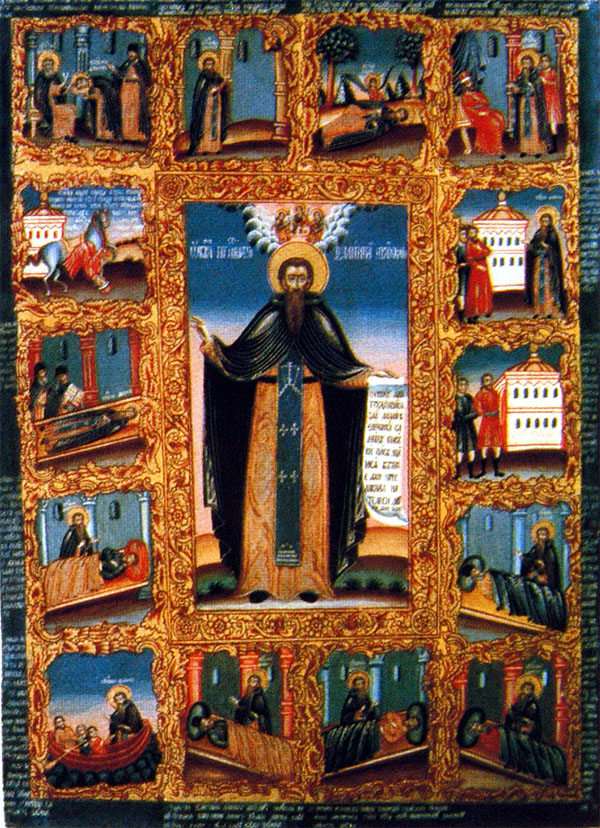
Venerable Nikon, Abbot of Radonezh, disciple of Venerable Sergius

Saint Nikon, Abbot of Radonezh, a disciple and successor of Saint Sergius of Radonezh (September 25 and July 5), was born at Yuriev-Polsk. Having heard of the angelic life of the Radonezh Wonderworker, the young man came to Saint Sergius and requested to be tonsured into the angelic schema.

Saint Sergius did not accept Nikon, whether because of his youth or for some other reason. Instead, he sent him to his disciple Saint Athanasius (September 12) at Serpukhov. But Saint Athanasius would not accept him right away. Only after seeing the young man’s persistence did he tonsure him into the monastic schema.

Saint Nikon struggled in prayer, studied Holy Scripture and persevered in virtue and purity. Because of his humility and the way he fulfilled each task assigned him without argument, Saint Nikon was called a “zealot of obedience.” When he reached the age of thirty, he was ordained to the priesthood. After a certain while, Saint Athanasius blessed him to go see Saint Sergius. Saint Sergius, catching sight of him, said, “It is good that you have come, my child Nikon,” and happily received him.

At first, he gave orders for Saint Nikon to serve the brethren. The disciple passed whole days in monastic matters, and his nights in prayerful conversation with God. Saint Sergius was comforted by his virtuous life. Having received a special insight concerning him, Saint Sergius bade his disciple to dwell with him in his own cell, so that he might share in spiritual attainment. He instructed him in every monastic virtue, and explained much about the essence of spiritual life. Saint Sergius assigned Saint Nikon to the duty of assisting him, but six months before his repose, he appointed his disciple as his successor. Then Saint Sergius withdrew into seclusion.

After the death of Saint Sergius (September 25, 1392), Nikon carried out his duties exactly as he was instructed by the founder of the monastery. He had the habit of attending all the monastic services, and never did he forsake common tasks, working on a equal footing with all the brethren. But the burden of being the igumen of the monastery weighed upon Saint Nikon. Recalling his quiet life in the Serpukhov Vysotsk monastery with Saint Athanasius, and later with Saint Sergius, he gave up his position and retired to his own cell.

For six years the monastery was guided by Saint Savva of Storozhevsk (December 3). In the year 1400 Saint Savva founded his own monastery near Zvenigorod, and the brethren entreated Saint Nikon to again take over its direction. He consented, but allotted himself a certain time each day for silence, so as to stand alone before God.

When reports began to spread about an invasion of the Russian land by Khan Edigei (1408), Saint Nikon zealously prayed to God to spare the monastery. In a dream the Moscow hierarchs Peter (December 21) and Alexis (February 12) together with Saint Sergius appeared to him and said that he should not grieve over the destruction of the monastery, since it would not become desolate, but would flourish all the more.

The monks left the monastery, taking with them relics, books, and consecrated vessels. When they returned, they saw that their beloved place had been reduced to ashes. But Saint Nikon did not despair, and the brethren began to restore the monastery. First of all a wooden church was built in honor of the Most Holy Trinity. It was consecrated on September 25, 1411, the anniversary of the repose of Saint Sergius.

The monastery was restored, and Saint Nikon began construction of a stone church over the grave of his spiritual Father, Saint Sergius. The work crew digging the foundations uncovered the incorrupt relics of Saint Sergius on July 5, 1422. Amidst universal rejoicing they placed the relics in a new reliquary and at the new site a wooden church was built (now the church in honor of the Descent of the Holy Spirit is at this place). Saint Nikon later built a new stone church in the Name of the Most Holy Trinity. In honor and memory of his spiritual Father, he transferred the holy relics into this newly built church.

Saint Nikon brought in the finest iconographers, Saints Andrew Rublev (July 4) and Daniel Cherny (June 13) for the adornment of the temple. Then Saint Andrew painted the Icon of the Most Holy Trinity (Hospitality of Abraham), embodying what was revealed to Saint Sergius. Saint Nikon was occupied with the construction of the Trinity church until the end of his life.

Saint Nikon’s final resting place was revealed to him in a vision before his death. He summoned the brethren and gave them instructions. After receiving the All-Pure Body of Christ and His Precious Blood, Saint Nikon gave the brethren a last blessing and said, “Go forth, my soul, with joy to the place where repose is prepared for you. Christ is calling you.”

Having made the Sign of the Cross, Saint Nikon died on November 27, 1426. He was buried near the reliquary of Saint Sergius. Under the hierarch Jonah (1448-1461), the hieromonk Pachomius the Logothete wrote the Service and Life of Saint Nikon. In the year 1547 a generally observed celebration to him was established. In the year 1548 a church named for him was built over the grave of Saint Nikon. In 1623 a new one was constructed in its place, in which the relics of Saint Nikon rest in a crypt. The 500 year anniversary of the repose of Saint Nikon was solemnly observed in 1976 at the Trinity-Sergeev Lavra.

Venerable Lazarus the Iconographer, of Constantinople

Saint Lazarus the Iconographer lived in Constantinople. He was a priest, led a strict ascetic life and painted holy icons. He fought against all heresy, enduring many afflictions from the Nestorians, Eutychians, and iconoclasts. Under the iconoclast emperor Theophilus (829-842), he was arrested and after cruel tortures, thrown into prison. Theophilus ordered horseshoes to be placed in a fire until they glowed red with the heat. Then they were put upon the iconographer’s hands, because he dared to paint icons of Christ and the saints. He was saved from execution by the intervention of the empress Theodora.

Saint Lazarus died in the year 857 while returning from Rome, where he had been sent in a delegation on church matters to Pope Benedict III (855-858). His remains were taken to Constantinople and buried in the church of Saint Evandrus.

Martyr Gobron (Michael) and 133 soldiers, of Georgia

In the year 914 a certain prince by the name of Michael-Gobron distinguished himself in a battle against the Arab Muslim invaders. After they had captured the fortress of Kvelistsikhe in southern Georgia, the Muslims took captive those who remained alive, and Prince Gobron was among them. Deeply impressed by the Georgian soldier’s valor, the emir Abu al-Qasim ordered his army to treat him with respect.

King Adarnerse sent Abu al-Qasim a large sum of money as a ransom for his people, and some were released. Gobron, however, was not among them. The Georgian prince recognized clearly what the future would bring, and he prepared to be martyred for Christ’s sake. The Saracens escorted Gobron and 133 Georgian soldiers to their execution.

Abu al-Qasim tempted the faithful prince by offering him earthly glory and honor in exchange for his renunciation of the Christian Faith. But Saint Gobron firmly declined all of his offers. Then the furious Abu al-Qasim ordered that he be taken into the yard and shown his fallen countrymen on one side and the promised wealth on the other.

When the emir cunningly asked which one he would choose, Gobron answered, “I told you from the very start that I will not retreat from Christ my Lord!”

Then the emir devised a new, more cruel trial: “He knows not the grief of death. Lead him outside and execute every living Christian before his eyes!” he commanded.

They led the saint out in the midst of his brothers and proceeded to slaughter every one of them. The blood of the dead flew around Gobron in every direction, and the martyrs’ limp bodies collapsed at his feet, but none of these horrors could break his will.

Then they compelled him to bow his head and brandished their swords above him two times. Prince Gobron traced a cross on his brow with blood and said, “I thank Thee, Lord Jesus Christ, that Thou hast accounted me, the most contemptible and chief among sinners, worthy to lay down my life for Thy sake!”

Again they brought Saint Gobron before the emir. For the last time Abu al-Qasim tried to entice him to apostatize, but the saint, dripping with blood, declared, “Do as you wish. I am a Christian and will never retreat from the name of my Christ!”

Having lost all patience, Abu al-Qasim ordered that Saint Gobron’s head be chopped off and thrown in with the other mutilated bodies. Then they dug three large holes, tossed in the relics of the martyrs, refilled the holes with earth, and forbade all Christians to approach that place. At night the graves shone with a divine light visible to believers and unbelievers alike.

For laying down their lives for Christ, the valorous prince Michael-Gobron and the 133 martyrs were numbered among the saints by the Georgian Apostolic Church. The day of their commemoration was designated as November 17, the day of their martyrdom.

Venerable Gennadius of Vatopedi, Mount Athos

Saint Gennadius was the steward of the Vatopedi monastery on Mt Athos in the fourteenth century, and was in charge of supplies. When the monastery’s oil began to run low, he tried to be economical with what remained by using oil just for the needs of the church. The cook began to complain to the Igumen, saying that he had no oil for preparing meals. The Igumen ordered Saint Gennadius to place his trust in the Mother of God, and to supply the oil for all the monastery’s needs.

One day, Saint Gennadius went to the storeroom and saw the tank overflowing with oil covering the floor as far as the door. This miracle was ascribed to the Most Holy Theotokos, and to Her Elaiovrytissa icon which stood nearby. Since that time, the icon has hung in the storeroom and has emitted an ineffable fragrance.

The Elaiovrytissa (“Flowing with oil”) Icon of the Most Holy Theotokos is commemorated on Bright Friday.

Daily Readings for Sunday, November 16, 2025

MATTHEW THE APOSTLE & EVANGELIST

ABSTAIN FROM MEAT, DAIRY, EGGS

Matthew the Apostle & Evangelist

ST. PAUL’S LETTER TO THE ROMANS 10:11-21; 11:1-2

Brethren, the scripture says, “No one who believes in God will be put to shame.” For there is no distinction between Jew and Greek; the same Lord is Lord of all and bestows his riches upon all who call upon him. For, “every one who calls upon the name of the Lord will be saved.” But how are men to call upon him in whom they have not believed? And how are they to believe in him of whom they have never heard? And how are they to hear without a preacher? And how can men preach unless they are sent? As it is written, “How beautiful are the feet of those who preach good news!” But they have not all obeyed the gospel; for Isaiah says, “Lord, who has believed what he has heard from us?” So faith comes from what is heard, and what is heard comes by the preaching of Christ. But I ask, have they not heard? Indeed they have; for “Their voice has gone out to all the earth, and their words to the ends of the world.” Again I ask, did Israel not understand? First Moses says, “I will make you jealous of those who are not a nation; with a foolish nation I will make you angry.” Then Isaiah is so bold as to say, “I have been found by those who did not seek me; I have shown myself to those who did not ask for me.” But of Israel he says, “All day long I have held out my hands to a disobedient and contrary people.” I ask, then, has God rejected his people? By no means! I myself am an Israelite, a descendant of Abraham, a member of the tribe of Benjamin. God has not rejected his people whom he foreknew.

MATTHEW 9:9-13

At that time, as Jesus passed on, he saw a man called Matthew sitting at the tax office; and he said to him, "Follow me." And he rose and followed him.
And as he sat at table in the house, behold, many tax collectors and sinners came and sat down with Jesus and his disciples. And when the Pharisees saw this, they said to his disciples, "Why does your teacher eat with tax collectors and sinners?" But when he heard it, he said, "Those who are well have no need of a physician, but those who are sick. Go and learn what this means, 'I desire mercy, and not sacrifice.' For I came not to call the righteous, but sinners to repentance.

Apostle and Evangelist Matthew

The Holy Apostle and Evangelist Matthew, was also named Levi (Mark 2:14; Luke 5:27); he was one of the Twelve Apostles (Mark 3:18; Luke 6:45; Acts 1:13), and was brother of the Apostle James Alphaeus (Mark 2:14). He was a publican, or tax-collector for Rome, in a time when the Jews were under the rule of the Roman Empire. He lived in the Galilean city of Capernaum. When Matthew heard the voice of Jesus Christ: “Come, follow Me” (Mt. 9:9), he left everything and followed the Savior. Christ and His disciples did not refuse Matthew’s invitation and they visited his house, where they shared table with the publican’s friends and acquaintances. Like the host, they were also publicans and known sinners. This event disturbed the pharisees and scribes a great deal.

Publicans who collected taxes from their countrymen did this with great profit for themselves. Usually greedy and cruel people, the Jews considered them pernicious betrayers of their country and religion. The word “publican” for the Jews had the connotation of “public sinner” and “idol-worshipper.” To even speak with a tax-collector was considered a sin, and to associate with one was defilement. But the Jewish teachers were not able to comprehend that the Lord had “come to call not the righteous, but sinners to repentance” (Mt. 9:13).

Matthew, acknowledging his sinfulness, repaid fourfold anyone he had cheated, and he distributed his remaining possessions to the poor, and he followed after Christ with the other apostles. Saint Matthew was attentive to the instructions of the Divine Teacher, he beheld His innumerable miracles, he went together with the Twelve Apostles preaching to “the lost sheep of the house of Israel” (Mt. 10:6). He was a witness to the suffering, death, and Resurrection of the Savior, and of His glorious Ascension into Heaven.

Having received the grace of the Holy Spirit, which descended upon the Apostles on the day of Pentecost, Saint Matthew preached in Palestine for several years. At the request of the Jewish converts at Jerusalem, the holy Apostle Matthew wrote his Gospel describing the earthly life of the Savior, before leaving to preach the Gospel in faraway lands.

In the order of the books of the New Testament, the Gospel of Matthew comes first. Palestine is said to be the place where the Gospel was written. Saint Matthew wrote in Aramaic, and then it was translated into Greek. The Aramaic text has not survived, but many of the linguistic and cultural-historical peculiarities of the Greek translation give indications of it.

The Apostle Matthew preached among people who were awaiting the Messiah. His Gospel manifests itself as a vivid proof that Jesus Christ is the Messiah foretold by the prophets, and that there would not be another (Mt. 11:3).

The preaching and deeds of the Savior are presented by the evangelist in three divisions, constituting three aspects of the service of the Messiah: as Prophet and Law-Giver (Ch. 5-7), Lord over the world both visible and invisible (Ch. 8-25), and finally as High Priest offered as Sacrifice for the sins of all mankind (Ch. 26-27).

The theological content of the Gospel, besides the Christological themes, includes also the teaching about the Kingdom of God and about the Church, which the Lord sets forth in parables about the inner preparation for entering into the Kingdom (Ch. 5-7), about the worthiness of servers of the Church in the world (Ch. 10-11), about the signs of the Kingdom and its growth in the souls of mankind (Ch. 13), about the humility and simplicity of the inheritors of the Kingdom (Mt. 18:1-35; 19 13-30; 20:1-16; 25-27; 23:1-28), and about the eschatological revelations of the Kingdom in the Second Coming of Christ within the daily spiritual life of the Church (Ch. 24-25).

The Kingdom of Heaven and the Church are closely interconnected in the spiritual experience of Christianity: the Church is the historical embodiment of the Kingdom of Heaven in the world, and the Kingdom of Heaven is the Church of Christ in its eschatological perfection (Mt. 16:18-19; 28:18-20).

The holy Apostle brought the Gospel of Christ to Syria, Media, Persia, Parthia, and finishing his preaching in Ethiopia with a martyr’s death. This land was inhabited by tribes of cannibals with primitive customs and beliefs. The holy Apostle Matthew converted some of the idol-worshippers to faith in Christ. He founded the Church and built a temple in the city of Mirmena, establishing there his companion Platon as bishop.

When the holy apostle was fervently entreating God for the conversion of the Ethiopians the Lord Himself appeared to him in the form of a youth. He gave him a staff, and commanded him to plant it at the doors of the church. The Lord said that a tree would grow from this staff and it would bear fruit, and from its roots would flow a stream of water. When the Ethiopians washed themselves in the water and ate the fruit, they lost their wild ways and became gentle and good.

When the holy apostle carried the staff towards the church, he was met by the wife and son of the ruler of the land, Fulvian, who were afflicted by unclean spirits. In the Name of Christ the holy apostle healed them. This miracle converted a number of the pagans to the Lord. But the ruler did not want his subjects to become Christians and cease worshiping the pagan gods. He accused the apostle of sorcery and gave orders to execute him.

They put Saint Matthew head downwards, piled up brushwood and ignited it. When the fire flared up, everyone then saw that the fire did not harm Saint Matthew. Then Fulvian gave orders to add more wood to the fire, and frenzied with boldness, he commanded to set up twelve idols around the fire. But the flames melted the idols and flared up toward Fulvian. The frightened Ethiopian turned to the saint with an entreaty for mercy, and by the prayer of the martyr the flame went out. The body of the holy apostle remained unharmed, and he departed to the Lord.

The ruler Fulvian deeply repented of his deed, but still he had doubts. By his command, they put the body of Saint Matthew into an iron coffin and threw it into the sea. In doing this Fulvian said that if the God of Matthew would preserve the body of the apostle in the water as He preserved him in the fire, then this would be proper reason to worship this One True God.

That night the Apostle Matthew appeared to Bishop Platon in a dream, and commanded him to go with clergy to the shore of the sea and to find his body there. The righteous Fulvian and his retinue went with the bishop to the shore of the sea. The coffin carried by the waves was taken to the church built by the apostle. Then Fulvian begged forgiveness of the holy Apostle Matthew, after which Bishop Platon baptized him, giving him the name Matthew in obedience to a command of God.

Soon Saint Fulvian-Matthew abdicated his rule and became a presbyter. Upon the death of Bishop Platon, the Apostle Matthew appeared to him and exhorted him to head the Ethiopian Church. Having become a bishop, Saint Fulvian-Matthew toiled at preaching the Word of God, continuing the work of his heavenly patron.

Saint Fulvian (in Baptism Matthew), Prince of Ethiopia

The holy Apostle brought the Gospel of Christ to Syria, Media, Persia, Parthia, and finishing his preaching in Ethiopia with a martyr’s death. This land was inhabited by tribes of cannibals with primitive customs and beliefs. The holy Apostle Matthew converted some of the idol-worshippers to faith in Christ. He founded the Church and built a temple in the city of Mirmena, establishing his fellow traveler Platon there as bishop.

When the Holy Apostle was fervently entreating God for the conversion of the Ethiopians the Lord Himself appeared to him in the form of a youth. He gave him a staff, and commanded him to plant it at the doors of the church. The Lord said that a tree would grow from this staff and it would bear fruit, and from its roots would flow a stream of water. When the Ethiopians washed themselves in the water and ate the fruit, they forsook their evil ways and became gentle and good.

When the Holy Apostle carried the staff towards the church, he was met by the wife and son of the ruler of the land, Fulvian, who were afflicted by unclean spirits. healed them in Christ's Name. This miracle converted a number of the pagans to the Lord. But the ruler did not want his subjects to become Christians and cease worshiping the pagan gods. He accused the apostle of sorcery and gave orders to execute him.

They put Saint Matthew head downward, piled up brushwood and lit it. When the fire flared up, everyone then saw that the fire did not harm Saint Matthew. Then Fulvian gave orders to put more wood on the fire, and with boldness, he commanded to set up twelve idols around the fire. But the flames melted the idols and flared up toward Fulvian. The frightened Ethiopian turned to the Saint with an entreaty for mercy, and by the Martyr's prayer the flame went out. The body of the Holy Apostle remained unharmed, and he fell asleep in the Lord.

The ruler Fulvian deeply repented of his deed, but still he had doubts. By his command, they put the body of Saint Matthew into an iron coffin and threw it into the sea. In doing this Fulvian said that if Matthew's God would preserve the Apostle's body in the water as He preserved him in the fire, then this would be proper reason to worship this One True God.

That night the Apostle Matthew appeared to Bishop Platon in a dream, and commanded him to go with clergy to the shore of the sea and to find his body there. The righteous Fulvian and his retinue went with the bishop to the shore of the sea. The coffin carried by the waves was taken to the church built by the apostle. Then Fulvian begged the Saint to forgive him, after which Bishop Platon baptized him. As Bishop Platon was about to speak the Prince's name, a voice came from on high, saying: "Do not call him Fulvian, but Matthew."

Soon the new Matthew abdicated his rule and became a presbyter. Upon the death of Bishop Platon, the Apostle Matthew appeared to him and exhorted him to head the Ethiopian Church. After becoming a Bishop, the new Saint Matthew toiled at preaching the Word of God, continuing the apostolic work of his heavenly patron.

Saint Sergius of Malopinega

Saint Sergius of Malopinega (in the world Simeon), was born in 1493. His father, Markian Stephanovich Nekliud, was descended from Novgorod nobles. Together with other fellow citizens they left their native-place setting off “to the side of the icy sea,” when Great Novgorod was finally subjugated to the power of Moscow by Ivan III. There in the northlands, Markian Stephanovich married Apollinaria, a maiden from a rich and noble family. The pious spouses raised their son Simeon in the fear of God, they gave him a fine education, and inculcated in him the love for “book-learning.” Having grown old, Markian and Apollinaria by mutual agreement went to monasteries. Markian (in monasticism Matthew) was afterwards igumen of the Resurrection monastery in the city of Keurola. Apollinaria died a schemanun with the name Pelagia.

Simeon was ordained presbyter at the canonical age of thirty to serve the churches of the Transfiguration of the Lord and the Great Martyr George in the Malopinega district. The holy presbyter Simeon with love finished his pastoral service at age sixty-two. With apostolic zeal he labored over the conversion of the pagan Chud people. The rare personal qualities of the pastor contributed much to the success of his preaching. As the Chronicle notes, he possessed a kindly soul and pure mind, a courageous heart, humility and quiet strength, love for truth, and was merciful to the poor to the point of self-denial.

In the final year of his life, the monk took the schema with the name Sergius and died on November 16, 1585. Following the saint’s final instructions, they buried him near the altar of the Transfiguration church. Later, a chapel was built over his grave. The old hand-written manuscript tells about the numerous miracles which occurred at the grave of the saint.

Saint Hypatius of Gangra

Hieromartyr Hypatius, was bishop of the city of Gangra in Paphlagonia (Asia Minor). In the year 325 he participated in the First Ecumenical Council at Nicea, at which the heresy of Arius was anathematized.

When Saint Hypatius was returning in 326 from Constantinople to Gangra, followers of the schismatics Novatus and Felicissimus fell upon him in a desolate place. The heretics ran him through with swords and spears, and threw him into a swamp. Like the Protomartyr Stephen, Saint Hypatius prayed for his murderers.

An Arian woman struck the saint on the head with a stone, killing him. The murderers hid his body in a cave, where a Christian who kept straw there found his body. Recognizing the bishop’s body, he hastened to the city to report this, and the inhabitants of Gangra piously buried their beloved archpastor.

After his death, the relics of Saint Hypatius were famous for numerous miracles, particularly for casting out demons and for healing the sick.

From of old the hieromartyr Hypatius was particularly venerated in the Russian land. Thus in the year 1330 the Ipatiev monastery was built at Kostroma, on the place where the Mother of God appeared with the Pre-eternal Christ Child, the Apostle Philip, and the hieromartyr Hypatius, Bishop of Gangra. This monastery later occupied a significant place in the spiritual and social life of the nation, particularly during the Time of Troubles.

The ancient copies of the Life of the hieromartyr Hypatius were widely distributed in Russian literature, and one of these was incorporated into The Reading Menaion of Metropolitan Macarius (1542-1564). In this Life there is an account of the appearance of the Savior to Saint Hypatius on the eve of the martyr’s death.

The entry for the saint’s Feast consists of his Life, some prayers, and words of praise and instruction. The pious veneration of Saint Hypatius was also expressed in Russian liturgical compositions. During the nineteenth century a new service was written for the hieromartyr Hypatius, distinct from the services written by Saint Joseph the Studite, contained in the March Menaion.

Daily Readings for Saturday, November 15, 2025

SATURDAY OF THE 8TH WEEK

ABSTAIN FROM MEAT, DAIRY, EGGS

Nativity Fast Begins, Guria, Shamuna, and Habib, Martyrs and Confessors of Edessa, Thomas II the New, Archbishop of Constantinople

ST. PAUL’S SECOND LETTER TO THE CORINTHIANS 8:1-5

Brethren, I want you to know about the grace of God which has been shown in the churches of Macedonia, for in a severe test of affliction, their abundance of joy and their extreme poverty have overflowed in a wealth of liberality on their part. For they gave according to their means, as I can testify, and beyond their means, of their own free will, begging us earnestly for the favor of taking part in the relief of the saints – and this, not as we expected, but first they gave themselves to the Lord and to us by the will of God.

LUKE 9:37-43

At that time, as Jesus had come down from the mountain, a great crowd met him. And behold, a man from the crowd cried, "Teacher, I beg you to look upon my son, for he is my only child; and behold, a spirit seizes him, and he suddenly cries out; it convulses him till he foams, and shatters him, and will hardly leave him. And I begged your disciples to cast it out, but they could not." Jesus answered, "O faithless and perverse generation, how long am I to be with you and bear with you? Bring your son here." While he was coming the demon tore him and convulsed him. But Jesus rebuked the unclean spirit, and healed the boy, and gave him back to his father. And all were astonished at the majesty of God.

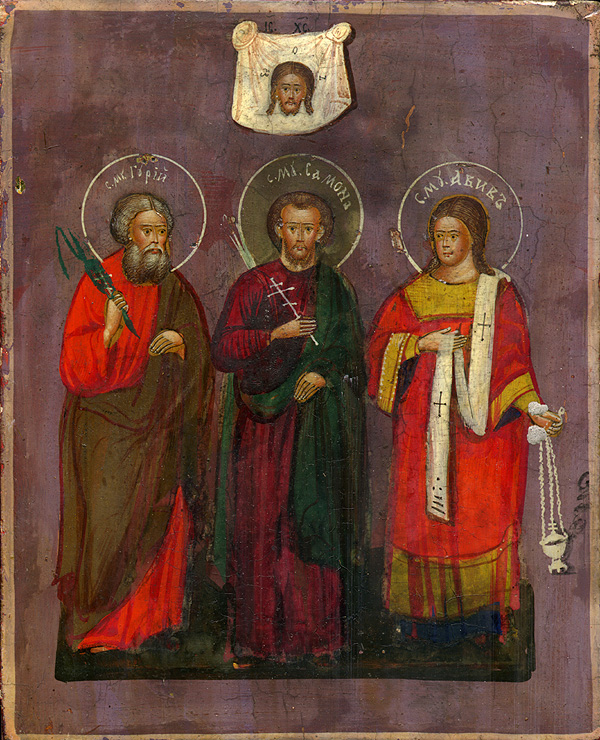
Holy Martyrs and Confessors Gurias, Samonas, and Habibus, of Edessa

The Holy Martyrs and Confessors Gurias, Samonas and Habibus suffered during the persecution against Christians under the emperors Diocletian (284-305) and Maximian (305-311). The two friends Gurias and Samonas, preachers of the Word of God, were arrested in the city of Edessa.

The saints refused to offer sacrifice to the gods, and boldly confessed their faith in Christ. For this they were subjected to cruel tortures: they were beaten, hung up by their hands, heavy weights were tied to their feet, and they were cast into a stifling prison.

The martyrs endured everything with firmness and Samonas uttered a prayer to the Lord, which one of the witnesses to their death wrote down: “O Lord my God, against Whose will not a single sparrow falls into the snare. It was You Who made room for David in his sorrow (Ps. 4:1), Who proved the Prophet Daniel stronger than lions (Dan. 6:16-24), and granted a child of Abraham to be victor over torture and flames (Dan. ch. 3, ch. 14). You know also, Lord, the infirmity of our nature, You see the struggle set before us. Our foe strives to snatch us, the work of Your right hand, away from You and to deprive us of the glory which is in You. With Your compassionate eye watching over us, preserve in us the inextinguishable light of Your Commandments. Guide our steps by Your light, and make us worthy of Your Kingdom, for You are blessed unto ages of ages.” By night, they took the martyrs out beyond the city and beheaded them (+ 299-306). Christians buried their holy bodies with reverence.

After some years, the last pagan emperor, Licinius (311-324), began a persecution against Christians. Habibus, a deacon of the Church of Edessa whom the emperor ordered to be arrested for his zealous spreading of the true Faith, presented himself before the executioners when he learned they were searching for him. The saint confessed his faith in Christ and was sentenced to be burned alive. The martyr went willingly into the fire and with a prayer surrendered his soul to the Lord. When the fire went out, the mother and relatives of the saint found his body unharmed. They buried the martyr next to Saints Gurias and Samonas.

After the death of the saints, numerous miracles were wrought by them for those who entreated their help with faith and love. Once, a certain Gothic soldier, sent to serve at Edessa, took the pious virgin Euphemia as his wife. Before this the barbarian vowed to her mother Sophia at the graves of the Martyrs Gurias, Samonas and Habibus that he would do his spouse no harm, and would never insult her, but would always love and cherish her.

At the completion of his service in Edessa, he took Euphemia with him back to his native land. It turned out that he had deceived her, for he already had a wife at home, and Euphemia became her slave. Her evil husband threatened to kill her if she revealed to anyone that they were married. Euphemia suffered much abuse and humiliation. When she gave birth to a son, the jealous Gothic woman poisoned him. Euphemia turned with prayer to the holy Martyrs Gurias, Samonas and Habibus, the witnesses to the perjurer’s oath, and the Lord delivered Euphemia from her suffering and miraculously returned her to Edessa, where she was welcomed by her mother.

After a certain while the Goth was again sent to serve in Edessa. The whole city learned of his misdeeds after he was denounced by Sophia. The Goth was executed by order of the prefect of the city.

In an Akathist, the Holy Church addresses the martyrs: “Rejoice, Gurias, Samonas and Habibus, Heavenly Patrons of honorable marriage.” We pray to them for deliverance from family turmoil, and from marital difficulties, especially where one spouse hates the other without cause.

Martyrs Elpidius, Marcellus, and Eustochius, who suffered under Julian the Apostate

The Holy Martyrs Elpidius, Marcellus and Eustochius suffered under the emperor Julian the Apostate (361-363). Saint Elpidius was a senator. They tried him before the imperial judge on charges of being a Christian.

The martyrs endured many terrible torments, and they died after being thrown into a fire. At the place where Christians buried the relics of the saints, Christ appeared with an host of angels and resurrected Elpidius. Then the emperor gave orders to arrest the holy martyr again.

During the torture, idols standing nearby crumbled into dust through the prayer of the saint. More than six thousand pagans witnessed this miracle and were converted to Christ. Saint Elpidius was burned again.

Martyr Dēmḗtrios of Thrace

Saint Dēmḗtrios was a Slav from the village of Davoudio (Dabuda) in Thrace, which was near the town of Amapasos. He was arrested in the time of Emperor Maximian and the Archon Publius, about the year 298 (some sources say 307). After suffering many tortures for Christ, he was finally beheaded.

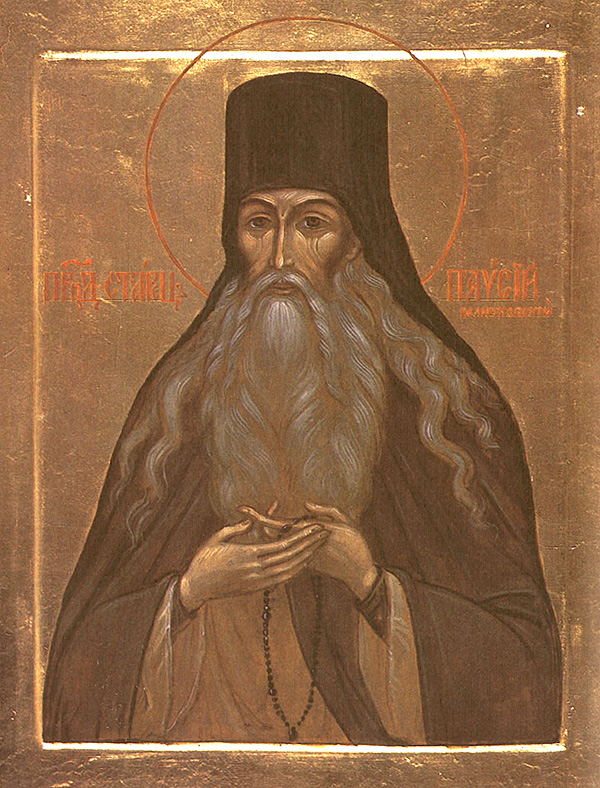
Venerable Paisios Velichkovsky

Saint Paisios (Paϊsios) Velichkovsky was born in Poltava in Little Russia on December 21, 1722, and was the eleventh of twelve children. His father John was a priest, who named him Peter at his Baptism, in honor of Saint Peter the Metropolitan of Moscow, on whose Feast he was born.

After the children’s father died, their mother Irene raised them in piety. Peter was sent to study at the Moghila Academy in Kiev in 1735. After four years, Peter decided to leave the world and become a monk. At the age of seventeen, he went in search of a monastery and a good Spiritual Father. For seven years Peter visited various monasteries, including the Kiev Caves Lavra, but he did not feel drawn to any of the monasteries of Ukraine.

After being made a rassophore monk (one blessed to wear the rasson, but not yet tonsured “into the mantya”) at the Saint Nicholas Medvedevsky Monastery with the name Platon, he found that there was no experienced Elder there who could teach him obedience, or give him spiritual direction. Not wishing to begin his monastic life without such guidance, he left the monastery a week afterward with the blessing of his Elder.

At first, he went to Kiev, where he happened to meet his sister-in-law, the widow of his older brother Archpriest John. She informed him of his mother’s sorrow when he left Kiev, and her mind seemed to be affected by her grief. Then one day an Angel appeared to her and told her that instead of loving the Creator with all her heart and soul, she loved His creation (her son) more. Because of this excessive love, the Angel continued, she was thinking of starving herself to death, which would result in her eternal condemnation. The Angel said that by God’s grace, her son would become a monk, and that she should also renounce the world and become a nun. After this, she became calm and accepted God’s will. She entered a convent and was tonsured with the name Juliana. After ten years or so, she departed to the Lord.

While at Kiev, Father Platon met two monks from Romania who were about to return to their country. After crossing the border into Moldavia, they came to Vlachia and the Skete of Saint Nicholas, which is called Trăisteni, around 1745. The Elder of the Skete, Hieroschema-monk Michael, was away on business in Ukraine, so Father Platon and his companions were welcomed by the Superior, Father Dēmḗtrios. Father Platon was placed under a general obedience and was given a cell near the Skete, from which the church was visible.

As he was sleeping one night, the semantron was sounded calling the monks to Sunday Matins, but Father Platon did not hear it. He woke up and ran to the church, only to find that the Gospel had already been read, and the Canon was being sung. In his grief and shame, he did not enter the church, but returned to his cell, weeping bitter tears. After the Liturgy, when it was time for the meal, the Superior and the Elder were surprised that Father Platon had not been seen at the Services. The Elder ordered that the meal be delayed while he sent Father Athanasios to find out what had happened to the absent monk.. Father Athanasios found him and asked why he was weeping. With difficulty, Father Platon was able to tell him the reason for his sorrow. Father Athanasios tried to console him and urged him to come to the Skete, where the others were waiting for him. Finally, he was persuaded to go.

Seeing the brethren at table but not eating, Father Platon fell down before them weeping and asking their forgiveness. The Elder and the Superior raised him up and heard from Father Athanasios the reason for his sorrow. The Elder told Father Platon not to grieve so over something that had happened involuntarily, and did his best to console him. From that time, however, the Saint would not sleep lying down in bed, but sitting up on a bench.

One day the Elder Onuphrios of Kyrkoul visited the Skete and spoke about his Skete at Kyrkoul. Father Platon longed to see Kyrkoul, and so he returned there with Father Onuphrios. He remained there for a time, conversing with Father Onuphrius about overcoming the passions, the struggle with demons, unceasing prayer, and other soul-profiting topics. This seed fell on good ground, and later produced spiritual fruit a hundredfold (Luke 8:8).

The time came when Father Platon was filled with longing to visit Mount Athos. He asked the brethren of the Skete, and those of other Sketes, for their forgiveness and blessing for the journey. He also thanked them for their kindness and their paternal instruction. They blessed him and let him go in peace. At that time, he was just twenty-four years old.

Father Platon went to Mount Athos in 1746, arriving at the Greatest Lavra on July 4, the eve of the Feast of Saint Athanasios of Athos. His traveling companion, Hieromonk Tryphon fell ill and reposed after four days. Father Platon would have died from the same illness, if not for the care of the Russian monks. He recovered and lived in solitude in a cell called Kaparis near the Pantokrator Monastery. He went around visiting many ascetics and solitaries, seeking a Spiritual Father, but was unable to find anyone suitable.

In 1750 Saint Basil of Poiana Marului (Mărului) (April 15) visited the Holy Mountain and spent some time with Father Platon, who asked him for monastic tonsure. Elder Basil granted his request, giving him the name Paisios. Then Father Basil returned to his Skete at Vlachia. About three months later, a young monk named Bessarion came to the Holy Mountain from Vlachia. He went around to the monasteries searching for an instructor, but did not find one. He also came to Father Paisios and asked him to tell him something about saving his soul. Father Paisios sighed and told him that he himself had been looking for an instructor without success. Yet, feeling compassion for Father Bessarion, he talked to him a little about the qualifications necessary for a true instructor, and about the Jesus Prayer. After hearing him, Father Bessarion said, “Why should I seek any further?" He fell down at the feet of Father Paisios, entreating him to be his Elder. Father Paisios did not wish to be anyone’s Elder, preferring to be one under the authority of an Elder. Father Bessarion wept for three days until Father Paisios finally agreed to accept him as a friend, but not as a disciple. They lived together for about four years, fulfilling God’s commandments, cutting off their own will, and obeying one another as equals.

Other disciples began to join them, and their number continued to increase. Since they needed a priest and a confessor, they pleaded with Father Paisios to accept ordination. He did not want to hear of this, and repeatedly refused to consent. They did not give up, however. They asked him how he could expect to teach the brethren obedience and cutting off their own will, when he disobeyed the tearful entreaties of those who wished him to accept. Finally, he said, “May God's will be done.”

In 1754 Father Paisios was ordained to the holy priesthood and was given the Skete of the Prophet Elias, where he began to accept even more disciples. Saint Paisios remained on Mount Athos for seventeen years, copying Greek patristic books and translating them into Slavonic.

In 1763 Father Paisios went to Moldavia with sixty-four disciples, and was given the Dragomirna Monastery near the city of Sochava, on the border between Bukovina and Moldavia. Here he remained for twelve years, and the number of monks increased to three hundred and fifty. His friend Hieromonk Alexius came to visit him from Vlachia, and Father Paisios asked to be tonsured into the Schema. Father Alexius did so, but without changing his name. While at Dragomirna, Elder Paisios corrected the Slavonic translations of patristic books by comparing them to the Greek manuscripts he had copied on Mount Athos.

The Russo-Turkish War broke out in 1768, and Moldavia and Vlachia saw many battles. Dragomirna and the forests around it became filled with refugees from the villages near the battlegrounds. Another catastrophe followed in 1771 with an outbreak of the plague. When Dragomirna and Bukovina came under the control of Austrian Catholics, Saint Paisios and his flock fled to Moldavia. In October of 1775, thi Holy Elder and many of his monks went to Secu Monastery, which is dedicated to the Beheading of Saint John the Baptist.

Secu was too small for the number of brethren, who were crowded with three to five monks in a cell. In the spring, more brethren were due to arrive from Dragomirna, so new cells had to be built. After three years of labor one hundred cells were completed, and everyone had a place. Still, the numbers continued to increase, and they had to look for a larger monastery.

Prince Constantine Muruz wrote to the Elder saying that there was no larger monastery than Neamţ, about two hours from Secu. On August 14, 1779, Saint Paisios moved to Neamţ Monastery, where he spent the last fifteen years of his life translating the writings of the Holy Fathers. He also introduced the the Typikon (Rule) of Mount Athos in that community. He gathered about a thousand monks in the monastery, instructing them in the unceasing prayer of the heart.

Archbishop Ambrose visited Saint Paisios at Neamţ in 1790, remaining for two days to converse with the Elder. During the Sunday Liturgy, he raised Saint Pausios to the rank of Archimandrite. He stayed for two more days, then departed after blessing everyone.

Saint Paisios fell asleep in the Lord on November 15, 1794 when he was almost seventy-two. It is possible that God revealed the time of his death to him beforehand, for he stopped translating books. He merely reviewed and corrected what had already been translated.

He was ill for four days, but felt well enough to attend the Liturgy on Sunday. After the service, he asked everyone to come and receive his blessing. Bidding farewell to them all, he returned to his cell and would not receive anyone. A few days later, on November 15, he received the Holy Mysteries once more, and surrendered his soul to God. His funeral was conducted by Bishop Benjamin of Tuma, and was attended by multitudes of priests, monks, laymen, nobles and ordinary people.

The holy relics of Saint Paisios were uncovered in 1846, 1853, 1861 and 1872, and were found to be incorrupt.

Saint Paisios has had an enormous influence, not only in Romania, but throughout the Orthodox world. His disciples traveled to Russia, sparking the spiritual revival of the XIX century with Slavonic translations of the Philokalia and the tradition of eldership which they had learned from Saint Paisios. His influence has been felt even in America, through Saint Herman of Alaska (December 13). Saint Herman had been taught by Elders whose spiritual formation was guided by Saint Paisios.

While he was still in Russia, Saint Herman met Saint Nazarius (February 23), who became his Elder at Valaam, at Sarov, then followed him to Sanaxar Monastery when Saint Theodore (February 19) was the Igoumen. One of the books that Saint Herman brought with him to America was the Slavonic Philokalia, printed in 1794. Not only did he absorb the spiritual wisdom that it contained, he also imparted it to others.

Kupyatitsa Icon of the Mother of God

The Kupyátitsa (or Kupyátich) Icon of the Mother of God appeared in the year 1180 near the village of Kupyátitsa near the former Pinsk district of the Minsk region. Igoumen Hilarion Denisovich of the Kupyátitsa Monastery wrote a book "A Description of the Miracles of the Kupyátitsa Icon of the Mother of God," and the monk Athanasios Kal'nophoysky also participated in its publication (Kiev, 1638), supplementing it with his own interpretations.

In his book "Teraturgima, or Miracles which occurred in both Caves of the Monastery" (Kiev, 1638), the monk Athanasios Kal'nophoyska of the Kiev Caves Lavra says that the Icon was found in the forest on a tree by a peasant girl named Anna, who was herding cattle. The Icon, in the shape of a Cross, shone with an unusual light between the trees. Anna took the Icon home and hid it in a chest. That evening, Anna wanted to show her father Basil the Cross she had found, but she was unable to find it.

When she returned to search the original site the next day, she saw once again a glow between the trees. Thinking that there was another Cross in the tree on which the Cross had been revealed, she brought it home. The next day it was back in its original place in the forest. Struck by these events, the villagers built a church dedicated to the Most Holy Theotokos, on the site of the Icon's appearance, and the Icon was placed in that temple. Since that time, by the grace of God, the Icon has been glorified with various miracles.

In 1240, during a raid, the Tatars ravaged and burnt the village and the Kupyátitsa church, but the wonderworking Icon was preserved intact in the ashes. The holy Icon was found a second time at the end of the XV century at the site of the burnt church by a pilgrim named Joachim, who was returning to his homeland from Jerusalem through the marshy woodlands. Not daring to take the Icon with him, he reported his discovery to the villagers, who transferred the cruciform Icon to the village church. By God’s will, Joachim remained at the church as the sacristan.

In 1629, the Kupyátitsa Entrance of the Theotokos – Transfiguration Monastery was built beside the church, within its walls the future Holy Monastic Martyrs Igoumen Athanasios of Brest († September 5, 1648) and Makarios of Kanev, Igoumen of Pinsk († September 7, 1678) labored in asceticism.

At the beginning of the XVII century, the Kupyátitsa Monastery was built next to the church. Roman Catholics seized both buildings at the end of the century. Later on, Uniate monks were living there. When the Orthodox monks abandoned the Monastery in 1655, they were led by Archimandrite Lazarus Baranovich. They took the Kupyátitsa Icon of the Mother of God with them, and transferred it to Kiev's Holy Wisdom cathedral.1

People flocked to the Kupyátitsa Icon of the Mother of God with reverence. It was venerated not only by the Orthodox Ukrainians, but also by the faithful of Belarus who had not forgotten about the holy Icon. In the middle of the XIX century, parishioners of the Kupyátitsa church appealed to the Holy Governing Synod with a petition for its return from Kiev's Holy Wisdom Cathedral. Their petition was denied, however. The refusal was based on the fact that the Icon "did not belong to the parish church, which was built in 1822, but rather to the Monastery, which no longer existed; and it was transferred to Kiev's Holy Wisdom Cathedral, not by the ancestors of the petitioners, but by the Orthodox monks of the former Monastery 200 years ago."

There is evidence that the wonderworking Icon remained in the Holy Wisdom Cathedral until the end of the 1920s, but its later fate is unknown.

An exact copy of the wonderworking Icon was painted in the XVII century, which is now located in the church of Saint Nicholas in the village of Kupyátitsa, Pinsk district, Brest region. Every year, pilgrims from all over Belarus flock to venerate the Holy Kupyátitsa Icon of the Mother of God.

The Kupyátitsa Icon of the Most Holy Theotokos is a small copper cross. On one side of the Cross, the Mother of God is depicted in relief holding the Pre-eternal Child with her left hand; on the other side is Christ Crucified.


1 This church was not named for a Saint named Sophia, but like Hagia Sophia in Constantinople, it was dedicated to Christ, the power and wisdom of God (1 Corinthians 1:24).

Saint Philip of Rabanga

Saint Philip of Rabanga was the founder of the Savior-Transfiguration monastery, near Kadnikov to the northeast of Vologda. He spent the beginning of his monastic life in the monastery of Saint Dionysius of Glushitsa (June 1), and was one of his closest disciples.

Upon the death of his teacher and spiritual Father, Saint Philip left the Glushitsa monastery and settled in a sparsely populated area at the confluence of the Sukhona and Rabanga Rivers. The saint wanted to lead his life in complete solitude. The local inhabitants learned about him, and seeking his guidance to become monks, they began to come to him in the wilderness. Accepting this as a mandate from above, Saint Philip traveled to Rostov to the holy Archbishop Ephraim (March 27) and asked the saint’s blessing to found a monastery and to build a church in honor of the Transfiguration of the Lord (the temple was built in 1447).

Tradition relates that the holy founder of the Savior-Transfiguration monastery was extremely strict with himself, but lenient towards the infirmities of others. Saint Philip died on November 15, 1457 and was buried in the monastery he founded.

“Fragrant Flower” Icon of the Mother of God

This Icon is in the Protection Cathedral at Voronezh. The Theotokos is shown holding her Divine Child on her left arm, with a blossoming branch in her right hand.

The Fragrant Flower Icon resembles the Unfading Flower Icon (April 3). In the older Unfading Flower Icons, the Child is held on the Virgin's right arm, and she holds white lilies in her left hand.

In contemporary iconography both Icons may depict Christ on His Mother's left arm, or on the right. One way to distinguish the two Icons is to remember that the Fragrant Flower Icon shows a branch, and the Unfading Flower Icon shows lilies.

Daily Readings for Friday, November 14, 2025

PHILIP THE APOSTLE

ABSTAIN FROM MEAT, DAIRY, EGGS

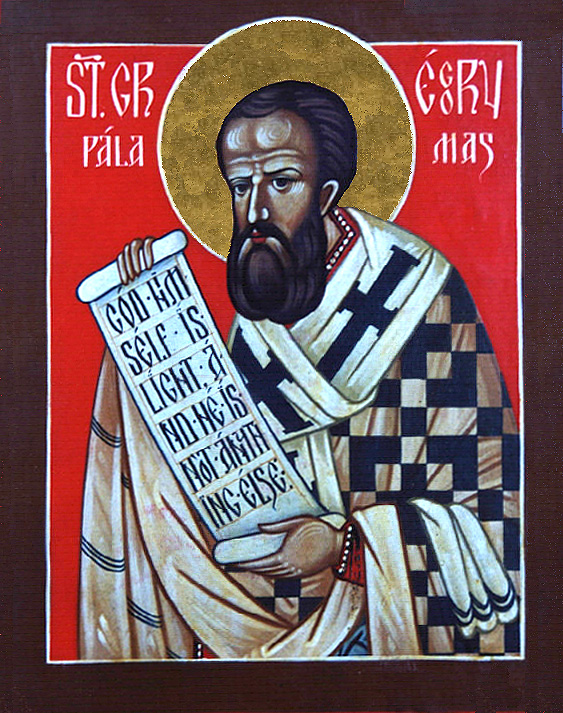
Philip the Apostle, Gregory Palamas, Archbishop of Thessaloniki, Holy Great New Martyr Constantine of Hydra, Justinian the Emperor and his wife Theodora

ST. PAUL’S FIRST LETTER TO THE CORINTHIANS 4:9-16

Brethren, God has exhibited us apostles as last of all, like men sentenced to death; because we have become a spectacle to the world, to angels and to men. We are fools for Christ’s sake, but you are wise in Christ. We are weak, but you are strong. You are held in honor, but we in disrepute. To the present hour we hunger and thirst, we are ill-clad and buffeted and homeless, and we labor, working with our own hands. When reviled, we bless; when persecuted, we endure; when slandered, we try to conciliate; we have become, and are now, as the refuse of the world, the off-scouring of all things. I do not write this to make you ashamed, but to admonish you as my beloved children. For though you have countless guides in Christ, you do not have many fathers. For I became your father in Christ Jesus through the gospel. I urge you, then, be imitators of me.

JOHN 1:43-51

At that time, Jesus decided to go to Galilee. And he found Philip and said to him, “Follow me.” Now Philip was from Bethsaida, the city of Andrew and Peter. Philip found Nathanael, and he said to him, “We have found him of whom Moses in the law and also the prophets wrote, Jesus of Nazareth, the son of Joseph.” Nathanael said to him, “Can anything good come out of Nazareth?” Philip said to him, “Come and see.” Jesus saw Nathanael coming to him, and said of him, “Behold, an Israelite indeed, in whom is no guile!” Nathanael said to him, “How do you know me?” Jesus answered him, “Before Philip called you, when you were under the fig tree, I saw you.” Nathanael answered him, “Rabbi, you are the Son of God! You are the King of Israel!” Jesus answered him, “Because I said to you, I saw you under the fig tree, do you believe? You shall see greater things than these.” And he said to him, “Truly, truly, I say to you, you will see heaven opened, and the angels of God ascending and descending upon the Son of man.”

Holy, All-Praised Apostle Philip

The Holy and All-praised Apostle Philip was a native of the city of Bethsaida in Galilee. He had a profound depth of knowledge of the Holy Scripture, and rightly discerning the meaning of the Old Testament prophecies, he awaited the coming of the Messiah. Through the call of the Savior (John 1:43), Philip followed Him. The Apostle Philip is spoken about several times in the Holy Gospel: he brought to Christ the Apostle Nathaniel (i.e. Bartholomew, April 22, June 30, and August 25. See John. 1:46). The Lord asks him where to buy bread for five thousand men (John. 6: 5-7). He brought certain of the Hellenized Jews wanting to see Jesus (John. 12:21-22); and finally, at the Last Supper he asked Christ to show them the Father (John. 14:8).

After the Ascension of the Lord, the Apostle Philip preached the Word of God in Galilee, accompanying his preaching with miracles. Thus, he restored to life a dead infant in the arms of its mother. From Galilee he went to Greece, and preached among the Jews that had settled there. Some of them reported the preaching of the Apostle to Jerusalem. In response, some scribes arrived in Greece from Jerusalem, with one of the Jewish chief priests at their head, to interrogate the Apostle Philip.

The Apostle Philip exposed the lie of the chief priest, who said that the disciples of Christ had stolen away and hidden the body of Christ. Philip told instead how the Pharisees had bribed the soldiers on watch, to deliberately spread this rumor. When the Jewish chief priest and his companions began to insult the Lord and lunged at the Apostle Philip, they suddenly were struck blind. By his prayer the Apostle restored everyone’s sight. Seeing this miracle, many believed in Christ. The Apostle Philip provided a bishop for them, by the name of Narcissus (one of the Seventy Apostles, January 4).

From Greece the Apostle Philip went to Parthia, and then to the city of Azotus, where he healed an eye affliction of the daughter of a local resident named Nikoklides, who had received him into his home, and then baptized his whole family.

From Azotus the Apostle Philip set out to Syrian Hieropolis (there were several cities of this name) where, stirred up by the Pharisees, the Jews burned the house of Heros, who had taken in the Apostle Philip, and they wanted to kill the apostle. The apostle performed several miracles: the healing of the hand of the city official Aristarchus, withered when he attempted to strike the apostle; and restoring a dead child to life. When they saw these marvels, they repented and many accepted holy Baptism. After making Heros the bishop at Hieropolis, the Apostle Philip went on to Syria, Asia Minor, Lydia, Emessa, and everywhere preaching the Gospel and undergoing sufferings. Both he and his sister Mariamne (February 17) were pelted with stones, locked up in prison, and thrown out of villages.

Then the Apostle Philip arrived in the city of Phrygian Hieropolis, where there were many pagan temples. There was also a pagan temple where people worshiped an enormous serpent as a god. The Apostle Philip by the power of prayer killed the serpent and healed many bitten by snakes.

Among those healed was the wife of the city prefect, Amphipatos. Having learned that his wife had accepted Christianity, the prefect Amphipatos gave orders to arrest Saint Philip, his sister, and the Apostle Bartholomew traveling with them. At the urging of the pagan priests of the temple of the serpent, Amphipatos ordered the holy Apostles Philip and Bartholomew to be crucified.

Suddenly, an earthquake struck, and it knocked down all those present at the place of judgment. Hanging upon the cross by the pagan temple of the serpent, the Apostle Philip prayed for those who had crucified him, asking God to save them from the ravages of the earthquake. Seeing this happen, the people believed in Christ and began to demand that the apostles be taken down from the crosses. The Apostle Bartholomew was still alive when he was taken down, and he baptized all those believing and established a bishop for them.

But the Apostle Philip, through whose prayers everyone remained alive, except for Amphipatos and the pagan priests, died on the cross.

Mariamne his sister buried his body, and went with the Apostle Bartholomew to preach in Armenia, where the Apostle Bartholomew was crucified (June 11); Mariamne herself then preached until her own death at Lykaonia.

The holy Apostle Philip is not to be confused with Saint Philip the Deacon (October 11), one of the Seventy.

Saint Philip, Abbot of Irap Near Novgorod

Saint Philip, Abbot of Irap near Novgorod, in the world Theophilus, was the founder of the Irap wilderness-monastery. As an orphan and not remembering his parents, the twelve-year-old Theophilus wandered about and eventually settled near the Komel monastery and lived on charity.

Saint Cornelius (May 19) accepted the pious youth into the monastery and after three years tonsured him a monk with the name Philip. Meek, humble and hard-working, at the request of the brethren he was ordained to the priesthood. His striving for greater efforts led him to withdraw to the outskirts of White Lake.

Here, having the patronage of Prince Andrew Sheleshpansky, who had allotted him land near the River Irapa, 45 versts from Cherepovets, the monk built a chapel in the Name of the Most Holy Trinity and a cell for himself. News about the holy wilderness-dweller spread throughout all the surrounding area, and monks began to flock to him. The laity also went to him for spiritual counsel, and Saint Philip would instruct them in the virtues which those living in the world ought to possess.

Soon at the place of the chapel a church was built in the Name of the Holy Life-Creating Trinity. Saint Philip dwelt in the wilderness for fifteen years and died in 1537 at age 45. His relics were placed beneath a crypt in the Trinity temple. Over his grave was an icon, painted by the monk Theodosius. Soon after the death of Saint Philip, the Krasnoborsk Philippov monastery arose on the place of his struggles.

The celebration of Saint Philip was established at the end of the sixteenth century. The manuscript service to him dates from the end of the sixteenth century.

Saint Justinian the Emperor

Saint Justinian, a major figure in the history of the Byzantine state, was also a great champion of Orthodoxy, a builder of churches and a Church writer. He was born in the Roman province of Illyricum. During his reign (527-565), Byzantium won glory with military victories in Persia, Africa, and Italy, as a result of which paganism was decisively routed among the Germanic Vandals and Visigoth tribes. By command of the emperor Justinian the pagan schools in Athens were closed. Justinian sent John, the Bishop of Ephesus, throughout the regions of Asia Minor with the aim of spreading Christianity. John baptized more than 70,000 pagans.

The emperor gave orders to build ninety churches for the newly-converted, and he generously supported church construction within the Empire. His finest structures of the time are considered to be St. Catherine's Monastery at Sinai, and the church of Hagia Sophia at Constantinople. Under Saint Justinian many churches were built dedicated to our Most Holy Lady Theotokos. Since he had received a broad education, Saint Justinian assiduously concerned himself with the education of clergy and monks, ordering them to be instructed in rhetoric, philosophy and theology.

The right-believing sovereign devoted much attention and effort to the struggle with the Origenists of his time, who then were reviving the Nestorian heresy. To counter their heretical speculations, the Church hymn “Only-Begotten Son and Immortal Word of God, Who for our salvation…” was composed, and Justinian commanded that it be sung in the churches. From that time to the present day, this hymn is sung at the Divine Liturgy before the Small Entrance after the second Antiphon.

At the command of the sovereign, the Fifth Ecumenical Council was convened in the year 553, censuring the teachings of Origen and affirming the definitions of the Fourth Ecumenical Council at Chalcedon. He also attempted to secure religious unity within the Empire through his (unsuccessful) dialogues with the non-Chalcedonians.

The holy Emperor Justinian wished to have orderly rule and law within the realm. Under his guidance and supervision a complete compendium of Roman law was compiled. It has come down to us as a law codex known as “the Justinian Codex.” The “Church laws” of Justinian are included in all the variants of the Russian collections of Canon Law.

In his personal life, Saint Justinian was strictly pious, and he fasted often. During Great Lent he would not eat bread nor drink wine. He is also remembered for promoting the idea of “symphony” between church and state. The holy Emperor Justinian died in the year 565.

Saint Theodora the Empress

Saint Theodora was the wife of Saint Justinian the emperor, and lived during the sixth century.

The Empress Theodora was at first a notorious harlot and actress, and an adherent of the Monophysite heresy, but then she repented. After becoming empress, she led a virtuous life, maintaining purity of both soul and body. She provided wise counsel for her husband during his reign, and she also saved his throne during the Nika riots of 532 through her political intelligence and expertise.

Saint Theodora died in 548.

Saint Gregory Palamas, Archbishop of Thessalonica

Saint Gregory Palamas, Archbishop of Thessalonica, was born in the year 1296 in Constantinople. Saint Gregory’s father became a prominent dignitary at the court of Andronicus II Paleologos (1282-1328), but he soon died, and Andronicus himself took part in the raising and education of the fatherless boy. Endowed with fine abilities and great diligence, Gregory mastered all the subjects which then comprised the full course of medieval higher education. The emperor hoped that the youth would devote himself to government work. But Gregory, barely twenty years old, withdrew to Mount Athos in the year 1316 (other sources say 1318) and became a novice in the Vatopedi monastery under the guidance of the monastic Elder Saint Νikόdēmos of Vatopedi (July 11). There he was tonsured and began on the path of asceticism. A year later, the holy Evangelist John the Theologian appeared to him in a vision and promised him his spiritual protection. Gregory’s mother and sisters also became monastics.

After the demise of the Elder Νikόdēmos, Saint Gregory spent eight years of spiritual struggle under the guidance of the Elder Nikēphóros, and after the latter’s death, Gregory transferred to the Lavra of Saint Athanasius (July 5). Here he served in the trapeza, and then became a church singer. But after three years, he resettled in the small skete of Glossia, striving for a greater degree of spiritual perfection. The head of this monastery began to teach the young man the method of unceasing prayer and mental activity, which had been cultivated by monastics, beginning with the great desert ascetics of the fourth century: Evagrius Pontikos and Saint Macarius of Egypt (January 19).

Later on, in the eleventh century, Saint Simeon the New Theologian (March 12) had provided detailed instruction in mental activity for those praying in an outward manner, and the ascetics of Athos put it into practice. The experienced use of mental prayer (or prayer of the heart), requiring solitude and quiet, is called “Hesychasm” (from the Greek “hesychia” meaning calm, silence), and those practicing it were called “hesychasts.”

During his stay at Glossia the future hierarch Gregory became fully imbued with the spirit of hesychasm and adopted it as an essential part of his life. In the year 1326, because of the threat of Turkish invasions, he and the brethren retreated to Thessalonica, where he was then ordained to the holy priesthood.

Saint Gregory combined his priestly duties with the life of a hermit. Five days of the week he spent in silence and prayer, and only on Saturday and Sunday did he come out to his people. He celebrated divine services and preached sermons. For those present in church, his teaching often evoked both tenderness and tears. Sometimes he visited theological gatherings of the city’s educated youth, headed by the future patriarch, Isidore. After he returned from a visit to Constantinople, he found a place suitable for solitary life near Thessalonica the region of Bereia. Soon he gathered here a small community of solitary monks and guided it for five years.

<br

In 1331 the saint withdrew to Mount Athos and lived in solitude at the skete of Saint Savva, near the Lavra of Saint Athanasius. In 1333 he was appointed Igumen of the Esphigmenou monastery in the northern part of the Holy Mountain. In 1336 the saint returned to the skete of Saint Savva, where he devoted himself to theological works, continuing with this until the end of his life.

In the 1330s events took place in the life of the Eastern Church which put Saint Gregory among the most significant universal apologists of Orthodoxy, and brought him great renown as a teacher of hesychasm.

About the year 1330 the learned monk Barlaam had arrived in Constantinople from Calabria, in Italy. He was the author of treatises on logic and astronomy, a skilled and sharp-witted orator, and he received a university chair in the capital city and began to expound on the works of Saint Dionysius the Areopagite (October 3), whose “apophatic” (“negative”, in contrast to “kataphatic” or “positive”) theology was acclaimed in equal measure in both the Eastern and the Western Churches. Soon Barlaam journeyed to Mt Athos, where he became acquainted with the spiritual life of the hesychasts. Saying that it was impossible to know the essence of God, he declared mental prayer a heretical error. Journeying from Mount Athos to Thessalonica, and from there to Constantinople, and later again to Thessalonica, Barlaam entered into disputes with the monks and attempted to demonstrate the created, material nature of the light of Tabor (i.e. at the Transfiguration). He ridiculed the teachings of the monks about the methods of prayer and about the uncreated light seen by the hesychasts.

Saint Gregory, at the request of the Athonite monks, replied with verbal admonitions at first. But seeing the futility of such efforts, he put his theological arguments in writing. Thus appeared the “Triads in Defense of the Holy Hesychasts” (1338). Towards the year 1340 the Athonite ascetics, with the assistance of the saint, compiled a general response to the attacks of Barlaam, the so-called “Hagiorite Tome.” At the Constantinople Council of 1341 in the church of Hagia Sophia Saint Gregory Palamas debated with Barlaam, focusing upon the nature of the light of Mount Tabor. On May 27, 1341 the Council accepted the position of Saint Gregory Palamas, that God, unapproachable in His Essence, reveals Himself through His energies, which are directed towards the world and are able to be perceived, like the light of Tabor, but which are neither material nor created. The teachings of Barlaam were condemned as heresy, and he himself was anathemized and fled to Calabria.

But the dispute between the Palamites and the Barlaamites was far from over. To these latter belonged Barlaam’s disciple, the Bulgarian monk Akyndinos, and also Patriarch John XIV Kalekos (1341-1347); the emperor Andronicus III Paleologos (1328-1341) was also inclined toward their opinion. Akyndinos, whose name means “one who inflicts no harm,” actually caused great harm by his heretical teaching. Akyndinos wrote a series of tracts in which he declared Saint Gregory and the Athonite monks guilty of causing church disorders. The saint, in turn, wrote a detailed refutation of Akyndinos’ errors. The patriarch supported Akyndinos and called Saint Gregory the cause of all disorders and disturbances in the Church (1344) and had him locked up in prison for four years. In 1347, when John the XIV was replaced on the patriarchal throne by Isidore (1347-1349), Saint Gregory Palamas was set free and was made Archbishop of Thessalonica.

In 1351 the Council of Blachernae solemnly upheld the Orthodoxy of his teachings. But the people of Thessalonica did not immediately accept Saint Gregory, and he was compelled to live in various places. On one of his travels to Constantinople the Byzantine ship fell into the hands of the Turks. Even in captivity, Saint Gregory preached to Christian prisoners and even to his Moslem captors. The Hagarenes were astonished by the wisdom of his words. Some of the Moslems were unable to endure this, so they beat him and would have killed him if they had not expected to obtain a large ransom for him. A year later, Saint Gregory was ransomed and returned to Thessalonica.

Saint Gregory performed many miracles in the three years before his death, healing those afflicted with illness. On the eve of his repose, Saint John Chrysostom appeared to him in a vision. With the words “To the heights! To the heights!” Saint Gregory Palamas fell asleep in the Lord on November 14, 1359. In 1368 he was canonized at a Constantinople Council under Patriarch Philotheus (1354-1355, 1364-1376), who compiled the Life and Services to the saint.

</br

New Hieromartyr Demetrius (Benevolenskii) of Tver

Demetrius Mikhailovich Benevolenskii was born on October 10, 1883 in Vishny Volochyok, Tver province. After his ordination to the priesthood in 1911, he was assigned to the Church of the Great Martyr Demetrius in the village of Ostrovno and, in 1919, to the Church of All the Afflicted in the village of Panoshino [today Udomlya]. He later served at the Church of the Tikhvin Icon of the Mother of God in the village of Sinev in the Dubrovo Sonkovskii District of the Tver region. As a result of his intense dedication to his pastoral duties, he had been arrested and imprisoned several times by the communist regime. After his final arrest, he was shot on November 27, 1937. On September 19, 1999, he was numbered among the new martyrs and confessors of Russia.

New Martyr Constantine of Hydra

The Holy New Martyr Constantine was born on the island of Hydra; his father was named Michael, and his mother was called Marina. At the age of eighteen, he left Hydra and went to Rhodes, where he served the Turkish ruler Hasan Kapetan. There Constantine converted to Islam and took the name Hasan, in honor of his master. For three years he received great honors and was content.

Later, however, he felt remorse for denying Christ. He gave alms to Orthodox Christians, prayed with bitter tears, and showed great reverence to the Orthodox priests he encountered. He decided to atone for his sin by martyrdom. So he found a Spiritual Father, to whom he confessed, asking for his blessing to seek martyrdom. Seeing how young he was, his Spiritual Father advised him to wait. Constantine obeyed and left Rhodes, traveling to the city of Krimi, then to Constantinople, and from there he went to the Holy Mountain.

At Ivḗron Monastery he prepared himself for martyrdom. With the blessing of the Fathers, he returned to Rhodes and presented himself to the ruler, and courageously confessed Christ. The tortures he endured were horrible. Finally, he was hanged on November 14, 1800.

Today, at Saint Constantine's birthplace on Hydra, there is a beautiful church which is dedicated to him, and there his holy relics are kept.

A fragment from Saint Constantine's relics is in the "Quick to Hear" Icon at Saint Tikhon's Monastery church in Pennsylvania.

Announcements, November 16, 2025

Sunday, November 16, 2025

The Holy Apostle and Evangelist Matthew

I Corinthians (4:9-16) Brethren, God has exhibited us Apostles as last of all, like men sentenced to death; because we have become a spectacle to the world, to angels and to men. We are fools for Christ’s sake, but you are wise in Christ. We are weak, but you are strong. You are held in honor, but we in disrepute. To the present hour we hunger and thirst, we are ill-clad and buffeted and homeless, and we labor, working with our own hands. When reviled, we bless; when persecuted, we endure; when slandered, we try to conciliate; we have become, and are now, as the refuse of the world, the off-scouring of all things. I do not write this to make you ashamed, but to admonish you as my beloved children. For though you have countless guides in Christ, you do not have many fathers. For I became your father in Christ Jesus through the Gospel. I urge you, then, be imitators of me.

Matthew (9:9-13) At that time, as Jesus passed on from there, He saw a man called Matthew sitting at the tax office; and He said to him, “Follow Me.” And he rose and followed Him. And as He sat at table in the house, behold, many tax collectors and sinners came and sat down with Jesus and His disciples. And when the Pharisees saw this, they said to His disciples, “Why does your teacher eat with tax collectors and sinners?” But when Jesus heard it, He said, “Those who are well have no need of a physician, but those who are sick. Go and learn what this means, ‘I desire mercy, and not sacrifice.’ For I came not to call the righteous, but sinners to repentance.”.

Troparion of the Resurrection: When Mary stood at Thy grave, looking for Thy sacred body, angelic powers shone above Thy revered tomb; and the soldiers who were to keep guard became as dead men. Thou led Hades captive and wast not tempted thereby. Thou didst meet the Virgin and didst give life to the world, O Thou, Who art risen from the dead, O Lord, glory to Thee

Troparion of St. Matthew the Evangelist: The offspring of Selyvria and the guardian of Aegina, the true friend of virtue who didst appear in the last years, O Nektarios, we faithful honor thee as a Godly servant of Christ, for thou pourest forth healings of every kind for those who piously cry out: Glory to Christ Who hath glorified thee. Glory to Him Who hath made thee wondrous. Glory to Him Who worketh healings for all through thee.

Troparion of the Chains of St. Peter: O Holy Apostle, Peter, thou dost preside over the Apostles by the precious chains which thou didst bear. We venerate them with faith and beseech thee that by thine intercessions we be granted the great mercy.

Kontakion of the Entrance of the Theotokos: (**Thou Who wast raised up**)

The sacred treasury of God’s holy glory, * the greatly precious bridal chamber and Virgin, * the Savior’s most pure temple, free of stain and undefiled, * into the House of the Lord * on this day is brought forward * and bringeth with herself the grace * of the Most Divine Spirit; * her do God’s Angels hymn with songs of praise, * for she is truly the heavenly tabernacle.

Calendar

Sunday, November 16, 2025 (The Holy Apostle and Evangelist Matthew)

8:50 AM – Orthros

9:00 AM – Christian Education

10:00 AM – Divine Liturgy

Monday, November 17, 2025

Father Herman off

5:45 – YAF Book Study

Tuesday, November 18, 2025

No Services

Wednesday, November 19, 2025

5:20 PM – Catechesis

6:30 PM – Advent Paraklesis

7:30 – Parish Council

Thursday, November 20, 2025 (Entrance of the Theotokos)

6:30 PM – Divine Liturgy

7:30 PM – Potluck Meal

Friday, November 21, 2025

No Services

Saturday, November 22, 2025

4:45 PM – Catechesis

6:00 PM – Great Vespers

Sunday, November 23, 2025 (Twenty-Fourth Sunday after Pentecost)

8:50 AM – Orthros

9:00 AM – Christian Education

10:00 AM – Divine Liturgy

Special Announcements

The Eucharist Bread was provided by the Lasseters for the Divine Liturgy this morning.

Eucharist Bread Schedule:

Eucharist Bread Coffee Hour

November 16 Lasseter Lockhart/Karam/Snell

November 20 (Thurs PM) Milnor Algood/Meadows/YAF

Entrance of the Theotokos POTLUCK

into the Temple

November 23 YAF Baker/Jimmy Jones/Rodriguez

November 30 Henderson Pigott/Ian Jones

Schedule for Epistle Readers – Page numbers refer to the Apostolos (book of Epistles) located on the chanters’ stand at the front of the nave. Please be sure to use book when you read.

Reader Reading Page#

November 16 Mary Martha Ellis I Cor 4:9-16 135

November 20 Ian Jones Heb 9:1-11 337

Entrance of the Theotokos

into the Temple

November 23 Grady Fisher Eph 2:14-22 207

November 30 Walt Wood I Cor 4:9-19 135

Please remember the following in your prayers: Aidan Milnor, the Milnor family; Lamia Dabit and her family; Mary Greene (Lee and Kh. Sharon’s sister); Jay and Joanna Davis; Fr. Leo and Kh. Be’Be’ Schelver and their family; Marilyn (Kyriake) Snell; Jack and Jill Weatherly; Dn.Terry Algood and their family; Fr. Joseph Bittle; Rick Carlton; Very Rev. Fr. Nicholas and Kh. Jan Speier; Lee Greene; Fr. John and Kh. Janet Henderson and their family; Galina Singletary; Emily and Cole Parker.

WAMP! Registration for winter camp has opened for ages 12-17. If your teen would like to attend, please see Fr. Herman for registration information if you do not already have it. Winter camp will be held back at Asbury Hills in Cleveland, SC again this year. Transportation to and from camp will be the responsibility of the parents as the church will not be providing vans for winter camp.

WINTER RETREAT! A Save the Date email has been sent out regarding the upcoming dates for the 2026 DOMSE Winter Retreat. The retreat will, again, be hosted by St. Elias Antiochian parish in Atlanta, GA. The dates for the retreat are January 30-31. Registration has not yet opened but once it does an email will be sent out with this information. Hope to see you there!

Please remember that we still need your tithes and offerings which may be placed in the tray that is passed during Divine Liturgy, in the tithe box at the back of the nave or be mailed to: St. Peter Orthodox Church, P.O. Box 2084, Madison, MS 39130-2084.

Potluck Meals: Everyone who attends the potluck meals during the month is encouraged to bring a dish to share with everyone. This is to ensure that there is enough food for all to partake. Over the past several months we have been running out of food before everyone has an opportunity to go through the line. This also applies to the Festal Liturgies that may be served during the week and the Soup Suppers after Presanctified Liturgies during Lent. Parents, please accompany your children through the line. Thank you all for your help with this.

As a friendly reminder, in regards to coffee hour, the church will provide beef sticks, cheese cubes, crackers, cookies, and orange juice. For sponsors of baptisms/chrismations a reception may be held after the service and may have whatever food the sponsors would like to provide in celebration of this occasion. If you wish to bring a snack for your children, please be responsible for the clean up of those items. Coffee hour is not meant to be a meal, but a means to break the fast with a snack and visit with each other. Also, as a friendly reminder, please make sure kids are not getting ice in the kitchen without adult supervision.

Calendar Items

* The men of the parish meet for lunch at 11:00 a.m. on the first Thursday of the month

* The Ladies meet for dining on the last Tuesday of the month. Times will vary.

* The Ladies meet at the church at 10:00 a.m. on the second Saturday of the month to pray the

Akathist. Alternating on behalf of our children and our sick.

* The Ladies of St Peter will meet every third Sunday during Coffee Hour.

* The Young Adult Fellowship (YAF) meets on alternating Mondays for Book Study.

Please see Brandon Strain for questions.

* Fast of the Nativity begins on November 15th and runs through December 24th.

* We will celebrate the Entrance of the Theotokos with Divine Liturgy on Thursday, November

20th at 6:00 p.m. followed by a Potluck meal afterwards.

* There will be no Daily Vespers on Wednesday, November 26th.

Fasting Discipline for November

The traditional fasting discipline (no meat, dairy, eggs, fish, wine or oil) is observed on all Wednesdays and Fridays through November 15th when the Fast of the Nativity begins. During the fast, we will abstain from meat, dairy, and eggs, except on the 19th, 26th and 28th of November when we will also abstain from fish, olive oil, and wine.

Major Commemorations for November

November 16 Apostle Matthew

November 21 Entrance of the Theotokos into the Temple

November 25 Great martyrs Catherine and Mercurios

November 30 Apostle Andrew, the First-called

Quotable: “The Lord, as an artful physician, subjects us to various trials, sorrows, illnesses, and misfortunes, in order to purify us like gold in the furnace. A soul that is hardened in various sins does not easily undergo cleansing and healing, but has to be forced to a great extent, and only through lengthy experience in patience and suffering does it become accustomed to virtue and begins to love God, from Whom it was alienated after becoming attached to all kinds of mortal sins. Such is the purpose of the trials and tribulations sent to us by God in this life.”

+ St. John of Kronstadt

Worship: November 23, 2025 (Twenty-Fourth Sunday after Pentecost)

Scripture: Eph 2:14-22; Luke 12:16-21

Epistle Reader: Gady Fisher

Prosphora: YAF

Coffee Hour: Baker/Jimmy Jones/ Rodriguez

Daily Readings for Thursday, November 13, 2025

JOHN CHRYSOSTOM, ARCHBISHOP OF CONSTANTINOPLE

NO FAST

John Chrysostom, Archbishop of Constantinople, Anthousa, the Mother of John Chrysostom, Damaskinos the New Martyr of Mount Athos

ST. PAUL’S LETTER TO THE HEBREWS 7:26-28; 8:1-2

Brethren, it was fitting that we should have such a high priest, holy, blameless, unstained, separated from sinners, exalted above the heavens. He has no need, like those high priests, to offer sacrifices daily, first for his own sins and then for those of the people; he did this once for all when he offered up himself. Indeed, the law appoints men in their weakness as high priests, but the word of the oath, which came later than the law, appoints a Son who has been made perfect for ever. Now the point in what we are saying is this: we have such a high priest, one who is seated at the right hand of the throne of the Majesty in heaven, a minister in the sanctuary and the true tent which is set up not by man but by the Lord.

JOHN 10:9-16

The Lord said, "I am the door; if any one enters by me, he will be saved, and will go in and out and find pasture. The thief comes only to steal and kill and destroy; I came that they may have life, and have it abundantly. I am the good shepherd. The good shepherd lays down his life for the sheep. He who is a hireling and not a shepherd, whose own the sheep are not, sees the wolf coming and leaves the sheep and flees; and the wolf snatches them and scatters them. He flees because he is a hireling and cares nothing for the sheep. I am the good shepherd; I know my own and my own know me, as the Father knows me and I know the Father; and I lay down my life for the sheep. And I have other sheep, that are not of this fold; I must bring them also, and they will heed my voice. So there shall be one flock, one shepherd.

Saint John Chrysostom, Archbishop of Constantinople

Saint John Chrysostom, Archbishop of Constantinople, one of the Three Hierarchs [January 30], was born at Antioch in about the year 347 into the family of a military commander. His father, Secundus, died soon after the birth of his son. His mother, Anthusa, widowed at twenty years of age, did not seek to remarry but rather devoted all her efforts to the raising of her son in Christian piety. The youth studied under the finest philosophers and rhetoricians. But, scorning the vain disciplines of pagan knowledge, the future hierarch turned himself to the profound study of Holy Scripture and prayerful contemplation. Saint Meletius, Bishop of Antioch (February 12), loved John like a son, guided him in the Faith, and in the year 367 baptized him.

After three years John was tonsured as a Reader. When Saint Meletius had been sent into exile by the emperor Valens in the year 372, John and Theodore (afterwards Bishop of Mopsuestia) studied under the experienced instructors of ascetic life, the presbyters Flavian and Diodorus of Tarsus. The highly refined Diodorus had particular influence upon the youth. When John’s mother died, he embraced monasticism, which he called the “true philosophy.” Soon John and his friend Basil were being considered as candidates for the episcopal office, and they decided to withdraw into the wilderness to avoid this. While Saint John avoided the episcopal rank out of humility, he secretly assisted in Basil’s consecration.

During this period Saint John wrote his “Six Discourses on the Priesthood,” a great work of Orthodox pastoral theology. The saint spent four years struggling in the wilderness, living the ascetic life under the guidance of an experienced spiritual guide. And here he wrote three books entitled, “Against the Opponents of Those Attracted to the Monastic Life”, and a collection entitled, “A Comparison of the Monk with the Emperor” (also known as “Comparison of Imperial Power, Wealth and Eminence, with the True and Christian Wisdom-Loving Monastic Life”), both works which are marked by a profound reflection of the worthiness of the monastic vocation.

For two years, the saint lived in a cave in complete silence, but was obliged to return to Antioch to recover his health. Saint Meletius, the Bishop of Antioch, ordained him deacon in the year 381. The following years were devoted to work on new theological writings: “Concerning Providence” (“To the Ascetic Stagirios”), “Book Concerning Virginity,” “To a Young Widow” (2 discourses), and the “Book of Saint Babylos, and Against Julian and the Pagans.”

In the year 386 Saint John was ordained presbyter by Bishop Flavian of Antioch. Saint John was a splendid preacher, and his inspired words earned him the name “Golden-Mouthed” (“Chrysostom”). For twelve years the saint preached in church, usually twice a week, but sometimes daily, deeply stirring the hearts of his listeners.

In his pastoral zeal to provide Christians with a better understanding of Holy Scripture, Saint John employed hermeneutics, an interpretation and analysis of the Word of God (i.e. exegesis). Among his exegetical works are commentaries on entire books of the Holy Scripture (Genesis, the Psalter, the Gospels of Matthew and John, the Epistles of the Apostle Paul), and also many homilies on individual texts of the Holy Bible, but also instructions on the Feastdays, laudations on the Saints, and also apologetic (i.e. defensive) homilies (against Anomoeans, Judaizers and pagans). As a priest, Saint John zealously fulfilled the Lord’s command to care for the needy. Under Saint John, the Antiochian Church provided sustenance each day to as many as 3,000 virgins and widows, not including in this number the shut-ins, wanderers and the sick.

Saint John began his commentary on Genesis at the beginning of Great Lent in 388, preaching thirty-two homilies during the forty day period. During Holy Week he spoke of how Christ was betrayed, and about the Cross. During Bright Week, his pastoral discourse was devoted to the Resurrection. His exegesis of the Book of Genesis was concluded only at the end of October (388).

At Pascha in the following year the saint began his homilies on the Gospel of John, and toward the end of the year 389 he took up the Gospel of Matthew. In the year 391 the Christians of Antioch listened to his commentary on the Epistles of the holy Apostle Paul to the Romans and to the Corinthians. In 393 he explained the Epistles to the Galatians, the Ephesians, Timothy, Titus, and the Psalms. In his homily on the Epistle to the Ephesians, Saint John denounced a schism in Antioch, “I tell you and I witness before you, that to tear asunder the Church means nothing less than to fall into heresy. The Church is the house of the heavenly Father, one Body and one Spirit.”

The fame of the holy preacher grew, and in the year 397 with the death of Archbishop Nectarius of Constantinople, successor to Saint Gregory the Theologian, Saint John Chrysostom was summoned from Antioch, and elected to the See of Constantinople. At the capital, the holy archpastor was not able to preach as often as he had at Antioch. Many matters awaited the saint’s attention, and he began with the most important — the spiritual perfection of the priesthood. He himself was the best example of this. The financial means apportioned for the archbishop were channeled by the saint into the upkeep of several hospices for the sick and two hostels for pilgrims. He fasted strictly and ate very little food, and usually refused invitations to dine because of his delicate stomach.

The saint’s zeal in spreading the Christian Faith extended not only to the inhabitants of Constantinople, but also to Thrace to include Slavs and Goths, and to Asia Minor and the Pontine region. He established a bishop for the Bosphorus Church in the Crimea. Saint John sent off zealous missionaries to Phoenicia, to Persia, and to the Scythians, to convert pagans to Christ. He also wrote letters to Syria to bring back the Marcionites into the Church, and he accomplished this. Preserving the unity of the Church, the saint would not permit a powerful Gothic military commander, who wanted the emperor to reward his bravery in battle, to open an Arian church at Constantinople. The saint exerted much effort in enhancing the splendor of the church services: he compiled a Liturgy, he introduced antiphonal singing for the all-night Vigil, and he wrote several prayers for the rite of anointing the sick with oil.

The saintly hierarch denounced the dissolute morals of people in the capital, especially at the imperial court, irrespective of person. When the empress Eudoxia connived to confiscate the last properties of the widow and children of a disgraced dignitary, the saint rose to their defense. The arrogant empress would not relent, and nursed a grudge against the archpastor. Eudoxia’s hatred of the saint blazed forth anew when malefactors told her that the saint apparently had her in mind during his sermon on vain women. A court was convened composed of hierarchs who had been justly condemned by Chrysostom: Theophilus of Alexandria, Bishop Severian of Gabala, who had been banished from the capital because of improprieties, and others.

This court of judgment declared Saint John deposed, and that he be executed for his insult to the empress. The emperor decided on exile instead of execution. An angry crowd gathered at the church, resolved to defend their pastor. In order to avoid a riot, Saint John submitted to the authorities. That very night there was an earthquake at Constantinople. The terrified Eudoxia urgently requested the emperor to bring the saint back, and promptly sent a letter to the banished pastor, beseeching him to return. Once more, in the capital church, the saint praised the Lord in a short talk, “For All His Ways.”

The slanderers fled to Alexandria. But after only two months a new denunciation provoked the wrath of Eudoxia. In March 404, an unjust council was convened, decreeing the exile of Saint John. Upon his removal from the capital, a fire reduced the church of Hagia Sophia and also the Senate building to ashes. Devastating barbarian incursions soon followed, and Eudoxia died in October 404. Even pagans regarded these events as God’s punishment for the unjust judgment against the saint.

In Armenia, the saint strove all the more to encourage his spiritual children. In numerous letters (245 are preserved) to bishops in Asia, Africa, Europe and particularly to his friends in Constantinople, Saint John consoled the suffering, guiding and giving support to his followers. In the winter of 406 Saint John was confined to his bed with sickness, but his enemies were not to be appeased. From the capital came orders to transfer Saint John to desolate Pityus in Abkhazia on the Black Sea. Worn out by sickness, the saint began his final journey under military escort, traveling for three months in the rain and frost. He never arrived at his place of exile, for his strength failed him at Comana.

At the crypt of Saint Basiliscus (May 22), Saint John was comforted by a vision of the martyr, who said, “Despair not, brother John! Tomorrow we shall be together.” After receiving the Holy Mysteries, the hierarch fell asleep in the Lord on September 14, 407. His last words were, “Glory to God for all things!”

The holy relics of Saint John Chrysostom were solemnly transferred to Constantinople in the year 438. The disciple of Saint John, the venerable Isidore of Pelusium (February 4), wrote: “The house of David is grown strong, and the house of Saul enfeebled. He is victor over the storms of life, and has entered into heavenly repose.”

Although he died on September 14, Saint John’s celebration was transferred to this day because of the Feast of the Elevation of the Holy Cross. Saint John Chrysostom is also celebrated on January 27 and January 30.

Martyrs Nikephoros, Antoninus, and Germanus of Caesarea, in Palestine

Saint Nikephoros (Nikēphóros), Antoninus, and Germanus were beheaded in Caesarea of Palestine during the reign of Maximian by the ruler Firmilian.

Martyr Manetha of Cæsarea in Palestine

Saint Manetha was captured along with Saints Antoninus, Nikēphóros and Germanus. She suffered many tortures. She was led naked through the city, was mocked, and received the crown of martyrdom when she was burned alive.

Monastic Martyr Damascene of the Lavra

Saint Damascene was a monk from Constantinople. His parents Kyriakos and Kyriake lived in the Galatea district of the city, and they named their son Diamantes.

Orphaned at a young age, and without parental guidance, the boy became rather undisciplined in his conduct. One day he was caught doing something unlawful, and in order to save himself he agreed to convert to Islam. Later he came to his senses and repented his denial of Christ. Fleeing to the Holy Mountain, he became a monk at the Lavra, receiving the name Damascene.

For twelve years he labored in prayer and asceticism, and was tonsured into the Great Schema. Finally, he revealed to his spiritual Father his desire for martyrdom. Receiving a blessing for this struggle, he cut his hair and dressed as a sailor.

In the church of Hagia Sophia, which had been turned into a mosque, the monk Damascene made the Sign of the Cross and proclaimed Christ as the true God. Since the Moslems did nothing to him, he went to the Sultan Mehmed mosque and repeated his confession of faith, calling the Moslems ignorant and deceived because they did not believe in Christ. Those who heard him thought he was insane.

The next day Saint Damascene went to the vizier’s courtyard and shouted at those he found there, “Your faith is not true. Christ is the true God, and only the faith of Christ is true.” Not surprisingly, he was seized and beaten, then chased away. He continued to proclaim Christ in other places, but everyone thought he was crazy, and they ignored him.

On a Sunday, the holy martyr went to the Tophana mosque, where many Moslems had gathered. Again he was seized and beaten. This time, however, he was sent to the kadi and then to the Grand Vizier, Kara Mustapha. Seeing that the saint would not change his mind and live as a Moslem, the Vizier sentenced him to death.

On November 13, 1681, Saint Damascene was led to the Phanar, where he was forced to kneel before the gates of the Patriarchate. Thanking God for allowing him to fulfill the exploit of martyrdom, he bent his neck and was beheaded. The relics of the holy New Martyr Damascene were taken to Chalki and enshrined in the church of the Holy Trinity.

Stockholm Icon of the Mother of God

The history of the Stockholm Icon of the Mother of God is closely connected with the sacred symbol of the Tikhvin Icon of the Mother of God (June 26) which appeared in Russia in 1383, on the banks of the Tikhvinka River. The appearance of the Stockholm Icon of the Most Holy Theotokos occurred during the XVI-XVII centuries, which was a time of great strife between Russia and the Kingdom of Sweden.

Because of their collusion with the opponents of the Orthodox Faith, and for many other sins, the wrath of God fell upon the Russian people. Swedish troops occupied the fortresses of Ivangorod, Yam, Koporje, and Ladoga. After a long siege, Novgorod fell into the hands of the enemy. In 1613, Tikhvin became a battleground. The Swedish general Jakob Delagardi brought his troops to the Dormition Monastery and ordered them to destroy it. Three times the Swedes besieged the holy habitation, but the Queen of Heaven did not withdraw her mercy from the monks, striking fear into their enemies, who had been edging forward on every side.

On September 13, 1613, the eve of the Feast of the Elevation of the Honorable and Life-creating Cross of the Lord, the Swedish regiments retreated when a large Muscovite army appeared to defend the monastery. News of this miracle marked the beginning of the liberation of the entire Novgorod region from foreign troops. Soon the Stolbov Peace Treaty was signed between Russia and Sweden in the presence of the Tikhvin Icon. Thus, the Tikhvin Icon of the Mother of God has been the protector and patron of the Orthodox in their relations with the Swedes.

Under this Treaty many cities were annexed by Sweden, but the Russian population had to remain in those places. The Orthodox, however, could not accept these terms and, after a short time, a mass exodus of people began from the annexed lands to the territory of Russia. Attempts by the Swedish authorities to keep people in their places by promising to reduce fees and duties did not produce the desired results. The Russian landowners and peasants, who did not wish to live in Sweden, a Lutheran country, left the region because they longed for their homes. Among them were citizens of Tikhvin. They could not forget their city with the golden cupolas of its churches, the ringing of bells, and the icons of the saints, so dear to their hearts.

The exodus of the Orthodox from the lands conquered by the Swedes continued in the reign of the most devout Tsar Alexei Mikhailovich (1645-1676), called "peace-loving" by the people because of his kindness. During his reign Russia acquired the Stockholm Icon of the Most Holy Theotokos.

One day, when the Tikhvin merchants came to the Swedish merchant Phoka in order to purchase some supplies, they saw a familiar Icon, an Icon of the Theotokos which resembled the Tikhvin Icon, only smaller. They prayed fervently, gazing at the expensive Icon, and from that time they came often to Phoka.

Time passed, and a rumor reached Tikhvin that the Swedes in Stockholm had found a Tikhvin Icon of the Mother of God. The soul of every man from Tikhvin was sorrowful at seeing this holy object in the hands of foreigners. They grieved to see their Patroness, the Most Holy Theotokos, in a foreign land. So the merchants decided to redeem the Icon.

It wasn't easy to persuade Phoka, but in the end, afraid of losing his profitable trade connections, he agreed to sell the Icon, asking for 100 gold coins. The matter was settled, and in the twenty-sixth year of the reign of the pious Sovereign Alexei Mikhailovich, the Tikhvin merchants started back again with the newly found holy object in the autumn of 1671. They carried with them the copy of the Tikhvin Icon, adorned with pearls and gemstones. which they had purchased in Stockholm.

On Lake Ladoga, they were caught in a terrible storm. For several days large waves tossed the ship from side to side. The water was covered with ice, and it was snowing. Just when it seemed that there was no hope, everyone on the ship fell to their knees before the Icon of the Theotokos and began to pray. Suddenly the helmsman shouted, "The Monastery! It is the Monastery of Saint Nicholas the Wonderworker." The Stockholm Icon followed the same route as the original Tikhvin Icon three hundred years before, along the rivers Svir and Oyat, and then it was brought to Tikhvin by a shipping route.

The miraculous rescue of the merchants, and the fact that the Icon had traveled the same route as the Tikhvin Icon, was regarded as a sign of the wonderworking power of the Stockholm Icon. On November 13, it was placed in Tikhvin's Dormition Cathedral for veneration. In the city, the Icon was greeted by a Cross Procession, and all the churches rang their bells. Together with all the people, the Superior of the Great Monastery of the Dormition knelt before the Icon and exclaimed: "The Sovereign Lady has come! She has come, not to a foreign country, but to her own place, to great and glorious Russia, to this holy monastery, where the Angels brought her ancient Icon to dwell."

The Stockholm Icon of the Queen of Heaven has a beautiful pearl riza, with an embossed crown, and was placed to the left of the Royal Doors, in the main row of the iconostasis of the Savior-Transfiguration Cathedral, which was built on the site of the wooden church established during the reign of Tsar Peter Alekseevich (1696-1725).

In the reign of Tsar Alexander II (1855-1881) the Icon was transferred to a heated cathedral, built in 1870-1872.

Every year on November 13, there is a service in honor of the Stockholm Icon with a Cross Procession.

The last reliable information concerning the Icon dates back to 1928. It comes from a description of the items confiscated by the Soviet government. Since then, all traces of the Stockholm Icon have disappeared.

Some say that the wonderworking Icon was moved to the Russian Museum in the 1930s, but it is no longer there. It is now in the church of Saint Sergius in Stockholm. This church was founded by a group of Russian Orthodox people in the late 1980s, at that time many immigrants from the former Soviet Union were living in Stockholm, but there was not a single church associated with the Moscow Patriarchate. The Savior-Transfiguration Church in Stockholm is under the jurisdiction of the Patriarch of Constantinople.

The icons in the altar were painted in Russia, among them is an icon of Saint Sergius, the heavenly patron of the parish. On the walls are icons, both new and old, which were brought to Sweden with the first wave of Russian emigration. Among them there is a particularly revered Stockholm Icon of the Mother of God.