Monthly Archives: November 2025

Daily Readings for Sunday, November 23, 2025

9TH SUNDAY OF LUKE

ABSTAIN FROM MEAT, DAIRY, EGGS

9th Sunday of Luke, Amphilochius, Bishop of Iconium, Gregory, Bishop of Agrigentum, Dionysios, Patriarch of Constantinople, Ischyrion, Bishop of Egypt, Afterfeast of the Entry of the Theotokos into the Temple, Sisinios the Confessor

ST. PAUL’S LETTER TO THE EPHESIANS 2:14-22

Brethren, Christ is our peace, who has made us both one, and has broken down the dividing wall of hostility, by abolishing in his flesh the law of commandments and ordinances, that he might create in himself one new man in place of the two, so making peace, and might reconcile us both to God in one body through the cross, thereby bringing the hostility to an end. And he came and preached peace to you who were far off and peace to those who were near; for through him we both have access in one Spirit to the Father. So then you are no longer strangers and sojourners, but you are fellow citizens with the saints and members of the household of God, built upon the foundation of the apostles and prophets, Christ Jesus himself being the cornerstone, in whom the whole structure is joined together and grows into a holy temple in the Lord; in whom you also are built into it for a dwelling place of God in the Spirit.

LUKE 12:16-21

The Lord said this parable: "The land of a rich man brought forth plentifully; and he thought to himself, 'What shall I do, for I have nowhere to store my crops?' And he said, 'I will do this: I will pull down my barns, and build larger ones; and there I will store all my grain and my goods. And I will say to my soul, 'Soul, you have ample goods laid up for many years; take your ease, eat, drink, be merry.' But God said to him, 'Fool! This night your soul is required of you; and the things you have prepared, whose will they be?' So is he who lays up treasure for himself, and is not rich toward God." As he said these things, he cried out: "He who has ears to hear, let him hear.

Afterfeast of the Entry of the Most Holy Mother of God into the Temple

According to Holy Tradition, the Entry of the Most Holy Theotokos into the Temple took place in the following manner. The parents of the Virgin Mary, Saints Joachim and Anna, praying for an end to their childlessness, vowed that if a child were born to them, they would dedicate it to the service of God.

When the Most Holy Virgin reached the age of three, the holy parents decided to fulfill their vow. They gathered together their relatives and acquaintances, and dressed the All-Pure Virgin in Her finest clothes. Singing sacred songs and with lighted candles in their hands, virgins escorted Her to the Temple (Ps. 44/45:14-15). There the High Priest and several priests met the handmaiden of God. In the Temple, fifteen high steps led to the sanctuary, which only the priests and High Priest could enter. (Because they recited a Psalm on each step, Psalms 119/120-133/134 are called “Psalms of Ascent.”) The child Mary, so it seemed, could not make it up this stairway. But just as they placed Her on the first step, strengthened by the power of God, She quickly went up the remaining steps and ascended to the highest one. Then the High Priest, through inspiration from above, led the Most Holy Virgin into the Holy of Holies, where only the High Priest entered once a year to offer a purifying sacrifice of blood. Therefore, all those present in the Temple were astonished at this most unusual occurrence.

After entrusting their child to the Heavenly Father, Joachim and Anna returned home. The All-Holy Virgin remained in the quarters for virgins near the Temple. According to the testimony of Holy Scripture (Exodus 38; 1 Kings 1: 28; Luke 2: 37), and also the historian Josephus Flavius, there were many living quarters around the Temple, in which those who were dedicated to the service of God dwelt.

The earthly life of the Most Holy Theotokos from Her infancy until She was taken up to Heaven is shrouded in deep mystery. Her life at the Jerusalem Temple was also a secret. “If anyone were to ask me,” said Saint Jerome, “how the Most Holy Virgin spent the time of Her youth, I would answer that that is known to God Himself and the Archangel Gabriel, Her constant guardian.”

But there are accounts in Church Tradition, that during the All-Pure Virgin’s stay at the Temple, She grew up in a community of pious virgins, diligently read the Holy Scripture, occupied Herself with handicrafts, prayed constantly, and grew in love for God. From ancient times, the Church has celebrated the Feast of the Entry of the Most Holy Theotokos into the Temple. Indications that the Feast was observed in the first centuries of Christianity are found in the traditions of Palestinian Christians, which say that the holy Empress Helen (May 21) built a church in honor of the Entry of the Most Holy Theotokos into the Temple.

Saint Gregory of Nyssa, in the fourth century, also mentions this Feast. In the eighth century Saints Germanus and Tarasius, Patriarchs of Constantinople, delivered sermons on the Feast of the Entry.

The Feast of the Entry of the Most Holy Theotokos into the Temple foretells God’s blessing for the human race, the preaching of salvation, the promise of the coming of Christ.

DISCOURSE ON THE FEAST OF THE ENTRY

OF OUR MOST PURE LADY THEOTOKOS

INTO THE HOLY OF HOLIES

by Saint Gregory Palamas, Archbishop of Thessalonica

If a tree is known by its fruit, and a good tree bears good fruit (Mt. 7:17; Luke 6:44), then is not the Mother of Goodness Itself, She who bore the Eternal Beauty, incomparably more excellent than every good, whether in this world or the world above? Therefore, the coeternal and identical Image of goodness, Preeternal, transcending all being, He Who is the preexisting and good Word of the Father, moved by His unutterable love for mankind and compassion for us, put on our image, that He might reclaim for Himself our nature which had been dragged down to uttermost Hades, so as to renew this corrupted nature and raise it to the heights of Heaven. For this purpose, He had to assume a flesh that was both new and ours, that He might refashion us from out of ourselves. Now He finds a Handmaiden perfectly suited to these needs, the supplier of Her own unsullied nature, the Ever-Virgin now hymned by us, and Whose miraculous Entrance into the Temple, into the Holy of Holies, we now celebrate. God predestined Her before the ages for the salvation and reclaiming of our kind. She was chosen, not just from the crowd, but from the ranks of the chosen of all ages, renowned for piety and understanding, and for their God-pleasing words and deeds.

In the beginning, there was one who rose up against us: the author of evil, the serpent, who dragged us into the abyss. Many reasons impelled him to rise up against us, and there are many ways by which he enslaved our nature: envy, rivalry, hatred, injustice, treachery, slyness, etc. In addition to all this, he also has within him the power of bringing death, which he himself engendered, being the first to fall away from true life.

The author of evil was jealous of Adam, when he saw him being led from earth to Heaven, from which he was justly cast down. Filled with envy, he pounced upon Adam with a terrible ferocity, and even wished to clothe him with the garb of death. Envy is not only the begetter of hatred, but also of murder, which this truly man-hating serpent brought about in us. For he wanted to be master over the earth-born for the ruin of that which was created in the image and likeness of God. Since he was not bold enough to make a face to face attack, he resorted to cunning and deceit. This truly terrible and malicious plotter pretended to be a friend and useful adviser by assuming the physical form of a serpent, and stealthily took their position. By his God-opposing advice, he instills in man his own death-bearing power, like a venomous poison.

If Adam had been sufficiently strong to keep the divine commandment, then he would have shown himself the vanquisher of his enemy, and withstood his deathly attack. But since he voluntarily gave in to sin, he was defeated and was made a sinner. Since he is the root of our race, he has produced us as death-bearing shoots. So, it was necessary for us, if he were to fight back against his defeat and to claim victory, to rid himself of the death-bearing venomous poison in his soul and body, and to absorb life, eternal and indestructible life.

It was necessary for us to have a new root for our race, a new Adam, not just one Who would be sinless and invincible, but one Who also would be able to forgive sins and set free from punishment those subject to it. And not only would He have life in Himself, but also the capacity to restore to life, so that He could grant to those who cleave to Him and are related to Him by race both life and the forgiveness of their sins, restoring to life not only those who came after Him, but also those who already had died before Him. Therefore, Saint Paul, that great trumpet of the Holy Spirit, exclaims, “the first man Adam was made a living soul, the last Adam was made a quickening spirit” (1 Cor. 15:45).

Except for God, there is no one who is without sin, or life-creating, or able to remit sin. Therefore, the new Adam must be not only Man, but also God. He is at the same time life, wisdom, truth, love, and mercy, and every other good thing, so that He might renew the old Adam and restore him to life through mercy, wisdom and righteousness. These are the opposites of the things which the author of evil used to bring about our aging and death.

As the slayer of mankind raised himself against us with envy and hatred, so the Source of life was lifted up [on the Cross] because of His immeasurable goodness and love for mankind. He intensely desired the salvation of His creature, i.e., that His creature would be restored by Himself. In contrast to this, the author of evil wanted to bring God’s creature to ruin, and thereby put mankind under his own power, and tyrannically to afflict us. And just as he achieved the conquest and the fall of mankind by means of injustice and cunning, by deceit and his trickery, so has the Liberator brought about the defeat of the author of evil, and the restoration of His own creature with truth, justice and wisdom.

It was a deed of perfect justice that our nature, which was voluntarily enslaved and struck down, should again enter the struggle for victory and cast off its voluntary enslavement. Therefore, God deigned to receive our nature from us, hypostatically uniting with it in a marvelous way. But it was impossible to unite that Most High Nature, Whose purity is incomprehensible for human reason, to a sinful nature before it had been purified. Therefore, for the conception and birth of the Bestower of purity, a perfectly spotless and Most Pure Virgin was required.

Today we celebrate the memory of those things that contributed, if only once, to the Incarnation. He Who is God by nature, the Co-unoriginate and Coeternal Word and Son of the Transcendent Father, becomes the Son of Man, the Son of the Ever-Virgin. “Jesus Christ the same yesterday and today, and forever” (Heb. 13:8), immutable in His divinity and blameless in His humanity, He alone, as the Prophet Isaiah prophesied, “practiced no iniquity, nor deceit with His lips” (Is. 53: 9). He alone was not brought forth in iniquity, nor was He conceived in sin, in contrast to what the Prophet David says concerning himself and every other man (Ps. 50/51: 5). Even in what He assumes, He is perfectly pure and has no need to be cleansed Himself. But for our sake, He accepted purification, suffering, death and resurrection, that He might transmit them to us.

God is born of the spotless and Holy Virgin, or better to say, of the Most Pure and All-Holy Virgin. She is above every fleshly defilement, and even above every impure thought. Her conceiving resulted not from fleshly lust, but by the overshadowing of the Most Holy Spirit. Such desire being utterly alien to Her, it is through prayer and spiritual readiness that She declared to the angel: “Behold the handmaiden of the Lord; be it unto Me according to thy word” (Luke 1:38), and that She conceived and gave birth. So, in order to render the Virgin worthy of this sublime purpose, God marked this ever-virgin Daughter now praised by us, from before the ages, and from eternity, choosing Her from out of His elect.

Turn your attention then, to where this choice began. From the sons of Adam God chose the wondrous Seth, who showed himself a living heaven through his becoming behavior, and through the beauty of his virtues. That is why he was chosen, and from whom the Virgin would blossom as the divinely fitting chariot of God. She was needed to give birth and to summon the earth-born to heavenly sonship. For this reason also all the lineage of Seth were called “sons of God,” because from this lineage a son of man would be born the Son of God. The name Seth signifies a rising or resurrection, or more specifically, it signifies the Lord, Who promises and gives immortal life to all who believe in Him.

And how precisely exact is this parallel! Seth was born of Eve, as she herself said, in place of Abel, whom Cain killed through jealousy (Gen. 4:25); and Christ, the Son of the Virgin, was born for us in place of Adam, whom the author of evil also killed through jealousy. But Seth did not resurrect Abel, since he was only a type of the resurrection. But our Lord Jesus Christ resurrected Adam, since He is the very Life and the Resurrection of the earth-born, for whose sake the descendents of Seth are granted divine adoption through hope, and are called the children of God. It was because of this hope that they were called sons of God, as is evident from the one who was first called so, the successor in the choice. This was Enos, the son of Seth, who as Moses wrote, first hoped to call on the Name of the Lord (Gen. 4:26).

In this manner, the choice of the future Mother of God, beginning with the very sons of Adam and proceeding through all the generations of time, through the Providence of God, passes to the Prophet-king David and the successors of his kingdom and lineage. When the chosen time had come, then from the house and posterity of David, Joachim and Anna are chosen by God. Though they were childless, they were by their virtuous life and good disposition the finest of all those descended from the line of David. And when in prayer they besought God to deliver them from their childlessness, and promised to dedicate their child to God from its infancy. By God Himself, the Mother of God was proclaimed and given to them as a child, so that from such virtuous parents the all-virtuous child would be raised. So in this manner, chastity joined with prayer came to fruition by producing the Mother of virginity, giving birth in the flesh to Him Who was born of God the Father before the ages.

Now, when Righteous Joachim and Anna saw that they had been granted their wish, and that the divine promise to them was realized in fact, then they on their part, as true lovers of God, hastened to fulfill their vow given to God as soon as the child had been weaned from milk. They have now led this truly sanctified child of God, now the Mother of God, this Virgin into the Temple of God. And She, being filled with Divine gifts even at such a tender age, … She, rather than others, determined what was being done over Her. In Her manner She showed that She was not so much presented into the Temple, but that She Herself entered into the service of God of her own accord, as if she had wings, striving towards this sacred and divine love. She considered it desirable and fitting that she should enter into the Temple and dwell in the Holy of Holies.

Therefore, the High Priest, seeing that this child, more than anyone else, had divine grace within Her, wished to set Her within the Holy of Holies. He convinced everyone present to welcome this, since God had advanced it and approved it. Through His angel, God assisted the Virgin and sent Her mystical food, with which She was strengthened in nature, while in body She was brought to maturity and was made purer and more exalted than the angels, having the Heavenly spirits as servants. She was led into the Holy of Holies not just once, but was accepted by God to dwell there with Him during Her youth, so that through Her, the Heavenly Abodes might be opened and given for an eternal habitation to those who believe in Her miraculous birthgiving.

So it is, and this is why She, from the beginning of time, was chosen from among the chosen. She Who is manifest as the Holy of Holies, Who has a body even purer than the spirits purified by virtue, is capable of receiving … the Hypostatic Word of the Unoriginate Father. Today the Ever-Virgin Mary, like a Treasure of God, is stored in the Holy of Holies, so that in due time, (as it later came to pass) She would serve for the enrichment of, and an ornament for, all the world. Therefore, Christ God also glorifies His Mother, both before, and also after His birth.

We who understand the salvation begun for our sake through the Most Holy Virgin, give Her thanks and praise according to our ability. And truly, if the grateful woman (of whom the Gospel tells us), after hearing the saving words of the Lord, blessed and thanked His Mother, raising her voice above the din of the crowd and saying to Christ, “Blessed is the womb that bore Thee, and the paps Thou hast sucked” (Luke 11:27), then we who have the words of eternal life written out for us, and not only the words, but also the miracles and the Passion, and the raising of our nature from death, and its ascent from earth to Heaven, and the promise of immortal life and unfailing salvation, then how shall we not unceasingly hymn and bless the Mother of the Author of our Salvation and the Giver of Life, celebrating Her conception and birth, and now Her Entry into the Holy of Holies?

Now, brethren, let us remove ourselves from earthly to celestial things. Let us change our path from the flesh to the spirit. Let us change our desire from temporal things to those that endure. Let us scorn fleshly delights, which serve as allurements for the soul and soon pass away. Let us desire spiritual gifts, which remain undiminished. Let us turn our reason and our attention from earthly concerns and raise them to the inaccessible places of Heaven, to the Holy of Holies, where the Mother of God now resides.

Therefore, in such manner our songs and prayers to Her will gain entry, and thus through her mediation, we shall be heirs of the everlasting blessings to come, through the grace and love for mankind of Him Who was born of Her for our sake, our Lord Jesus Christ, to Whom be glory, honor and worship, together with His Unoriginate Father and His Coeternal and Life-Creating Spirit, now and ever and unto ages of ages. Amen.

Saint Amphilokhios, Bishop of Iconium

Saint Amphilokhios (Amphilókhios), Bishop of Iconium, was born in Caesarea of Cappadocia (circa 340) a city which produced some of the greatest Fathers and teachers of the Orthodox Church. He was a lawyer in Constantinople, but later he devoted himself entirely to serving the Church. Not only was he a friend of Saint Basil the Great and a relative of Saint Gregory the Theologian, he was also their disciple.

Saint Amphilokhios labored diligently in Christ's vineyard, living in the wilderness as a strict ascetic for about forty years, until the the Lord chose him to serve as a Hierarch. Saint Amphilokhios was the first Metropolitan of the new province of Lycaonia, and he often relied on Saint Basil for advice and help in his pastoral duties.

The holy Archpastor fought against Arianism and other heresies of that time, defending the Divinity of the Holy Spirit against the heresy of Macedonius. Saint Basil dedicated his treatise "On the Holy Spirit" to Bishop Amphilokhios. In addition to demonstrating the divinity of the Holy Spirit and His equality with the Father and the Son, Saint Basil's treatise defends the Church's ancient unwritten traditions, such as making the Sign of the Cross, facing East when we pray, not kneeling on Sunday, and so on.

For many years Saint Amphilokhios tended the flock of Iconium which the Lord entrusted to him. The righteous one's prayer was so intense that he could ask the Lord to heal the physical and spiritual infirmities of his flock. He was also a gifted writer and preacher, guiding his flock on the path of salvation . As a strict Orthodox theologian, the Saint fought relentlessly against the Arian and Eunomian heresies. He participated in the Second Ecumenical Council in 381, and led the struggle against the heresy of Macedonius. Few of the Saint's writings have been preserved, but eight of his homilies exist, including the oldest known homily on the Meeting of the Lord (February 2).

The holy Bishop Amphilokhios departed peacefully to the Lord in the year 394. Pieces of the Saint's Holy Relics are to be found in the Monasteries of Saint Panteleimon on Mount Athos, Kykkos Monastery on Cyprus, and at the Benaki Museum in Athens.

Saint Gregory, Bishop of Agrigentum

Saint Gregory, Bishop of Agrigentum, was born on the island of Sicily, in the village of Pretorium, not far from the city of Agrigentum, of the pious parents Chariton and Theodota. The infant Gregory was baptized by the bishop of Agrigentum, Pataimonus. At ten years of age the studious boy mastered writing and was able to read, and to sing church hymns. At twelve years of age Saint Gregory was given to the clergy, and he was put under the spiritual guidance of the archdeacon Donatus. Saint Gregory spent the next ten years in the Agrigentum church. Then, however, an angel of the Lord appeared to the holy youth, who had a fervent desire to visit Jerusalem, and said that God had blessed his intention.

At Jerusalem Saint Gregory was presented to Patriarch Macarius (563-574), who retained the pious youth for service in his own cathedral church, ordaining him deacon. The soul of Saint Gregory thirsted for monastic labors, and the Patriarch gave his blessing, allowing him go to a monastery on the Mount of Olives. After a year Saint Gregory departed this monastery for a desert Elder, who for four years taught him spiritual wisdom, humility and the principles of monastic life. The ascetic, foreseeing in Saint Gregory a future great luminary of the Church, gave him a blessing to forsake the solitary life.

Having left the Elder, Saint Gregory dwelt for a certain time at Jerusalem, and then went to Constantinople, where he was received with love by the brethren of the monastery of the holy Martyrs Sergius and Bacchus. The ascetic efforts of Saint Gregory were noticed by Patriarch Eutychius of Constantinople (552-565), at whose insistence the saint participated in the Fifth Ecumenical Council (553). At the completion of the Council Saint Gregory set off for Rome, to venerate the graves of the holy Apostles Peter and Paul.

During this time the bishop of Agrigentum died. The elder clergy and illustrious citizens of Agrigentum journeyed to Rome with a request for the Pope to determine a successor for their late hierarch from among a list of candidates they were presenting. The Pope, however, declined their proposal through divine inspiration, and instead summoned Saint Gregory to serve them as bishop.

For a few years Saint Gregory peacefully guided the flock entrusted to him by God. He was a defender of the down-trodden, a wise preacher, and miraculous healer. As archbishop, Saint Gregory led the life of an ascetic monk, fervently observing monastic vows. The flock loved their hierarch and trusted in him. But there were also malicious people who had resolved to slander him.

While Saint Gregory was in church, these vicious people secretly led a bribed harlot into his chambers, and then in front of the crowd which accompanied the bishop to the doors of his house after services, they led her out and accused Saint Gregory of the deadly sin of fornication. They placed the holy bishop under guard. The people attempted to defend their bishop, but were unsuccessful. At the trial the harlot gave false testimony against Saint Gregory. Just as she pronounced the words of slander, she went into a fit of frenzied rage. The judges accused the saint of sorcery. Saint Gregory was sent for judgment to the Roman bishop together with a report about his “crimes.”

The Pope, after reading the charges, did not want to see the accused, and gave orders to remand him to prison. The saint endured his humiliation humbly, dwelling in constant prayer. His prayerful effort and wonderworking gifts quickly became known through the city and the surrounding region. Pious Romans began to gather at the prison, whom the imprisoned saint taught about the righteous life, and he implored the Lord to heal the sick.

After two years, a clairvoyant Elder named Mark, who had known Saint Gregory since youth, came to the Pope. The Elder did not believe the charges and he persuaded the Pope to convene a Council to decide Gregory’s case. At the invitation of the Pope, many clergy from the city of Agrigentum came to the Council, together with all those making accusations against the saint, including the harlot. From Constantinople three bishops and the imperial dignitary Marcian came to Rome. Along the way Marcian had fallen grievously ill. On the advice of many people who had received healing through the prayers of Saint Gregory, servants carried the dying man to the prison where the wonderworking saint languished. Through the prayers of Saint Gregory the Lord granted healing to Marcian.

At the Council the slanderers attempted to renew their accusations, and as their chief proof they presented the deranged harlot to the judge, declaring that Gregory had bewitched her. But the saint prayed over her and cast out the devil. The woman came to her senses and told the Council the whole truth. The slanderers were brought to shame and judged. Marcian even wanted to execute them, but Saint Gregory implored forgiveness for them.

Saint Gregory returned in honor to his own cathedral, and surrounded by the love of his flock, he guided the Church until his own peaceful demise.

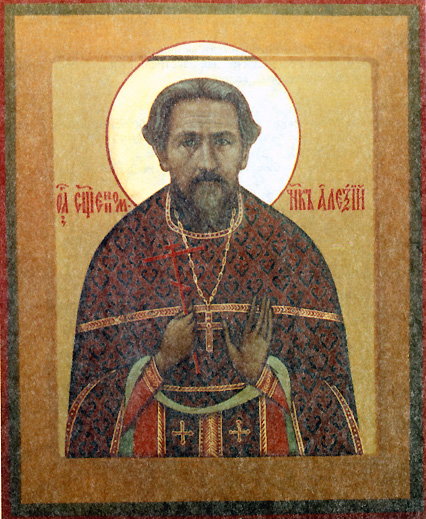
Repose of Saint Alexander Nevsky

The Holy Prince Alexander Nevsky was born on May 30, 1220 in the city of Pereslavl-Zalessk. His father Yaroslav II, Theodore in Baptism (+1246), “a gentle, kindly and genial prince”, was the younger son of Vsevolod III Large Nest (+ 1212), brother of the Holy Prince Yuri Vsevolodovich (February 4). Saint Alexander’s mother, Theodosia Igorevna, a Ryazan princess, was Yaroslav’s third wife. Their older son was the Holy Prince Theodore (June 5), who departed to the Lord at age fifteen. Saint Alexander was their second son.

His childhood was spent at Pereslavl-Zalessk, where his father was prince. The princely tonsure of the lad Alexander (a ceremony of initiation to be soldier) was done in the Savior Transfiguration Cathedral of Pereslavl by Saint Simon, Bishop of Suzdal (May 10), one of the compilers of the Kiev Caves Paterikon (Lives of the Fathers). From this Elder-hierarch, Saint Alexander received his first blessing for military service in the name of God, to defend the Russian Church and the Russian Land.

In 1227 Prince Yaroslav, at the request of the people of Novgorod, was sent by his brother Yuri, the Great Prince of Vladimir, to rule as prince in Novgorod the Great. He took with him his sons, Saints Theodore and Alexander. Dissatisfied with the Vladimir princes, the people of Novgorod soon invited Saint Michael of Chernigov (September 20), and in February 1229 Yaroslav with his sons departed to Pereslavl. The matter ended peacefully: in 1230 Yaroslav with his sons returned to Novgorod, and Saint Michael’s daughter Theodosia was betrothed to Saint Theodore, the elder brother of Saint Alexander. After the death of the bridegroom in 1233 the young princess went to a monastery and became famous in monastic exploits as the nun Saint Euphrosynē of Suzdal (September 25).

From his early years Saint Alexander went along on his father’s campaigns. In 1235 he participated in a battle at the River Emajogi (in present-day Estonia), where the forces of Yaroslav totally routed the Germans. In the following year Yaroslav went to Kiev, “settling” his son, Saint Alexander, to rule independently as prince at Novgorod. In 1239 Saint Alexander entered into marriage, taking as wife the daughter of the Polotsian prince Briacheslav. Some histories relate that the day the princess was baptized was the Name Day of her saintly spouse, and she was named Alexandra. His father, Yaroslav, blessed them at betrothal with the holy wonderworking icon of the Theodore Mother of God (the father was named Theodore in Baptism). Afterwards, Saint Alexander constantly prayed before this icon. Later, it was taken from the Gorodetsk Monastery, where he died, by his brother Basil of Kostroma (+1276), and transferred to Kostroma.

A very troublesome time had begun in Russian history: from the East came the Mongol Horde destroying everything in their path; from the West came the forces of the Teutonic Knights, which blasphemously and with the blessing of the Roman Pope, called itself “Cross-bearers” by wearing the Cross of the Lord. In this terrible hour the Providence of God raised up for the salvation of Russia holy Prince Alexander, a great warrior, man of prayer, ascetic and upholder of the Land of Russia. “Without the command of God there would not have been his prince.”

Abetted by the invasion of Batu, by the ruin of Russian cities, by the dismay and grief of the nation, by the destruction of its finest sons and leaders, a horde of crusaders made incursions into the borders of Russia. First were the Swedes. “A king of Roman faith from the midnight land,” Sweden, in 1240 gathered a great armed force and sent them to the Neva on many ships under the command of his son-in-law, Yarl (Prince) Birger. The haughty Swede sent his messengers to Novgorod to say to Saint Alexander: “Fight me if you have the courage, for I am already here and I am taking your land captive.”

Saint Alexander, then not yet twenty years old, prayed a long time in the church of Saint Sophia, the Wisdom of God. He recited the Psalm of David, saying: “Judge, O Lord, those who injure me, fight against those who fight against me. Take hold of shield and buckler, and rise up to help me” (Ps. 34/35). Archbishop Spyridon blessed the holy prince and his army for the battle. Leaving the church, Saint Alexander exhorted his troops with words of faith: “The power of God is not in numbers, but in truth.” With a smaller force, trusting in the Holy Trinity, the prince hastened towards the enemy to await help from his father, not knowing whether the enemy would attack, nor when.

But there was a miraculous omen: at dawn on July 15 the warrior Pelgui, in Baptism Philip, saw a boat, and on it were the Holy Martyrs Boris and Gleb, in royal purple attire. Boris said: “Brother Gleb, let us help our kinsman Alexander.” When Pelgui reported the vision to the prince, Saint Alexander commanded that no one should speak about the miracle. Emboldened by this, he urged the army to fight valiantly against the Swedes.

“There was a great slaughter of the Latins, and a countless multitude was killed, and their leader was left with a mark upon his face from a sharp spear.” An angel of God invisibly helped the Orthodox army: when morning came, on the opposite bank of the River Izhora, where the army of Saint Alexander was unable to proceed, was a multitude of the slain enemy. Because of this victory at the River Neva on July 15, 1240, the nation called the saint Alexander Nevsky.

The Teutonic Knights remained a dangerous enemy. In a lightning-quick campaign in 1241 Saint Alexander recaptured the ancient Russian fortress of Kopore, expelling the knights. But in 1242, the Germans succeeded capturing Pskov. The enemy boasted of “subjecting all the Slavic nation.” Saint Alexander, setting forth in a winter campaign, liberated Pskov, that ancient home of the Holy Trinity, and in spring of the year 1242 fought a decisive battle against the Teutonic Order. On the ice of Lake Chud both armies clashed on April 5, 1242. Raising his hands towards the heavens, Saint Alexander prayed: “Judge me, O God, and judge my strife with a boastful nation and grant help to me, O God, as to Moses of old against Amalek, and to my great-grandfather Yaroslav the Wise against accursed Svyatopolk.”

By his prayer, by the help of God, and by military might the Crusaders were completely destroyed. There was a terrible slaughter, and there was such a crashing of striking spears and swords that it seemed as though the frozen lake were in motion and not solid ice, since it was covered with blood. When they turned to flee, the enemy was pursued and slashed by Alexander’s army “as if they sped through the air, and there was nowhere for the enemy to flee.” Later, they led a multitude of captives behind the holy prince, marching in disgrace.

Contemporaries clearly understood the universal historical significance of the Great Battle of the Ice, and the name of Saint Alexander was celebrated throughout Holy Russia, “through all the lands, from the Egyptian Sea to Mount Ararat, from both sides of the Varangian Sea to Great Rome.”

The western boundaries of the Russian land were safely secured, and it was time to guard Russia from the East. In 1242 Saint Alexander Nevsky and his father Yaroslav journeyed to the Horde. Metropolitan Cyril blessed them for this new service of many hardships: it was necessary to turn the Tatars from enemies and plunderers into honorable allies, and this required “the meekness of an angel and the wisdom of a snake.”

The Lord crowned the holy mission of the defenders of the Russian land with success, but this required years of hardship and sacrifice. Having made an alliance with Khan Batu, Prince Yaroslav was required to travel to faraway Mongolia, to the capital of all the nomadic empire. The situation of Batu himself being precarious, he sought the support of the Russian princes, wishing to break with his own Golden Horde from faraway Mongolia. And there in turn, they trusted neither Batu nor the Russians.

Prince Yaroslav was poisoned. He died in agony, surviving the Holy Martyr Michael of Chernigov, whose relative he nearly became, by only ten days. Since his father bequeathed him an alliance with the Golden Horde, it was necessary for Saint Alexander Nevsky to hold fast to it in order to avert a new devastation of Russia. Sartak, the son of Batu, had accepted Christianity, and was in charge of Russian affairs with the Horde. He became his friend, and like a brother to him. Vowing his support, Saint Alexander allowed Batu to launch a campaign against Mongolia, to become the chief power in all the Great Steppes, and to raise up the Tatar Christian leader, Khan Munke (most of his Tatar Christians were Nestorians) on the throne in Mongolia.

Not all the Russian princes possessed the wisdom of Saint Alexander Nevsky. Many hoped for European help in the struggle against the Mongol Yoke. Saint Michael of Chernigov, Prince Daniel of Galich, and Andrew, Saint Alexander’s brother, conducted negotiations with the Roman Pope. But Saint Alexander well knew the fate of Constantinople, seized and devastated by Crusaders in the year 1204. His own personal experience taught him not to trust the West. The alliance of Daniel of Galich with the Pope, giving him nothing in return, was a betrayal of Orthodoxy, a unia with Rome. Saint Alexander did not want this to happen to his Church.

When ambassadors of the Roman Pope appeared in 1248 to seduce him also, he wrote in answer that the Russians were faithful to the Church of Christ and to the belief of the Seven Ecumenical Councils: “These we know very well, but we do not accept your teaching.” Catholicism was unsuitable for the Russian Church, and a unia signified a rejection of Orthodoxy, a rejection of the source of spiritual life, a rejection of the historical future foreordained by God, and the dooming of itself to spiritual death.

In the year 1252 many Russian cities rose up against the Tatar Yoke, supporting Andrew Yaroslavich. The situation was very risky. Again there arose a threat to the very existence of Russia. Saint Alexander had to journey to the Horde once more, in order to prevent a punitive Tatar incursion on the Russian lands. Defeated, Andrew fled to the Swedes seeking the help of those very robbers whom his great brother had crushed with the help of God at the Neva.

Saint Alexander became the ruling Great Prince of All Rus: Vladimir, Kiev and Novgorod. A great responsibility before God and history lay upon his shoulders. In 1253, he repelled a new German incursion against Pskov; in 1254 he made a treaty with Norway concerning peacetime borders; in 1256 he went on a campaign to the Finnish land. The chronicler called it “the dark campaign,” because the Russian army went along through the polar night, “going to impassable places, unable to see either day or night”. Into the darkness of paganism Saint Alexander brought the light of Gospel preaching and Orthodox culture. All the coastal region was enlightened and opened up by the Russians.

In 1256 Khan Batu died, and soon his son Sartak was poisoned, the one who was like a brother to Alexander Nevsky. The holy prince journeyed a third time to Sarai in order to confirm peaceful relations of Rus and the Horde with the new Khan, Berke. Although the successor to Batu had accepted Islam, he needed the alliance with Orthodox Rus. In 1261, by the diligent efforts of Saint Alexander and Metropolitan Cyril, a diocese of the Russian Orthodox Church was established at Sarai, the capital of the Golden Horde.

There followed an epoch of great Christianization of the pagan East, and Saint Alexander Nevsky prophetically speculated about the historical vocation of Rus. The holy prince used every possibility to uplift his native land and the ease its allotted cross. In 1262 by his decree in many of the cities the Tatar collectors of tribute and the conscription of soldiers were stopped. They waited for a Tatar reprisal. But the great intercessor of the nation again journeyed to the Horde and he wisely directed the event into quite another channel. Having been dismissed for the uprising of the Russians, Khan Berke ceased to send tribute to Mongolia and proclaimed the Golden Horde an independent entity, making it a veritable shield for Russia from the East. In this great uniting of the Russian and Tatar lands and peoples the future multi-national Russian State was matured and strengthened. Later, within the bounds of the Russian Church, was encompassed nearly the entire legacy of Ghenghis Khan to the coasts of the Pacific Ocean.

This diplomatic journey of Saint Alexander Nevsky to Sarai was his fourth and last. The future of Rus was rescued, his duty before God was fulfilled. But his power was wholly devoted, and his life put to the service of the Russian Church. On the return journey from the Horde Saint Alexander fell deathly ill. Unable to reach Vladimir, in a monastery at Gorodets the prince-ascetic gave up his spirit to the Lord on November 14, 1263, completing his difficult earthly path by receiving the monastic schema with the name of Alexis.

Metropoltan Cyril, the spiritual Father and companion of the holy prince, said in the funeral eulogy: “Know, my child, that already the sun has set for the land of Suzdal. There will be no greater prince in the Russian land.” They took his holy body to Vladimir, the journey lasted nine days, and the body remained undecayed.

On November 23, before his burial at the Nativity Monastery in Vladimir, there was manifest by God “a wondrous miracle and worthy of memory.” When the body of Saint Alexander was placed in the crypt, the steward Sebastian and Metropolitan Cyril wanted to take his hand, in order to put in it the spiritual gramota (document of absolution). The holy prince, as though alive, reached out his hand and took the document from the hand of the Metropolitan. “Because of their terror, and they were barely able to stumble from his tomb. Who would not be astonished at this, since he was dead and the body was brought from far away in the winter time.”

Thus did God glorify the saintly Soldier-Prince Alexander Nevsky. The universal Church glorification of Saint Alexander Nevsky took place under Metropolitan Macarius at the Moscow Cathedral in 1547. The Canon to the saint was compiled at that time by the monk Michael of Vladimir.

Saint Metrophanes (in schema Macarius), Bishop of Voronezh

Saint Metrophanes, Bishop of Voronezh, in the world Michael, was born November 8, 1623. Since the saint’s book of commemorations begins with persons of priestly rank, it is assumed that he was born into a priestly family. We know from Saint Metrophanes’ will that he “was born of pious parents and was raised by them in the incorrupt piety of the Eastern Church, in the Orthodox Faith.”

Until he was forty, the saint lived in the world. He was married, had a son John, and served as a parish priest. The place of Father Michael’s pastoral activity was the village of Sidorovo, situated at the River Molokhta, a tributary of the Teza flowing to the Klyazma, not far from the city of Shui (now Vladimir district).

After his wife died, Father Michael received monastic tonsure with the name Metrophanes in the Zolotnikovskaya Dormition Monastery in 1663. In the Synodikon of the monastery the entry for Saint Metrophanes begins with the words: “Origin of the black clergy Metrophanes of Sidorovo.” After three years of monastic life the hieromonk Metrophanes was chosen igumen of the Saint Cosmas of Yakrom (February 18) monastery. He guided the monastery for ten years, showing himself zealous as its head. By his efforts a church was built here in honor of the Icon of the Savior Not-Made-by-Hands (August 16).

Patriarch Joachim (1674-1690), learning about the deep piety of Saint Metrophanes, raised him in 1675 to the rank of archimandrite of the Makariev-Unzha monastery. Under the supervision of the saint, a stone church was built there in honor of the Annunciation of the Most Holy Theotokos, together with a trapeza and bell-tower.

At the Moscow Council of 1681-1682 among the number of measures taken for the struggle against the old ritualist schism, and with the goal of improving Christian enlightenment among the Orthodox populace, it was resolved to increase the number of dioceses, and to open up new cathedrals at Voronezh, Tambov, Kholmogor and Great Ustiug. Saint Metrophanes was summoned to the capital and on April 2, 1682 was consecrated Bishop of Voronezh by Patriarch Joachim and sixteen archpastors.

The beginning of Saint Metrophanes’ tenure as bishop coincided with a dispute over the imperial succession, and a Church schism. Upon his arrival at Voronezh the saint first of all sent an encyclical to the pastors of his diocese, in which he urged his pastors to moral improvement. “Venerable priests of God Most High,” he wrote, “leaders of the flock of Christ! You ought to possess clear eyes of the mind, illumined by the light of reason, in order to lead others on the correct path. In the words of the Lord, you must be the light yourselves: ‘you are the light of the world’ (Mt. 5:14). When Christ the Savior entrusted His flock to the Apostle Peter, He said to him three times: ‘feed my sheep.’ This is because pastors care for their flock in three ways: by the words of teaching, by prayer and the power of the Holy Mysteries, and by their way of life. You must also act by all three methods: teach the people, set an example of a righteous life, and pray for them. Strengthen them by the Holy Mysteries; above all enlighten the unbelievers by holy Baptism, and try to lead sinners to repentance. Take care of the sick, so that they do not depart from this life without receiving Holy Communion and Holy Unction.”

Saint Metrophanes began his archpastoral activity with the building of a new cathedral church in honor of the Annunciation of the Most Holy Theotokos, replacing an old wooden temple. In 1692 the cathedral with chapels in honor of Saint Michael and Saint Nicholas was consecrated. In the twenty years that Saint Metrophanes was bishop, the number of churches increased from 182 to 239, and two monasteries were founded: the Korotoyaksk Ascension and the Bitiugsk Trinity monasteries. And in the existing monasteries, he concerned himself with eradicating the unseemly behavior and disorder, emphasizing a strict life according to the monastic rule.

The first Bishop of Voronezh eagerly concerned himself with the needs of his flock. He consoled both the poor and the wealthy, was a defender of widows and orphans, and an advocate of the wronged. His home served as a hostel for strangers and a hospice for the sick. The saint prayed not only for the living, but also for dead Christians, and particularly for soldiers fallen for the Fatherland, inscribing their names in the cathedral’s memorial list. Remembering them at Proskomedia [priest’s preparation of the gifts before Liturgy], Saint Metrophanes said: “If this is a righteous soul, then there is a greater portion of worthiness. If he is a sinner, however, then there is a connection with God’s mercy.”

There was a great friendship between Saint Metrophanes and Saint Pitirim, Bishop of Tambov (July 28). They not only kept up a correspondence, but also met for spiritual talks. The founding of the Tregulyaev monastery of Saint John the Forerunner was connected with the friendship of the bishops. On September 15, 1688 Saint Metrophanes visited Saint Pitirim. Three of them (the priest Basil was with them) took a stroll together to the Tambov archpastor’s place of solitary prayer, and there they chose the place for the future monastery.

Saint Metrophanes, an intensely patriotic man, by his own moral authority, kind-heartedness and prayers, contributed to the reforms of Peter I, the necessity and purpose of which he well understood. With the building of a fleet at Voronezh for a campaign against Azov, Saint Metrophanes urged the nation to fully support Peter I. This was particularly important, since many regarded the construction of a fleet as useless. The saint did not limit himself only to advice to the Tsar, but rendered also material support to the state treasury, which needed money for the construction of the fleet, and he provided all the means, aware that they would go for the benefit of the nation.

The saint’s patriotic feelings were combined in his soul with unflinching faith and strict Orthodox conviction, on account of which he did not fear incurring the Tsar’s wrath. The saint refused to go to court to see Peter I, since there were statues of pagan gods there, and although disgrace threatened the saint for disobeying the imperial will, he remained uncompromising. Peter gave orders to remove the statues and from that time was filled with greater respect for the bishop.

Saint Metrophanes died in 1703 in extreme old age, taking the schema with the name Macarius before his death. The funeral took place on December 4, conducted according to the saint’s monastic, not priestly rank. This became the established practice for the burial of a bishop. Tsar Peter I himself carried the coffin from the cathedral to the tomb. Taking leave, he said: “I no longer have a holy Elder such as he. Memory eternal to him.”

One of the remarkable memorials of the life and activity of Saint Metrophanes is his Spiritual Testament. In it he says: “By divine destiny I have arrived at old age and now I have exhausted my natural strength. Therefore I declare this my final writing … When my sinful soul is released from its union with the flesh, I entrust it to God Who created it, that it might find favor as the work of His hands. My sinful bones I grant to the mother of all (the earth), in expectation of the resurrection of the dead.” Further on, addressing pastors and the flocks, the saint says: “The simple sinner gives answer to God for his soul alone, but priests can come to torment for many, in neglecting the sheep, from which they gather milk and wool… For everyone the rule of wise men is: do work, preserve a balance, and you will be rich. Drink temperately, eat little, and you will be healthy. Do good, shun evil, and you will be saved.”

The commemoration of Saint Metrophanes was established in 1832. On August 7, we celebrate the translation of his holy relics.

Sisinius the Confessor, Bishop of Cyzicus

The Holy Confessor Sisinius was Bishop of Cyzicus in what is now Turkey. During the persecution of Diocletian he was slated for martyrdom, having been tied behind a horse in an effort to drag him through the streets until death. Sisinius survived, however, and died in the year 325 AD.

Martyr Theodore of Antioch

The Holy Martyr Theodore of Antioch, a fifteen-year-old youth, was condemned to fierce torments by the emperor Julian the Apostate (361-363). Because he was responsible for the translation of the relics of Saint Babylas (September 4) from Daphne to Antioch, he was arrested and tortured. The executioners were dismayed that the saint could rejoice during the torture, and didn’t seem to feel any pain. They reported this miracle to the emperor, and he gave orders to release the saint.

Saint Theodore later said that when they were tormenting him, an angel appeared and relieved his suffering. When the angel left after the torture, the saint began to feel the pain. The holy Martyr Theodore lived to old age and peacefully fell asleep in the Lord.

Ven. Anthony of Iezeru-Vâlcea Skete

Saint Anthony the Hesychast was born in the sub-Carpathian Mountains of Vâlcea county in Romania, and he loved Christ from his early childhood. He visited many of the monasteries and sketes in that area, conversing with the hesychasts who sought quietude in the mountains. They had a profound effect upon his life, and in time, he entered the monastic life at Iezeru Skete in the beautiful wilderness of Vâlcea.

In 1690, after acquiring experience in the ascetical life, the Igoumen blessed him to live as a solitary a few kilometers above Iezeru Skete on the mountain of the same name. He walked from place to place searching for a stone cave for his cell and a chapel. Finally he found a small cave, where he glorified God and struggled against the demons. Only true hesychasts know what great temptations and trials face those who wish to live as hermits. Saint Anthony labored for three years, digging a chapel out of the cliffside with only a hammer and chisel. He worked during the day, and kept vigil by night. The cave was a shelter for his body, exhausted by his fasting and prostrations. Yet, his soul was not at rest because there was no church nearby where he could lift up his heart and hands in prayer day and night. From time to time, a Hieromonk from the Skete would come to serve the Divine Liturgy on Feast Days and during the fasts.

After praying to the Mother of God, he began to hollow out a space for a small chapel. When it was finished, it was consecrated by Bishop Hilarion of Râmnicu Vâlcea. In this little chapel, the blessed one prayed unceasingly, together with the Angels in heaven, reading the daily Services, and making hundreds of prostrations. Who can describe his long fasts for three days and more, his all-night vigils, his battles with unseen enemies who cannot abide the humility and hardships of the Saints, and his fervent prayer and incessant tears from his heart? He never slept for more than two or three hours a night, nor did he eat anything but breadcrumbs soaked in water and salt, with a few vegetables that he grew in his little garden. He repeated the Jesus Prayer unceasingly from his heart, and he read the Psalms with many tears of humility.

Saint Anthony’s holy life became known throughout the area, and many of the clergy and laity flocked to him for spiritual advice or consolation in their sorrows. He received them with love, gave them the help they needed, and then sent them home in peace. Through his influence, a genuine spiritual revival took place in sub-Carpathian Oltenia.

Saint Anthony fell asleep in the Lord in 1714 after twenty-five years of spiritual struggles. His disciples mourned him, and buried him beside his small chapel. His Life was written by his disciple Father Nicholas. The faithful still go there to light candles and to pray, asking for his blessing and assistance.

Saint Anthony the Hesychast was glorified by the Orthodox Church of Romania in 1992. The inscription on his scroll reads “Lord Jesus Christ, Son of God, have mercy on me.”

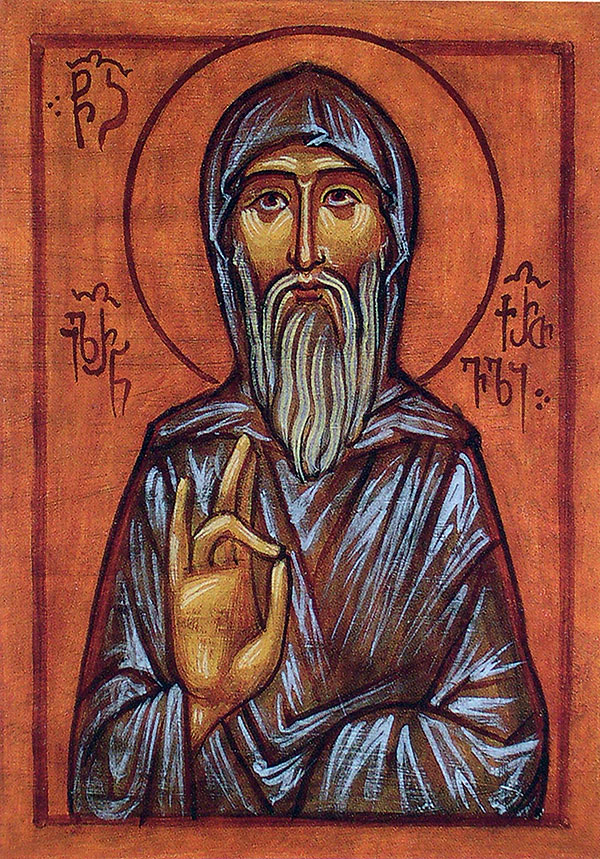
Hieromartyr Gregory (Peradze) of Georgia

Archimandrite Gregory (Peradze) was born August 31, 1899, in the village of Bakurtsikhe, in the Sighnaghi district of Kakheti. His father, Roman Peradze, was a priest.

In 1918, Gregory completed his studies at the theological school and seminary in Tbilisi and enrolled in the philosophy department at Tbilisi University. Three years later, in 1921, he began to teach at the university, but the Georgian Church soon sent him to Germany to study theology. From 1922 to 1925, Gregory studied theology and eastern languages at the University of Berlin, and in 1925 he transferred to the philosophy department at the University of Bonn, where he received a doctoral degree in philosophy for his dissertation “The Monastic Life in Georgia from Its Origins to 1064.” Gregory continued to attend lectures in theology at the University of Louvain until 1927.

In 1927, Gregory moved to England to continue his career in academia, and there he became acquainted with the old patristic manuscripts that were preserved in the library collections of the British Museum and Oxford University. In July of that year, Gregory was named an associate professor at the University of Bonn, and he returned there to lecture on the history of Georgian and Armenian literature. In 1931, Gregory was tonsured a monk, ordained a priest, and appointed dean of the Georgian church in Paris. A year later he was invited to Oxford to lecture on Georgian history.

A new period in Saint Gregory’s life began later in 1932, when the Metropolitan of all Poland, Dionysius Waledinsky, invited him to be a professor of Patrology and the chair of Orthodox Theology at Warsaw University. He often delivered lectures at academic conferences and in academic centers throughout Europe. He sought tirelessly for ancient Georgian manuscripts and historical documents on the Georgian Church. His searches took him to Syria, Palestine, Greece, Bulgaria, Austria, Romania, Italy and England. As a result of his labors, many long-lost Georgian manuscripts surfaced again.

Humility and industriousness characterized the Hieromartyr Gregory throughout his life. In difficult moments he often repeated the words of Saint John Chrysostom: “Glory be to God for all things!”

In the 1920s, as the Red Army was securing its occupation of Georgia, the nation’s treasures were carried away to France for safekeeping. Later, in the 1940s, Georgian society was unaware that, due to Saint Gregory’s efforts alone, many treasures of Georgian national culture were spared confiscation by the Nazis in Paris. Risking execution at the hands of a firing squad, Saint Gregory wrote in the official documentation presented to the Nazis that these items were of no particular value but were precious to the Georgians as part of their national consciousness.

Nor did most of Georgian society know that, in Paris, Archimandrite Gregory had founded a Georgian church in honor of the holy Equal-to-the-Apostles Nino and a parish journal called Jvari Vazisa, or “The Cross of Vines.”

In May of 1942, Saint Gregory was arrested by the Gestapo. The priceless Georgian manuscripts he had preserved and many sacred objects that had been crafted by ancient Georgian masters and collected by Saint Gregory during his travels (in hopes of returning them to Georgia) disappeared after his apartment was searched.

Archimandrite Gregory was arrested for sheltering and aiding Jews and other victims of the fascist persecutions. He was incarcerated at Pawiak Prison in Warsaw, and deported to Auschwitz at the beginning of November.

In the camp an inmate killed a German officer. The guards drove everyone out of the barracks absolutely naked, forcing them to stay in the below-freezing temperatures until someone confessed. Saint Gregory decided to take the blame for the murder, thus saving innocent prisoners from freezing to death. The guards let loose the dogs on the martyr, poured gasoline over him, and lit him on fire. Then they said, “Poles, go warm yourselves around him, your intercessor.”

According to the official German documentation, Gregory Peradze died on December 6, 1942 [November 23, old style], at 4:45 in the afternoon. (According to another account, the martyr entered the gas chamber in place of a Jewish man with a large family. This was reported by a former prisoner, who, after being liberated, visited Metropolitan Dionysius and gave him Saint Gregory’s cross.) In the end, like Christ Himself, Archimandrite Gregory died for having taken upon himself the sin of another.

Daily Readings for Saturday, November 22, 2025

SATURDAY OF THE 9TH WEEK

ABSTAIN FROM MEAT, DAIRY, EGGS

Archippus the Apostle, Philemon the Apostle & his wife, Apphia, Onesimos the Disciple of Paul, Holy Martyr Cecilia and those with her, Afterfeast of the Entry of the Theotokos into the Temple, Kallistos Xanthopoulos, Patriarch of Constantinople, Anthimos, President of Crete, Righteous Jacob of Evia

ST. PAUL’S LETTER TO PHILEMON 1:1-25

PAUL, a prisoner for Christ Jesus, and Timothy our brother, To Philemon our beloved fellow worker, and Apphia our sister and Archippos our fellow soldier, and the church in your house: Grace to you and peace from God our Father and the Lord Jesus Christ. I thank my God always when I remember you in my prayers, because I hear of your love and of the faith which you have toward the Lord Jesus and all the saints, and I pray that the sharing of your faith may promote the knowledge of all the good that is ours in Christ. For I have derived much joy and comfort from your love, my brother, because the hearts of the saints have been refreshed through you. Accordingly, though I am bold enough in Christ to command you to do what is required, yet for love's sake I prefer to appeal to you – I, Paul, an ambassador and now a prisoner also for Christ Jesus – I appeal to you for my child, Onesimos, whose father I have become in my imprisonment. (Formerly he was useless to you, but now he is indeed useful to you and to me.) I am sending him back to you, sending my very heart. I would have been glad to keep him with me, in order that he might serve me on your behalf during my imprisonment for the gospel; but I preferred to do nothing without your consent in order that your goodness might not be by compulsion but of your own free will. Perhaps this is why he was parted from you for a while, that you might have him back for ever, no longer as a slave but more than a slave, as a beloved brother, especially to me but how much more to you, both in the flesh and in the Lord. So if you consider me your partner, receive him as you would receive me. If he has wronged you at all, or owes you anything, charge that to my account. I, Paul, write this with my own hand, I will repay it – to say nothing of your owing me even your own self. Yes, brother, I want some benefit from you in the Lord. Refresh my heart in Christ. Confident of your obedience, I write to you, knowing that you will do even more than I say. At the same time, prepare a guest room for me, for I am hoping through your prayers to be granted to you. Epaphras, my fellow prisoner in Christ Jesus, sends greetings to you, and so do Mark, Aristarchos, Demas, and Luke, my fellow workers. The grace of the Lord Jesus Christ be with your spirit. Amen.

LUKE 9:57-62

At that time, as Jesus was going along the road, a man said to him, "I will follow you wherever you go." And Jesus said to him, "Foxes have holes, and birds of the air have nests; but the Son of man has nowhere to lay his head." To another he said, "Follow me." But he said, "Lord, let me first go and bury my father." But he said to him, "Leave the dead to bury their own dead; but as for you, go and proclaim the kingdom of God." Another said, "I will follow you, Lord; but let me first say farewell to those at my home." Jesus said to him, "No one who puts his hand to the plow and looks back is fit for the kingdom of God.

Afterfeast of the Entry of the Most Holy Mother of God into the Temple

According to Holy Tradition, the Entry of the Most Holy Theotokos into the Temple took place in the following manner. The parents of the Virgin Mary, Saints Joachim and Anna, praying for an end to their childlessness, vowed that if a child were born to them, they would dedicate it to the service of God.

When the Most Holy Virgin reached the age of three, the holy parents decided to fulfill their vow. They gathered together their relatives and acquaintances, and dressed the All-Pure Virgin in Her finest clothes. Singing sacred songs and with lighted candles in their hands, virgins escorted Her to the Temple (Ps. 44/45:14-15). There the High Priest and several priests met the handmaiden of God. In the Temple, fifteen high steps led to the sanctuary, which only the priests and High Priest could enter. (Because they recited a Psalm on each step, Psalms 119/120-133/134 are called “Psalms of Ascent.”) The child Mary, so it seemed, could not make it up this stairway. But just as they placed Her on the first step, strengthened by the power of God, She quickly went up the remaining steps and ascended to the highest one. Then the High Priest, through inspiration from above, led the Most Holy Virgin into the Holy of Holies, where only the High Priest entered once a year to offer a purifying sacrifice of blood. Therefore, all those present in the Temple were astonished at this most unusual occurrence.

After entrusting their child to the Heavenly Father, Joachim and Anna returned home. The All-Holy Virgin remained in the quarters for virgins near the Temple. According to the testimony of Holy Scripture (Exodus 38; 1 Kings 1: 28; Luke 2: 37), and also the historian Josephus Flavius, there were many living quarters around the Temple, in which those who were dedicated to the service of God dwelt.

The earthly life of the Most Holy Theotokos from Her infancy until She was taken up to Heaven is shrouded in deep mystery. Her life at the Jerusalem Temple was also a secret. “If anyone were to ask me,” said Saint Jerome, “how the Most Holy Virgin spent the time of Her youth, I would answer that that is known to God Himself and the Archangel Gabriel, Her constant guardian.”

But there are accounts in Church Tradition, that during the All-Pure Virgin’s stay at the Temple, She grew up in a community of pious virgins, diligently read the Holy Scripture, occupied Herself with handicrafts, prayed constantly, and grew in love for God. From ancient times, the Church has celebrated the Feast of the Entry of the Most Holy Theotokos into the Temple. Indications that the Feast was observed in the first centuries of Christianity are found in the traditions of Palestinian Christians, which say that the holy Empress Helen (May 21) built a church in honor of the Entry of the Most Holy Theotokos into the Temple.

Saint Gregory of Nyssa, in the fourth century, also mentions this Feast. In the eighth century Saints Germanus and Tarasius, Patriarchs of Constantinople, delivered sermons on the Feast of the Entry.

The Feast of the Entry of the Most Holy Theotokos into the Temple foretells God’s blessing for the human race, the preaching of salvation, the promise of the coming of Christ.

DISCOURSE ON THE FEAST OF THE ENTRY

OF OUR MOST PURE LADY THEOTOKOS

INTO THE HOLY OF HOLIES

by Saint Gregory Palamas, Archbishop of Thessalonica

If a tree is known by its fruit, and a good tree bears good fruit (Mt. 7:17; Luke 6:44), then is not the Mother of Goodness Itself, She who bore the Eternal Beauty, incomparably more excellent than every good, whether in this world or the world above? Therefore, the coeternal and identical Image of goodness, Preeternal, transcending all being, He Who is the preexisting and good Word of the Father, moved by His unutterable love for mankind and compassion for us, put on our image, that He might reclaim for Himself our nature which had been dragged down to uttermost Hades, so as to renew this corrupted nature and raise it to the heights of Heaven. For this purpose, He had to assume a flesh that was both new and ours, that He might refashion us from out of ourselves. Now He finds a Handmaiden perfectly suited to these needs, the supplier of Her own unsullied nature, the Ever-Virgin now hymned by us, and Whose miraculous Entrance into the Temple, into the Holy of Holies, we now celebrate. God predestined Her before the ages for the salvation and reclaiming of our kind. She was chosen, not just from the crowd, but from the ranks of the chosen of all ages, renowned for piety and understanding, and for their God-pleasing words and deeds.

In the beginning, there was one who rose up against us: the author of evil, the serpent, who dragged us into the abyss. Many reasons impelled him to rise up against us, and there are many ways by which he enslaved our nature: envy, rivalry, hatred, injustice, treachery, slyness, etc. In addition to all this, he also has within him the power of bringing death, which he himself engendered, being the first to fall away from true life.

The author of evil was jealous of Adam, when he saw him being led from earth to Heaven, from which he was justly cast down. Filled with envy, he pounced upon Adam with a terrible ferocity, and even wished to clothe him with the garb of death. Envy is not only the begetter of hatred, but also of murder, which this truly man-hating serpent brought about in us. For he wanted to be master over the earth-born for the ruin of that which was created in the image and likeness of God. Since he was not bold enough to make a face to face attack, he resorted to cunning and deceit. This truly terrible and malicious plotter pretended to be a friend and useful adviser by assuming the physical form of a serpent, and stealthily took their position. By his God-opposing advice, he instills in man his own death-bearing power, like a venomous poison.

If Adam had been sufficiently strong to keep the divine commandment, then he would have shown himself the vanquisher of his enemy, and withstood his deathly attack. But since he voluntarily gave in to sin, he was defeated and was made a sinner. Since he is the root of our race, he has produced us as death-bearing shoots. So, it was necessary for us, if he were to fight back against his defeat and to claim victory, to rid himself of the death-bearing venomous poison in his soul and body, and to absorb life, eternal and indestructible life.

It was necessary for us to have a new root for our race, a new Adam, not just one Who would be sinless and invincible, but one Who also would be able to forgive sins and set free from punishment those subject to it. And not only would He have life in Himself, but also the capacity to restore to life, so that He could grant to those who cleave to Him and are related to Him by race both life and the forgiveness of their sins, restoring to life not only those who came after Him, but also those who already had died before Him. Therefore, Saint Paul, that great trumpet of the Holy Spirit, exclaims, “the first man Adam was made a living soul, the last Adam was made a quickening spirit” (1 Cor. 15:45).

Except for God, there is no one who is without sin, or life-creating, or able to remit sin. Therefore, the new Adam must be not only Man, but also God. He is at the same time life, wisdom, truth, love, and mercy, and every other good thing, so that He might renew the old Adam and restore him to life through mercy, wisdom and righteousness. These are the opposites of the things which the author of evil used to bring about our aging and death.

As the slayer of mankind raised himself against us with envy and hatred, so the Source of life was lifted up [on the Cross] because of His immeasurable goodness and love for mankind. He intensely desired the salvation of His creature, i.e., that His creature would be restored by Himself. In contrast to this, the author of evil wanted to bring God’s creature to ruin, and thereby put mankind under his own power, and tyrannically to afflict us. And just as he achieved the conquest and the fall of mankind by means of injustice and cunning, by deceit and his trickery, so has the Liberator brought about the defeat of the author of evil, and the restoration of His own creature with truth, justice and wisdom.

It was a deed of perfect justice that our nature, which was voluntarily enslaved and struck down, should again enter the struggle for victory and cast off its voluntary enslavement. Therefore, God deigned to receive our nature from us, hypostatically uniting with it in a marvelous way. But it was impossible to unite that Most High Nature, Whose purity is incomprehensible for human reason, to a sinful nature before it had been purified. Therefore, for the conception and birth of the Bestower of purity, a perfectly spotless and Most Pure Virgin was required.

Today we celebrate the memory of those things that contributed, if only once, to the Incarnation. He Who is God by nature, the Co-unoriginate and Coeternal Word and Son of the Transcendent Father, becomes the Son of Man, the Son of the Ever-Virgin. “Jesus Christ the same yesterday and today, and forever” (Heb. 13:8), immutable in His divinity and blameless in His humanity, He alone, as the Prophet Isaiah prophesied, “practiced no iniquity, nor deceit with His lips” (Is. 53: 9). He alone was not brought forth in iniquity, nor was He conceived in sin, in contrast to what the Prophet David says concerning himself and every other man (Ps. 50/51: 5). Even in what He assumes, He is perfectly pure and has no need to be cleansed Himself. But for our sake, He accepted purification, suffering, death and resurrection, that He might transmit them to us.

God is born of the spotless and Holy Virgin, or better to say, of the Most Pure and All-Holy Virgin. She is above every fleshly defilement, and even above every impure thought. Her conceiving resulted not from fleshly lust, but by the overshadowing of the Most Holy Spirit. Such desire being utterly alien to Her, it is through prayer and spiritual readiness that She declared to the angel: “Behold the handmaiden of the Lord; be it unto Me according to thy word” (Luke 1:38), and that She conceived and gave birth. So, in order to render the Virgin worthy of this sublime purpose, God marked this ever-virgin Daughter now praised by us, from before the ages, and from eternity, choosing Her from out of His elect.

Turn your attention then, to where this choice began. From the sons of Adam God chose the wondrous Seth, who showed himself a living heaven through his becoming behavior, and through the beauty of his virtues. That is why he was chosen, and from whom the Virgin would blossom as the divinely fitting chariot of God. She was needed to give birth and to summon the earth-born to heavenly sonship. For this reason also all the lineage of Seth were called “sons of God,” because from this lineage a son of man would be born the Son of God. The name Seth signifies a rising or resurrection, or more specifically, it signifies the Lord, Who promises and gives immortal life to all who believe in Him.

And how precisely exact is this parallel! Seth was born of Eve, as she herself said, in place of Abel, whom Cain killed through jealousy (Gen. 4:25); and Christ, the Son of the Virgin, was born for us in place of Adam, whom the author of evil also killed through jealousy. But Seth did not resurrect Abel, since he was only a type of the resurrection. But our Lord Jesus Christ resurrected Adam, since He is the very Life and the Resurrection of the earth-born, for whose sake the descendents of Seth are granted divine adoption through hope, and are called the children of God. It was because of this hope that they were called sons of God, as is evident from the one who was first called so, the successor in the choice. This was Enos, the son of Seth, who as Moses wrote, first hoped to call on the Name of the Lord (Gen. 4:26).

In this manner, the choice of the future Mother of God, beginning with the very sons of Adam and proceeding through all the generations of time, through the Providence of God, passes to the Prophet-king David and the successors of his kingdom and lineage. When the chosen time had come, then from the house and posterity of David, Joachim and Anna are chosen by God. Though they were childless, they were by their virtuous life and good disposition the finest of all those descended from the line of David. And when in prayer they besought God to deliver them from their childlessness, and promised to dedicate their child to God from its infancy. By God Himself, the Mother of God was proclaimed and given to them as a child, so that from such virtuous parents the all-virtuous child would be raised. So in this manner, chastity joined with prayer came to fruition by producing the Mother of virginity, giving birth in the flesh to Him Who was born of God the Father before the ages.

Now, when Righteous Joachim and Anna saw that they had been granted their wish, and that the divine promise to them was realized in fact, then they on their part, as true lovers of God, hastened to fulfill their vow given to God as soon as the child had been weaned from milk. They have now led this truly sanctified child of God, now the Mother of God, this Virgin into the Temple of God. And She, being filled with Divine gifts even at such a tender age, … She, rather than others, determined what was being done over Her. In Her manner She showed that She was not so much presented into the Temple, but that She Herself entered into the service of God of her own accord, as if she had wings, striving towards this sacred and divine love. She considered it desirable and fitting that she should enter into the Temple and dwell in the Holy of Holies.

Therefore, the High Priest, seeing that this child, more than anyone else, had divine grace within Her, wished to set Her within the Holy of Holies. He convinced everyone present to welcome this, since God had advanced it and approved it. Through His angel, God assisted the Virgin and sent Her mystical food, with which She was strengthened in nature, while in body She was brought to maturity and was made purer and more exalted than the angels, having the Heavenly spirits as servants. She was led into the Holy of Holies not just once, but was accepted by God to dwell there with Him during Her youth, so that through Her, the Heavenly Abodes might be opened and given for an eternal habitation to those who believe in Her miraculous birthgiving.

So it is, and this is why She, from the beginning of time, was chosen from among the chosen. She Who is manifest as the Holy of Holies, Who has a body even purer than the spirits purified by virtue, is capable of receiving … the Hypostatic Word of the Unoriginate Father. Today the Ever-Virgin Mary, like a Treasure of God, is stored in the Holy of Holies, so that in due time, (as it later came to pass) She would serve for the enrichment of, and an ornament for, all the world. Therefore, Christ God also glorifies His Mother, both before, and also after His birth.

We who understand the salvation begun for our sake through the Most Holy Virgin, give Her thanks and praise according to our ability. And truly, if the grateful woman (of whom the Gospel tells us), after hearing the saving words of the Lord, blessed and thanked His Mother, raising her voice above the din of the crowd and saying to Christ, “Blessed is the womb that bore Thee, and the paps Thou hast sucked” (Luke 11:27), then we who have the words of eternal life written out for us, and not only the words, but also the miracles and the Passion, and the raising of our nature from death, and its ascent from earth to Heaven, and the promise of immortal life and unfailing salvation, then how shall we not unceasingly hymn and bless the Mother of the Author of our Salvation and the Giver of Life, celebrating Her conception and birth, and now Her Entry into the Holy of Holies?

Now, brethren, let us remove ourselves from earthly to celestial things. Let us change our path from the flesh to the spirit. Let us change our desire from temporal things to those that endure. Let us scorn fleshly delights, which serve as allurements for the soul and soon pass away. Let us desire spiritual gifts, which remain undiminished. Let us turn our reason and our attention from earthly concerns and raise them to the inaccessible places of Heaven, to the Holy of Holies, where the Mother of God now resides.

Therefore, in such manner our songs and prayers to Her will gain entry, and thus through her mediation, we shall be heirs of the everlasting blessings to come, through the grace and love for mankind of Him Who was born of Her for our sake, our Lord Jesus Christ, to Whom be glory, honor and worship, together with His Unoriginate Father and His Coeternal and Life-Creating Spirit, now and ever and unto ages of ages. Amen.

Apostles of the Seventy Philemon and Archippus, Martyr Apphia, wife of Philemon and Equal-to-the-Apostles, and Onesimus, disciple of Saint Paul

The Holy Apostles of the Seventy Philemon and his wife Apphia lived in the city of Colossa in Phrygia. After they were baptized by the holy Apostle Paul, they converted their house into a house of prayer, where all those who believed in Christ gathered and attended services. They devoted themselves to serving the sick and downcast.

Saint Philemon became bishop of the city of Gaza, and he preached the Word of God throughout Phrygia. The holy Apostle Paul continued to be his guide, and addressed to him his Epistle filled with love, and in which he sends blessings “to Philemon our dearly beloved, and fellow laborer, and to our beloved Apphia, and to Archippus our fellow soldier, and to the church in thy house” (Phil 1:1-3).

Saint Onesimus (February 15), also mentioned in the Epistle, was Saint Philemon’s former slave.

Saints Philemon and Apphia, and also Saint Archippus (who also lived at Colossa), all received the crown of martyrdom during the persecution of Nero (54-68). During a pagan festival an enraged crowd rushed into the Christian church when services were going on. All fled in terror, and only Saints Philemon, Archippus and Apphia remained. They seized them and led them off to the city prefect. The crowd beat and stabbed Saint Archippus with knives, and he died on the way to the court. Saints Philemon and Apphia were stoned to death by order of the prefect.

The memory of the holy Apostles Archippus, Philemon, and Apphia is celebrated also on February 19.

Martyr Michael, Prince of Tver

The Holy Right-Believing Prince Michael of Tver was born in the year 1272, after the death of his father Great Prince Yaroslav Yaroslavich, the brother of Saint Alexander Nevsky (November 23). On his journey to the Horde, Prince Yaroslav fell ill, and was tonsured as a monk with the name Athanasios, then he reposed. Michael’s mother, Xenia, raised her son with fervent love for God. Michael was educated and studied under the guidance of an Archbishop (probably Clement) of Novgorod. He took the place of his older brother Svyatoslav in the principality of Tver.

In 1285 Michael built a stone church in honor of the Savior’s Transfiguration to replace of the wooden church of Saints Cosmas and Damian. Upon the death of Great Prince Andrew Alexandrovich (+1305), Michael went to the Horde and was appointed as Great Prince by right of seniority. Prince Yurii of Moscow would not submit to this, however, because he sought the princely title for himself. He was often at the Golden Horde of the new Khan Uzbek, who had converted to Mohammedanism, and was known for his cruelty and fanaticism. Prince Yurii knew how to please the Khan, so he married the Khan's sister Konchaka and was given the title of Great Prince.

Even then he did not calm down, but instead began a civil war with Tver. In Yurii’s army was a detachment of Tatars sent by Uzbek, with Kavgadi at the head. But the men of Tver, led by Prince Michael, defeated Yurii on December 22, 1317. Many captives were taken, including Kavgadi, whom Saint Michael released, and the Moscow Prince Yurii's wife Konchaka, who died unexpectedly at Tver.

Prince Yurii slandered Prince Michael before the Khan, accusing him of poisoning Konchaka. The Khan became enraged, threatening to destroy Saint Michael’s princely holding, and demanded that he appear to give an account. Not wishing to spill Russian blood in an unequal struggle with the Khan, Saint Michael went humbly to the Horde, knowing that this meant certain death for him. He bade farewell to his family and the people of Tver, and received a blessing for his exploit of martyrdom from his Spiritual Father Igoumen John.

“Father,” said Michael, “I was much concerned for the peace of Christians, but because of my sins, I was not able to stop this civil war. Now give me your blessing, so that if my blood is shed for them, they might have some respite, and so the Lord may forgive my sins.”

An unjust trial was held at the Horde, which found the Saint guilty of disobedience to the Khan, and sentenced him to death. They removed him under guard and put him in heavy wooden stocks. As was his habit, Saint Michael constantly read the Psalter in prison and blessed the Lord for allowing him to suffer for Him. He asked not to be abandoned in his present torments. Since the hands of the holy sufferer were secured in the stocks, a boy sat before him and turned the pages of the Psalter. The holy captive languished at the Horde for a long time, enduring beatings and ridicule. They suggested that he flee, but the Saint replied, “Never in my life have I fled from an enemy. If I save myself and my people remain in peril, what glory is that for me? No, let it be as the Lord wills.”

By the mercy of God, he was not deprived of Christian solace: Orthodox priests attended to him, the Igoumens Alexander and Mark. Each week he made his Confession and received the Holy Mysteries of Christ, thus receiving a Christian preparation for his death. At the instigation of Prince Yurii and Kavgadi, who wanted revenge on Michael for their defeat, assassins were sent into the encampment where the captive was held. On November 22, 1318, they beat the Martyr severely and kicked him, then one of them stabbed Prince Michael with a knife and cut out his heart.

The royal Martyr’s naked body was exposed for abuse, and later they covered him with a cloth and placed him on a large board attached to a cart. Two guards were posted to watch the body that night, but fear overcame them and they fled. In the morning, the body was not on the board.

On the previous night many, not only Orthodox but Tatars as well, had seen two radiant clouds shining over the place where the Martyr's body lay. Although many wild animals roamed the steppes, not one of them touched him. In the morning everyone said, “Prince Michael is a Saint, and was unjustly murdered."

Finally, the body of the martyred Prince was brought to Moscow and buried in the Kremlin's Monastery of the Savior in the Transfiguration church. Princess Anna was not yet aware of her husband's martyrdom. A year later, Prince Yurii returned from the Khan with Michael's yarlyk.1 He brought with him the Tver boyars and Prince Constantine from the Horde. A year later, in 1319, the people of Tver learned the fate of their Prince, his death, and his burial in Moscow.

Princess Anna and her children asked Prince Yurii of Moscow for permission to carry the holy relics to Tver, and he barely gave his consent. Then boyars from Tver were sent to Moscow to bring Saint Michael's body back to Tver. When they arrived in Moscow they witnessed a remarkable miracle by which the Lord was pleased to glorify His Saint: his body showed no signs of decay. The boyars took the coffin with the Holy Prince's relics and carried them to Tver with much honor. As the procession approached the city, Princess Anna and her sons Dēmḗtrios, Alexander and Basil went toward the Volga, and Bishop Barsanuphios, with all the priests of the cathedral and countless people, met the holy relics on the shore. There was much sobbing, so loud that the choir could not be heard, and Princess Anna wept bitter tears.

At the request of his wife, Saint Anna of Kashin (October 2), and the people of Tver, the relics of Saint Michael were transferred to his native city, and on September 6, 1320 they were placed in the church he had built in honor of the Lord's Transfiguration. Local veneration of the Holy Prince began soon after the transfer of his relics to Tver, and his Church-wide glorification took place at the Council of 1549.

On November 24, 1632 the incorrupt relics of Saint Michael were uncovered. The martyred Prince has often helped the Russian land. In 1606 the Polish and Lithuanians besieging Tver repeatedly saw an unknown horseman ride out from the city on a white horse, with sword in hand, forcing them to flee. Later, when they saw an icon of Saint Michael, they affirmed with an oath to Archbishop Theoktistos of Tver that the horseman was indeed Saint Michael.


1 яр­лы­к: An emblem of Saint Michael's office as Great Prince.

Blessed Yaropolk (in Baptism Peter), Prince of Vladimir-Volhynia

Holy Prince Yaropolk Izyaslavich, in Holy Baptism Peter, was the grandson of Yaroslav the Wise, and great-grandson of Saint Vladimir. He shared the sad fate of his father, the Kievan Great Prince Izyaslav, expelled by his brothers from Kiev.

Yaropolk journeyed on various missions for his father to the Polish king, the German emperor, and the Bishop of Rome Saint Gregory VII (1073-1085). Upon the death of Great Prince Svyatoslav in 1078, Prince Izyaslav was restored to his principality, and Yaropolk received Vyzhgorod. After the death of his father, he was given as his appanage the city of Vladimir-Volynsk, from which the Rostislavichi attempted to displace him.

On the way from Vladimir to Zvenigorod-Galitsk, Yaropolk was treacherously murdered by Neryadets, one of his retainers (+1086). The murderer indeed had been bribed by the Rostislavichi. The body of Yaropolk was transferred to Kiev and on December 5 was buried at the monastery of Saint Demetrius in the church of Saint Peter, which he himself had begun to build. Many Church memorials, beginning with the Chronicle of Saint Nestor, testify that the murdered Prince Yaropolk be venerated in the rank of saints well-pleasing to God.

Virgin Martyr Cecilia and the Holy Martyrs Valerian, Tiburtius and Maximus at Rome

Saint Cecilia was born in Rome during the III century to wealthy and illustrious parents, who were idolaters. Hearing the Gospel preached, she came to believe in Christ, and vowed to preserve her virginity. Against her will, however, they betrothed her to a noble pagan named Valerian, and forced her to wear fine clothes and jewelry at all times. Beneath these rich garments, she wore a rough hair shirt.

Filled with love for her Bridegroom Christ, she entreated Him to prevent the wedding. When the day of the marriage arrived, Saint Cecilia wept bitterly and prayed that the Lord would send an Angel to guard her chastity. That night, as they were led to the bridal chamber, she told her husband that an invisible Angel had been sent to defend her virginity. "If you touch me," she said, "he will slay you at once."

Valerian asked to see this Angel, but she told him, "you cannot see the Angel because you do not know the true God. You will not be able to see the Angel until you are cleansed of the impurity of unbelief."

“How may I be cleansed?” he asked.

She said that if he asked Bishop Urban to baptize him, he would be able to see the Angel. The Saint persuaded her husband to see Bishop Urban, who was hiding from the persecution in a cave along the Appian Way. The wise bishop's instructions filled Valerian's soul with joy, and after his Baptism Bishop Urban sent him home.

He found Cecilia praying, and saw an Angel of indescribable beauty standing beside her, holding two crowns of red roses and white lilies. Placing the wreaths on their heads he said, "Guard these wreaths by keeping your hearts pure and your bodies undefiled. I have brought them from Paradise, and no one can see them unless they, like you, are lovers of chastity. God sent me to you, Valerian, because you have agreed to preserve your purity. He wants you to have what you desire."

Valerian said, "No one is dearer to me than my brother Tiburtius. I ask the Lord to deliver him from the worship of idols, and convert him, as he converted me."

The Angel said that this request was pleasing to God, and would be granted. He also revealed that Valerian and Tiburtius would suffer martyrdom together. Soon after this, Tiburtius came to visit his brother. When he entered the house, he noticed the fragrance of roses and lilies. Valerian told him that he was able to smell the flowers because he had prayed that Tiburtius would come to love God and become worthy of an unfading crown.

"Am I dreaming," Tiburtius exclaimed, "or are you really telling me this?"

Valerian answered, "Until now, we have been living as if in a dream, worshiping false 'gods' and unclean demons. Now we walk in God's truth and grace."

After receiving instruction, Tiburtius was baptized by Bishop Urban. Then the brothers distributed part of their inheritance to the poor, took care of the sick, and buried the Christians who had been tortured to death by their persecutors.

This was reported to Almachius, the Eparch of the city, who ordered that the brothers be arrested and brought to trial. He ordered the Saints to renounce Christ and offer sacrifice to the pagan "gods," but the brothers refused. Then they scourged the brothers without mercy. Saint Valerian urged the Christians not to fear torments, but to stand firm for Christ.

In order to prevent the brothers from influencing the people, Almachius ordered that the martyrs be taken outside the city and executed there. The soldiers accompanying the martyrs to execution were commanded by Maximus. He was amazed at the courage of the Saints, and asked them why they did not fear death. The holy brothers said that they were exchanging this temporal life for everlasting life. Maximus wanted to learn Christian teaching in detail. He took Saints Valerian and Tiburtius to his own house and conversed with them all night. When she heard of this, Saint Cecilia went with a priest to Maximus. Then he and his entire family were baptized.

The next day, when the Martyrs Valerian and Tiburtius were beheaded, Saint Maximus confessed before everyone that he saw their holy souls being taken up to Heaven. Because of this, the holy Martyr Maximus was beaten to death.

The Eparch wanted to confiscate the property of those who had been executed, but when he was told that Saint Cecilia had already given her remaining wealth to the poor and had converted 400 men, he ordered her execution. For three days they tormented her in an overheated bath-house, with the heat and steam, but she was helped by the grace of God. Seeing that Saint Cecilia was still alive, they decided to behead her. The executioner struck her three times with a sword, but only wounded her. The holy Martyr lived three more days in full consciousness, encouraging those around her. Finally, she surrendered her soul to God, and her body was buried with reverence.

Saint Cecilia is regarded as the patron Saint of Church music. St. John Chrysostom extols the benefits of sacred music, and shows how strongly the fire of divine love is kindled in the soul by devout psalmody. (On Psalm 41).

The Holy Relics of Saints Valerian and Tiburtius are in the Roman Catholic Basilica of Saints Valerian and Cecilia in Rome.

Martyr Procopius the Reader at Caesarea, in Palestine

The Holy Martyr Procopius was a reader in the Church of Jerusalem. He led a strict ascetic life, for which he received from the Lord the ability to cast out demons. The zealous preacher of the Word of God was arrested and brought to trial in Palestinian Caesarea. For his refusal to offer sacrifice to idols, he was beheaded.

Martyr Menignus at Parium

The Holy Martyr Menignus was a simple worker, a linen-bleacher. The Lord granted him His special mercy. Twice in his life, he heard a voice from Heaven calling on him to suffer for Christ.

During the persecution of Christians under the emperor Decius (249-251) a miracle occurred: an angel led Christians out of prison. Having learned of this, Saint Menignus rejoiced and loved the Savior with all his heart. Calling to mind the heavenly summons to suffer for Christ, he tore up the decree of the impious Decius which hung in the city square, and which ordered the persecution of Christians. The saint declared himself a follower of Christ. For this he was arrested and after fierce tortures he was beheaded.

Saint Agabbas of Syria

Saint Agabbas was by birth an Ishmaelite (Arab) and pursued asceticism in Syria. He was a novice under the Monk Eusebius, from whom he learned inner prayer and silence, and he lived thirty-eight years as a hermit. The saint always went barefoot, wore chains on his loins and never sat nor lay down. Saint Agabbas spent both day and night standing or kneeling, constantly at prayer. He finished his ascetic life in peace.

Righteous Michael the soldier of Potouka, Bulgaria

Saint Michael the Soldier of Bulgaria, was among the first of the Bulgarians to become Christian, and lived in the city of Potuka during the reign of the Byzantine Emperor Michael III (855-867). While still an infant, he was known as a “saintly child.” From his youth he led a blameless life, possessed the fear of God, fasted, generously distributed alms to the poor, visited the sick, and was meek and humble.

At twenty-four years of age Saint Michael was made commander of a troop of soldiers. At that time, the Turks were warring against Christians, and Saint Michael inspired his troops by his bravery in battle. When the allies of the Bulgarians, the Greeks, fled from the field of battle, he fell to the ground and prayed with tears for the deliverance of the Christians. Then he led his own soldiers against the enemy. Rushing into the center of the enemy formation, he put them into disarray, and remained unharmed himself.

Returning homeward after a battle, he rescued the inhabitants of a certain city in the Raipha wilderness from a huge beast which emerged from a lake and attacked children. People came to see this brave soldier when they heard that he had slain the beast they once worshiped as a god. He preached the Gospel to them, and turned them from demon worship and human sacrifice.

Soon after he returned home, Saint Michael surrendered his soul to the Lord, Whom he had loved since his youth. He wrought many miracles after death, healing those who came to him with faith.

The transfer of the relics of the saint from Potuka to Trnovo occurred in the year 1206, and at the beginning of the nineteenth century, they were transferred to Wallachia.

Saint Kallistos II, Patriarch of Constantinople

Saint Kallistos (Kállistos) lived a life of asceticism at the Magul Skete on Mount Athos (opposite Philotheou Monastery), abiding there for twenty-eight years. He was a disciple of Saint Gregory of Sinai (August 8), whose Life he wrote.

He became closely acquainted with Saint Ignatius Xanthopoulos, who was born in Constantinople. They have been described as two bodies united with one soul, in a spiritual sense, for both were godly-minded and attained great heights of noetic prayer. According to Saint Symeon of Thessaloniki (September 15), Kállistos and Ignatius Xanthopoulos beheld the Uncreated Light, just as the Apostles had on Mount Tabor, and their faces seemed to “shine like the sun.” Together they wrote the "Directions to Hesychasts in One Hundred Chapters," a treatise in 100 sections on the ascetical practices of the Hesychast monks. This was incorporated into the Philokalia of the Wakeful Fathers by Saint Nikodemos the Hagiorite, and it had a profound influence on Orthodox spirituality.

In 1397 Saint Kállistos was elevated to the patriarchal throne, but for only three months during the reign of Manuel Paleologos (1391-1425). He agreed to travel to Serbia in order to bring peace to that church, stopping along the way at Mount Athos. There Saint Maximos Kavsokalyvites (January 13) predicted: "This Elder shall not see his flock again, for the funeral dirge, "Blessed are the blameless in the way" (Psalm 118/119:1) is sounding behind him.

When he reached Serbia, Saint Kállistos exchanged this temporal life for everlasting life.

New Hieromartyr Alexis (Benemanskii) of Tver

Born January 6, 1881 in the Tver region, the New Martyr Alexis Constantinovich Benemanskii was a priest of the Diocese of Tver, Russia, during the early 1900s. He widely opposed the Living Church, which had been set up in the 1920s by the Soviet state to challenge the legitimacy of the Patriarchate of Moscow and, initially, Saint Tikhon himself. He was tenacious in defending the canonical Church against the "renovationists," as proponents of the Living Church were called, and was unwilling to sacrifice his principles. Over the years, he had been arrested four times and imprisoned or exiled. On December 4/November 21, 1937, he was arrested again, together with his coworker Archpriest Elias Gromoglasov, and martyred the following day, having been accused of taking part in fictitious counter-revolutionary activities allegedly organized by the New Martyr Archbishop Thaddeus of Tver, who was arrested three days later and subsequently martyred. He was canonized by the Diocese of Tver in 1999 and was numbered among those glorified as new martyrs and confessors of the Soviet Yoke by the Russian Orthodox Church in August 2000.

New Hieromartyr Elias (Gromoglasov) of Tver

Born in 1869, the New Martyr Elias Gromoglasov was a priest of the Diocese of Tver, Russia, during the early 1900s. He was well educated in canon law, theology and other disciplines, had taught for many years, and had authored numerous pieces on a variety of topics ranging from canon law to the Old Believer Schism. In the early 1920s he was arrested in Moscow due to his opposition to the confiscation of Church property by the Soviet regime, but was soon released. In 1925 he was again arrested and sentenced to three years of exile in Surgut, Siberia. Deprived of the right to reside in Moscow after his release, he relocated to Tver. On December 4, 1937, he was again arrested with his coworker, Saint Alexis Benemanskii, with whom he was martyred on the following day. He was canonized by the Diocese of Tver in 1999 and was numbered among those glorified as new martyrs and confessors of the Soviet Yoke by the Russian Orthodox Church in August 2000.

Daily Readings for Friday, November 21, 2025

THE ENTRANCE OF THE THEOTOKOS INTO THE TEMPLE

ABSTAIN FROM MEAT, DAIRY, EGGS

The Entrance of the Theotokos into the Temple

ST. PAUL’S LETTER TO THE HEBREWS 9:1-7

BRETHREN, the first covenant had regulations for worship and an earthly sanctuary. For a tent was prepared, the outer one, in which were the lampstand and the table and the bread of the Presence; it is called the Holy Place. Behind the second curtain stood a tent called the Holy of Holies, having the golden altar of incense and the ark of the covenant covered on all sides with gold, which contained a golden urn holding the manna, and Aaron’s rod that budded, and the tables of the covenant; above it were the cherubim of glory overshadowing the mercy seat. Of these things we cannot now speak in detail. These preparations having thus been made, the priests go continually into the outer tent, performing their ritual duties; but into the second only the high priest goes, and he but once a year, and not without taking blood which he offers for himself and for the errors of the people.

LUKE 10:38-42, 11:27-28

At that time, Jesus entered a village; and a woman called Martha received him into her house. And she had a sister called Mary, who sat at the Lord’s feet and listened to his teaching. But Martha was distracted with much serving; and she went to him and said, “Lord, do you not care that my sister has left me to serve you alone? Tell her then to help me.” But the Lord answered her, “Martha, Martha, you are anxious and troubled about many things; one thing is needful. Mary has chosen the good portion, which shall not be taken away from her.” As he said this, a woman in the crowd raised her voice and said to him, “Blessed is the womb that bore you, and the breasts that you sucked!” But he said, “Blessed rather are those who hear the word of God and keep it!”

The Entry of the Most Holy Mother of God into the Temple

According to Holy Tradition, the Entry of the Most Holy Theotokos into the Temple took place in the following manner. The parents of the Virgin Mary, Saints Joachim and Anna, praying for an end to their childlessness, vowed that if a child were born to them, they would dedicate it to the service of God.

When the Most Holy Virgin reached the age of three, the holy parents decided to fulfill their vow. They gathered together their relatives and acquaintances, and dressed the All-Pure Virgin in Her finest clothes. Singing sacred songs and with lighted candles in their hands, virgins escorted Her to the Temple (Ps. 44/45:14-15). There the High Priest and several priests met the handmaiden of God. In the Temple, fifteen high steps led to the sanctuary, which only the priests and High Priest could enter. (Because they recited a Psalm on each step, Psalms 119/120-133/134 are called “Psalms of Ascent.”) The child Mary, so it seemed, could not make it up this stairway. But just as they placed Her on the first step, strengthened by the power of God, She quickly went up the remaining steps and ascended to the highest one. Then the High Priest, through inspiration from above, led the Most Holy Virgin into the Holy of Holies, where only the High Priest entered once a year to offer a purifying sacrifice of blood. Therefore, all those present in the Temple were astonished at this most unusual occurrence.

After entrusting their child to the Heavenly Father, Joachim and Anna returned home. The All-Holy Virgin remained in the quarters for virgins near the Temple. According to the testimony of Holy Scripture (Exodus 38; 1 Kings 1: 28; Luke 2: 37), and also the historian Josephus Flavius, there were many living quarters around the Temple, in which those who were dedicated to the service of God dwelt.

The earthly life of the Most Holy Theotokos from Her infancy until She was taken up to Heaven is shrouded in deep mystery. Her life at the Jerusalem Temple was also a secret. “If anyone were to ask me,” said Saint Jerome, “how the Most Holy Virgin spent the time of Her youth, I would answer that that is known to God Himself and the Archangel Gabriel, Her constant guardian.”

But there are accounts in Church Tradition, that during the All-Pure Virgin’s stay at the Temple, She grew up in a community of pious virgins, diligently read the Holy Scripture, occupied Herself with handicrafts, prayed constantly, and grew in love for God. From ancient times, the Church has celebrated the Feast of the Entry of the Most Holy Theotokos into the Temple. Indications that the Feast was observed in the first centuries of Christianity are found in the traditions of Palestinian Christians, which say that the holy Empress Helen (May 21) built a church in honor of the Entry of the Most Holy Theotokos into the Temple.

Saint Gregory of Nyssa, in the fourth century, also mentions this Feast. In the eighth century Saints Germanus and Tarasius, Patriarchs of Constantinople, delivered sermons on the Feast of the Entry.

The Feast of the Entry of the Most Holy Theotokos into the Temple foretells God’s blessing for the human race, the preaching of salvation, the promise of the coming of Christ.

DISCOURSE ON THE FEAST OF THE ENTRY

OF OUR MOST PURE LADY THEOTOKOS

INTO THE HOLY OF HOLIES

by Saint Gregory Palamas, Archbishop of Thessalonica

If a tree is known by its fruit, and a good tree bears good fruit (Mt. 7:17; Luke 6:44), then is not the Mother of Goodness Itself, She who bore the Eternal Beauty, incomparably more excellent than every good, whether in this world or the world above? Therefore, the coeternal and identical Image of goodness, Preeternal, transcending all being, He Who is the preexisting and good Word of the Father, moved by His unutterable love for mankind and compassion for us, put on our image, that He might reclaim for Himself our nature which had been dragged down to uttermost Hades, so as to renew this corrupted nature and raise it to the heights of Heaven. For this purpose, He had to assume a flesh that was both new and ours, that He might refashion us from out of ourselves. Now He finds a Handmaiden perfectly suited to these needs, the supplier of Her own unsullied nature, the Ever-Virgin now hymned by us, and Whose miraculous Entrance into the Temple, into the Holy of Holies, we now celebrate. God predestined Her before the ages for the salvation and reclaiming of our kind. She was chosen, not just from the crowd, but from the ranks of the chosen of all ages, renowned for piety and understanding, and for their God-pleasing words and deeds.

In the beginning, there was one who rose up against us: the author of evil, the serpent, who dragged us into the abyss. Many reasons impelled him to rise up against us, and there are many ways by which he enslaved our nature: envy, rivalry, hatred, injustice, treachery, slyness, etc. In addition to all this, he also has within him the power of bringing death, which he himself engendered, being the first to fall away from true life.

The author of evil was jealous of Adam, when he saw him being led from earth to Heaven, from which he was justly cast down. Filled with envy, he pounced upon Adam with a terrible ferocity, and even wished to clothe him with the garb of death. Envy is not only the begetter of hatred, but also of murder, which this truly man-hating serpent brought about in us. For he wanted to be master over the earth-born for the ruin of that which was created in the image and likeness of God. Since he was not bold enough to make a face to face attack, he resorted to cunning and deceit. This truly terrible and malicious plotter pretended to be a friend and useful adviser by assuming the physical form of a serpent, and stealthily took their position. By his God-opposing advice, he instills in man his own death-bearing power, like a venomous poison.

If Adam had been sufficiently strong to keep the divine commandment, then he would have shown himself the vanquisher of his enemy, and withstood his deathly attack. But since he voluntarily gave in to sin, he was defeated and was made a sinner. Since he is the root of our race, he has produced us as death-bearing shoots. So, it was necessary for us, if he were to fight back against his defeat and to claim victory, to rid himself of the death-bearing venomous poison in his soul and body, and to absorb life, eternal and indestructible life.

It was necessary for us to have a new root for our race, a new Adam, not just one Who would be sinless and invincible, but one Who also would be able to forgive sins and set free from punishment those subject to it. And not only would He have life in Himself, but also the capacity to restore to life, so that He could grant to those who cleave to Him and are related to Him by race both life and the forgiveness of their sins, restoring to life not only those who came after Him, but also those who already had died before Him. Therefore, Saint Paul, that great trumpet of the Holy Spirit, exclaims, “the first man Adam was made a living soul, the last Adam was made a quickening spirit” (1 Cor. 15:45).

Except for God, there is no one who is without sin, or life-creating, or able to remit sin. Therefore, the new Adam must be not only Man, but also God. He is at the same time life, wisdom, truth, love, and mercy, and every other good thing, so that He might renew the old Adam and restore him to life through mercy, wisdom and righteousness. These are the opposites of the things which the author of evil used to bring about our aging and death.

As the slayer of mankind raised himself against us with envy and hatred, so the Source of life was lifted up [on the Cross] because of His immeasurable goodness and love for mankind. He intensely desired the salvation of His creature, i.e., that His creature would be restored by Himself. In contrast to this, the author of evil wanted to bring God’s creature to ruin, and thereby put mankind under his own power, and tyrannically to afflict us. And just as he achieved the conquest and the fall of mankind by means of injustice and cunning, by deceit and his trickery, so has the Liberator brought about the defeat of the author of evil, and the restoration of His own creature with truth, justice and wisdom.

It was a deed of perfect justice that our nature, which was voluntarily enslaved and struck down, should again enter the struggle for victory and cast off its voluntary enslavement. Therefore, God deigned to receive our nature from us, hypostatically uniting with it in a marvelous way. But it was impossible to unite that Most High Nature, Whose purity is incomprehensible for human reason, to a sinful nature before it had been purified. Therefore, for the conception and birth of the Bestower of purity, a perfectly spotless and Most Pure Virgin was required.

Today we celebrate the memory of those things that contributed, if only once, to the Incarnation. He Who is God by nature, the Co-unoriginate and Coeternal Word and Son of the Transcendent Father, becomes the Son of Man, the Son of the Ever-Virgin. “Jesus Christ the same yesterday and today, and forever” (Heb. 13:8), immutable in His divinity and blameless in His humanity, He alone, as the Prophet Isaiah prophesied, “practiced no iniquity, nor deceit with His lips” (Is. 53: 9). He alone was not brought forth in iniquity, nor was He conceived in sin, in contrast to what the Prophet David says concerning himself and every other man (Ps. 50/51: 5). Even in what He assumes, He is perfectly pure and has no need to be cleansed Himself. But for our sake, He accepted purification, suffering, death and resurrection, that He might transmit them to us.

God is born of the spotless and Holy Virgin, or better to say, of the Most Pure and All-Holy Virgin. She is above every fleshly defilement, and even above every impure thought. Her conceiving resulted not from fleshly lust, but by the overshadowing of the Most Holy Spirit. Such desire being utterly alien to Her, it is through prayer and spiritual readiness that She declared to the angel: “Behold the handmaiden of the Lord; be it unto Me according to thy word” (Luke 1:38), and that She conceived and gave birth. So, in order to render the Virgin worthy of this sublime purpose, God marked this ever-virgin Daughter now praised by us, from before the ages, and from eternity, choosing Her from out of His elect.

Turn your attention then, to where this choice began. From the sons of Adam God chose the wondrous Seth, who showed himself a living heaven through his becoming behavior, and through the beauty of his virtues. That is why he was chosen, and from whom the Virgin would blossom as the divinely fitting chariot of God. She was needed to give birth and to summon the earth-born to heavenly sonship. For this reason also all the lineage of Seth were called “sons of God,” because from this lineage a son of man would be born the Son of God. The name Seth signifies a rising or resurrection, or more specifically, it signifies the Lord, Who promises and gives immortal life to all who believe in Him.

And how precisely exact is this parallel! Seth was born of Eve, as she herself said, in place of Abel, whom Cain killed through jealousy (Gen. 4:25); and Christ, the Son of the Virgin, was born for us in place of Adam, whom the author of evil also killed through jealousy. But Seth did not resurrect Abel, since he was only a type of the resurrection. But our Lord Jesus Christ resurrected Adam, since He is the very Life and the Resurrection of the earth-born, for whose sake the descendents of Seth are granted divine adoption through hope, and are called the children of God. It was because of this hope that they were called sons of God, as is evident from the one who was first called so, the successor in the choice. This was Enos, the son of Seth, who as Moses wrote, first hoped to call on the Name of the Lord (Gen. 4:26).

In this manner, the choice of the future Mother of God, beginning with the very sons of Adam and proceeding through all the generations of time, through the Providence of God, passes to the Prophet-king David and the successors of his kingdom and lineage. When the chosen time had come, then from the house and posterity of David, Joachim and Anna are chosen by God. Though they were childless, they were by their virtuous life and good disposition the finest of all those descended from the line of David. In prayer they besought God to deliver them from their childlessness, and promised to dedicate their child to God from its infancy. By God Himself, the Mother of God was proclaimed and given to them as a child, so that from such virtuous parents the all-virtuous child would be raised. So in this manner, chastity joined with prayer came to fruition by producing the Mother of virginity, giving birth in the flesh to Him Who was born of God the Father before the ages.

Now, when Righteous Joachim and Anna saw that they had been granted their wish, and that the divine promise to them was realized in fact, then they on their part, as true lovers of God, hastened to fulfill their vow given to God as soon as the child had been weaned from milk. They have now led this truly sanctified child of God, now the Mother of God, this Virgin into the Temple of God. And She, being filled with Divine gifts even at such a tender age, … She, rather than others, determined what was being done over Her. In Her manner She showed that She was not so much presented into the Temple, but that She Herself entered into the service of God of her own accord, as if she had wings, striving towards this sacred and divine love. She considered it desirable and fitting that she should enter into the Temple and dwell in the Holy of Holies.

Therefore, the High Priest, seeing that this child, more than anyone else, had divine grace within Her, wished to set Her within the Holy of Holies. He convinced everyone present to welcome this, since God had advanced it and approved it. Through His angel, God assisted the Virgin and sent Her mystical food, with which She was strengthened in nature, while in body She was brought to maturity and was made purer and more exalted than the angels, having the Heavenly spirits as servants. She was led into the Holy of Holies not just once, but was accepted by God to dwell there with Him during Her youth, so that through Her, the Heavenly Abodes might be opened and given for an eternal habitation to those who believe in Her miraculous birthgiving.

So it is, and this is why She, from the beginning of time, was chosen from among the chosen. She Who is manifest as the Holy of Holies, Who has a body even purer than the spirits purified by virtue, is capable of receiving … the Hypostatic Word of the Unoriginate Father. Today the Ever-Virgin Mary, like a Treasure of God, is stored in the Holy of Holies, so that in due time, (as it later came to pass) She would serve for the enrichment of, and an ornament for, all the world. Therefore, Christ God also glorifies His Mother, both before, and also after His birth.

We who understand the salvation begun for our sake through the Most Holy Virgin, give Her thanks and praise according to our ability. And truly, if the grateful woman (of whom the Gospel tells us), after hearing the saving words of the Lord, blessed and thanked His Mother, raising her voice above the din of the crowd and saying to Christ, “Blessed is the womb that bore Thee, and the paps Thou hast sucked” (Luke 11:27), then we who have the words of eternal life written out for us, and not only the words, but also the miracles and the Passion, and the raising of our nature from death, and its ascent from earth to Heaven, and the promise of immortal life and unfailing salvation, then how shall we not unceasingly hymn and bless the Mother of the Author of our Salvation and the Giver of Life, celebrating Her conception and birth, and now Her Entry into the Holy of Holies?

Now, brethren, let us remove ourselves from earthly to celestial things. Let us change our path from the flesh to the spirit. Let us change our desire from temporal things to those that endure. Let us scorn fleshly delights, which serve as allurements for the soul and soon pass away. Let us desire spiritual gifts, which remain undiminished. Let us turn our reason and our attention from earthly concerns and raise them to the inaccessible places of Heaven, to the Holy of Holies, where the Mother of God now resides.

Therefore, in such manner our songs and prayers to Her will gain entry, and thus through her mediation, we shall be heirs of the everlasting blessings to come, through the grace and love for mankind of Him Who was born of Her for our sake, our Lord Jesus Christ, to Whom be glory, honor and worship, together with His Unoriginate Father and His Coeternal and Life-Creating Spirit, now and ever and unto ages of ages. Amen.

Daily Readings for Thursday, November 20, 2025

THURSDAY OF THE 9TH WEEK

ABSTAIN FROM MEAT, DAIRY, EGGS

The Forefeast of the Presentation of the Theotokos into the Temple, Gregory the Righteous of Decapolis, Proclus, Archbishop of Constantinople

ST. PAUL’S FIRST LETTER TO THE THESSALONIANS 4:18-5:10

Brethren, comfort one another with these words. But as to the times and the seasons, brethren, you have no need to have anything written to you. For you yourselves know well that the day of the Lord will come like a thief in the night. When people say, “There is peace and security, ” then sudden destruction will come upon them as travail comes upon a woman with child, and there will be no escape. But you are not in darkness, brethren, for that day to surprise you like a thief. For you are all sons of light and sons of the day; we are not of the night or of darkness. So then let us not sleep, as others do, but let us keep awake and be sober. For those who sleep sleep at night, and those who get drunk are drunk at night. But, since we belong to the day, let us be sober, and put on the breastplate of faith and love, and for a helmet the hope of salvation. For God has not destined us for wrath, but to obtain salvation through our Lord Jesus Christ, who died for us so that whether we wake or sleep we might live with him.

LUKE 16:1-9

The Lord said this parable, "There was a rich man who had a steward, and charges were brought to him that this man was wasting his goods. And he called him and said to him, 'What is this that I hear about you? Turn in the account of your stewardship, for you can no longer be steward.' And the steward said to himself, 'What shall I do, since my master is taking the stewardship away from me? I am not strong enough to dig, and I am ashamed to beg. I have decided what to do, so that people may receive me into their houses when I am put out of the stewardship.' So, summoning his master's debtors one by one, he said to the first, 'How much do you owe my master?' He said, 'A hundred measures of oil.' And he said to him, 'Take your bill, and sit down quickly and write fifty.' Then he said to another, 'And how much do you owe?' He said, 'A hundred measures of wheat.' He said to him, 'Take your bill, and write eighty.' The master commended the dishonest steward for his shrewdness; for the sons of this world are more shrewd in dealing with their own generation than the sons of light. And I tell you, make friends for yourselves by means of unrighteous mammon, so that when it fails they may receive you into the eternal habitations.

Forefeast of the Entry into the Temple of the Most Holy Theotokos

Today we celebrate the Forefeast of the Entry of the Most Holy Theotokos into the Temple, and tomorrow is the Feast Day itself. A Forefeast is one or more days preceding certain major holidays, in order to prepare the faithful for the celebration of the actual Feast Day. In the Services, hymns describing the festive event are sung.

According to Tradition, the righteous Joachim and Anna, the parents of the Virgin Mary, vowed to dedicate their child to God. When the girl was three years old, her parents brought her to the Temple at Jerusalem holding candles and singing Psalms.

Psalm 44/45: 10-17 foreshadows this event:

"Hear, O daughter, and see, and incline your ear; forget also your people and your father’s house. Because the king has desired your beauty; for he is your Lord. And the daughter of Tyre shall adore with gifts; the rich of the people of the land shall supplicate your countenance. All her glory is that of the daughter of the king of Esebon, robed as she is golden fringed garments, in embroidered clothing; virgins shall be be brought to the king after her, her fellows shall be brought to you. They shall be brought with gladness and exaltation; they shall be led into the king's temple. Instead of your fathers children are born to you; you shall make them princes over all the earth. They shall make mention of your name from generation to generation; therefore shall the nations shall confess you for ever, even forever and ever

She was met by the priests of the Temple and the High Priest Zachariah himself. With no help from anyone else, the girl walked up fifteen steps. Zachariah, the father of Saint John the Baptist, took the Virgin Mary into the Holy of Holies: the most sacred place in the Temple, where she remained until at the age of twelve, when she was betrothed to Saint Joseph. No one could enter there except the High Priest, who entered alone once a year (on the Day of Atonement) to offer the blood of sacrificial animals "for himself, and for the errors of the people" (Hebrews 9:7). But Zachariah was given an extraordinary inspiration for his action. After all, the Virgin herself was to become the Holy of Holies, a living temple, bearing in her womb the Savior of the world.

Venerable Gregory the Decapolite

Saint Gregory was born in the Isaurian city of Decapolis (ten cities) in the VIII century. From his childhood he loved the house of God and the Church Services. He read the Holy Scripture constantly and with reverence. In order to avoid the marriage which his parents had intended for him, he left home and spent his entire life wandering. He travelled to Constantinople, Rome, Corinth, and he lived as an ascetic on Olympus for a while. Saint Gregory preached the Word of God everywhere, denouncing the Iconoclast heresy, and strengthening the faith and courage of the Orthodox, who were persecuted, tortured, and imprisoned by the Iconoclasts.

Through his ascetical struggles and prayers, Saint Gregory attained the gifts of prophecy and working miracles. After overcoming the passions and attaining the height of virtue, he was permitted to hear the angelic singing in praise of the Holy Trinity. Saint Gregory left the monastery of Saint Menas near Thessaloniki, where he had labored for a long time, and he went to Constantinople again in order to combat the Iconoclast heresy. At the capital, a grievous illness undermined his strength, and he went to the Lord in the year 816.

Saint Gregory was buried at a monastery in Constantinople, and many miracles took place at his tomb. As a result, the monks recovered Saint Gregory's holy relics and enshrined them in the church where people could venerate them.

When Constantinople fell to the Turks in 1453, the relics of Saint Gregory were carried to the region of the Danube by a Turkish official. In 1498 Barbu Craiovescu, the Ban of Wallachia heard of the miracles performed by the holy relics and he bought them for a considerable sum of money. Barbu Craiovescu placed the relics in the main church of Bistrița's Dormition Monastery which he founded at Rimnicu Vilcea,1 where they remain to the present day.

A small booklet describing the miracles and healings performed by Saint Gregory the Decapolite in Romania was written by Igoumeness Olga Gologan, who reposed in 1972.


1 Located in Neamț County, Romania.

Saint Proclus, Archbishop of Constantinople

Saint Proclus, Archbishop of Constantinople, from his early years devoted all his time to prayer and the study of Holy Scripture. The Lord granted him the great good fortune to be a disciple of Saint John Chrysostom (November 13), who at first ordained him as a deacon, and then to the holy priesthood. He witnessed the appearance of the Apostle Paul to Saint John Chrysostom. Saint Proclus received from his teacher a profound understanding of Holy Scripture, and learned to elucidate his thoughts in a polished form.

After the exile and death of Saint John Chrysostom, the holy Patriarch of Constantinople Sisinius (426-427) consecrated Saint Proclus as bishop of the city of Kyzikos, but under the influence of Nestorian heretics he was expelled by his flock there.

Saint Proclus then returned to the capital and preached the Word of God in the churches of Constantinople, strengthening listeners in the Orthodox Faith and denouncing the impiety of the heretics. He once preached a sermon before Nestorius in which he fearlessly defended the title “Theotokos” in speaking of the holy Virgin. Upon the death of the Patriarch Saint Sisinius, Saint Proclus was chosen to take his place. Having thus been made Patriarch of Constantinople, he guided the Church over the course of twelve years (434-447). By the efforts of Saint Proclus, the relics of Saint John Chrysostom were transferred from Comana to Constantinople in the time of the holy emperor Saint Theodosius II (408-450).

When Saint Proclus was Patriarch, the Empire suffered destructive earthquakes, lasting for several months. At Bithynia, in the Hellespont, and in Phrygia cities were devastated, rivers disappeared from the face of the earth, and terrible flooding occurred in previously dry places. The people of Constantinople came out of the city with the patriarch and emperor at their head and offered prayers for an end to the unprecedented calamities.

During one prayer service, a boy from the crowd was snatched up into the air by an unseen force and carried up to such a height that he was no longer to be seen by human eyes. Then, whole and unharmed, the child was lowered to the ground and he reported that he heard and he saw the angels glorifying God singing: “Holy God, Holy Mighty, Holy Immortal.” All the people began to sing this Trisagion Prayer, adding to it the refrain, “Have mercy on us!” Then the earthquakes stopped. The Orthodox Church sings still this prayer at divine services to this very day.

The Constantinople flock esteemed their Patriarch for his ascetic life, for his concern about the downtrodden, and for his preaching. Many works of the saint have survived to the present day. Best known are his discourses against the Nestorians, two tracts of the Saint in praise of the Mother of God, and four tracts on the Nativity of Christ, setting forth the Orthodox teaching about the Incarnation of the Son of God. The activity of the holy patriarch in establishing decorum in all the church affairs gained him universal esteem. Surrounded by love and respect, Saint Proclus departed to the Lord after serving as Patriarch for twenty years.

Venerable Diodoros, Igoumen of George Hill

Saint Diodoros (Diódoros) of Yuriegorsk, George Hill (Георгиевского холма) was born in the village of Turchasovo on the Onega River, half-way between Archangelsk and Kargopol. His parents, Hierotheos and Maria, named their son Diomedes. When he was fifteen years old he went on a pilgrimage to Solovki Monastery, and remained there as a novice. When he was nineteen, he was tonsured by Igoumen Anthony, who gave him the name Damian. The new monk was assigned to an experienced Elder for spiritual direction: Hieromonk Joseph of Great Novgorod.

Because of his love for solitude, the holy ascetic left the Monastery frequently and went to a deserted island, where he stayed for several days at a time. Once he remained on the island for forty days, but he did not bring any food or other supplies. He became so exhausted that the brethren found him barely alive. After they brought him back to the Monastery, he received the Holy Mysteries and his health began to improve. He lived with the anchorites on desolate islands, and then he settled at Lake Vodla. There he spent seven years with his disciple Prokhoros.

Resolving to establish a Monastery in honor of the Life-giving Trinity at George Hill, 16.5 miles from Olonets, the venerable one went to Moscow, where he received a charter from Tsar Michael (1613-1645), as well as funds from the Tsar’s mother, the Nun and Eldress Martha. Metropolitan Cyprian of Novgorod provided him with an antimension for the altar, some money, and various supplies for his return trip. He also gave him a document which exempted the Monastery from taxes, and a priest who was to perform the Divine Services in the Monastery church.

On one occasion, Saint Diodoros traveled to Novgorod to collect alms for the Monastery. As he was making his way back to the Monastery, he met a pious man named John. He lived in the village of Amdoma with his young daughter, who was engaged to someone. Speaking with the Saint, John said, "Holy Father, I wish to give my daughter in marriage."

Saint Diodoros was silent for a moment, and then he replied, "O servant of God, wait a while, and then act in the way which is pleasing to God."

The next day, the Saint left for his Monastery. Forty days later, John's daughter reposed as a virgin.

Shortly before his repose, Saint Diodoros had to travel to Kargopol on Monastery business. Taking leave of Hieromonk Joasaph and Elder Prokhoros, he entrusted them with guiding the Monastery. He told Prokhoros of his approaching death. "We shall no longer see each other," he said. "If it is pleasing to the Lord, we will meet in the life to come."

He departed to the Lord on November 27, 1633 and was buried at Kargopol. Two years later his incorrupt body was transferred to Holy Trinity Monastery and was buried by the south wall of the cathedral church.

Saint Diodoros is commemorated on November 20 because the day of his repose coincides with the Feast of the Icon of the Mother of God “Of the Sign.”

His relics rest in a hidden place in his former Monastery (now a parish church). There is a manuscript Service in his honor.

Martyr Dasius of Dorostorum

The Holy Martyr Dasius lived during the third century in the city of Dorostorum on the Danube River. The inhabitants of the city were preparing for a festival in honor of the pagan god Saturn. By custom, thirty days before the celebration they selected a handsome youth, dressed him in fine clothing, accorded him royal honors, and he would go forth in public made up like Saturn. For thirty days, he would indulge in wicked deeds and immoral pleasures. On the day of the feast he was brought before the idols and put to the sword as a sacrifice to Saturn.

The choice of his compatriots fell upon Saint Dasius, since in the city there was not a more handsome youth. Learning of this, the saint said, “If I am fated to die, then it’s better to die for Christ as a Christian.” He openly confessed his faith in Christ before his fellow citizens and refused to take part in the shameful ritual. He denounced the impiety and error of the idolaters and converted many of them to Christ. Therefore, on the orders of the emperors Diocletian (284-305) and Maximian (305-311), he was beheaded after cruel tortures.

Martyrs Eustace, Thespesius, and Anatolius of Nicea

The Holy Martyrs Eustathius, Thespesius and Anatolius, natives of the city of Gangra, were the children of a rich merchant. They were baptized by Bishop Anthimus of Nicomedia (September 3). They died as martyrs at Nicea, after suffering fierce tortures.

Hieromartyrs Nerses and Joseph and many other men and women who suffered with them in Persia

Saint Nerses the bishop suffered for Christ in Persia with his disciple Joseph; Bishops John, Saverius, Isaac and Hypatius; the Martyrs Azades the Eunuch, Savonius, Thekla, Anna and many other men and women. They were executed in 343 during a persecution against Christians under the emperor Sapor II.

Saint Nerses and his disciple Joseph were beheaded; Saint John was stoned. This fate befell also Saints Isaac and Hypatius. Saint Saverius died in prison, and after death they cut off his head. A certain apostate presbyter strangled the Martyr Azades the Eunuch. The Martyrs Savonius, Thekla, Anna and many other men and women also underwent torture, suffering and death for Christ in 343.

Saint Theoctistus the Confessor

Saint Theoctistus the Confessor was an influential senior Byzantine official during the first half of the 9th century. He was well known for his administrative and political competence, for his involvement in the ending of iconoclasm, and for promoting a major renaissance in education within the Empire.

In 843 AD, Theoctistus prevailed upon the Empress Theodora to officially reintroduce the veneration of icons, ending the second period of official iconoclasm. With the enthronement of a new patriarch, Methodius I, a Synod was convened in Constantinople to condemn iconoclasm — an event that is commemorated as the "Triumph of Orthodoxy." In the same year, Theoctistus invited his nephews, Cyril and Methodius, to the imperial capital to study and to arrange the placement of Methodius as a commander of a Slavic administrative region. He also is credited with initiating a far-reaching educational program and establishing the University of Magnaura.

After a series of long-standing political intrigues involving the imperial family, he was arrested and put to death by his adversaries in 855 AD.

Announcements, November 23, 2025

Sunday, November 23, 2025

Twenty-Fourth Sunday after Pentecost

After-feast of the Entrance of the Theotokos

Ephesians (2:14-22) Brethren, Christ is our peace, Who has made us both one, and has broken down the dividing wall of hostility, by abolishing in His flesh the law of commandments and ordinances, that He might create in Himself one new man in place of the two, so making peace, and might reconcile us both to God in one body through the Cross, thereby bringing the hostility to an end. And He came and preached peace to you, who were far off, and peace to those who were near; for through Him we both have access in one Spirit to the Father. So then you are no longer strangers and sojourners, but you are fellow citizens with the saints and members of the household of God, built upon the foundation of the apostles and prophets, Christ Jesus Himself being the cornerstone, in Whom the whole structure is joined together and grows into a holy temple in the Lord; in Whom you also are built into it for a dwelling place of God in the Spirit

Luke (12:16-21) The Lord spoke this parable: “The land of a rich man brought forth plentifully; and he thought to himself, ‘What shall I do, for I have nowhere to store my crops?’ And he said, ‘I will do this: I will pull down my barns, and build larger ones; and there I will store all my grain and my goods. And I will say to my soul, Soul, you have ample goods laid up for many years; take your ease, eat, drink, be merry.’ But God said to him, ‘Fool! This night your soul is required of you; and the things you have prepared, whose will they be?’ So is he who lays up treasure for himself, and is not rich toward God.” As He said this, Jesus called out, “He who has ears to hear, let him hear.”

Troparion of the Resurrection: Thou didst shatter death by Thy Cross, Thou didst open paradise to the thief; Thou didst turn the sadness of the ointment-bearing women into joy. And didst bid Thine Apostles proclaim a warning, that Thou hast risen O Christ, granting to the world the Great Mercy.

Troparion of the Entrance of the Theotokos: Today the Virgin is the foreshadowing of the pleasure of God, and the beginning of the preaching of the salvation of mankind. Thou hast appeared in the Temple of God openly and hast gone before, preaching Christ to all. Let us shout with one thrilling voice, saying: Rejoice, O thou who art the fulfillment of the Creator’s dispensation.

Troparion of the Chains of St. Peter: O Holy Apostle, Peter, thou dost preside over the Apostles by the precious chains which thou didst bear. We venerate them with faith and beseech thee that by thine intercessions we be granted the great mercy.

Kontakion of the Entrance of the Theotokos: (**Thou Who wast raised up**)

The all-pure temple of the Saviour, the most precious bridal-chamber and Virgin, the treasure-house of the glory of God, today enters the Temple of the Lord, bringing with her the grace which is in the divine Spirit; whom also the angels of God do celebrate in song; for she is the heavenly tabernacle.

Calendar

Sunday, November 23, 2025 (Twenty-Fourth Sunday after Pentecost)

8:50 AM – Orthros

9:00 AM – Christian Education

10:00 AM – Divine Liturgy

11:00 AM – Ladies of St Peter meet during coffee hour

Monday, November 24, 2025

Father Herman off

Tuesday, November 25, 2025

No Services

Wednesday, November 26, 2025

NO DAILY VESPERS

Thursday, November 27, 2025

No Service

Friday, November 28, 2025

No Services

Saturday, November 29, 2025

6:00 PM – Great Vespers

Sunday, November 30, 2025 (The Holy Apostle Andrew the First-Called)

8:50 AM – Orthros

9:00 AM – Christian Education

10:00 AM – Divine Liturgy

Special Announcements

Please remember the following in your prayers: Aidan Milnor, the Milnor family; Mary Greene (Lee and Kh. Sharon’s sister); Jay and Joanna Davis; Fr. Leo and Kh. Be’Be’ Schelver and their family; Jack and Jill Weatherly; Dn.Terry Algood and their family; Fr. John and Kh. Janet Henderson and their family

The Eucharist Bread was provided by the Milnors on Thursday for the Divine Liturgy for the Entrance of the Theotokos into the Temple and by the YAF for the Divine Liturgy this morning.

Eucharist Bread Schedule:

Eucharist Bread Coffee Hour

November 23 YAF Baker/Jimmy Jones/Rodriguez

November 30 Henderson Pigott/Ian Jones

December 5 (Fri PM) D. Root (Artos) No Meal

St. Nicholas the Wonder-worker

December 7 Algood K. Jones/Stewart

December 14 Schelver Danereau/Brock

December 21 Jones Meadows/Alateeawi

December 24 (Wed PM) Meadows Ellis/Zouboukos/Miller/D. Root

Nativity

December 28 Baker Lockhart/Karam/Snell

December 31 (Wed PM) Pacurari (Artos) No Meal

Schedule for Epistle Readers – Page numbers refer to the Apostolos (book of Epistles) located on the chanters’ stand at the front of the nave. Please be sure to use book when you read.

Reader Reading Page#

November 23 Grady Fisher Eph 2:14-22 207

November 30 Walt Wood I Cor 4:9-19 135

December 7 Sharon Meadows Eph 5:8-19 217

December 14 Reader Basil Baker Col 3:4-11 233

December 21 Reader Chad Miller Heb 11:9-1,32-40 348

December 24 Brandon Strain Gal 4:47 351

December 28 Athena Zouboukos Gal 1:11-19 188

Reminder that there will be no services on Wednesday, November 26. We pray everyone has a blessed Thanksgiving.

St. Nicholas Fund will begin this year on December 7. Donations that are made to this fund will go toward a family, or individual, who has a certain need. Please consider making a donation toward this charity this Nativity season. Donations will be collected through December 28. This will be the last day to make a donation. Please mark your donation as St. Nicholas Fund.

Teen’s St. Nicholas play will be during coffee hour on Sunday, December 7. Please make sure to stay for this robust performance of the life of St. Nicholas.

WAMP! Registration for winter camp has opened for ages 12-17. If your teen would like to attend, please see Fr. Herman for registration information if you do not already have it. Winter camp will be held back at Asbury Hills in Cleveland, SC again this year. Transportation to and from camp will be the responsibility of the parents as the church will not be providing vans for winter camp.

WINTER RETREAT! A Save the Date email has been sent out regarding the upcoming dates for the 2026 DOMSE Winter Retreat. The retreat will, again, be hosted by St. Elias Antiochian parish in Atlanta, GA. The dates for the retreat are January 30-31. Registration has opened and was emailed out by Fr. Herman. If you did not receive this, please see him for registration information. Hope to see you there!

Please remember that we still need your tithes and offerings which may be placed in the tray that is passed during Divine Liturgy, in the tithe box at the back of the nave or be mailed to: St. Peter Orthodox Church, P.O. Box 2084, Madison, MS 39130-2084.

Potluck Meals: Everyone who attends the potluck meals during the month is encouraged to bring a dish to share with everyone. This is to ensure that there is enough food for all to partake. Over the past several months we have been running out of food before everyone has an opportunity to go through the line. This also applies to the Festal Liturgies that may be served during the week and the Soup Suppers after Presanctified Liturgies during Lent. Parents, please accompany your children through the line. Thank you all for your help with this.

As a friendly reminder, in regards to coffee hour, the church will provide beef sticks, cheese cubes, crackers, cookies, and orange juice. For sponsors of baptisms/chrismations a reception may be held after the service and may have whatever food the sponsors would like to provide in celebration of this occasion. If you wish to bring a snack for your children, please be responsible for the clean up of those items. Coffee hour is not meant to be a meal, but a means to break the fast with a snack and visit with each other. Also, as a friendly reminder, please make sure kids are not getting ice in the kitchen without adult supervision.

Calendar Items

* The men of the parish meet for lunch at 11:00 a.m. on the first Thursday of the month

* The Ladies meet for dining on the last Tuesday of the month. Times will vary.

* The Ladies meet at the church at 10:00 a.m. on the second Saturday of the month to pray the

Akathist. Alternating on behalf of our children and our sick.

* The Ladies of St Peter will meet every third Sunday during Coffee Hour.

* The Young Adult Fellowship (YAF) meets on alternating Mondays for Book Study.

Please see Brandon Strain for questions.

* Fast of the Nativity begins on November 15th and runs through December 24th.

* There will be no Daily Vespers on Wednesday, November 26th.

Fasting Discipline for November

The traditional fasting discipline (no meat, dairy, eggs, fish, wine or oil) is observed on all Wednesdays and Fridays through November 15th when the Fast of the Nativity begins. During the fast, we will abstain from meat, dairy, and eggs, except on the 19th, 26th and 28th of November when we will also abstain from fish, olive oil, and wine.

Major Commemorations for November/December

November 25 Great martyrs Catherine and Mercurios

November 30 Apostle Andrew, the First-called

December 6 Nicholas the Wonder-worker

December 9 Conception of the Theotokos

December 12 Spyridon the Wonder-worker

December 13 Herman of Alaska

December 15 Heiromartyr Eleutherios

Forefathers of Christ

December 20 Ignatius of Antioch

December 22 Sunday before the Nativity of Christ

December 25 Nativity of our Lor Jesus Christ

December 26 Synaxis of the Theotokos

December 27 Protomartyr Stephen

December 29 Sunday after the Nativity of Christ

Quotable: “Amidst the confusion of our times what needs to be made clear is that parishes are not like branches for delivering religious services but the centers and the points of reference of our lives. This is where life begins. This is where it finds its meaning, is sanctified, brightened and distinguished. This is where life finds its way to eternity”

Archbishop Ieronymos of Athens

Worship: November 30, 2025 (The Holy Apostle Andrew the First-Called)

Scripture: 1 Cor 4:9-16; John 1:35-51

Epistle Reader: Walt Wood

Prosphora: Henderson

Coffee Hour: Pigott/Ian Jones

Daily Readings for Wednesday, November 19, 2025

WEDNESDAY OF THE 9TH WEEK

ABSTAIN FROM MEAT, FISH, DAIRY, EGGS, WINE, OLIVE OIL

Obadiah the Prophet, Martyr Barlaam of Caesarea, Martyr Heliodorus, Anthimos, Thallalaeos, Christopher, Euphemia & her children, the Martyrs

ST. PAUL’S FIRST LETTER TO THE THESSALONIANS 4:1-12

Brethren, we beseech and exhort you in the Lord Jesus, that as you learned from us how you ought to live and to please God, just as you are doing, you do so more and more. For you know what instructions we gave you through the Lord Jesus. For this is the will of God, your sanctification: that you abstain from unchastity; that each one of you know how to take a wife for himself in holiness and honor, not in the passion of lust like the heathen who do not know God; that no man transgress, and wrong his brother in this matter, because the Lord is an avenger in all these things, as we solemnly forewarned you. For God has not called us for uncleanness, but in holiness. Therefore whoever disregards this, disregards not man but God, who gives his Holy Spirit to you. But concerning the love of the brethren you have no need to have any one write to you, for you yourselves have been taught by God to love one another; and indeed you do love all the brethren throughout Macedonia. But we exhort you, brethren, to do so more and more, to aspire to live quietly, to mind your own affairs, and to work with your hands, as we charged you; so that you may command the respect of outsiders, and be dependent on nobody.

LUKE 15:1-10

At that time, the tax collectors and sinners were all drawing near to Jesus to hear him. And the Pharisees and the scribes murmured, saying, “This man receives sinners and eats with them.” So he told them this parable: “What man of you, having a hundred sheep, if he has lost one of them, does not leave the ninety-nine in the wilderness, and go after the one which is lost, until he finds it? And when he has found it, he lays it on his shoulders, rejoicing. And when he comes home, he calls together his friends and his neighbors, saying to them, ‘Rejoice with me, for I have found my sheep which was lost.’ Just so, I tell you, there will be more joy in heaven over one sinner who repents than over ninety-nine righteous persons who need no repentance. “Or what woman, having ten silver coins, if she loses one coin, does not light a lamp and sweep the house and seek diligently until she finds it? And when she has found it, she calls together her friends and neighbors, saying, ‘Rejoice with me, for I have found the coin which I had lost.’ Just so, I tell you, there is joy before the angels of God over one sinner who repents.”

Prophet Obadiah (Abdia)

The holy Prophet Obadiah [or Abdia] is the fourth of the Twelve Minor Prophets, and he lived during the ninth century B.C. He was from the village of Betharam, near Sichem, and he served as steward of the impious Israelite King Ahab. In those days the whole of Israel had turned away from the true God and had begun to offer sacrifice to Baal, but Obadiah faithfully served the God of Abraham, Isaac and Jacob in secret.

When Ahab’s wife, the impious and dissolute Jezebel, hunted down all the prophets of the Lord (because of her quarrel with the Prophet Elias), Obadiah gave them shelter and food (3/1 Kgs 18:3 ff). Ahab’s successor King Okhoziah [Ahaziah] sent three detachments of soldiers to arrest the holy Prophet Elias (July 20). One of these detachments was headed by the holy Prophet Obadiah. Through the prayer of the Prophet Elias, two of the detachments were consumed by heavenly fire, but Obadiah and his detachment were spared by the Lord (4/2 Kgs 1).

From that moment Obadiah resigned from military service and became a follower of the Prophet Elias. Afterward, he himself received the gift of prophecy. The God-inspired work of the Prophet Obadiah is the fourth of the Books of the Twelve Minor Prophets in the Bible, and contains predictions about the future salvation of the Gentiles (Vs. 15) and that the Savior would come forth from Sion (Vs. 17). The holy Prophet Obadiah, whose name means servant (or worshipper) of the Lord, was buried in Samaria.

In iconography, the Prophet Obadiah is depicted as a grey-haired old man with a rounded beard. His scroll reads: “In that day, saith the Lord, I shall destroy the wise men out of Idumea.”(Obadiah 8).

Martyr Barlaam of Caesarea, in Cappadocia

The Holy Martyr Barlaam lived in Antioch of Syria. During Diocletian’s persecution against Christians, the aged Saint Barlaam was arrested and brought to trial, where he confessed himself a Christian.

The judge, wanting to compel the saint to renounce Christ, ordered that Saint Barlaam be brought to the pagan altar. His right hand was placed over it, and a red-hot censer burning with incense was put into his hand. The torturer thought that a physically weak old man could not endure the pain and would drop it on the altar. In this way he would involuntarily be offering sacrifice to the idol. However, the saint held on to the censer until his hand fell off. After this, the holy Martyr Barlaam surrendered his soul to the Lord.

Venerable Barlaam, Abbot of the Kiev Near Caves

Saint Barlaam, Igumen of the Kiev Caves, lived during the eleventh century at Kiev, and was the son of an illustrious noble. From his youth, he yearned for the monastic life and he went to Saint Anthony of the Caves (July 10), who accepted the pious youth so firmly determined to become a monk, and he bade Saint Nikon (March 23) to tonsure him.

Saint Barlaam’s father tried to return him home by force, but finally became convinced that his son would never return to the world, so he gave up. When the number of monks at the Caves began to increase, Saint Anthony made Saint Barlaam igumen, while he himself moved to another cave and again began to live in solitude.

Saint Barlaam became the first igumen of the Kiev Caves monastery. In the year 1058, after asking Saint Anthony’s blessing, Saint Barlaam built a wooden church in honor of the Dormition of the Most Holy Theotokos. Afterwards, Saint Barlaam became igumen of the newly-formed monastery in honor of the Great Martyr Demetrius.

Saint Barlaam twice went on pilgrimage to the holy places in Jerusalem and Constantinople. After he returned from his second journey, he died in the Vladimir Holy Mountain monastery at Volhynia in 1065 and was buried, in accord with his final wishes, at the Caves monastery in the Near Caves. His memory is celebrated September 28 and on the second Sunday of Great Lent.

Finding of the relics of Monastic Martyr Adrian of Poshekhonsk, Yaroslavl

The Uncovering of the Relics of the Hieromartyr Adrian of Poshekhonsk and Yaroslavl took place on November 19, 1625. On December 17, 1625, under Patriarch Philaret, his incorrupt relics were transferred to the monastery he founded. The account of the hieromartyr Adrian is located on the day of his death, March 5.

Martyr Azes of Isauria and 150 soldiers with him

The Holy Martyr Azes and with him 150 Soldiers suffered at Isauria, in Asia Minor, under the emperor Diocletian (284-305). For his confession of the Christian Faith, the saint was arrested and brought to trial before the eparch, Aquilinus.

One hundred and fifty soldiers had been sent to arrest the saint, but they were converted to the path of salvation and they accepted holy Baptism with water that sprang forth through the prayer of Saint Azes. The martyr persuaded them to fulfill the commandment to obey those in authority, and therefore to bring him before the eparch.

The soldiers and the saint confessed their Christian faith before Aquilinus, and for this they were all beheaded. With them the eparch executed his own wife and daughter, who had come to believe in Christ, seeing the steadfastness of Saint Azes under torture.

Martyr Heliodorus in Pamphylia

The Holy Martyr Heliodorus lived during the reign of the emperor Aurelian (270-275) in the city of Magidum (Pamphylia). The ruler of the city, Aetius, subjected the saint to fierce tortures for his faith in Christ and had him beheaded.

Venerable Hilarion the Wonderworker, Monk of Thessalonica

Saint Hilarion the Georgian was the son of a Kakheti aristocrat. There were other children in the family, but only Hilarion was dedicated to God from his very birth. Hilarion’s father built a monastery on his own land, and there the boy was raised.

At the age of fourteen Hilarion left the monastery and his father’s guardianship and settled in a small cave in the Davit-Gareji Wilderness. There he remained for ten years.

Soon report spread through all of eastern Georgia of the angelic faster and tireless intercessor in prayer. Crowds flocked to his cave to receive instruction, blessings, and counsel. When the bishop of Rustavi came to visit Hilarion, he ordained him a priest. Soon he was made abbot of Saint Davit of Gareji Lavra.

After his ordination, the holy father was praised even more among his people, and he decided to leave his motherland. Hilarion chose one of the brothers to replace him as abbot of the monastery and set off on a pilgrimage to Jerusalem.

On the way Venerable Hilarion was attacked by a band of vicious thieves. They sought to kill the holy father, but their hands suddenly withered. When the terrified thieves realized that God had punished them for raising their hands to kill the saint, they fell to their knees before Saint Hilarion and begged his forgiveness. The venerable father blessed them with the sign of the Cross, healed them and let them depart in peace.

Saint Hilarion venerated the holy places in Jerusalem, then settled in a cave in the Jordan wilderness (according to tradition, the holy prophet Elijah had dwelt in that same cave).

One night Saint Hilarion saw a vision: He was standing before the Most Holy Theotokos, in the midst of twelve men, on the Mount of Olives, the place of our Lord’s Ascension. The Holy Virgin said to him, “Hilarion! Return to your home and prepare a meal for the Lord, my Son!”

Upon waking, Hilarion understood this vision with both his heart and mind and immediately set off for his motherland.

When he returned to Georgia, Saint Hilarion learned of the repose of his father and brothers. His mother gave her only living son the family inheritance.

Blessed Hilarion founded a convent with the resources he had inherited, donated lands to the monastic community, and established its rules. Then he gathered seventy-six worthy monk-ascetics and founded a monastery for men. He distributed his remaining property to the poor and disabled.

As before, the news of Saint Hilarion’s virtuous deeds spread quickly through all of Georgia. Again many desired to receive his blessing and counsel, but when the clergy announced their intention to consecrate him a bishop, he abandoned Georgia for the second time. He took two companions and journeyed to Constantinople.

After the long journey, Hilarion and his companions finally reached Mt. Olympus in Asia Minor and settled in a small, forsaken church. During the evening services on Cheese-fare Saturday, the lamplighter from the Monastery of Saint Ioannicius the Great came to the church to light an icon lamp, and seeing that several people had settled there, he brought them some food.

The next Saturday, the feast of Saint Theodore the Tyro, the same monk returned to the church and saw that the brothers had gone the whole week eating nothing but a few lentils. They had not touched the food he had brought them. So the monk asked Saint Hilarion what they needed, and Hilarion requested prosphora and wine for the Bloodless Sacrifice. Then Saint Hilarion celebrated the Liturgy at the appropriate time, received Holy Communion, and served the Holy Gifts to the brothers.

When the abbot of the Great Lavra heard that a service had been celebrated by an unknown priest in a language other than Greek, he was infuriated and ordered his steward and several of the monks to chase the strangers off the monastery property. But Saint Hilarion responded to the steward in Greek and asked for permission to spend the night in the church, promising to depart in the morning.

That night the Theotokos appeared to the abbot of the lavra in a vision. She stood at the foot of his bed and rebuked him, saying, “Foolish one! What has moved you to cast out these strangers, who left their own country for the love of my Son and God? Why have you broken the commandment to receive and show mercy to strangers and the poor? Do you not know that there are many living on this mountain that speak the same language as they? They are also praising God here. He who fails to receive them is my enemy, for my Son entrusted me to protect them and to ensure that their Orthodox Faith is not shaken. They believe in my Son and have been baptized in His name!”

The next day the elder fell to his knees before Saint Hilarion, begged forgiveness for his impertinence, and requested that he remain at the monastery. Saint Hilarion consoled the elder and agreed to stay.

Saint Hilarion spent five years on Mt. Olympus, then journeyed again to Constantinople, to venerate the Life-giving Cross of our Lord. From there he traveled to Rome to venerate the graves of the holy Apostles Peter and Paul. On the way to Rome his prayers healed a paralyzed man. After spending two years in Rome, Saint Hilarion set off again for Constantinople. On the way, in the city of Thessalonica, the blessed Hilarion stopped for a rest at the home of the prefect. When he arrived, a servant woman was carrying a paralyzed fourteen-year-old boy out of the house, and she laid him in the sun. The saint asked the woman for water, and when she had gone to bring it, he blessed the child with the sign of the Cross and healed him. Immediately the boy ran to his mother, and Saint Hilarion quickly departed from that place.

But the prefect, the boy’s father, had witnessed the miracle, and he ordered that the wonderworker be found. When he had been brought before him, the prefect begged Saint Hilarion to remain in Thessalonica and choose for himself a place to continue his miraculous works.

Recognizing the prefect to be a true lover of God, the saint heeded his entreaty and agreed to remain. The prefect built a church in the place that Hilarion had chosen, and before long the entire city had heard about Saint Hilarion and his miracles.

Saint Hilarion spent the remainder of his days in Thessalonica. When the Lord made known to him the day of his repose, he called for the prefect, thanked him, and instructed him to love the monks and all the suffering and to be just and merciful.

The saint reposed on November 19, 875, and the sorrowful prefect prepared a marble shrine for him. Those who were sick and who approached Saint Hilarion’s grave with faith were healed of their infirmities.

The prefect and the archbishop of Thessalonica informed the Byzantine emperor Basil the Macedonian (867-886) about the miracles that had occurred at the holy father’s grave. The emperor in turn informed the monks who came to him from Mt. Olympus, among whom was the elder who once had tried to chase Saint Hilarion out of the church. Emperor Basil became intrigued with Saint Hilarion’s disciples and fellow countrymen through the stories of Hilarion’s miracles. Saint Hilarion’s three disciples were presented to him, and the emperor was so struck by their holiness that he sent them to the patriarch of Constantinople to receive his blessing. Recognizing immediately that the three elders were filled with divine favor, the patriarch advised the emperor to confer great honors upon them.

In response, Emperor Basil invited the elders to choose for themselves and their countrymen one of the monasteries in Constantinople and make it their own. The fathers graciously declined since they did not wish to live in the populous city. Instead the monks asked the emperor to build cells for them outside the capital. So Emperor Basil built a large church dedicated to the Holy Apostles in a place that the Georgian fathers had chosen in a certain ravine, where a spring of cold water flowed from beneath a little hill, and he carved a cell for himself as well. The monastery was called “Romana,” after the nearby brook.

Later the emperor sent his own two sons, Leo and Alexander, to be raised by the holy fathers.

Emperor Basil sought to bury Saint Hilarion’s holy relics in the capital, but the people of Thessalonica would not allow the relics to be taken away. In the end, it was necessary for the emperor’s envoys to conceal the sacred shrine and carry it back to Constantinople in secret.

The emperor, the patriarch, and all the people met the arrival of Saint Hilarion’s relics with glorious hymns and prayers. Before the special burial vault had been built, the emperor kept Saint Hilarion’s holy relics in his own chamber. Three nights after the relics had arrived, Basil awoke to an unusual fragrance. No one in the court could discover its source.

When the emperor dozed off again, Saint Hilarion appeared to him in his vestments and said, “You have done a good deed by preparing a shelter for my remains. But the sweet fragrance you smell was acquired in the wilderness, not in the city. Therefore, if you desire to receive the divine blessings in full, take me away to the wilderness!”

The emperor reported this wondrous turn of events to the patriarch and the prefect, and with their consent he brought the holy relics of Saint Hilarion to the Monastery of Romana.

Repose of Saint Philaret (Drozdov), Metropolitan of Moscow

Saint Philaret (Drozdov) was born on December 26, 1782 in Kolomna, a suburb of Moscow, and was named Basil in Baptism. His father was a deacon (who later became a priest).

The young Basil studied at the Kolomna seminary, where courses were taught in Latin. He was small in stature, and far from robust, but his talents set him apart from his classmates.

In 1808, while he was a student at the Moscow Theological Academy at Holy Trinity Lavra, Basil received monastic tonsure and was named Philaret after Saint Philaret the Merciful (December 1). Not long after this, he was ordained a deacon.

In 1809, he went to teach at the Theological Academy in Petersburg, which had been reopened only a short time before. Hierodeacon Philaret felt ill at ease in Petersburg, but he was a very good teacher who tried to make theology intelligible to all. Therefore, he worked to have classes taught in Russian rather than in Latin.

Philaret was consecrated as bishop in 1817, and was appointed to serve as a vicar in the diocese of Petersburg. He soon rose to the rank of archbishop, serving in Tver, Yaroslavl, and Moscow. In 1826, he was made Metropolitan of Moscow, and remained in that position until his death.

The Metropolitan believed that it was his duty to educate and enlighten his flock about the Church’s teachings and traditions. Therefore, he preached and wrote about how to live a Christian life, basing his words on the wisdom of the Holy Fathers. His 1823 CATECHISM has been an influential book in Russia and in other countries for nearly two hundred years.

The reforms of Tsar Peter the Great had abolished the patriarchate and severely restricted the Church, placing many aspects of its life under governmental control. Metropolitan Philaret tried to regain some of the Church’s freedom to administer its own affairs, regarding Church and State as two separate entities working in harmony. Not everyone shared his views, and he certainly made his share of enemies. Still, he did achieve some degree of success in effecting changes.

One day, Archimandrite Anthony (Medvedev), a disciple of Saint Seraphim of Sarov (January 2), paid a call on his diocesan hierarch. During their conversation, Father Anthony spoke of the patristic teaching on unceasing prayer, and he may have told the Metropolitan something of Saint Seraphim. Saint Philaret felt a deep spiritual kinship with Father Anthony, who soon became his Elder. He made no important decision concerning diocesan affairs, or his own spiritual life, without consulting Father Anthony. Saint Seraphim once told Father Anthony that he would become the igumen of a great monastery, and gave him advice on how to conduct himself. It was Saint Philaret who appointed him as igumen of Holy Trinity Lavra.

Metropolitan Philaret wanted to have the Holy Scriptures translated into modern Russian, so that people could read and understand them. Father Anthony, however, criticized the unorthodox ethos of the Russian Bible Society, which was popular during the reign of Alexander I. In his eagerness to have the Bible translated into modern Russian, Saint Philaret at first supported the Bible Society without realizing how dangerous some of its ideas were. The first Russian translation of the Bible was printed during the reign of Tsar Alexander II.

Under the direction of his Elder, Metropolitan Philaret made great progress in the spiritual life. He also received the gifts of unceasing prayer, clairvoyance, and healing. It is no exaggeration to suggest that Saint Philaret himself was one of the forces behind the spiritual revival in nineteenth century Russia. He defended the Elders of Optina Monastery when they were misunderstood and attacked by many. He protected the nuns of Saint Seraphim’s Diveyevo Convent, and supported the publication of patristic texts by Optina Monastery.

Metropolitan Philaret was asked to dedicate the new Triumphal Gate in Moscow, and Tsar Nicholas I was also present. Seeing statues of pagan gods on the Gate, the Metropolitan refused to bless it. The Tsar became angry, and many people criticized the saint’s refusal to participate. He felt that he had followed his conscience in this matter, but still felt disturbed by it, and so he prayed until he finally dropped off to sleep. He was awakened around 5 A.M. by the sound of someone opening the door which he usually kept locked. The Metropolitan sat up and saw Saint Sergius of Radonezh (September 25) leaning over his bed. “Don’t worry,” he said, “it will all pass.” Then he disappeared.

Two months before his death, Saint Philaret saw his father in a dream, warning him about the 19th day of the month. On November 19, 1867, he served the Divine Liturgy for the last time. At two in the afternoon, they went to his cell and found his body. He was buried at Holy Trinity Lavra.

Saint Philaret was glorified by the Russian Orthodox Church in 1995.

“Consolation in Afflictions and Sorrows” Icon of the Mother of God

The exact origin of the “Consolation in Afflictions and Sorrows” Icon of the Mother of God is unknown, but the lettering on the Icon indicates that it is very ancient. There is a tradition that the Icon belonged to the holy Patriarch Athanasios III of Constantinople (May 2). This Icon accompanied him in all his travels, and so he brought the Icon to Russia with him in the year 1653. After the repose of Saint Athanasios in 1654, the Icon was brought to the Monastery of Vatopedi on Mount Athos, remaining there until October 11,1849, when the Russian Skete of Saint Andrew was founded.

Metropolitan Gregory, who was living alone at Vatopedi, gave the Icon to the newly-founded Skete as a blessing from his monastery. The Icon was kept in the cell of Hieroschema-monk Bessarion (Vavilov), the founder of the Skete. Father Bessarion blessed the brotherhood with the Icon saying, “May this icon bring you joy, and console you in afflictions and sorrows.”

The glorification of the Icon took place in Russia, in 1863, when Hieromonk Paisios arrived in the town of Sloboda (Vyatka Province) from Mount Athos, bringing with him the “Consolation in Afflictions and Sorrows” Icon of the Mother of God. This image was decorated with rich silver and a gilded riza. Father Paisios placed the Icon in the women’s Monastery of the Nativity of the Lord, in the church of the Nativity.

When Father Paisios was about to return to the Holy Mountain, the eighteen-year-old son of a local priest, Father Vladimir Nevolin, who had been unable to speak for six years, was healed by the Icon of the Most Holy Theotokos. Following a Moleben, he touched her lips and began to speak. After this, people began to make pilgrimages to the Icon, and many suffering pilgrims received healing and comfort in their sorrows from the holy Icon in those days.

The holy Icon was transferred to the women’s Monastery of the Transfiguration in the city of Vyatka with great reverence. At Slobodsky, an exact list of the Icon’s miracles was compiled by the same eighteen-year old young man who had been healed. The spiritual uplifting of the inhabitants of Vyatka was so great that on the eve of a Great Cross procession, the “Vyatka Provincial Gazette” compared the religious fervor to that when the holy Icon from Mount Athos first arrived.

When Father Paisios was leaving for Mount Athos, he left the list of the Icon’s miracles at the Monastery of the Transfiguration. At Vyatka, on June 26, 1871, the foundation of a church in honor of the “Consolation in Afflictions and Sorrows” Icon was laid. It was built over a period of eleven years.

On August 31, 1882, on the Feast of the Placing of the Honorable Belt of the Most Holy Theotokos, Archbishop Appolos consecrated the church, and every Saturday an Akathist was read before the Icon. Every two years, in remembrance of the holy Icon’s stay in the Vyatka region and the miraculous healings which took place, solemn processions were held throughout the entire diocese.

On November 19, 1866 at Sloboda’s Monastery of the Nativity of the Lord, a gilded riza was added to the “Consolation in Afflictions and Sorrows” Icon of the Mother of God from Mount Athos; and in remembrance of the Icon’s first healing (of the young man who could not speak), a particularly solemn service took place in the monastery. That day was established as the Feast Day of the wonderworking Icon of the Most Holy Theotokos.

On March 27, 1890, an exact copy of the Icon was delivered to Russia and placed in the Annunciation Cathedral at St. Petersburg, the representation church of Saint Andrew’s Skete on Mount Athos. Day and night, crowds of people came to venerate the wonderworking Icon. By the grace of God, this icon of the Mother of God was also glorified by numerous miracles.

Now the Icon is at the Cathedral of Saint Nicholas in St. Petersburg, and a list of miracles is with the holy Icons in the suburban Cathedral of Saint Katherine. In 1999, the altar of one of the churches of the former Monastery of the Exaltation of the Holy Cross in the town of Sloboda was consecrated in honor of the wonderworking Icon.

In the Aleksievo-Akatov women’s monastery in Voronezh, there is also a list of the Athos shrine, which says: “This icon was painted and blessed on the Holy Mountain in the Russian Monastery of Saint John Chrysostom under the rector Hieroschema-monk Cyril in 1905.” The Icon was restored in 1999.

The “Consolation in Afflictions and Sorrows” Icon is in the form of a triptych. In addition to the Most Holy Theotokos, the following saints are depicted: The Great Martyrs George and Demetrios of Thessaloniki on horseback; Saint John the Forerunner and Holy Apostle and Evangelist John the Theologian, the monastic saints Anthony, Euthymios, Onuphrios the Great and Savva the Sanctified; Saints Spyridon of Trimythontos and Nicholas the Wonderworker. The Icon is adorned with several rizas, one of which is gold.

Although the Feast Day of the Icon is on November 19, it does not have its own Service; so the Troparion, Kontakion, and Akathist for the Assuage my Sorrows Icon (January 25 and October 9) are also used for this Icon.

Saints Barlaam the monk and Prince Ioasaph of India

These Christian monks are mentioned in The Lives of Saints Barlaam and Ioasaph (November 19), by Saint John of Damascus (December 4). They suffered in the IV century when King Abenner ruled India. He hated Christians because they were converting his people to Christ, and some of them even became monks. The King issued a decree ordering all Christians to renounce their Faith at once, threatening to torture and kill them if they did not comply. He had a special hatred for the monks, and persecuted them without mercy. Some Christians, unable to endure the torments, submitted to the King's decree, but the monks rebuked him for his wickedness. Some of them fled into the deserts and mountains, while others chose martyrdom.

When his son Ioasaph was born, King Abenner rejoiced and prepared a feast for his people. Among the guests were fifty-five astrologers, who were asked to predict the child's future. They spoke in general terms of great riches and power, saying that he would surpass all who had ruled before him. One of them, the wisest of all, said that the child would not succeed Abenner, but instead he would enter a better and greater kingdom. Moreover, the astrologer said that Ioasaph would become a Christian.

When the King heard this he was angry and sorrowful, and took steps to prevent this from happening. He built a huge palace, and kept his son there. He would not permit anyone to approach the child, except for a few carefully chosen instructors. He charged them not to speak to the Prince about unpleasant topics such as death, old age, sickness, poverty, etc. He wanted them to speak to Ioasaph only about pleasant things. Above all, he did not want his son to hear anything about Christ or His doctrines.

When the King learned that there were still some monks left, he commanded heralds to go into the city and throughout the countryside and to proclaim that after three days, no monk would be allowed to live there. If any monks were discovered after that time, they would be executed.

Hieromonk Barlaam, an experienced monk who was filled with every divine virtue, was led by a revelation from God to visit Prince Ioasaph. To conceal his monastic garb, he disguised himself as a merchant. When he arrived in the city where the Prince's palace was he remained for several days asking about the Prince and who had access to him. Learning that the Prince's tutor was also his closest friend, he approached him and said that he had a precious gem, which he had never shown to anyone. He said, "Now I will reveal this secret to you, seeing that you are wise and prudent, so that you may bring me before the king's son, and I will present it to him."

The tutor asked Barlaam to show him the gem before he would consent to go to the Prince with such a dubious tale. Barlaam told him that the gem could not be seen, except by one whose eyesight was strong and sound, and his body undefiled. If anyone who lacked these qualities were to gaze upon this precious treasure, he would lose his sight and also his mind.

He mentioned to the tutor that he had studied medicine, and he could tell that the tutor's eyes were not healthy, and that he did not wish to be the cause of the tutor losing his sight. He went on to say that he had heard that the Prince's were healthy, and that he led a life of sobriety. Therefore, Barlaam said that he would show the treasure to the Prince.

At the palace, the tutor went to the Prince and told him about the merchant and his gem. When the Prince heard these words, he was filled with joy and gladness. He told the tutor to bring the merchant to him. Barlaam spoke to him of many things, preparing him with parables before revealing that his Master was Christ, the Son of God. He also proved to him the futility of idolatry. Then he told the Prince how God had created the world and everything in it, and how Adam and Eve had disobeyed God, but God promised to send a Redeemer to save people from their sins. He also spoke of Moses, and how God led His people into the Promised land. Then he proceeded to tell Ioasaph about Christ's Incarnation, His Crucifixion, His Death and Resurrection, and His glorious Ascension.

Prince Ioasaph came to realize that Barlaam was not describing a marvelous gem, but rather Christ, the Priceless Pearl. Barlaam continued his instructions for many days in preparation for the Prince's Baptism. Then he baptized the Prince in a garden pool, according to his wish. Afterward, they went into the palace, where Barlaam offered the Bloodless Sacrifice and Ioasaph partook of the Holy Mysteries.

Some years later, the King sent his chief counsellor Araches into the wilderness to search for Saint Barlaam, who had baptized Ioasaph. They searched the deserts and remote places without finding him. They did happen to encounter seventeen monks, however, walking at the foot of a mountain. They were seized by the soldiers, and Araches questioned them about Barlaam, but the monks refused to tell him where he was. Araches said that if they did not bring Barlaam to him, they would die.

The monks replied that they did not fear death, so he tortured them. When he saw that nothing would make them talk, he decided to bring them to the King. Several days afterward, they appeared before the King, who subjected them to further torments.

Seeing that nothing would induce them to betray Barlaam, the King had their eyes gouged out, and then cut off their arms and legs. All the while, the monks exhorted one another to accept death for the sake of Christ, and so they received their crowns of glory from the Lord. Saint John of Damascus compares the seventeen monastic martyrs to the seven holy Maccabees of the Old Testament (August 1).