Monthly Archives: January 2025

Daily Readings for Monday, January 13, 2025

AFTERFEAST OF THE THEOPHANY OF OUR LORD AND SAVIOUR JESUS CHRIST

NO FAST

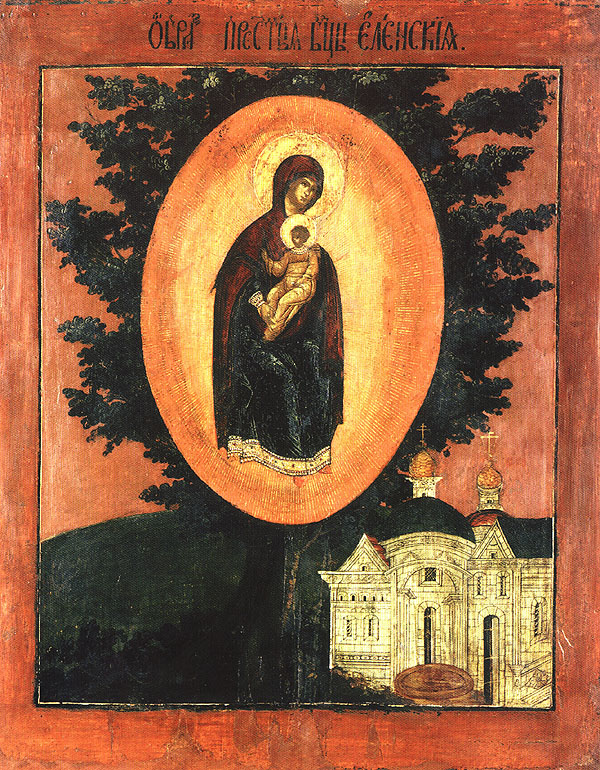
Afterfeast of the Theophany of Our Lord and Saviour Jesus Christ, The Holy Martyrs Hermylus and Stratonicus, Synaxis of the Most Holy Theotokos – Mediatress, Maximos the Righteous of Kapsokalyvia, Mount Athos, Hilary of Poitiers, Kentigern, Bishop of Glasgow

ST. PAUL’S LETTER TO THE GALATIANS 3:23-29; 4:1-5

Brethren, before faith came, we were confined under the law, kept under restraint until faith should be revealed. So that the law was our custodian until Christ came, that we might be justified by faith. But now that faith has come, we are no longer under a custodian; for in Christ Jesus you are all sons of God, through faith. For as many of you as were baptized into Christ have put on Christ. There is neither Jew nor Greek, there is neither slave nor free, there is neither male nor female; for you are all one in Christ Jesus. And if you are Christ’s, then you are Abraham’s offspring, heirs according to promise. I mean that the heir, as long as he is a child, is no better than a slave, though he is the owner of all the estate; but he is under guardians and trustees until the date set by the father. So with us; when we were children, we were slaves to the elemental spirits of the universe. But when the time had fully come, God sent forth his Son, born of a woman, born under the law, to redeem those who were under the law, so that we might receive adoption as sons.

LUKE 20:1-8

At that time, as Jesus was teaching the people in the temple and preaching the gospel, the chief priests and the scribes with the elders came up and said to Him, ‘Tell us by what authority you do these things, or who it is that gave you this authority.’ He answered them, ‘I also will ask you a question; now tell me, was the baptism of John from heaven or from men?’ And they discussed it with one another, saying, ‘If we say, ‘From heaven, ‘ he will say, ‘Why did you not believe him?’ But if we say, ‘From men, ‘ all the people will stone us; for they are convinced that John was a prophet.’ So they answered that they did not know whence it was. And Jesus said to them, ‘Neither will I tell you by what authority I do these things.’

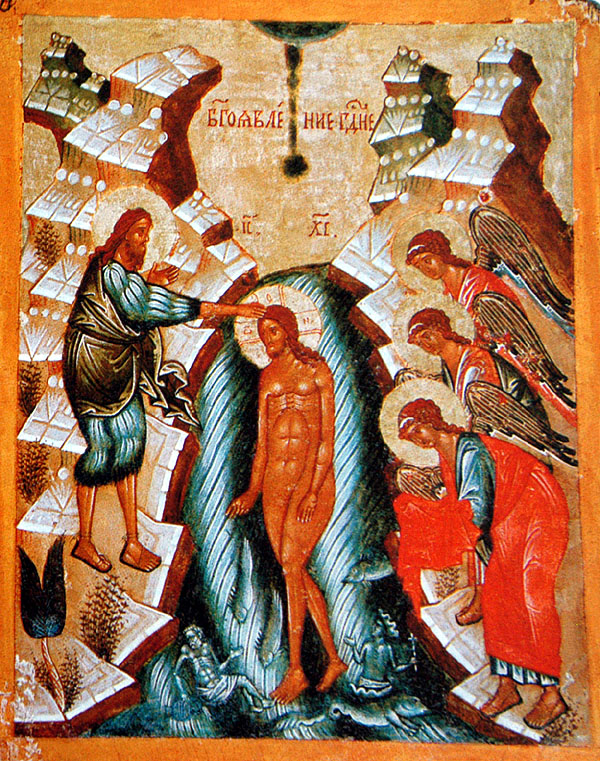
Afterfeast of the Theophany of our Lord and Savior Jesus Christ
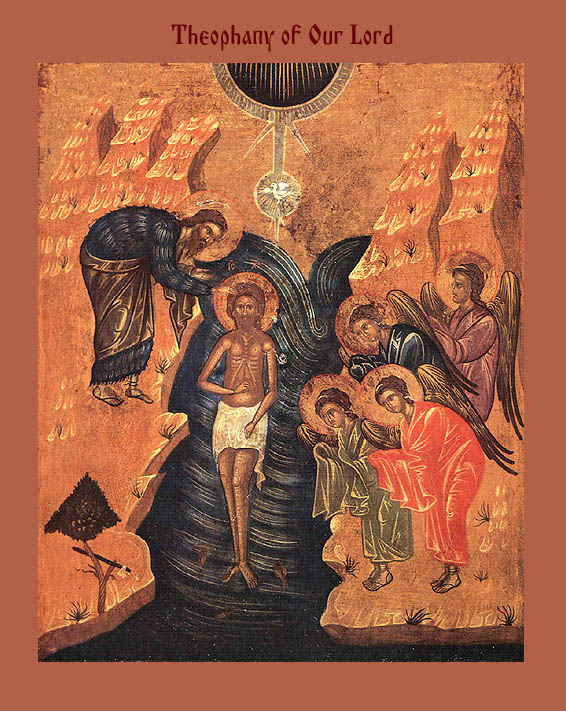
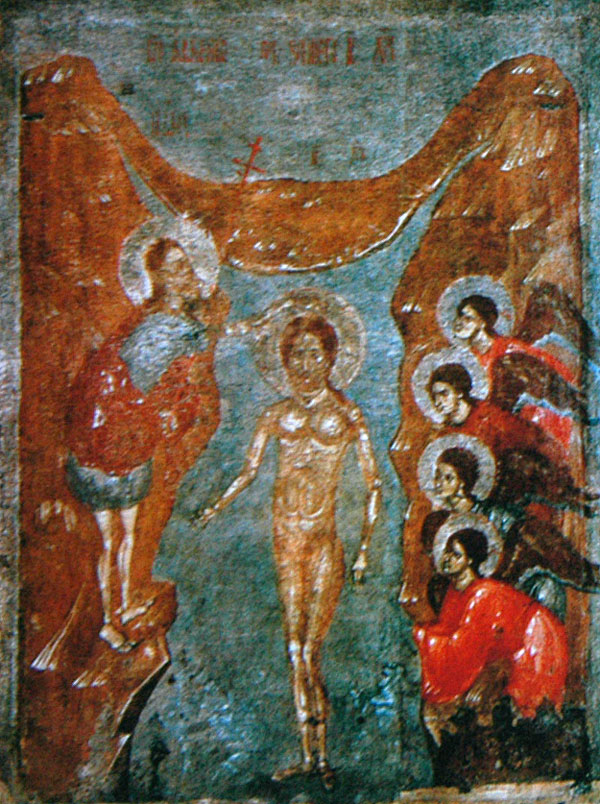
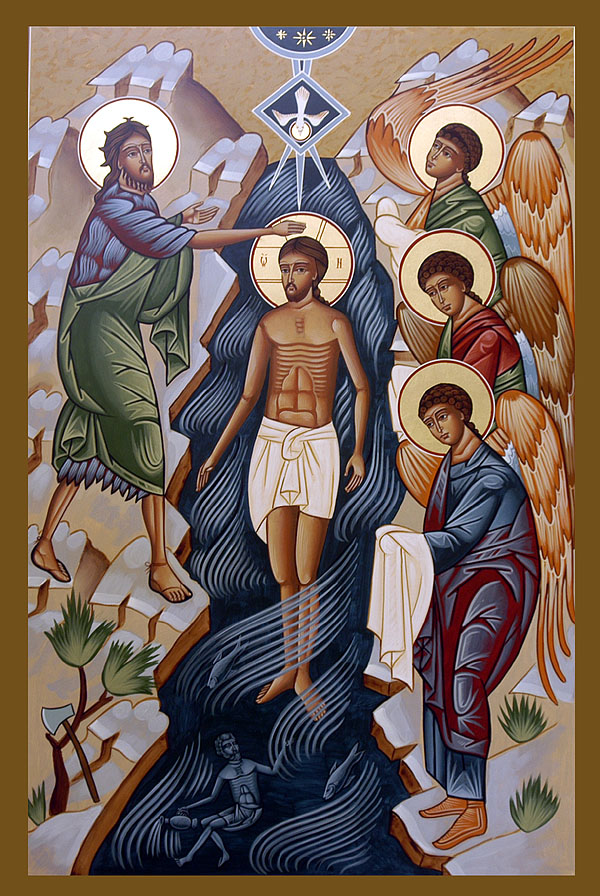
The seventh day of the Afterfeast of Theophany falls on January 13. Many of the Church’s hymns during this period rejoice in the manifestation of God (Theophany) at Christ’s baptism in the Jordan. The voice of the Father is heard, the Son enters the water, and the Holy Spirit appears in the form of a dove.

Martyrs Hermylus and Stratonicus of Belgrade

The Holy Martyrs Hermylus and Stratonicus, Slavs by origin, lived at the beginning of the fourth century during a persecution against Christians by the emperor Licinius (311-324). Saint Hermylus served as deacon in the city of Singidunum (Belgrade). Condemned by Licinius to imprisonment, he was long and cruelly tortured for Christ, but he remained unyielding.

Hermylus mocked the pagan gods, calling them deaf, dumb, and blind idols. In anger Licinius ordered more severe torments for him, saying that he could avoid them if he would offer sacrifice. The holy martyr predicted that Licinius would suffer terrible wounds himself because he worshiped idols instead of the Creator. His words came true, for Licinius was killed in 324.

After three days Hermylus was brought before the tribunal again and asked whether he would avoid more torture by offering sacrifice. The saint replied that he would offer worship and sacrifice only to the true God.

Saint Hermylus prayed that the Lord would give him strength to endure his torments and triumph over the pagans. A voice was heard saying, “Hermylus, you will be delivered from your suffering in three days, and will receive a great reward.” The torturers fell to the ground in fear, and took the saint back to prison.

Saint Stratonicus was one of the prison guards and a secret Christian. Seeing the agonizing torments of his friend, he was unable to keep from weeping, and he revealed that he was a Christian. They also subjected him to punishment.

After the torture, they put both martyrs into a net and threw them into the Danube. On the third day, the bodies of the saints were found by Christians on the bank of the river and buried near Singidunum. Their venerable heads were in the Church of Hagia Sophia, where the Russian pilgrim Anthony saw them in the year 1200.

Venerable Irenarchus the Recluse of Rostov

Irenarchus, Hermit of Rostov, was born into a peasant family in the village of Kondakovo in the Rostov district. In Baptism he received the name Elias. In his thirtieth year, he was tonsured a monk at the Rostov Saints Boris and Gleb monastery. There he began fervently to labor at monastic tasks, he attended church services, and by night he prayed and slept on the ground. Once, taking pity on a vagrant who did not have shoes, Saint Irenarchus gave him his own boots, and from that time he began to go barefoot through the snow.

The igumen did not care for such behavior, and he began to humiliate him, compelling him to stand for an hour or nearly two in the snow opposite his cell, or to ring the bells for a long time. The saint endured everything with patience but he did not change his conduct. The igumen continued to be hard-hearted, and the monk was obliged to transfer to the Abramiev Theophany monastery, where he was accepted into the number of the brethren and he was soon chosen as steward.

The saint fulfilled his monastic obediences with zeal, but grieved that the brethren and servants did not look after the property of the monastery, but imprudently wasted it. Once in a dream he saw Saint Abraham of Rostov (October 29), who comforted him and blessed him to distribute necessities to all without trouble. Later, Saint Irenarchus sobbed loudly during the singing of the Cherubimic hymn. The archimandrite asked him why he wept, and he answered, “My mother has died!”

Leaving Abramiev monastery, Saint Irenarchus transferred to the Rostov monastery of Saint Lazarus, settled into a solitary cell and lived for three years in privation and hunger. Here he was visited by Blessed John the Fool, nicknamed “the Big Simpleton.” The saints encouraged each other by spiritual conversation. The Elder, however, had a desire to return to the Saints Boris and Gleb monastery. He was accepted back with love by the strict Barlaam, and he began to pursue even greater ascetic deeds at the monastery.

Having withdrawn into solitude, Saint Irenarchus chained himself to a wooden chair, and he placed on himself heavy chains and crosses. For this he endured the mockery and sneers of the brethren. During this time he was visited by his old friend, Blessed John the Fool, who predicted the Lithuanian invasion of Moscow.

Saint Irenarchus spent twenty-five years shackled in chains and in arduous tasks. His ascetic deeds were a silent reproach to those living carelessly at the monastery, and they lied to the igumen about him. They said that the Elder taught that they should not do monastic work, but rather pursue asceticism as he did. The igumen believed the slander and he banished the holy Elder from the monastery. Humbly submitting, Saint Irenarchus again went to Rostov and lived in the monastery of Saint Lazarus for one year.

Meanwhile the igumen of Saints Boris and Gleb regretted his conduct and sent monks after Saint Irenarchus. He returned, blaming himself that he did not live like the brethren who engaged in righteous works, in which he was lacking. The monk continued to bear his own heavy fetters. He made clothes for the needy, and he knitted hairshirts and klobuks. He slept at night for only an hour or two, the rest of the time he prayed and beat his body with an iron rod.

Saint Irenarchus had a vision that Lithuania would invade Moscow, and that churches there would be destroyed. He began to weep bitterly about the impending disaster, and the igumen ordered him to go to Moscow and warn Tsar Basil Shuisky (1606-1610) about the terrible misfortune. Saint Irenarchus carried out the order. He refused the gifts offered him and when he returned, he began to pray fervently that the Lord would show mercy on the Russian land.

Enemies appeared against Russia, they began the conquest of the city, beat the inhabitants, and robbed churches and monasteries. The False Demetrius and a second Pretender sought to conquer Russia for the Polish king. Saints Boris and Gleb monastery was also overrun by the enemy, who came to the holy hermit and were amazed at the direct and bold words of the Elder, predicting catastrophe for them.

Sapega, remaining at the Saints Boris and Gleb monastery, wanted to see the Elder sitting in chains, and he was amazed at such an ascetic exploit. When the Polish nobles with Sapega told him that the Elder prayed for Shuisky, the monk boldly said, “I am born and baptized in Russia, and I pray to God for the Russian Tsar.” Sapega answered, “Grandfather speaks truly; in whatever land one lives, there one also serves.” After this Saint Irenarchus began to urge Sapega to leave Russia, predicting death for him if he did not do so.

Saint Irenarchus followed the course of the war and sent his blessings and a prosphora to Prince Demetrius Pozharsky. He told him to come to Moscow, predicting, “You shall see the glory of God.” To assist Pozharsky and Minin, the saint handed over his cross. With the help of God the Russians vanquished the Lithuanians, Prince Pozharsky took possession of the Kremlin, and peace gradually began to return to the Russian land. Saint Irenarchus incessantly prayed God with tears for the deliverance of Russia from enemies and, with the power to work miracles, he healed the sick and demoniacs.

The day of his death was revealed to him, and summoning his disciples Alexander and Cornelius, he gave them his final instructions. After taking leave of all he quietly fell asleep in the Lord. The holy Elder left behind 142 copper crosses, seven shoulder chains, other chains which he wore on his neck, iron foot shackles, eighteen hand fetters, heavy “bonds” which he wore on his belt, and iron rods with which he thrashed his body to drive away demons.

In these works, as the Elder called them, he spent thirty-eight years, and having lived in the world for thirty years, he died in his sixty-eighth year. After the death of Saint Irenarchus, many miracles took place at his grave, especially the healing of the sick and the demoniacs by laying the holy ascetic’s crosses and chains upon them.

Venerable Eleazar of Anzersk Island, Solovki

Saint Eleazar of Anzersk was born in the city of Kozelsk into the merchant family Severiukov. With the blessing of his parents he went off to the Solovki monastery, where he received monastic tonsure from the igumen Saint Irenarchus (July 17).

At the monastery he displayed an astonishing artistic gift: he learned woodcarving and he took part in the embellishment of the Transfiguration Cathedral. With the blessing of the igumen, he went to the island of Anzersk in 1612, where he became a hermit, devoting himself to constant prayer and meditation on God.

In order to obtain subsistence for himself on the island wilderness, Saint Eleazar carved wooden cups, which he left at the dock. On the cups he wrote a message requesting food. Fishermen left bread and other supplies for the ascetic, and they were rewarded with a great catch of fish.

In the year 1616 Saint Eleazar was elevated to schemamonk. Disciples gathered around the saint wishing to live near him and benefit from his instruction. He organized a skete with a strict rule of monastic life following the ancient form. Monastic cells were built far away from one another, and the hermits gathered together only for Saturday and Sunday services.

Among the disciples of Saint Eleazar was the hieromonk Niketas (Nikḗtas), the future Patriarch Nikon. Tsar Michael (1613-1645), learning of the saint’s ascetic life, summoned him to Moscow. Saint Eleazar predicted the birth of a son, and in return the Tsar generously gave him help to build a stone church on the island dedicated to the Holy Trinity, and also a monastery.

Saint Eleazar loved books. He compiled three books, “Flower Gardens,” collecting edifying sayings and examples from various sources. He also wrote a commentary on the Rule for monastic cell life.

Saint Eleazar died in great old age, forseeing the time of his death. It is not known how old he was, but he lived at Ansersk for forty years, and he was at Solovki for some time before that.

Martyr Peter of Anium, at Hieropolis

Saint Peter was slain at Hieropolis between 309—320 for confessing Christ.

Saint James, Bishop of Nisibis

Saint James, Bishop of Nisibis, was the son of prince Gefal (Armenia) and received a fine upbringing. From the time of his youth he loved solitude, and for a long time he lived in the mountains around about the city of Niziba (on the border of the Persian and Roman Empires), where he carried out strict ascetic exploits: he lived under the open sky, fed himself with tree fruits and greens, and dressed himself in goat-skins. The monk passed all this time in prayerful conversations with God.

During a persecution by the emperor Maximian (284-305) he was glorified by a courageous confession of faith. Because of his strict and pious life the inhabitants of Nisibis chose him as their bishop (no later than the year 314). Saint James was glorified by his ardent zeal for the Orthodox Faith, by great miracles and by the gift of clairvoyance. By his prayers Nisibis was saved from an invasion by Sapor, the emperor of Persia.

Saint James, among the Fathers of the First Ecumenical Council, was one of the prominent defenders of the Orthodox Faith. A wise and educated pastor, he constructed a public school at Nisibis, in which he himself was an instructor. He made a strong impression on the hearts of his listeners by the high morality of his life.

Saint Gregory, bishop of great Armenia, turned to him with a request to write about the faith, and the Nisibis pastor sent to him by way of reply a detailed Discourse (18 Chapters): about the faith, about love, fasting, prayer, spiritual warfare, the resurrection of the dead, the duties of pastors, about circumcision (against the Jews), about the choice of foods, about Christ as the Son of God, and so on. His composition distinguishes itself by its persuasive clear exposition and warmth.

Saint James died peacefully in about the year 350.

Saint Hilary, Bishop of Poitiers

Saint Hilary, the great opponent of Arianism, was born around 320. He was raised as a pagan, but converted to Christianity as an adult. He became Bishop of Poitiers in 350. When the emperor Constantius II attempted to impose Arianism on the western Church, Saint Hilary led a vigorous opposition to his efforts. Because of his outspoken criticism, he was exiled to Phrygia in 356. There he became such a defender and champion of Orthodoxy that the emperor decided it would be less trouble to allow him to return to his diocese.

Saint Hilary continued to fight against Arianism until his death in 368. His holy relics still rest in the cathedral bearing his name at Poitiers in France.

He has lent his name to the “Hilary term” of English law courts and universities, which begin on or near his Feast Day.

Venerable Maximus Kavsokalyvites of Mount Athos

Saint Maximus Kavsokalyvites was educated at the church of the Most Holy Theotokos at Lampsakos. At seventeen years of age he left his parental home, became a monk, and passed his obedience under Elder Mark, the finest spiritual instructor in Macedonia. After the death of his teacher, the saint pursued asceticism under the guidance of several desert Fathers of extremely strict life. Arriving in Constantinople, Saint Maximus was constantly at the Blachernae church of the Most Holy Theotokos, as though he had taken up his abode at the entrance.

From his youth, Saint Maximus had a great love for the Mother of God. He persistently entreated Her to grant him the gift of unceasing mental prayer. One day, as he was venerating her icon, he felt a warmth and a flame enter his heart from the icon. It did not burn him, but he felt a certain sweetness and contrition within. From that time, his heart began to repeat the Jesus Prayer of itself. In this way, the Virgin Theotokos fulfilled his request.

Saint Maximus fulfilled his obedience in the Lavra of Saint Athanasius on Mt. Athos. In order to conceal his ascetic deeds of fasting and prayer, and to avoid celebrity, he behaved like a fool. One day, he had a vision of the Mother of God, who told him to ascend the mountain. On the summit of the Holy Mountain, he prayed for three days and nights. Again, the Most Holy Theotokos appeared to him surrounded by angels, and holding Her divine Son in Her arms.

Prostrating himself, the saint heard the All-Holy Virgin speak to him, “Receive the gift against demons… and settle at the foot of Athos, for this is the will of My Son.” She told him that he would ascend the heights of virtue, and become a teacher and guide for many. Then, since he had not eaten for several days, a heavenly bread was given to him. As soon as he put it in his mouth, he was surrounded by divine light, and he saw the Mother of God ascending into Heaven.

Saint Maximus told his vision to a certain Elder living by the church of the holy Prophet Elias at Carmel. He was skeptical, but the saint turned his disbelief to good. He pretended to be slightly crazy in order to conceal his prodigious ascetic deeds, privations, his hardship and solitude. Saint Maximus did not live in a permanent abode, but wandered from place to place like a lunatic. Whenever he moved, he would burn his hut down. Therefore, he was called “Kavsokalyvites,” or “Hut Burner.”

Those on the Holy Mountain, knowing of the extreme deprivations and sorrows of Saint Maximus, for a long time regarded him with contempt, even though he had attained the height and perfection of spiritual life. When Saint Gregory of Sinai (August 8) arrived on Athos, he encountered the holy fool. After speaking to him, he began to call him an earthly angel. Saint Gregory persuaded Saint Maximus to stop behaving like a fool and to live in one place so that others might benefit from his spiritual experience. Heeding the words of Saint Gregory and the advice of other Elders, Saint Maximus selected a permanent dwelling in a cave near the renowned Elder Isaiah.

Knowing of his gift of clairvoyance, the Byzantine Emperors John Paleologos (1341-1376) and John Kantakouzenos (1341-1355) visited him and were surprised by the fulfillment of his predictions. Theophanes, the igumen of Vatopedi monastery, wrote about Saint Maximus: “I invoke God as my witness, that I myself saw several of his miracles. Once, for instance, I saw him travel through the air from one place to another. I listened as he made a prediction concerning me, that first I would be an igumen, and then Metropolitan of Ochrid. He even revealed to me how I would suffer for the Church.”

Saint Maximus abandoned his solitude only just before his death, and settled near the Lavra of Saint Athanasius, where he surrendered his soul to the Lord at 95 years of age (+ 1354). After his death, as in life, Saint Maximus was glorified by many miracles.

Saint Elian, Missionary to Cornwall, England

Little is known of Saint Elian. While some accounts hold that he came by sea from Rome and landed in Anglesey at Porth yr Yehen in Northern Wales, where he established a church around 450 AD, others claim that he was of Cornish or Breton roots and lived during the sixth century. He was said to have been related to Saint Ismael, the sixth century Welsh Bishop of Rhos. He is remembered for his missionary efforts in Cornwall, England and for establishing several religious houses.

Saint Jeremiah I Patriarch of Constantinople

Jeremiah I was Ecumenical Patriarch from 1522-1546, with one interruption in the year 1526. He was from Zitsa in Epirus, and was elected Metropolitan of Sofia before 1513. He had a limited education, but was very popular and had great administrative skills.

He was elected Ecumenical Patriarch by the Holy Synod with the support of the ruler Constantine Kounoupis on December
31, 1522, paying 500 coins of Frankish mintage as a gift to the Sultan, and 3,500 florins as an annual debt.

Around April or May 1524, while on a tour of Cyprus, Egypt, Palestine and Mount Sinai, Ioannikios of Sozopoleos ascended the throne in an irregular way. With the help of the Patriarchs of Antioch and of Alexandria, Jeremiah succeeded in overturning the coup, and Ioannikios was deposed by two Synods; one at Jerusalem, and another at Constantinople. Jeremiah was officially reinstated on September 24, 1525 by the berat (decree) of Sultan Suleiman I and was received enthusiastically by the clergy and the people of Constantinople, henceforth gaining great influence.

Around 1536, the former Stavronikita Keli1 which belonged to Koutloumousiou Monastery since 1287, and then, until 1533, to Philotheou Monastery, was assigned to him by the Holy Community and was elevated as Stavronikita Monastery, thus becoming the twentieth monastery of Mount Athos.

At the invitation of the Holy Community, Patriarch Jeremiah was personally involved in the reconstruction of the Monastery, of which he became a benefactor, and which he declared to be stavropegial in 1544.

During his tenure as Patriarch he managed to save many churches which were threatened with destruction by the Turks, arguing that Constantinople had surrendered and was not captured. Also, in 1537, he succeeded in publishing a decree of Sultan Suleiman the Magnificent, which stopped the conversion of churches in Constantinople into mosques, a decision which was not confirmed by his successors.

During Saint Jeremiah's time, the embatoikion was established; that is to say, Hierarchs had to give a monetary gift to the Patriarchate for its financial support at the time of their election. In October 1538, he donated part of his property to the Patriarchate.

Jeremiah was Patriarch until 1546, when he became ill. He abdicated his throne, and was tonsured into the Great Schema with the name John. He reposed in Vratsa, Tyrnovo Province, Wallachia, on January 13, 1546.

On January 10, 2023 the Holy Synod of the Ecumenical Patriarchate decided to include Patriarch Jeremiah I in the Hagiologion of the Orthodox Church.


1 Κελί: the cell of a monk, or a monastic establishment consisting of a building with a chapel, and some land around it, usually inhabited by three monks.

Daily Readings for Sunday, January 12, 2025

SUNDAY AFTER EPIPHANY

NO FAST

Sunday after Epiphany, Afterfeast of the Theophany of Our Lord and Saviour Jesus Christ, Tatiana the Martyr of Rome, Basil and John the Hieromartyrs, Martyr Mertios, Euthasia the Virgin-Martyr, Peter of Absalom, Benedict

ST. PAUL’S LETTER TO THE EPHESIANS 4:7-13

BRETHREN, grace was given to each of us according to the measure of Christ’s gift. Therefore it is said, “When he ascended on high he led a host of captives, and he gave gifts to men.” (in saying, “He ascended, ” what does it mean but that he had also descended into the lower parts of the earth? He who descended is he who also ascended far above all the heavens, that he might fill all things.) And his gifts were that some should be apostles, some prophets, some evangelists, some pastors and teachers, to equip the saints for the work of ministry, for building up the body of Christ, until we all attain to the unity of the faith and of the knowledge of the Son of God, to mature manhood, to the measure of the stature of the fullness of Christ.

MATTHEW 4:12-17

At that time, when Jesus heard that John had been arrested, he withdrew into Galilee; and leaving Nazareth he went and dwelt in Capernaum by the sea, in the territory of Zebulun and Naphtali, that what was spoken by the prophet Isaiah might be fulfilled: “The land of Zebulun and the land of Naphtali, toward the sea, across the Jordan, Galilee of the Gentiles, the people who sat in darkness have seen a great light, and for those who sat in the region and shadow of death light has dawned.” From that time Jesus began to preach, saying, “Repent, for the kingdom of heaven is at hand.”

Afterfeast of the Theophany of our Lord and Savior Jesus Christ

The sixth day of the Afterfeast of Theophany falls on January 12. Divine grace shines forth so that we might be freed from the power of the devil, and cleansed of our sins in Baptism.

“He who once assumed the appearance of a malignant serpent and implanted death in the creation, is now cast into
darkness by Christ’s coming in the flesh….” (Ode 3, second Canon at Matins).

“Through the Spirit and by the grace that comes through water, He grants a new birth to all who acknowledge His divinity, delivering them from their faults” (Ode 6, first Canon at Matins).

Martyr Tatiana of Rome, and those who suffered with her

The Holy Virgin Martyr Tatiana was born into an illustrious Roman family, and her father was elected consul three times. He was secretly a Christian and raised his daughter to be devoted to God and the Church. When she reached the age of maturity, Tatiana decided to remain a virgin, betrothing herself to Christ. Disdaining earthly riches, she sought instead the imperishable wealth of Heaven. She was made a deaconess in one of the Roman churches and served God in fasting and prayer, tending the sick and helping the needy.

When Rome was ruled by the sixteen-year-old Alexander Severus (222-235), all power was concentrated in the hands of the regent Ulpian, an evil enemy and persecutor of Christians. Christian blood flowed like water. Tatiana was also arrested, and they brought her into the temple of Apollo to force her to offer sacrifice to the idol. The saint began praying, and suddenly there was an earthquake. The idol was smashed into pieces, and part of the temple collapsed and fell down on the pagan priests and many pagans. The demon inhabiting the idol fled screeching from that place. Those present saw its shadow flying through the air.

Then they tore holy virgin’s eyes out with hooks, but she bravely endured everything, praying for her tormentors that the Lord would open their spiritual eyes. And the Lord heard the prayer of His servant. The executioners saw four angels encircle the saint and beat her tormentors. A voice was heard from the heavens speaking to the holy virgin. Eight men believed in Christ and fell on their knees before Saint Tatiana, begging them to forgive them their sin against her. For confessing themselves Christians they were tortured and executed, receiving Baptism by blood.

The next day Saint Tatiana was brought before the wicked judge. Seeing her completely healed of all her wounds, they stripped her and beat her, and slashed her body with razors. A wondrous fragrance then filled the air. Then she was stretched out on the ground and beaten for so long that the servants had to be replaced several times. The torturers became exhausted and said that an invisible power was beating them with iron rods. Indeed, the angels warded off the blows directed at her and turned them upon the tormentors, causing nine of them to fall dead. They then threw the saint in prison, where she prayed all night and sang praises to the Lord with the angels.

A new morning began, and they took Saint Tatiana to the tribunal once more. The torturers beheld with astonishment that after such terrible torments she appeared completely healthy and even more radiant and beautiful than before. They began to urge her to offer sacrifice to the goddess Diana. The saint seemed agreeable, and they took her to the heathen temple. Saint Tatiana made the Sign of the Cross and began to pray. Suddenly, there was a crash of deafening thunder, and lightning struck the idol, the sacrificial offerings and the pagan priests.

Once again, the martyr was fiercely tortured. She was hung up and scraped with iron claws, and her breasts were cut off. That night, angels appeared to her in prison and healed her wounds as before. On the following day, they took Saint Tatiana to the circus and loosed a hungry lion on her. The beast did not harm the saint, but meekly licked her feet.

As they were taking the lion back to its cage, it killed one of the torturers. They threw Tatiana into a fire, but the fire did not harm the martyr. The pagans, thinking that she was a sorceress, cut her hair to take away her magical powers, then locked her up in the temple of Zeus.

On the third day, pagan priests came to the temple intending to offer sacrifice to Zeus. They beheld the idol on the floor, shattered to pieces, and the holy martyr Tatiana joyously praising the Lord Jesus Christ. The judge then condemned the valiant sufferer to be beheaded with a sword. Her father was also executed with her, because he had raised her to love Christ.

The Relics of Saint Tatiana in Craiova

The honorable head of the Holy Martyr Tatiana was first brought to Romania in 1204, when members of the ruling family (Asanestan dynasty) placed it in a church in Tarnovo (Bulgaria) and then in Bucovat Monastery (near Craiova). Later, however, in 1393, the head of the Saint was taken to a church in the town of Nicaea (where the First Ecumenical Synod met), and then to Constantinople, and placed in the Church of the Holy Apostles.

In 1453, after the conquest of Constantinople by the Turks, during the reign of Neagoe Basarab, the Craioveşti boyars brought the head of the holy Martyr Tatiana to this country, as well as the entire body of Saint Gregory the Decapolite (November 20), which they placed in the church of Bistriţa Monastery. From that monastery, the relics of Saint Tatiana were taken by Saint Neagoe Basarab (September 15) and brought to the royal church at Curtea de Argeș. Later, with the reorganization of the Metropolitan Church of Oltenia (1950-1955), the honorable skull of Saint Tatiana was taken from Curtea de Argeș and brought to the Episcopal Cathedral of Râmnicu Vâlcea in 1955. Finally, the honored relics were permanently enshrined in the Metropolitan Cathedral of Craiova.

Today, the holy relics of Saint Tatiana are kept, with great honor, in the Metropolitan Cathedral of the Holy Great Martyr Demetrios in Craiova, in the same reliquary with the relics of Saint Niphon of Constantinople (August 11), and the Holy Martyrs Sergius and Bacchus (October 7).

Venerable Martinian, Abbot of Belozersk

Saint Martinian of White Lake, in the world Michael, was born in the year 1370 in the village of Berezniko, not far from the Cyrilov monastery. At age thirteen he left his parents and went secretly to Saint Cyril of White Lake (June 9), whom many described as a great ascetic.

The young Martinian began zealously to imitate his teacher, with whom he dwelt in complete obedience. At the monastery he studied reading and writing, and with the blessing of Saint Cyril, he occupied himself with the copying of books. In time Martinian was ordained deacon and then hieromonk.

After the death of Saint Cyril (+ 1427), Martinian withdrew to a deserted island on Lake Vozha. Several monks gradually gathered around him. Saint Martinian established for them the church of the Transfiguration of the Lord and introduced a general Rule for the inhabitants. Yielding to the persistent requests of the brethren of Therapon monastery, he consented to become igumen of the monastery and brought it into an improved condition.

Saint Martinian gave spiritual support to Great Prince Basil in the difficulties of his time, when his first-cousin Demetrius Shemyaka illicitly sought the Moscow throne. He was always an advocate of truth and justice. Afterwards, upon the entreaty of the Great Prince, the saint accepted the governance of the monastery of Saint Sergius of Radonezh.

In 1455, Saint Martinian returned to the Therapon monastery. In his last years he was grievously ill and not able to walk, so the brethren carried him to church. He died at age 85. His relics were uncovered in the year 1514, and this event is celebrated on October 7.

Martyr Mertius of Mauretania

The Holy Martyr Mertius was a soldier. He suffered for Christ in Africa during the reign of Diocletian (284-305). The emperor demanded that he offer sacrifice to idols, and when he refused, gave him over to torture. The saint suffered fierce torments, not making a sound. He was thrown into prison, where he died from hunger and his wounds.

Martyr Peter Apselamus of Palestine

The Holy Martyr Peter Apselamus was a native of the village of Aneia in Palestine. During the fourth century persecution against Christians he was arrested and brought to Severus, the governor of Palestine. In vain did the judge and the people urge him to escape torture by sacrificing to the pagan gods.

“I will spare myself by remaining faithful to the truth and refusing to offer sacrifice to lifeless idols,” the saint replied. “Whoever offers sacrifice to false gods will perish.”

Severus was enraged, and ordered the holy martyr to be tortured without mercy. Finally, he was crucified during the reign of Maximian, while our Lord Jesus Christ was reigning unto the ages of ages.

In some Lives of the Saints he is listed twice: on January 12 as the martyr Peter Apselamus, and on January 13 as Peter of Aneia, because it was mistakenly assumed that they were different persons.

Venerable Eupraxia of Tabenna, in Egypt

Saint Eupraxia the Elder was the mother of Saint Eupraxia, maiden of Tabennisi (July 25). She was the wife of the pious senator Antigonus, who was related to the emperor Theodosius the Great (379-395). Following the birth of their daughter, the couple decided to live from that time forward as brother and sister. They distributed alms to the poor, hoping to inherit the heavenly Kingdom.

After she was widowed, Saint Eupraxia devoted herself completely to the service of the Lord. After visiting several monastic establishments and bestowing liberal alms, she came to the Tabennisi monastery in Egypt, where the abbess was the nun Theodula, known for her strict rule.

Deeply moved by the pure way of monastic life, Saint Eupraxia came often to this monastery and always brought her eight-year-old daughter with her. The virtues and prayers of her parents bestowed a particular grace of God upon the child, who desired to dedicate herself to God. To her mother’s great joy, the abbess Theodula kept the younger Eupraxia at the convent and blessed her to receive monastic tonsure.

Saint Eupraxia the elder continued her works of charity, and increased her fasting and prayer. Abbess Theodula, possessing the gift of clairvoyance, told her of her impending end. Learning of her imminent death, Eupraxia gave thanks to the Lord for His great mercy towards her. She bid farewell to the sisters of the convent and to her daughter. She left her with these parting words: “Love the Lord Jesus Christ, and respect the sisters. Never dare to think that they are below you and should serve you. Be poor in your thoughts in order to profit by spiritual treasures. Also remember your father and me, and pray for the salvation of our souls.” After three days the saint surrendered her soul to the Lord (+ 393) and was buried at the monastery, where her daughter continued her ascetic struggles.

Icon of the Mother of God of “the Akathist”

The “Akathist” Icon of the Mother of God is on the iconostasis of the Hilandar monastery’s katholikon. It is known as the “Akathist” Icon because, during a fire at the katholikon in 1837 an Akathist was being read before the icon, and it remained unharmed, to the joy of the monks.

This icon should not be confused with the Zographou Icon “Of the Akathist” (October 10).

Icon of the Mother of God the “Milkgiver”

The “Milk-Giver” Icon of the Mother of God was originally located at the Lavra of Saint Savva the Sanctified near Jerusalem. Before his death, the holy founder of the Lavra foretold that a royal pilgrim having the same name as himself would visit the Lavra. Saint Savva told the brethren to give the wonderworking icon to that pilgrim as a blessing.

In the thirteenth century, Saint Savva of Serbia visited the Lavra. As he approached the reliquary of Saint Savva the Sanctified, the saint’s staff fell at his feet. The brethren asked the visitor his name, and he told them he was Archbishop Savva of Serbia. Obeying the instructions of their founder, the monks gave Saint Savva his staff, the “Milk-Giver” Icon, and the Icon “Of the Three Hands” (June 28 and July 12).

The holy archbishop took the icon to Hilandar on Mount Athos and put it on the right side of the iconostasis in the church of Saint Savva at the kellion of Karyes, which is attached to Hilandar. The icon was later named Typikonissa, since the Rule (Typikon) of Saint Savva was preserved there.

Icon of the Mother of God, the “Priestly”

The “Priestly” Icon of the Mother of God stands in the katholikon of Hilandar Monastery by a column of the left kliros. A certain heretical priest, having declared himself Orthodox, acted at the Hilandar monastery with evil purpose, but he was punished. During the procession for the blessing of water he took this icon but stumbled, fell into the sea and drowned. Since that time the cross procession is always done with this icon, and invariably a priest carries it, so it was called “Priestly” by the Serbs.

Virgin Martyrs Neollina, Domnina, and Parthena

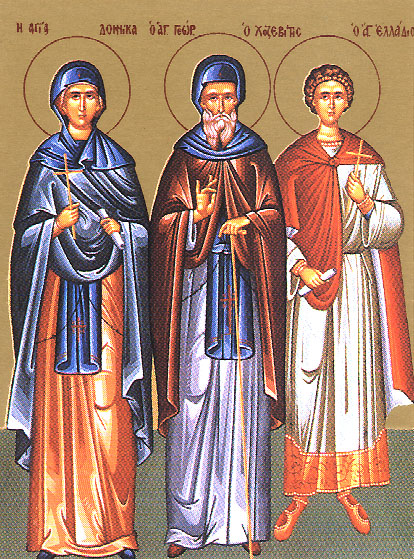
On the first Sunday after Theophany (January 7-13), we celebrate the memory of the Virgin Martyrs Neollina, Domnina and Parthena (Νεολλίνα, Δομνίνα, Παρθένα) of Edessa in the Holy Metropolis of Edessa and Pella.

Nothing is known about Saints Neollina and Domnina, but only about Saint Parthena. The Holy Virgin Martyr Parthena came from Edessa in Macedonia and was born in the 14th century. Her life was in accord with her virginal name, for she lived ascetically, and with the utmost modesty.

In the year 1375 Edessa was besieged by the Turks, and the residents put up a strong defense, aided and encouraged by Hieromonk Seraphim, the rector of the cathedral of the Dormition of the Theotokos. The enemy was perfectly organized and numerous, but it as it happened, they were preparing to end the siege.

At the last minute, Peter, one of the city's priests, who was Parthena's father, was paid a large sum of money by the Turkish Pasha, and so he betrayed the city.

The Turks invaded Edessa on December 26, 1375 from the southeast, where he was on guard, and where one of the major battles for the city took place. Afterward, its citizens were massacred or sold into slavery; homes were looted, and women were raped. Hieromonk Seraphim was arrested and subjected to severe torments, and then he was drowned in the great waterfall called "Itseri Pasha" (the Pasha's water).

The traitor Peter, after his heinous act which led to the fall of the city, denied Christ and became a Muslim. As if that were not enough, he also gave his daughter Parthena to the Pasha as a concubine, because he was unable to persuade her to deny Christ. After hearing her father's words, Saint Parthena, like another Saint Barbara, shuddered, and with spiritual courage she told her wretched father that she would never deny the sweetest name of her heavenly Bridegroom, Jesus Christ. Instead of being put to shame and moved to repentance, he became angry and behaved like a wild beast. He beat the Saint until she was bloody and unconscious. Then he stripped her and handed her over to the Turks. The soldiers tortured her for three days. In the end, she was led up a hillside, where she was buried alive. To this day, the hill is called Parthena's Hill.

As shocking as the father's conduct may seem, the Savior predicted that such atrocities would take place: "Brother will deliver up brother to death, and the father his child, and children will rise up against parents and have them put to death; and you will be hated by everyone for my name's sake. But he who endures to the end will be saved" (Matthew 10:21-22).

Through the prayers of the Holy Virgin Martyr Parthena, may the Lord strengthen us to persevere until the end of our earthly lives, and make us worthy of a small corner of Paradise.

Founder's Icon of the Mother of God at Vatopedi Monastery

The Founder's Icon of the Mother of God (Greek: Κτιτόρισσα) is also called Altarnitsa (Altárnitsa) or Bematarissa (Bēmatárissa). There are also other icons known by the name of Altarnitsa or Bematarissa (Commemorated on January 21, and Tuesday of Bright Week at Vatopedi Monastery).

Emperor Theodosios the Great, after learning of the miraculous rescue of his son Arkadios from death in the sea, not only adorned and enriched Vatopedi Monastery, but he also donated an Icon of the Mother of God made of mastic to the Monastery. This Icon was named in remembrance of the fact that the Emperor was the founder of the Monastery. This Icon was placed in the katholikon (cathedral church) of the Annunciation in the altar in the High Place. The latter circumstance served as an explanation why the name of this Holy Icon is Altarnitsa.

When Arab pirates attacked the Holy Mountain in 862 they were not far from Vatopedi, the Monastery's ecclesiarch Hierodeacon Savva hid the Founder's Icon of the Most Holy Theotokos, together with a cross donated by Saint Constantine the Great, in a well beneath the floor of the church, under a marble slab, and lit a candle (or lampada) before the shrine, and only then did he hasten to run away.

After 40 or 70 years, he was freed and returned to the devastated Monastery. When the monks lifted the slab at his behest, they found both the Icon of the Mother of God and the cross in the well. The candle was still burning before them.

An unsleeping candle (lampada) still burns before the Founder's Icon of the Mother of God on the right side: the monks make sure that it does not go out, passing it on from generation to generation so that it will continue to burn as long as the Monastery itself stands.

Since both relics were found on a Monday, from the time of their discovery, a solemn Moleben to the Mother of God is served in the katholikon of Vatopedi Monastery. On the following day, Tuesday, a solemn Liturgy is served in the same katholikon with the blessing of koliva, and offering of a part of the prosphoron in honor of the Mother of God.1 This celebration has been going on for nine centuries and testifies to the truth of the event, which is deeply imprinted in the traditions of Vatopedi Monastery. The special solemnity of this celebration is evident from the fact that the Liturgy on Tuesday is served in the katholikon, but according to the established rules, it is served in the katholika of the Holy Mountain only on Sundays and Feast Days, but on weekdays it is always served in the side altars, or chapels.

The Founder's Icon is now in the altar of the katholikon of the Annunciation of the Most Holy Theotokos in the High Place, while the Cross remains on the altar.

The original Bematarissa Icon of the Mother of God has a gold oklad from 1690 with an inscription: "Nicholas of Nikolita, goldsmith, 1690."

During Cross Processions at the Monastery, this Icon precedes all the others. A separate commemoration of this Icon of the Mother of God is takes place on Tuesday of Bright Week, when a Cross Procession goes around the Monastery in her honor.


1 This seems to refer to the prayers at Trapeza found in the Great Horologion (Brookline, Mass., 1997) pages 161-165).

1/12 announcements

January 12, 2025

Sunday after the Theophany of Christ

Ephesians 4:7-13: Brethren, grace was given to each of us according to the measure of Christ’s gift. Therefore, it is said, “When He ascended on high He led a host of captives, and He gave gifts to men.” (In saying, “He ascended,” what does it mean but that He had also descended into the lower parts of the earth? He who descended is He who also ascended far above all the heavens, that He might fill all things.) And His gifts were that some should be apostles, some prophets, some evangelists, some pastors and teachers, to equip the saints for the work of ministry, for building up the body of Christ, until we all attain to the unity of the faith and of the knowledge of the Son of God, to mature manhood, to the measure of the stature of the fullness of Christ.

Matthew 4:12-17: At that time, when Jesus heard that John had been arrested, he withdrew into Galilee; and leaving Nazareth he went and dwelt in Capernaum by the sea, in the territory of Zebulon and Naphtali, so that what was spoken by the prophet Isaiah might be fulfilled: “The land of Zebulon and the land of Naphtali, toward the sea, across the Jordan, Galilee of the Gentiles—the people who sat in darkness have seen a great light, and for those who sat in the region and shadow of death light has dawned.” From that time Jesus began to preach, saying, “Repent, for the kingdom of Heaven is at hand.”

Troparion of the Resurrection: Having learned the joyful message of the Resurrection from the angel, the women Disciples cast from them their parental condemnation, and proudly broke the news to the Disciples, saying, Death has been spoiled. Christ God is risen, granting the world Great Mercy.

Troparion of Theophany: By thy baptism, O Lord, in the River Jordan, worship to the Trinity has made its appearance; for the voice of the Lord didst come forth to thee with the testimony, naming thee beloved Son; and the Spirit in the likeness of a dove, confirming the truth of the word. Wherefore, O thou who didst appear and light the world, glory to thee.

Troparion of the Chains of St. Peter: O Holy Apostle, Peter, thou dost preside over the Apostles by the precious chains which thou didst bear. We venerate them with faith and beseech thee that by thine intercessions we be granted the great mercy.

Kontakion of Theophany: Today thou hast appeared to the universe, O Lord, and thy light hast been shed upon us, who praise thee with knowledge, saying, Thou hast come and appeared, O unapproachable Light.

CALENDAR

UNTIL FURTHER NOTICE: All services listed on the calendar will be available through streaming and webcast. (Instructions can be found on the parish website.)

Sunday, January 12 (Sunday after Theophany)

8:50 a.m. – Orthros

9:00 a.m. – Christian Education

10:00 a.m. – Divine Liturgy (webcast)

4:30 p.m. – Outdoor Blessing of the Water at the Ross Barnett Reservoir

Monday, January 13

Father Herman off

Tuesday, January 14

NO Services

Wednesday, January 15

6:00 p.m. – Orthros followed by Divine Liturgy

Thursday, January 16 (Veneration of the Chains of St. Peter)

NO Services

Friday, January 17 (Anthony the Great)

NO Services

Saturday, January 18 (Athanasios and Cyril of Alexandria)

4:30 p.m. – Choir Practice

6:00 p.m. – Great Vespers

Sunday, January 19 (Twenty-ninth Sunday after Pentecost)

8:50 a.m. – Orthros

9:00 a.m. – Christian Education

10:00 a.m. – Divine Liturgy (webcast)

12:00 p.m. – Ladies of St. Peter meeting during Coffee Hour

SPECIAL ANNOUNCEMENTS

The Eucharist Bread …was offered by the Lasseters for the Divine Liturgy this morning.

Eucharist Bread Schedule:

Eucharist Bread Coffee Hour

January 12 Lasseter Ellis/Zouboukos/Waites

January 15 (Wed. p.m.) Milnor D. Root/Lively

(Chains of St. Peter)

January 19 Henderson Miller/Weatherly

January 26 Algood Lasseter/Pacurari/Lavric

Schedule for Epistle Readers – Page numbers refer to the Apostolos (book of the Epistles) located on the Chanters’ stand at the front of the nave. Please be sure to use this book when you read.

Reader Reading Page#

January 12 Grady Fisher Eph. 4:7-13 364

January 15 (Wed. p.m.) Reader Chad Miller Acts 12:1-11 50-51

January 19 Brandon Strain Col. 3:4-11 233

January 26 Katie Miller I Tim. 4:9-15 252

Also, please remember that we still need your tithes and offerings which may be placed in the tray that is passed during the Divine Liturgy, in the tithe box at the back of the nave or be mailed to: St. Peter Orthodox Church, P.O. Box 2084, Madison, MS 39130-2084.

Please remember the following in your prayers: Aidan Milnor, the Milnor family; Lamia Dabit and her family; Mary Greene (Lee and Kh. Sharon’s sister); Jay and Joanna Davis; Fr. Leo and Kh. Be’Be’ Schelver and their family; Marilyn (Kyriake) Snell; Jack and Jill Weatherly; Dn. Terry Algood and their family; Reader Basil and Brenda Baker and their family; Fr. Joseph Bittle; Rick Carlton; Very Rev. Fr. Nicholas and Kh. Jan Speier; Lee Greene; Joseph, Amanda and Hunter Hines; Fr. John and Kh. Janet Henderson and their family; Galina Singletary; Emily and Cole Parker; Dane and Stephanie Skirtech.

Fr. Herman will be out of town January 25th – February 1st, attending the Winter Retreat in Atlanta. If you need a priest during this time, please contact one of the other priests.

The Ladies of St. Peter will have a brief meeting during Coffee Hour, next Sunday, January 19th.

Seating spaces in the Nave: As a gentle reminder, please be mindful of seating spaces in the Nave during Sunday Divine Liturgy. Due to our growth over the past few years seating has become a little more limited and there has been an overflow toward the back of the Nave near the Narthex, which makes it “tight” for the clergy to make the Great Entrance. While this is a good problem to have, and until we can begin work on the new Temple, please make sure there are enough spaces available in the “seating” area of the Nave for as many people as possible. This means we may have “squtch in” on the rows. Thank you for your help in this.

We are now taking up donations for Sunnybrook Children’s Home and the St. Nicholas Fund. These donations will go directly to Sunnybrook to help with their ministry there and donations taken up for the St. Nicholas fund will go toward a need from within the parish our outside the parish. Please mark your donation as either Sunnybrook or St. Nicholas. Please prayerfully consider giving toward these charities.

Calendar Items:

* The men of the parish meet for lunch at 11:00 a.m. on the first Thursday of the month.

* The Ladies meet at the church at 10:00 a.m. on the second Saturday of the month to pray the Akathist to the Mother of God, Nurturer of Children on behalf of our children.

* The Ladies meet for lunch at 1:00 p.m. on the last Tuesday of the month.

* We will celebrate the Veneration of the Chains of St. Peter with Orthos followed by Divine Liturgy on Wednesday evening, January 15th, beginning at 6:00 p.m.

* The DOMSE Winter Retreat will be held at St. Elias Orthodox Church in Atlanta January 31-February 1.

Fasting Discipline for January

The traditional fasting discipline (no meat, dairy, eggs, fish, wine or oil) is observed on all Wednesdays and Fridays of January.

Major Commemorations for January

January16 Veneration of the Chains of St. Peter

January 17 Anthony the Great

January 18 Athanasios and Cyril of Alexandria

January 23 Gregory the Theologian

January 27 John Chrysostom (transfer of relics)

January 30 (The Three Holy Hierarchs

January 31 Cyros and John the Unmercenary Healers

Alfred and Christina Katool’s new address in AZ is

1934 E. Kingbird Lane

Safford, AZ 85546

Quotable: “We think we know a lot, but what we know is very little. Even all those who have striven all their life to bring progress to mankind — learned scientists and highly educated people — all realize in the end that all their knowledge is but a grain of sand on the seashore. All our achievements are insufficient.”

Elder Thaddeus, Our Thoughts Determine Our Lives

Worship: Sunday, January 19, 2025 (Twenty-ninth Sunday after Pentecost)

Scripture: Colossians 3:4-11; Luke 17:12-19

Epistle Reader: Reader Chad Miller

Prosphora: Henderson

Coffee Hour: Miller/Weatherly

Daily Readings for Saturday, January 11, 2025

SATURDAY AFTER EPIPHANY

NO FAST

Afterfeast of the Theophany of Our Lord and Saviour Jesus Christ, Our Righteous Father Theodosius the Cenobiarch, Nikephoros the New Martyr of Crete, Vitalis of Gaza

ST. PAUL’S LETTER TO THE HEBREWS 13:7-16

Brethren, remember your leaders, those who spoke to you the word of God; consider the outcome of their lives, and imitate their faith. Jesus Christ is the same yesterday and today and for ever. Do not be led away by diverse and strange teachings; for it is well that the heart be strengthened by grace, not by foods, which have not benefited their adherents. We have an altar from which those who serve the tent have no right to eat. For the bodies of those animals whose blood is brought into the sanctuary by the high priest as a sacrifice for sin are burned outside the camp. So Jesus also suffered outside the gate in order to sanctify the people through his own blood. Therefore let us go forth to him outside the camp and bear the abuse he endured. For here we have no lasting city, but we seek the city which is to come. Through him then let us continually offer up a sacrifice of praise to God, that is, the fruit of lips that acknowledge his name. Do not neglect to do good and to share what you have, for such sacrifices are pleasing to God.

MATTHEW 4:1-11

At that time, Jesus was led up by the Spirit into the wilderness to be tempted by the devil. And he fasted forty days and forty nights, and afterward he was hungry. And the tempter came and said to him, “If you are the Son of God, command these stones to become loaves of bread.” But he answered, “It is written, ‘Man shall not live by bread alone, but by every word that proceeds from the mouth of God.'” Then the devil took him to the holy city, and set him on the pinnacle of the temple, and said to him, “If you are the Son of God, throw yourself down; for it is written, ‘He will give his angels charge of you, ‘ and ‘On their hands they will bear you up, lest you strike your foot against a stone.'” Jesus said to him, “Again, it is written, ‘You shall not tempt the Lord your God.'” Again, the devil took him to a very high mountain, and showed him all the kingdoms of the world and the glory of them; and he said to him, “All these I will give you, if you will fall down and worship me.” Then Jesus said to him, “Be gone, Satan! for it is written, ‘You shall worship the Lord your God and him only shall you serve.'” Then the devil left him, and behold, angels came and ministered to him.

Afterfeast of the Theophany of our Lord and Savior Jesus Christ

The fifth day of the Afterfeast of Theophany falls on January 11. Many of the hymns of this period glorify Christ as God Who sanctifies the waters of Jordan by being baptized in them.

Venerable Theodosius the Great, the Cenobiarch

Saint Theodosius the Great lived during the fifth-sixth centuries, and was the founder of cenobitic monasticism. He was born in Cappadocia of pious parents. Endowed with a splendid voice, he zealously toiled at church reading and singing. Saint Theodosius prayed fervently that the Lord would guide him on the way to salvation. In his early years he visited the Holy Land and met with Saint Simeon the Stylite (September 1), who blessed him and predicted future pastoral service for him.

Yearning for the solitary life, Saint Theodosius settled in Palestine into a desolate cave, in which, according to Tradition, the three Magi had spent the night, having come to worship the Savior after His Nativity. He lived there for thirty years in great abstinence and unceasing prayer. People flocked to the ascetic, wishing to live under his guidance. When the cave could no longer hold all the monks, Saint Theodosius prayed that the Lord Himself would indicate a place for the monks. Taking a censer with cold charcoal and incense, the monk started walking into the desert.

At a certain spot the charcoal ignited by itself and the incense smoke began to rise. Here the monk established the first cenobitic monastery, or Lavra (meaning “broad” or “populous”). Soon the Lavra of Saint Theodosius became renowned, and up to 700 monks gathered at it. According to the final testament of Saint Theodosius, the Lavra rendered service to neighbor, giving aid to the poor and providing shelter for wanderers.

Saint Theodosius was extremely compassionate. Once, when there was a famine in Palestine and a multitude of people gathered at the monastery, the monk gave orders to allow everyone into the monastery enclosure. His disciples were annoyed, knowing that the monastery did not have the means to feed all those who had come. But when they went into the bakery, they saw that through the prayers of the abba, it was filled with bread. This miracle was repeated every time Saint Theodosius wanted to help the destitute.

At the monastery, Saint Theodosius built a home for taking in strangers, separate infirmaries for monks and laymen, and also a shelter for the dying. Seeing that people from various lands gathered at the Lavra, the saint arranged for services in the various languages: Greek, Georgian and Armenian. All gathered to receive the Holy Mysteries in the large church, where divine services were chanted in Greek.

During the reign of the Byzantine Emperor Anastasius (491-518) there arose the heresy of Eutychius and Severus, which recognized neither the sacraments nor the clergy. The emperor accepted the false teaching, and the Orthodox began to suffer persecution. Saint Theodosius stood firmly in defense of Orthodoxy and wrote a letter to the emperor on behalf of the monks, in which they denounced him and refuted the heresy with the teachings of the Ecumenical Councils. He affirmed moreover, that the desert-dwellers and monks would firmly support the Orthodox teaching. The emperor showed restraint for a short while, but then he renewed his persecution of the Orthodox. The holy Elder then showed great zeal for the truth. Leaving the monastery, he came to Jerusalem and in the church, he stood at the high place and cried out for all to hear: “Whoever does not honor the four Ecumenical Councils, let him be anathema!” For this bold deed the monk was sent to prison, but soon returned after the death of the emperor.

Saint Theodosius accomplished many healings and other miracles during his life, coming to the aid of the needy. Through his prayers he once destroyed the locusts devastating the fields in Palestine. Also by his intercession, soldiers were saved from death, and he also saved those perishing in shipwrecks and those lost in the desert.

Once, the saint gave orders to strike the semandron (a piece of wood hit with a mallet), so that the brethren would gather at prayer. He told them, “The wrath of God draws near the East.” After several days it became known that a strong earthquake had destroyed the city of Antioch at the very hour when the saint had summoned the brethren to prayer.

Before his death, Saint Theodosius summoned to him three beloved bishops and revealed to them that he would soon depart to the Lord. After three days, he died at the age of 105. The saint’s body was buried with reverence in the cave in which he lived at the beginning of his ascetic deeds.

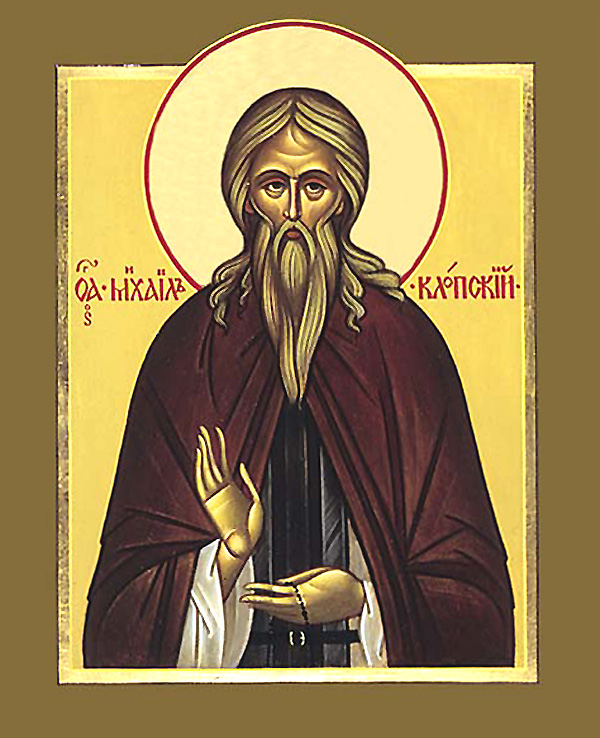
Venerable Michael the Fool-for-Christ of the Klops Monastery, Novgorod

Blessed Michael of Klops was of noble lineage, and he was a relative of Great Prince Demetrius of the Don (1363-1389). He took upon himself the exploit of foolishness for Christ to avoid the praise of men. Leaving Moscow dressed in rags, he arrived at the Klops monastery, near Novgorod.

No one knew how he got into the locked cell of the hieromonk Macarius, who was going round the cell censing during the Ninth Ode of the Canon. A man in monastic garb sat there beneath a candle, copying out the Acts of the Holy Apostles. After the end of Matins the igumen came with some of the brethren and asked the stranger who he was, and what his name was. But he responded only by repeating the questions, and did not reveal his origin.

In church the stranger sang in the choir and read the Epistle, and he also read the Lives of the Saints at meals. All who listened were moved by the beauty and spirituality of his reading. On the Feast of the Transfiguration of the Lord, the Klops monastery was visited by Prince Constantine Dimitrievich (son of Great Prince Demetrius of the Don ).

After Communion he was in the trapeza with the princess, during which time the unknown stranger read from the Book of Job. Hearing the reading, the prince approached the reader and looked him over. Then he bowed down to him, calling his kinsman Michael Maximovich by name. The fool remarked, “Only the Creator knows me, and who I am,” but he confirmed that his name was Michael.

Saint Michael soon set an example for the brethren in all the monastic efforts. He lived at the Klops monastery for forty-four years, exhausting his body in work, vigils and various deprivations, and he received from the Lord the gift of clairvoyance.

He denounced the vices of people, not fearing the powerful of this world. He predicted the birth of Great Prince Ivan III on January 22, 1440, and his capture of Novgorod. He denounced Prince Demetrius Shemyaka for blinding his brother the Great Prince Basil the Dark (1425-1462).

On a sandy spot Saint Michael summoned forth a spring of water, having written upon the earth: “I will take the cup of salvation (Ps. 115/116:13), let the well-spring show forth on this spot.” And during a time of famine, the supplies of bread at the monastery granary did not diminish, though they distributed grain abundantly to the hungry.

Having indicated beforehand the place of his burial, the saint died on January 11, 1453.

Saint Theodosius of Antioch

Saint Theodosius of Antioch in his early years left the rich home of his illustrious parents and entered upon the straight and arduous path of asceticism. He settled into a small cell on the shore of the Gulf of Isska, near the city of Ossos. The saint weakened his body with prostrations and by lying upon the bare ground. He also wore a hairshirt and heavy iron chains. His hair grew so long that it covered his feet.

By continuous feats of fasting and prayer he conquered his fleshly and spiritual passions, he quieted his temper, and drove away unclean thoughts. He labored much, tilling his garden and occupying himself with plaiting ropes. In his native land Saint Theodosius founded a monastery (Skupela). He imparted to the monks a love for physical toil and for spiritual deeds. Saint Theodosius had a special concern for strangers.

The sublime life of the saint was known even beyond the confines of the monastery. Both Christians and pagans knew him. Seafarers in time of peril called out for help to “the God of Theodosius.” It happened that at the mere mention of Saint Theodosius, the waves of the sea were calmed. Brigands feared and respected him, and sought his prayers. Fleeing the praise of people, the saint settled near the village of Maraton, founding here the Maratonia monastery. There the great ascetic peacefully finished the days of his God-pleasing life (412).

Venerable Theodosius, Metropolitan of Trebizond

Saint Theodosius, Metropolitan of Trebizond, was born in the village of Koritsa, near the Kastorian hills. At eighteen years of age he became a monk at Constantinople and went to the Philotheou monastery on Mount Athos, where he led a strict ascetic life.

He was chosen igumen of the monastery in 1375, and afterwards was made Metropolitan of Trebizond because of the holiness of his life. He persuaded John Alexius Komnenos to build the monastery of Dionysiou on Mount Athos. After a God-pleasing life, he died in Trebizond in 1392.

Yelets Icon of the Mother of God

The only thing we known about this Icon is that it was located in the city of Yelts, Orlov Gubernia. In addition, the annals record the year of its appearance – 1060, which is the same as that of the Yelets-Chernigov Icon (February 5). Researchers believe that the Yelets Icon is a late copy of the Yelets-Chernigov Icon. In addition to the belt image of the Mother of God, there is another kind of Yelets Icon which depicts the appearance of the Queen of Heaven to Tamerlane in 1395 in the city of Yelets, before his march on Moscow.

The Holy Virgin appeared with a multitude of Saints, in a threatening vision to Tamerlane as he was resting in his tent on Mount Argamach. On the same day (August 26) the residents of Moscow met the wonderworking Vladimir Icon of the Mother of God, praying before it for deliverance from the terrible invasion. Terrified by the vision, Tamerlane exclaimed, "So, we shall not defeat the land of Russia!" and then he retreated with his horde.

The Yelets Icon is commemorated on January 11, and also on August 26, in remembrance of Tamerlane's retreat. The Elets-Chernigov (or Chernigov Spruce Tree) Icon of the Mother of God is commemorated On February 5.

Daily Readings for Friday, January 10, 2025

AFTERFEAST OF THE THEOPHANY OF OUR LORD AND SAVIOUR JESUS CHRIST

ABSTAIN FROM MEAT, FISH, DAIRY, EGGS, WINE, OLIVE OIL

Afterfeast of the Theophany of Our Lord and Saviour Jesus Christ, Gregory of Nyssa, Dometian, Bishop of Melitene, Theosebia the Deaconess, sister of Basil the Great & Gregory of Nyssa, Markianos, Priest and Oikonomos of the Great Church

ST. PAUL’S LETTER TO THE EPHESIANS 4:7-13

BRETHREN, grace was given to each of us according to the measure of Christ’s gift. Therefore it is said, “When he ascended on high he led a host of captives, and he gave gifts to men.” (in saying, “He ascended, ” what does it mean but that he had also descended into the lower parts of the earth? He who descended is he who also ascended far above all the heavens, that he might fill all things.) And his gifts were that some should be apostles, some prophets, some evangelists, some pastors and teachers, to equip the saints for the work of ministry, for building up the body of Christ, until we all attain to the unity of the faith and of the knowledge of the Son of God, to mature manhood, to the measure of the stature of the fullness of Christ.

LUKE 3:19-22

At that time, Herod the tetrarch, who had been reproved by John for Herodias, his brother’s wife, and for all the evil things that Herod had done, added this to them all, that he shut up John in prison. Now when all the people were baptized, and when Jesus also had been baptized and was praying, the heaven was opened, and the Holy Spirit descended upon him in bodily form, as a dove, and a voice came from heaven, “You are my beloved Son; with you I am well pleased.”

Afterfeast of the Theophany of our Lord and Savior Jesus Christ

The fourth day of the Afterfeast of Theophany falls on January 10. Some of the hymns of this period compare the streams of the Jordan to the life-giving waters of Baptism.

Saint Gregory, Bishop of Nyssa

Saint Gregory, Bishop of Nyssa, was a younger brother of Saint Basil the Great (January 1). His birth and upbringing came at a time when the Arian disputes were at their height. Having received an excellent education, he was at one time a teacher of rhetoric. In the year 372, he was consecrated by Saint Basil the Great as bishop of the city of Nyssa in Cappadocia.

Saint Gregory was an ardent advocate for Orthodoxy, and he fought against the Arian heresy with his brother Saint Basil. Gregory was persecuted by the Arians, by whom he was falsely accused of improper use of church property, and thereby deprived of his See and sent to Ancyra.

In the following year Saint Gregory was again deposed in absentia by a council of Arian bishops, but he continued to encourage his flock in Orthodoxy, wandering about from place to place. After the death of the emperor Valens (378), Saint Gregory was restored to his cathedra and was joyously received by his flock. His brother Saint Basil the Great died in 379.

Only with difficulty did Saint Gregory survive the loss of his brother and guide. He delivered a funeral oration for him, and completed Saint Basil’s study of the six days of Creation, the Hexaemeron. That same year Saint Gregory participated in the Council of Antioch against heretics who refused to recognize the perpetual virginity of the Mother of God. Others at the opposite extreme, who worshipped the Mother of God as being God Herself, were also denounced by the Council. He visited the churches of Arabia and Palestine, which were infected with the Arian heresy, to assert the Orthodox teaching about the Most Holy Theotokos. On his return journey Saint Gregory visited Jerusalem and the Holy Places.

In the year 381 Saint Gregory was one of the chief figures of the Second Ecumenical Council, convened at Constantinople against the heresy of Macedonius, who incorrectly taught about the Holy Spirit. At this Council, on the initiative of Saint Gregory, the Nicean Symbol of Faith (the Creed) was completed.

Together with the other bishops Saint Gregory affirmed Saint Gregory the Theologian as Archpastor of Constantinople.

In the year 383, Saint Gregory of Nyssa participated in a Council at Constantinople, where he preached a sermon on the divinity of the Son and the Holy Spirit. In 386, he was again at Constantinople, and he was asked to speak the funeral oration in memory of the empress Placilla. Again in 394 Saint Gregory was present in Constantinople at a local Council, convened to resolve church matters in Arabia.

Saint Gregory of Nyssa was a fiery defender of Orthodox dogmas and a zealous teacher of his flock, a kind and compassionate father to his spiritual children, and their intercessor before the courts. He was distinguished by his magnanimity, patience and love of peace.

Having reached old age, Saint Gregory of Nyssa died soon after the Council of Constantinople. Together with his great contemporaries, Saints Basil the Great and Gregory the Theologian, Saint Gregory of Nyssa had a significant influence on the Church life of his time. His sister, Saint Macrina, wrote to him: “You are renowned both in the cities, and gatherings of people, and throughout entire districts. Churches ask you for help.” Saint Gregory is known in history as one of the most profound Christian thinkers of the fourth century. Endowed with philosophical talent, he saw philosophy as a means for a deeper penetration into the authentic meaning of divine revelation.

Saint Gregory left behind many remarkable works of dogmatic character, as well as sermons and discourses. He has been called “the Father of Fathers.”

Saint Dometian, Bishop of Melitene

Saint Dometian, Bishop of Melitene, was born and lived during the sixth century, in the time of the emperor Justin the Younger. He was married but was widowed, and thereafter he became a monk and lived a strict and holy life.

At thirty years of age he was chosen bishop of the city of Melitene (in Armenia). Wise and zealous in questions of faith, strong in word and deed, Saint Dometian quickly gained fame as a good and dedicated pastor. More than once he carried out government commissions in Persia to avoid conflict with the Greeks. Beloved by all, Saint Dometian often received rich gifts, which he distributed to the poor. Both during his life and after his death in 601, Saint Dometian was glorified by God with miracles.

Saint Marcian the Presbyter in Constantinople

Saint Marcian, Presbyter of the Great Church, was born at Rome and in his youth he received a first-rate education in Constantinople. After the death of his parents, Saint Marcian used his inheritance on the building, renovation and embellishment of churches. Thus, he built a church dedicated to the holy Martyr Anastasia (December 22), richly adorned it, and had the holy relics of the saint transferred to it. He also built a church of the Great Martyr Irene (May 5), and the church of Saint Isidore.

His moral purity and strict asceticism were resented by those who were slothful and avaricious, for they regarded his life as an unspoken criticism of their own lack of virtue. However, his meekness and silence overcame their slanders and brought him to the attention of the Patriarch, who ordained Saint Marcian a presbyter and appointed him treasurer of the Church of Constantinople.

From his wealth Saint Marcian distributed generous alms, and distinguished himself by non-covetousness, denying himself in everything. In accord with the command of the Savior, he did not even have an extra set of clothes, which he might need should he be caught in inclement weather. Having received a gift of wonderworking, Saint Marcian healed the sick and cast out devils. Saint Marcian died between 472-474 and was buried at the monastery of Saint John the Forerunner at Constantinople.

Venerable Paul, Abbot of Obnora, Vologda

Saint Paul of Obnora, a famed disciple of Saint Sergius of Radonezh, was born at Moscow in the year 1317. From his youth he distinguished himself by his piety and kindliness towards the poor and suffering. His rich parents prepared him for a secular life, but at twenty-two years of age he secretly left his parental home and received tonsure at the Nativity monastery on the Volga (in the Yaroslav diocese).

From there Paul transferred to the Holy Trinity monastery to Saint Sergius of Radonezh, spending several years with him as his disciple, obeying the holy Elder in all things. With the blessing of Saint Sergius, he settled a short distance from the monastery in a separate cell, where he spent fifteen years as a hermit. Having asked the blessing of Saint Sergius to go off into the wilderness for a quiet and solitary life, Saint Paul wandered about for a long while, seeking a place of solitude. He wandered a great deal in the wilderness. He spent time with Saint Abraham of Chukhloma (July 20) and finally, he remained in the Komel forest.

At the Gryazovitsa River, in the hollow of an old linden tree, the monk built a small cell and dwelt there for three years in complete silence, “not giving his body rest, that he might receive future rest.” Then he moved on to the River Nurma, where he built a hut and dug a well, spending his days in vigil and prayer.

Five days out of the week he went without food, and only on Saturday and Sunday did he partake of some bread and water. The news about the hermit spread abroad, and those wishing spiritual guidance began coming to him. Despite his love for the solitary life, Saint Paul never refused anyone spiritual consolation and guidance. He was also visited by Saint Sergius of Nurma (October 7), who sought solitude with the blessing of Saint Sergius of Radonezh, and who also spent his ascetic life in these places.

With the blessing of Saint Sergius and the agreement of Metropolitan Photius, Saint Paul built the Holy Trinity church in 1414, around which a monastery sprang up (later called the Monastery of Saint Paul of Obnora). Having written a strict monastic Rule for the brethren, Saint Paul entrusted the guidance of the new monastery to his disciple Alexis, while he himself continued as before to live in a solitary cell on a hill. He remained a responsive and good counsellor for anyone needing his help. Saint Paul died at 112 years of age. His final words were, “Brethren, have love one for another and keep to the rule of the monastic community.”

The Life of the saint was written in about the year 1546, and his glorification occurred in 1547.

Venerable Makarios of Pisma and Kostroma

On January 10, the Feast Day of Saint Paul of Obnora (or Komel), the Church also commemorates one of his friends and companions: Saint Makarios of Pisma. There is no information about when the two hermits became acquainted. According to ancient tradition, Saint Paul met Saint Makarios when he was visiting various monasteries before he settled in the Komel forest on the Obnora River, that is, before 1414.

Tradition says that Saint Makarios was born in the village of Danilovo, located on the left bank of the Pisma River, twelve versts from the hermitage, where the noble Pismensky family revered Saint Makarios as one of its relatives. Saint Makarios received his first monastic training from Saint Sergius at Holy Trinity Monastery, and from there he returned to his homeland and settled in a dense forest near the Pisma River, since he loved solitude. This place has retained the name of the old Makariev Hermitage. Disciples began to gather around him, and there were many others who wished to live near him, Saint Makarios founded a small monastery a mile away from his secluded cell, and built a wooden church in honor of the Transfiguration of the Lord. Later, the righteous one was buried near this church.

While establishing his own monastery, Saint Paul did not forget about his friend; and for his part, Saint Makarios did not regard the hermitage he had founded in the Pisma wilderness as separate from Saint Paul's Monastery. Like-minded in their understanding of human life, and the benefits of solitude and silence, both hermits grew closer together; thus the monasteries they founded were perhaps the beginning of monastic life in the region. But the communities of these spiritual friends had different fates: Obnora Monastery grew crowded, but Pisma Monastery remained a small hermitage. However, the bond between them was never broken.

The charters of Tsars Ivan the Terrible (1566) and Michael (1625) describe the Makariev Hermitage by the Shachebal mill as belonging to the Saint Paul of Obnora Monastery.

In an inventory of the Saint Paul of Obnora Monastery dating from 1683, an icon of Saint Makarios and Saint Paul is mentioned, thus the ascetic's local veneration had already begun at that time. Concerning the Monastery itself it is stated in the inventory: "Saint Paul's Monastery is the same as the Monastery of Makariev Hermitage in the Kostroma district, by the Shachebalsky mill on the Pisma River, and in the church of the Transfiguration of our Lord, God, and Savior Jesus Christ is a chapel dedicated to Saint Paul, the wonderworker of Obnora, with a domed roof. In the same chapel the tomb of Saint Makarios is covered with a black cloth, over the middle of which a cross is suspended."

The following miracle occurred at the grave of Saint Makarios. At the end of the XVIII century, the church burnt down, and a wooden structure was set up over the Saint's grave; and in the place where this wooden structure was located, not only did they fail to notice the burning wood and coals, but the ashes as well; and the whole area was covered with an extraordinary dew. After the fire, a curious person wanted to open the tomb to see what was there, and he was punished with blindness for his temerity.

At present, the Saint's relics rest beneath the floor. On the tomb is an icon of Saint Makarios, and his staff lies on top of the cloth. A prayer to the Saint, dating from 1750, has been preserved as well.

Blessed Theosebia the Deaconess, sister of Saints Basil the Great and Gregory of Nyssa

Saint Theosebia the Deaconess was the sister of Saints Basil the Great, Gregory, afterwards Bishop of Nyssa , and Peter, Bishop of Sebaste. She was a virgin and served the Holy Church as a deaconess, caring for the sick, distributing food to vagrants, raising orphans and preparing women for holy Baptism.

When her brother, Saint Gregory of Nyssa, was in exile for three years, Saint Theosebia was with him and she shared in all the tribulations of a life of wandering. Saint Theosebia died in 385, and Saint Gregory the Theologian praised her in a eulogy.

Venerable Antipas of Valaam Monastery

Saint Antipas was born in Moldavia, Romania in 1816. His father was a deacon in the village church, and his mother ended her life in a women’s monastery as a schemanun.

Saint Antipas came to Valaam Monastery from Mt Athos on November 6, 1865. He spent the rest of his life in the skete at Valaam, living like a hermit.

Blessed with the gift of clairvoyance, Saint Antipas fell asleep in the Lord on January 10, 1882.

Saint Theophan the Recluse, Bishop of Tambov

George Govorov, the future Saint Theophan, was born on January 10, 1815 in the village of Chernavsk in the Orlov province where his father was a priest.

At first, George attended a primary school at Liven, then a military school. From 1837-1841 he studied at the Kiev Theological Academy, and probably visited the Monastery of the Caves several times. In these surroundings, it was not surprising that he received the monastic tonsure while he was still a student. After graduation Hieromonk Theophan was appointed rector of Kiev’s church schools, and later became rector of the seminary in Novgorod. Before he retired from teaching, Father Theophan served as a professor and Assistant Inspector at the Petersburg Academy.

Saint Theophan was not completely happy with academic work, so he asked to be relieved of his duties. He was assigned to be a member of the Russian Mission in Jerusalem. After being raised to the rank of Archimandrite, he became Rector of Olnets Seminary. Soon he was assigned as the chief priest of the embassy church in Constantinople. Saint Theophan was eventually recalled to Russia to become rector of the Petersburg Academy, and supervisor of religious education in the capital’s secular schools.

On May 9, 1859 Saint Theophan was consecrated as Bishop of Tambov, where he established a diocesan school for girls. During his time in Tambov he came to love the secluded Vysha Monastery in his diocese. In 1863 he was transferred to Vladimir and remained there for three years. He also established a diocesan school for girls at Vladimir.

The holy bishop visited parishes throughout his diocese serving, preaching, restoring churches, and sharing the joys and sorrows of his flock. It was very difficult for Bishop Theophan to live in the world and become involved with vain worldly disputes. Many abused his trust, but he could not bring himself to chastise anyone. Instead, he left such unpleasant tasks to the Archpriest of his cathedral.

He was present at the uncovering of the relics of Saint Tikhon of in 1861, and this made a tremendous impression on him, for he had much in common with that saint. He had loved Saint Tikhon from early childhood, and always spoke about him with great enthusiasm. When Saint Tikhon was glorified as a saint on August 13, Bishop Theophan’s joy knew no bounds.

In 1866 his request to be relieved of his duties as Bishop of Vladimir was granted. He was appointed as Superior of the Vysha Monastery, but soon resigned from that position. He was permitted to live there and to celebrate services whenever he wished. He also received a pension of 1000 rubles.

As he prepared to leave his diocese, he wished to focus on his own salvation, and to concentrate on undisturbed communion with God. On July 24, 1866 he bade his diocese farewell, leaving the world for a life of reclusion, and to devote himself to writing spiritual books. Through these books, Saint Theophan has become the spiritual benefector of all Orthodox Christians. Although he sought the Kingdom of God and His righteousness (Mt. 6:33), a reputation as a writer of great significance for the whole world was also added to him.

Bishop Theophan wrote many books, but received no profits from their sale. He tried to keep them as inexpensive as possible, and they quickly sold out. He wrote about topics which others before him had not fully treated, such as how to live a Christian life, how to overcome sinful habits, and how to avoid despair. He tried to explain the steps of spiritual perfection systematically, as one who had himself gone through these various steps. Some of his books include The Spiritual Life and How to be Attuned to It, The Path to Salvation, and Letters on the Spiritual Life. He also translated the Philokalia in five volumes, and The Sermons of Saint Simeon the New Theologian.

For the first six years in the monastery, Bishop Theophan attended all the services, including the early Liturgy. He stood still in church with his eyes closed so that he would not be distracted. He often celebrated Liturgy on Sundays and Feast Days.

Beginning in 1872, he cut off all relationships with people (except for his confessor) and no longer left his cell to attend church. He built a small chapel in his quarters and dedicated it to the Lord’s Baptism. For ten years he served there on Sundays and Feast Days. For the last eleven years of his life he served every day by himself. Sometimes he would sing, and sometimes he kept completely silent.

Whenever anyone visited him on business, Bishop Theophan would reply with as few words as possible, then immerse himself in prayer. If anyone sent him money, he would distribute it to the poor, keeping only a small portion to purchase books.

Whenever he was not occupied with writing or praying, the reclusive bishop worked at carpentry or painting icons. He received from twenty to forty letters each day, and he answered all of them. He was able to discern each writer’s spiritual condition, then give detailed answers to the questions of those who were struggling for the salvation of their souls.

His eyesight deteriorated in his latter years, but he did not curtail his work because of it. In the evening, his cell attendant would prepare everything for the bishop to serve Liturgy the next morning. After finishing the Liturgy, Bishop Theophan would knock on the wall to signal the cell attendant to serve him tea. On days when there was no fasting, he would eat lunch at 1:00 P.M. This consisted of one egg and a glass of milk. At four o’clock he would have some tea, and then no more food that day.

Bishop Theophan began to get weaker at the beginning of 1894. He was still writing on the afternoon of January 6, but when the cell attendant came to check on him at 4:30 he found that the bishop had departed to the Lord.

Saint Theophan’s body lay in the small church in his cell for three days, then three more days in the cathedral. There was no trace of corruption, however. He was laid to rest in the Kazan church of the Vysha Monastery.

Several of Saint Theophan’s books have been translated into English, and are reliable spiritual guides for Orthodox Christians of today. Saint Theophan’s gift was the ability to present the wisdom of the Fathers in terms which modern people can understand. Since he lived close to our own time, many readers find his books “more approachable” than the earlier patristic literature. He treats the life of the soul and the life of the body as a unified whole, not as two separate elements, and reveals to people the path of salvation.

Daily Readings for Thursday, January 09, 2025

AFTERFEAST OF THE THEOPHANY OF OUR LORD AND SAVIOUR JESUS CHRIST

NO FAST

Afterfeast of the Theophany of Our Lord and Saviour Jesus Christ, Polyeuctus the Martyr of Melitene in Armenia, Eustratios the Wonderworker, Peter, Bishop of Sebaste, brother of Basil the Great and Gregory of Nyssa, Philip, Metropolitan of Moscow

ST. PAUL’S SECOND LETTER TO TIMOTHY 2:1-10

Timothy, my son, be strong in the grace that is in Christ Jesus, and what you have heard from me before many witnesses entrust to faithful men who will be able to teach others also. Share in suffering as a good soldier of Christ Jesus. No soldier on service gets entangled in civilian pursuits, since his aim is to satisfy the one who enlisted him. An athlete is not crowned unless he competes according to the rules. It is the hardworking farmer who ought to have the first share of the crops. Think over what I say, for the Lord will grant you understanding in everything.
Remember Jesus Christ, risen from the dead, descended from David, as preached in my gospel, the gospel for which I am suffering and wearing fetters like a criminal. But the word of God is not fettered. Therefore I endure everything for the sake of the elect, that they also may obtain salvation in Christ Jesus with its eternal glory.

MARK 1:9-15

In those days Jesus came from Nazareth of Galilee and was baptized by John in the Jordan. And when he came up out of the water, immediately he saw the heavens opened and the Spirit descending upon him like a dove; and a voice came from heaven, “You are my beloved Son; with you I am well pleased.” The Spirit immediately drove him out into the wilderness. And he was in the wilderness forty days, tempted by Satan; and he was with the wild beasts; and the angels ministered to him. Now after John was arrested, Jesus came into Galilee, preaching the gospel of God, and saying, “The time is fulfilled, and the kingdom of God is at hand; repent, and believe in the gospel.”

Afterfeast of the Theophany of our Lord and Savior Jesus Christ

The third day of the Afterfeast of Theophany falls on January 9. The hymns of this period invite us to purify our minds in order to see Christ.

Martyr Polyeuktos of Melitene in Armenia

Saint Polyeuktos1 (Polу́euktos)was the first to be martyred for Christ in the Armenian city of Melitene (Melitēnḗ). He was a soldier during the reign of Emperor Decius (249-251), and he later suffered martyrdom in the reign of Valerian (253-259). He was a friend of Nearkhos (Néarkhos/Νέαρχος) a fellow-soldier and a firm Christian. Polyeuktos, however, although he led a virtuous life, remained a pagan.

When the persecution against Christians began, Nearkhos said to Polyeuktos, “Friend, soon we shall be separated, for they will take me to torture, and you, alas, will renounce your friendship with me.” Polyeuktos told him that he had seen Christ in a dream. The Savior took his soiled military cloak from him and dressed him in a radiant garment. “Now,” he said, “I am prepared to serve the Lord Jesus Christ.”

Enflamed with zeal, Saint Polyeuktos went to the city square, and tore up the edict of Decius which required everyone to worship the idols. A few moments later, he met a procession carrying twelve idols through the streets of the city. Dashing the idols to the ground, he trampled them underfoot.

His father-in-law, the magistrate Felix, who was responsible for enforcing the imperial edict, was horrified at what Saint Polyeuktos had done and advised him to obey the imperial edict. Polyeuktos told him that we must obey God rather than men. Felix declared that Polyeuktos must die for this. “Go then, bid farewell to your wife and children,” he said. Paulina wept and urged her husband to renounce Christ. Felix also wept, but Saint Polyeuktos remained steadfast in his resolve to suffer for Christ.

Bowing his head beneath the executioner's sword, he was baptized in his own blood. In the reign of Saint Constantine the Great, when the Church of Christ had triumphed throughout the Roman Empire, a church was built at Melitene in honor of Saint Polyeuktos. Many miracles were worked through his intercession. In that same church, the parents of Saint Euthymios the Great (January 20) prayed fervently for a son. The birth of this great luminary of Orthodoxy occurred in the year 376, through the prayers of the Holy Martyr Polyeuktos.

Saint Polyeuktos was also venerated by Saint Akakios, the Bishop of Melitene (March 31), who participated in the Third Ecumenical Council, and was a great proponent of Orthodoxy. In the East, as well as in the West, the Holy Martyr Polyeuktos is venerated as the patron Saint of vows and treaties.

The Polyeucte Overture of French composer Paul Dukas is only one of many pieces of classical music inspired by the Saints. It premiered in January of 1892. The French dramatist Pierre Corneille has also written a play, "Polyeucte" (1642), based on the Martyr’s life.


1 The name Polyeuktos means much-desired.

Hieromartyr Philip, Metropolitan of Moscow and All Russia

Saint Philip, Metropolitan of Moscow, in the world Theodore, was descended from the illustrious noble lineage of the Kolichevi, occupying a prominent place in the Boyar duma at the court of the Moscow sovereigns. He was born in the year 1507. His father, Stephen Ivanovich, “a man enlightened and filled with military spirit,” attentively prepared his son for government service. Theodore’s pious mother Barbara, who ended her days as a nun with the name Barsanouphia, implanted in the soul of her son a sincere faith and deep piety. Young Theodore Kolichev applied himself diligently to the Holy Scripture and to the writings of the holy Fathers. The Moscow Great Prince Basil III, the father of Ivan the Terrible, brought young Theodore into the court, but he was not attracted to court life. Conscious of its vanity and sinfulness, Theodore all the more deeply immersed himself in the reading of books and visiting the churches of God. Life in Moscow repelled the young ascetic. The young Prince Ivan’s sincere devotion to him, promising him a great future in government service, could not deter him from seeking the Heavenly City.

On Sunday, June 5, 1537, in church for Divine Liturgy, Theodore felt intensely in his soul the words of the Savior: “No man can serve two masters” (Mt.6:24), which determined his ultimate destiny. Praying fervently to the Moscow wonderworkers, and without bidding farewell to his relatives, he secretly left Moscow in the attire of a peasant, and for a while he hid himself away from the world in the village of Khizna, near Lake Onega, earning his livelihood as a shepherd.

His thirst for ascetic deeds led him to the renowned Solovki monastery on the White Sea. There he fulfilled very difficult obediences: he chopped firewood, dug the ground, and worked in the mill. After a year and a half of testing, the igumen Alexis tonsured him, giving him the monastic name Philip and entrusting him in obedience to the Elder Jonah Shamina, a converser with Saint Alexander of Svir (August 30).

Under the guidance of experienced elders Philip grew spiritually, and progressed in fasting and prayer. Igumen Alexis sent him to work at the monastery forge, where Saint Philip combined the activity of unceasing prayer with his work with a heavy hammer.

He was always the first one in church for the services, and was the last to leave. He toiled also in the bakery, where the humble ascetic was comforted with a heavenly sign. In the monastery afterwards they displayed the “Bakery” image of the Mother of God, through which the heavenly Mediatrix bestowed Her blessing upon the humble baker Philip. With the blessing of the igumen, Saint Philip spent a certain while in wilderness solitude, attending to himself and to God.

In 1546 at Novgorod the Great, Archbishop Theodosius made Philip igumen of the Solovki monastery. The new igumen strove with all his might to exalt the spiritual significance of the monastery and its founders, Saints Sabbatius and Zosimus of Solovki (September 27, April 17). He searched for the Hodēgḗtria icon of the Mother of God brought to the island by the first head of Solovki, Saint Sabbatius. He located the stone cross which once stood before the saint’s cell. The Psalter belonging to Saint Zosimus (+1478), the first igumen of Solovki, was also found. His robe, in which igumens would vest during the service on the days when Saint Zosimus was commemorated, was also discovered.

The monastery experienced a spiritual revival. A new monastic Rule was adopted to regulate life at the monastery. Saint Philip built majestic temples: a church of the Dormition of the Mother of God, consecrated in the year 1557, and a church of the Transfiguration of the Lord. The igumen himself worked as a simple laborer, helping to build the walls of the Transfiguration church. Beneath the north portico he dug himself a grave beside that of his guide, the Elder Jonah. Spiritual life in these years flourished at the monastery: struggling with the brethren with the disciples of Igumen Philip were Saints John and Longinus of Yarenga (July 3) and Bassian and Jonah of Pertominsk (July 12).

Saint Philip often withdrew to a desolate wilderness spot for quiet prayer, two versts from the monastery, which was later known as the Philippov wilderness.

But the Lord was preparing the saint for other work. In Moscow, Tsar Ivan the Terrible fondly remembered the Solovki hermit from his childhood. The Tsar hoped to find in Saint Philip a true companion, confessor and counsellor, who in his exalted monastic life had nothing in common with the sedition of the nobles. The Metropolitan of Moscow, in Ivan’s opinion, ought to have a certain spiritual meekness to quell the treachery and malice within the Boyar soul. The choice of Saint Philip as archpastor of the Russian Church seemed to him the best possible.

For a long time the saint refused to assume the great burden of the primacy of the Russian Church. He did not sense any spiritual affinity with Ivan. He attempted to get the Tsar to abolish the Oprichniki [secret police]. Ivan the Terrible attempted to argue its civil necessity. Finally, the dread Tsar and the holy Metropolitan came to an agreement: Saint Philip would not meddle in the affairs of the Oprichniki and the running of the government, he would resign as Metropolitan in case the Tsar could not fulfill his wishes, and that he would be a support and counsellor of the Tsar, just as former Metropolitans supported the Moscow sovereigns. On July 25, 1566 Saint Philip was consecrated for the cathedra of Moscow’s hierarch saints, whose number he was soon to join.

Ivan the Terrible, one of the greatest and most contradictory figures in Russian history, lived an intensely busy life. He was a talented writer and bibliophile , he was involved in compiling the Chronicles (and himself suddenly cut the thread of the Moscow chronicle writing), he examined the intricacies of the monastic Rule, and more than once he thought about abdicating the throne for the monastic life.

Every aspect of governmental service, all the measures undertaken to restructure civil and social life, Ivan the Terrible tried to rationalize as a manifestation of Divine Providence, as God acting in history. His beloved spiritual heroes were Saint Michael of Chernigov (September 20) and Saint Theodore the Black (September 19), military men active with complex contradictory destinies, moving toward their ends through whatever the obstacles before them, and fulfilling their duties to the nation and to the Church.

The more the darkness thickened around Ivan, the more resolutely he demanded cleansing and redemption of his soul. Journeying on pilgrimage to the Saint Cyril of White Lake monastery, he declared his wish to become a monk to the igumen and the brethren. The haughty autocrat fell on his knees before the igumen, who blessed his intent. Ivan wrote, “it seems to me, an accursed sinner, that I am already robed in black.”

Ivan imagined the Oprichnina in the form of a monastic brotherhood, serving God with weapons and military deeds. The Oprichniki were required to dress in monastic garb and attend long and tiring church services, lasting from 4 to 10 o’clock in the morning. “Brethren” not in church at 4 o’clock in the morning, were given a penance by the Tsar. Ivan and his sons fervently wished to pray and sing in the church choir. From church they went to the trapeza, and while the Oprichniki ate, the Tsar stood beside them. The Oprichniki gathered leftover food from the table and distributed it to the poor at the doorway of the trapeza.

Ivan, with tears of repentance and wanting to be an esteemer of the holy ascetics, the teachers of repentance, wanted to wash and burn away his own sins and those of his companions, cherishing the assurance that even his terribly cruel actions would prove to be for the welfare of Russia and the triumph of Orthodoxy. The most clearly spiritual action and monastic sobriety of Ivan the Terrible is revealed in his “Synodikon.” Shortly before his death, he ordered full lists compiled of the people murdered by him and his Oprichniki. These were then distributed to all the Russian monasteries. Ivan acknowledged all his sins against the nation, and besought the holy monks to pray to God for the forgiveness of his tormented soul.

The pseudo-monasticism of Ivan the Terrible, a dark most grievous oppression over Russia, tormented Saint Philip, who considered it impossible to mix the earthly and the heavenly, serving the Cross and serving the sword. Saint Philip saw how much unrepentant malice and envy was concealed beneath the black cowls of the Oprichniki. There were outright murderers among them, hardened in lawless bloodletting, and profiteers seeking gain, rooted in sin and transgressions. By the sufferance of God, history is often made by the hands of the impious, and Ivan the Terrible wanted to whiten his black brotherhood before God. The blood spilled by its thugs and fanatics cried out to Heaven.

Saint Philip decided to oppose Ivan. This was prompted by a new wave of executions in the years 1567-1568. In the autumn of 1567, just as the Tsar was setting out on a campaign against Livonia, he learned about a boyar conspiracy. The plotters intended to seize the Tsar and deliver him to the Polish king, who already was on the move with an army towards Russian territory.

Ivan dealt severely with the conspirators, and again he shed much blood. It was bitter for Saint Philip, and the conscience of the saint compelled him boldly to enter into defense of the executed. The final rift occurred in the spring of 1568. On the Sunday of the Veneration of the Cross, March 2, 1568, when the Tsar with his Oprichniki entered the Dormition cathedral in monastic garb, as was their custom, Saint Philip refused to bless him, and began openly to denounce the lawless acts committed by the Oprichniki. The accusations of the hierarch shattered the harmony of the church service. In a rage Ivan retorted, “Would you oppose us? We shall see your firmness! I have been too soft on you.”

The Tsar began to show ever greater cruelty in persecuting all those who opposed him. Executions followed one after the other. The fate of the saintly confessor was sealed. But Ivan wanted to preserve a semblance of canonical propriety. The Boyar Duma obediently carried out his decision to place the Primate of the Russian Church on trial. A cathedral court was set up to try Metropolitan Philip in the presence of a diminished Boyar Duma, and false witnesses were found. To the deep sorrow of the saint, these were monks of the Solovki monastery, his former disciples and novices whom he loved. They accused Saint Philip of a multitude of transgressions, including sorcery.

“Like all my ancestors,” the saint declared, “I came into this world prepared to suffer for truth.” Having refuted all the accusations, the holy sufferer attempted to halt the trial by volunteering to resign his office. His resignation was not accepted, however, and new abuse awaited the martyr.

Even after a sentence of life imprisonment had been handed down, they compelled Saint Philip to serve Liturgy in the Dormition cathedral. This was on November 8, 1568. In the middle of the service, the Oprichniki burst into the temple, they publicly read the council’s sentence of condemnation, and then abused the saint. Tearing his vestments off, they dressed him in rags, dragged him out of the church and drove him off to the Theophany monastery on a simple peasant’s sledge.

For a long while they held the martyr in the cellars of the Moscow monasteries. They placed his feet into stocks, they held him in chains, and put a heavy chain around his neck. Finally, they drove him off to the Tver Otroch monastery. And there a year later, on December 23,1569, the saint was put to death at the hands of Maliuta Skuratov. Only three days before this the saint foresaw the end of his earthly life and received the Holy Mysteries. At first, his relics were committed to earth there at the monastery, beyond the church altar. Later, they were transferred to the Solovki monastery (August 11, 1591) and from there to Moscow (July 3, 1652).

Initially, the memory of Saint Philip was celebrated by the Russian Church on December 23, the day of his martyric death. In 1660, the celebration was transferred to January 9.

Prophet Shemaiah (Samaia or Semeias)

The Prophet Shemaiah (Samaia) lived under King Solomon and his son Rehoboam. At that time, the kingdom of Israel in the north was divided from the southern kingdom of Juda. Israel was comprised of ten loosely united tribes, and Juda of two tribes. The prophet ordered Rehoboam not to make war against the ten tribes of Israel, who had separated themselves from the offspring of David (3/1 Kings 12:22, 2 Chron. 11:2). His name means “God hears.”

Saint Peter, Bishop of Sebaste, in Armenia

Saint Peter, Bishop of Sebaste, was a brother of Saint Basil the Great and Saint Gregory of Nyssa (January 1 and January 10). His older sister, Saint Macrina (July 19) played a large role in his upbringing.

Saint Basil the Great ordained Saint Peter as presbyter, and later he was made Bishop of Sebaste (in Armenia). Saint Peter was present at the Second Ecumenical Council in the year 381, convened at Constantinople against the heresy of Macedonius.

Saint Eustratius the Wonderworker

Saint Eustratius came from the city of Tarsus. At twenty years of age he secretly left his parents’ home and settled in the Abgar monastery (on Olympos in Asia Minor). There he lived a strict ascetic life, eating only bread and water, and spending his nights at prayer. After a certain while he was chosen as igumen of the monastery.

During the reign of the Iconoclast Leo the Armenian (813-820), Saint Eustratius hid from pursuit by roaming the hills and the wilds. After the death of the emperor he returned to the monastery. Prayer was always on his lips, and he constantly repeated the words: “Lord, have mercy!”

Before his death he gave instructions to the monks not to be attracted towards earthly blessings, and constantly to think about the future life. Signing himself with the Sign of the Cross, he said, “Into Thy hands, O Lord, I commend my spirit” and he died in peace at age 95.

Daily Readings for Wednesday, January 08, 2025

AFTERFEAST OF THE THEOPHANY OF OUR LORD AND SAVIOUR JESUS CHRIST

ABSTAIN FROM MEAT, FISH, DAIRY, EGGS, WINE, OLIVE OIL

Afterfeast of the Theophany of Our Lord and Saviour Jesus Christ, George of Hozeva, Domnica the Righteous of Constantinople, Atticus and Cyrus, Holy Patriarchs of Constantinople, Gregory of the Kiev Caves, Emilianos the Confessor, Bishop of Cyzikos, Pega the Virgin, Hermitess of Peakirk

ST. PAUL’S LETTER TO THE ROMANS 6:3-11

Brethren, all who have been baptized into Christ Jesus were baptized into His death. We were buried therefore with Him by baptism into death, so that as Christ was raised from the dead by the glory of the Father, we too might walk in newness of life. For if we have been united with Him in a death like His, we shall certainly be united with Him in a resurrection like His. We know that our old self was crucified with Him so that the sinful body might be destroyed, and we might no longer be enslaved to sin. For he who has died is freed from sin. But if we have died with Christ, we believe that we shall also live with Him. For we know that Christ being raised from the dead will never die again; death no longer has dominion over Him. The death He died He died to sin, once for all, but the life He lives He lives to God. So you also must consider yourselves dead to sin and alive to God in Christ Jesus our Lord.

JOHN 3:22-33

At that time, Jesus and his disciples went into the land of Judea; there He remained with them and baptized. John also was baptizing at Aenon near Salim, because there was much water there; and people came and were baptized. For John had not yet been put in prison.
Now a discussion arose between John's disciples and a Jew over purifying. And they came to John, and said to him, "Rabbi, he who was with you beyond the Jordan, to whom you bore witness, here he is, baptizing, and all are going to him." John answered, "No one can receive anything except what is given him from heaven. You yourselves bear me witness, that I said, I am not the Christ, but I have been sent before Him. He who has the bride is the bridegroom; the friend of the bridegroom, who stands and hears him, rejoices greatly at the bridegroom's voice; therefore this joy of mine is now full. He must increase, but I must decrease.
He who comes from above is above all; he who is of the earth belongs to the earth, and of the earth he speaks; he who comes from heaven is above all. He bears witness to what he has seen and heard, yet no one receives his testimony; he who receives his testimony sets his seal to this, that God is true.

Afterfeast of the Theophany of our Lord and Savior Jesus Christ

The second day of the Afterfeast of Theophany falls on January 8. At Vespers we repeat a hymn which has already been sung at Compline for Theophany. In the hymn Saint John wonders in whose name he should baptize Christ. Should he baptize Him in the name of the Father? The Lord Jesus Christ already bears Him in Himself. Of the Son? He Himself is the incarnate Son of God. Of the Holy Spirit? Christ Himself sends the Spirit.

Venerable George the Chozebite, Abbot

Saint George the Chozebite was born on the island of Cyprus toward the end of the sixth century. After the death of his parents, he went to Palestine to worship at the holy places. Here he entered into the monastic community of Chozeba between the River Jordan and Jerusalem, and he later became head of this monastery. Saint George presented the monks example in fasting, vigil and physical efforts. Having lived as an angel upon the earth, he died in peace.

Venerable Domnica of Constantinople

Saint Domnica came from Carthage to Constantinople in the time of the holy Emperor Theodosius the Great. Here she was baptized by Patriarch Nectarius and entered a women’s monastery.

Through strict and prolonged ascetic effort she attained to high spiritual perfection. The saint healed the sick, demonstrated power over the natural elements, and predicted the future. By her miracles the saint moved inhabitants of the capital towards concerns about life eternal and the soul. Adorned by virtues, the saint departed this life a spotless virgin in her old age.

Saint Emilian the Confessor, Bishop of Cyzicus

Saint Emilian was a zealous defender of the holy icons during the reign of Emperor Leo the Armenian. He suffered torture and martyrdom in the year 820. His main feast is August 8.

Venerable Gregory, Wonderworker of the Kiev Near Caves

Saint Gregory was tonsured at the Kiev Caves monastery in the time of Saint Theodosius (May 3). The saint devoted much time to reading books, which were his sole possession. He had the ability to bring thieves to their senses. Several times robbers broke in on him in his cell or in the garden, but the saint reasoned with them, the thieves repented, and began to lead honest lives.

Once, when the monk went to the Dnieper River for water, some servants of Prince Rostislav caught sight of the Elder and rudely began making fun of him. The saint answered them, “Children, when you should be asking for everyone’s prayers, you are displeasing God. Weep, for disaster approaches. Repent and ask God to be merciful to you on the Day of Judgment. All you will find death in the water with your prince.” By orders of the enraged Prince Rostislav, the monk was bound hand and foot, and he was drowned in the Dnieper with a stone around his neck. Still, his prediction came true. Rostislav did not return from the campaign. In that same year of 1093 the twenty-year-old prince drowned in sight of his brother, Vladimir Monomakh, trying to save himself as he fled from the Polovetsians.

Several sources identify Saint Gregory with Saint Gregory, a composer of Canons in honor of the holy Prince Vladimir, Saint Theodosius, and the holy Martyrs Boris and Gleb. But Saint Gregory, compiler of canons, lived later and died in about the year 1120. Saint Gregory the Wonderworker died in 1093 and was buried in the Near Caves. His memory is celebrated also on September 28 and on the second Sunday of Great Lent.

Venerable Gregory the Recluse, of the Kiev Caves

Saint Gregory, Hermit of the Caves, lived during the fourteenth century. In the “Lives of the Saints Whose Relics lie in the Cave of Saint Theodosius,” it says that uncooked grass served as Saint Gregory’s food all his life. He gave this grass to those coming to him, and the sick were healed. He is also commemorated on August 28 and on the second Sunday of Great Lent.

Hieromartyr Isidore and 72 others at Yuriev, Estonia

Saint Isidore was priest of Saint Nicholas church in the city of Yuriev (Derpto, at present Taru in Estonia). According to the terms of a treaty concluded in 1463 between the Moscow Great Prince Ivan III and the Livonian knights, the latter were obligated to extend every protection to the Orthodox at Derpto. But the Livonian knights (who were German Catholics) broke the treaty and tried to force the Orthodox to become Roman Catholics.

The priest Isidore bravely stood forth in defense of Orthodoxy, preferring to accept a martyr’s crown rather than submit to the Catholics. The Latin bishop and the Roman Catholic nobles of Yuriev had been told that Saint Isidore and the Orthodox population of the city had spoken against the faith and customs of the Germans.

When Saint Isidore and seventy-two of his parishioners went to bless the waters of the River Omovzha (or Emaiyga, now Emajogi) for the Feast of Theophany, they were arrested and brought before the Latin bishop Andrew and the civil judges of the city. Pressure was brought on them to convert to Catholicism, but the saint and his flock refused to renounce Christ or the Orthodox Faith. Enraged by this, the authorities had them thrown into prison.

Saint Isidore encouraged his flock to prepare themselves for death, and not to fear torture. He partook of the reserved Gifts he carried with him, then communed all the men, women, and children with the Holy and Life-Giving Mysteries of Christ.

Then the bishop and the judges summoned the Orthodox to appear before them once more, demanding that they convert to Catholicism. When they refused to do so, they were dragged back to the river and pushed through the hole in the ice that they had cut to bless the water. So they all suffered and died for Christ, Who bestowed on them crowns of unfading glory.

During the spring floods, the incorrupt bodies of the holy martyrs, including the fully-vested body of the hieromartyr Isidore, were found by Russian merchants journeying along the river bank. They buried the saints around the church of Saint Nicholas.

Although people began to venerate these saints shortly after their death, they were not officially glorified by the Church until 1897.

Saint Paisius of Uglich

Saint Paisius of Uglich was igumen of the Protection monastery, near Uglich. He was born in the Tver district near the city of Kashin, and he was a nephew of Saint Macarius of Kalyazin (March 17).

Saint Paisius entered his uncle’s monastery after the death of his parents, when he was just an eleven-year-old child. Under his uncle’s guidance, Saint Paisius led a monastic life of obedience, fasting and prayer, and he was put to work copying soul-saving books.

“A man wondrous of spirit, famed teacher of holiness and most astounding wonderworker, he founded (in 1464) the cenobitic Protection monastery three versts from Uglich at the wish of Prince Andrew, and he was chosen igumen.” Saint Paisius was also “founder and organizer of the holy Nikolsky Grekhozaruchnya monastery in 1489.”

Struggling at the Protection monastery, Saint Paisius lived into old age and died on June 6, 1504. His relics, glorified by miracles, rest beneath a crypt in the Protection monastery.

Saint Carterius of Caesarea in Cappadocia

Saint Carterius lived during the reign of Diocletian, and was a teacher in Caesarea of Cappadocia. He stood before a statue of Serapis and prayed to Christ, and the idol shattered to pieces. The procurator Urbanus ordered Saint Carterius to be tortured and then beheaded. Some, however, say he was killed with a spear.

Martyrs Theophilus the Deacon, and Helladius, in Libya

Saint Theophilus the deacon suffered with Saint Helladius. After confessing Christ before the governor of Libya, they were tortured and slain.

Martyrs Julian and his wife, Basilissa, and those with them in Egypt

The Holy Martyr Julian was born in the Egyptian city of Antinoe, and to satisfy his parents he entered into marriage with the noble and rich maiden, Basilissa. Though married, the spouses remained virginal. Upon the death of their parents they built two monasteries: one for men, and one for women. They themselves became monastics and headed these monasteries.

In the year 313, during the reign of Diocletian, Saint Julian suffered cruelly for his faith in Christ. By his bravery he converted Celsius, the son of his torturer the hegemon Marcian, and his wife, Marionilla. Having resurrected a dead pagan, the saint also converted him. The converts received Baptism from the priest Anthony. In Baptism the pagan was named Anastasius (i.e. “Resurrected”). After being locked in prison, they all received the crown of martyrdom, won through beheading by the sword. Also with them were twenty soldiers and seven youths.

Venerable Elias the Hermit, of Egypt

Saint Elias the Egyptian became a monk and pursued asceticism for seventy-five years on a desolate mountain in a cave. He died in the fourth century at the age of 110.

Martyr Abo the Perfumer, of Tbilisi, Georgia

In the 8th century a Saracen army tyrannized Kartli as a first step towards overturning the Georgian nation. The invaders were certain that the best way to conquer Georgia was to uproot the Christian Faith. The Georgian people were alarmed, and the clergy and the best sons of Kartli sought desperately for a resolution to this calamity. Much blood was shed in 766 when the Muslim invaders crushed an uprising in the eastern region of Kakheti.

In 772, Caliph Al Mansur (754-775), dissatisfied with the provincial governor of Kartli, Duke Nerse, summoned him to Baghdad. Nerse spent the following three years in captivity. During that time he became acquainted with a seventeen-year-old perfumer named Abo, and when he was released he brought Abo back with him to Georgia. Abo was amazed at the great piety of the Georgian people, and he began to learn the Georgian language, attend the divine services, and speak with local priests. Abo sought with all his heart to become a Christian, and he was eventually baptized in Khazaria, while in the company of Duke Nerse.

Later, Abo accompanied the duke to Abkhazeti, to escape the Saracen raids. Discovering an entire population of Christians praising Jesus Christ with one heart and mouth, Abo gave great thanks to God for the opportunity to visit this area. Nerse later returned to Kartli, but Abo remained at the request of the Abkhaz king, who feared that the Saracens would torture Abo for his devout faith in Christ. Soon, however, Abo became restless and told the king, “Let me go, and I will freely declare my Christian Faith to those who hate Christ!”

Abo labored in Tbilisi for three years, preaching the Christian Faith. Then his own former countrymen betrayed and captured him, but he was released soon after at the request of the duke Stepanoz.

A new emir was appointed to rule in Tbilisi, and when the Christians heard that he was plotting to capture Abo, they begged him to conceal his identity. But Abo simply rejoiced and told them, “I am prepared not only to be tortured for Christ, but to die for His sake as well.” As predicted, the emir’s servants captured Abo and brought him before a judge. The judge tried in vain to entice Abo to return to the faith of his ancestors. Then, in a rage, he ordered that Abo be cast into prison and that his hands and feet be fettered in chains. But his suffering for Christ filled the blessed Abo with even greater love, and he asked his Christian brothers and sisters to sell his clothes and use the money earned to buy candles and incense for local churches.

On the day of his execution Abo washed his face, anointed it with holy oil, partook of the Holy Gifts, and prepared for his death as though preparing for a feast. “Weep not, but rejoice, for I am going to my Lord. Pray for me, and may the peace of God protect you,” he cheerfully told the faithful Christians who surrounded him in his last hours.

When his time had come, Saint Abo placed his arms on his breast in the form of a cross and joyously bowed his head beneath the sword. The executioners swung their swords three times in hopes of frightening Abo into denying Christ, but the blessed Abo stood unyielding until his last breath. Finally, convinced that all their efforts and cunning were in vain, the executioners were given a sign and they beheaded the holy Abo. Defeated and ashamed, Abo’s godless executioners tossed his body, his garments, and the earth that had been soaked with his blood into a sack, dragged it outside the city, and burned it near the Mtkvari River. Then they wrapped his ashes in sheepskin and cast them into the river.

In the evening a sign was given from above. Next to the Metekhi Cliff, by the bridge, a shining star hung over the river with its bright light reflecting in the water where the remains of the saint rested. Later, a chapel was built in honor of Saint Abo on the left bank of the Mtkvari.

Venerable Gregory of Ochrid

Saint Gregory was a faithful teacher and shepherd of Christ’s flock. An inscription in the church of Holy Wisdom (Hagia Sophia) in Ochrid refers to him as “Gregory the Wise.”