Monthly Archives: December 2024

12/29 announcements

December 29, 2024

After-feast of and

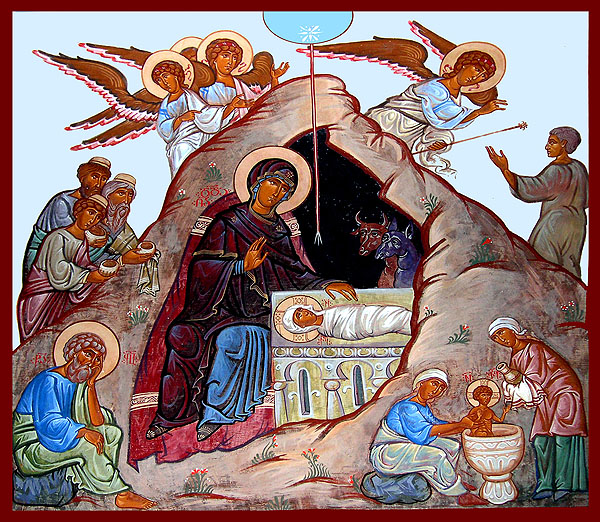
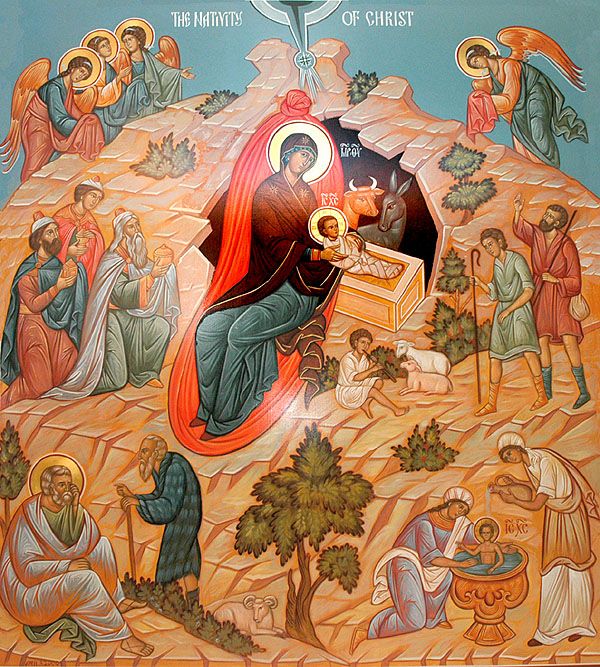
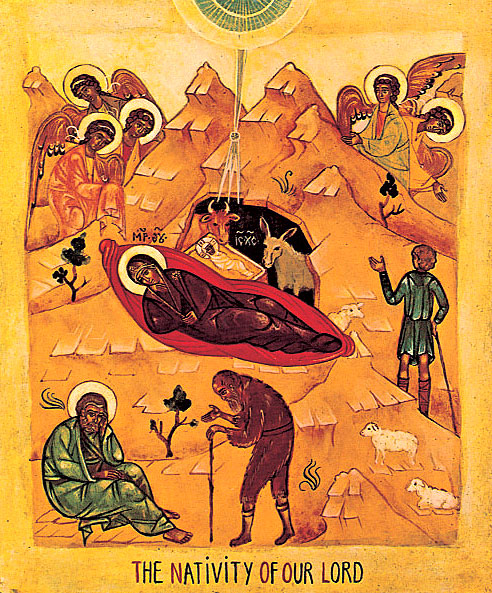
Sunday after the Nativity of Christ

Galatians 1:11-19: Brethren, I would have you know that the Gospel, which was preached by me, is not man’s gospel. For I did not receive it from man, nor was I taught it, but it came through a revelation of Jesus Christ. For you have heard of my former life in Judaism, how I persecuted the Church of God violently and tried to destroy it; and I advanced in Judaism beyond many of my own age among my people; so extremely zealous was I for the traditions of my fathers. But when He who had set me apart before I was born, and had called me through His grace, was pleased to reveal His Son to me, in order that I might preach Him among the Gentiles, I did not confer with flesh and blood, nor did I go up to Jerusalem to those who were apostles before me, but I went away into Arabia; and again I returned to Damascus. Then after three years I went up to Jerusalem to visit Cephas, and remained with him fifteen days. But I saw none of the other apostles except James the Lord’s brother.

Matthew 2:13-23: When the wise men had departed, behold, an angel of the Lord appeared to Joseph in a dream and said, “Rise, take the Child and His mother, and flee to Egypt, and remain there until I tell you; for Herod is about to search for the Child, to destroy Him.” And he rose and took the Child and His mother by night, and departed to Egypt, and remained there until the death of Herod. This was to fulfill what the Lord had spoken by the prophet, “Out of Egypt have I called My Son.” Then Herod, when he saw that he had been tricked by the wise men, was in a furious rage, and he sent and killed all the male children in Bethlehem and in all that region, who were two years old or under, according to the time which he had ascertained from the wise men. Then was fulfilled what was spoken by the prophet Jeremiah: “A voice was heard in Ramah, wailing and loud lamentation, Rachel weeping for her children; she refused to be consoled, because they were no more.” But when Herod died, behold, an angel of the Lord appeared in a dream to Joseph in Egypt, saying, “Rise, take the Child and His mother, and go to the land of Israel, for those who sought the Child’s life are dead.” And he rose and took the Child and His mother, and went to the land of Israel. But when he heard that Archelaus reigned over Judea in place of his father Herod, he was afraid to go there, and being warned in a dream he withdrew to the district of Galilee. And he went and dwelt in a city called Nazareth, that what was spoken by the prophets might be fulfilled, “He shall be called a Nazarene.”

Troparion of the Resurrection: When thou, O immortal Life, didst humble thyself unto death, then didst thou destroy death by the brightness of thy Godhead; and when thou didst raise the bowels of the earth, then all the heavenly powers exclaimed, O Christ, thou art the Giver of life! Glory to thee, O our God!

Troparion of the Nativity: Thy Nativity, O Christ our God, hath given rise to the light of knowledge in the world; for they that worshiped the stars did learn therefrom to worship thee, O Sun of justice, and to know that from the east of the Highest thou didst come; O Lord, glory to thee.

Troparion of the Sunday after Nativity: Proclaim, O Joseph, to David, the grandparent of God, the amazing wonders; for thou hast seen a Virgin great with child; for with the shepherds thou didst give glory, with the Magi thou didst worship, and by the angel it was revealed to thee. Wherefore, plead thou with Christ God to save our souls.

Troparion of the Chains of St. Peter: O Holy Apostle, Peter, thou dost preside over the Apostles by the precious chains which thou didst bear. We venerate them with faith and beseech thee that by thine intercessions we be granted the great mercy.

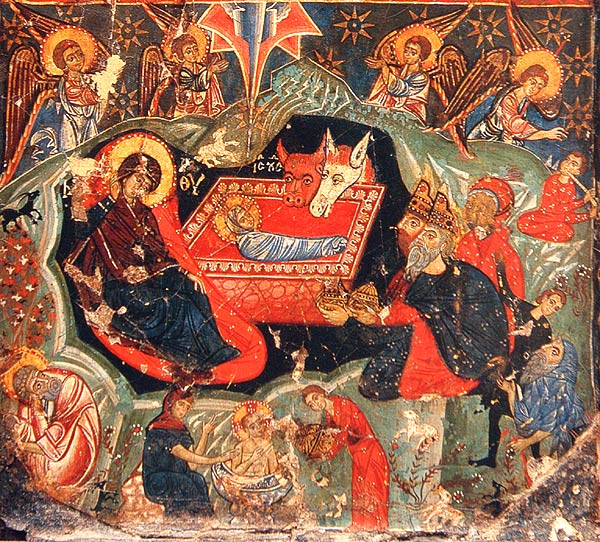
Kontakion of Nativity: On this day the Virgin beareth the Transcendent in Essence; to the Unapproachable, the earth doth offer a small cave; Angels join in choir with shepherds in giving glory; with a star the Magi travel upon their journey; for our sakes is born a young Child, He Who existed before the ages as God.

CALENDAR

UNTIL FURTHER NOTICE: All services listed on the calendar will be available through streaming and webcast. (Instructions can be found on the parish website.)

Sunday, December 29 (Sunday after the Nativity)

8:50 a.m. – Orthros

10:00 a.m. – Divine Liturgy (webcast)

Monday, December 30

Father Herman off

Tuesday, December 31

6:30 p.m. – Great Vespers with Litia and Artoklasia

Wednesday, January 1 (Circumcision of Christ; Feast-day of Basil the Great)

NO Services

Thursday, January 2

NO Services

11:00 a.m. – Men’s Lunch

Friday, January 3

7:00 a.m. – Royal Hours

Saturday, January 4

9:30 a.m. -Baptisms of Lucy Skirtech and Aaron Franklin

4:30 p.m. – Choir Practice

6:00 p.m. – Great Vespers with Litia and Artoklasia

Sunday, January 5 (Feast of Theophany [by transfer])

8:50 a.m. – Orthros

9:00 a.m. – Christian Education

10:00 a.m. – Divine Liturgy (webcast)

12:00 p.m. – POT LUCK MEAL

SPECIAL ANNOUNCEMENTS

The Eucharist Bread …was offered by the Brocks for the Feast of the Nativity of our Lord this past Tuesday evening and by the Davises for the Divine Liturgy this morning.

Please remember the following in your prayers: Aidan Milnor, the Milnor family; Lamia Dabit and her family; Mary Greene (Lee and Kh. Sharon’s sister); Jay and Joanna Davis; Fr. Leo and Kh. Be’Be’ Schelver and their family; Marilyn (Kyriake) Snell; Jack and Jill Weatherly; Dn. Terry Algood and their family; Reader Basil and Brenda Baker and their family; Fr. Joseph Bittle; Rick Carlton; Very Rev. Fr. Nicholas and Kh. Jan Speier; Lee Greene; Joseph, Amanda and Hunter Hines; Fr. John and Kh. Janet Henderson and their family; Galina Singletary; Emily and Cole Parker; Dane and Stephanie Skirtech.

Eucharist Bread Schedule:

Eucharist Bread Coffee Hour

December 29 Davis Dansereau/Alaeetawi

December 31 (Tues. p.m.) R. Root (Artos) No Meal

(Circumcision of Christ & Feast-day of St. Basil the Great – GV with Litia & Artoklasia)

January 4 (Sat. p.m.) D. Root (Artos) No Meal

January 5 Pacurari POT LUCK MEAL

(Feast of Theophany) Dansereau/Alaeetawi

January 12 Lasseter Ellis/Zouboukos/Waites

January 15 (Wed. p.m.) Milnor D. Root/Lively

(Chains of St. Peter)

January 19 Henderson Miller/Weatherly

January 26 Algood Lasseter/Pacurari/Lavric

Schedule for Epistle Readers – Page numbers refer to the Apostolos (book of the Epistles) located on the Chanters’ stand at the front of the nave. Please be sure to use this book when you read.

Reader Reading Page#

December 29 Ian Jones Gal. 1:11-19 188

January 5 Walt Wood Titus 2:11-14; 3:4-7 361

January 12 Grady Fisher Eph. 4:7-13 364

January 15 (Wed. p.m.) Reader Chad Miller Acts 12:1-11 50-51

January 19 Brandon Strain Col. 3:4-11 233

January 26 Katie Miller I Tim. 4:9-15 252

Also, please remember that we still need your tithes and offerings which may be placed in the tray that is passed during the Divine Liturgy, in the tithe box at the back of the nave or be mailed to: St. Peter Orthodox Church, P.O. Box 2084, Madison, MS 39130-2084.

Seating spaces in the Nave: As a gentle reminder, please be mindful of seating spaces in the Nave during Sunday Divine Liturgy. Due to our growth over the past few years seating has become a little more limited and there has been an overflow toward the back of the Nave near the Narthex, which makes it “tight” for the clergy to make the Great Entrance. While this is a good problem to have, and until we can begin work on the new Temple, please make sure there are enough spaces available in the “seating” area of the Nave for as many people as possible. This means we may have “squtch in” on the rows. Thank you for your help in this.

Registration for the DOMSE Winter Retreat at St. Elias’ in Atlanta, GA on January 31-February 1 is now open. The registration link was emailed out a few weeks ago but if you did not receive it please see Fr. Herman. Registration ends on January 7.

We are now taking up donations for Sunnybrook Children’s Home and the St. Nicholas Fund. These donations will go directly to Sunnybrook to help with their ministry there and donations taken up for the St. Nicholas fund will go toward a need from within the parish our outside the parish. Please mark your donation as either Sunnybrook or St. Nicholas. Please prayerfully consider giving toward these charities. We will take up donations until December 31 for both.

On January 4, 2025, Lucy Skirtech and Aaron Franklin will be baptized into the “One Holy Catholic and Apostolic Church” beginning at 9:30am. Please mark this date and time on your calendars and join us for this most blessed occasion. Please keep them and their Godparents, Ian Jones and Jennifer Skirtech, in your prayers.

Congratulations to Katherine Habeeb on completing her Make a Difference (MAD) Project, where she made 100 pillows to bring comfort to cancer patients at Women’s Hospital. Glory to God for all things.

Calendar Items:

* The men of the parish meet for lunch at 11:00 a.m. on the first Thursday of the month.

* The Ladies meet at the church at 10:00 a.m. on the second Saturday of the month to pray the Akathist to the Mother of God, Nurturer of Children on behalf of our children.

* The Ladies meet for lunch at 1:00 p.m. on the last Tuesday of the month.

* We will celebrate the Circumcision of Christ and the Feast-day of St. Basil the Great on Tuesday evening, December 31st with Great Vespers with Litia and Artoklasia, beginning at 6:30 p.m.

* Royal Hours for the Feast of Theophany will be prayed Friday morning, January 3rd, beginning at 7:00 a.m.

In 2025 the Feast of Theophany will fall on a Monday. We have been given permission to transfer the celebration of the Feastday to Sunday, January 5th instead. We will also have our monthly Pot Luck Meal in conjunction with the Feast that month. We will pray Royal Hours for the Feast on Friday, January 3rd, beginning at 7:00 a.m.

Fasting Discipline for December/January

There will be no fasting whatsoever from December 25 through January 5. The traditional fasting discipline (no meat, dairy, eggs, fish, wine or oil) is observed on all Wednesdays and Fridays of January.

Major Commemorations for January

January 1 Circumcision of Christ

Feast-day of Basil the Great

January 6 Feast of Theophany

January 7 Synaxis of the Forerunner

January 11 Theodosios the Head of Monasteries

January16 Veneration of the Chains of St. Peter

January 17 Anthony the Great

January 18 Athanasios and Cyril of Alexandria

January 23 Gregory the Theologian

January 27 John Chrysostom (transfer of relics)

January 30 (The Three Holy Hierarchs

January 31 Cyros and John the Unmercenary Healers

Quotable: “I too will proclaim the greatness of this day: the Immaterial becomes incarnate, the Word is made flesh, the invisible makes itself seen, the intangible can be touched, the timeless has a beginning, the Son of God becomes the Son of Man, Jesus Christ, always the same, yesterday, today and forever . . . This is the solemnity we are celebrating today: the arrival of God among us, so that we might go to God, or more precisely, return to Him. . . Revere the nativity, which releases you from the chains of evil. Honor this tiny Bethlehem which restores Paradise to you. Venerate this crib; because of it you who were deprived of meaning (logos) are fed by the divine Meaning, the divine Logos Himself.”

St. Gregory the Theologian

Worship: Sunday, January 5, 2025 (Feast of Theophany [by transfer])

Scripture: Titus 2:11-14; 3:4-7; Matthew 3:13-17

Epistle Reader: Walt Wood

Prosphora: Pacurari

Coffee Hour: Dansereau/Alaeetawi

Daily Readings for Tuesday, December 24, 2024

EVE OF THE NATIVITY OF CHRIST

ABSTAIN FROM MEAT, FISH, DAIRY, EGGS, WINE, OLIVE OIL

Eve of the Nativity of Christ, Eugenia the Righteous Nun-martyr of Rome and those with her

ST. PAUL’S LETTER TO THE HEBREWS 1:1-12

IN MANY AND VARIOUS WAYS God spoke of old to our fathers by the prophets; but in these last days he has spoken to us by a Son, whom he appointed the heir of all things, through whom also he created the world. He reflects the glory of God and bears the very stamp of his nature, upholding the universe by his word of power. When he had made purification for sins, he sat down at the right hand of the Majesty on high, having become as much superior to angels as the name he has obtained is more excellent than theirs. For to what angel did God ever say, "Thou art my Son, today I have begotten thee"? Or again, "I will be to him a father, and he shall be to me a son"? And again, when he brings the first-born into the world, he says, "Let all God's angels worship him." Of the angels he says, "Who makes his angels winds, and his servants flames of fire." But of the Son he says, "Thy throne, O God, is for ever and ever, the righteous scepter is the scepter of thy kingdom. Thou hast loved righteousness and hated lawlessness; therefore God, thy God, has anointed thee with the oil of gladness beyond thy comrades." And, "Thou, Lord, didst found the earth in the beginning, and the heavens are the work of thy hands; they will perish, but thou remainest; they will all grow old like a garment, like a mantle thou wilt roll them up, and they will be changed. But thou art the same, and thy years will never end.

LUKE 2:1-20

In those days a decree went out from Caesar Augustus that all the world should be enrolled. This was the first enrollment, when Quirinius was governor of Syria. And all went to be enrolled, each to his own city. And Joseph also went up from Galilee, from the city of Nazareth, to Judea, to the city of David, which is called Bethlehem, because he was of the house and lineage of David, to be enrolled with Mary, his betrothed, who was with child. And while they were there, the time came for her to be delivered. And she gave birth to her first born son and wrapped him in swaddling clothes, and laid him in a manger, because there was no place for them in the inn.
And in that region there were shepherds out in the field, keeping watch over their flock by night. And an angel of the Lord appeared to them, and the glory of the Lord shone around them, and they were filled with fear. And the angel said to them, "Be not afraid; for behold, I bring you good news of a great joy which will come to all the people; for to you is born this day in the city of David a Savior, who is Christ the Lord. And this will be a sign for you: you will find a babe wrapped in swaddling clothes and lying in a manger." And suddenly there was with the angel a multitude of the heavenly host praising God and saying, "Glory to God in the highest, and on earth peace, good will among men!
When the angels went away from them into heaven, the shepherds said to one another, "Let us go over to Bethlehem and see this thing that has happened, which the Lord has made known to us." And they went with haste, and found Mary and Joseph, and the babe lying in a manger. And when they saw it they made known the saying which had been told them concerning this child; and all who heard it wondered at what the shepherds told them. But Mary kept all these things, pondering them in her heart. And the shepherds returned, glorifying and praising God for all they had heard and seen, as it had been told them.

Eve of the Nativity of our Lord

In Slavic practice, on the eve of the Nativity of the Lord, the liturgical services consist of the Royal Hours with the Typika, Vespers, and the Divine Liturgy of Saint Basil the Great. At Vigil in the evening, Great Compline is followed by Matins.

If the Nativity falls on Sunday, however, the Royal Hours with the Typika are read on the preceding Friday. On Friday evening, the office of the Forefeast is served, December 24. The Liturgy of Saint John Chrysostom is served on Saturday morning. At Vigil in the evening, Great Compline is followed by Matins. On Sunday morning, the Liturgy of Saint Basil is celebrated.

If the Nativity falls on a Monday, Royal Hours with the Typika are read on Friday December 22. On Saturday evening and Sunday morning we follow the order for the Sunday before the Nativity with the office of the Forefeast for December 24. On Sunday morning the Liturgy of Saint John Chrysostom is served. Vigil on Sunday evening consists of Great Compline is followed by Matins. On Monday morning the Liturgy of Saint Basil is celebrated.

On the eve of the Nativity, instead of three readings from the Old Testament at Vespers, there are eight readings (from Genesis, Numbers, Micah, Isaiah, Baruch, Daniel, and two more readings from Isaiah). The entrance is made with the Gospel.

At the end of Liturgy the priest places a lighted candle in a candlestick in the center of the church. Then the troparion and kontakion of the Feast are sung. At Vigil on the evening of the twenty-fourth, Great Compline is followed by Matins.

Nun-Martyr Eugenia of Rome

The Holy Martyr Eugenia, was a Roman by birth. She lived at Alexandria, where her father Philip was sent by the emperor Commodus (180-192) to be Prefect of Egypt. Eugenia received a fine upbringing and was noted for her beauty and good disposition. Many illustrious youths sought her hand, but she did not wish to marry anyone, for she was determined to preserve her virginity.

Providentially, she became acquainted with the Epistles of the Apostle Paul. She yearned with all her soul to become a Christian, but kept this a secret from her parents. At that time, Christians were banished from Alexandria by the command of the emperor. Wishing to learn more about Christian teachings, she asked permission to visit one of the family estates outside the city, supposedly to enjoy the countryside. She left in the company of her two servants Protus and Hyacinthus, dressed in men’s clothes. She and her companions were baptized at a certain monastery by Bishop Elias (July 14), who learned about her in a vision. He blessed her to pursue asceticism at the monastery disguised as the monk Eugene.

By her ascetic labors, Saint Eugenia acquired the gift of healing. Once, a rich young woman named Melanthia turned to her for help. Seeing “Eugene,” this woman burned with an impure passion, and when she was spurned, she falsely accused the saint of attempted rape. Saint Eugenia came to trial before the Prefect of Egypt (her father), and she was forced to reveal her secret. Her parents and brothers rejoiced to find the one for whom they had long grieved.

After a while they all accepted holy Baptism. But Philip, after being denounced by pagans, was dismissed from his post. The Alexandrian Christians chose him as their bishop. The new Prefect, fearing the wrath of the people, did not dare to execute Philip openly, but sent assassins to kill him. They inflicted wounds upon Saint Philip while he was praying, from which he died three days later.

Saint Claudia went to Rome with her sons, daughter, and her servants. There Saint Eugenia continued with monastic life, and brought many young women to Christ. Claudia built a wanderers’ hostel and aided the poor. After several peaceful years, the emperor Galienus (260-268) intensified the persecution against Christians, and many of them found refuge with Saints Claudia and Eugenia.

Basilla, an orphaned Roman girl of imperial lineage, heard about the Christians and Saint Eugenia. She sent a trusted servant to the saint asking her to write her a letter explaining Christian teachings. Saint Eugenia sent her friends and co-ascetics, Protus and Hyacinthus, who enlightened Basilla, and she accepted holy Baptism.

Basilla’s servant then told her fiancé Pompey that his betrothed had become a Christian. Pompey then complained to the emperor against the Christians for preaching celibacy and denouncing idolatry. Basilla refused to enter into marriage with Pompey, and so they killed her with a sword.

They dragged Saints Protus and Hyacinthus into a temple to make them sacrifice to the idols, but just as they entered, the idol fell down and was shattered. The holy Martyrs Protus and Hyacinthus were beheaded. They also brought Saint Eugenia to the temple of Diana by force, but she had not even entered it, when the pagan temple collapsed with its idol.

They threw the holy martyr into the Tiber with a stone about her neck, but the stone became untied and she remained unharmed. She also remained unscathed in the fire. Then they cast her into a pit, where she remained for ten days. During this time the Savior Himself appeared to her and said that she would enter into the heavenly Kingdom on the day He was born. When this radiant Feast came, the executioner put her to death with a sword. After her death, Saint Eugenia appeared to her mother to tell her beforehand the day of her own death.

Venerable Nicholas the Monk of Bulgaria

Saint Nicholas the Former General was a military commander under the Byzantine emperor Nikēphóros I (802-811). He was ordered to lead his troops against the Bulgars. On the eve of battle he was approached by the innkeeper’s daughter, but he resisted her shameless attempts to seduce him.

All his comrades perished in the battle, but Nicholas remained alive. It was revealed to him in a vision that his life was spared because he had overcome temptation. After this Saint Nicholas left the world and settled into a cave. He became a schemamonk, and prayed unceasingly for his fallen soldiers. By his great ascetic efforts he so pleased the Lord, that he was granted the gift of clairvoyance.

Saint Antiochus

Saint Antiochus was from Galatia, and lived during the reign of Heraclius (610-641). He witnessed the martyrdom of the monks of Saint Savva’s Monastery (May 16) by the Saracens, and recorded their sufferings. He also wrote another book, called Pandect of the Scriptures. Divided into 130 chapters, the book examines the moral teachings of the Holy Scriptures.

A quote attributed to Saint Antiochus is found in the Evergetinos (Book 3:39). One of his best-known prayers is recited during Compline, “And grant us, Master, as we lay down to sleep, repose of both body and soul….”

Daily Readings for Monday, December 23, 2024

MONDAY OF THE 15TH WEEK

ABSTAIN FROM MEAT, FISH, DAIRY, EGGS, WINE, OLIVE OIL

Forefeast of the Nativity of Our Lord and Savior, Jesus Christ, Ten Martyrs of Crete, Paul, Archbishop of Neo-Caesarea, Rememberance of the Founding of the Holy and Great Church of Christ, Hagia Sophia in Constantinople, Naoum the Illuminator of The Bulgarians, Nicholas & John the New Martyrs

ST. PAUL’S FIRST LETTER TO TIMOTHY 5:1-10

Timothy, my son, do not rebuke an older man but exhort him as you would a father; treat younger men like brothers, older women like mothers, younger women like sisters, in all purity. Honor widows who are real widows. If a widow has children or grandchildren, let them first learn their religious duty to their own family and make some return to their parents; for this is acceptable in the sight of God. She who is a real widow, and is left all alone, has set her hope on God and continues in supplications and prayers night and day; whereas she who is self-indulgent is dead even while she lives. Command this, so that they may be without reproach. If any one does not provide for his relatives, and especially for his own family, he has disowned the faith and is worse than an unbeliever. Let a widow be enrolled if she is not less than sixty years of age, having been the wife of one husband; and she must be well attested for her good deeds, as one who has brought up children, shown hospitality, washed the feet of the saints, relieved the afflicted, and devoted herself to doing good in every way.

MARK 10:46-52

At that time, as Jesus was leaving Jericho with his disciples and a great multitude, Bartimaios, a blind beggar, the son of Timaios, was sitting by the roadside. And when he heard that it was Jesus of Nazareth, he began to cry out and say, “Jesus, Son of David, have mercy on me!” And many rebuked him, telling him to be silent; but he cried out all the more, “Son of David, have mercy on me!” And Jesus stopped and said, “Call him.” And they called the blind man, saying to him, “Take heart; rise, he is calling you.” And throwing off his mantle he sprang up and came to Jesus. And Jesus said to him, “What do you want me to do for you?” And the blind man said to him, “Rabbi, let me receive my sight.” And Jesus said to him, “Go your way; your faith has made you well.” And immediately he received his sight and followed him on the way.

Forefeast of the Nativity of our Lord

The Forefeast of the Nativity of the Lord begins on December 20. From now on, most of the liturgical hymns will be concerned with the birth of the Savior.

At Compline on this fourth day of the prefeast of the Nativity we sing, “Let us purify our minds, washing ourselves with the divine Mysteries; let us draw near in soul and body to Bethlehem, that we may behold the fearful dispensation of the birth of the Lord” (Ode Five of the Canon).

10 Holy Martyrs of Crete

The Ten Holy Martyrs of Crete: Theodulus, Saturninus, Euporus, Gelasius, Eunician, Zoticus, Pompius, Agathopus, Basilides and Evaristus suffered for Christ during the third century under the emperor Decius (249-251). The governor of Crete, also named Decius, fiercely persecuted the Church, and arrested anyone who believed in Christ. Once, ten Christians were brought before him from various cities of Crete, who at the trial steadfastly confessed their faith in Christ and refused to worship idols.

For thirty days they were subjected to cruel tortures, and with the help of God they all persevered, glorifying God. Before their death they prayed that the Lord would enlighten their torturers with the light of the true Faith. Since pain did not influence them, the saints were beheaded.

Saint Paul of Constantinople (November 6) visited Crete about a hundred years later. He took the relics of the holy martyrs to Constantinople to serve as a protection for the city, and a source of blessings for the faithful.

Repose of Saint Theoktistos, Archbishop of Novgorod

Before Saint Theoktistos (Theóktistos) became a bishop, he was the Igoumen of Annunciation Monastery near Novgorod. After the repose of Archbishop Clement in the year 1300, the people of Novgorod chose him as their Archbishop. Metropolitan Maximus and Bishops Simeon of Rostov and Andrew of Tver consecrated Saint Theoktistos as Archbishop of Novgorod on June 29, 1300.

One of the Hierarch's concerns was the renovation and building of churches. He consecrated cathedrals in honor of Saints Boris and Gleb (July 24), and in honor of the Holy Fathers of the First Ecumenical Council (Seventh Sunday after Pascha). Valaam Monastery was set in good order during this time.

Because of his poor health, the Hierarch retired to Annunciation Monastery in 1307, devoting himself to the ascetical feat (podvig) of silence until his blessed repose on December 23,1310.

Saint Theoktistos was glorified in 1664, because of the many miraculous cures which took place before his relics. His relics were transferred to Yuriev in 1786, where Archimandrite Photios built a chapel in the local cathedral and dedicated it to Saint Theoktistos.

On July 10, 2015, as a result of the opening of an XVIII century tomb by an archaeological team led by Vladimir Sedov, Corresponding Member of the Russian Academy of Sciences, and Doctor of Art History, in the presence of Metropolitan Leo of Novgorod and Staraya Rus, the holy relics of Archbishop Theoktistos of Novgorod were discovered. His relics were solemnly transferred to the Cathedral of the Savior at Saint George's Monastery, and placed in a reliquary for the faithful to venerate. At the same time, the first Moleben was served in honor of the discovery of the holy relics of Saint Theoktistos.

Saint Theoktistos is also commemorated on the following dates: January 23 (The recovery of his Holy Relics); and on the third Sunday after Pentecost (Synaxis of the Novgorod Saints).

Saint Niphon, Bishop of Constantia, Cyprus

Saint Niphon (Nḗphon), the Bishop of Constantia on the island of Cyprus, was born in Paphlagonia in the IV century, and was educated in Constantinople. As a child, he was gentle and kind, and he often attended Church Services. But in in his youth, he began to lead a wild and sinful life. Sometimes, when he came to his senses, he was horrified at the extent of his fall, but believing that he was lost and could not be forgiven, he continued his wicked life.

One day he met a friend who gazed at his face for a long time in astonishment. When Niphon asked why he was staring, the friend replied, “I have never seen your face like this before. It is black, like that of an Ethiopian.” These words made Niphon realize how far he had fallen, and he began to cry out to the Mother of God, asking for her intercession.

After praying for a long time, he saw that the face of the Mother of God on the Icon had become radiant, and she smiled. From that time, Niphon prayed incessantly to the Queen of Heaven. If he fell into sin, the face of the Mother of God turned away from him, but after he prayed with fervent tears of repentance, she seemed to show mercy and she looked at him again.

Finally, Niphon completely turned his life around, and he began to spend his time in prayer and repentance. After an illness, from which he was healed by the Mother of God, he partook of the Holy Mysteries. Then he was tonsured as a monk and intensified his ascetical labors, exhausting his body in his struggle with the passions.

That struggle lasted several years, and Saint Niphon was attacked many times by demons, but with God's help he was able to overcome them. Furthermore, he received from the Lord the gift of discerning the machinations of evil spirits, and how to defeat them. He was even able to see the departure of souls after death.

When he was already an old man, he journeyed to Alexandria. At that time a delegation from Constantia was in the city to ask Patriarch Alexander (May 29) to consecrate a new Bishop for them, because their Bishop Christopher had reposed.

That night Saint Paul appeared to Saint Alexander in a vision and told him to go to the church the next day with his clergy. The Apostle said, "When you see someone who resembles me (except for being bald), consecrate him as the Bishop of Christ's flock, even if he does not wish it."

In the morning Patriarch Alexander told Niphon that he must not refuse to do what the Lord had appointed for him. Niphon protested that he was not worthy to be a Hierarch, yet he did not dare to oppose God's will. Preparations were made and Niphon was ordained as a deacon, then shortly afterward he was ordained to the priesthood; and finally, he was consecrated as a Bishop. Three days later, he set out for his diocese.

After governing his flock for a short time, Saint Niphon foresaw that he would die in three days. Before his repose he was visited by Saint Athanasios the Great. On his deathbed, he was accounted worthy to behold the Holy Angels and various Saints: Martyrs, Prophets, Priests, Monks, and the Most Holy Theotokos.

When his flock learned of their Bishop's death there was weeping and lamentation throughout the city. The Patriarch asked them to give thanks to God instead, for letting them have such a holy man as their Bishop. After the funeral, Saint Niphon was laid to rest in the church of the Holy Apostles, and then everyone glorified God, Who is wondrous in His Saints.

Saint Paul, Bishop of Neocaesarea

Saint Paul, Bishop of Neocaesarea, suffered under the emperor Licinius (311-324). At his trial he firmly confessed his faith, and was subjected to beatings. They tortured him also with hunger, but he remained steadfast. Then they scorched his hands with red-hot iron and locked him in a prison at the banks of the Euphrates.

After Licinius was executed in the year 324, when Saint Constantine became the sole ruler of the Roman Empire, and Christians in prison received their freedom, Saint Paul returned to his flock. He was a participant at the First Ecmenical Council at Nicea, convened in the year 325, at which the Arian heresy was condemned and the Symbol of Faith adopted. At the end of the Council, the Emperor Constantine solemnly received the Council participants and kissed Saint Paul’s burned hand. After long years of guiding his flock, Saint Paul peacefully fell asleep in the Lord.

Saint Nahum of Ochrid, disciple of Saints Cyril and Methodius, Equal of the Apostles

Saint Nahum was a disciple of Saints Cyril and Methodius (May 11), one of their coworkers known as the Five Followers.

Saint Nahum was a man of great learning, and he spoke several languages. After a visit to Rome, he settled on the shores of Lake Ochrid. There he built a monastery at the time when Saint Clement of Ochrid (July 27) was serving as a bishop.

Many monks gathered around Saint Nahum, who was known as a great wonderworker and a man of prayer. He also labored to translate the Holy Scriptures from Greek into Slavonic.

Saint Nahum fell asleep in the Lord in 910, and his holy relics continue to work miracles of healing for those who venerate them in faith.

Daily Readings for Sunday, December 22, 2024

SUNDAY BEFORE NATIVITY

ABSTAIN FROM MEAT, FISH, DAIRY, EGGS

Sunday before Nativity, Forefeast of the Nativity of Our Lord and Savior, Jesus Christ, Anastasia the Great Martyr, Chrysogonos, Theodota, Evodias, & Eutychianus, the Martyrs, The opening of the gates of the Great Church of God

ST. PAUL’S LETTER TO THE HEBREWS 11:9-10; 32-40

BRETHREN, by faith Abraham sojourned in the land of promise, as in a foreign land, living in tents with Isaac and Jacob, heirs with him of the same promise. For he looked forward to the city which has foundation, whose builder and maker is God.
And what more shall I say? For time would fail me to tell of Gideon, Barak, Samson, Jephthah, of David and Samuel and the prophets – who through faith conquered kingdoms, enforced justice, received promises, stopped the mouths of lions, quenched raging fire, escaped the edge of the sword, won strength out of weakness, became mighty in war, put foreign armies to flight. Women received their dead by resurrection. Some were tortured, refusing to accept release, that they might rise again to a better life. Others suffered mocking and scourging, and even chains and imprisonment. They were stoned, they were sawn in two, they were tempted, they were killed with the sword; they went about in skins of sheep and goats, destitute, afflicted, ill-treated – of whom the world was not worthy – wandering over deserts and mountains, and in dens and caves of the earth.
And all these, though well attested by their faith, did not receive what was promised, since God had foreseen something better for us, that apart from us they should not be made perfect.

MATTHEW 1:1-25

The book of the Genealogy of Jesus Christ, the son of David, the son of Abraham.
Abraham was the father of Isaac, and Isaac the father of Jacob, and Jacob the father of Judah and his brothers, and Judah the father of Perez and Zerah by Tamar, and Perez the father of Hezron, and Hezron the father of Aram, and Aram the father of Amminadab, and Amminadab the father of Nahshon, and Nahshon the father of Salmon, and Salmon the father of Boaz by Rahab, and Boaz the father of Obed by Ruth, and Obed the father of Jesse, and Jesse the father of David the king.
And David was the father of Solomon by the wife of Uriah, and Solomon the father of Rehoboam, and Rehoboam the father of Abijah, and Abijah the father of Asa, and Asa the father of Jehoshaphat, and Jehoshaphat the father of Joram, and Joram the father of Uzziah, and Uzziah the father of Jotham, and Jotham the father of Ahaz, and Ahaz the father of Hezekiah, and Hezekiah the father of Manasseh, and Manasseh the father of Amon, and Amon the father of Josiah, and Josiah the father of Jechoniah and his brothers, at the time of the deportation to Babylon.
And after the deportation to Babylon: Jechoniah was the father of Salathiel, and Salathiel the father of Zerubbabel, and Zerubbabel the father of Abiud, and Abiud the father of Eliakim, and Eliakim the father of Azor, and Azor the father of Zadok, and Zadok the father of Achim, and Achim the father of Eliud, and Eliud the father of Eleazar, and Eleazar the father of Matthan, and Matthan the father of Jacob, and Jacob the father of Joseph the husband of Mary, of whom Jesus was born, who is called Christ.
So all the generations from Abraham to David were fourteen generations, and from David to the deportation to Babylon fourteen generations, and from the deportation to Babylon to the Christ fourteen generations.
Now the birth of Jesus Christ took place in this way. When his mother Mary had been betrothed to Joseph, before they came together she was found to be with child of the Holy Spirit; and her husband Joseph, being a just man and unwilling to put her to shame, resolved to divorce her quietly. But as he considered this, behold, an angel of the Lord appeared to him in a dream, saying, "Joseph, son of David, do not fear to take Mary your wife, for that which is conceived in her is of the Holy Spirit; she will bear a son, and you shall call his name Jesus, for he will save his people from their sins." All this took place to fulfill what the Lord had spoken by the prophet: "Behold, a virgin shall conceive and bear a son, and his name shall be called Emmanuel" (which means, God with us). When Joseph woke from sleep, he did as the angel of the Lord commanded him; he took his wife, but knew her not until she had borne a son; and he called his name Jesus.

Sunday before the Nativity

The Sunday before the Nativity of Christ we commemorate Adam and Eve (the first-created), the righteous Abel, son of Adam, the righteous Seth, son of Adam, the righteous Enos, son of Seth, the righteous Kenan, son of Enos, the righteous Mehaliel (Maleleim), son of Kenan, the righteous Jared, son of Mehaliel, the righteous Enoch, son of Jared, the righteous Methuselah, son of Enoch, the righteous Lamech, son of Methuselah, the righteous Noah, son of Lamech, the righteous Shem, son of Noah, the righteous Japheth, son of Noah, the righteous Arphachshad, son of Shem, the righteous Canaan, son of Arphachshad (in some versions of the OT, Canaan is called the son of Ham), the righteous Shelah, son of Canaan (some versions of the OT call Shelah the son of Arphachshad), the righteous Eber (from whom the Hebrews take their name), son of Shelah, the righteous Peleg, son of Eber, the righteous Ragab (Reu), son of Peleg, the righteous Serug, son of Ragab, the righteous Nahor, son of Serug, the righteous Terah, son of Serug.

The holy Patriarchs: the righteous Patriarch Abraham, son of Terah, the righteous Patriarch Isaac, son of Abraham, the righteous Patriarch Jacob, son of Isaac, the righteous Patriarch Reuben, son of Jacob and Leah, the righteous Patriarch Simeon, son of Jacob and Leah, the righteous Patriarch Levi, son of Jacob and Leah, the righteous Patriarch Judah (Christ was of this tribe), the righteous Patriarch Zebulon, son of Jacob and Leah, the righteous Patriarch Issachar, son of Jacob and Leah, the righteous Patriarch Dan, son of Jacob and Bilhah (Rachel's maid), the righteous Patriarch Gad, son of Jacob and Zilpah (Leah's maid), the righteous Patriarch Asher, son of Jacob and Zilpah, the righteous Patriarch Naphthali, son of Jacob and Bilhah, the righteous Patriarch Joseph, son of Jacob and Rachel, the righteous Patriarch Benjamin, son of Jacob and Rachel.

The righteous Pharez and Zerah, twin sons of Judah, the righteous Hezron, son of Pharez, the righteous Aram, son of Hezron, the righteous Aminadab, son of Aram, the righteous Nahshon, son of Aminadab, the righteous Salmon, son of Nahshon, the righteous Boaz, son of Salmon, the righteous Obed, son of Boaz and Ruth, the righteous Jesse, son of Obed.

The holy Prophet-King David, son of Jesse, King Solomon, son of David, King Rehoboam, son of Solomon, King Abijah, son of Rehoboam, King Asa, son of Abijah, King Jehosaphat, son of Asa, King Joram (Jehoram, an evil king), son of Jehosaphat, King Ochoziah (Ahaziah), son of Joram, King Jotham, son of Uzziah (Oziah), King Ahaz (a faithless king), son of Jotham, King Hezekiah, son of Ahaz, King Manesseh, son of Hezekiah, King Amos (Ammon), son of Manesseh, King Josiah, son of Amos, King Jechoniah, son of Josiah.

Shealtiel, son of Jechoniah, Zerubbabel (who led captives back to Jerusalem, and laid the foundations of the new Temple), son of Shealtiel, Abiud, son of Zerubbabel, Eliachem, son of Abiud, Azor, son of Eliachem, Zadok, son of Azor, Achim, son of Zadok, Eliud, son of Achim, Eleazar, son of Eliud, Matthan, son of Eleazar, Jacob, son of Matthan, St Joseph the Betrothed, son of Jacob.

The righteous Melchizedek, King of Salem, the righteous Job, the holy Prophet Moses, the priests Hur and Aaron, Joshua, son of Nun.

The holy prophet Samuel, the holy prophet Nathan, the holy prophet Daniel, the three holy youths Hananiah, Mishael and Azariah.

The righteous Sarah, wife of Abraham, the righteous Rebecca, wife of Isaac, the righteous Leah, first wife of Jacob, the righteous Rachel, second wife of Jacob, the righteous Asineth, wife of Patriarch Joseph the all-comely, the righteous Miriam, sister of Moses, the righteous Deborah, Judge of Israel and prophetess, the righteous Ruth, wife of Boaz, the righteous woman of Zarephath, to whom Elias was sent (3 Kings 17), the righteous woman of Shunem, who was hospitable to Elisha (4 Kings 4), the righteous Judith, slayer of Holofernes, the righteous Esther, who delivered Israel from death, the righteous Hannah, mother of the prophet Samuel, the righteous Susanna.

ezra
Righteous Ezra

Righteous Ezra was a scribe and priest who lived in Babylon (during the Captivity), and returned to Jerusalem circa 458 B. C. He collected and revised the previous Old Testament writings, and established the Old Testament Canon. His book I Esdras 1 (in the Greek Septuagint) tells the story of the return to Jerusalem.

Forefeast of the Nativity of our Lord

The Forefeast of the Nativity of the Lord begins on December 20. From now on, most of the liturgical hymns will be concerned with the birth of the Savior.

At Vespers for this third day of the prefeast of the Nativity we sing, “Christ is born on earth to crush the power of evil, to enlighten those in darkness, and to free the captives. Let us go forth to meet Him.”

Great Martyr Anastasia the Deliverer from Poisons, her teacher, Martyr Chrysogonos, and many with them

The Great Martyr Anastasia (Anastasía) the Deliverer from Poisons, was a Roman by birth, who suffered for Christ during Diocletian’s persecution of Christians, circa 304. Her father was a pagan, and her mother Fausta was a secret Christian. As a child, Anastasia’s teacher was an educated and pious Christian named Chrysogonos (Chrysógonos). After the death of her mother, Anastasia's father gave her in marriage to a pagan named Publius, but by feigning illness, she preserved her virginity.

Clothing herself in the garb of a beggar, and accompanied by only one servant, she visited the prisons. She fed, treated, and often ransomed captives who were suffering for their faith in Christ. When her servant told Publius about this, he beat his wife and confined her in his house. Then Anastasia began to correspond secretly with Chrysogonos, who told the Saint to be patient, to cleave to the Cross of Christ, and to accept the Lord’s will. He also foretold the impending death of Publius in the ocean. Publius did drown, as he was setting out for Persia with a delegation. After her husband's death, Anastasia distributed her property to the poor and suffering.

Diocletian was informed that the Christians who filled the prisons of Rome stoically endured their torments. He commanded that all of them should be put to death in a single night, and that Chrysogonos be sent to him at Aquileia. Anastasia followed her teacher at a distance.

The Emperor interrogated Chrysógonos personally, but could not make him deny Christ. Therefore, he commanded that he be decapitated and thrown into the sea. The Holy Martyr's body and severed head were carried to shore by the waves. There by Divine Providence, the relics were found by a priest named Zoilos (Zoϊlos), who placed them in a coffer, and concealed them in his home.

Saint Chrysogonos appeared to Zoilos and informed him that three sisters who lived nearby, Agape (Agápē), Chionia (Χιονὶα), and Irene (April 16), would soon suffer martyrdom for Christ. He told him to send Saint Anastasia to them to encourage them. Saint Chrysogonos foretold that Zoilos would also die on the same day. Nine days later, the words of Saint Chrysogonos were fulfilled. Zoilos fell asleep in the Lord, and Saint Anastasia visited the three maidens before their tortures. After these three Martyrs surrendered their souls to God, she buried them.

After carrying out her teacher’s request, the Saint went from city to city ministering to Christian prisoners. Proficient in the medical arts of the time, she zealously cared for captives far and wide, healing their wounds and relieving their suffering. Because of her labors, Saint Anastasia was known as the Deliverer from Potions (Pharmakolytria),1 since by her intercessions she has healed many from the effects of potions, poisons, and other harmful substances.

She made the acquaintance of the pious young widow named Theodótē, finding in her a faithful helper. When it was learned that she was a Christian, Theodote was brought in for questioning. Meanwhile, Saint Anastasia was arrested in Illyricum. This occurred just after all the Christian captives there had been murdered in a single night by Diocletian's order. Saint Anastasia went to one of the prisons, and finding no one there, she began to weep loudly. The jailers realized that she was a Christian and took her to the prefect of that district, who tried to persuade her to deny Christ by threatening her with torture. After his unsuccessful attempts to persuade Anastasia to offer sacrifice to idols, he handed her over to the pagan priest Ulpian in Rome.

The cunning pagan told Saint Anastasia to choose between luxury and riches, or grievous sufferings. He set before her gold, precious stones and fine clothing, as well as fearsome instruments of torture. The crafty man was put to shame by the bride of Christ. Saint Anastasia refused the riches and chose the tools of torture.

But the Lord prolonged the earthly life of the Saint, and Ulpian gave her three days to reconsider. Charmed by Anastasia’s beauty, the pagan priest decided to defile her. However, when he tried to touch her he suddenly became blind. His head began to ache so severely that he screamed like a madman. He asked to be taken to a pagan temple to pray to the idols for help, but on the way he fell down and died.

Saint Anastasia was set free and she and Theodote devoted themselves once more to the care of imprisoned Christians. Before long, Saint Theodote and her three sons received the crown of martyrdom. Her eldest son, Euódos2 stood bravely before the judge and endured his beatings without protest. After much torture, they were all thrown into a red-hot oven.

Saint Anastasia was caught again and condemned to death by starvation. She remained in prison without food for sixty days. Saint Theodote appeared to the Martyr every night and gave her courage. Seeing that hunger caused Saint Anastasia no harm whatsoever, the judge sentenced her to drowning together with other prisoners. Among them was Eutychianos (Εὐτυχιανὸς), who was condemned for his Christian Faith.

The prisoners were put into a boat which went out into the open sea. The soldiers bored holes in the boat and got into a galley. Saint Theodote appeared to the captives and steered the ship to shore. When they reached dry land, 120 men believed in Christ and were baptized by Saints Anastasia and Eutychianos. All were captured and received a martyr’s crown. Saint Anastasia was stretched between four pillars and burned alive. A certain pious woman named Apollinaria buried her body, which was unharmed by the fire, in the garden outside her house.

In the fifth century, Saint Anastasia's relics were transferred to Constantinople, where a church was built and dedicated to her. Later her head and one of her hands were transferred to the Monastery of Saint Anastasia, near Mount Athos.


1 Saint Anastasia's epithet (Ἡ Ἁγία Ἀναστασία ἡ Φαρμακολύτρια) is derived from the verbs φαρμακεύω and λύω which have the following meanings:

  1. To administer drugs (in order to heal).
  2. To poison someone. (Revelation 9:21)
  3. To practice sorcery or idolatry. (Galatians 5:20, Wisdom 12:4; 18:13, Rev. 18:23) etc.
  4. To season food.

The second part of her title comes from λύω (to loosen, unbind, loosen from bonds, set free, rescue, release.

2 Pronounced Evódos

Daily Readings for Saturday, December 21, 2024

SATURDAY BEFORE NATIVITY

ABSTAIN FROM MEAT, FISH, DAIRY, EGGS

Forefeast of the Nativity of Our Lord and Savior, Jesus Christ, Juliana of Nicomedia & her 630 Companion Martyrs, Themistocles the Martyr of Myra, Peter, Metropolitan of Moscow

ST. PAUL’S LETTER TO THE GALATIANS 3:8-12

Brethren, the scripture, foreseeing that God would justify the Gentiles by faith, preached the gospel beforehand to Abraham, saying, “in you shall all the nations be blessed.” So then, those who are men of faith are blessed with Abraham who had faith. For all who rely on works of the law are under a curse; for it is written, “Cursed be every one who does not abide by all things written in the book of the law, and do them.” Now it is evident that no man is justified before God by the law; for “the righteous shall live by faith” but the law does not rest on faith, for “He who does them shall live by them.”

LUKE 13:19-29

The Lord said this parable, "The kingdom of God is like a grain of mustard seed which a man took and sowed in his garden; and it grew and became a tree, and the birds of the air made nests in its branches." And again he said, "To what shall I compare the kingdom of God? It is like leaven which a woman took and hid in three measures of flour, till it was all leavened." He went on his way through towns and villages, teaching, and journeying toward Jerusalem. And some one said to him, "Lord, will those who are saved be few?" And he said to them, "Strive to enter by the narrow door; for many, I tell you, will seek to enter and will not be able. When once the householder has risen up and shut the door, you will begin to stand outside and to knock at the door, saying, 'Lord, open to us.' He will answer you, 'I do not know where you come from.' Then you will begin to say, 'We ate and drank in your presence, and you taught in our streets.' But he will say, 'I tell you, I do not know where you come from; depart from me, all you workers of iniquity!' There you will weep and gnash your teeth when you see Abraham and Isaac and Jacob and all the prophets in the kingdom of God and you yourselves thrust out. And men will come from east and west, and from north and south, and sit at table in the kingdom of God.

Forefeast of the Nativity of our Lord

The Forefeast of the Nativity of the Lord begins on December 20. From now on, most of the liturgical hymns will be concerned with the birth of the Savior.

During Matins (after the first Sedalen) on this second day of the prefeast of the Nativity we sing, “The unapproachable God in His tender mercy approaches me; He wills to be born in the flesh in the city of Bethlehem. He receives human nature from a Virgin maiden. Let us eagerly run to greet Him, crying out in fear: O Lord, glory to Thee.”

Virgin Martyr Juliana of Nicomedia, and 500 men and 130 women with her

The Holy Virgin Martyr Juliana, daughter of an illustrious pagan named Africanus, was born in the city of Nicomedia. As a child, she was betrothed to a certain Elusius, one of the emperor’s advisors. Saint Juliana was endowed with a profound intellect and goodness of soul. She saw through the delusion and deception of the pagan faith, and secretly accepted holy Baptism.

When the time of her wedding approached, Juliana refused to be married. Her father urged her not to break her engagement, but when she refused to obey him, he began to beat her viciously. Then Africanus handed his daughter over to the Eparch, who happened to be Elusius, Juliana’s former fiancé. Elusius fervently asked Juliana to marry him, promising not to require her to abandon her faith. Saint Juliana refused and said that she’d rather be put to death.

They beat the saint both long and harshly, but after each beating she received healing and new strength from God. Her punishment took place before a large number of people. Of these, 500 men and 130 women came to confess Christ after witnessing the steadfastness and courage of the holy virgin miraculously healed from her wounds. They were all beheaded, and were baptized in their own blood.

Convinced of the futility of attempting to separate the holy virgin from her heavenly Bridegroom, Eleusius sentenced Juliana to death. She accepted the sentence with joy and glorified the Lord for permitting her to receive a martyr’s crown. The holy Martyr Juliana was executed in the year 304.

Saint Juliana is the subject of an Anglo-Saxon poem, believed to have been written by Cynewulf in the eighth century.

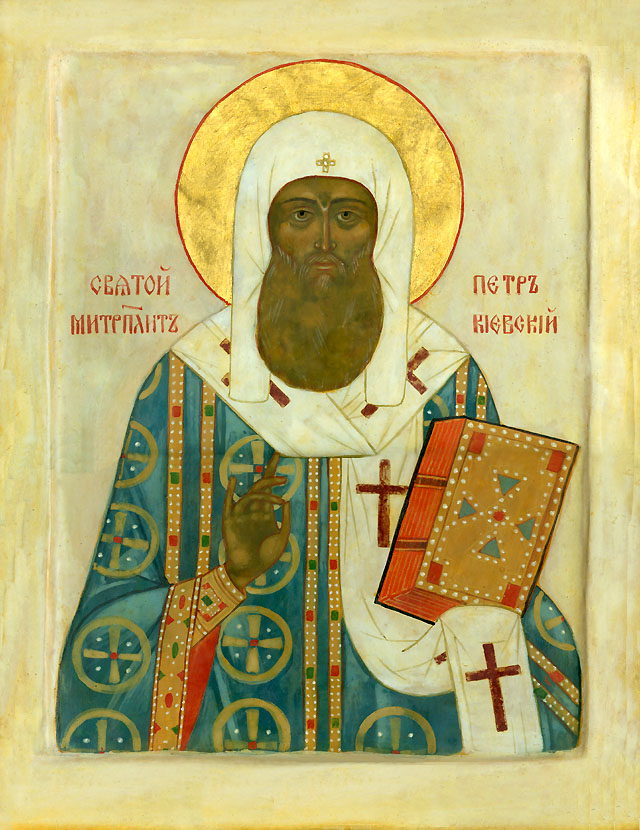
Repose of Saint Peter, Metropolitan of Moscow, Wonderworker of All Russia

Saint Peter, Metropolitan of Moscow, was born in Volhynia of pious parents, Theodore and Eupraxia. Even before the birth of her son, the Lord revealed to Eupraxia the preordained blessedness of her son. At the age of twelve, young Peter entered a monastery. He successfully studied the book sciences of those times and eagerly fulfilled his monastic obediences. The future saint devoted much time to an attentive study of the Holy Scriptures, and he also learned iconography. The icons painted by Saint Peter were distributed to the brethren and to Christians who visited the monastery.

Because of his virtuous and ascetic life, the igumen of the monastery had Saint Peter ordained as a hieromonk. After years of ascetic labors at the monastery, the hieromonk Peter, with the blessing of the igumen, left the monastery in search of a solitary place.

He built a cell at the Rata River and began to pursue asceticism in silence. Afterwards, at the place of his ascetic exploits, a monastery was formed, called the Novodvorsk. A church dedicated to the Savior was built for the monks who came to him. Chosen as igumen, Saint Peter guided his spiritual children, and never became angry with a guilty monk. Instead, he instructed the brethren by word and by example. The virtuous igumen and ascetic became known far beyond the vicinity of the monastery. Prince Yuri of Galicia frequently visited the monastery in order to receive spiritual instruction from the holy ascetic.

Once, in his travels through the Russian land, Metropolitan Maximus of Kiev and Vladimir (December 6) visited the monastery with words of instruction and edification. Having received the blessing of Saint Maximus, Saint Peter presented him with an icon of the Dormition of the Most Holy Theotokos, which he had painted. Saint Maximus prayed before the icon for the salvation of the Russian land entrusted to him by God until the end of his days.

When Metropolitan Maximus died, the See of Vladimir remained for a certain time unoccupied. An abbot named Gerontius, aspiring to become the primate of Russia, went to Constantinople with Saint Peter’s vestments, archpastoral staff, and the icon he had painted. The Great Prince of Vladimir, Saint Michael of Tver (November 22), sent him to the Patriarch of Constantinople with a petition that he be appointed as Metropolitan of Russia.

On the suggestion of Prince Yuri of Galicia, Igumen Peter reluctantly went to the Patriarch of Constantinople with a petition that he be consecrated as Metropolitan. God chose Saint Peter to nourish the Russian Church. The Mother of God appeared to Gerontius during a storm on the Black Sea and said, “You labor in vain, for you will never be bishop. The one who painted this icon, the Rata igumen Peter, shall be elevated to the throne of Kiev.”

The words of the Mother of God were fulfilled. Patriarch Athanasius of Constantinople (1289-1293) elevated Saint Peter as Metropolitan of Russia, bestowing upon him the hierarchal vestments, staff and icon, brought by Gerontius. Upon his return to Russia in 1308, Metropolitan Peter arrived at Kiev after a year, and then proceeded on to Vladimir.

The chief hierarch was tested by many trials during his first years of guiding the Russian metropolitanate. Suffering beneath the Tatar (Mongol) Yoke the Russian land was in turmoil, and Saint Peter was often obliged to change the place of his residence. During this period the saint’s labors and concerns to affirm the true Faith and morality in the realm were particularly important. On his journeys throughout the diocese, he incessantly instructed the people and clergy on preserving Christian piety. He also brought quarrelsome princes to peace and unity.

In the year 1312 the saint made a journey to the Horde, where he received a decree from Khan Uzbek, safeguarding the rights of the Russian clergy.

In 1325 Metropolitan Peter, at the request of Great Prince John Kalita (1328-1340), transferred the metropolitan See from Vladimir to Moscow. This event had very great significance for all the Russian land. Saint Peter prophetically predicted deliverance from the Tatar Yoke and that Moscow would become the foremost city in Russia.

With his blessing, the foundation of the cathedral of the Dormition of the Most Holy Theotokos in the Moscow Kremlin was laid in August 1326.

Saint Peter fell asleep in the Lord on December 21, 1326. The holy relics of the saint were buried in the Dormition cathedral in a stone crypt, which he himself had prepared. Many miracles were accomplished through the saint’s prayers. Many healings were even done secretly, which testifies to his profound humility even after death.

The veneration of the first hierarch of the Russian Church was affirmed and spread throughout the Russian land. In 1339, under Saint Theognostus (March 14), Saint Peter was numbered among the saints. Princes kissed the cross on the saint’s tomb as a sign of their fidelity to the Great Prince of Moscow.

As a particularly venerated protector of Moscow, Saint Peter was called on to witness the drawing up of government treaties. The people of Novgorod once had the right of nominating their own bishop in the cathedral of Saint Sophia. After their annexation to Moscow under Ivan III, they swore an oath that henceforth they would only consecrate their archbishops at the grave of Saint Peter the Wonderworker. And it was at the grave of the saint that the first hierarchs of Russia were named and chosen.

The Russian Chronicles mention him frequently, and no significant state undertaking was initiated without prayers at the grave of Saint Peter. The relics of Saint Peter were transferred in 1472 and 1479. In memory of these events, feastdays were established for October 5 and August 24.

Right-believing Princess Juliana of Vyazma

Saint Juliana, Princess of Vyazma and Novy Torg, a daughter of the noble Maximus Danilov, was known for her virtues and her chastity. Her spouse, Prince Simeon of Vyazma, and also Prince Yuri of Smolensk, were compelled to flee their native lands, which the Lithuanian prince Vitovt had seized. Then Prince Basil of Moscow bestowed the Tver city of Torzhok upon the exiled princes.

Prince Yuri became captivated by Juliana’s beauty and tried in every way to persuade her to commit adultery, but Juliana remained faithful to her husband. During a feast, Prince Yuri killed Juliana’s husband, in the hope of taking her by force. Saint Juliana resisted the ravisher, wounding him with a knife. The enraged Prince Yuri ordered that her hands and feet be cut off, and that her body be thrown into the Tvertsa River.

Troubled by his conscience and censured by everyone, Prince Yuri fled to the Tatars, but even there he did not find peace. He settled in the Ryazan wilderness where he died in 1408.

The martyrdom of Saint Juliana occurred in the winter of 1406. In the spring of 1407, they saw the body of Princess Juliana floating in the river. A certain peasant heard a voice from above, commanding that the body of Saint Juliana be buried in the Torzhok cathedral on the right side by the south doors.

A tomb for her body was afterwards built at the Savior-Transfiguration cathedral, where many received healing from her. In connection with the glorification of Saint Juliana on June 2, 1819 a chapel was built on the right-hand side, and dedicated to her. At the cathedral of the Transfiguration of the Lord, where earlier there had been a chapel over the grave of the saint, a church was built and also dedicated to Saint Juliana in 1906.

Blessed Procopius of Vyatka the Fool-For-Christ

Blessed Procopius, Fool-for-Christ, of Vyatka, was the son of pious peasants. When Procopius reached age twenty, they wanted him to marry, but he secretly went to the city of Khlynov and took upon himself the feat of foolishness. The holy fool endured hunger, cold, mocking and insults. The Lord glorified him with the gift of clairvoyance. Blessed Procopius died at the age of forty-nine in 1627.

Martyr Themistocles of Myra in Lycia

The Holy Martyr Themistocles lived in the city of Myra of Lycia during the reign of the persecutor of Christians, Decius (249-251). Themistocles was a shepherd. During the persecution he concealed within his home a certain Christian named Dioskorides, while he himself went out to the pursuers. They tortured him cruelly, and he received a martyr’s crown for Christ in the year 251.

Venerable Macarius the Faster, Abbot of the Khakhuli Monastery

In the second half of the 10th century King Davit Kuropalates constructed the Khakhuli Church in southern Georgia. He also founded Khakhuli Monastery, which in later centuries would become a center of spirituality, science, and education. Today this monastery is located on Turkish territory, but the grace of the ascetic labors of the fathers who labored there in the past pours forth hope upon the Georgian people to this day.

Many holy and wonderworking fathers labored at Khakhuli Monastery, including Saint Basil the son of King Bagrat III, the brothers George and Saba of Khakhuli, Saint Hilarion of Tvali and many other God-fearing ascetics, whose righteousness and spiritual feats were guided by the holy abbot Macarius.

Fr. Macarius was a great ascetic, teacher, and prophet. Novices and wise, experienced elders alike flocked to him for advice and blessings. The young monk George, later the great ascetic George of the Holy Mountain, was brought to Saint Macarius to receive his blessing. Saint Macarius called George his spiritual son.

By the grace of God, Saint Macarius reconciled his responsibilities as abbot of the monastery with the great spiritual labor of solitude. He earned the title “the Faster” for his exceptional ascesis in fasting and prayer. It is said that, as abbot of Khakhuli Monastery, “he shone like the morning sunrise and guided the spiritual activity and secular life of the entire Tao-Klarjeti region.”

Saint Macarius reposed around the year 1034.

Daily Readings for Friday, December 20, 2024

IGNATIUS THE GOD-BEARER, BISHOP OF ANTIOCH

ABSTAIN FROM MEAT, FISH, DAIRY, EGGS

Ignatius the God-Bearer, Bishop of Antioch, Forefeast of the Nativity of Our Lord and Savior, Jesus Christ, Our Righteous Father Philogonius, Bishop of Antioch, John the New Martyr of Thassos, Holy Father John of Kronstadt

ST. PAUL’S LETTER TO THE HEBREWS 10:32-38

Brethren, recall the former days when, after you were enlightened, you endured a hard struggle with sufferings, sometimes being publicly exposed to abuse and affliction, and sometimes being partners with those so treated. For you had compassion on the prisoners, and you joyfully accepted the plundering of your property, since you knew that you yourselves had a better possession and an abiding one. Therefore do not throw away your confidence, which has a great reward. For you have need of endurance, so that you may do the will of God and receive what is promised. "For yet a little while, and the coming one shall come and shall not tarry; but my righteous one shall live by faith.

MARK 9:33-41

At that time, Jesus and his disciples came to Capernaum, and when he was in the house he asked them, “What were you discussing on the way?” But they were silent; for on the way they had discussed with one another who was the greatest. And he sat down and called the twelve; and he said to them, “If any one would be first, he must be last of all and servant of all.” And he took a child, and put him in the midst of them; and taking him in his arms, he said to them, “Whoever receives one such child in my name receives me; and whoever receives me, receives not me but him who sent me.” John said to him, “Teacher, we saw a man casting out demons in your name, and we forbade him, because he was not following us.” But Jesus said, “Do not forbid him; for no one who does a mighty work in my name will be able soon after to speak evil of me. For he that is not against us is for us. For truly, I say to you, whoever gives you a cup of water to drink because you bear the name of Christ, will by no means lose his reward.”

Forefeast of the Nativity of our Lord

The Forefeast of the Nativity of the Lord begins on December 20. From now on, most of the liturgical hymns will be concerned with the birth of the Savior. Many of the Church’s hymns of this period are slightly modified versions of the hymns of Holy Week.

From December 20-23 we sing the Troparion (Tone 4) “Prepare, O Bethlehem, for Eden has been opened to all. Adorn yourself, O Ephratha, for the Tree of Life blossoms forth from the Virgin in the cave. Her womb is a spiritual paradise planted with the Divine Fruit; if we eat of it we shall live forever and not die like Adam. Christ comes to restore the image which He made in the beginning.”

We also sing the Kontakion (Tone 3) “Today the Virgin comes to the cave to give birth ineffably to the pre-eternal Word. Hearing this, rejoice, O inhabited earth! With the angels and the shepherds glorify the pre-eternal God, Whose will it was to appear as a young child!

Hieromartyr Ignatius the God-Bearer, Bishop of Antioch

The Hieromartyr Ignatius the God-Bearer, was a disciple of the holy Apostle and Evangelist John the Theologian, as was also Saint Polycarp, Bishop of Smyrna (February 23). Saint Ignatius was the second bishop of Antioch, and successor to Bishop Euodius, Apostle of the Seventy (September 7).

Tradition suggests that when Saint Ignatius was a little boy, the Savior hugged him and said: “Unless you turn and become as little children, you shall not enter into the Kingdom of Heaven” (Mt. 18:3). The saint was called “God-Bearer” (Theophoros), because he bore God in his heart and prayed unceasingly to Him. He also had this name because he was held in the arms of Christ, the incarnate Son of God.

Saint Ignatius was a disciple of the Apostle John the Theologian, together with Saint Polycarp of Smyrna. As Bishop of Antioch, Saint Ignatius was zealous and spared no effort to build up the church of Christ. To him is attributed the practice of antiphonal singing (by two choirs) during church services. He had seen a vision of the angels in heaven alternately singing praises to God, and divided his church choir to follow this example. In the time of persecution he was a source of strength to the souls of his flock, and was eager to suffer for Christ.

In the year 106 the emperor Trajan (98-117), after his victory over the Scythians, ordered everyone to give thanks to the pagan gods, and to put to death any Christians who refused to worship the idols. In the year 107, Trajan happened to pass through Antioch. Here they told him that Bishop Ignatius openly confessed Christ, and taught people to scorn riches, to lead a virtuous life, and preserve their virginity. Saint Ignatius came voluntarily before the emperor, so as to avert persecution of the Christians in Antioch. Saint Ignatius rejected the persistent requests of the emperor Trajan to sacrifice to the idols. The emperor then decided to send him to Rome to be thrown to the wild beasts. Saint Ignatius joyfully accepted the sentence imposed upon him. His readiness for martyrdom was attested to by eyewitnesses, who accompanied Saint Ignatius from Antioch to Rome.

On the way to Rome, the ship sailed from Seleucia stopped at Smyrna, where Saint Ignatius met with his friend Bishop Polycarp. Clergy and believers from other cities and towns thronged to see Saint Ignatius. He exhorted everyone not to fear death and not to grieve for him. In his Epistle to the Roman Christians, he asked them to assist him with their prayers, and to pray that God would strengthen him in his impending martyrdom for Christ: “I seek Him Who died for us; I desire Him Who rose for our salvation… In me, desire has been nailed to the cross, and no flame of material longing is left. Only the living water speaks within me, saying, ‘Hasten to the Father.’”

From Smyrna, Saint Ignatius went to Troas. Here he heard the happy news of the end of the persecution against Christians in Antioch. From Troas, Saint Ignatius sailed to Neapolis (in Macedonia) and then to Philippi.

On the way to Rome Saint Ignatius visited several churches, teaching and guiding the Christians there. He also wrote seven epistles: to the churches of Ephesus, Magnesia, Tralles, Rome, Philadelphia, and Smyrna. He also addressed a letter to Saint Polycarp, who mentions a collection of the letters of Saint Ignatius in his letter to the Philippians (Ch. 13). Saint Irenaeus of Lyons quotes from Saint Ignatius’s letter to the Romans (AGAINST HERESIES 5:28:4). All these letters have survived to the present day.

The Roman Christians met Saint Ignatius with great joy and profound sorrow. Some of them hoped to prevent his execution, but Saint Ignatius implored them not to do this. Kneeling down, he prayed together with the believers for the Church, for love between the brethren, and for an end to the persecution against Christians.

On December 20, the day of a pagan festival, they led Saint Ignatius into the arena, and he turned to the people: “Men of Rome, you know that I am sentenced to death, not because of any crime, but because of my love for God, by Whose love I am embraced. I long to be with Him, and offer myself to him as a pure loaf, made of fine wheat ground fine by the teeth of wild beasts.”

After this the lions were released and tore him to pieces, leaving only his heart and a few bones. Tradition says that on his way to execution, Saint Ignatius unceasingly repeated the name of Jesus Christ. When they asked him why he was doing this, Saint Ignatius answered that this Name was written in his heart, and that he confessed with his lips Him Whom he always carried within. When the saint was devoured by the lions, his heart was not touched. When they cut open the heart, the pagans saw an inscription in gold letters: “Jesus Christ.” After his execution Saint Ignatius appeared to many of the faithful in their sleep to comfort them, and some saw him at prayer for the city of Rome.

Hearing of the saint’s great courage, Trajan thought well of him and stopped the persecution against the Christians. The relics of Saint Ignatius were transferred to Antioch (January 29), and on February 1, 637 were returned to Rome and placed in the church of San Clemente.

Venerable Ignatius, Archimandrite of the Kiev Caves

Saint Ignatius, Archimandrite of the Kiev Caves: In the general service to the Kiev Caves saints, it says of him: “Ignatius, monastic pastor and healer of the sick, in our infirmities you help us by your reverence, therefore let us offer song of praise unto your memory” (Ode 1 of the Canon). He was buried in the Far (Theodosiev) Caves, and his memory is celebrated together with the Fathers of these Far Caves, on August 28. The commemoration of the Saint Ignatius was established on December 20 because of his namesake, the Hieromartyr Ignatius the God-Bearer. There is also another commemoration: the Synaxis of all the Fathers of the Kiev Caves monastery on the second Sunday of Great Lent.

Saint Philogonius, Bishop of Antioch

Before becoming a bishop, Saint Philogonius was a laywer who defended the poor, the widowed and the orphaned. When his wife died, he was chosen as Bishop of Antioch.

Distinguished by profound theological knowledge, Saint Philogonius successfully defended Orthodoxy against the Arian heresy and by this prevented unrest in the Church.

During the persecution against Christians under the emperors Maximian (284-305)and Licinius (311-324), Saint Philogonius proved himself a confessor of the Orthodox Faith. He died peacefully in about the year 323. Saint John Chrysostom wrote a eulogy for Saint Philogonius in 386.

Saint Daniel II, Archbishop of Serbia

Saint Daniel of Serbia, the only son of rich and renowned parents, was a close associate of the Serbian king Stephan Urosh Milutin. Having renounced a secular career, he received monastic tonsure from the igumen of the Saint Nicholas monastery at Konchul near the River Ibar. Saint Daniel’s ascetic life was an example for all the brethren.

Archbishop Eustathius of Serbia ordained him presbyter and took him into his cell. When it was time to choose the igumen for the Hilandar monastery on Mount Athos, Saint Daniel received the appointment. The saint was igumen at a most difficult time for the Holy Mountain. After the Crusaders were expelled from Palestine, they joined with the Arabs to plunder and loot the Athonite monasteries, “not sparing anything sacred.”

Saint Daniel remained at the Hilandar monastery, enduring siege and hunger. When peace came to the Holy Mountain, the saint resigned as igumen and withdrew into complete silence in the cell of Saint Savva of Serbia (at Karyes). During the internecine war of Kings Milutin and Dragutin and Stephen of Dechani (November 11), the ascetic was summoned to Serbia, where he reconciled the adversaries.

In his native land Daniel was made Bishop of Banja and head of the renowned monastery of Saint Stephen, a royal treasury. After completing the construction of a cathedral church at Banja in honor of the holy Protomartyr and Archdeacon Stephen, Saint Daniel returned to his monastic labors on the Holy Mountain.

The saint was summoned from Athos again in 1325, when he was elected Archbishop of Serbia. He was consecrated on the Feast of the Elevation of the Cross of the Lord. The Protos [“head”] of the Holy Mountain, Garbasios, and other Athonite Elders took part in the solemnities.

Archbishop Daniel was a model of piety, and a wise archpastor. His tenure as archbishop was marked by complete non-covetousness, concern and toil for the needs of the Church and the flock, and the building of churches. In 1335 the saint built a church at Dechani in honor of the Ascension of the Lord, one of the finest Christian monuments in Serbia. He collected accounts about the Serbian past, and compiled the “Rodoslov” [Account about the homeland], writing about the lives of Serbian rulers and Serbian archpastors.

Even during his lifetime Saint Daniel was granted the gift of wonderworking and healing. After fourteen years as archbishop, Saint Daniel departed to the Lord on December 19, 1338.

Repose of Saint John of Kronstadt

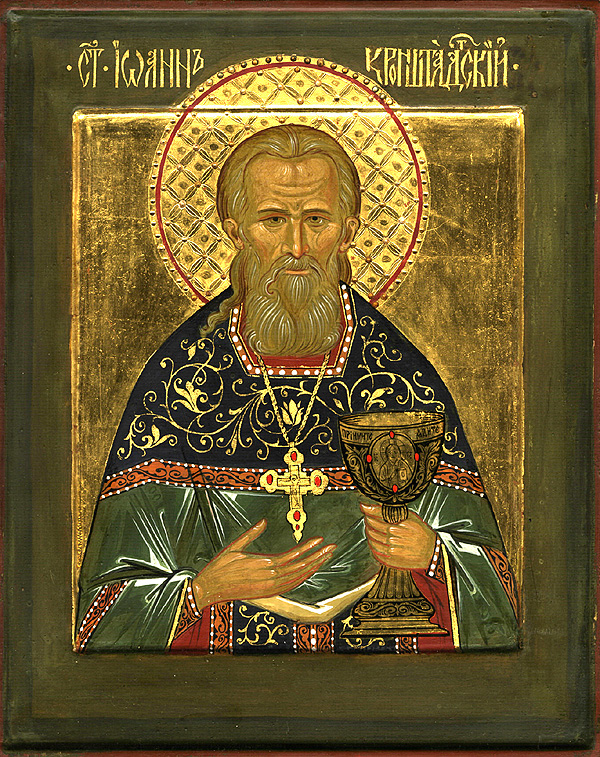
Saint John of Kronstadt was born in the village of Sura in Archangel province on October 19, 1829, and was called John in honor of Saint John of Rila (August 18). His parents were very poor but were very devoted to the Church. Even though he was poor, as a young boy John learned to feel compassion for others in their misfortune. His neighbors frequently asked him to pray for them, as they noticed this special grace-endowed gift in him. When John was ten, his parents were able to raise some money and send him to the local school which was attached to the church. At first, the boy had an extremely difficult time with his studies. He worked for days on end, but still failed to keep up.

Writing about his life he once recalled an evening when everyone had already gone to bed. “I could not sleep, and I still failed to understand anything I was taught. I still read poorly and could not remember anything I was told. I became so depressed I fell to my knees and began to pray. I don’t know whether I had spent a long time in that position or not, but suddenly something shook my whole being. It was as if a veil had fallen from my eyes, and my mind had been opened, and I remembered clearly my teacher of that day and his lesson. I also recalled the topic and the examples he had given. I felt so light and joyous inside.” After this experience he did so well he became one of the first in his class to be chosen to go to seminary, and after seminary to the Theological Academy in Saint Petersburg (a great honor at that time).

Throughout his studies, John thought about the importance of forgiveness, meekness, and love, and came to believe that these were the very center and power of Christianity, and that only one path—the path of humble love—leads to God and the triumph of His righteousness. He also thought a great deal about the Savior’s death on the Cross at Golgotha, and pitied those who did not know Jesus Christ. He wished to preach to them about His death and Resurrection. He dreamed about becoming a missionary to distant China, but saw that there was a great deal of work for a genuine pastor of Christ’s flock both in his own city and the surrounding towns.

When John graduated from the Academy he met Elizabeth Nesvitsky who lived in the town of Kronstadt. They dated, he proposed, and they were married. After his studies, John still desired to learn more about his faith and his Church.

It was in this frame of mind that he prepared to be a priest and to enter public ministry. He was ordained a deacon on December 10, 1855, and then priest on December 12. He was assigned to Saint Andrew’s Cathedral in the city of Kronstadt. He said, “I made myself a rule to be as sincere as possible in my work, and of strictly watching myself and my inner life.”

Father John wanted most of all to earn the love of the people in his care, because only a loving attitude could provide the firm support and help he needed as he faced the difficult work of the priesthood. His constant thought was how he would come before the Last Judgment and have to give an account, not only for his own deeds, but also the deeds of his flock, for whose education and salvation he was responsible. To him no one was a stranger; everyone who came to him for help became a friend and relative. He would tell people “The Church is the best heavenly friend of every sincere Christian.” He conducted divine services daily and offered the prayers of the faithful. He called all who rarely receive Holy Communion to prepare themselves and live their lives in a Christian way so that they could receive more often. Listening to Father John, many people changed their lifestyle, repented sincerely, and joyfully received Holy Communion on a regular basis.

At that time the government exiled murderers, thieves and other criminals to Kronstadt. Life was horrible for the exiles. Even children of exiles would become thieves and criminals. He would go to their dugouts, hovels and shacks to visit with them. Not satisfied with staying for five or ten minutes to administer some rite and then leave, Father John believed he was coming to visit a priceless soul, his brothers and sisters. He would stay for hours, talking, encouraging, comforting, crying, and rejoicing together with them.

From the beginning he also concerned himself with the material needs of the poor. He would shop for food, go to the pharmacy for prescriptions, to the doctor for help, many times giving the poor his last few coins. The inhabitants of Kronstadt would see him returning home barefoot and without his cassock. Often parishioners would bring shoes to his wife, saying to her, “Your husband has given away his shoes to someone, and will come home barefoot.” He would also write articles for the newspaper exhorting the people of Kronstadt to “support the poor morally and materially.” These appeals touched the hearts of many and Father John organized many charitable efforts. Realizing that his individual charity was insufficient for aiding the needy, he founded the Orthodox Christian House Parish Trusteeship of Saint Andrew the First-Called. This brotherhood coordinated many charitable efforts throughout the city and helped many needy people.

In 1857, he began teaching in the local city schools. He would tell people, “If children cannot listen to the Gospel, it is only because it is taught like any other subject, with boredom and indifference. Such teaching defeats the purpose of the Gospel. It fails because it forces students only to read words and memorize them instead of making them live in their lives.” To Father John there were no incapable students. He taught in such a way that poor pupils as well as good ones were able to understand. His attention was aimed not so much at forcing students to memorize as to fill their souls with the joy of living according to Christian values, sharing with them the holy thoughts which filled his soul.

When speaking to other priests about their vocation he would say, “You are a representative of the faith of the Church, O priest; you are a representative of Christ the Lord Himself. You should be a model of meekness, purity, courage, perseverance, patience, and lofty spirit. You are doing the work of God and must not let anything discourage you.”

Saint John has performed more miracles than almost any other saint, with the possible exception of Saint Nicholas. Through his prayers he healed the sick, gave hope to the hopeless, and brought sinners to repentance.

Father John labored endlessly in his work for the Lord preaching, teaching, and helping those in need. Having spent his entire life serving God and His people, Father John fell ill and died on December 20, 1908. Almost immediately, people from near and far began to make pilgrimages to the monastery where he was buried. Even today millions of Orthodox Christians in Russia and around the world pray to him to intercede for them as he had always done from his childhood.

Saint John was glorified by the Russian Orthodox Church on June 8, 1990.

Icon of the Mother of God the “Rescuer of the Drowning”

In the village of Lenkov on the bank of the Desno River near Novgorod, Russia, there was a dangerous whirlpool, which made the river difficult to cross. Often, the powerful swirling waters would cause the demise of ships and their passengers. It was at that dangerous site that an Icon of the Mother of God was discovered, resting on the riverbank. In time, a church dedicated to the Mother of God was erected on the site, and the Icon of the Mother of God, the "Rescuer of the Drowning," was enshrined therein. Those who journeyed along the Desno River customarily stopped at Lenkov to offer prayers in the icon's presence, imploring the Mother of God to grant them a safe journey despite the dangerous whirlpool. It had been said that after the icon had been discovered, mishaps to sailors were rare, and later completely ceased.

Lenkov and its church were destroyed during an invasion by the Poles in the 17th century. A new church dedicated to the Archangel Michael soon rose on the site of the former Church of the Mother of God, and the icon was enshrined therein. Many miracles were ascribed to the Mother of God, and the icon came to be revered not only in area of Lenkov, but far beyond, especially in Russia's larger port cities.

In the 18th century, the Icon was transferred to the Monastery of the Transfiguration in Novgorod, where it remained until the Russian Revolution in 1917. History does not record what happened to the miraculous icon during Soviet times. However, in 2003, a pious man named Sergei Babushkin gave to the Church an identical antique copy of the long-lost original "Rescuer of the Drowning" Icon, which was subsequently enshrined in the Transfiguration Monastery, thus marking the beginning of its revival.

The icon is remarkably similar to the much older Korsun Icon of the Mother of God, which was said to have been a copy of an icon by Saint Luke the Evangelist that had been kept in Ephesus until it was brought to Kyiv in 988 AD.

New-martyr John of Thasos

The New Martyr John of Thasos was from the village of Marias on the island of Thasos. In his youth he was brought to Constantinople and apprenticed to a tailor. One day he was seized by the Turks and accused of insulting the Moslem religion. They tried to force him to accept Islam, but he would not agree to renounce the Christian Faith, for which he was beheaded at the age of eighteen in the year 1652.

Icon of the Mother of God of Novgorod

The Novgorod Icon of the Mother of God was painted by Saint Peter, Metropolitan of Moscow (December 21), during his stay as igumen of a monastery on the River Rata at the boundary of the Malyi Dvorets. During a time of persecution, the Uniates plundered the Novgorod monastery, and the icon was transferred by the hieromonk James to the Eletsk Chernigov monastery. Bishop Anthony (Stakovsky) of Chernigov later blessed Simeon, the organizer of the Surozh monastery (Chernigov diocese) with this icon. On August 14, 1677, during a church procession from the old church to a new one, the icon manifested miraculous signs.