Removal of the relics of Nicephorus, Patriarch of Constantinople, Pouplios the Martyr, Bishop of Athens, Christina the Martyr of Persia, Gerald, Bishop of Mayo
JOEL 3:12-21
Let the nations bestir themselves, and come up to the valley of Jehosh'aphat; for there I will sit to judge all the nations round about.
Put in the sickle, for the harvest is ripe. Go in, tread, for the wine press is full. The vats overflow, for their wickedness is great.
Multitudes, multitudes, in the valley of decision! For the day of the Lord is near in the valley of decision. The sun and the moon are darkened, and the stars withdraw their shining.
And the Lord roars from Zion, and utters his voice from Jerusalem, and the heavens and the earth shake. But the Lord is a refuge to his people, a stronghold to the people of Israel.
So you shall know that I am the Lord your God, who dwell in Zion, my holy mountain. And Jerusalem shall be holy and strangers shall never again pass through it.
And in that day the mountains shall drip sweet wine, and the hills shall flow with milk, and all the stream beds of Judah shall flow with water; and a fountain shall come forth from the house of the Lord and water the valley of Shittim.
Egypt shall become a desolation and Edom a desolate wilderness, for the violence done to the people of Judah, because they have shed innocent blood in their land. But Judah shall be inhabited for ever, and Jerusalem to all generations. I will avenge their blood, and I will not clear the guilty, for the Lord dwells in Zion."
JOEL 2:12-26
Yet even now, " says the Lord, "return to me with all your heart, with fasting, with weeping, and with mourning; and rend your hearts and not your garments." Return to the Lord, your God, for he is gracious and merciful, slow to anger, and abounding in steadfast love, and repents of evil. Who knows whether he will not turn and repent, and leave a blessing behind him, a cereal offering and a drink offering for the Lord, your God?
Blow the trumpet in Zion; sanctify a fast; call a solemn assembly; gather the people. Sanctify the congregation; assemble the elders; gather the children, even nursing infants. Let the bridegroom leave his room, and the bride her chamber.
Between the vestibule and the altar let the priests, the ministers of the Lord, weep and say, "Spare thy people, O Lord, and make not thy heritage a reproach, a byword among the nations. Why should they say among the peoples, 'Where is their God?'
Then the Lord became jealous for his land, and had pity on his people. The Lord answered and said to his people, "Behold, I am sending to you grain, wine, and oil, and you will be satisfied; and I will no more make you a reproach among the nations.
I will remove the northerner far from you, and drive him into a parched and desolate land, his front into the eastern sea, and his rear into the western sea; the stench and foul smell of him will rise, for he has done great things.
Fear not, O land; be glad and rejoice, for the Lord has done great things! Fear not, you beasts of the field, for the pastures of the wilderness are green; the tree bears its fruit, the fig tree and vine give their full yield.
Be glad, O sons of Zion, and rejoice in the Lord, your God; for he has given the early rain for your vindication, he has poured down for you abundant rain, the early and the latter rain, as before.
The threshing floors shall be full of grain, the vats shall overflow with wine and oil. I will restore to you the years which the swarming locust has eaten, the hopper, the destroyer, and the cutter, my great army, which I sent among you.
You shall eat in plenty and be satisfied, and praise the name of the Lord your God, who has dealt wondrously with you. And my people shall never again be put to shame.
Translation of the relics of Saint Nikephoros, Patriarch of Constantinople
Saint Nikephoros (Nikēphóros) was a dignitary at the court of the empress Irene (797-802), and then after receiving monastic tonsure, he became known for his piety. In the year 806 he was elevated to the patriarchal throne. The saint was a zealous defender of the holy Icons. When the Iconoclast emperor Leo the Armenian (813-820) came to rule, the saint in 815 was exiled to Prokonnis, where he died in the year 828.
In the year 846 the holy relics of Patriarch Nikephoros were opened, and were found incorrupt and fragrant. They transferred them from Prokonnis to Constantinople and placed them for one day in Hagia Sophia, and then transferred them to the Church of the Holy Apostles. The saint’s hands are preserved in the Hilandar monastery on Mount Athos.
The saint left behind three writings against Iconoclasm. The main Feast of Saint Nikephoros is celebrated on June 2, but today we commemorate the finding and transfer of his holy relics.
Martyr Sabinus (Abibus) of Egypt
The Holy Martyr Sabinus suffered in Egypt in the year 287.
Martyrs Africanus, Publius, and Terence, of Carthage
The Holy Martyrs Africanus, Publius, and Terence suffered in the third century at Petrium. Their memory is celebrated also on April 10.
Hieromartyr Publius, Bishop of Athens
Saint Publius was Bishop of Athens (after Saint Narcissus) during the second century. He was one of the Seventy Apostles (January 4), and a disciple of Saint Dionysios the Aereopagite (October 3). The God-pleasing hierarch ruled his flock as a good shepherd, and he gave his life for his rational sheep, after he had perfected it by a martyric death during the persecution of Emperor Marcus Aurelius (161-180).
Martyr Alexander of Macedonia
The Holy Martyr Alexander was a presbyter in the city of Pidna, not far from Thessalonica. The saint converted many pagans to Christianity by his preaching. During the persecution against Christians under the emperor Maximian Galerius (305-311), Saint Alexander was subjected to fierce tortures, and then beheaded.
Martyr Christina of Persia
The Holy Martyr Christina of Persia was scourged to death for confessing her faith in Christ, during the fourth century.
Theophanes the Confessor, Symeon the New Theologian, Gregory Dialogos, Bishop of Rome, Phineas, grandson of Prophet Aaron, Paul Aurelian, Bishop of Brittany
ST. JUDE’S FIRST UNIVERSAL LETTER 1:1-10
Jude, a servant of Jesus Christ, and brother of James,
To those who are called, beloved in God the Father and kept for Jesus Christ:
May mercy, peace, and love be multiplied to you.
Beloved, being very eager to write to you of our common salvation, I found it necessary to write appealing to you to contend for the faith which was once for all delivered to the saints. For admission has been secretly gained by some who long ago were designated for this condemnation, ungodly persons who pervert the grace of our God into licentiousness and deny the only Master and our Lord Jesus Christ.
Now I desire to remind you, though you were once for all fully informed, that the Lord saved a people out of the land of Egypt, afterward destroyed those who did not believe. And the angels that did not keep their own position but left their proper dwelling have been kept by him in eternal chains in the nether gloom until the judgment of the great day; just as Sodom and Gomorrah and the surrounding cities, which likewise acted immorally and indulged in unnatural lust, serve as an example by undergoing a punishment of eternal fire.
Yet in like manner these men in their dreamings defile the flesh, reject authority, and revile the glorious ones. But when the archangel Michael, contending with the devil, disputed about the body of Moses, he did not presume to pronounce a reviling judgment upon him, but said, "The Lord rebuke you." But these men revile whatever they do not understand, and by those things that they know by instinct as irrational animals, they are destroyed.
LUKE 22:39-42, 45-71; 23:1
At that time, when Jesus came out, he went, as was his custom, to the Mount of Olives; and the disciples followed him. And when he came to the place he said to them, "Pray that you may not enter into temptation." And he withdrew from them about a stone's throw, and knelt down and prayed, "Father, if you are willing, remove this cup from me; nevertheless not my will, but yours, be done." And when he rose from prayer, he came to the disciples and found them sleeping for sorrow, and he said to them, "Why do you sleep? Rise and pray that you may not enter into temptation.
While he was still speaking, there came a crowd, and the man called Judas, one of the twelve, was leading them. He drew near to Jesus to kiss him; but Jesus said to him, "Judas, would you betray the Son of man with a kiss?" And when those who were about him saw what would follow, they said, "Lord, shall we strike with the sword?" And one of them struck the slave of the high priest and cut off his right ear. But Jesus said, "No more of this!" And he touched his ear and healed him. Then Jesus said to the chief priests and officers of the temple and elders, who had come out against him, "Have you come out as against a robber, with swords and clubs? When I was with you day after day in the temple, you did not lay hands on me. But this is your hour, and the power of darkness.
Then they seized him and led him away, bringing him into the high priest's house. Peter followed at a distance; and when they had kindled a fire in the middle of the courtyard and sat down together, Peter sat among them. Then a maid, seeing him as he sat in the light and gazing at him, said, "This man also was with him." But he denied it, saying "Woman, I do not know him." And a little later someone else saw him and said, "You also are one of them." But Peter said, "Man, I am not." And after an interval of about an hour still another insisted, saying, "Certainly this man also was with him; for he is a Galilean." But Peter said, "Man, I do not know what you are saying." And immediately, while he was still speaking, the cock crowed. And the Lord turned and looked at Peter. And Peter remembered the word of the Lord, how he had said to him, "Before the cock crows today, you will deny me three times." And he went out and wept bitterly.
Now the men who were holding Jesus mocked him and beat him; they also blindfolded him and asked him, "Prophesy! Who is it that struck you?" And they spoke many other words against him, reviling him.
When day came, the assembly of the elders of the people gathered together, both chief priests and scribes; and they led him away to their council, and they said, "If you are the Christ, tell us." But he said to them, "If I tell you, you will not believe; and if I ask you, you will not answer. But from now on the Son of man shall be seated at the right hand of the power of God." And they all said, "Are you the Son of God, then?" And he said to them, "You say that I am." And they said, "What further testimony do we need? We have heard it ourselves from his own lips.
Then the whole company of them arose, and brought him before Pilate.
Venerable Theophanes the Confessor of Sigriane
Saint Theophanes the Confessor was born in 759 at Constantinople into a pious and renowned family. His father was a relative of the Byzantine emperor Leo the Isaurian (717-741). Three years after Theophanes was born, his father died, leaving his family under the care of the emperor himself.
Theophanes grew up at the court and became a dignitary under the emperor Leo IV the Khazar (775-780). His position obliged him to enter into marriage, but he persuaded his bride to live with him in virginity.
After the death of his parents, Theophanes and his wife visited monasteries in the Sygrian district (Asia Minor). Theophanes met the Elder Gregory Stratitios, who predicted to Theophanes’ wife that her husband would earn the crown of martyrdom.
Later the wife of Theophanes was tonsured a nun in one of the monasteries in Bithynia, and Theophanes went to a monastery in the Cyzicus region. With the blessing of his Elder, Theophanes founded the Kalonymon monastery on an island in the Sea of Marmara and secluded himself in his cell, transcribing books. Theophanes attained a high degree of skill in this occupation.
Later, Saint Theophanes founded another monastery in Sygria, at a place called the “Big Settlement”, and became its igumen. He participated in all the work of the monastery, and was an example to all in his love for work and ascetical effort. He received from the Lord the gift of wonderworking, healing the sick, and casting out demons.
The Seventh Ecumenical Council met in Nicea in 787, which condemned the heresy of Iconoclasm. Saint Theophanes was also invited to the Council. He arrived dressed in his tattered garments, but he revealed his wisdom in affirming the veneration of the holy icons.
At the age of fifty, Saint Theophanes fell grievously ill and he suffered terribly until the day he died. Even on his deathbed, the saint continued to work. He wrote his CHRONOGRAPHIA, a history of the Christian Church covering the years 285-813. This work has remained an invaluable source for the history of the Church.
During the reign of the emperor Leo the Armenian (813-820), when the saint was advanced in age, the Iconoclast heresy returned. They demanded that Saint Theophanes accept the heresy, but he firmly refused and was locked up in prison. His “Big Settlement” monastery was put to the torch. The holy confessor died in 818 after twenty-three days in prison.
After the death of the impious emperor Leo the Armenian, the “Big Settlement” monastery was restored and the relics of the holy confessor were transferred there.
Righteous Phineas the grandson of Aaron
The Righteous Phineas, grandson of the High Priest Aaron (also commemorated today) and son of the High Priest Eleazar, was also a priest and zealous in his service.
When the Israelites, after the holy Prophet Moses (September 4) led them out of Egypt, were already near the Promised Land, their neighbors the Moabites and Midianites were overcome by fear and envy. Not trusting in their own strength, they summoned the magician Balaam to put a curse on the Israelites. The Lord revealed His will to Balaam, and Balaam refused to curse the People of God, seeing that God was pleased to bless them (Num. 24:1).
Then the Moabites drew the Israelites into the worship of Baal-Peor. God punished the Jews for their apostasy, and they died by the thousands from a plague. Many, beholding the wrath of God, came to their senses and repented.
At this time a certain man named Zimri, of the tribe of the Simeon, “brought to his brethren a Midianite woman in the sight of Moses and in the sight of all the congregation of the children of Israel, and they wept at the door of the tabernacle of witness” (Num. 25:6). Phineas, filled with wrath, went into Zimri’s tent and killed both him and the Midianite woman with a spear.
“And the Lord said to Moses, ‘Phineas… has caused My wrath against the children of Israel to cease, when I was exceedingly jealous among them…. Behold, I give him a covenant of peace, and he and his descendants shall have a perpetual covenant of priesthood, because he was zealous for his God, and made atonement for the children of Israel’” (Num. 25:10-13).
After this, at the command of God, Phineas went at the head of the Israelite army against the Moabites and brought chastisement upon them for their impiety and treachery. After the death of the High Priest Eleazar, Saint Phineas was unanimously chosen as High Priest. The high priesthood, in accord with God’s promise, continued also with his posterity. Saint Phineas died at an advanced age around 1500 B.C.
Saint Gregory Dialogus, Pope of Rome
Saint Gregory Dialogus, Pope of Rome, was born in Rome around the year 540. His grandfather was Pope Felix, and his mother Sylvia (November 4) and aunts Tarsilla and Emiliana were also numbered among the saints by the Roman Church. Having received a most excellent secular education, he attained high government positions.
Leading a God-pleasing life, he yearned for monasticism with all his soul. After the death of his father, Saint Gregory used his inheritance to establish six monasteries. At Rome he founded a monastery dedicated to the holy Apostle Andrew the First-Called, where he received monastic tonsure. Later, on a commission of Pope Pelagius II, Saint Gregory lived for a while in Constantinople. There he wrote his Commentary on the Book of Job.
After the death of Pope Pelagius, Saint Gregory was chosen to the Roman See. For seven months he would not consent to accept this service, considering himself unworthy. He finally accepted consecration only after the persistent entreaties of the clergy and flock.
Wisely leading the Church, Saint Gregory worked tirelessly in propagating the Word of God. Saint Gregory compiled the Liturgy of the Presanctified Gifts in the Latin language, which before him was known only in the verbal tradition. Affirmed by the Sixth Ecumenical Council, this liturgical service was accepted by all the Orthodox Church.
He zealously struggled against the Donatist heresy; he also converted the inhabitants of Brittany, pagans and Goths, who had been adhering to the Arian heresy, to the True Faith.
Saint Gregory has left behind numerous written works. After the appearance of his book, DIALOGUES CONCERNING THE LIFE AND MIRACLES OF THE ITALIAN FATHERS (DIALOGI DE VITA ET MIRACULIS PATRUM ITALIORUM), the saint was called “Dialogus.” His PASTORAL RULE (or LIBER REGULAE PASTORALIS) was well-known. In this work, Saint Gregory describes the model of the true pastor. His letters (848), dealing with moral guidance, have also survived.
Saint Gregory headed the Church for thirteen years, ministering to all the needs of his flock. He was characterized by an extraordinary love of poverty, for which he was granted a vision of the Lord Himself.
Pope Saint Gregory the Great, as he is known, died in the year 604, and his relics rest in the cathedral of the holy Apostle Peter in the Vatican.
Venerable Simeon the New Theologian
Saint Simeon the New Theologian was born in the year 949 in the city of Galatea (Paphlagonia), and he was educated at Constantinople. His father prepared him for a career at court, and for a certain while the youth occupied a high position at the imperial court. When he was fourteen, he met the renowned Elder Simeon the Pious at the Studion Monastery, who would be a major influence in his spiritual development. He remained in the world for several years preparing himself for the monastic life under the Elder’s guidance, and finally entered the monastery at the age of twenty-seven.
Saint Simeon the Pious recommended to the young man the writings of Saint Mark the Ascetic (March 5) and other spiritual writers. He read these books attentively and tried to put into practice what he read. Three points made by Saint Mark in his work “On the Spiritual Law” (see Vol. I of the English Philokalia) particularly impressed him. First, you should listen to your conscience and do what it tells you if you wish your soul to be healed (Philokalia, p. 115). Second, only by fulfilling the commandments can one obtain the activity of the Holy Spirit. Thirdly, one who prays only with the body and without spiritual knowledge is like the blind man who cried out, “Son of David, have mercy upon me” (Luke 18:38) (Philokalia, p. 111). When the blind man received his sight, however, he called Christ the Son of God (John 9:38).
Saint Simeon was wounded with a love for spiritual beauty, and tried to acquire it. In addition to the Rule given him by his Elder, his conscience told him to add a few more Psalms and prostrations, and to repeat constantly, “Lord Jesus Christ, have mercy upon me.” Naturally, he heeded his conscience.
During the day, he cared for the needs of people living in the palace of Patricius. At night, his prayers grew longer and he remained praying until midnight. Once, as he was praying in this way, a most brilliant divine radiance descended upon him and filled the room. He saw nothing but light all around him, and he was not even aware of the ground beneath his feet.
It seemed to him that he himself became light. Then his mind rose upward to the heavens, and he saw a second light brighter than the light which surrounded him. Then, on the edge of this second light, he seemed to see Saint Simeon the Pious, who had given him Saint Mark the Ascetic to read.
Seven years after this vision, Saint Simeon entered the monastery. There he increased his fasting and vigilance, and learned to renounce his own will.
The Enemy of our salvation stirred up the brethren of the monastery against Saint Simeon, who was indifferent to the praises or reproaches of others. Because of the increased discontent in the monastery, Saint Simeon was sent to the Monastery of Saint Mamas in Constantinople.
There he was tonsured into the monastic schema, and increased his spiritual struggles. He attained to a high spiritual level, and increased his knowledge of spiritual things through reading the Holy Scriptures and the writings of the Fathers, as well as in conversation with holy Elders.
Around the year 980, Saint Simeon was made igumen of the monastery of Saint Mamas and continued in this office for twenty-five years. He repaired and restored the monastery, which had suffered from neglect, and also brought order to the life of the monks.
The strict monastic discipline, for which Saint Simeon strove, led to great dissatisfaction among the brethren. Once, after Liturgy, some of the monks attacked him and nearly killed him. When the Patriarch of Constantinople expelled them from the monastery and wanted to hand them over to the civil authorities, Saint Simeon asked that they be treated with leniency and be permitted to live in the world.
About the year 1005, Saint Simeon resigned his position as igumen in favor of Arsenius, while he himself settled near the monastery in peace. There he composed his theological works, portions of which appear in the Philokalia.
The chief theme of his works is the hidden activity of spiritual perfection, and the struggle against the passions and sinful thoughts. He wrote instructions for monks: “Theological and Practical Chapters,” “A Treatise on the Three Methods of Prayer,” (in Vol. IV of the English Philokalia) and “A Treatise on Faith.” Moreover, Saint Simeon was an outstanding church poet. He also wrote “Hymns of Divine Love,” about seventy poems filled with profound prayerful meditations.
The sublime teachings of Saint Simeon about the mysteries of mental prayer and spiritual struggle have earned him the title “the New Theologian.” These teachings were not the invention of Saint Simeon, but they had merely been forgotten over time.
Some of these teachings seemed unacceptable and strange to his contemporaries. This led to conflict with Constantinople’s church authorities, and Saint Simeon was banished from the city. He withdrew across the Bosphorus and settled in the ancient monastery of Saint Makrina.
The saint peacefully fell asleep in the Lord in the year 1021. During his life he received the gift of working miracles. Numerous miracles also took place after his death; one of them was the miraculous discovery of his icon.
His Life was written by his cell-attendant and disciple, Saint Nicetas Stethatos.
Since March 12 falls during Great Lent, Saint Simeon’s Feast is transferred to October 12.
Icon of the Mother of God Icon “Not Made by Hands” from Lydda
The wonderworking Lydda Icon is mentioned in the service for the Kazan Icon (July 8 & October 22) in the third Ode of the Canon.
According to Tradition, the Apostles Peter and John were preaching in Lydda (later called Diospolis) near Jerusalem. There they built a church dedicated to the Most Holy Theotokos, then went to Jerusalem and asked her to come and sanctify the church by her presence. She sent them back to Lydda and said, “Go in peace, and I shall be there with you.”
Arriving at Lydda, they found an icon of the Virgin imprinted in color on the wall of the church (some sources say the image was on a pillar). Then the Mother of God appeared and rejoiced at the number of people who had gathered there. She blessed the icon and gave it the power to work miracles. This icon was not made by the hand of man, but by a divine power.
Julian the Apostate (reigned 361-363) heard about the icon and tried to eradicate it. Masons with sharp tools chipped away at the image, but the paint and lines just seemed to penetrate deeper into the stone. Those whom the emperor had sent were unable to destroy the icon. As word of this miracle spread, millions of people came to venerate the icon.
In the eighth century, Saint Germanus, the future Patriarch of Constantinople (May 12) passed through Lydda. He had a copy of the icon made, and sent it to Rome during the iconoclastic controversy. It was placed in the church of Saint Peter, and was the source of many healings. In 842, the reproduction was returned to Constantinople and was known as the Roman Icon (June 26).
The oldest sources of information for the Lydda Icon are a document attributed to Saint Andrew of Crete in 726, a letter written by three eastern Patriarchs to the iconoclast emperor Theophilus in 839, and a work of George the Monk in 886.
The icon still existed as late as the ninth century.
Righteous King Demetrius Tavdadebuli of Georgia
No information on the life of this saint is available at this time.
Hieromartyr Kirion II, Catholicos-Patriarch of All Georgia
The holy Hieromartyr Kirion II (known in the world as George Sadzaglishvili) was born in 1855 in the village of Nikozi in the Gori district. His father was a priest.
He enrolled at the parochial school in Ananuri, then at the theological school in Gori, and finally at Tbilisi Seminary.
In 1880 he graduated from the Kiev Theological Academy and was appointed assistant dean of the Odessa Theological Seminary. From 1883 to 1886 Saint Kirion was active in the educational life of Gori, Telavi, Kutaisi, and Tbilisi. In 1886 he was appointed supervisor of the Georgian monasteries and dean of the schools of the Society for the Renewal of Christianity in the Caucasus. He directed the parochial schools, established libraries and rare book collections within them, and published articles on the history of the Georgian Church, folklore and literature under the pseudonyms Iverieli, Sadzagelov, and Liakhveli (the Liakhvi River flows through his native region of Shida [Inner] Kartli, the central part of eastern Georgia).
In 1886 God’s chosen, George, was tonsured a monk with the name Kirion, and he was enthroned as abbot of Kvabtakhevi Monastery. Kirion continued his scholarly pursuits and intensified his spiritual labors. He collected folklore and ethnographic materials and studied artifacts from ancient Georgian churches. He generously donated the reliquaries and rare manuscripts he found to the antiquities collections at the Church Museum of Tbilisi and the Society for the Propagation of Literacy among the Georgians.
In 1898 Kirion published a description of the historical monuments of Liakhvi Gorge. His publication is an important resource for scholars and historians, since most of the monuments he describes were toppled by Georgia’s ideological and national enemies in subsequent years. (Kirion would later join the Moscow Archaeological Society.)
In August of 1898 Archimandrite Kirion was consecrated bishop of Alaverdi.
Saint Kirion began at once to rebuild Alaverdi Church, and he offered his own resources for this momentous task. At the same time, he began to study the ancient artifacts of Kakheti and Hereti in eastern Georgia. Among the manuscripts he turned over to the Church Museum of Tbilisi was a Holy Gospel from the year 1098, unknown to scholars until that time.
Bishop Kirion was a tireless researcher, with a broad range of scholarly interests. To his pen belong more than forty monographs on various themes relating to the history of the Georgian Church and Christian culture in Georgia. He compiled a short terminological dictionary of the ancient Georgian language and, with the linguist Grigol Qipshidze, a History of Georgian Philology.
Kirion fought the appropriation of Georgian churches by the Armenian Monophysites. He sent a detailed memorandum to the Russian exarch in Georgia demanding that the confiscated Orthodox churches be returned.
In 1901 Kirion was installed as bishop of Gori. By that time it had become clear to the Georgian exarchate that the educated and progressive clergymen were endorsing the holy hierarch Kirion and contesting the abolition of the autocephaly of the Georgian Church. But the government found a way out of this “dangerous situation” by frequently reassigning Saint Kirion to serve in different parts of the Russian Empire: in 1903 he was reassigned to Cherson, in 1904 to Orel, and in 1906 to Sokhumi. In Sokhumi Saint Kirion exerted every effort to restore and revive the historical Georgian churches and monasteries, though he would soon be reassigned to the Kovno diocese.
In 1905, at the demand of Georgia’s intelligentsia (under the leadership of Saint Ilia the Righteous), the regime formed an extraordinary commission to formally consider the question of the autocephaly of the Georgian Church. Saint Kirion delivered two lectures to the commission: one on the reasons behind Georgia’s struggle for the restoration of an autocephalous Church, and the other on the role of nationality in the life of the Church. The commission rejected the Georgian claims to autocephaly and subjected the leaders of the movement to harsh repression.
In 1907 Saint Ilia the Righteous was killed, and the government forbade Saint Kirion to travel to Georgia to pay his last respects. Saint Kirion managed only to send a letter of condolence to Saint Ilia’s loved ones. In the months that followed, the regime tightened down even more severely on Saint Kirion. In 1908 he was accused of conspiring in the murder of Exarch Nikon, deprived of the rank of bishop, and arrested. This treacherous deed roused the indignation not only of the Georgian people but of the faithful of Russia as well. Even the democratic forces in Europe founded a society for the protection of the rights of Bishop Kirion and gathered signatures to demand his release from prison. The bishop himself humbly carried the cross of his persecution and consoled his sympathizers with the words of the great Georgian poet Shota Rustaveli: “‘Not a single rose is plucked from this world without thorns.’ We must bear our suffering with love, since suffering is the fruit of love and in suffering we will find our strength!”
By the year 1915 the regime had ceased to persecute Saint Kirion. They restored him to the bishopric and elevated him as archbishop of Polotsk and Vitebsk in western Russia. He was not, however, permitted to return to his motherland.
In March of 1917 the Georgian Apostolic Orthodox Church declared its autocephaly restored. At the incessant demands of the Georgian people, Saint Kirion finally returned to his motherland. One hundred and twenty cavalrymen met him in Aragvi Gorge (along the Georgian Military Highway) and reverently escorted him to the capital. In Tbilisi Saint Kirion was met with great honor.
In September of 1917 the Holy Synod of the Georgian Orthodox Church enthroned Bishop Kirion as Catholicos-Patriarch of All Georgia. During the enthronement ceremony at Svetitskhoveli Cathedral, Saint Kirion addressed the faithful: “My beloved motherland, the nation protected by the Most Holy Theotokos, purified in the furnace by tribulations and suffering, washed in its own tears: I turn to you, having been separated from you, having sought after you, having grieved over you, having sought for you and now having returned not as a prodigal son, but as your confidant and the conscience of your Church.
“I know that in your minds you are all inquiring, ‘What has he brought back with him? With what ointment will he heal his wounds? How will he comfort himself in his sadness?’ Consider my words: He came not to be ministered unto, but to minister, and to give His life a ransom for many (Matt. 20:28). I, likewise, have come not as a hired servant, but as a faithful and obedient son!”
Soon after he was enthroned, Saint Kirion sent an appeal to all the Orthodox patriarchs of the world in which he described in detail the history of the Georgian Church and requested an official recognition of her autocephaly.
On May 26, 1918, Georgia declared its independence. The next day Catholicos-Patriarch Kirion II presided during a service of thanksgiving. The chief shepherd and his flock rejoiced at the restoration of the autocephaly of the Georgian Church and the independence of the Georgian state, though from the beginning they perceived the imminence of the Bolshevik danger. The socialist revolution, now showing its true face, posed an enormous threat to the young republic and her Church.
On June 27, 1918, Catholicos-Patriarch Kirion II was found murdered in the patriarchal residence at Martqopi Monastery. The investigation was a mere formality and the guilty were never found.
Rumors were even spread that Saint Kirion had shot himself. When the Holy Synod of the Georgian Apostolic Orthodox Church convened on October 17, 2002, it canonized Holy Hieromartyr Kirion and numbered him among the saints.
Cheesefare Monday, Sophronius, Patriarch of Jerusalem, Theodora the Righteous, Pionios the Presbyter, George the New Wonderworker of Constantinople, Trophimos and Thallos the Martyrs
ST. JOHN’S THIRD UNIVERSAL LETTER 1:1-15
The elder to the beloved Gaius, whom I love in the truth.
Beloved, I pray that all may go well with you and that you may be in health; I know that it is well with your soul. For I greatly rejoiced when some of the brethren arrived and testified to the truth of your life, as indeed you do follow the truth. No greater joy can I have than this, to hear that my children follow the truth.
Beloved, it is a loyal thing you do when you render any service to the brethren, especially to strangers, who have testified to your love before the church. You will do well to send them on their journey as befits God's service. For they have set out for his sake and have accepted nothing from the heathen. So we ought to support such men, that we may be fellow workers in the truth.
I have written something to the church; but Diotrephes, who likes to put himself first, does not acknowledge my authority. So if I come I will bring up what he is doing, prating against me with evil words. And not content with that, he refuses himself to welcome the brethren, and also stops those who want to welcome them and puts them out of the church.
Beloved, do not imitate evil but imitate good. He who does good is of God; he who does evil has not seen God. Demetrios has testimony from every one, and from the truth itself; I testify to him too, and you know my testimony is true.
I had much to write to you, but I would rather not write with pen and ink; I hope to see you soon, and we will talk together face to face.
Peace be to you. The friends greet you. Greet the friends, every one of them.
LUKE 19:29-40; 22:7-39
At that time, when Jesus drew near to Bethphage and Bethany, at the mount that is called Olivet, he sent two of the disciples, saying, "Go into the village opposite, where on entering you will find a colt tied, on which no one has ever yet sat; untie it and bring it here. If any one asks you, 'Why are you untying it?' you shall say this, 'The Lord has need of it.'" So those who were sent went away and found it as he had told them. And as they were untying the colt, its owners said to them, "Why are you untying the colt?" And they said, "The Lord has need of it." And they brought it to Jesus, and throwing their garments on the colt they set Jesus upon it. And as he rode along, they spread their garments on the road. As he was now drawing near, at the descent of the Mount of Olives, the whole multitude of the disciples began to rejoice and praise God with a loud voice for all the mighty works that they had seen, saying, "Blessed is the King who comes in the name of the Lord! Peace in heaven and glory in the highest!" And some of the Pharisees in the multitude said to him, "Teacher, rebuke your disciples." He answered, "I tell you, if these were silent, the very stones would cry out.
Then came the day of Unleavened Bread, on which the passover lamb had to be sacrificed. So he sent Peter and John, saying; "Go and prepare the passover for us, that we may eat it." They said to him, "Where will you have us prepare it?" He said to them, "Behold, when you have entered the city, a man carrying a jar of water will meet you; follow him into the house which he enters, and tell the householder, 'The Teacher says to you, Where is the guest room, where I am to eat the passover with my disciples?' And he will show you a large upper room furnished; there make ready." And they went, and found it as he had told them; and they prepared the passover.
And when the hour came, he sat at table, and the apostles with him. And he said to them, "I have earnestly desired to eat this passover with you before I suffer; for I tell you I shall never eat it again until it is fulfilled in the kingdom of God." And he took a cup, and when he had given thanks he said, "Take this, and divide it among yourselves; for I tell you that from now on I shall not drink of the fruit of the vine until the kingdom of God comes." And he took bread, and when he had given thanks he broke it and gave it to them, saying, "This is my body which is given for you. Do this in remembrance of me." And likewise the cup after supper, saying, "This cup which is poured out for you is the new covenant in my blood. But behold the hand of him who betrays me is with me on the table. For the Son of man goes as it has been determined; but woe to that man by whom he is betrayed!" And they began to question one another, which of them it was that would do this.
A dispute also arose among them, which of them was to be regarded as the greatest. And he said to them, "The kings of the Gentiles exercise lordship over them; and those in authority over them are called benefactors. But not so with you; rather let the greatest among you become as the youngest, and the leader as one who serves. For which is the greater, one who sits at table, or one who serves? Is it not the one who sits at table? But I am among you as one who serves.
You are those who have continued with me in my trials; and I assign to you, as my Father assigned to me, a kingdom, that you may eat and drink at my table in my kingdom, and sit on thrones judging the twelve tribes of Israel.
Simon, Simon, behold, Satan demanded to have you, that he might sift you like wheat, but I have prayed for you that your faith may not fail; and when you have turned again, strengthen your brethren." And he said to him, "Lord, I am ready to go with you to prison and to death." He said, "I tell you, Peter, the cock will not crow this day, until you three times deny that you know me.
And he said to them, "When I sent you out with no purse or bag or sandals, did you lack anything?" They said, "Nothing." He said to them, "But now, let him who has a purse take it, and likewise a bag. And let him who has no sword sell his mantle and buy one. For I tell you that this scripture must be fulfilled in me, 'And he was reckoned with transgressors'; for what is written about me has its fulfillment." And they said, "Look, Lord, here are two swords." And he said to them, "It is enough.
And he came out, and went, as was his custom, to the Mount of Olives; and the disciples followed him.
Saint Sophronius, Patriarch of Jerusalem
Saint Sophronius, Patriarch of Jerusalem, was born in Damascus around 560. From his youth he was distinguished for his piety and his love for classical studies. He was especially proficient in philosophy, and so he was known as Sophronius the Wise. The future hierarch, however, sought the true philosophy of monasticism, and conversations with the desert-dwellers.
He arrived in Jerusalem at the monastery of Saint Theodosius, and there he became close with the hieromonk John Moschus, becoming his spiritual son and submitting himself to him in obedience. They visited several monasteries, writing down the lives and spiritual wisdom of the ascetics they met. From these notes emerged their renowned book, the LEIMONARION or SPIRITUAL MEADOW, which was highly esteemed at the Seventh Ecumenical Council.
To save themselves from the devastating incursions of the Persians, Saints John and Sophronius left Palestine and went to Antioch, and from there they went to Egypt. In Egypt, Saint Sophronius became seriously ill. During this time he decided to become a monk and was tonsured by Saint John Moschus.
After Saint Sophronius recovered his health, they both decided to remain in Alexandria. There they were received by the holy Patriarch John the Merciful (November 12), to whom they rendered great aid in the struggle against the Monophysite heresy. At Alexandria Saint Sophronius had an affliction of the eyes, and he turned with prayer and faith to the holy Unmercenaries Cyrus and John (January 31), and he received healing in a church named for them. In gratitude, Saint Sophronius then wrote the Lives of these holy Unmercenaries.
When the barbarians began to threaten Alexandria, Patriarch John, accompanied by Saints Sophronius and John Moschus, set out for Constantinople, but he died along the way. Saints John Moschus and Sophronius then set out for Rome with eighteen other monks. Saint John Moschus died at Rome. His body was taken to Jerusalem by Saint Sophronius and buried at the monastery of Saint Theodosius.
In the year 628, Patriarch Zacharias of Jerusalem (609-633) returned from his captivity in Persia. After his death, the patriarchal throne was occupied for two years by Saint Modestus (December 18). After the death of Saint Modestus, Saint Sophronius was chosen Patriarch. Saint Sophronius toiled much for the welfare of the Jerusalem Church as its primate (634-644).
Toward the end of his life, Saint Sophronius and his flock lived through a two year siege of Jerusalem by the Moslems. Worn down by hunger, the Christians finally agreed to open the city gates, on the condition that the enemy spare the holy places. But this condition was not fulfilled, and Saint Sophronius died in grief over the desecration of the Christian holy places.
Written works by Patriarch Sophronius have come down to us in the area of dogmatics, and likewise his “Excursus on the Liturgy,” the Life of Saint Mary of Egypt (April 1), and also about 950 troparia and stikheras from Pascha to the Ascension.
While still a hieromonk, Saint Sophronius reviewed and made corrections to the Rule of the monastery of Saint Savva the Sanctified (December 5). The saint’s three Canons for the Holy Forty Day Great Fast are included in the contemporary Lenten Triodion.
Saint Euthymius, Bishop of Novgorod
Saint Euthymius, in Baptism John, was born in answer to the fervent prayers of the presbyter Micah and his wife Anna. For many years they had been childless, and they vowed that if they had a son, they would dedicate him to God. The boy read priestly books and frequently attended church services, often helping his father in the small church of Saint Theodore. All this sanctified young John’s soul. In the year 1411, he left his parental home for a monastery at the age of fifteen.
Twelve versts from Novgorod, in a wilderness spot named Vyazhisch, three monks, Euphrosynus, Ignatius and Galacteon, settled in the forests and the swamps. They were soon joined by the priest Pimen, who was tonsured with the name Pachomius. Here they lived in complete solitude at a wooden chapel they built in honor of Saint Nicholas. They lived in unceasing prayer and struggled with the severe conditions of nature in the northern regions.
The young John also came to these ascetics seeking salvation. The igumen Pachomius accepted him fondly and tonsured him into monasticism with the name Euthymius. His tonsure at such a young age is an indication of the young ascetic’s outstanding spiritual traits.
During this time the See of Novgorod was occupied by Archbishop Simeon, a simple monk who became a hierarch. The virtuous life of Saint Euthymius became known to the archbishop. Saint Euthymius was summoned to Novgorod and after a long talk with Archbishop Simeon, he was appointed as the archbishop’s steward.
At that time the Archbishops of Novgorod occupied a unique position. Independent of princely authority, they were elected directly by the assembly and they assumed a large role in secular matters. Moreover, they administered vast land-holdings. Under these conditions, an archbishop’s steward had to combine administrative talent with the utmost non-covetousness and deep Christian humility. Saint Euthymius fervently entreated the archpastor to send him back to Vyazhisch, but then he agreed to stay.
Saint Euthymius evoked general astonishment and esteem, occupying such an important position, and being at the center of business life in a large city. As a monk he devoted himself to asceticism as fervently as he would have done in the deep forest.
Archbishop Simeon died in 1421. Under the new hierarch, Euthymius I, Saint Euthymius again withdrew to his monastery. Soon, however, the monks of a monastery on Lisich Hill chose the saint as their igumen. With the death of Archbishop Euthymius I in 1429, Saint Euthymius was then chosen as archbishop. On November 29, he entered into the temple of Saint Sophia. For four years the saint administered the Novgorod diocese, while putting off being installed as archbishop. Only on May 24, 1434 was he consecrated at Smolensk by Metropolitan Gerasimus.
Saint Euthymius wisely governed his diocese for twenty-nine years, zealous in fulfilling his archpastoral duty. Saint Euthymius labored in constructing and restoring churches, especially after the devastating fires of the years 1431 and 1442.
The Sophia cathedral was richly embellished by the saint, and several new churches were built in the Novgorod Kremlin. “If you wish to see a few of his great works,” writes Pachomius the Logothete, “go to the temple of Saint Sophia. There you will see the churches he built, standing like hillocks. They speak of their varied charm, not with words, but in deed. ‘This was given me by Archbishop Euthymius,’ proclaims one church. Another says, ‘He has adorned me so magnificently.’ A third exclaims, ‘He built me up from the very foundations.’
The church of Saint John Chrysostom, tall and beautiful, blesses with the hand of Chrysostom, and proclaims: “Since you have built me a temple, I in turn shall entreat the Creator to prepare a habitation in Heaven for you.”
The cathedral of the Wisdom of God, speaking across the years of its restoration by him, proclaims: “He has restored me to my original grandeur, he has adorned me with holy icons. He is my praise and beauty.”
Saint Euthymius built also a church in honor of his Guardian Angel [i.e. Russian idiom for “patron saint”], and in 1438 he built a stone church at Vyazhitsk monastery in honor of Saint Nicholas. The following year he built a stone church in honor of Saint John the Theologian with a trapeza and consistory.
Zealous for the glory of God, Saint Euthymius had more spiritual books printed. Many service books survive from this period, transcribed “under the authority of Archbishop Euthymius.” Despite his abundant works, the saint always promptly fulfilled the monastic Rule. Whatever he could not do by day he accomplished by night. An hour before Matins the saint rose up for his cell rule. He often spent the whole night without sleep, and he wore chains, but no one knew about them until his death. The saint spent the first week of Great Lent at Vyazhitsk monastery in silent prayer, eating nothing.
In 1446 the great-princely throne was usurped by Shemyaka, who established relations with Novgorod. The political situation in Novgorod was often quite strained. In 1451, Saint Jonah (March 31) in a special letter urged the people of Novgorod to cease their rowdiness and to heed their archpastor. “Heed our son and brother, your father and teacher, the God-beloved Archbishop Euthymius, in all things.”
Saint Euthymius, advanced in age, was troubled in soul that the actions of Shemyaka might cast a pall over his relations with the revered primate, and he sent a letter to Saint Jonah. Sensing the nearness of his death, Saint Euthymius asked his prayers and pardon.
In his reply, a letter of pardon, Saint Jonah wrote: “We remind you, my son, that you comported yourself too simply: you accepted one who was excommunicated for his transgressions by Our Humility, and found him worthy of your blessing. My son, offer repentance to God for this.”
Saint Jonah ordered that if the letter of pardon should arrive after the blessed end of Novgorod’s archpastor, then it should be read over his grave. Saint Euthymius reposed on March 10, 1458. The priest Eumenius, sent by Saint Jonah with the grammota of pardon, arrived in Novgorod sixteen days after the death of Saint Euthymius, whose grave was at the church of the Vyazhitsk monastery.
When they opened the grave in order to read the letter of pardon, they then saw that the body of the saint showed no sign of decay. Saint Euthymius lay there as though asleep, and his fingers were positioned for a blessing. “God preserve Novgorod, for which Saint Euthymius prays,” exclaimed Eumenius. Reading the letter of Saint Jonah, he placed it into the hand of the deceased hierarch.
Soon after the death of the saint, the Lord glorified him by working miracles for those who sought his prayerful intercession. Greatly revering the saint, the monks of the Vyazhitsk monastery built a church in honor of Saint Euthymius, which was noted in the census of 1500.
The commemoration of Saint Euthymius was established at the Moscow Council of 1549. The Life of Saint Euthymius was written by Pachomius the Logothete, having been commissioned by Saint Jonah, Archbishop of Novgorod (November 5)
Hieromartyrs Pionius and Limnus of Smyrna and those with them: Asclepiades, Macedonia, and Sabina
The Hieromartyrs Pionius and Limnus, and the martyrs Sabina, Macedonia, and Asclepiades suffered during the persecution of Christians in the reign of Decius (249-251). They suffered at Smyrna, a mercantile city on the eastern shores of the Aegean Sea. The Church in Smyrna was founded by the holy Apostle John the Theologian (May 8 and September 26), and was made glorious by its martyrs and confessors.
Saint Pionius knew that he and his companions would be arrested on February 23, the anniversary of Saint Polycarp’s martyrdom, and a feastday for the Christians of Smyrna. The day before they were arrested, Saint Pionius entertained Asclepiades and Sabina in his house. Taking three lengths of woven chains, Saint Pionius placed them around his neck, and around the necks of the other two. He did this to show that they were all determined to be led off to prison rather than eat food sacrificed to idols.
The holy confessors were indeed arrested on February 23. After a brief interrogation they were dragged off by Polemon the verger in order to sacrifice to the idols and eat forbidden foods. They were brought to the forum, where a great crowd had gathered.
Saint Pionius addressed the people, chiding them for laughing and rejoicing at those Christians who had agreed to offer sacrifice. He quoted Homer to the pagans (Odyssey 22, 412) and said that it was shameful to gloat over those who were about to die. He reminded the Jews in the audience of the words of Solomon: “If your enemy falls, do not rejoice over him, and do not be glad when he stumbles” (Proverbs 24:17).
Polemon attempted once again to persuade Pionius to obey the law and offer sacrifice to the idols.
“If only I could persuade you to become Christians,” he replied.
The men laughed at him, saying that he did not have the power to do that, because they knew they would be burned alive if they converted.
Saint Pionius said, “It is far worse to burn after death.”
Saint Sabina laughed when she heard this. Then Polemon threatened to put her in a brothel, but she said she believed that God would protect her.
Under questioning, Saint Pionius stated repeatedly that he was a Christian, and could not sacrifice to the emperor or to the idols.
Before Polemon came to Sabina to question her, Saint Pionus told her to say that her name was Theodote. This he did so that she would not be returned to her former mistress Politta, an immoral woman. In an effort to turn her from Christ, Politta had bound Saint Sabina and cast her out on the mountains. She was secretly helped by the brethren, and hid in Saint Pionus’s house most of the time. That is how she came to be arrested.
Saints Sabina and Asclepiades were questioned, and they said they were Christians who worshiped Jesus Christ. Then they were thrown into jail.
In prison Saint Pionius and his companions met Limnus, a priest of the Church of Smyrna, and his wife Macedonia from the village of Karine. They had also been imprisoned for confessing Christ.
Many believers visited the holy confessors in prison, offering them whatever they could, but the saints did not accept it. The jailers were angry, because they used to keep a portion of the gifts given to prisoners for themselves.
The holy martyrs were brought to the marketplace, and were urged to offer sacrifice. When they refused, they were taken back to prison. On the way, they were beaten and mocked by the crowd. Someone said to Saint Sabina, “Why couldn’t you have died in your own city?”
Saint Sabina retorted, “What is my native city?”
Terentius, who was in charge of the gladiatorial games, said to Asclepiades, “After you are condemned, I shall ask that you compete in the games given by my son.”
“That does not scare me,” he said.
After many torments, the holy martyr was brought to the amphitheatre on March 11, 250. Since he still refused to offer sacrifice to the idols, Saint Pionius was sentenced to be burned alive. He was nailed to a cross, then they stacked wood around him and lit the fire. When the fire subsided, everyone saw the body of the saint was unharmed. Not even the hairs of his head had been singed. His face was radiant, and shone with divine grace. After his victory in the contest, Saint Pionius received an incorruptible crown of glory from the Savior Christ.
Saint Pionius transcribed the Martyrdom of Saint Polycarp of Smyrna (February 23) from an older copy made by Isocrates (or Socrates) in Corinth. This document in turn was transcribed from an earlier manuscript written by Gaius, and was based on the recollections of Saint Irenaeus of Lyons (August 23), who knew Saint Polycarp. Saint Polycarp appeared to Pionius in a vision, telling him to search for the text of Isocrates. Saint Pionius collected the material which was nearly worn out with age, thus preserving the account for later generations. Now Saint Pionius rejoices in the heavenly Kingdom, glorifying the Life-Creating Trinity, the Father, the Son, and the Holy Spirit, throughout all ages.
Translation of the relics of the Martyr Epimachus of Pelusium
The Holy Martyr Epimachus of Alexandria was a native of Egypt. For a long time he lived in seclusion on Mount Peleusium. During a persecution against Christians at Alexandria (about the year 250), Saint Epimachus in his fervent zeal came into the city, destroyed pagan idols, and fearlessly confessed Christ. For this the saint was put to torture. Among the people watching the torture was a woman who was blind in one eye. A drop of blood from the martyr healed her infirmity.
After fierce tortures, the saint was beheaded by the sword.
Today we commemorate the translation of the relics of Saint Epimachus.
Saint Sophronius, Bishop of Vratcha, Bulgaria
No information on the life of this saint is available at this time.
Venerable Sophronius the Recluse of the Kiev Caves
Saint Sophronius the Hermit of the Caves was an ascetic of the Far Caves (the Theodosiev Caves), during the thirteenth century. The saint wore a hairshirt and a heavy iron belt, and read through the entire Psalter every day.
Judgment Sunday (Meatfare Sunday), Quadratus the Martyr & his Companions, Anastasia of Alexandria, Michael Mauroudes the New-Martyr
ST. PAUL’S FIRST LETTER TO THE CORINTHIANS 8:8-13; 9:1-2
Brethren, food will not commend us to God. We are no worse off if we do not eat, and no better off if we do. Only take care lest this liberty of yours somehow become a stumbling block to the weak. For if any one sees you, a man of knowledge, at table in an idol's temple, might he not be encouraged, if his conscience is weak, to eat food offered to idols? And so by your knowledge this weak man is destroyed, the brother for whom Christ died. Thus, sinning against your brethren and wounding their conscience when it is weak, you sin against Christ. Therefore, if food is a cause of my brother's falling, I will never eat meat, lest I cause my brother to fall.
Am I not free? Am I not an apostle? Have I not seen Jesus our Lord? Are not you my workmanship in the Lord? If to others I am not an apostle, at least I am to you; for you are the seal of my apostleship in the Lord.
MATTHEW 25:31-46
The Lord said, “When the Son of man comes in his glory and all the holy angels with him, then he will sit on his glorious throne. Before him will be gathered all the nations, and he will separate them one from another as a shepherd separates the sheep from the goats, and he will place the sheep at his right hand, but the goats at the left. Then the king will say to those at his right hand, ‘Come, O blessed of my Father, inherit the kingdom prepared for you from the foundation of the world; for I was hungry and you gave me food, I was thirsty and you gave me drink, I was a stranger and you welcomed me, I was naked and you clothed me, I was sick and you visited me, I was in prison and you came to me.’ Then the righteous will answer him, ‘Lord, when did we see you hungry and feed you, or thirsty and give you drink? And when did we see you a stranger and welcome you, or naked and clothe you? And when did we see you sick or in prison and visit you?’ And the King will answer them, ‘Truly, I say to you, as you did it to one of the least of these my brethren, you did it to me.’ Then he will say to those at his left hand, ‘Depart from me, you cursed, into the eternal fire prepared for the devil and his angels; for I was hungry and you gave me no food, I was thirsty and you gave me no drink, I was a stranger and you did not welcome me, naked and you did not clothe me, sick and in prison and you did not visit me.’ Then they also will answer, ‘Lord, when did we see you hungry or thirsty or a stranger or naked or sick or in prison, and did not minister to you?’ Then he will answer them, ‘Truly, I say to you, as you did it not to one of the least of these, you did it not to me.’ And they will go away into eternal punishment, but the righteous into eternal life.”
Sunday of Meatfare of the Last Judgment
Today’s Gospel reading is Matthew 25:31-46, the parable of the Last Judgment. It reminds us that while trusting in Christ’s love and mercy, we must not forget His righteous judgment when He comes again in glory. If our hearts remain hardened and unrepentant, we should not expect the Lord to overlook our transgressions simply because He is a good and loving God. Although He does not desire the death of a sinner, He also expects us to turn from our wickedness and live (Ezek. 33:11). This same idea is expressed in the prayer read by the priest after the penitent has confessed his or her sins (Slavic practice).
The time for repentance and forgiveness is now, in the present life. At the Second Coming, Christ will appear as the righteous Judge, “Who will render to every man according to his deeds” (Rom. 2:6). Then the time for entreating God’s mercy and forgiveness will have passed.
As Father Alexander Schmemann reminds us in his book GREAT LENT (Ch. 1:4), sin is the absence of love, it is separation and isolation. When Christ comes to judge the world, His criterion for judgment will be love. Christian love entails seeing Christ in other people, our family, our friends, and everyone else we may encounter in our lives. We shall be judged on whether we have loved, or not loved, our neighbor. We show Christian love when we feed the hungry, give drink to the thirsty, clothe the naked, visit those who are sick or in prison. If we did such things for the least of Christ’s brethren, then we also did them for Christ (Mt.25:40). If we did not do such things for the least of the brethren, neither did we do them for Christ (Mt.25:45).
Today is the last day for eating meat and meat products until Pascha, though eggs and dairy products are permitted every day during the coming week. This limited fasting prepares us gradually for the more intense fasting of Great Lent.
Martyr Quadratus and those with him at Corinth
During a persecution against Christians (in the third century) a certain pious woman named Rufina fled from Corinth to a mountain, to escape from her pursuers. There she gave birth to a son Quadratus, and died soon afterward. By the Providence of God the infant remained alive and was nourished in miraculous manner: a cloud appeared over him, dropping a sweet dew into his mouth.
The childhood and youth of Saint Quadratus were spent in the wilderness. When he was a young man, he chanced upon Christians, who enlightened him with the light of the true Faith. Quadratus studied grammar, and later learned the physician’s art and attained great success in it. But most of all, Quadratus loved the wilderness solitude and he spent the greater part of his time in the hills, in prayer and meditation upon God. Many years passed, and his friends and followers frequently came to the saint to hear his instruction. Among them were Cyprian, Dionysius, Anectus, Paul, Crescens and many others.
By order of the impious emperor Decius (249-251), the military prefect Jason arrived at Corinth to torture and slay Christians. Since Quadratus was the eldest, he spoke for the rest. The saint bravely defended his faith in Christ the Savior, then they began the torture. Saint Quadratus, despite inhuman suffering, encouraged the others, urging them not to be afraid and to stand firmly for the Faith.
Unable to persuade any of them to deny Christ, Jason ordered the martyrs to be thrown to wild beasts to be torn apart. But the beasts did not touch them. They tied the saints to chariots by their feet and dragged them through the city, and many of the crowd threw stones at them. Finally, they condemned the martyrs to beheading by the sword. At the place of execution the martyrs requested for a certain time to pray, and then one after the other they bent their necks beneath the sword.
The remaining disciples of Saint Quadratus also suffered for Christ: Dionysius (another one) was stabbed in the night; Victorinus, Victor and Nikēphóros were crushed in a large stone press; Claudius’s hands and feet were cut off; Diodorus was thrown into a fire prepared for him; Serapion was decapitated; Papias and Leonidas were drowned in the sea. Many holy women also went voluntarily to suffer for Christ: Saints Chariessa, Nunechia, Basilissa, Nike, Galla, Galina, and Theodora were among them.
Martyr Quadratus and those with him at Nicomedia
The Holy Martyrs Quadratus of Nicomedia, Saturinus, Rufinus and others suffered during the persecutions of the emperor Decius (249-251) and his successor Valerian (253-259).
Saint Quadratus was descended from an illustrious family. Possessing considerable wealth, the saint did not spare his means in helping fellow Christians, languishing in prison for the faith.
When the envoy of the impious Decius, the proconsul Perennius, arrived in Nicomedia, Saint Quadratus voluntarily appeared before him, in order to strengthen the courage of the imprisoned brethren by his self-sacrificing decision. At first Perennius attempted to lure Quadratus from Christ, promising him rewards and honors. Then, seeing the futility of his attempts, he cast the saint into prison and gave orders to lay him down on a bed of nails and to lay a large stone on him.
Setting out for Nicea, the proconsul commanded that all the imprisoned Christians be brought after him. In that number was Saint Quadratus. Upon arriving in the city, Saint Quadratus implored that they be led to the pagan temple. As soon as they untied his hands and feet, he began to overturn and destroy the idols. By order of the proconsul, they gave Quadratus over to torture. Enduring terrible torments, the saint held firm in spirit and by his act encouraged the other martyrs, whose wounds were seared with burning candles.
During the suffering of the martyrs, suddenly there shone a brilliant cloud, but the pagans found themselves in total darkness. In the ensuing silence was heard the singing of angels glorifying God. Many of those present confessed themselves Christians. Perennius ascribed the miracle to sorcery, and gave orders to take them to prison.
From Nicea the martyrs walked behind the proconsul to Apamea, then to Caesarea, Apollonia and the Hellespont, where they tortured them in all sorts of ways, hoping to make them deny Christ.
They tied Saint Quadratus into a sack filled with poisonous serpents, and threw it into a deep pit. On the following morning, everyone was astonished to see the martyr whole and unharmed. When they began to beat him mercilessly, two noblemen, Saturinus and Rufinus, were moved with pity for the martyr. This was observed, and Saturinus and Rufinus were beheaded.
Perennius subjected the martyr to even more fierce and refined tortures, but was not able to break his spirit. The saint lost his strength and was hardly able to move. For the last time the proconsul urged the martyr to abjure Christ. Marshalling his strength, the saint firmly replied, “Since childhood I have acknowledged Christ as the one and only God, and I know no other.”
The proconsul gave orders to light the fire, make the iron grate red-hot and throw the martyr on it. Having blessed himself with the Sign of the Cross, Saint Quadratus laid himself down upon the red-hot couch as upon a soft bed, emerging unharmed from the flames. In frustration, the proconsul gave orders to behead Saint Quadratus.
Saint Anastasia the Patrician of Alexandria
Saint Anastasia the Patrician of Alexandria lived in Constantinople and was descended from an aristocratic family. She was an image of virtue, and she enjoyed the great esteem of the emperor Justinian (527-565). Widowed at a young age, Anastasia decided to leave the world and save her soul far from the bustle of the capital. She secretly left Constantinople and went to Alexandria. She founded a small monastery not far from the city, and devoted herself entirely to God.
Several years later, the emperor Justinian was widowed and decided to search for Anastasia and marry her. As soon as she learned of this, Saint Anastasia journeyed to a remote skete to ask Abba Daniel (March 18) for help.
In order to safeguard Anastasia, the Elder dressed her in a man’s monastic garb and called her the eunuch Anastasius. Having settled her in one of the very remote caves, the Elder gave her a Rule of prayer and ordered her never to leave the cave and to receive no one. Only one monk knew of this place. His obedience was to bring a small portion of bread and a pitcher of water to the cave once a week, leaving it at the entrance. The nun Anastasia dwelt in seclusion for twenty-eight years. Everyone believed that it was the eunuch Anastasius who lived in the cave.
The Lord revealed to her the day of her death. Having learned of her approaching death, she wrote several words for Abba Daniel on a potsherd and placed it at the entrance to the cave. The Elder came quickly and brought everything necessary for her burial. He found the holy ascetic still alive, and he confessed and communed her with the Holy Mysteries. At Abba Daniel’s request, Saint Anastasia blessed him and the monk accompanying him. With the words: “Lord, into Thy hands I commend my spirit,” the saint died in peace (ca. 567-568).
When the grave was prepared, the Elder gave his disciple his outer garment and ordered him to dress the deceased “brother” in it. As he was putting on the rassa, the monk noticed that she was a woman, but he did not dare to say anything. However, when they returned to the monastery after they buried the nun, the disciple asked Abba Daniel whether he knew the “brother” was a woman, and the Elder related to the young monk the life of Saint Anastasia. Later, the abba’s narrative was written down and received wide acclaim.
The relics of Saint Anastasia were transferred to Constantinople in the year 1200, and put not far from the church of Hagia Sophia.
Saint John of Khakhuli the Oqropiri, also called Chrysostom
In the second half of the 10th century King Davit Kuropalates founded Khakhuli Monastery in the historical region of Tao, at the gorge of the Khakhuli River, where it joins the Tortumi River.
Once famed for its holiness and academic activity, today Khakhuli Monastery is a Turkish possession and has become a tourist site. Nevertheless, the Georgian nation continues to be illumined by its grace and the radiance of the Georgian faithful who labored there.
A contemporary of King Bagrat III (975-1014), Saint John of Khakhuli was a highly educated theologian, translator, and calligrapher. He has been called “Chrysostom” since he, like the beloved archbishop of Constantinople, delivered his sermons with extraordinary eloquence.
Some sources claim that Saint John was first consecrated bishop of Bolnisi and later transferred to the Khakhuli diocese. It is generally agreed, however, that he left Khakhuli around the year 1019 and traveled to Mt. Athos with Arsen of Ninotsminda and John Grdzelisdze.
One Georgian manuscript, however, suggests that Saint John was not a bishop at that time, and this has baffled Church historians to this day. In this manuscript it is written: “Pray for the blessed monk John Grdzelisdze and his spiritual son John Chrysostom, who labored to write this holy book.”
While laboring on Mt. Athos, Saint John faithfully assisted Saint Ekvtime of the Holy Mountain, and these spiritual brothers became close friends.
The countless good works he performed from the bishop’s throne, the title “Chrysostom,” and the many important writings accredited to him attest to the piety, wisdom, and patriotism of Saint John of Khakhuli. It is written in The Life of Giorgi of the Holy Mountain that Saint John reposed on Mt. Athos.
Saturday of Souls, The Holy Forty Martyrs of Sebastia, Caesarios the Righteous
ST. PAUL’S FIRST LETTER TO THE THESSALONIANS 4:13-17
But we would not have you ignorant, brethren, concerning those who are asleep, that you may not grieve as others do who have no hope. For since we believe that Jesus died and rose again, even so, through Jesus, God will bring with him those who have fallen asleep. For this we declare to you by the word of the Lord, that we who are alive, who are left until the coming of the Lord, shall not precede those who have fallen asleep. For the Lord himself will descend from heaven with a cry of command, with the archangel’s call, and with the sound of the trumpet of God. And the dead in Christ will rise first; then we who are alive, who are left, shall be caught up together with them in the clouds to meet the Lord in the air; and so we shall always be with the Lord.
LUKE 21:8-9, 25-27, 33-36
The Lord said, “Take heed that you are not led astray; for many will come in my name, saying, ‘I am he!’ and, ‘The time is at hand!’ Do not go after them. And when you hear of wars and tumults, do not be terrified; for this must first take place, but the end will not be at once. And there will be signs in sun and moon and stars, and upon the earth distress of nations in perplexity at the roaring of the sea and the waves, men fainting with fear and with foreboding of what is coming on the world; for the powers of the heavens will be shaken. And then they will see the Son of man coming in a cloud with power and great glory. Heaven and earth will pass away, but my words will not pass away. But take heed to yourselves lest your hearts be weighed down with dissipation and drunkenness and cares of life, and that day come upon you suddenly like a snare; for it will come upon all who dwell upon the face of the whole earth. But watch at all times, praying that you may have strength to escape all these things that will take place, and to stand before the Son of man.”
Memorial Saturday of Meatfare
On the day before Meatfare Sunday, on which we remember the Last Judgment, the Orthodox Church prays for those of its members who may have died unexpectedly because of wars, plagues, starvation, or any other sort of death while they were in a foreign country, or while they were traveling by sea, by land, or by air. The Church also prays for the poor, or for those who may not have received a proper burial, or who had no one to request Memorial Services to be offered for them.
We pray for the departed on this Saturday because the Orthodox Church has established Saturday as the proper day of the week for remembering the dead. On this day before we hear the Gospel about the Last Judgment, we should pause to recall our own inescapable death when we shall appear before Christ to give an account of our lives. May we have "an acceptable defense before His dread Judgment Seat."
As we prepare for the spiritual struggles of the Great Fast, we should remember that we have been given this present life for repentance and for entreating God's mercy. When Christ comes in glory to judge the world, it will be too late then to say that we repent, or to ask for mercy. Therefore, we should make the most of the time that has been given us in order to struggle against every sinful impulse which separates us from God, to confess our sins, to correct ourselves, and to pursue a life of virtue and holiness.
During the week leading up to Meatfare Sunday, we do not sing "Alleluia" in place of "God is the Lord," at Matins. "Alleluia" is appointed to be sung on the Wednesday and Friday of Cheesefare Week, and also during Great Lent. See the TYPIKON or the OCA rubrics book for information about the structure of the pre-Lenten and Lenten services.
40 Holy Martyrs of Sebaste
In the year 313 Saint Constantine the Great issued an edict granting Christians religious freedom, and officially recognizing Christianity as equal with paganism under the law. But his co-ruler Licinius was a pagan, and he decided to stamp out Christianity in his part of the Empire. As Licinius prepared his army to fight Constantine, he decided to remove Christians from his army, fearing mutiny.
One of the military commanders of that time in the Armenian city of Sebaste was Agricola, a zealous champion of idolatry. Under his command was a company of forty Cappadocians, brave soldiers who had distinguished themselves in many battles. When these Christian soldiers refused to offer sacrifice to the pagan gods, Agricola locked them up in prison. The soldiers occupied themselves with prayer and psalmody, and during the night they heard a voice saying, “Persevere until the end, then you shall be saved.”
On the following morning, the soldiers were again taken to Agricola. This time the pagan tried flattery. He began to praise their valor, their youth and strength, and once more he urged them to renounce Christ and thereby win themselves the respect and favor of their emperor.
Seven days later, the renowned judge Licius arrived at Sebaste and put the soldiers on trial. The saints steadfastly answered, “Take not only our military insignia, but also our lives, since nothing is more precious to us than Christ God.” Licius then ordered his servants to stone the holy martyrs. But the stones missed the saints and returned to strike those who had thrown them. One stone thrown by Licius hit Agricola in the face, smashing his teeth. The torturers realized that the saints were guarded by some invisible power. In prison, the soldiers spent the night in prayer and again they heard the voice of the Lord comforting them: “He who believes in me, though he die, yet shall he live (John 11:25). Be brave and fear not, for you shall obtain imperishable crowns.”
On the following day the judge repeated the interrogation in front of the torturer, but the soldiers remained unyielding.
It was winter, and there was a severe frost. They lined up the holy soldiers, threw them into a lake near the city, and set a guard to prevent them from coming out of the water. In order to break the will of the martyrs, a warm bath-house was set up on the shore. During the first hour of the night, when the cold had become unbearable, one of the soldiers made a dash for the bath-house, but no sooner had he stepped over the threshold, then he fell down dead.
During the third hour of the night, the Lord sent consolation to the martyrs. Suddenly there was light, the ice melted away, and the water in the lake became warm. All the guards were asleep, except for Aglaius, who was keeping watch. Looking at the lake he saw that a radiant crown had appeared over the head of each martyr. Aglaius counted thirty-nine crowns and realized that the soldier who fled had lost his crown.
Aglaius then woke up the other guards, took off his uniform and said to them, “I too am a Christian,” and he joined the martyrs. Standing in the water he prayed, “Lord God, I believe in You, in Whom these soldiers believe. Add me to their number, and make me worthy to suffer with Your servants.” Then a fortieth crown appeared over his head.
In the morning, the torturers saw with surprise that the martyrs were still alive, and their guard Aglaius was glorifying Christ together with them. They led the soldiers out of the water and broke their legs. During this horrible execution the mother of the youngest of the soldiers, Meliton, pleaded with her son to persevere until death.
They put the bodies of the martyrs on a cart and committed them to fire. Young Meliton was still breathing, and they left him on the ground. His mother then picked up her son, and on her own shoulders she carried him behind the cart. When Meliton drew his last breath, his mother put him on the cart with the bodies of his fellow sufferers. The bodies of the saints were tossed in the fire, and their charred bones were thrown into the water, so that Christians would not gather them up.
Three days later the martyrs appeared in a dream to Saint Peter, Bishop of Sebaste, and commanded him to bury their remains. The bishop together with several clergy gathered up the relics of the glorious martyrs by night and buried them with honor.
There is a pious custom of baking “skylarks” (pastries shaped like skylarks) on this day, because people believed that birds sing at this time to announce the arrival of spring. Forty “skylarks” are prepared in honor of the Forty Martyrs.
The Holy Martyr Urpasianus suffered in the city of Nicomedia. The emperor Maximian Gallerius (305-311) cruelly persecuted Christians serving in his army and at his court. Some of the timid of soul began to waver and worship the pagan gods, but the strong held out until the very end.
The dignitary Urpasianus threw down his cloak and belt at the feet of the ruler and said, “Henceforth I am a warrior of the Heavenly King, the Lord Jesus Christ. Take back the insignia that was given to me.” Maximian gave orders to tie Urpasianus to a tree and whip him with thongs.
Later, they bound the saint to an iron grate, and they built a fire beneath him. Saint Urpasianus endured the intolerable suffering with incessant prayer. The glorious martyr was burned alive, and his ashes thrown into the sea.
Saint Caesarius, brother of Saint Gregory the Theologian
Saint Caesarius was the son of Saint Gregory (January 1) and Saint Nonna (August 5), and the brother of Saint Gregory the Theologian (January 25). After studying oratory, philosophy, medicine and other subjects in Alexandria, he went to Constantinople, where he became one of the city's leading doctors. Such was his reputation that Emperor Constantius wanted to make him his personal physician. Saint Caesarius thanked him, but declined.
When his brother Saint Gregory completed his studies in Athens, he visited Constantinople (between 358 and 360), and there he met Caesarius. So the two brothers returned to Nazianzus together.
In 361, when Julian the Apostate became Emperor, Saint Caesarius was summoned to Constantinople to become his physician. Although the evil Emperor was a fierce persecutor of the Church and issued many edicts against Cheistians, he exempted Saint Caesarius from any punishment. Julian repeatedly tried to turn Saint Caesarius away from Christ, but he was unable to do so. Finally, at the urging of his father and his brother, Caesarius resigned his position and went back home to Nazianzus.
When Julian died in the year 363, Saint Caesarius returned to Constantinople once more. Under the Emperors Valentinian (364 – 374) and his brother Valens (364 – 378), he was appointed as treasurer of public funds at Nicaea in Bithynia.
On October 11, 368, Saint Caesarius was miraculously unharmed by an earthquake which struck Bithynia. He was baptized1 and then gave away all his belongings to the poor and began to live a quiet, prayerful life. His righteous repose occurred later that same year (or early in 369). Saint Gregory the Theologian delivered a funeral oration for Saint Caesarius. In his writings he also mentions his brother's wisdom, and how respected he was in his lifetime.
1 At that time it was not uncommon for people to postpone Baptism until reaching maturity.
Righteous Tarasius of Liconium
No information available at this time.
Icon of the Mother of God, “Albazin” or “The Word was made Flesh”
The Albazin Icon of the Mother of God “the Word made Flesh” is of great religious significance in the Amur River region. It received its name from the Russian fortress of Albazin (now the village of Albazino) along the Amur river, founded in the year 1650 by the famous Russian frontier ataman Hierotheus Khabarov on the site of a settlement of the Daurian prince Albaza.
The hue and cry over the Amur Albazinsk fortress became an object of enmity for the Chinese emperor and his generals, who then already dreamed of expanding their influence over all of Russian Siberia.
On the eve of the Feast of the Annunciation, on March 24, 1652, the first military clash of the Russians with the Chinese occurred at the Amur. Through the prayers of the Most Holy Theotokos the pagans were scattered and fled to their own territory. This victory seemed like a portent for the Russians. But the struggle had only just begun. Many sons of Holy Russia died in the struggle for the Amur, and for the triumph of Orthodoxy in the Far East.
In June of 1658 an Albazin military detachment, 270 Cossacks under the leadership of Onuphrius Stepanov, fell into an ambush and in a heroic fight they were completely annihilated by the Chinese.
The enemy burned Albazin, overran Russian lands, and carried off the local population into China. They wanted to turn the fertile cultivated area back into wilderness.
During these difficult years the Most Holy Theotokos showed signs of Her mercy to the land of Amur. In 1665, when Russians returned and rebuilt Albazin, together with a priest there came to the Amur the Elder Hermogenes from the Kirensk Holy Trinity monastery. He carried with him a wonderworking icon of the Mother of God “the Word made Flesh”, called the Albazinsk Icon since that time. In 1671 the holy Elder built a small monastery on the boundary mark of the Brusyan Stone (one and a half kilometers from Albazin near the Amur), where the holy icon was later kept.
Albazin was built up. At two churches in the city, the Ascension of the Lord and Saint Nicholas the Wonderworker, Albazin priests offered the Bloodless Sacrifice. Not far from the city (along the Amur) another monastery was built, the Spassky. The fertile soil produced bread for Eastern Siberia. The local populace adapted itself to Russian Orthodox culture, peacefully entering into the multi-national Russian state, and found Russian protection from the plundering raids of Chinese feudal war-lords.
At Moscow they did not forget the needs of the far-away Amur frontier. They strengthened military defenses and improved regional government. In 1682 the Albazin Military-Provincial Government was formed. They concerned themselves about the spiritual nourishment of the Amur region peoples. A local Council of the Russian Church in 1681 adopted a resolution to send “archimandrites, igumens, or priests, both learned and good, to enlighten unbelievers with the law of Christ.” The Daurian and Tungusian peoples as a whole accepted Holy Baptism. Of great significance was the conversion of the Daurian prince Hantimur (renamed Peter) and his eldest son Katana (renamed Paul) to Orthodoxy.
The servants of the Chinese emperor planned for a new attack. After several unsuccessful forays, on July 10, 1685, they marched against Albazin with an army of 15,000 and encircled the fortress. In it were 450 Russian soldiers and three cannon. The first assault was repulsed. The Chinese then from all sides piled up firewood and kindling against the wooden walls of the fortress and set it on fire. Further resistance proved impossible. With its military standards and holy things, among which was the wonderworking Albazin Icon, the soldiers abandoned the fortress.
The Mother of God did not withhold Her intercession from Her chosen city. Scouts soon reported that the Chinese suddenly began to withdraw from Albazin, ignoring the Chinese emperor’s command to destroy the crops in the Russian fields. The miraculous intervention of the Heavenly Protectress not only drove the enemy from Russian territories, but also preserved the grain which sustained the city for the winter months. On August 20, 1685 Russians were in Albazin again.
A year went by, and the fortress was again besieged by Chinese. There began a five-month defense of Albazin, which occupies a most honored place in Russian military history. Three times, in July, in September, and in October, the forces of the Chinese emperor made an assault on the wooden fortifications. A hail of fiery arrows and red-hot cannon balls fell on the town. Neither the city nor its defenders could be seen in the smoke and fire. And all three times, the Mother of God defended the inhabitants of Albazin from their fierce enemy.
Until December 1686, when the Chinese lifted the siege of Albazin, of the city’s 826 defenders only 150 men remained alive.
These forces were inadequate to continue the war against the Chinese emperor. In August 1690 the last of the Cossacks departed from Albazin under the leadership of Basil Smirenikov. Neither the fortress, nor its holy things, fell into the hands of the enemy. The fortifications were razed and leveled by the Cossacks, and the Albazin Icon of the Mother of God was taken to Sretensk, a city on the river Shilka, which flows into the Amur.
But even after the destruction of Albazin, God destined its inhabitants to do another service for the good of the Church. By divine Providence the end of the military campaign contributed to the increase of the influence of the grace of Orthodoxy among the peoples of the Far East. During the years of war, a company of about a hundred Russian cossacks and peasants from Albazin and its environs were taken captive and sent to Peking.
The Chinese emperor even gave orders to give one of the Buddhist temples in the Chinese capital for an Orthodox church dedicated to Sophia, the Wisdom of God. In 1695 Metropolitan Ignatius of Tobolsk sent an antimension, chrism, service books, and church vessels to the Sophia church. In a letter to the captive priest Maximus, “the Preacher of the Holy Gospel to the Chinese Empire,” Metropolitan Ignatius wrote: “Be not troubled, nor troubled in soul for yourself and the captives with you, for who is able to oppose the will of God? Your captivity is not without purpose for the Chinese people, so that you may reveal to them the light of Christ’s Orthodox Faith.”
The preaching of the Gospel in the Chinese Empire soon bore fruit and resulted in the first baptisms of Chinese. The Russian Church zealously looked after the new flock. In 1715 the Metropolitan of Tobolsk, Saint Philotheus “the Apostle to Siberia” (+ May 31, 1727), wrote a letter to the Peking clergy and the faithful living under the Peking Spiritual Mission, who continued with the Christian work of enlightening pagans.
The years went by, and the new epoch brought the Russian deliverance of the Amur. On August 1, 1850, the Procession of the Precious Wood of the Life-Giving Cross, Captain G. I. Nevelsky raised up the Russian Andreev flag at the mouth of the Amur River and founded the city of Nikolaevsk-on-Amur. Through the efforts of the Governor-General of Eastern Siberia, N. N. Muraviev-Amursky (+ 1881), and Saint Innocent, Archbishop of Kamchatka (March 31), and through the spiritual nourishment which obtained in the Amur and coastal regions, in several years the left bank of the Amur was built up with Russian cities, villages and Cossack settlements.
Each year brought important advances in the development of the liberated territory, its Christian enlightenment and welfare. In the year 1857 on the bank of the Amur fifteen way-stations and settlements were established (the Albazin on the site of the old fortress and the Innokentiev, named in honor of Saint Innocent). In a single year, 1858, there were more than thirty settlements, among which were three cities: Khabarovsk, Blagoveschensk and Sophiisk.
On May 9, 1858, on the Feast of Saint Nicholas, N. N. Muraviev-Amursky and Archbishop Innocent of Kamchatka arrived in the Cossack post at Ust’-Zeisk. Saint Innocent was there to dedicate a temple in honor of the Annunciation of the Mother of God (Blagoveschenie, in Slavonic), the first building in the new city. Because of the name of the temple, the city was also called Blagoveschensk, in memory of the first victory over the Chinese on the Feast of the Annunciation in 1652, and in memory of the Annunciation church at Irkutsk, in which Saint Innocent began his own priestly service. It was also a sign that “from that place proceeded the blessed news of the reintegration of the Amur region territory under Russian sovereignty.” New settlers on the way to the Amur, journeying through Sretensk, fervently offered up their prayers to the Holy Protectress of the Amur region before her Wonderworking Albazin Icon. Their prayers were heard: the Aigunsk (1858) and Peking (1860) treaties decisively secured the left bank of the Amur and coastal regions for Russia.
In 1868 the Bishop of Kamchatka, Benjamin Blagonravov, the successor to Saint Innocent, transferred the holy icon from Sretensk to Blagoveschensk, thereby returning the famous holy icon to the Amur territory. In 1885, a new period began in the veneration of the Albazin Icon of the Mother of God and is associated with the name of the Kamchatka bishop Gurias, who established an annual commemoration on March 9 and a weekly Akathist.
In the summer of 1900, during the “Boxer Rebellion” in China, the waves of insurrection reached all the way to the Russian border. Chinese troops suddenly appeared on the banks of the Amur before Blagoveschensk. For nineteen days the enemy stood before the undefended city, raining artillery fire down upon it, and menacing the Russian bank with invasion.
The shallows of the Amur afforded passage to the adversary. In the Annunciation church services were celebrated continuously, and Akathists were read before the Wonderworking Albazin Icon. The Protection of the Mother of God was again extended over the city, just as it had been in earlier times. Not daring to cross the Amur, the enemy departed from Blagoveschensk. According to the accounts of the Chinese themselves, they often saw a Radiant Woman over the bank of the Amur, inspiring them with fear and rendering their missiles ineffective.
For more than 300 years the Wonderworking Albazin Icon of the Mother of God watched over the Amur frontier of Russia. Orthodox people venerate it not only as Protectress of Russian soldiers, but also as a Patroness of mothers. Believers pray for mothers before the icon during their pregnancy and during childbirth, “so that the Mother of God might bestow the gift of abundant health from the Albazin Icon’s inexhaustible well-spring of holiness.”
This icon depicts Christ as a child standing in a mandorla before His Mother’s breast.
Venerable Vitalius of Castronovo
Saint Vitalius was born in the Sicilian town of Castronovo in the X century to wealthy and pious parents, Sergius and Chrysonίkḗ, who raised him according to God's Word, and saw that he received a good education.
From an early age, Vitalius loved Christ and the monastic state, which is why he fled to the monastery of Saint Philip at Agira (Ancient Agyrion). There he became a monk and received the Angelic Schema after living a life of asceticism, and by making progress in virtue for fifteen years. During this time, he made pilgrimages to Rome, Calabria and other holy places. Finally, he returned to Calabria and engaged in further ascetical struggles on the mountain of Liporachos. There he met the ascetic Anthony and lived with him for a short time. Then he moved from mountain to mountain, until at last he settled in the monastery of Saint Elias at Carbone.
After several years, he went to a cave between the mountains of Turri and Armento. The Saint struggled day and night, praying and ascending to great spiritual heights. Even the wild beasts of the mountain approached him docilely in order to receive his blessing.
There he was visited by Saint Luke of Demena, Sicily (October 13, February 5), with whom he prayed and discussed spiritual matters.1
Later the Saint went to Bari with his nephew Elias and settled on Mount Turri, where he built a small church. The final abode of Saint Vitalius was in the region of Rapolla,where he built a monastery. There he spent the rest of his life, gathering a multitude of monks around him.
Saint Vitalius reposed peacefully in the year 994.
1 San Luca d’Armento (October 13, February 5) was a monk in Lucania, Sicily. He founded the monastery of Saints Elias and Anastasios the Persian (January 22) at Carbone, Italy and served as its first Igoumen. Saint Luke based his Rule for the monastic life on the Greek Typika.
ABSTAIN FROM MEAT, FISH, DAIRY, EGGS, WINE, OLIVE OIL
Theophylact the Confessor, Bishop of Nicomedia, Hermas the Apostle of the 70, Dometios the Righteous, Paul the Confessor, Felix of Burgundy, Enlightener of East Anglia
ST. PAUL’S LETTER TO THE HEBREWS 12:1-10
BRETHREN, since we are surrounded by so great a cloud of witnesses, let us also lay aside every weight, and sin which clings so closely, and let us run with perseverance the race that is set before us, looking to Jesus the pioneer and perfecter of our faith, who for the joy that was set before him endured the cross, despising the shame, and is seated at the right hand of the throne of God. Consider him who endured from sinners such hostility against himself, so that you may not grow weary or fainthearted. In your struggle against sin you have not yet resisted to the point of shedding your blood. And have you forgotten the exhortation which addresses you as sons? ‘My son, do not regard lightly the discipline of the Lord, nor lose courage when you are punished by him. For the Lord disciplines him whom he loves, and chastises every son whom he receives.’ It is for discipline that you have to endure. God is treating you as sons; for what son is there whom his father does not discipline? If you are left without discipline, in which all have participated, then you are illegitimate children and not sons. Besides this, we have had earthly fathers to discipline us and we respected them. Shall we not much more be subject to the Father.
MATTHEW 20:1-16
The Lord said this parable, “The kingdom of heaven is like a householder who went out early in the morning to hire laborers for his vineyard. After agreeing with the laborers for a denarius a day, he sent them into his vineyard. And going out about the third hour he saw others standing idle in the marketplace; and to them he said, ‘You go into the vineyard too, and whatever is right I will give you.’ So they went. Going out again about the sixth hour and the ninth hour, he did the same. And about the eleventh hour he went out and found others standing; and he said to them, ‘Why do you stand here idle all day?’ They said to him, ‘Because no one has hired us.’ He said to them, ‘You go into the vineyard too.’ And when evening came, the owner of the vineyard said to his steward, ‘Call the laborers and pay them their wages, beginning with the last, up to the first.’ And when those hired about the eleventh hour came, each of them received a denarius. Now when the first came, they thought they would receive more; but each of them also received a denarius. And on receiving it they grumbled at the householder, saying, ‘These last worked only one hour, and you have made them equal to us who have borne the burden of the day and the scorching heat.’ But he replied to one of them, ‘Friend, I am doing you no wrong; did you not agree with me for a denarius? Take what belongs to you, and go; I choose to give to this last as I give to you. Am I not allowed to do what I choose with what belongs to me? Or is your eye evil because I am good?’ So the last will be first, and the first last. For many are called, but few are chosen.”
Saint Theophylactus, Bishop of Nicomedia
Saint Theophylactus lived at Constantinople in the eighth century during the time of the Iconoclast heresy. After the death of the iconoclast emperor Leo IV the Khazar (775-780), Emperor Constantine VI (780-797) ascended the throne. At the same time, the holy Patriarch Paul (August 30), not having the strength to continue guiding the flock in the face of iconoclasm, voluntarily resigned his office (784). Saint Tarasius (February 25) was chosen in his place. At that time, he was an eminent imperial counselor. Under the supervision of the new Patriarch the Seventh Ecumenical Council (787) was convened to condemn the Iconoclast heresy. A relatively peaceful time began for the Church, and monasteries again began to fill with monks.
Saint Theophylactus, a gifted disciple of Saint Tarasius, with the blessing of the Patriarch, went to a monastery on the coast of the Black Sea with Saint Michael (May 23). The zealous ascetics by their God-pleasing labors and intense prayer were granted the gift of wonderworking by God. During a drought, when the workers in the field were weakened by thirst, the saints prayed and an empty vessel became filled with enough water to last the entire day.
After several years in the monastery, they were both consecrated as bishops by Patriarch Tarasius. Saint Michael was made Bishop of Synada, and Saint Theophylactus was made Bishop of Nicomedia.
Heading the Church of Nicomedia, Saint Theophylactus cared for the flock entrusted to him. He built churches, hospices, homes for wanderers, he generously distributed alms, was the guardian of orphans, widows and the sick, and personally attended those afflicted with leprosy, not hesitating to wash their wounds.
When the iconoclast Leo the Armenian (813-820) came to the imperial throne, the terrible heresy burst forth with renewed strength.
But the iconoclast emperor was not able to influence Saint Nikēphóros (June 2), the successor of Patriarch Tarasius, who with the other bishops vainly urged Leo not to destroy the peace of the Church. Saint Theophylactus was present at the negotiations of the emperor with the Patriarch. Denouncing the heretics, Saint Theophylactus predicted a speedy death for Leo the Armenian. For his bold prophecy the saint was sent into exile to the fortress Strobil (in Asia Minor). He languished for thirty years until his death, which took place around the year 845.
After the restoration of icon-veneration in the year 847 under the empress Saint Theodora (February 11) and her son Michael, the holy relics of Saint Theophylactus were returned to Nicomedia.
Venerable Lazarus of Murom
Saint Lazarus of Murom was a Greek, born at Constantinople. In his native city he became a monk at the High-Mount monastery under the Elder Athanasius Diskotes, builder of many monasteries. Eight years later, Lazarus was under the guidance of Bishop Basil of Caesarea. In the year 1343 Bishop Basil, wanting to encourage the Russian Church, sent Saint Lazarus as a noted iconographer together with monks and gifts to Saint Basil, Archbishop of Novgorod (February 10, October 4, June 3).
Saint Lazarus made a copy of Novgorod’s Icon of Sophia, the Wisdom of God (August 15) for the Caesarea diocese, and compiled an account of Novgorod churches and monasteries. Meeting the monk, the Novgorod hierarch bowed to the ground to his guest and blessed him to remain in a monastery he built. For ten years Saint Lazarus faithfully served Saint Basil, and in 1352 upon the death of the holy archpastor, he “dressed the holy body in the prepared clothing and shed many tears.”
Previously, Saint Lazarus had received letters informing him of the death of Bishop Basil of Caesarea. Grieved that he had been deprived of both his guides, the Saint considered returning to his native land. However, in a dream the Novgorod hierarch appeared to him and directed him “to go northward towards the sea, to Mucha Island in Lake Onega” (Murom Island in Lake Onega). In a short time his first guide, Bishop Basil of Caesarea, commanded him in a dream to go to that same place and found a monastery. The Chronicles say that at this time the Novgorodians were making their first attempts to convert the peoples of the White Sea coastal region to Christianity.
But Saint Lazarus was not able to get to this island at once. For a long time, the owner of the island, the Novgorod merchant Ivan, would not permit him. The monk prayed fervently to the Most Holy Theotokos and to Saint John the Forerunner, and he wept at the grave of Saint Basil; and the owner’s resistance was removed. Saint Basil once appeared to him in a dream and ordered him to bestow the island “to our friend Lazarus”, so that the Mother of God might be honored there.
Saint Lazarus arrived alone at the blessed spot. He set up a cross, a hut, and a chapel. Soon the Lopari and Chud natives living on the island heard about him, and he endured much suffering from them. They burned down his hut and did what damage they could. They beat him, chased him from the island, and pursued him in order to kill him. But God and the Queen of Heaven guarded the saint.
At the site of the burned hut the icon of the Dormition of the Most Holy Theotokos again appeared to Saint Lazarus, miraculously undamaged by the fire. It was with this icon that they had blessed him when he became a monk, and from it was heard a commanding Voice: “The faithless people shall become faithful, and there will be one Church and one flock of Christ. Establish upon this place a church of the Dormition of the Most Holy Theotokos.”
Another time the saint saw how this place was blessed by “a Woman of majesty, radiant with golden hue, and resplendent men who made reverence to Her.” Soon the eldest of the Lopari came to the monk and begged him to heal a child born blind: “… then we shall depart from the island, as your servants have been commanded.” Saint Lazarus perceived that this was an angel, and he gave thanks unto the Lord. He healed the blind child after praying and sprinkling him with holy water. Then those resisting the Saint quit the island. The father of the healed child later became a monk and all his sons were baptized.
From that time, people started coming to the saint from faraway places. He baptized them, and tonsured them into monasticism. Even his fellow countrymen came to him from Constantinople, the holy Monks Eleazar, Eumenius and Nazarius (June 4), future founders of the Monastery of the Forerunner in the Olonetsk region.
Visiting Novgorod, Saint Lazarus received from Bishop Moses (1352-1360) his blessing for the construction of a monastery, together with an antimension and some church vessels. A church was built in honor of the Dormition of the Most Holy Theotokos, the first in all the coastal region; also a church of the Resurrection of Lazarus, and even a wooden church of Saint John the Forerunner together with a trapeza.
The Murom Dormition monastery was built up and strengthened by its zealous head Saint Lazarus until his old age.
The time of his death was revealed to him in a vision by his faithful protector, Saint Basil of Novgorod. Having chosen a worthy successor, the Athonite Elder Theodosius, and after receiving the Holy Life-Creating Mysteries and blessing everyone, Saint Lazarus departed to the Lord on March 8, 1391 at the age of 105 years. They buried him in a chapel beside the church of the Dormition of the Most Holy Theotokos.
The Life of Saint Lazarus was written by the Elder Theodosius from the words of the monk himself.
Venerable Athanasius of Murom
Igumen Athanasius labored in the monastery of Saint Lazarus of Murom, or Murmansk, in the mid-fifteenth century. Unfortunately, there is no information about his godly life. After his repose, the body of Saint Athanasius was placed in a special chapel, and here his chains are kept as evidence of his exploits. The ascetic is revered locally in the monastery of Saint Lazarus along with the latter. The veneration of Saint Athanasius goes back a long time. In the second half of the seventeenth century Igumen Athanasius was described as a “venerable wonderworker.”
A troparion and a kontakion in honor of Saint Athanasius are known to exist.
In iconography Saint Athanasius is depicted with a prayer rope in his left hand, while in his right hand he holds a rolled-up scroll as a symbol of his teaching. If the scroll is open, the inscription reads: “Listen, my brother, and do not sin until the end of the age.” In an icon of Saints Lazarus and Athanasius from Murom’s Dormition Monastery, the Saints are depicted full length, praying to the Savior in heaven.
Sometimes Saint Athanasius is shown with his head uncovered, short hair, and a long dark beard, pointed at the tip. He is wearing a light green robe and a brown mantle with a blue Schema and a kukulion on his shoulders. Above is the inscription: “Saint Athanasius of Murom, Wonderworker.”
Apostle Hermḗs of the Seventy
Saint Hermḗs is mentioned by the Holy Apostle Paul in his Epistle to the Romans (16:14). According to Tradition, he was the Bishop of Dalmatia and reposed in peace. In the Synaxarion of Hippolyte Delehaye (1902) he is called Ermylos. In the Paris Codex 13 f. 296 he is listed on April 8 along with with Herodion, Asynkritos (Bishop of Hyrkania in Asia), Phlegon (Bishop of Marathon), Rufus and his mother (whom Saint Paul refers to as his mother, as well), Epaphras, and Agabos.
Hieromartyr Theodoritus of Antioch
Saint Theodoritus was a presbyter and keeper of sacred vessels at the cathedral church in Antioch. This church was built and richly adorned by the emperor Saint Constantine the Great (May 21) and his son Constantius, and the people called it “the Golden church.” Having occupied the throne after the death of the emperor Constantius (337-361), Julian the Apostate (361-363) decided to restore paganism throughout the Roman Empire.
The emperor appointed his uncle, also named Julian, as prefect of Antioch. He ordered him to close the Christian churches, and to send the valuables within them to the imperial treasury. Wanting to please the emperor, the prefect, also an apostate from Christianity, set about his impious task with zeal.
Arriving at Antioch with the dignitary Felix, he gave orders to lock up the priest Theodoritus under guard, and he began his plundering, defiling the altar and the holy altar table. One of those present, Euzoios, tried to admonish him for his impiety, and for this he was killed. Julian accused Theodoritus of hiding the church valuables, but the venerable keeper of vessels denied the accusation and openly denounced Julian for his apostasy.
Despite beastly tortures, the holy martyr maintained his faith in Christ the Savior, and predicted a speedy death for Julian and the emperor for their sacrilege.
The soldiers torturing the faithful presbyter were struck by his firmness and endurance, and by the power of the Word of God. They were converted to Christ, for which they were drowned in the sea.
The holy confessor was beheaded. The mockery and sacrilege of the pagans did not go unpunished, and the predictions of Saint Theodoritus were soon fulfilled. The prefect Julian died in agony from a grievous illness, and the emperor Julian perished in a campaign against the Persians.
Venerable Dometius
It is possible that this Saint Dometius is the same as Saint Dometius the Persian who is commemorated on August 7 with his two disciples.
Kursk Root Icon of the Mother of God “of the Sign”
In March of 1898, several intruders, hoping to undermine popular belief in the miraculous power of the Kursk Icon, decided to destroy it. During the All-night Vigil in the Cathedral of the Sign, they secretly placed a powerful bomb with a timer at the foot of the Icon of the Mother of God. At two o'clock in the morning there was a terrible explosion, so that all the walls of the Monastery shook.
The frightened monks hastened to the Cathedral to their shrine. When they entered the building, they beheld a terrible scene of destruction. The force of the explosion tore the cast-iron gilded canopy over the Icon to pieces. The heavy marble pedestal with several massive steps had been moved from its place and broken into several pieces; a massive candle holder before the icon was tossed aside. The iron-bound door near the Icon was damaged and pushed outward, and the wall cracked. All the glass in the Cathedral was broken, even in the upper dome. But in the midst of all this destruction, the Icon of the Most Holy Theotokos of the Sign remained intact. Even the glass on the kiot remained undamaged. The vandals who hoped to destroy the Icon only added to its greater glorification. because of this miracle, When news of this spread throughout the city, everyone rushed to the Cathedral of the Sign to see with their own eyes the grace-filled power of the Mother of God, and to venerate her wonderworking Icon.
Every year on Friday of the ninth week after Pascha, the Icon of the "Sign" is solemnly transferred in a Cross Procession from the Kursk Cathedral of the Sign to the place of her appearance in the Kursk Root Hermitage, where it remains until September 12. On September 13 the Icon returns to Kursk with the same celebrations. This Cross Procession was established in 1618 in remembrance of the Icon's transfer from Moscow to Kursk, and in remembrance of its original appearance.
The wonderworking Kursk Root Icon of the Mother of God is small in size, and is adorned with a precious riza covered with pearls and precious stones. It is placed to the left of the main entrance of the Cathedral of the Sign, under a special cast-iron gilded canopy, supported by marble columns.
At various places in Russia there are copies of the Kursk Icon of the Sign, glorified in the same way as the original Icon, with many miracles. One of these copies is in the village of Pokoshichi, Krolev district, Chernigov Province; another is in the village of Lyubotin, Volkovsky District, Kharkiv Province. Regarding the Lyubotin Icon, the locals revere it as miraculous and resort to it reverently for their needs and with faith. From 1847-1848, during an outbreak of cholera, the inhabitants carried this holy icon to their homes for two months, with fervent prayers. By the intercession of the Mother of God, the cholera soon ended. In gratitude for stopping the devastating disease, all the parishioners of Lyubotyn unanimously decided to have a solemn Moleben before the Icon of the Mother of God on Sundays before the Liturgy. As to the origin of this Icon, there is an oral tradition that it had existed for about 200 years. This miraculous Icon was placed in In the Lyubotyn church in 1820 by the priest of this church, Father Theodore Litinsky, who received the Icon as a gift from his relative, the landowner Fesenkov.
In addition to these two copies, there is also a particularly revered copy of the Kursk Icon of the Sign, located in the city of Suma, in Kharkov province. This Icon was painted in 1870 by Kursk merchants, who used to come to Suma for the Entry of the Theotokos Fair on November 27, on the day of the Sign of the Most Holy Theotokos, to serve an All-night Vigil and prayers in her honor.
Saint Felix of Burgundy, Bishop of Dunwich, Enlightener of East Anglia
Saint Felix, the Apostle of East Anglia, was born in the Burgundy region of Gaul (now France). It was he who converted Sigebert (September 27), King of East Anglia, while he was in exile in Gaul. He was forced to flee there, in order to save himself from the intrigues of his kinsmen.
When Saint Sigebert (or Sigerberht, which means "bright victory") was summoned home to claim his ancestral crown, he invited his Spiritual Father, Saint Felix, to leave Gaul to assist him in converting his idolatrous subjects to Christianity. Saint Felix was consecrated as a bishop in 631 by Archbishop Honorius of Canterbury (September 30), who sent him to preach in East Anglia.
The new Bishop was quite successful in his ministry. After seventeen years he had converted almost the entire region. He established churches, monasteries, and a school for boys with the help of King Siegbert, and Saint Felix provided him with teachers from Canterbury. Because of this, some regard him as the founder of the university of Cambridge. Saint Felix also established schools at Felixstoe and at Flixton, or Felixton.
After after two years, King Sigebert abdicated in favor of his cousin Egric, and entered the monastery at Cnobersburgh, now Burgh Castle in Suffolk, the monastery he had founded for Saint Fursey, or Fursa (January 16), who had lived there for about ten years. In 642, after Saint Sigebert was killed in battle against King Penda of Mercia, Saint Fursey made a pilgrimage to Rome. Then he travelled to Gaul, where he established a monastery at Lagny-sur-Marne, near Paris, around the year 644.
Saint Felix reposed in 648 and was buried at Dunwich, but his relics were transferred to Ramsey Abbey in Huntingdonshire in 971. Saint Felix has given his name to Felixstowe in Suffolk, and to Felixkirk in Yorkshire. He is mentioned by Saint Bede (History of the English Church and People, Book 3, chapters 18 and 20).
Dunwich was once a large city, with fifty-two religious establishments, but was gradually swallowed up by the sea. The remains of the steeples may still be seen, underwater, about five miles from shore.
Icon of the Mother of God of “the Sign”
On March 8, 1898, a group of anarchists who hoped to undermine the people’s faith in the Kursk-Root Icon’s wonderworking power, decided to destroy it. They placed a time bomb in the Cathedral of the Sign in the city of Kursk, and at 2 o’clock in the morning there was a devastating explosion that shook the monastery's walls.
The frightened monks ran immediately to the cathedral, where they saw horrible devastation. The force of the blast shattered the gilded canopy above the Icon. The heavy marble base, with several massive steps, had been jolted out of position and had split into several pieces. A huge metal candlestick which had stood in front of the Icon was blown to the opposite side of the cathedral. A cast iron door near the Icon of the Mother of God was torn from its hinges and was thrown outward where it smashed against a wall and made a deep crack. All the windows in the cathedral, including those in the dome overhead, were shattered. Amid the general devastation, the holy Icon remained in one piece and even the glass within the frame was intact. Instead of destroying the Kursk-Root Icon, the anarchists had, on the contrary, become the cause of its greater glorification.
The principal Feast Day of the Kursk-Root Icon is on November 27. It is also commemorated on September 8, the day of its appearance in 1259.
The Holy Martyred Bishops of Cherson: Basileus, Ephraim, Eugene, Capito, Aetherius, Agathodorus, and Elpidius, Lavrentios of Megara, the Righteous, Paul the Simple
ST. JOHN’S FIRST UNIVERSAL LETTER 4:20-21; 5:1-21
Beloved, if any one says, "I love God, " and hates his brother, he is a liar; for he who does not love his brother whom he has seen, cannot love God whom he has not seen. And this commandment we have from him, that he who loves God should love his brother also.
Every one who believes that Jesus is the Christ is a child of God, and every one who loves the parent loves the child. By this we know that we love the children of God, when we love God and obey his commandments. For this is the love of God, that we keep his commandments. And his commandments are not burdensome. For whatever is born of God overcomes the world; and this is the victory that overcomes the world, our faith. Who is it that overcomes the world but he who believes that Jesus is the Son of God?
This is he who came by water and blood, Jesus Christ, not with the water only but with the water and the blood. And the Spirit is the witness, because the Spirit is the truth. There are three witnesses, the Spirit, the water, and the blood; and these three agree. If we receive the testimony of men, the testimony of God is greater; for this is the testimony of God that he has borne witness to his Son. He who believes in the Son of God has the testimony in himself. He who does not believe God has made him a liar, because he has not believed in the testimony that God has borne to his Son. And this is the testimony, that God gave us eternal life, and this life is in his Son. He who has the Son has life; he who has not the Son of God has not life.
I write this to you who believe in the name of the Son of God, that you may know that you have eternal life. And this is the confidence which we have in him, that if we ask anything according to his will he hears us. And if we know that he hears us in whatever we ask, we know that we have obtained the requests made of him. If any one sees his brother committing what is not a mortal sin, he will ask, and God will give him life for those whose sin is not mortal. There is sin which is mortal; I do not say that one is to pray for that. All wrongdoing is sin, but there is sin which is not mortal.
We know that any one born of God does not sin, but He who was born of God keeps him, and the evil one does not touch him.
We know that we are of God, and the whole world is in the power of the evil one.
And we know that the Son of God has come and has given us understanding, to know him who is true; and we are in him who is true, in his Son Jesus Christ. This is the true God and eternal life. Little children, keep yourselves from idols. Amen.
MARK 15:1-15
At that time, the chief priests, with the elders, and scribes and the whole council held a consultation; and they bound Jesus and led him away and delivered him to Pilate. And Pilate asked him, “Are you the King of the Jews?” And he answered him, “You have said so.” And the chief priests accused him of many things. And Pilate again asked him, “Have you no answer to make? See how many charges they bring against you.” But Jesus made no further answer, so that Pilate wondered. Now at the feast he used to release for them one prisoner for whom they asked. And among the rebels in prison, who had committed murder in the insurrection, there was a man called Barabbas. And the crowd came up and began to ask Pilate to do as he was wont to do for them. And he answered them, “Do you want me to release for you the King of the Jews?” For he perceived that it was out of envy that the chief priests had delivered him up. But the chief priests stirred up the crowd to have him release for them Barabbas instead. And Pilate again said to them, “Then what shall I do with the man whom you call the King of the Jews?” And they cried out again, “Crucify him.” And Pilate said to them, “Why, what evil has he done?” But they shouted all the more, “Crucify him.” So Pilate, wishing to satisfy the crowd, released for them Barabbas; and having scourged Jesus, he delivered him to be crucified.
The Holy Hieromartyrs of Cherson: Basil, Ephraim, Capito, Eugene, Aetherius, Elpidius, and Agathodorus
The Hieromartyrs Basil, Ephraim, Eugene, Elpidius, Agathodorus, Aetherius, and Capiton carried the Gospel of Christ into the North Black Sea region from the Danube to the Dniper, including the Crimea. They were bishops of Cherson at different times during the fourth century, and they sealed their apostolic activity with martyrdom. Only Aetherius died in peace.
Long before the Baptism of Rus under Saint Vladimir, the Christian Faith had already spread into the Crimea, which in antiquity was called Tauridia and was ruled by the Roman Emperor. The beginning of the enlightenment of Tauridia is attributed to the holy Apostle Andrew the First-Called (November 30).
The Church’s enemies unwittingly contributed to the further spread of Christianity. The Roman emperors often banished traitors to this area. During the first three centuries, Christians were regarded as traitors because they would not follow the state religion. In the reign of Trajan (98-117), Saint Clement, Bishop of Rome (November 25), was sent to work in a stone quarry near Cherson. There he continued his preaching, and suffered martyrdom.
The pagans inhabiting the Crimea stubbornly resisted the spread of Christianity. But the faith of Christ, through its self-sacrificing preachers, grew strong and was affirmed. Many missionaries gave their lives in this struggle.
At the beginning of the fourth century a bishop’s See was established at Cherson. This was a critical period when Cherson served as a base for the Roman armies which constantly passed through the area. During the reign of Diocletian (284-305), the Patriarch of Jerusalem sent many bishops to preach the Gospel in various lands. Two of them, Ephraim and Basil, arrived in Cherson and planted the Word of God there.
Later on, Saint Ephraim went to the peoples living along the Danube, where he underwent many tribulations and sorrows. He was beheaded at the start of the persecution. The preaching at Cherson was continued by Saint Basil, Saint Ephraim’s companion. He set many idol-worshippers on the path of truth. Other wayward inhabitants of the city, enraged at his activity, rose up against him. The saint was arrested, mercilessly beaten and expelled from the city.
He went to a mountain and settled in a cave, where he unceasingly prayed to God for those who had driven him out, asking that He might illumine them with the light of true knowledge. And the Lord provided the unbelievers with a miracle. The only son of an important citizen of Cherson died. The dead child appeared to his parents in a dream and said that a certain man named Basil could resurrect him from the dead by his prayers.
When the parents had found the saint and entreated him to work the miracle, Saint Basil replied that he himself was a sinful man and had not the power to raise the dead, but the Lord Almighty could fulfill their request if they were to believe in Him. For a long time the saint prayed, invoking the Name of the Holy Trinity. Then he blessed water, and sprinkled it on the dead one, who was restored to life. The saint returned to the city with honor, and many believed and were baptized.
Soon, by order of the emperor Maximian Galerius (305-311), the persecution against Christians spread with renewed force. The Christ-haters rose up also against Saint Basil. On March 7, 309 he was dragged from his house during the night. They tied him up, dragged him along the streets and beat him to death with stones and rods. The body of the saint was thrown out of the city to be eaten by dogs and birds, and for many days it was left unburied, but remained untouched. Then Christians secretly buried the body of the holy martyr in a cave.
A year after the martyrdom of Saint Basil, three of his companions, Bishops Eugene, Elpidius and Agathodorus, ceased their preaching in the Hellespont, and arrived at Cherson to continue his holy work. They endured many hardships for the salvation of human souls. All three bishops shared the fate of their predecessor: they were stoned to death by the pagans on March 7, 311.
When Constantine the Great (May 21) took the throne, Bishop Aetherius was sent by emperor Constantine to Cherson from Jerusalem. At first he also encountered hostility on the part of the pagans, but the holy emperor would not tolerate acts of violence against the preacher. He issued a decree permitting the Christians of Cherson to have church services without hindrance. Through the efforts of Saint Aetherius a church was built in the city, where the saint peacefully governed his flock.
Saint Aetherius journeyed to Constantinople to thank the emperor for protecting the Christians. He fell ill and died on the return trip.
The holy emperor Constantine then sent Bishop Capiton to Cherson to replace Saint Aetherius. The Christians met him with joy, but the pagans demanded a sign from the new bishop, so they might believe in the God Whom he preached. Placing all his hope on the Lord, Saint Capiton put on his omophorion and went into a burning furnace. He prayed in the fire for about an hour, and emerged from it unharmed. “Shall anyone bind fire in his bosom, and not burn his garments?” Solomon asks (Prov. 6:27). Saint Capiton carried red-hot coals in his phelonion, yet neither his body nor his garments were scorched. Many of the unbelievers were then persuaded in the power of the Christian God.
This miracle and the great faith of Saint Capiton were reported to Saint Constantine and the holy Fathers of the First Ecumenical Council (325), and they all glorified God.
After several years Saint Capiton journeyed to Constantinople on business, but the ship encountered a storm at the mouth of the Dniepr River. The local people (pagans) seized the ship and drowned all those on board, including Saint Capiton. Although this occurred on December 21, Saint Capiton is commemorated with the other hieromartyrs of Cherson on March 7.
Venerable Paul the Simple, disciple of Venerable Anthony the Great
Saint Paul the Simple of Egypt also lived in the fourth century and was called the Simple for his simplicity of heart and gentleness. He had been married, but when he discovered his wife’s infidelity, he left her and went into the desert to Saint Anthony the Great (January 17). Paul was already 60 years old, and at first Saint Anthony would not accept Paul, saying that he was unfit for the harshness of the hermit’s life. Paul stood outside the cell of the ascetic for three days, saying that he would sooner die than go from there. Then Saint Anthony took Paul into his cell, and tested his endurance and humility by hard work, severe fasting, with nightly vigils, constant singing of Psalms and prostrations. Finally, Saint Anthony decided to settle Paul into a separate cell.
During the many years of ascetic exploits the Lord granted Saint Paul both discernment, and the power to cast out demons. When they brought a possessed youth to Saint Anthony, he guided the afflicted one to Saint Paul saying, “I cannot help the boy, for I have not received power over the Prince of the demons. Paul the Simple, however, does have this gift.” Saint Paul expelled the demon by his simplicity and humility.
After living for many years, performing numerous miracles, he departed to the Lord. He is mentioned by Saint John, the Abbot of Sinai (Ladder 24:30): “The thrice-blessed Paul the Simple was a clear example for us, for he was the rule and type of blessed simplicity….”
Saint Paul is also commemorated on October 4.
Saint Paul the Confessor, Bishop of Plousias in Bithynia
Saint Paul the Confessor was bishop of the city of Plousias (in the province of Bithynia in Asia Minor) at a time when the iconoclasts raged against the Church of Christ. His zealous defense of the holy icons was based on Holy Scripture. Saint Paul was subjected to harassment and persecution together with Saint Theophylactus (March 8). The holy confessor was sent into exile, and reposed around the year 850.
Saint Emilian of Rome
Saint Emilian of Italy (in the world Victorinus) was a Roman by birth, and until he was an old man, he led a sinful life. He finally repented, withdrew to a monastery, and became a monk with the name of Emilian. For the remainder of his days he humbly served God, astounding the brethren by his uncomplaining obedience and strict fasting. The monks noticed that at night Emilian secretly visited a cave near the monastery. Once, the igumen followed him and found Saint Emilian in the cave, praying with tears of contrition, and illumined by an unearthly light. He heard a Voice saying, “Emilian, your sins are forgiven.”
Deeply moved by all that had happened, the igumen after morning services asked the Elder to tell the brethren his secret, and the saint told everyone of God’s great mercy toward him. Then the igumen said to the brethren, “The Lord could have forgiven him his sin in secret, but for our sake He revealed His mercy with light and a voice, so that we might behold His grace and mercy toward sinners who repent.”
Saint Emilian spent the remainder of his days in spiritual joy, and peacefully departed to the Lord.
Icon of the Mother of God “the Surety of sinners” of Odrino, Orlov
The Icon of the Mother of God “Surety of Sinners” is known by this name because of the inscription on the icon: “I am the Surety of sinners for My Son Who has entrusted Me to hear them, and those who bring Me the joy of hearing them will receive eternal joy through Me.” The Mother of God embraces Her Child, Who holds Her right hand with both His hands so that Her thumb is in His right hand, and Her small finger in His left hand. This is the gesture of one who gives surety for another.
Although we do not know when or by whom the icon was originally painted, it is believed that the basis of the icon is to be found in the Akathist to the Protection of the Most Holy Theotokos: “Rejoice, You Who offer Your hands in surety for us to God.”
This icon was first glorified by miracles at the Saint Nicholas Odrino men’s monastery of the former Orlov gubernia in the mid-nineteenth century (the “Assuage My Sorrows Icon” commemorated on October 9 is also from this monastery). The “Surety of Sinners” icon of the Mother of God was in an old chapel beyond the monastery gates, and stood between two other ancient icons. Because it was so faded and covered with dust, it was impossible to read the inscription.
In 1843 it was revealed to many of the people in dreams that the icon was endowed with miraculous power. They solemnly brought the icon into the church. Believers began to flock to it to pray for the healing of their sorrows and sicknesses. The first to receive healing was a crippled child, whose mother prayed fervently before the icon in 1844. The icon was glorified during a cholera epidemic, when many people fell deathly ill, and were restored to health after praying before the icon.
A large stone church with three altars was built at the monastery in honor of the wonderworking icon.
In 1848, through the zeal of Lt. Col. Demetrius Boncheskul, a copy of the wonderworking “Surety of Sinners” Icon was made and placed in his home. Soon it began to exude a healing myrrh, which was given to many so they might recover their health after grievous illnesses. Boncheskul donated this wonderworking copy to the church of Saint Nicholas at Khamovniki in Moscow, where a chapel was built in honor of the icon.
The “Surety of Sinners” Icon is also commemorated on May 29 and on Thursday of the week of All Saints.


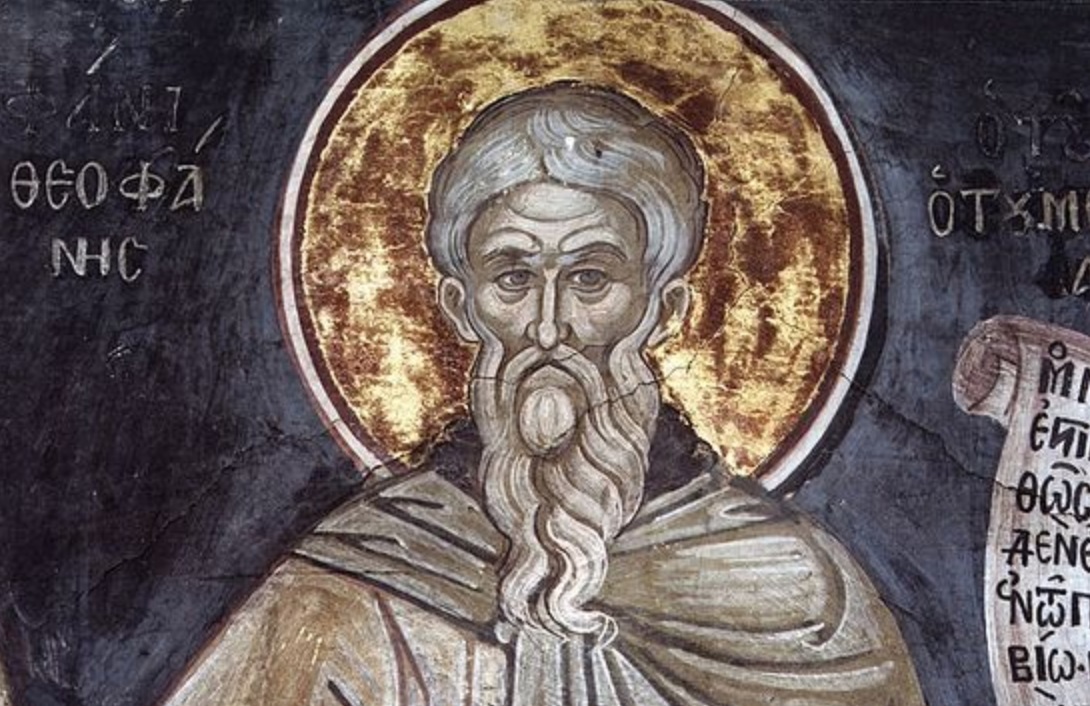

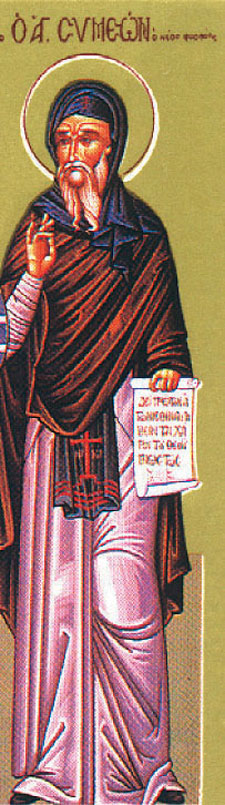


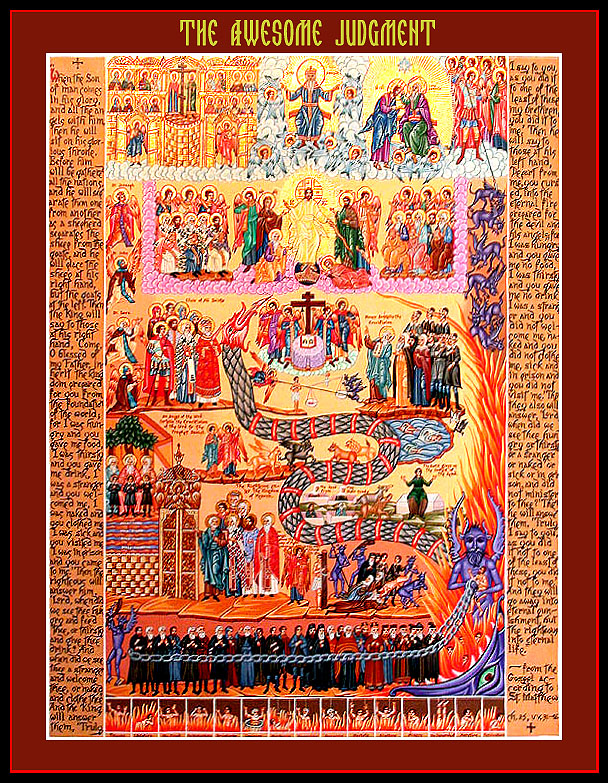
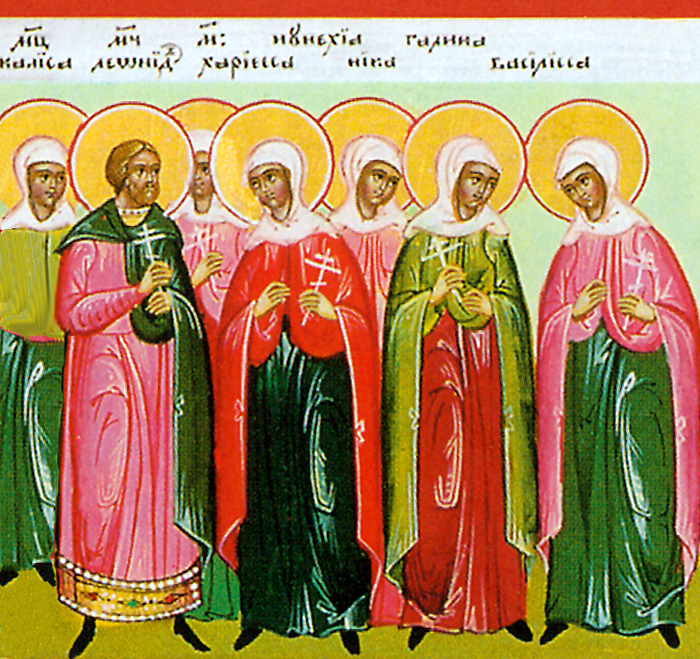
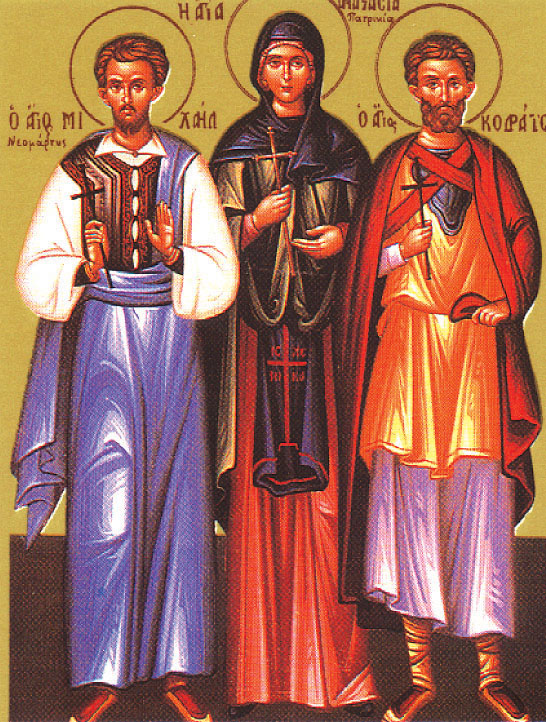

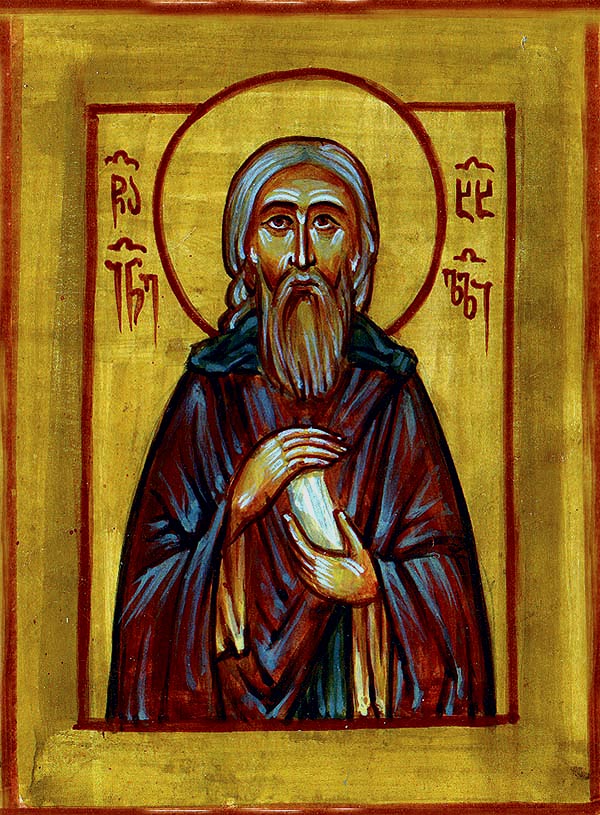


.jpg)

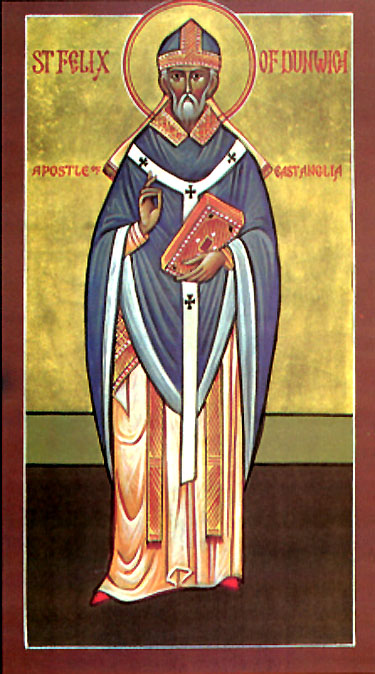
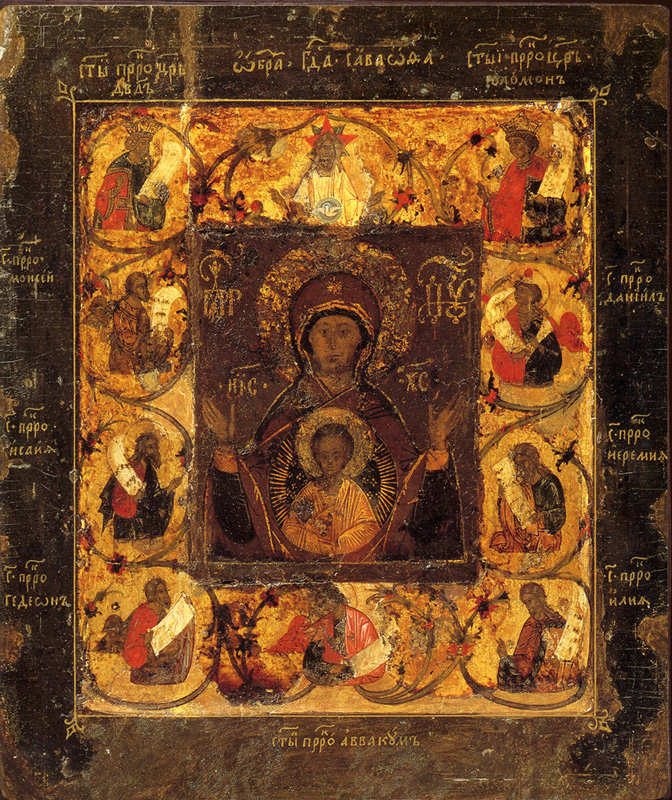


 Saint Peter Antiochian Orthodox Church
You must be logged in to post a comment.