ABSTAIN FROM MEAT, FISH, DAIRY, EGGS, WINE, OLIVE OIL
Cyrus & John the Unmercenaries, Holy Women Martyrs Theodote, Theoktiste and Eudoxia, Our Righteous Father Arsenius of Parus, Elias Ardounis the New Righteous-Martyr of Mount Athos, Aed from Ferns
ST. PAUL’S FIRST LETTER TO THE CORINTHIANS 12:27-31; 13:1-8
Brethren, you are the body of Christ and individually members of it. And God has appointed in the church first apostles, second prophets, third teachers, then workers of miracles, then healers, helpers, administrators, speakers in various kinds of tongues. Are all apostles? Are all prophets? Are all teachers? Do all work miracles? Do all possess gifts of healing? Do all speak with tongues? Do all interpret? But earnestly desire the higher gifts. And I will show you a still more excellent way. If I speak in the tongues of men and of angels, but have not love, I am a noisy gong or a clanging cymbal. And if I have prophetic powers, and understand all mysteries and all knowledge, and if I have all faith, so as to remove mountains, but have not love, I am nothing. If I give away all I have, and if I deliver my body to be burned, but have not love, I gain nothing. Love is patient and kind; love is not jealous or boastful; it is not arrogant or rude. Love does not insist on its own way; it is not irritable or resentful; it does not rejoice at wrong, but rejoices in the right. Love bears all things, believes all things, hopes all things, endures all things. Love never ends.
MATTHEW 10:1, 5-8
At that time, Jesus called to him his twelve disciples and gave them authority over unclean spirits, to cast them out, and to heal every disease and every infirmity. These twelve Jesus sent out, charging them, “Go nowhere among the Gentiles, and enter no town of the Samaritans, but go rather to the lost sheep of the house of Israel. And preach as you go, saying, ‘The kingdom of heaven is at hand.’ Heal the sick, raise the dead, cleanse lepers, cast out demons. You received without paying, give without pay.”
Holy Wonderworkers and Unmercenaries Cyrus and John, and those with them
Saint Cyrus was a noted physician in the city of Alexandria, where he had been born and raised. He was a Christian and he treated the sick without charge, not only curing their bodily afflictions, but also healing their spiritual infirmities. He would say, “Whoever wishes to avoid being ill should refrain from sin, for sin is often the cause of bodily illness.” Preaching the Gospel, the holy physician converted many pagans to Christ. During the persecution by Diocletian (284-305), Saint Cyrus withdrew into Arabia, where he became a monk. He continued to heal people by his prayer, having received from God the gift to heal every sickness.
In the city of Edessa at this time lived the soldier John, a pious Christian. When the persecution started, he went to Jerusalem and there he heard about Saint Cyrus. He began to search for him, going first to Alexandria and then to Arabia. When Saint John finally found Saint Cyrus, he remained with him and became his faithful follower.
They learned of the arrest of the Christian woman Athanasia and her three young daughters. Theoctiste was fifteen; Theodota, was thirteen; and Eudoxia, was eleven. Saints Cyrus and John hastened to the prison to help them. They were concerned that faced with torture, the women might renounce Christ.
Saints Cyrus and John gave them courage to endure what lay before them. Learning of this, the ruler of the city arrested Saints Cyrus and John, and seeing their steadfast and fearless confession of faith in Christ, he brought Athanasia and her daughters to witness their torture. The tyrant did not refrain from any form of torture against the holy martyrs. The women were not frightened by the sufferings of Saints Cyrus and John, but courageously continued to confess Christ. They were flogged and then beheaded, receiving their crowns of martyrdom.
At the same place they executed the Holy Unmercenaries Cyrus and John. Christians buried their bodies in the church of the holy Evangelist Mark. In the fifth century the relics of Saints Cyrus and John were transferred from Canopis to Manuphin. Later on their relics were transferred to Rome, and from there to Munchen (Munich) (another account is located under June 28).
Saints Cyrus and John are invoked by those who have difficulty in sleeping.
Venerable Nikḗtas of the Kiev Caves, Far Caves, Bishop of Novgorod
Saint Nikḗtas, Bishop of Novgorod, in his youth entered the Kiev Caves monastery and soon wished to become a hermit. The igumen cautioned him that such an exploit was premature for a young monk, but he, trusting in his own strength, would not listen.
In the hermitage Saint Nikḗtas fell into temptation. The devil appeared to him in the guise of an angel, and the inexperienced ascetic bowed down to him. The devil gave him advice, speaking as if to one who had attained perfection: “Don’t bother to pray, just read and study other things, and I shall pray in your place.” He stood near the hermit, giving the appearance of praying. The deceived monk Nikḗtas came to surpass everyone in his knowledge of the Books of the Old Testament, but he would not speak about the Gospel, nor did he wish to hear it read.
The Elders of the Kiev Caves went to the monk, and after they had prayed, they expelled the devil from him. After this Saint Nikḗtas remained a hermit with the blessing of the Elders, and lived in strict fasting and prayer, surpassing everyone in obedience and humility.
Through the prayer of the holy Elders, the merciful Lord brought him up from the depths of his fall to a high degree of spiritual perfection. Afterwards, he was made Bishop of Novgorod, and for his holy life God granted him the gift of wonderworking. Once, during a time of drought, he brought rain from the heavens by his prayers. Another time, he stopped a fire in the city. Saint Nikḗtas guided the Novgorod flock for thirteen years, and then peacefully fell asleep in the Lord in 1109.
In 1558, during the reign of Tsar Ivan Vasilievich, Bishop Nikḗtas was glorified as a saint. His relics now rest in the church of the holy Apostle Philip in Novgorod. He is also commemorated on May 14.
Saint Nikḗtas is invoked for protection against lightning and fire. People also turn to the Most Holy Theotokos, glorified in her “Unburnt Bush” Icon (September 4), for this purpose.
Martyrs Victorinus, Victor, Nikēphóros, Claudius, Diodorus, Serapion, and Papias, of Egypt
The Holy Martyrs Victorinus, Victor, Nikēphóros, Claudius, Diodorus, Serapion, and Papias suffered at Corinth in 251, during a persecution under the emperor Decius (249-251). Saints Victorinus, Victor and Nikēphóros were tied to a stone mortar and crushed by a huge stone pestle. Saint Claudius died after his hands and feet were cut off. Saint Diodorus was burned, Saint Serapion beheaded, and Saint Papias was drowned in the sea.
Martyr Tryphaίnē at Cyzicus
Saint Tryphaίnē was from Kyzikos on the Hellespont and was the daughter of devout parents, Senator Anastasios and his virtuous wife Sokratia.
She revealed her Christian upbringing and courage during a persecution where, in order to strengthen those who were weak, she boldly confessed her faith in Christ, and in the ultimate triumph of Orthodoxy. As soon as the ruler Caesarius heard these things he became enraged and ordered the Saint's arrest. His order was carried out and the tortures began.
First, Saint Tryphaίnē was pushed into a fiery furnace, but miraculously, she was saved. Then, she was thrown from a tall tree, onto a bed of iron nails. Afterward, she was given to some wild animals to be devoured by them, but they did not harm her. Finally, she was gored by a mad bull. In this manner, the Saint received the glorious crown of martyrdom in the first century.
It is said that a spring of pure water welled up at the place where Saint Tryphaίnē's blood was shed. After drinking this water, women who gave birth, but did not have any milk, were able to produce milk to feed their newborn children.
Saint Tryphaίnē is invoked by women who have difficulty in nursing their babies.
Saint Arsenius of Paros
Saint Arsenius was born on January 31, 1800 in Ioannina, Epirus of pious Orthodox parents. In holy Baptism he was given the name Athanasius. His parents died when he was quite young. He was only nine years old when he made his way to Kydoniai, Asia Minor, where he was received by Hieromonk Gregory Saraphis and enrolled in his school. His humility and piety endeared him to Father Gregory and also to the other teachers. The boy remained at the school for five years, surpassing the other students in learning and in virtue.
One day the renowned Spiritual Father Daniel of Zagora, Thessaly came to the school to hear confessions. Athanasius became Daniel’s disciple, remaining with him until the latter’s death.
Not long after this, Father Daniel decided to go to the Holy Mountain for quiet and spiritual struggles. Athanasius begged his Elder not to leave him, but to take him with him. He expressed the desire to travel to Mt. Athos, the Garden of the All-Holy Virgin, and to become a monk.
Father Daniel instructed Athanasius in the monastic life, which is called “the art of arts, and the science of sciences.” The holy Elder was a perfect teacher who was accomplished in the spiritual life, and Athanasius was an attentive student. After a time Father Daniel tonsured his pupil, and told him he had to learn three important lessons. First, he must cut off his own will. Secondly, he must acquire humility. Finally, he must learn obedience. “If you cut off your will, if you become humble, and if you practice perfect obedience, you will also make progress in the other virtues, and God will glorify you.”
After a further period of testing, Father Daniel tonsured Athanasius into the Great Schema and gave him the name Arsenius. The saint remained on Mt. Athos with his Elder for six years. Then they had to leave the Holy Mountain because of the agitation against the so-called “Kollyvades,” who called for a strict adherence to Holy Tradition. The name comes from the kollyva (boiled wheat) used in the memorial service. Part of the controversy involved the debate on whether it was proper to serve memorial services for the dead on Sunday. The Kollyvades believed that these services were inappropriate for the Day of Resurrection, but should be served on Saturday. The Kollyvades advocated frequent Communion, rather than the practice of receiving the Holy Mysteries only a few times during the year. When Father Daniel and Saint Arsenius left Athos, it was probably due to the animosity of those who opposed the Kollyvades.
Early in 1821, before the Greek War of Independence, they went to the Monastery of Pendeli near Athens. Their stay was a brief one, for Father Daniel forsaw the destruction of the monastery by the Turks.
The two made their way to the Cyclades Islands in the southern Aegean Sea. First they stopped at Paros, perhaps because some of the Kollyvades had settled there. Eventually, they decided to live on the island of Pholegandros. Since there were no teachers for the children, the inhabitants entreated Father Daniel to allow Saint Arsenius to instruct their children. The Elder agreed, and had Arsenius ordained as a deacon. Then he was appointed to the teaching post by the government.
The saint remained there as a teacher from 1829-1840. He taught the required subjects in school, but he also helped his students to form a good character, and to live as pious Christians.
In 1840 Saint Arsenius entered the Monastery of Saint George on the island of Paros. Elder Daniel had passed away in 1837. Before his repose, he asked his disciple to take his remains to Mt. Athos after two years. Saint Arsenius left Plolegandros in obedience to Father Daniel’s request, planning to stop on Paros then continue to the Holy Mountain. On Paros the abbot of Saint George’s Monastery, Father Elias Georgiadis, told Saint Arsenius that it was God’s will for him to remain on Paros. This was providential, because Mt. Athos was undergoing great difficulty after the Greek War of Independence. 3,000 Turkish soldiers occupied Athos, resulting in the departure of 5,000 of the 6,000 monks.
Saint Arsenius joined the community at Saint George’s Monastery on the northern end of Paros. There he found spiritual strivers of true wisdom and excellent conduct, who were worthy models for him to follow.
When he was ordained to the holy priesthood at the age of forty-seven, Saint Arsenius intensified his spiritual efforts. Every day he studied the Holy Scriptures and the writings of the Fathers, and became adept at the unceasing prayer of the heart. He also began to show forth the gift of tears. In this, he resembled his patron Saint Arsenius the Great (May 8), who continuously wept tears of contrition.
Gradually, the inhabitants of Paros came to recognize him as an outstanding Father Confessor and spiritual guide. Whenever he stood before the holy altar, he felt that he was standing before God. He served with great compunction, and his face often became radiant like the face of an angel.
As his virtues became known to people, they flocked to him from near and far. He received all with paternal affection, treating each one with the proper spiritual medicine which would restore their souls to health.
A certain girl from Syros came to the Convent of the Transfiguration to visit her sister, who was a nun. The nun had previously been informed that her sister had fallen into a serious sin. When she learned that the girl was outside the doors of the convent, the nun screamed at her, “Go far away from here. Since you are defiled, you will defile the convent and the nuns.” Instead of feeling pity for her sister, and trying to lead her to repentance, the nun and some of the other nuns struck the poor girl and told her to go away.
The wretched girl cried, “I have made a mistake. Forgive me!”
The nun shrieked, “Go away, or I will kill you to wash away the shame you have brought to our family.”
“Have you no pity, my sister, don’t you share my pain?”
“No,” the nun shouted, “you are not my sister, you are a foul harlot.”
“Where shall I go?” she sobbed.
“Go and drown yourself,” was the heartless reply.
The poor girl fled from the convent, bleeding and wounded, intending to kill herself. At that very moment, Saint Arsenius was on his way to visit the convent. Seeing the girl in such a state, he asked her what was wrong. She explained that she had been led astray by corrupt men and women. Realizing her sin, she went to the convent to ask her sister for help
“See what they have done to me, Elder. What do you advise me to do? Shall I drown myself, or leap off a cliff?”
“I do not advise you to do either, my child. If you wish, I shall take you with me and heal the wounds of your soul and body,” he said gently.
“Where will you take me?” the miserable girl asked.
“To the convent, my child.”
“I beg you not to take me there, Elder. My sister and the other nuns said they would kill me if I came back.”
The saint replied, “Do not be afraid. They will not kill you, because I shall entrust you to Christ, and no one will be able to harm you.”
“Very well,” she said, “If you entrust me to Christ I will not be afraid of them, for Christ is more powerful than they.”
Saint Arsenius led her to the convent, consoling her and encouraging her to repentance and confession. After hearing her confession, he made her a nun. Then he called all the nuns into the church and severely rebuked those who wounded the girl. He reminded them of the parable of the Prodigal Son, and of how Christ had come to save sinners. He often associated with sinners, showing them great love and mercy.
“You, however, have done the opposite. Though you knew that her soul had been wounded by the devil, you did not feel sorry for her. You did not embrace her and try to save her from further sin, but you attacked her and beat her. Then you urged her to kill herself. Now I, your Spiritual Father, tell you that you are not nuns, you are not Christians, you are not even human beings. You are devoid of compassion, affection, and sympathy. You are murderesses! Therefore, I forbid you to receive Holy Communion for three years, unless you recognize your sin. Repent and confess, weep and ask forgiveness from God and from me, your Spiritual Father, and from the other nuns who did not participate in your sinful behavior.”
The nuns began to weep bitterly and they repented. Thus, he lessened their penance and forgave them. He gave the girl’s sister the penance of not receiving Holy Communion for a whole year. Because the other nuns had shared in this sin, he would not permit them to receive Communion for six months.
Saint Arsenius foresaw his death a month before it occurred. At the Liturgy for the Feast of Saint Basil, he announced that he would soon depart from them. With great effort, he was able to serve for the Feast of the Theophany. After the service, he told some nuns that this had been his last Liturgy.
News of the saint’s illness and approaching death spread quickly to all the villages of Paros. People wept because they were about to lose their Spiritual Father, and they hastened to bid him farewell and to receive his blessing.
On the eve of his repose, he called the nuns of the convent to come to him. He told them that the next day he would leave this temporary life and enter into eternal life.
On January 31, 1877 Saint Arsenius received Holy Communion for the last time and fell asleep in the Lord. For three days, people came to kiss his body, then they followed the funeral procession to the burial site which he himself had selected.
Saint Arsenius of Paros was glorified by the Patriarchate of Constantinople in 1967. He is also commemorated on August 18 (the uncovering of his relics).
Saint Julius of Aegina
Saint Julius was born in 330 on the island of Aegina to wealthy and pious parents who nurtured him in the discipline and admonition of the Lord (Ephesians 6:4). He learned to read and write, and then he studied in Athens with Saints Basil (January 1) and Gregory (January 25). After returning to Aegina, he and Deacon Julian decided to emulate Saint Paul, the Apostle to the Gentiles, and to preach Christ.
The two Saints took up their apostolic staves (Mark 6:8) and offered themselves to the Lord. Julius was ordained as a priest by the Bishop of Athens. Adorned with the grace of the priesthood, he set off with Deacon Julian to proclaim the Gospel and to baptize many Gentiles.
At the end of his life he withdrew to Kousion on Lake Orta, where, after a life of asceticism and prayer, he reposed peacefully in 401 at the age of 71.
SYNAXIS OF THE THREE HIERARCHS: BASIL THE GREAT, GREGORY THE THEOLOGIAN, & JOHN CHRYSOSTOM
NO FAST
Synaxis of The Three Hierarchs: Basil the Great, Gregory the Theologian, & John Chrysostom, Hippolytos, Pope of Rome, Athanasia the Martyr & her 3 daughters
ST. PAUL’S LETTER TO THE HEBREWS 13:7-16
Brethren, remember your leaders, those who spoke to you the word of God; consider the outcome of their lives, and imitate their faith. Jesus Christ is the same yesterday and today and for ever. Do not be led away by diverse and strange teachings; for it is well that the heart be strengthened by grace, not by foods, which have not benefited their adherents. We have an altar from which those who serve the tent have no right to eat. For the bodies of those animals whose blood is brought into the sanctuary by the high priest as a sacrifice for sin are burned outside the camp. So Jesus also suffered outside the gate in order to sanctify the people through his own blood. Therefore let us go forth to him outside the camp and bear the abuse he endured. For here we have no lasting city, but we seek the city which is to come. Through him then let us continually offer up a sacrifice of praise to God, that is, the fruit of lips that acknowledge his name. Do not neglect to do good and to share what you have, for such sacrifices are pleasing to God.
MATTHEW 5:14-19
The Lord said to his disciples, “You are the light of the world. A city set on a hill cannot be hid. Nor do men light a lamp and put it under a bushel, but on a stand, and it gives light to all in the house. Let your light so shine before men, that they may see your good works and give glory to your Father who is in heaven. Think not that I have come to abolish the law and the prophets; I have come not to abolish them but to fulfill them. For truly, I say to you, till heaven and earth pass away, not an iota, not a dot, will pass from the law until all is accomplished. Whoever then relaxes one of the least of these commandments and teaches men so, shall be called least in the kingdom of heaven; but he who does them and teaches them shall be called great in the kingdom of heaven.”
Synaxis of the Ecumenical Teachers and Hierarchs: Basil the Great, Gregory the Theologian, and John Chrysostom
Synaxis of the Three Hierarchs: Basil the Great, Gregory the Theologian and John Chrysostom: During the eleventh century, disputes raged in Constantinople about which of the three hierarchs was the greatest. Some preferred Saint Basil (January 1), others honored Saint Gregory the Theologian (January 25), while a third group exalted Saint John Chrysostom (November 13).
Dissension among Christians increased. Some called themselves Basilians, others referred to themselves as Gregorians, and others as Johnites.
By the will of God, the three hierarchs appeared to Saint John the Bishop of Euchaita (June 14) in the year 1084, and said that they were equal before God. “There are no divisions among us, and no opposition to one another.”
They ordered that the disputes should stop, and that their common commemoration should be celebrated on a single day. Bishop John chose January 30 for their joint Feast, thus ending the controversy and restoring peace.
Hieromartyr Hippolytus, and those with him
The Hieromartyr Hippolytus, and the Martyrs Censorinus, Sabinus, Chryse the Virgin and 20 others suffered during the third century.
When Saint Hippolytus, Bishop of Rome, learned of the suffering of the martyrs, he appeared before the governor despite his advanced years and rebuked the torturers for their inhumanity. The enraged governor sentenced the holy bishop to be tortured. After long torments, they tied him hand and foot and threw him into the sea.
Saint Censorinus was a high-ranking magistrate during the reign of the Roman emperor Claudius II (268-270). He was arrested and thrown into prison for his faith in Christ. By the grace of the Lord Jesus Christ he raised up a dead man. As a result, twenty soldiers and prison guards were converted to Christ. They were beheaded with Saint Censorinus. Then the virgin Chryse was brought for interrogation. She bravely confessed herself a Christian and was subjected to torture. They lashed her sides and burned the wounds with candles. Then she was stretched out on the ground and beaten with heavy clubs. Not content with this, they broke her jaw with a rock and her back with leaden balls. Although she was covered with wounds, she confessed her faith as she was dying. So cruel was the brutality of her murderers that they tied a large stone around her neck and threw her into the sea.
Saint Chryse was thrown into the deep, but the newly-slain bride emerged from the ocean and entered the heavenly Bridal Chamber. Although her body disappeared into the water, her memory remains eternal and immortal, even more golden than her illustrious name. [FootNote: Chryse means “golden.”]
Saint Sabinus was the servant of Saint Chryse. The depraved idolaters beat him mercilessly with heavy leaden balls on his neck, then they hung him up on a tree and burned his entrails. After giving thanks to God, he surrendered his soul to Christ.
With Saint Chryse suffered the martyrs Ares, Felix, Maximus, Herculianus, Venerius, Stiracius, Mennas, Commodus, Hermes, Maurus, Eusebius, Rusticus, Monagrius, Amandinus, Olympius, Cyprus, Theodore the Tribune, Maximus the Presbyter, Archelaus the Deacon, and Cyriacus the Bishop.
All these Roman martyrs suffered in the year 269. The relics of the Hieromartyr Hippolytus were put in the church of the holy Martyrs Laurence and Pope Damasus at Rome. Saint Hippolytus was a disciple of Saint Irenaeus, Bishop of Lugdunum (Lyons in France), and he is also renowned as a Christian theologian who wrote many treatises against the heretics.
Saint Hyppolitus compiled a Paschal Canon, the famous Apostolic Tradition, “On Christ”, and a “Treatise on the Antichrist.” Saint Hippolytus also wrote many commentaries on Holy Scripture, on the Biblical Books: Genesis, Exodus, Proverbs, Ecclesiastes, the Song of Songs, and on the Gospels of Matthew, Luke and John, and on the Prophets Isaiah, Ezekiel, Daniel, Zechariah, on the Psalms of David and on the Apocalyse. Part of his works are preserved only in fragments. His discourses, devoted to the Theophany and the Prophet Daniel, are preserved in full. His discourses demonstrate his masterful style of preaching. He was one of the last Western Fathers to write in Greek.
Venerable Zeno the Faster, of the Kiev Caves
Saint Zeno the Faster and Lover of Labor of the Far Caves of Kiev lived in the fourteenth century. In the Third Ode of the Canon to the Monks of the Far Caves, he is described as “resplendent in fasting.” His memory is also celebrated on August 28 and the second Sunday of Great Lent.
Venerable Zeno the Hermit of Antioch, disciple of Saint Basil the Great
Saint Zeno, the disciple of Saint Basil the Great, was born in the city of Pontus into a rich family. He served at the court of the emperor Valens (364-378), among the soldiers who were sent out to deliver the imperial edicts.
After the death of Valens, Saint Zeno left the world and settled in a cave near the city of Antioch. For forty years he lived in this cave, and he lived an austere life in complete solitude, cleansing his soul, and meditating on God.
Saint Zeno went to church each Sunday and received the Holy Mysteries of Christ. In his cell he had neither bed, nor fireplace, nor lamp. The ascetic wore old rags, and ate only bread and water, for which he had to make a tedious journey into the city to the well.
Saint Zeno was particularly fond of holy books, which he borrowed from those who came to him for spiritual counsel. Through his deep humility the blessed ascetic, filled with the gifts of grace, considered himself poor in spirit. Saint Zeno died at the beginning of the fifth century.
Martyr Theophilus the New in Cyprus
The Holy Martyr Theophilus the New was born and raised in Constantinople. He was a commander of the Greek armies and a senator. During a time of war with enemies of the Byzantine Empire, Saint Theophilus was taken captive. The Arabs demanded he renounce Christ, but he remained faithful to Orthodoxy. Saint Theophilus was imprisoned on Cyprus, where he spent four years, after which he was beheaded in the year 784.
Blessed Peter, King of Bulgaria
Saint Peter, King of Bulgaria, was the son of the militant Bulgarian prince Simeon. Saint Peter was distinguished for his Christian piety, and he often turned to Saint John of Rila (August 18, October 19), asking his prayers, spiritual guidance and advice.
King Peter concluded peace with Byzantium on terms advantageous for Bulgaria. He also gained recognition from the Patriarch of Constantinople for the autonomy of the Bulgarian Church, and the affirmation of a Patriarchal throne in Bulgaria, benefiting all the Bulgarian Church.
Saint Peter aided in the successful extirpation of the Bogomil heresy in his lands. He died in the year 967, at fifty-six years of age.
Icon of the Mother of God “Tinos”
This highly-venerated icon of the Annunciation was discovered in the ruins of the ancient church of Saint John the Baptist on January 30, 1823.
An elderly man, Michael Polyzoes, had a dream shortly before the Feast of the Annunciation in 1821, in which the Mother of God appeared to him in shining white garments. She instructed him to dig in the field of Anthony Doxaras outside the city, where he would find her icon. She also told him to build a church on the site, since there had once been one there. The Queen of Heaven also promised to help him accomplish these tasks.
Upon awakening, he crossed himself and tried to go back to sleep, believing that his dream had been a temptation from the devil. Before falling asleep, Michael saw the Theotokos once again, and noticed that the room was flooded by a gentle white light. Her head was surrounded by divine light, and her face displayed ineffable grace and sweetness. Speaking to the old man she said, “Why are you afraid? Your fear comes from unbelief. Listen! I am Panagia (the all-holy one). I want you to dig in the field of Anthony Doxaras where my icon is buried. I ask you to do this as a favor, old man. You will build a church there and I will help you.” Then she disappeared.
The next morning, Michael went into the village and told the priest what had happened to him during the night. The priest also thought the dream was a temptation, so he urged Michael to come for Confession and Communion. The old man, however, was not convinced that his visions were mere dreams or demonic temptations. He told the inhabitants of the village of his experience. Some laughed at him, but only two believed his words.
The two men went with him to the field one night and dug in many places, but they found nothing. Then they dug in another place and found the remains of an old wall. Finding nothing but bricks, they had to give up their search in the morning so the Turks would not find out what they were doing.
Anthony Doxaras, the owner of the field, found the bricks and tried to use them to build an oven. The mortar would not adhere to the bricks, so whenever they tried to build one section of the oven, it collapsed. The workers were convinced that God was showing them that the bricks from the ancient church were not to be used for an oven.
Saint Pelagia (July 23), an eighty-year-old nun, had several dreams in June of 1822 in which the Most Holy Theotokos appeared to her. Saint Pelagia was living in the women’s monastery of the Dormition on Mt. Kechrovounios, about an hour’s journey from the village. She had lived in the monastery from a young age, and was known for her great virtue and piety.
The Theotokos appeared to her in a dream and ordered her to go to Stamatelos Kangades (a prominent man of the village), and tell him to uncover the church of Saint John the Baptist in the field of Anthony Doxaras.
Terrified by the vision, Pelagia attributed the dream to her imagination, and she began to pray. She was afraid to tell anyone about her dream, but the following week, the Theotokos appeared to her again, reminding her of her instructions. Still, the nun remained silent and told no one of her vision. The Theotokos appeared a third time, this time with a severe manner. She chastised the nun for her unbelief, saying, “Go and do as I told you. Be obedient.”
Saint Pelagia woke up in fear and trembling. As she opened her eyes, she saw the same mysterious Woman she had seen while asleep. With a great effort she asked, “Who are you, Lady? Why are you angry with me, and why do you order me to do these things?”
The Woman raised her hand and said, “Proclaim, O earth, glad tidings of great joy” (Megalynarion of the Ninth Ode of the Canon for Matins of the Annunciation).
Understanding at last, the aged nun joyfully exclaimed, “Praise, O heavens, the glory of God” (The next line of the Megalynarion).
At once, she informed the Abbess of her visions, and she also told Stamatelos Kangades. Mr. Kangades, who had been designated by the Theotokos to carry out the excavation of the church, informed Bishop Gabriel of these events. The bishop had already heard of the dream of Michael Polyzoes, and realized that the account of the nun Pelagia agreed with his vision. Bishop Gabriel wrote to all the churches on the island of Tinos, urging them to cooperate in finding the church and the icon.
Excavations began in September of 1822 under the supervision of Mr. Kangades. The foundations of the church of Saint John, destroyed by Arabs in 1200, were uncovered. An old well was found near the church, but not the holy icon. The money ran out, and so the effort was abandoned.
Once again the Mother of God appeared to Saint Pelagia, urging that the excavations continue. Bishop Gabriel sent out an appeal for donations to build a new church on the foundations of the old church of Saint John the Baptist. The new church was built, and was dedicated to Saint John and to the Life-Giving Fountain.
On January 30, 1823 workers were leveling the ground inside the church in preparation for laying a new stone floor. About noon one of the workers, Emmanuel Matsos, struck a piece of wood with his pickaxe, splitting it down the middle. He looked at one piece of the board and saw that it was burned on one side, while the other side showed traces of paint. As he brushed off the dirt with his hand, he saw that it was an icon. Joining the two pieces of wood together, he crossed himself and venerated the icon.
He called the other workers, who also came and venerated the icon. When the icon was cleaned, it was shown to be an icon of the Annunciation. The split was in the middle of the icon, between the Theotokos and the Archangel Gabriel. Neither figure was damaged, and this was regarded as a miracle.
That same day, the icon was given to Bishop Gabriel, who kissed it and cried out, “Great art Thou, O Lord, and wondrous are Thy works.”
After the finding of the icon, the inabitants of Tinos were filled with zeal to build a magnificent church in honor of the Theotokos. People offered their money and their own labor to help build the church of the Evangelistria (She who received the Good News).
The new church was completed in 1823, and was consecrated by Bishop Gabriel. Saint Pelagia of Tinos fell asleep in the Lord on April 28, 1834. Her Feast Day, however, is on July 23.
The Tinos Icon of the Most Holy Theotokos continues to be venerated as one of Greece’s holiest treasures. Innumerable miracles of healing and deliverance from danger have not ceased since the time the icon was found.
Saint Demetrius, New Martyr of Sliven
The Holy New Martyr Demetrius was born on October 9, 1818 in Sliven, Bulgaria. His parents had no children for the first eight years of their marriage. Their prayers to God were answered, and their sons Stephen and Demetrius were born.
Demetrius was the younger son, and was brought up in a pious manner. He did not go to school, but he attended church frequently and memorized many prayers and services.
After their parents died, Stephen left home and went to Wallachia. Demetrius remained in the family home, which soon collapsed because of its age. The Moslems used this excuse to seize the surrounding property, and Demetrius became a servant to one of them. The family tried to convert him to their religion, but Demetrius resisted such attempts. “Our Orthodox Christian religion was given to us by the Lord Jesus Christ,” he said, “while yours was given to you by Mohammed, a mere man.”
They threw Demetrius out of the house when they heard this, and he later became a baker. Even while selling his bread in the marketplace, Demetrius proclaimed the Orthodox Faith and pointed out the deficiencies of Islam. Naturally, this outraged the Moslems, and they began to plan their revenge.
A new kadi came to Sliven, and Demetrius was chosen to prepare the food. The local beys chose him because they knew he had insulted Islam. The kadi offered him tobacco and liquor, but Demetrius said that he did not smoke or drink. When he tried to leave, the kadi said, “Let me make you a Moslem. You see what a good life we have. If you convert, I will tell your master to give you his daughter in marriage, and half of his riches.”
Demetrius answered sarcastically, “Oh, sure.”
Mistaking this for a serious reply, one of the Moslems began wrapping cloth around the young man’s head in the form of a turban. Demetrius threw the turban to the ground and ran from the house. Some of the Hagarenes chased him, but were unable to catch him. For three days he hid in the village of Ichera without food or water.
Demetrius went to a bishop and told him his story. The bishop encouraged him to remain Orthodox, then sent him away with a gold coin and a wooden cross.
Exchanging the coin for change, Demetrius gave half the money to the poor. Then he went up to a Moslem guard and said that he was the one they were seeking. He was escorted back to Sliven with his hands tied behind him. When he met an Orthodox Christian Demetrius said, “Forgive me, brethren. I gave myself up to these ungodly people for the glory of our Faith.”
When Saint Demetrius was thrown into prison, he asked for his brother the priest Stephen to visit him. His request was refused, but Father Stephen learned that Demetrius was incarcerated and tried to have him freed. The kadi ordered Demetrius to be brought to him while he was dining with other officials.
The kadi asked Demetrius if he was willing to accept Islam. Christ’s holy martyr informed him that he had never promised to become a Moslem, and he had no intention of doing so. “If you took my irony for truth, I am sorry for you.” He went on to call Mohammed a false prophet, and his followers sons of Satan.
The kadi told Demetrius that if he did not become a Moslem, he would be put to death. Then he sent him back to prison for three days to consider this. When he was brought before the kadi again, Demetrius refused to convert. Then he was ordered to be executed.
When the other Christians heard of Demetrius’s fearless confession of faith and his impending death, they brought Father Stephen to him. Demetrius told the priest he was afraid that he would not be able to endure the tortures. Father Stephen urged him to remain strong and bear witness to Christ.
Saint Demetrius remained in prison for a whole year. His tortures continued, and no one was able to help him. At the beginning of the year, many Moslems gathered and shouted for the kadi to execute Demetrius. Therefore, he summoned Demetrius before him. The fearless martyr remained unshaken in his resolve, and mocked their faith.
For the last time Demetrius was offered the choice of converting to Islam or being put to death. He said he would remain a Christian whatever they did to him. Father Stephen came to the prison to hear the saint’s confession and give him Communion.
On the morning of January 30, 1841 Demetrius was brought to the place of execution. He asked forgiveness of the Christians he met, entreating them to pray for him. Then they ordered him to kneel on the ground for beheading. The first stroke did not sever his head, and he remained motionless. With the second stroke, the martyr’s head fell to the ground. The Christians soaked cloths in his blood, and Father Stephen collected some of the blood-soaked earth in a box.
The holy relics remained unburied all night. The kadi ordered the body to be thrown into the river the next day, because Moslems believe that the bodies of those who insult Mohammed should not be received by the earth. After a sufficient bribe had been paid, the kadi released the body for burial in the garden of the monastery. Saint Demetrius now lives in the heavenly Kingdom, glorifying most holy Trinity, the Father, the Son, and the Holy Spirit throughout all ages.
New Martyr Theodore
The Holy New Martyr Theodore was born in the city of Mytilene, where he married and raised children in Orthodox piety. He renounced Christ and accepted the Moslem religion, but soon repented of his sin, left his family and went to Mt. Athos. But even in the monastery Saint Theodore was deeply anguished by his denial of Christ.
The Lord blessed the saint to confess the Orthodox Faith before a Moslem judge in the year 1784. The enraged judge gave orders to fiercely torture the holy martyr, and then they strangled him with a rope and cast him into the sea. Christians buried the body of the holy Martyr Theodore in the church of Saint John the Forerunner.
Removal of the Relics of Ignatius the God-bearer, Ignatius and Nicandrus of Sinai, Laurence the Recluse of the Kiev Caves, Gildas the Wise
ST. PAUL’S LETTER TO THE HEBREWS 10:32-38
Brethren, recall the former days when, after you were enlightened, you endured a hard struggle with sufferings, sometimes being publicly exposed to abuse and affliction, and sometimes being partners with those so treated. For you had compassion on the prisoners, and you joyfully accepted the plundering of your property, since you knew that you yourselves had a better possession and an abiding one. Therefore do not throw away your confidence, which has a great reward. For you have need of endurance, so that you may do the will of God and receive what is promised. "For yet a little while, and the coming one shall come and shall not tarry; but my righteous one shall live by faith.
MARK 9:33-41
At that time, Jesus and his disciples came to Capernaum, and when he was in the house he asked them, “What were you discussing on the way?” But they were silent; for on the way they had discussed with one another who was the greatest. And he sat down and called the twelve; and he said to them, “If any one would be first, he must be last of all and servant of all.” And he took a child, and put him in the midst of them; and taking him in his arms, he said to them, “Whoever receives one such child in my name receives me; and whoever receives me, receives not me but him who sent me.” John said to him, “Teacher, we saw a man casting out demons in your name, and we forbade him, because he was not following us.” But Jesus said, “Do not forbid him; for no one who does a mighty work in my name will be able soon after to speak evil of me. For he that is not against us is for us. For truly, I say to you, whoever gives you a cup of water to drink because you bear the name of Christ, will by no means lose his reward.”
Translation of the relics of the Hieromartyr Ignatius, the Godbearer and Bishop of Antioch
The Transfer of the Relics of the Hieromartyr Ignatius the God-Bearer: (See December 20). After the holy hieromartyr Ignatius was thrown to the lions in the year 107 on the orders of the emperor Trajan, Christians gathered up his bones and preserved them at Rome.
Later, in the year 108, the saint’s relics were collected and buried outside the gate of Daphne at Antioch. A second transfer, to the city of Antioch itself, took place in the year 438. After the capture of Antioch by the Persians, the relics of the Hieromartyr Ignatius were returned to Rome and placed into the church of the holy Hieromartyr Clement in the year 540 (in 637, according to other sources).
Saint Ignatius introduced antiphonal singing into Church services. He has left us seven archpastoral epistles in which he provided instructions on faith, love and good works. He also urged his flock to preserve the unity of the faith and to beware of heretics. He encouraged people to honor and obey their bishops, “We should regard the bishop as we would the Lord Himself.” (To the Ephesians 6)
In his Letter to Polycarp, Saint Ignatius writes: “Listen to the bishop, if you want God to listen to you… let your baptism be your shield, your faith a helmet, your charity a spear, your patience, like full armor.” (Compare Eph. 6:14-17 and the Wisdom of Solomon 5:17-20. Also The Ladder 4:2)
Saint Laurence, Recluse of the Kiev Caves, Far Caves, and Bishop of Turov
Saint Laurence, Hermit of the Caves and Bishop of Turov, in the Near Caves at first lived as a hermit at the monastery of the Great Martyr Demetrius, built by Great Prince Izyaslav at Kiev near the Monastery of the Caves. Later, he transferred to the Kiev Caves monastery, and was glorified by a gift of healing.
He was elevated to the See of Turov in 1182 (Turov is a city in the Minsk region), and was a successor of Saint Cyril of Turov (April 28). He died in 1194, and was buried in the Near Caves. His memory is celebrated also on September 28 and on the second Sunday of Great Lent.
Saint Gerasimus, Bishop of Perm
Saint Gerasimus was the third bishop of the Zyryan people, and a worthy successor of Saint Stephen, Enlightener of Perm. He was elevated to the See of Perm sometime after the year 1416, when only part of the Zyryani had been converted to Christianity.
He was concerned for his flock, which suffered incessant incursions from the Novgorodians and pagan Vogulians. He went into the Vogul camps, urging them to stop plundering the defenseless Christians of Perm. On one of these journeys in 1441, he was murdered by his Vogul servant (according to tradition he was strangled with his omophorion). He was buried in the Annunciation church of the village of Ust-Vym not far from the city of Yarenga, at the River Vychegda (also January 24).
Today’s common commemoration of these three saints acknowledges their apostolic activity in this Eastern expanse of Russia. Saint Gerasimus is also commemorated on January 24.
Saint Pitirim, Bishop of Perm
Archimandrite Pitirim succeeded Saint Gerasimus as bishop of Great Perm and Ustiug. Even during his time the Voguli had not ceased attacking the peaceful Zyryani, the settlers of Perm. Bishop Pitirim stood up for his flock just as his predecessor had done.
In 1447 he personally appealed to the Great Prince to help the Zyryani. The saint often visited his flock, which was spread out over a wide territory, instructing them in the Word of God and assisting them in their misfortunes. He undertook long journeys to enlighten the pagan Voguli, during which his life was frequently in danger, and he had to endure all sorts of privation. The saint did not slacken his efforts, he enlightened and instructed people in their homes, in churches, and in the open places.
By his preaching he converted many of the Voguli who lived along the tributaries of the River Pechora, to Christianity. Because of this he aroused the terrible wrath of the leader of the Voguli, Asyk, who murdered the saint in a field as he was serving a Molieben. This occurred not far from Ust-Vym on August 19, 1455. Saint Pitirim compiled the Life of Saint Alexis and the Canon for the uncovering of his relics.
The relics of Saint Pitirim rest in the Annunciation temple in Ust-Vym (in Vologda district).
The common commemoration of these three saints acknowledges their apostolic activity in this Eastern expanse of Russia. Saint Pitirim is also commemorated on August 19.
Saint Jonah, Bishop of Perm
After Saint Pitirim, Saint Jonah ascended the throne of Perm. He converted to Christianity the remaining part of Great Perm, i.e. the pagan tribes living along the Rivers Vishera, Kama, Chusova and others. By his efforts the idols were eradicated and in their place churches were built. Experienced pastors were sent to teach the new converts at the church-run schools of Us-Vym.
Saint Jonah reposed on June 6, 1470. His relics rest together with the relics of Saints Gerasimus and Pitirim in the Annunciation temple in Ust-Vym (in Vologda district).
The commemoration in common of these three saints acknowledges their apostolic activity in this Eastern expanse of Russia. Saint Jonah is also commemorated on June 6.
Martyrs Romanus, Jacob (James), Philotheus, Hyperechius, Abibus, Julian, and Paregonius, at Samosata
The Holy Martyrs Romanus, James, Philotheus, Hyperichius, Habib, Julian and Parigoreas suffered in the year 297, during the persecution by Diocletian (284-305), in the city of Samosata (in Syria on the River Euphrates). They bravely denounced the senseless worship of idols, for which they were arrested and given over to various terrible tortures. Their bodies were scraped with iron, heavy iron fetters were hung around their necks, and they were locked up in prison. Finally, nails were driven into their heads while they were suspended on crosses.
Martyr Ashot Curapalati, King of Artanuji
In the year 786, Ashot, the son of Adarnerse, ascended the throne of Kartli. From the very beginning of his reign he fought fiercely for the reunification of Georgia. His first step was to take advantage of the Arab Muslims’ weariness and banish them from Tbilisi.
Three years passed and, under the leadership of a new ruler, the reinvigorated Muslims began to hunt for Ashot. The king was forced to flee after he delayed taking action against them. The enemy had again conquered Tbilisi.
Ashot was compelled to leave Kartli, and he departed for Byzantium with his family and small army. The refugees journeyed as far as Javakheti in southern Georgia and stopped near Lake Paravani for a rest. But while they were sleeping, a Saracen army assailed their camp. The king’s army was doomed, but “God helped Ashot Kuropalates and his scant army. He bestowed power upon them, and they defeated an enemy that greatly outnumbered them.” The king was deeply moved by God’s miraculous intervention and decided that, rather than journeying on to Byzantium as he had intended, he would remain in the region of Shavshet-Klarjeti.
At that time southern Georgia was suffering great calamities. A cholera epidemic intensified the struggles of a people devastated by a ruthless enemy. Very few had survived, but that powerless and wearied remnant gladly received Ashot Kuropalates as their new leader, and the king began to restore the region at once.
Ashot Kuropalates restored Artanuji Castle, which had originally been built by King Vakhtang Gorgasali and later ravaged by the Arab general Marwan “the Deaf.” Ashot founded a city nearby and proclaimed it the residence of the Bagrationi royal family of Klarjeti. He also constructed a church in honor of Saints Peter and Paul. As it is written, “God granted Ashot Kuropalates great strength and many victories.”
The region of Klarjeti took on a new life, and through the efforts of Saint Grigol of Khandzta and his companions, the former wasteland was transformed into a borough bustling with churches, monasteries, and schools. Georgian noblemen soon began traveling to Klarjeti to forge their nation’s future with King Ashot and the other God-fearing leaders.
Ashot Kuropalates was not only a leader who campaigned vigorously for the unification of Georgia—he was truly a godly-minded man. With great honor and joy he was the host of Fr. Grigol of Khandzta, a “heavenly man and an earthly angel.” Fr. Grigol blessed Ashot’s kingdom and his inheritance.
Upon those who labored at Khandzta Monastery, Ashot Kuropalates bestowed the best lands, including Shatberdi, to serve as rural estates, which would supply food for the monastery. His children, Adarnerse, Bagrat, and Guaram, would later contribute much of their own fortune to the revival of the monasteries in the Klarjeti Wilderness. (Udabno in Georgian. Translated as “wilderness,” these deserted places where hermits made their abodes often attracted monks and pious laymen as the fame of these holy men spread. Over the centuries, with the foundation of numerous monasteries, these deserts became veritable cities and only retained the name “wilderness” in a figurative sense.)
But after some time the usually virtuous King Ashot fell in love with a certain woman. He forgot his honor, his achievements, and his loyalty to God and the nation and took her to Artanuji Castle, an estate that had been built for the queen. Saint Grigol, however, heard about the king’s adulterous relationship and became exceedingly sorrowful.
He confronted the king about his behavior, and the desperate Ashot promised to leave the woman, but he could not bring himself to fulfill his promise. So Fr. Grigol took her to Mere Monastery and turned her over to the abbess, Mother Pebronia, without telling Ashot. Upon hearing what had happened, King Ashot pleaded with Mother Pebronia to return the woman, but the abbess refused. At long last Ashot bowed his head to the nun and repented, saying, “Blessed is the man who is no longer alive to this world.”
The king rediscovered his love for God and his country, and he prepared to return to Kartli. But his plans were foiled when a certain Muslim warrior named Khalil invaded, conquering the lands of Kartli, Hereti, and Kvemo Kartli.
Ashot sent his men to assemble an army, but before the troops had been gathered, the Saracens attacked and forced them to flee. The king then traveled to Nigali Gorge with the intent of enlarging his army. Some of the draftees turned out to be traitors, and when the king discovered the betrayal, it was already too late. He hid in a church, but the godless men found him and stabbed him to death in the sanctuary. “They murdered him on the altar, as though slaughtering a sacrificial lamb, and his blood remains there to this day,” writes Sumbat, the son of Davit, in his book Lives of the Bagrationis.
Thus the first Bagrationi king, “a believer, upon whom the inheritance of the Georgian people was established,” was also a martyr. The Georgians took revenge on the murderers of their beloved king. When the people of Doliskana heard that Ashot had been killed, they pursued his murderers and killed them near the Chorokhi River. Venerable Grigol and the Georgian people wept bitterly over the loss of their king and hope. Saint Ashot’s holy relics were buried in the Church of Saints Peter and Paul that he himself had built.
Saint Ignatius, Wonderworker and Bishop of Smolensk
Saint Ignatius, Bishop of Smolensk and Wonderworker (+ ca. 1210): By some accounts, Saint Ignatius was the first bishop of Smolensk. He was a friend of Saint Abraham (August 21), whom he ordained to the priesthood. Bishop Ignatius was a kindly and pious Elder, heading the trial instigated by Saint Abraham’s enemies, at which the monk was acquitted.
Saint Ignatius founded a monastery in honor of the Placing of the Robe of the Mother of God. To him is ascribed the construction of the most ancient Avraamiev monastery in which he spent the remainder of his days, after resigning as bishop. At the death of Saint Ignatius a miracle occurred: “A great light came down from heaven upon him, and all were filled with fear.” The relics of the saint rest in the Smolensk cathedral church.
Saint Aphraates of Persia
Saint Aphraates, a Persian who came to believe in Christ, disavowed his illustrious lineage and left his pagan countrymen by going to Edessa, and then to Antioch. He attracted many by his holy life, and preached the Word of God to them. He died in the year 370.
Martyrs Sarbelus and Bebaia of Edessa
The Holy Martyr Sarbelus was a pagan priest who lived during the reign of the emperor Trajan (98-117) He and his sister Bebaia were converted by Barsimaius, the Bishop of Edessa. They both received the crown of martyrdom.
Saints Sarbelus and Bebaia are also commemorated on October 15.
15th Sunday of Luke, Ephraim the Syrian, Isaac the Syrian, Bishop of Ninevah, James the Righteous, Palladios the Hermit of Antioch, Theodosius of Totma, Grace the Martyr
ST. PAUL’S FIRST LETTER TO TIMOTHY 4:9-15
Timothy, my son, the saying is sure and worthy of full acceptance. For to this end we toil and suffer reproach, because we have our hope set on the living God, who is the Savior of all men, especially of those who believe. Command and teach these things. Let no one despise your youth, but set the believers an example in speech and conduct, in love, in faith, in purity. Till I come, attend to the public reading of scripture, to preaching, to teaching. Do not neglect the gift you have, which was given you by prophetic utterance when the council of elders laid their hands upon you. Practice these duties, devote yourself to them, so that all may see your progress.
LUKE 19:1-10
At that time, Jesus was passing through Jericho. And there was a man named Zacchaios; he was a chief collector, and rich. And he sought to see who Jesus was, but could not, on account of the crowd, because he was small of stature. So he ran on ahead and climbed up into a sycamore tree to see him, for he was to pass that way. And when Jesus came to the place, he looked up and said to him, “Zacchaios, make haste and come down; for I must stay at your house today.” So he made haste and came down, and received him joyfully. And when they saw it they all murmured, “He has gone in to be the guest of a man who is a sinner.” And Zacchaios stood and said to the Lord, “Behold, Lord, the half of my goods I give to the poor; and if I have defrauded any one of anything, I restore it fourfold.” And Jesus said to him, “Today salvation has come to this house, since he also is a son of Abraham. For the Son of man came to seek and to save the lost.”
New Martyrs and Confessors of Russia
On the Sunday closest to January 25, the Church commemorates the Synaxis of the Holy New Martyrs and Confessors of Russia, remembering all those Orthodox Christians who suffered for Christ at the hands of the godless Soviets during the years of persecution. These include the royal Passion Bearers Tsar Nicholas II and his family, and the Grand Duchess Elizabeth. Countless thousands of martyrs, both clergy and laity also suffered, some of whose names are known, as well as millions of simple believers whose names have been lost to history.
It is estimated that the number of the New Martyrs of Russia, who were glorified by the Russian Orthodox Church at the Jubilee Council of 2000, far exceeds that of all the martyrs who died for Christ during the first three centuries of Christianity. The Russian Church lost millions of its sons and daughters, not only at the hands of external enemies, but also those of their own country. Among those who were murdered and tortured in the years of persecution were countless Orthodox: laity, monks, priests, and bishops, whose only “crime” was their unshakable faith in God.
In the long history of the world, never have so many new heavenly intercessors been glorified by the Church in such a way (more than one thousand New Martyrs were numbered among the saints). Among those who suffered for their faith were some who labored in America before the Russian Revolution: St. Tikhon, Patriarch of Moscow and All Russia (April 7); St. Alexander Hotovitzky (Dec. 4); St. John Kochurov (Oct. 31).
Venerable Ephraim the Syrian
Saint Ephraim the Syrian, a teacher of repentance, was born at the beginning of the fourth century in the city of Nisibis (Mesopotamia) into the family of impoverished toilers of the soil. His parents raised their son in piety, but from his childhood he was known for his quick temper and impetuous character. He often had fights, acted thoughtlessly, and even doubted God’s Providence. He finally recovered his senses by the grace of God, and embarked on the path of repentance and salvation.
Once, he was unjustly accused of stealing a sheep and was thrown into prison. He heard a voice in a dream calling him to repent and correct his life. After this, he was acquitted of the charges and set free.
The young man ran off to the mountains to join the hermits. This form of Christian asceticism had been introduced by a disciple of Saint Anthony the Great, the Egyptian desert dweller Eugenius.
Saint James of Nisibis (January 13) was a noted ascetic, a preacher of Christianity and denouncer of the Arians. Saint Ephraim became one of his disciples. Under the direction of the holy hierarch, Saint Ephraim attained Christian meekness, humility, submission to God’s will, and the strength to undergo various temptations without complaint.
Saint James transformed the wayward youth into a humble and conrite monk. Realizing the great worth of his disciple, he made use of his talents. He trusted him to preach sermons, to instruct children in school, and he took Ephraim with him to the First Ecumenical Council at Nicea (in the year 325). Saint Ephraim was in obedience to Saint James for fourteen years, until the bishop’s death in 338.
After the capture of Nisibis by the Persians in 363, Saint Ephraim went to a monastery near the city of Edessa. Here he saw many great ascetics, passing their lives in prayer and psalmody. Their caves were solitary shelters, and they fed themselves with a certain plant.
He became especially close to the ascetic Julian (October 18), who was of one mind with him. Saint Ephraim combined asceticism with a ceaseless study of the Word of God, taking from it both solace and wisdom for his soul. The Lord gave him a gift of teaching, and people began to come to him, wanting to hear his counsel, which produced compunction in the soul, since he began with self-accusation. Both verbally and in writing, Saint Ephraim instructed everyone in repentance, faith and piety, and he denounced the Arian heresy, which at that time was causing great turmoil. Pagans who heard the preaching of the saint were converted to Christianity.
He also wrote the first Syriac commentary on the Pentateuch (i.e. “Five Books”) of Moses. He wrote many prayers and hymns, thereby enriching the Church’s liturgical services. Famous prayers of Saint Ephraim are to the Most Holy Trinity, to the Son of God, and to the Most Holy Theotokos. He composed hymns for the Twelve Great Feasts of the Lord (the Nativity of Christ, the Baptism, the Resurrection), and funeral hymns. Saint Ephraim’s Prayer of Repentance, “O Lord and Master of my life…”, is recited during Great Lent, and it summons Christians to spiritual renewal.
From ancient times the Church has valued the works of Saint Ephraim. His works were read publicly in certain churches after the Holy Scripture, as Saint Jerome tells us. At present, the Church Typikon prescribes certain of his instructions to be read on the days of Lent. Among the prophets, Saint David is the preeminent psalmodist; among the Fathers of the Church, Saint Ephraim the Syrian is the preeminent man of prayer. His spiritual experience made him a guide for monastics and a help to the pastors of Edessa. Saint Ephraim wrote in Syriac, but his works were very early translated into Greek and Armenian. Translations into Latin and Slavonic were made from the Greek text.
In many of Saint Ephraim’s works we catch glimpses of the life of the Syrian ascetics, which was centered on prayer and working in various obediences for the common good of the brethren. The outlook of all the Syrian ascetics was the same. The monks believed that the goal of their efforts was communion with God and the acquisition of divine grace. For them, the present life was a time of tears, fasting and toil.
“If the Son of God is within you, then His Kingdom is also within you. Thus, the Kingdom of God is within you, a sinner. Enter into yourself, search diligently and without toil you shall find it. Outside of you is death, and the door to it is sin. Enter into yourself, dwell within your heart, for God is there.”
Constant spiritual sobriety, the developing of good within man’s soul gives him the possibility to take upon himself a task like blessedness, and a self-constraint like sanctity. The requital is presupposed in the earthly life of man, it is an undertaking of spiritual perfection by degrees. Whoever grows himself wings upon the earth, says Saint Ephraim, is one who soars up into the heights; whoever purifies his mind here below, there glimpses the Glory of God. In whatever measure each one loves God, he is, by God’s love, satiated to fullness according to that measure. Man, cleansing himself and attaining the grace of the Holy Spirit while still here on earth, has a foretaste of the Kingdom of Heaven. To attain to life eternal, in the teachings of Saint Ephraim, does not mean to pass over from one realm of being into another, but rather to discover “the heavenly,” spiritual condition of being. Eternal life is not bestown on man through God’s one-sided efforts, but rather, it constantly grows like a seed within him by his efforts, toils and struggles.
The pledge within us of “theosis” (or “deification”) is the Baptism of Christ, and the main force that drives the Christian life is repentance. Saint Ephraim was a great teacher of repentance. The forgiveness of sins in the Mystery of Repentance, according to his teaching, is not an external exoneration, not a forgetting of the sins, but rather their complete undoing, their annihilation. The tears of repentance wash away and burn away the sin. Moreover, they (i.e. the tears) enliven, they transfigure sinful nature, they give the strength “to walk in the way of the the Lord’s commandments,” encouraging hope in God. In the fiery font of repentance, the saint wrote, “you sail yourself across, O sinner, you resurrect yourself from the dead.”
Saint Ephraim, accounting himself as the least and worst of all, went to Egypt at the end of his life to see the efforts of the great ascetics. He was accepted there as a welcome guest and received great solace from conversing with them. On his return journey he visited at Caesarea in Cappadocia with Saint Basil the Great (January 1), who wanted to ordain him a priest, but he considered himself unworthy of the priesthood. At the insistence of Saint Basil, he consented only to be ordained as a deacon, in which rank he remained until his death. Later on, Saint Basil invited Saint Ephraim to accept a bishop’s throne, but the saint feigned madness in order to avoid this honor, humbly regarding himself as unworthy of it.
After his return to his own Edessa wilderness, Saint Ephraim hoped to spend the rest of his life in solitude, but divine Providence again summoned him to serve his neighbor. The inhabitants of Edessa were suffering from a devastating famine. By the influence of his word, the saint persuaded the wealthy to render aid to those in need. From the offerings of believers he built a poor-house for the poor and sick. Saint Ephraim then withdrew to a cave near Edessa, where he remained to the end of his days.
Venerable Theodosius, Abbot of Totma, Vologda
Saint Theodosius of Totma was born at Vologda about the year 1530. In his youth he was raised in a spirit of Christian piety and the fear of God. At the insistence of his parents he married, but family life did not turn him away from God. He went fervently to church and prayed at home, particularly at night. After the death of his parents and his wife, he withdrew to the Priluki monastery not far from Vologda.
At the monastery Theodosius passed through the various obediences: he carried water, chopped fire-wood, milled flour and baked bread. He went to Totma on the igumen’s orders to search for a salt-works for the monastery. He sought the permission of Tsar Ivan Vasilevich and the blessing of Archbishop Nicander to found a monastery at Totma. Theodosius was appointed head of this newly-formed Totma monastery, which in a grant of 1554 was declared free of taxation.
The saint founded the Totma Ephraimov wilderness monastery and brought brethren into it. Eventually becoming the head of two monasteries, Theodosius continued to lead an ascetic life. He wore down his body by wearing chains and a hairshirt, and beneath his monastic cowl he wore an iron cap. Fond of spiritual reading, he acquired many books for the monastery. Saint Theodosius reposed in the year 1568 and was buried in the monastery he founded, and miracles occurred at his grave.
On September 2, 1796 during the reconstruction of the Ascension church, his relics were found incorrupt, and their glorification took place on January 28, 1798, on the day of his repose.
Venerable Ephraim the Wonderworker, Abbot of Novy Torg
Saint Ephraim of Novy Torg, founder of the Saints Boris and Gleb monastery in the city of Novy Torg, was a native of Hungary. Together with his brothers, Saint Moses the Hungarian (July 26) and Saint George (in Hungarian “Sandor,” pronounced “Shandor”), he quit his native land, possibly because he was Orthodox.
Having come to Russia, all three brothers entered into the service of the Rostov prince Saint Boris, son of Saint Vladimir (July 15). Saint Ephraim’s brother George also perished in the year 1015 at the River Alta, with holy Prince Boris. The murderers cut off his head, and took the gold medallion which he had received from Saint Boris. Moses managed to save himself by flight, and became a monk at the Kiev Caves monastery.
Saint Ephraim, evidently in Rostov at this time, and arriving at the place of the murder, found the head of his brother and took it with him. Forsaking service at the princely court, Saint Ephraim withdrew to the River Tvertsa in order to lead a solitary monastic life.
After several other monks settled near him, he founded a monastery in honor of the holy Passion-Bearers Boris and Gleb in the year 1038. The brethren chose him to lead them. Near the monastery, not far from a merchant’s road to Novgorod, a wanderer’s home was built, where the poor and travelers stayed for free. Saint Ephraim died in old age. His body was buried at the monastery he founded. The head of his brother, Saint George was also placed in the grave, in accordance with his last wishes. The relics of Saint Ephraim were uncovered in the year 1572.
Saint Ephraim, Bishop of Pereyaslavl, Kiev Caves, Far Caves
Saint Ephraim of the Caves, Bishop of Pereyaslavl, before his tonsure into monasticism, was treasurer and steward of household affairs at the court of the Kiev Great Prince Izyaslav (Demetrius) Yaroslavich (1054-1068). Weighed down by this noisy and bustling life and wishing to become a monk, he was accepted by Saint Anthony of the Kiev Caves and was tonsured by Saint Nikon (March 23).
The enraged prince demanded that Ephraim return, threatening to lock him up in prison and to destroy the Monastery of the Caves. Saint Anthony and the brethren left the monastery and decided to go to another place. Izyaslav, however, feared the wrath of God. He took his wife’s advice and withdrew his forces from the monastery in disgrace.
Saint Ephraim wished to go on pilgrimage to the holy places abroad. With the blessing of Saint Anthony, he journeyed to Constantinople and settled there in one of the monasteries. While in Constantinople, Saint Ephraim made a copy of the Studite monastic Rule, and took it to Kiev at the request of Saint Theodosius. As soon as he received the Rule, Saint Theodosius implemented it in his monastery.
After the year 1072 Ephraim was made bishop in Pereyaslavl, with the title of Metropolitan. He adorned Pereyaslavl with many beautiful churches and public buildings, and he built stone walls around the city in the Greek manner. He built free hospices for the poor and travelers, and constructed several public bath-houses.
In the year 1091, Saint Ephraim participated in the opening and solemn transfer of the relics of Saint Theodosius. A Life of Saint Ephraim existed in former times, but it has not survived. We find an account of him both in the Life of Saint Theodosius, and in the Russian Chronicles. A tale and encomium for Saint Nicholas the Wonderworker is ascribed to Saint Ephraim.
Saint Ephraim died in the year 1098. He was buried in the Antoniev (Far) Caves of the Kiev Caves monastery.
His memory is also celebrated on September 28 and on the second Sunday of Great Lent.
Venerable Palladius the Hermit, of Antioch
Saint Palladius the Desert Dweller led an ascetical life in a certain mountain cave near Syrian Antioch. Because of his struggles, he received from the Lord a gift of wonderworking. Once, a merchant was found murdered by robbers near his cave. People accused Saint Palladius of the murder, but through the prayer of the saint, the dead man rose up and named his murderers. The saint died at the end of the fourth century, leaving behind several edifying works.
Saint Isaac the Syrian, Bishop of Nineveh
Saint Isaac the Syrian, Bishop of Ninevah, lived during the sixth century. He and his brother entered the monastery of Mar Matthew near Ninevah and received the monastic tonsure. His learning, virtue, and ascetic manner of life attracted the notice of the brethren, and they proposed that he head the monastery. Saint Issac did not want this burden, preferring a life of silence, so he left the monastery to live alone in the desert.
His brother urged him more than once to return to the monastery, but he would not agree. However, when the fame of Saint Isaac’s holy life had spread, he was made Bishop of Ninevah. Seeing the crude manners and disobedience of the inhabitants of the city, the saint felt that it was beyond his ability to guide them, and moreover, he yearned for solitude.
Once, two Christians came to him, asking him to settle a dispute. One man acknowledged that he owed money to the other, but asked for a short extension. The lender threatened to bring his debtor to court to force him to pay. Saint Isaac, citing the Gospel, asked him to be merciful and give the debtor more time to pay. The man said, “Leave your Gospel out of this!” Saint Isaac replied, “If you will not submit to Lord’s commandments in the Gospel, then what remains for me to do here?” After only five months as bishop, Saint Isaac resigned his office and went into the mountains to live with the hermits. Later, he went to the monastery of Rabban Shabur, where he lived until his death, attaining a high degree of spiritual perfection.
From the early eighth century until the beginning of the eighteenth century, nothing was known about Saint Isaac of Syria in Europe except for his name and works. Only in 1719 was a biography of the saint published at Rome, compiled by an anonymous Arab author. In 1896, more information on Saint Isaac came to light. The learned French soteriologist Abbot Chabot published some eighth century works on Syrian history by Iezudena, bishop of Barsa, where the account of Saint Isaac the Syrian was found.
Totemsk-Sumorin Icon of the Mother of God
The city of Tot'ma is located in the Vologda gubernia. Saint Theodosios contested nearby during the XVI century, and the spot was named Totemsk, after the place of his ascetical exploits. The residents of Tot'ma treated the aged Elder with reverence and helped him from their own means. When Venerable Theodosios wanted to build a monastery, they wrote to Tsar Ivan the Terrible petitioning him to allow Elder Theodosios to build a monastery in their city. Their request was granted, and in 1554 Archbishop Nikander of Rostov gave Elder Theodosios a charter to build a church and everything necessary for its consecration. At the same time, the Igoumen of the Savior-Priluki Monastery blessed Father Theodosios with an Icon of the Mother of God for his successful completion of the new monastery. The holy Elder brought this Icon to Tot'ma.
After the Saint's repose in 1568, the wonderworking Icon was placed in a kiosk before his shrine in the Monastery's Ascension Church. In 1919, the Savior-Sumorin Monastery was closed. The Icon disappeared, and the relics of Saint Theodosios were confiscated by the Soviet authorities and placed in a storeroom of the Vologda Museum. Since 1998 his relics have been kept in the church of the Nativity of Christ at Tot'ma, since the Savior-Sumorin Monastery was in a dilapidated state. Iconographers restored the Totemsk-Sumorin Icon, and on May 10, 2002, the holy Icon was returned to Tot'ma. The church of the Nativity of Christ was consecrated on the same day.
The wonderworking Icon is not only called Totemsk, but also Sumorin. The latter name is borrowed from the surname of Saint Theodosios — Sumorin. Both names are often combined and so the Icon is called the Totemsk-Sumorin Icon of the Mother of God, or even Savior-Sumorin.
This Icon of the Mother of God is renowned for its numerous miracles. Sometimes, in answer to their prayers, Saint Theodosios appears to sick people, holding the holy Icon in his hands, and healing them.
The Totemsk-Sumorin Icon is commemorated on January 28, and also on June 29.
REMOVAL OF THE RELICS OF JOHN CHRYSOSTOM, ARCHBISHOP OF CONSTANTINOPLE
NO FAST
Removal of the Relics of John Chrysostom, Archbishop of Constantinople, Peter the Righteous of Egypt, Demetrios the New Martyr of Constantinople
ST. PAUL’S LETTER TO THE HEBREWS 7:26-28; 8:1-2
Brethren, it was fitting that we should have such a high priest, holy, blameless, unstained, separated from sinners, exalted above the heavens. He has no need, like those high priests, to offer sacrifices daily, first for his own sins and then for those of the people; he did this once for all when he offered up himself. Indeed, the law appoints men in their weakness as high priests, but the word of the oath, which came later than the law, appoints a Son who has been made perfect for ever. Now the point in what we are saying is this: we have such a high priest, one who is seated at the right hand of the throne of the Majesty in heaven, a minister in the sanctuary and the true tent which is set up not by man but by the Lord.
JOHN 10:9-16
The Lord said, "I am the door; if any one enters by me, he will be saved, and will go in and out and find pasture. The thief comes only to steal and kill and destroy; I came that they may have life, and have it abundantly. I am the good shepherd. The good shepherd lays down his life for the sheep. He who is a hireling and not a shepherd, whose own the sheep are not, sees the wolf coming and leaves the sheep and flees; and the wolf snatches them and scatters them. He flees because he is a hireling and cares nothing for the sheep. I am the good shepherd; I know my own and my own know me, as the Father knows me and I know the Father; and I lay down my life for the sheep. And I have other sheep, that are not of this fold; I must bring them also, and they will heed my voice. So there shall be one flock, one shepherd.
Translation of the relics of Saint John Chrysostom, Archbishop of Constantinople
Saint John Chrysostom, the great ecumenical teacher and hierarch, died in the city of Comana in the year 407 on his way to a place of exile. He had been condemned by the intrigues of the empress Eudoxia because of his daring denunciation of the vices of those ruling over Constantinople. The transfer of his venerable relics was made in the year 438, thirty years after the death of the saint, during the reign of Eudoxia’s son emperor Theodosius II (408-450).
Saint John Chrysostom had the warm love and deep respect of the people, and grief over his untimely death lived on in the hearts of Christians. Saint John’s disciple, Saint Proclus, Patriarch of Constantinople (434-447), during services in the Church of Hagia Sophia, preached a sermon praising Saint John. He said, “O John, your life was filled with sorrow, but your death was glorious. Your grave is blessed and reward is great, by the grace and mercy of our Lord Jesus Christ O graced one, having conquered the bounds of time and place! Love has conquered space, unforgetting memory has annihilated the limits, and place does not hinder the miracles of the saint.”
Those who were present in church, deeply touched by the words of Saint Proclus, did not allow him even to finish his sermon. With one accord they began to entreat the Patriarch to intercede with the emperor, so that the relics of Saint John might be brought back to Constantinople.
The emperor, overwhelmed by Saint Proclus, gave his consent and gave the order to transfer the relics of Saint John. But those he sent were unable to lift the holy relics until the emperor realized that he had sent men to take the saint’s relics from Comana with an edict, instead of with a prayer. He wrote a letter to Saint John, humbly asking him to forgive his audacity, and to return to Constantinople. After the message was read at the grave of Saint John, they easily took up the relics, carried them onto a ship and arrived at Constantinople.
The coffin with the relics was placed in the Church of Holy Peace (Hagia Eirene). When Patriarch Proclus opened the coffin, the body of Saint John was found to be incorrupt. The emperor approached the coffin with tears, asking forgiveness for his mother, who had banished Saint John. All day and night people did not leave the coffin.
In the morning the coffin was brought to the Church of the Holy Apostles. The people cried out, “Father, take up your throne.” Then Patriarch Proclus and the clergy standing by the relics saw Saint John open his mouth and say, “Peace be to all.” Many of the sick were healed at his tomb.
The celebration of the transfer of the relics of Saint John Chrysostom was established in the ninth century.
Saint Clement the Stylite who lived as an ascetic on Mount Ságmata in Boeotia
This holy ascetic is not mentioned in the Synaxaristes nor in the Menaion. His Church Service, however, is found in the Laurentian Codex E 152 f. 332 a and Γ 12f. 82 β.
In his Service he is praised as one who "appeared as a most ascetical spirit-bearer, ascending a tall pillar, as a steadfast pillar of the hermits, and the support of monastics who perform works of light."1
In his Kontakion it is stated that he contested alone "most willingly on the mountain of Ságmata on a narrow pillar [and] you adorned the choir of the ascetics, O Most Righteous Clement."
Saint Clement lived during the XII century and performed many miracles.
1 See Acts 26:18, Romans 12:13, I Thessalonians 5:5.
Holy Empress Markianḗ
Saint Markianḗ was the wife of Emperor Justin I the Elder (reigned 518 – 527). She was distinguished for her piety, her ascetical life, and her philanthropy.
Her righteous death was peaceful, and she was buried in the church of the Holy Apostles at Constantinople.
Holy King Askiot of Georgia
Saint Askiot reigned in Georgia in the IX century. This pious ruler built many churches as well as several monasteries. He was killed by Arabs in the church of the castle at Artanugi, Georgia, which he had built. In the Georgian Synaxaria it is also referred to as Kouropalatis.
ABSTAIN FROM MEAT, FISH, DAIRY, EGGS, WINE, OLIVE OIL
Xenophon & his Companions, Symeon the Elder of Mount Sinai
ST. PAUL’S FIRST LETTER TO THE CORINTHIANS 3:9-17
Brethren, we are God’s fellow workers; you are God’s field, God’s building. According to the grace of God given to me, like a skilled master builder I laid a foundation, and another man is building upon it. Let each man take care how he builds upon it. For no other foundation can any one lay than that which is laid, which is Jesus Christ. Now if any one builds on the foundation with gold, silver, precious stones, wood, hay, straw – each man’s work will become manifest; for the Day will disclose it, because it will be revealed with fire, and the fire will test what sort of work each one has done. If the work which any man has built on the foundation survives, he will receive a reward. If any man’s work is burned up, he will suffer loss, though he himself will be saved, but only as through fire. Do you not know that you are God’s temple and that God’s Spirit dwells in you? If any one destroys God’s temple, God will destroy him. For God’s temple is holy, and that temple you are.
MATTHEW 22:2-14
The Lord said this parable, "The kingdom of heaven may be compared to a king who gave a marriage feast for his son, and sent his servants to call those who were invited to the marriage feast; but they would not come. Again he sent other servants, saying, 'Tell those who are invited, Behold, I have made ready my dinner, my oxen and my fat calves are killed, and everything is ready; come to the marriage feast.' But they made light of it and went off, one to his farm, another to his business, while the rest seized his servants, treated them shamefully, and killed them. The king was angry, and he sent his troops and destroyed those murderers and burned their city. Then he said to his servants, 'The wedding is ready, but those invited were not worthy. Go therefore to the thoroughfares, and invite to the marriage feast as many as you find.' And those servants went out into the streets and gathered all whom they found, both bad and good; so the wedding hall was filled with guests. But when the king came in to look at the guests, he saw there a man who had no wedding garment; and he said to him, 'Friend, how did you get in here without a wedding garment?' And he was speechless. Then the king said to the attendants, 'Bind him hand and foot, and cast him into the outer darkness; there men will weep and gnash their teeth.' For many are called, but few are chosen.
Venerable Xenophon, his wife, Mary, and their two sons, Arcadius and John, of Constantinople
Saint Xenophon, his wife Maria, and their sons Arcadius and John, were noted citizens of Constantinople and lived in the fifth century. Despite their riches and position, they distinguished themselves by their simplicity of soul and goodness of heart. Wishing to give their sons John and Arcadius a more complete education, they sent them off to the Phoenician city of Beirut.
By divine Providence the ship on which both brothers sailed was wrecked. The waves tossed the brothers ashore at different places. Grieved at being separated, the brothers dedicated themselves to God and became monks. For a long time the parents had no news of their children and presumed them to be dead.
Xenophon, however, already quite old, maintained a firm hope in the Lord and consoled his wife Maria, telling her not to be sad, but to believe that the Lord watched over their children. After several years the couple made a pilgrimage to the holy places, and at Jerusalem they met their sons, living in asceticsm at different monasteries. The joyful parents gave thanks to the Lord for reuniting the family.
Saints Xenophon and Maria went to separate monasteries and dedicated themselves to God. The monks Arcadius and John, having taken leave of their parents, went out into the wilderness, where after long ascetic toil they were glorified by gifts of wonderworking and discernment. Saints Xenophon and Maria, laboring in silence and strict fasting, also received from God the gift of wonderworking.
Translation of the relics of Venerable Theodore, Abbot of Studion
Today the Church commemorates the transfer of the sacred relics of Saint Theodore of Studion (November 11) from the island of Prinkēpo to Studion Monastery, which occurred in the year 844 (or 845), under Patriarch Methodios of Constantinople (842 – 846). The holy Confessor's relics were preserved whole and incorrupt, to such an extent that even his skin did not undergo the slightest change.
In addition to the relics of Saint Theodore, those of his exiled brother, Saint Joseph, the Bishop of Thessaloniki (July 4), who also suffered at the hands of the iconoclasts, were taken to Constantinople. The holy relics of both brothers were placed beside the coffin of their Igoumen and uncle Saint Platon (April 5).1
1 Saint Platon is commemorated on April 4 in Greek usage.
Saint Xenophon of Robeika
Saint Xenophon of Robeika was the disciple of Saint Barlaam of Khutyn (+ November 6, 1192). After the latter's repose, and the repose of Venerable Anthony of Dymsk (+ June 24, 1224), Father Xenophon became the third Superior of Khutyn Monastery when Igoumen Isidore fell asleep in the Lord in 1243. After resigning as Superior, Father Xenophon founded Holy Trinity Monastery on the banks of the Robeika River (not far from Novgorod).
On June 28, 1262 Saint Xenophon reposed at Robeika Monastery, which he founded. His holy relics rested in the monastery church, which later became a parish.
Saint Xenophon is commemorated on June 28, the day of his repose; on January 26, the Feast Day of his heavenly patron, Venerable Xenophon of Constantinople (V-VI centuries); and on the third Sunday after Pentecost, the Synaxis of the Novgorod Saints.
Martyrs Ananias the Presbyter, Peter, and seven soldiers, in Phoenicia
The Holy Martyrs Ananias the Presbyter, Peter the prison guard, and seven soldiers suffered in Phoenicia in the year 295. During a persecution of Christians under the emperor Diocletian (284-305), Saint Ananias was brought before Maximus the governor of Phoenicia. He had been arrested for confessing Christ and refusal to worship idols.
He was beaten with hammers, burnt with fire, and salt was sprinkled on his scorched body. After his terrible sufferings, a temple and the idols standing in it were destroyed through the prayers of Saint Ananias.
Peter and seven other soldiers who were stationed to guard Ananias and witnessed his suffering came to believe in Christ. They were drowned in the sea after lengthy torture.
Saint Simeon “the Ancient” of Mount Sinai
Saint Simeon the Elder was so named in order to distinguish him from Saint Simeon the Stylite (September 1). He practiced asceticism in Syria in the fifth century, and in his childhood years went out into the Syrian wilderness and lived in a cave in complete solitude.
Unceasing prayer, meditation, and contemplation of God were his constant occupation. The ascetic ate only the grass which grew about his cave. When people began to come to him to receive guidance, he wished to preserve his silence, so he left his cave and settled on one of the mountains of the Aman range. But here also his solitude was disturbed by many visitors. Saint Simeon withdrew to Mount Sinai, where formerly the Prophet Moses (September 4) received a revelation from God.
By divine Providence, the holy ascetic returned to Aman after a short stay on Sinai and founded two monasteries: one at the top of the mountain, the other at its base. As head of these monasteries, Saint Simeon guided the monks, warning them about the wiles of the Enemy of mankind, and he taught them how to struggle against temptations. He inspired and encouraged them in ascetic deeds, rousing them to think of their salvation. Because of the holiness of his life Saint Simeon received from God the gift of wonderworking.
After the many labors of his ascetic life, Saint Simeon departed to God around the year 390.
Saint Joseph, Bishop of Thessalonica, and brother of Saint Theodore of Studion
Saint Joseph, Archbishop of Thessalonica, was brother of Saint Theodore the Studite (November 11), and together they pursued a life of asceticism under the guidance of Saint Platon (April 5) in the monastery at Sakkudion, Bithynia.
Because of his ascetic life, Saint Joseph was unanimously chosen archbishop of the city of Thessalonica. He and his brother opposed the unlawful marriage of the emperor Constantine VI (780-797), for which he was tortured then banished to a barren island. The emperor Michael Rangabes (811-813) freed Saint Joseph from imprisonment.
Under the emperor Leo V the Armenian (813-820) the holy hierarch and his brother Saint Theodore suffered once more for their veneration of holy icons. Though they subjected him to torture, he remained steadfast in his faith. The iconoclast emperor ordered him to sign the iconoclast confession of faith, and when he refused they threw him into an even more foul prison.
Under the emperor Michael the Stammerer (820-829) Saint Joseph was set free, together with other monks who had suffered for their veneration of icons. He spent his final years at the Studion Monastery, where he died in 830.
Saint Joseph is renowned as a hymnographer. He composed triodia for Holy Week, several stikhera of the LENTEN TRIODION, a Canon for the Sunday of Prodigal Son (which is filled with the spirit of profound repentance), and other hymns. He wrote several sermons for feastdays, of which the best known is the Sermon on the Exaltation of the Precious and Life-Giving Cross of the Lord.
Blessed David IV, King of Georgia
At the end of the 11th century the Georgian Church underwent a trial of physically and spiritually catastrophic proportions.
The Seljuk sultan, Jalal al-Dawlah Malik Shah (1073-1092), captured the village of Samshvilde, imprisoned its leader, Ioane Orbeliani, son of Liparit, ravaged Kvemo (Lower) Kartli, and finally captured all of Georgia, despite the isolated victories of King Giorgi II (1072-1089). The fearful Georgians fled their homes to hide in the mountains and forests.
Tempted and deeply distressed by the difficult times, the nation that had once vowed its unconditional love for Christ began to fall into sin and corruption. People of all ages and temperaments sinned against God and turned to the path of perdition. God manifested His wrath toward the Georgian people by sending a terrible earthquake that devastated their Paschal celebrations.
In the year 1089, during this period of devastation and despair, King Giorgi II abdicated, designating his sixteen-year-old only son, David (later known as “the Restorer”), heir to the throne. It is written that the Heavenly Father said: I have found David My servant, with My holy oil have I annointed him (Ps. 88:19).
The newly crowned King David took upon himself enormous responsibility for the welfare of the Church. He supported the efforts of the Council of Ruisi-Urbnisi to restore and reinforce the authority of the Georgian Church and suppress the conceited feudal lords and unworthy clergymen. During King David’s reign, the government’s most significant activities were carried out for the benefit of the Church. At the same time, the Council of Ruisi-Urbnisi reasserted the vital role of the Orthodox Faith in rescuing the Georgian people from the godless mire into which they had sunk.
Foremost among King David’s goals at the beginning of his reign was the repatriation of those who had fled Georgia during the Turkish rule. The king summoned his noblemen and began to reunify the nation. The king’s efforts to reunify Georgia began in the eastern region of Kakheti-Hereti, but the Turks and traitorous feudal lords were unwilling to surrender the power they had gained in the area. Nevertheless, King David’s army was in God’s hands, and the Georgians fought valiantly against the massive Turkish army. King David himself fought like any other soldier: three of his horses were killed, but he mounted a fourth to finish the fight with a fantastic victory. The Turkish presence was eliminated from his country.
Soon, however, the uncompromising Seljuk sultan Mehmed (Muhammad) I of Baghdad (1105-1118) ordered an army of one hundred thousand soldiers to march on Georgia. When King David heard of the enemy’s approach, he immediately assembled a force of fifteen hundred men and led them towards Trialeti. A battle began in the early morning, and with God’s help the enemy was defeated. Simultaneously, the king’s adviser, Giorgi of Chqondidi, recaptured the town of Rustavi in 1115, as the Georgian army recovered the ravine of the Mtkvari River. (Giorgi of Chqondidi was King David’s teacher and closest adviser. He held the post of chancellor-procurator. At the council of Ruisi-Urbnisi, King David introduced a new law, combining the office of chancellor-procurator with the archbishopric of Chqondidi, the most influential episcopate in Georgia.) One year later, the Turks, who had been encamped between the towns of Karnipori and Basiani, were banished from the country. The “Great Wars” continued, and the holy king was crowned with new victories. David’s son Demetre (later the venerable Damiane), a young man distinguished in “wisdom, holiness, appearance and courage,” was a great asset to his father. The prince led a war on Shirvan, captured Kaladzori, and returned to his father with slaves and great riches, the spoils of war in those days. One year later, the villages of Lore and Agarani were rejoined to Georgia.
In spite of his victories, King David knew that it would be difficult for his meager army to protect the recovered cities and fortresses, while continuing to serve as a permanent military force. Thus it became necessary to establish a separate, permanent standing army. The wise king planned to draft men from among the Qipchaks, a northern Caucasian tribe, to form this army. He was well acquainted with the character of these people, and confident that they were brave and seasoned in war. Furthermore, David’s wife, Queen Gurandukhti, was a daughter of Atrak, the Qipchaks’ ruler. Atrak joyfully agreed to the request of his son-in-law, the king.
As a true diplomat seeking to maintain peaceful relations with the Qipchaks, King David took his adviser, Giorgi of Chqondidi, and traveled to the region of Ossetia in the northern Caucasus. There Giorgi of Chqondidi, an “adviser to his master and participant in his great works and victories,” reposed in the Lord. Following this, the dispirited King David declared that his kingdom would grieve for forty days. But he accomplished what he had set out to do, and selected forty thousand Qipchaks to add to the five thousand Georgian soldiers he had already enlisted. From that point on King David had a standing army of forty-five thousand men.
The king’s enormous army finally uprooted the Turkish presence in and around Georgia permanently. The defeated Turks returned in shame to their sultan in Baghdad, draped in black as a sign of grief and defeat. Nevertheless, the unyielding sultan Mahmud II (1118-1131) rallied a coalition of Muslim countries to attack Georgia. The sultan summoned the Arab leader Durbays bin Sadaka, commanded his own son Malik (1152-1153) to serve him, gathered an army of six hundred thousand men, and marched once more towards Georgia.
It was August of 1121. Before heading off to battle, King David inspired his army with these words: “Soldiers of Christ! If we fight bravely for our Faith, we will defeat not only the devil’s servants, but the devil himself. We will gain the greatest weapon of spiritual warfare when we make a covenant with the Almighty God and vow that we would rather die for His love than escape from the enemy. And if any one of us should wish to retreat, let us take branches and block the entrance to the gorge to prevent this. When the enemy approaches, let us attack fiercely!”
None of the soldiers thought of retreating. The king’s stunning battle tactics and the miracles of God terrified the enemy. As it is written, “The hand of God empowered him, and the Great-martyr George visibly led him in battle. The king annihilated the godless enemy with his powerful right hand.”
The battle at Didgori enfeebled the enemy for many years. The following year, in 1122, King David recaptured the capital city of Tbilisi, which had borne the yoke of slavery for four hundred years. The king returned the city to its mother country. In 1123 King David declared the village of Dmanisi a Georgian possession, and thus, at last, unification of the country was complete.
One victory followed another, as the Lord defended the king who glorified his Creator.
In 1106 King David had begun construction of Gelati Monastery in western Georgia, and throughout his life this sacred complex was the focus of his efforts on behalf of the revival of the Georgian Church. Gelati Monastery was the most glorious of all the existing temples to God. To beautify the building, King David offered many of the great treasures he had acquired as spoils of war. Then he gathered all the wise, upright, generous, and pious people from among his kinsmen and from abroad and established the Gelati Theological Academy. King David helped many people in Georgian churches both inside and outside his kingdom. The benevolent king constructed a primitive ambulance for the sick and provided everything necessary for their recovery. He visited the infirm, encouraging them and caring for them like a father. The king always took with him a small pouch in which he carried alms for the poor.
The intelligent and well-lettered king spent his free time reading the Holy Scriptures and studying the sciences. He even carried his books with him to war, soliciting the help of donkeys and camels to transport his library. When he tired of reading, King David had others read to him, while he listened attentively. One of the king’s biographers recalls, “Each time David finished reading the Epistles, he put a mark on the last page. At the end of one year, we counted that he had read them twenty-four times.”
King David was also an exemplary writer. His “Hymns of Repentance” are equal in merit to the works of the greatest writers of the Church.
This most valiant, powerful, and righteous Georgian king left his heirs with a brilliant confession when he died. It recalled all the sins he had committed with profound lamentation and beseeched the Almighty God for forgiveness.
King David completed his will in 1125, and in the same year he abdicated and designated his son Demetre to be his successor. He entrusted his son with a sword, blessed his future, and wished him many years in good health and service to the Lord. The king reposed peacefully at the age of fifty-three.
St. David the Restorer was buried at the entrance to Gelati Monastery. His final wish was carved in the stone of his grave: This is My rest for ever and ever; here I will dwell, for I have chosen her (Ps. 131:15).
Saint Theodore of Ajareli
No information available at this time.
Saint Paula
Our Venerable Mother Paula was born on May 5, 347, and was the daughter of Rogatus and Blessilla, who belonged to the nobility. Her father was a Greek, and her mother was descended from two of the most illustrious families of Rome – the Gracchi, and the Scipios. She married a wealthy man by the name of Toxotius and bore him six children: Blesilla, Paulina, Eustochium, Julia, Rufina, and a son who was named for his father.
The elder Toxotius died when Saint Paula was thirty-three years old, and she almost died of grief. As time passed, she realized the vanity of all earthly things and submitted herself to God’s will. Gradually she accustomed herself to plain food and inexpensive clothing. She would not sit down at the table with any man, not even with the bishops whom she hosted in her home, and whose advice she sought. While her husband was alive she strove to please him, but after his death she devoted herself to serving God.
She became a friend of Saint Marcella (January 31), another widow who had organized a sort of religious sisterhood at her home on Rome’s Aventine Hill. This group of Roman ladies, who were drawn to a life of study and asceticism, was led by Saint Jerome (September 30), that priest and biblical scholar who is renowned for his Latin translation of the Bible from Greek and Hebrew manuscripts. Saint Jerome left for the Holy Land in 385, and Saint Paula decided to follow him. All her children were nearly grown, and she was weary of Rome's business concerns and social life. Her unmarried daughter Eustochium accompanied her, for she also longed to see the Holy Land, and desired to consecrate her virginity to Christ. They arrived at Jerusalem and visited the holy sites, praying before the True Cross, walking the Via Dolorosa, and venerating the Life-giving tomb of Christ.
The holy women then traveled to Bethlehem, where the Lord was born of the Virgin Mary. Saint Jerome had settled in that vicinity, so she bought a small house where she could be near her teacher and Spiritual Father. Her wealth enabled her to establish a hospital for pilgrims, a monastery for Saint Jerome and his monks, three women’s monasteries, and a church large enough to accommodate the nuns from all three convents.
Saint Paula governed the affairs of her monastery in an efficient and loving manner. Despite her wealth and noble birth, she never refused to perform the most menial tasks. Thus she led others by her own example, indicating to them the path of humility which they should follow.
Since she had learned Greek from her father, Saint Paula decided to learn Hebrew so she could chant the Psalms in their original language. The entire Psalter was sung each day during Church Services, and every nun was required to learn it by heart. The sisters also performed manual labor, making clothing for themselves and for the poor.
Saint Paula reposed the age of fifty-six. Five years of her widowhood were spent at Rome, and almost twenty years at Bethlehem. In her last illness she repeated the Psalms almost incessantly, and the praises of God were ever on her lips. When she was no longer able to speak, she made the Sign of the Cross on her lips, and fell asleep in the Lord on January 26, 404. Two days later her body was carried in procession by certain bishops, and others held with lighted torches and tapers, and she was buried in the church of the Nativity in Bethlehem. Her tomb is still shown in that place, near that of Saint Jerome, but it is empty.
Saint Jerome composed a Latin epitaph in verse, which was engraved on her tomb, but it has been eradicated. The verse may be found the end of a letter (Epistle 86) which he addressed to her daughter.
By her holy prayers, may we also be made worthy of the heavenly Kingdom.
GREGORY THE THEOLOGIAN, ARCHBISHOP OF CONSTANTINOPLE
NO FAST
Gregory the Theologian, Archbishop of Constantinople, Kastinos, Archbishop of Constantinople
ST. PAUL’S LETTER TO THE HEBREWS 7:26-28; 8:1-2
Brethren, it was fitting that we should have such a high priest, holy, blameless, unstained, separated from sinners, exalted above the heavens. He has no need, like those high priests, to offer sacrifices daily, first for his own sins and then for those of the people; he did this once for all when he offered up himself. Indeed, the law appoints men in their weakness as high priests, but the word of the oath, which came later than the law, appoints a Son who has been made perfect for ever. Now the point in what we are saying is this: we have such a high priest, one who is seated at the right hand of the throne of the Majesty in heaven, a minister in the sanctuary and the true tent which is set up not by man but by the Lord.
JOHN 10:9-16
The Lord said, "I am the door; if any one enters by me, he will be saved, and will go in and out and find pasture. The thief comes only to steal and kill and destroy; I came that they may have life, and have it abundantly. I am the good shepherd. The good shepherd lays down his life for the sheep. He who is a hireling and not a shepherd, whose own the sheep are not, sees the wolf coming and leaves the sheep and flees; and the wolf snatches them and scatters them. He flees because he is a hireling and cares nothing for the sheep. I am the good shepherd; I know my own and my own know me, as the Father knows me and I know the Father; and I lay down my life for the sheep. And I have other sheep, that are not of this fold; I must bring them also, and they will heed my voice. So there shall be one flock, one shepherd.
Saint Gregory the Theologian, Archbishop of Constantinople
Saint Gregory the Theologian, Archbishop of Constantinople, a great Father and teacher of the Church, was born into a Christian family of eminent lineage in the year 329, at Arianzos (not far from the city of Cappadocian Nazianzos). His father, also named Gregory (January 1), was Bishop of Nazianzus. The son is the Saint Gregory Nazianzus encountered in Patristic theology. His pious mother, Saint Nonna (August 5), prayed to God for a son, vowing to dedicate him to the Lord. Her prayer was answered, and she named her child Gregory.
When the child learned to read, his mother presented him with the Holy Scripture. Saint Gregory received a complete and extensive education: after working at home with his uncle Saint Amphilochius (November 23), an experienced teacher of rhetoric, he then studied in the schools of Nazianzos, Caesarea in Cappadocia, and Alexandria. Then the saint decided to go to Athens to complete his education.
On the way from Alexandria to Greece, a terrible storm raged for many days. Saint Gregory, who was just a catechumen at that time, feared that he would perish in the sea before being cleansed in the waters of Baptism. Saint Gregory lay in the ship’s stern for twenty days, beseeching the merciful God for salvation. He vowed to dedicate himself to God, and was saved when he invoked the name of the Lord.
Saint Gregory spent six years in Athens studying rhetoric, poetry, geometry, and astronomy. His teachers were the renowned pagan rhetoricians Gymorias and Proeresias. Saint Basil, the future Archbishop of Caesarea (January 1) also studied in Athens with Saint Gregory. They were such close friends that they seemed to be one soul in two bodies. Julian, the future emperor (361-363) and apostate from the Christian Faith, was studying philosophy in Athens at the same time.
Upon completing his education, Saint Gregory remained for a certain while at Athens as a teacher of rhetoric. He was also familiar with pagan philosophy and literature.
In 358 Saint Gregory quietly left Athens and returned to his parents at Nazianzus. At thirty-three years of age, he received Baptism from his father, who had been appointed Bishop of Nazianzus. Against his will, Saint Gregory was ordained to the holy priesthood by his father. However, when the elder Gregory wished to make him a bishop, he fled to join his friend Basil in Pontus. Saint Basil had organized a monastery in Pontus and had written to Gregory inviting him to come.
Saint Gregory remained with Saint Basil for several years. When his brother Saint Caesarius (March 9) died, he returned home to help his father administer his diocese. The local church was also in turmoil because of the Arian heresy. Saint Gregory had the difficult task of reconciling the bishop with his flock, who condemned their pastor for signing an ambiguous interpretation of the dogmas of the faith.
Saint Gregory convinced his father of the pernicious nature of Arianism, and strengthened him in Orthodoxy. At this time, Bishop Anthimus, who pretended to be Orthodox but was really a heretic, became Metropolitan of Tyana. Saint Basil had been consecrated as the Archbishop of Caesarea, Cappadocia. Anthimus wished to separate from Saint Basil and to divide the province of Cappadocia.
Saint Basil the Great made Saint Gregory bishop of the city of Sasima, a small town between Caesarea and Tyana. However, Saint Gregory remained at Nazianzos in order to assist his dying father, and he guided the flock of this city for a while after the death of his father in 374.
Upon the death of Patriarch Valentus of Constantinople in the year 378, a council of bishops invited Saint Gregory to help the Church of Constantinople, which at this time was ravaged by heretics. Obtaining the consent of Saint Basil the Great, Saint Gregory came to Constantinople to combat heresy. In the year 379 he began to serve and preach in a small church called “Anastasis” (“Resurrection”). Like David fighting the Philistines with a sling, Saint Gregory battled against impossible odds to defeat false doctrine.
Heretics were in the majority in the capital: Arians, Macedonians, and Appolinarians. The more he preached, the more did the number of heretics decrease, and the number of the Orthodox increased. On the night of Pascha (April 21, 379) when Saint Gregory was baptizing catechumens, a mob of armed heretics burst into the church and cast stones at the Orthodox, killing one bishop and wounding Saint Gregory. But the fortitude and mildness of the saint were his armor, and his words converted many to the Orthodox Church.
Saint Gregory’s literary works (orations, letters, poems) show him as a worthy preacher of the truth of Christ. He had a literary gift, and the saint sought to offer his talent to God the Word: “I offer this gift to my God, I dedicate this gift to Him. Only this remains to me as my treasure. I gave up everything else at the command of the Spirit. I gave all that I had to obtain the pearl of great price. Only in words do I master it, as a servant of the Word. I would never intentionally wish to disdain this wealth. I esteem it, I set value by it, I am comforted by it more than others are comforted by all the treasures of the world. It is the companion of all my life, a good counselor and converser; a guide on the way to Heaven and a fervent co-ascetic.” In order to preach the Word of God properly, the saint carefully prepared and revised his works.
In five sermons, or “Theological Orations,” Saint Gregory first of all defines the characteristics of a theologian, and who may theologize. Only those who are experienced can properly reason about God, those who are successful at contemplation and, most importantly, who are pure in soul and body, and utterly selfless. To reason about God properly is possible only for one who enters into it with fervor and reverence.
Explaining that God has concealed His Essence from mankind, Saint Gregory demonstrates that it is impossible for those in the flesh to view mental objects without a mixture of the corporeal. Talking about God in a positive sense is possible only when we become free from the external impressions of things and from their effects, when our guide, the mind, does not adhere to impure transitory images. Answering the Eunomians, who would presume to grasp God’s Essence through logical speculation, the saint declared that man perceives God when the mind and reason become godlike and divine, i.e. when the image ascends to its Archetype. (Or. 28:17). Furthermore, the example of the Old Testament patriarchs and prophets and also the Apostles has demonstrated, that the Essence of God is incomprehensible for mortal man. Saint Gregory cited the futile sophistry of Eunomios: “God begat the Son either through His will, or contrary to will. If He begat contrary to will, then He underwent constraint. If by His will, then the Son is the Son of His intent.”
Confuting such reasoning, Saint Gregory points out the harm it does to man: “You yourself, who speak so thoughtlessly, were you begotten voluntarily or involuntarily by your father? If involuntarily, then your father was under the sway of some tyrant. Who? You can hardly say it was nature, for nature is tolerant of chastity. If it was voluntarily, then by a few syllables you deprive yourself of your father, for thus you are shown to be the son of Will, and not of your father” (Or. 29:6).
Saint Gregory then turns to Holy Scripture, with particular attention examining a place where it points out the Divine Nature of the Son of God. Saint Gregory’s interpretations of Holy Scripture are devoted to revealing that the divine power of the Savior was actualized even when He assumed an impaired human nature for the salvation of mankind.
The first of Saint Gregory’s Five Theological Orations is devoted to arguments against the Eunomians for their blasphemy of the Holy Spirit. Closely examining everything that is said in the Gospel about the Third Person of the Most Holy Trinity, the saint refutes the heresy of Eunomios, which rejected the divinity of the Holy Spirit. He comes to two fundamental conclusions. First, in reading Holy Scripture, it is necessary to reject blind literalism and to try and understand its spiritual sense. Second, in the Old Testament the Holy Spirit operated in a hidden way. “Now the Spirit Himself dwells among us and makes the manifestation of Himself more certain. It was not safe, as long as they did not acknowledge the divinity of the Father, to proclaim openly that of the Son; and as long as the divinity of the Son was not accepted, they could not, to express it somewhat boldly, impose on us the burden of the Holy Spirit” (Or. 31:26).
The divinity of the Holy Spirit is a sublime subject. “Look at these facts: Christ is born, the Holy Spirit is His Forerunner. Christ is baptized, the Spirit bears witness to this… Christ works miracles, the Spirit accompanies them. Christ ascends, the Spirit takes His place. What great things are there in the idea of God which are not in His power? What titles appertaining to God do not apply also to Him, except for Unbegotten and Begotten? I tremble when I think of such an abundance of titles, and how many Names they blaspheme, those who revolt against the Spirit!” (Or. 31:29).
The Orations of Saint Gregory are not limited only to this topic. He also wrote Panegyrics on Saints, Festal Orations, two invectives against Julian the Apostate, “two pillars, on which the impiety of Julian is indelibly written for posterity,” and various orations on other topics. In all, forty-five of Saint Gregory’s orations have been preserved.
The letters of the saint compare favorably with his best theological works. All of them are clear, yet concise. In his poems as in all things, Saint Gregory focused on Christ. “If the lengthy tracts of the heretics are new Psalters at variance with David, and the pretty verses they honor are like a third testament, then we also shall sing Psalms, and begin to write much and compose poetic meters,” said the saint. Of his poetic gift the saint wrote: “I am an organ of the Lord, and sweetly… do I glorify the King, all a-tremble before Him.”
The fame of the Orthodox preacher spread through East and West. But the saint lived in the capital as though he still lived in the wilderness: “his food was food of the wilderness; his clothing was whatever necessary. He made visitations without pretense, and though in proximity of the court, he sought nothing from the court.”
The saint received a shock when he was ill. One whom he considered as his friend, the philosopher Maximus, was consecrated at Constantinople in Saint Gregory’s place. Struck by the ingratitude of Maximus, the saint decided to resign the cathedral, but his faithful flock restrained him from it. The people threw the usurper out of the city. On November 24, 380 the holy emperor Theodosius arrived in the capital and, in enforcing his decree against the heretics, the main church was returned to the Orthodox, with Saint Gregory making a solemn entrance. An attempt on the life of Saint Gregory was planned, but instead the assassin appeared before the saint with tears of repentance.
At the Second Ecumenical Council in 381, Saint Gregory was chosen as Patriarch of Constantinople. After the death of Patriarch Meletius of Antioch, Saint Gregory presided at the Council. Hoping to reconcile the West with the East, he offered to recognize Paulinus as Patriarch of Antioch.
Those who had acted against Saint Gregory on behalf of Maximus, particularly Egyptian and Macedonian bishops, arrived late for the Council. They did not want to acknowledge the saint as Patriarch of Constantinople, since he was elected in their absence.
Saint Gregory decided to resign his office for the sake of peace in the Church: “Let me be as the Prophet Jonah! I was responsible for the storm, but I would sacrifice myself for the salvation of the ship. Seize me and throw me… I was not happy when I ascended the throne, and gladly would I descend it.”
After telling the emperor of his desire to quit the capital, Saint Gregory appeared again at the Council to deliver a farewell address (Or. 42) asking to be allowed to depart in peace.
Upon his return to his native region, Saint Gregory turned his attention to the incursion of Appolinarian heretics into the flock of Nazianzus, and he established the pious Eulalius there as bishop, while he himself withdrew into the solitude of Arianzos so dear to his heart. The saint, zealous for the truth of Christ, continued to affirm Orthodoxy through his letters and poems, while remaining in the wilderness. He died on January 25, 389, and is honored with the title “Theologian,” also given to the holy Apostle and Evangelist John.
In his works Saint Gregory, like that other Theologian Saint John, directs everything toward the Pre-eternal Word. Saint John of Damascus (December 4), in the first part of his book An Exact Exposition of the Orthodox Faith, followed the lead of Saint Gregory the Theologian.
Saint Gregory was buried at Nazianzos. In the year 950, his holy relics were transferred to Constantinople into the church of the Holy Apostles. Later on, a portion of his relics was transferred to Rome.
In appearance, the saint was of medium height and somewhat pale. He had thick eyebrows, and a short beard. His contemporaries already called the archpastor a saint. The Orthodox Church, honors Saint Gregory as a second Theologian and insightful writer on the Holy Trinity.
Saint Moses, Archbishop of Novgorod
Saint Moses, Archbishop of Novgorod (1325-1330, 1352-1359), in the world Metrophanes, was born at Novgorod. In his youth he secretly left his home and entered Tver’s Otroch monastery, where he became a monk. His parents found him, and at their insistence he transferred to a monastery near Novgorod. At this monastery he was ordained as a hieromonk, and later he was appointed archimandrite of the Yuriev monastery.
After the death of Archbishop David of Novgorod, Saint Peter (December 21) consecrated Moses as Archbishop of Novgorod in 1325. This was the first episcopal consecration to be performed in Moscow. Saint Moses did not guide his Novgorod flock for long, however. The quarrels and contentious factions, the conflagrations and other misfortunes weighed heavily on his soul, which sought monastic solitude. After four years, he petitioned to be allowed to retire and live in asceticism. He was succeeded by Saint Basil.
In 1330 the saint withdrew to the Kolmov monastery for tranquillity. He did not remain here very long, either. He found a desolate spot at Derevyanitsa, where he built the stone church of the Resurrection of Christ. At this place the monk spent more than twenty years at monastic deeds. After Basil’s death, Saint Moses yielded to the requests of the Novgorod people to be their archpastor once again. The ancient chronicler describes Saint Moses in this way: “He shepherded his flock as a good pastor; he defended the downtrodden, and protected destitute widows; he employed a company of copyists, and because of him many books were written, and he confirmed many in piety by his guidance.”
In the year 1354 Patriarch Philotheus of Constantinople (1354-1355, 1364-1376), as a token of his deep respect for Saint Moses gave him permission to wear polystavrion vestments (“many crosses”), and even sent him a set. He also permitted Saint Moses to deal directly with the Patriarch of Constantinople without intermediaries.
Archbishop Moses continued as hierarch for seven years, a period marked by the building of many churches in Novgorod and its environs. In 1352 the saint built a stone church in honor of the Dormition of the Most Holy Theotokos at Volotova; in 1355 a monastery was built in a place named Skovorodka, with a stone church in honor of the holy Archangel Michael. In 1357, churches were also built at three monasteries: at Radogovitsa near the Volotov Dormition church, at the Holy Spirit monastery, and at a women’s monastery. The churches were named for Saint John the Theologian (the first and third of these monasteries were founded by Saint Moses).
In 1359, feeling weak and sick, the saint withdrew into the Monastery of the Archangel Michael in Skovorodsk which he had founded. Saint Moses labored here in asceticism until his death on January 25, 1362. He was buried at the cathedral church.
The Feast of Saint Moses on April 19 commemorates the uncovering of his incorrupt relics in 1686.
Martyr Felicitas of Rome, and her seven sons
The Holy Martyr Felicitas with her Seven Sons, Januarius, Felix, Philip, Silvanus, Alexander, Vitalius and Marcial. Saint Felicitas was born of a rich Roman family. She boldly confessed before the emperor and civil authorities that she was a Christian. The pagan priests said that she was insulting the gods by spreading Christianity. Saint Felicitas and her sons were turned over to the Prefect Publius for torture.
Saint Felicitas witnessed the suffering of her sons, and prayed to God that they would stand firm and enter the heavenly Kingdom before her. All the sons died as martyrs before the eyes of their mother, who was being tortured herself.
Saint Felicitas soon followed her sons in martyrdom for Christ. They suffered at Rome about the year 164. Saint Gregory Dialogus mentions her in his Commentary on the Gospel of Saint Matthew (Mt.12:47).
Saint Publius the Ascetic of Syria
Saint Publius of Syria was born in the city of Zeugma on the Euphrates and was a senator. Renouncing the world, he gave away his possessions, became a monk, and lived an ascetical life in a cave on a mountain in the Syrian wilderness.
Saint Publius founded two monasteries: one for Greeks, and another for Syrians. He died in the year 380. Of his disciples, Saints Theoteknos, Theodotus, Gregory, and Aphthonius were particularly known for the sanctity of their life.
Saint Publius guided the monastery for over forty years and was eventually made an archimandrite. Though elevated in rank, he changed neither his garb nor his manner of life, but remained a strict ascetic.
Saint Mares the Singer in Syria
Saint Mares the Singer lived in a hut in fasting and prayer for thirty-seven years in the village of Homeron, not far from the city of Cyrrhus in Syria. He ate rough food, and wore clothes made from the hide of wild goats. He was handsome, and had a pleasant singing voice. Saint Mares reposed in the year 430.
Translation to Moscow of the Icon of the Mother of God “Assuage my Sorrow”
The “Assuage my Sorrows” Icon of the Most Holy Theotokos was glorified at Moscow by many miracles in the second half of the eighteenth century, particularly during a plague in 1771. The icon had been brought to Moscow by Cossacks in 1640 in the reign of Tsar Michael (1613-1645), and placed in the church of Saint Nicholas in the Pupishevo district of Moscow.
Once, perhaps after a fire and the rebuilding of the temple, the icon was carelessly put in a bell tower. However, the abundant mercies manifested by the Mother of God would one day bring about a renewed veneration of this holy icon.
The Feast of the wonderworking icon on January 25 was established in 1760 to commemorate the healing of a sick woman who had seen the icon in a vision. A voice instructed her to go to the church of Saint Nicholas in the Pupishevo district of Moscow where she would find this icon. “Pray before it, and you will receive healing.”
She obeyed and went to Moscow, where she found an icon, darkened by age and dust, in the church’s bell tower. When the sick woman saw the face and inscription she cried out, “It is She!” The woman, who previously had been unable to move her arms and legs, walked out of church on her own after a Molieben was served before the icon on January 25.
In 1760 an honored place was set aside for the Icon in the church, and later a chapel was built for it. The Church Services and the Akathist for the Icon date from this period. Copies of the “Assuage my Sorrows” Icon are to be found in some churches of Moscow and other cities. The church of Saint Nicholas at Pupishevo was destroyed in the 1930s, but by the grace of God the Icon has survived. It is now in the church of Saint Nicholas near Kuznetskaya Sloboda.
The “Assuage my Sorrows” Icon of the Most Holy Theotokos is also commemorated on September 25 and October 9.
Icon of the Mother of God “The Unexpected Joy”
The “Unexpected Joy” Icon of the Most Holy Theotokos, is painted in this way: in a room is an icon of the Mother of God, and beneath it a youth is kneeling at prayer. The tradition about the healing of some youth from a bodily affliction through this holy icon is recorded in the book of Saint Demetrius of Rostov, The Fleece of Prayer [See Judges 6: 36-40].
The sinful youth, who was nevertheless devoted to the Theotokos, was praying one day before the icon of the All-Pure Virgin before going out to commit a sin. Suddenly, he saw that wounds appeared on the Lord’s hands, feet, and side, and blood flowed from them. In horror he exclaimed, “O Lady, who has done this?” The Mother of God replied, “You and other sinners, because of your sins, crucify My Son anew.” Only then did he realize how great was the depth of his sinfulness. For a long time he prayed with tears to the All-Pure Mother of God and the Savior for mercy. Finally, he received the unexpected joy of the forgiveness of his sins.
The “Unexpected Joy” icon is also commemorated on January 25 and May 1.
Saint Vladimir, Metropolitan of Kiev and Gallich
The holy Metropolitan Vladimir of Kiev was the first bishop to be tortured and slain by the Communists at the time of the Russian Revolution.
Basil Nikephorovich Bogoyavlensky was born in the province of Tambov of pious parents on January 1, 1848. His father, a priest, was later murdered. The young Basil graduated from the Theological Academy in Kiev in 1874, and taught in the Tambov seminary for seven years before he was ordained to the holy priesthood.
His wife died in 1886, and their only child died shortly thereafter. The bereaved widower entered the Kozlov monastery in Tambov and was given the name Vladimir. In 1888 he was consecrated bishop of Staraya Rus, and served as a vicar bishop of the Novgorod diocese. In 1891 he was assigned to the diocese of Samara. In those days people of his diocese suffered from a cholera epidemic and a crop failure. Bishop Vladimir devoted himself to caring for the sick and suffering, inspiring others to follow his example.
In 1892 he became Archbishop of Kartalin and Kahetin, then in 1898 he was chosen as Metropolitan of Moscow and Kolomna. He served fifteen years in this position.
Metropolitan Vladimir was distinguished by his compassion for the poor, and for widows and orphans. He also tried to help alcoholics and those who had abandoned the Church. The Metropolitan was also interested in the education of children in school, especially those who were studying in the theological schools.
In 1912, after the death of Metropolitan Anthony, he was appointed Metropolitan of Petrograd, administering that diocese until 1915. Because he disapproved of Rasputin, Metropolitan Vladimir fell out of favor with the Tsar, and so he was transferred to Kiev. On November 5, 1917 it was he who announced that Saint Tikhon (April 7) had been elected as Patriarch of Moscow.
The “Ukrainian Congress” was also calling for an autonomous Ukraine and for the creation of a Ukrainian Church independent from the Church of Russia. Metropolitan Vladimir suffered and grieved because of this question, warning that such a division in the Church would allow its enemies to be victorious. However, at the end of 1917, a Ukrainian Dominion was formed, and also a separate Ukrainian church administration (“rada”) led by the retired Archbishop Alexis Dorodnitzin. This uncanonical group forbade the commemoration of Patriarch Tikhon during church services, and demanded that Metropolitan Vladimir leave Kiev.
In January 1918 the civil war came to Kiev, and the two forces vied for control of the city. Many churches and monasteries were damaged by the cannon fire. The Bolsheviks seized the Kiev Caves Lavra on January 23, and soldiers broke into the churches. Monks were taken out into the courtyard to be stripped and beaten. At six thirty on the night of January 25, five armed soldiers and a sailor came looking for Metropolitan Vladimir. The seventy-year-old hierarch was tortured and choked in his bedroom with the chain of his cross. The ruffians tortured the Metropolitan and demanded money.
When they emerged, the Metropolitan’s cell attendant approached and asked for a blessing.The sailor pushed him aside and told him, “Enough bowing to these blood-drinkers. No more of it.” After blessing and kissing him, the Metropolitan said, “Good-bye, Philip.” Then he walked calmly with his executioners, just as if he were on his way to serve the Liturgy.
Metropolitan Vladimir was driven from the monastery to the place of execution. As they got out of the car, the holy martyr asked, “Do you intend to shoot me here?”
“Why not?” they replied.
After praying for a short time and asking forgiveness for his sins, Metropolitan Vladimir blessed the executioners, saying, “May God forgive you.” Then several rifle shots were heard.
In the morning, some women came to the gates of the Lavra and told the monks where the Metropolitan’s body could be found. He was lying on his back, with bullet wounds near his right eye and by his right collarbone. There were also several cuts and gashes on the body, including a very deep chest wound. The hieromartyr was carried into the Lavra church of Saint Michael, where he had spent his last days at prayer.
In Moscow, the All-Russian Church Council was in session when word came of Metropolitan Vladimir’s death. Patriarch Tikhon and his clergy performed a Memorial Service for the New Martyr Vladimir. A commission was formed to investigate the circumstances of Metropolitan Vladimir’s murder, but it was unable to carry out its duties because of the Revolution.The Council decided that January 25, the day of his death, would be set aside for the annual commemoration of all of Russia’s martyrs and confessors killed by the Soviets.
The holy New Martyr Vladimir of Kiev was glorified by the Orthodox Church of Russia in 1992. On the Sunday closest to January 25 (the day of Metropolitan Vladimir’s martyrdom) we also observe the Synaxis of Russia’s New Martyrs and Confessors.
New Martyr Auxentius of Constantinople
The holy New Martyr Auxentius was born in 1690 in the diocese of Vellas, part of the Metropolitan district of Ioannina in Greece. When he was a young man, he moved to Constantinople with his parents and became a furrier.
Later, he left his trade and went to work on the ships, leading a sinful life in pursuit of worldly pleasures. His Moslem coworkers turned against him and accused him of denying Christ to embrace Islam. Fearing that they would denounce him to the captain of the ship, Auxentius jumped ship and returned to Constantinople.
Auxentius bought a small boat and earned his living with it. He began to regret his previous conduct, and the desire for martyrdom grew within him. One day, a monk got into his boat in order to cross the water. This was Father Gregory, a monk of Xeropotamou Monastery on Mt. Athos.
He revealed to Father Gregory his desire to be a martyr for Christ. The wise monk praised his desire, but urged caution lest he should weaken under torture and deny Christ. He recommended that Auxentius move to a quiet place and become a monk. Heeding Father Gregory’s advice, Auxentius continued to work with his boat for a time, giving most of his money to the poor, and living as an ascetic.
Auxentius often prayed at the church of the Life-Giving Fountain, asking God to give him strength to become a martyr. Then he returned to his old ship, where his former shipmates began to beat him. They dragged him before the kadi, stating that he had converted to Islam, but then returned to Christianity.
Auxentius said, “I was, and am, an Orthodox Christian. I am prepared to suffer thousands of tortures for the sake of Christ.”
The furious Hagarenes began to beat Auxentius with an iron bar. He lost an eye and several teeth as a result. He remained steadfast in confessing Christ, in spite of all the tortures that were inflicted upon him, and absolutely refused to become a Moslem.
Father Gregory went to see Auxentius in prison, and was asked to bring him Holy Communion on his next visit. The monk did this, also urging him to remain strong in the Orthodox Faith.
The holy martyr was brought before the vizier, who urged him to respect Islam as good and true, instead of treating it with contempt. Saint Auxentius answered that he would never abandon his faith. In fact, he even urged the vizier to become a Christian. This enraged the vizier, and he sentenced Auxentius to death.
After praying for all Orthodox Christians, and for the whole world, Saint Auxentius was beheaded on January 25, 1720 at 9:00 A.M. Two days later, a heavenly light was seen by Christians and Moslems, shining on the body of the martyr.
The sultan’s tailor, an Orthodox Christian named Michael, went to the sultan and asked for the body. Patriarch Jeremiah III accompanied the body to the Church of the Life-Giving Fountain for the funeral and burial.
Two years later, when the saint’s relics were exhumed, a sweet fragrance came forth from them.
Venerable Anatole I of Optina
Saint Anatole (Zertsalov) was born with the name Alexis in the village of Bobolya on March 24, 1824. His father, Moses Kopev, was a deacon, and his mother’s name was Anna. The parents were exceptionally devout Christians who hoped that their children would enter the monastic life.
Their only son Alexis was taught to read from the age of five. He studied at the Saint Boris Theological Seminary, then later he entered the seminary at Kaluga. When he was fourteen, Alexis was stricken with a fever which kept him out of school for a year.
From a very early age, Alexis wanted to become a monk. He even thought about going to the Roslavl forests to live with the hermits at that place. His plans were not fulfilled, however, because a thunderstorm prevented him from continuing on his way. He decided to turn back, regarding the storm as a sign that God did not wish him to proceed on his journey.
The young man returned to seminary, where he was renamed Anatole M. Zertsalov. Sometimes students at Russian seminaries were given new names, as was the case with Saint Innocent Veniaminov (March 31).
After being healed of tuberculosis, he arrived at Optina Monastery with his mother. Saint Macarius (September 7) praised her for setting her son on such a good path. The Elder took Anatole under his wing, instructing him in the Jesus Prayer, and in the principles of the spiritual life. When Father Macarius was too busy, he blessed Anatole to seek advice from Father Ambrose or Father Anthony.
Anatole fulfilled various obediences in the monastery, beginning in the kitchen. He did not get much sleep, and then only on the wood pile. He was frequently transferred from cell to cell, and he experienced many sorrows and trials. These difficulties taught him the virtues of humility and patience.
Saint Ignatius Brianchaninov (April 30) once visited Optina hoping to meet and converse with monks experienced in the spiritual life, and was referred to Father Anatole, who was then a deacon. The bishop was impressed with Father Anatole, and related the details of their conversation to Father Macarius. The Elder began to beat him with his staff, and ordered him out of the room. When someone asked why he had been so harsh, Father Macarius said, “Why shouldn’t I scold him? It’s easy to become proud.”
After Father Macarius reposed in 1860, Father Anatole became very close to Father Ambrose. When Father Ambrose noticed that Father Anatole was mature enough to guide others, he began to train him for this service, just as Father Macarius had trained him.
Father Anatole was ordained to the priesthood in 1870. On August 3, 1871 he was assigned as Superior of the Spassky-Orlov Monastery, and raised to the rank of archimandrite. Father Anatole did not wish to leave Optina, and Father Ambrose made a formal request to have him assigned as his assistant, and so the appointment was made. Father Anatole was made Superior of the Skete in 1874, at the urging of Father Ambrose. Father Anatole accepted these duties out of obedience to his Elder, and fulfilled them to the best of his ability. Even in his new position, Father Anatole continued to respect and obey Father Ambrose.
Father Ambrose’s cell was to the right of the doors to the Skete, while that of Father Anatole was to the left. Visitors to one often went to see the other, as well. In addition to receiving visitors, Father Anatole maintained a correspondence with many people who relied on his advice.
Father Ambrose, because of his illness, relied greatly on Father Anatole in ordering life at the Shamordino Convent. He told the nuns that he rarely visited them because of his confidence in Father Anatole. Father Ambrose called him a great practicioner of the Jesus Prayer, who had received grace and the gift of unceasing prayer. Only one in a thousand received such grace, he informed the nuns.
Near the end of his life, Father Anatole had atained the same spiritual wisdom, discernment, and clairvoyance possessed by Father Macarius and Father Ambrose. He saw the secrets of the human soul, and was able to foretell future events.
After Father Ambrose’s repose in 1891, the bishop (who did not approve of Father Ambrose) forbade Father Anatole to visit Shamordino. This caused him deep sorrow, which affected his health. He traveled to Saint Petersburg in 1892 and met with Saint John of Kronstadt (December 20). On October 10, the anniversary of Father Ambrose’s death, they served together. Doctors in the capital examined him and found that his heart and lungs were not good.
Father Anatole’s health grew worse during 1893, and on October 10, he was secretly tonsured into the Great Schema.
Saint Anatole fell asleep in the Lord on January 25, 1894, and was buried near his beloved instructors Saint Ambrose and Saint Macarius.
The Moscow Patriarchate authorized local veneration of the Optina Elders on June 13,1996. The work of uncovering the relics of Saints Leonid, Macarius, Hilarion, Ambrose, Anatole I, Barsanuphius and Anatole II began on June 24/July 7, 1998 and was concluded the next day. However, because of the church Feasts (Nativity of Saint John the Baptist, etc.) associated with the actual dates of the uncovering of the relics, Patriarch Alexey II designated June 27/July 10 as the date for commemorating this event. The relics of the holy Elders now rest in the new church of the Vladimir Icon of the Mother of God.
The Optina Elders were glorified by the Moscow Patriarchate for universal veneration on August 7, 2000.
Saint Dositheus of Tbilisi
No information available at this time.
Saint Gabriel, Bishop of Imereti
Bishop Gabriel (Kikodze) was born November 15, 1825, in the village of Bachvi, in the western Georgian district of Ozurgeti in Guria. His father was the priest Maxime Kikodze.
From 1840 to 1845, Gabriel (Gerasime in the world) studied in Tbilisi and at the theological seminaries in Pskov and Saint Petersburg. In 1849, he graduated from the Saint Petersburg Theological Academy with a master’s degree, and in the same year he was married and returned to Georgia. Upon his return he was appointed dean of Tbilisi Seminary. In 1854 Saint Gabriel was ordained a deacon, and later a priest.
In 1856 a terrible grief befell Saint Gabriel: his wife and five children died during an epidemic that swept through the capital. After this tragedy Saint Gabriel received a blessing from the exarch Isidore to be tonsured a monk at Davit-Gareji Monastery, and in 1858 he was enthroned as abbot of this monastery. In the same year he was consecrated bishop of Gori, and then on July 2, 1860, he was transferred to the Imereti region. He shepherded the flock of this diocese to the end of his life. In 1869 the Abkhazeti diocese was also brought under his leadership. Saint Gabriel strove tirelessly to strengthen the faith of his flock, and to this end he traveled constantly throughout the villages, preaching and helping those in need. In the end it was his own character and example that proved to have the most powerful influence on his spiritual children.
There existed no differentiation among petitioners in the eyes of Bishop Gabriel: old or young, prince or pauper, relative, acquaintance or stranger—all were equal to him and equally deserving of his help, support, and protection. He would not tolerate lawlessness or immorality.
The simplicity of his character was evident even in his clothing, his dwelling, and the food he ate. It was not unusual for visitors, seeing the elder clad in a shabby monk’s robe, to take him for a servant. Bishop Gabriel was a merciful almsgiver and generously distributed aid to the widows and orphans in his community.
He sympathized deeply with the struggles of simple people and sought to establish a system of universal primary education. He offered his help to many young people by providing them with shelter and by often funding their studies. He would host dinners for the youth, leading long discussions to instill in them virtuous thoughts and to cultivate a love of humility in their young souls. Bishop Gabriel lived by the axiom: “Nothing is my own; all belongs to God.”
We know from Bishop Gabriel’s diaries the number of beggars he buried, the naked he clothed, the people for whom he paved the way to survival, the students for whom he created an opportunity for study, and the sick for whom he purchased medicine. Often in the winter Saint Gabriel would anonymously send firewood and money to families that were suffering from hunger and cold.
Despite all of this, Bishop Gabriel would receive letters accusing him of unrighteousness, injustice, immorality, ambition, and the selling of Church property without permission.
Bishop Gabriel’s strong nationalist sentiments (especially those pertaining to the Georgian language) often caused conflicts with the Russian exarch Evsevi. For this reason Bishop Gabriel became entangled in the politics of Georgian-Russian relations and he was held in high suspicion by officials of the Russian rule in Georgia. Bishop Gabriel began to be regarded as “untrustworthy” by his own government, and the officials assigned spies to watch over his every action.
In 1885 Bishop Gabriel’s secretary, the publicist Evstati Mchedlidze (Bosleveli), was killed. The bishop himself began to receive threatening letters, and he decided to leave Georgia. “My spiritual weakness was such that I became frightened,” he wrote in his memoirs. “It was not only for myself that I was afraid, seeing how I had already grown old and had little time remaining in the world. Rather, if they had killed me, a great disgrace would have fallen on the nation that had devoted itself so faithfully to its shepherd.”
But Bishop Gabriel never left Georgia. In his last years he began to suffer severe inner torment, and he often saw terrible visions—the enemy of mankind launched a final campaign to spiritually defeat the already physically weakened elder. Bishop Gabriel ceaselessly repeated the prayer “God be merciful to me, a sinner.”
Breathing his last, he prayed, “Remember me, O Lord, when Thou comest in Thy Kingdom!”
Bishop Gabriel reposed in Kutaisi on January 25, 1896. The winter was unusually harsh in western Georgia that year. The roads were covered with snow, and it was impossible to translate his holy relics from Kutaisi to nearby Gelati. The people waited for more agreeable weather, and until it arrived Bishop Gabriel’s relics remained at the City Cathedral in Kutaisi (this cathedral was destroyed during the Communist period).
For forty-six days all of Georgia mourned Bishop Gabriel’s passing, and during that time his body showed no signs of decay. In accordance with his will, the hierarch’s personal possessions were distributed to widows, orphans, and the poor. His parting address, in which he remitted the sins of all his flock and asked for the forgiveness of his own sins, was published as a final, enduring testament to his great faith.
Saint Vetranion of Tomis
Saint Vetranion (or Bretanion) lived during the IV century, and was the Bishop of Tomis, (now Constanța, Romania) in the Province of Scythia Minor.1 Little is known about his life except that he came from Cappadocia, and was elected to the See of Tomis about the year 360.2 He confessed the Orthodox Faith, and suffered a great deal from the heretical Emperor Valens (364 – 378), an adherent of the Arian heresy, and who persecuted the Church. During his reign, many Orthodox Christians were put to death.
Saint Vetranion, who possessed every virtue, was Bishop of all the cities of Scythia. According to Sozomen (a Church historian of the V century), when the Emperor Valens was campaigning against the Goths of Scythia, he stopped at Tomis and ordered its citizens to become Arians and to reject the Nicene Creed. Filled with divine zeal, the courageous hierarch rebuked Valens for distorting the Faith, and for his unjust persecution of the saints.Then the Saint repeated the following words of the Prophet-King David: “I spoke of thy testimonies before kings, and was not ashamed” (Psalm 118/119:46).3
As a result, Saint Vetranion was sent into exile. Later, Valens was forced by the public outcry against the Bishop's banishment to let him return to his flock.
In 373 or 374, Saint Basil the Great requested Junius Soranus, the ruler of Scythia Minor, to send him some relics of the Saints from that region. Junius sent the relics of Saint Savva the Goth (April 15) to Saint Basil along with a letter: the Epistle of the Church of God in Gothia to the Church of God in Cappadocia, and to all the local churches of the holy catholic Church. The sending of the relics and the writing of the letter have been attributed to Bishop Vetranion. The letter, written in Greek, is the oldest known document written on what is now Romanian soil.
Perhaps Bishop Vetranion did represent Tomis at the Third Ecumenical Council in 381; but it could be that his name was confused with that of Bishop Gerontius (or Terentius) of Tomis.
1 (Greek) ΜΕΓΑΣ ΣΥΝΑΞΑΡΙΣΤΗΣ: Ὁ Ἅγιος Βρετάννιος ὁ Ὁμολογητής. 25 Ιανουαρίου. 2 (Romanian) Vetranion – Dictionarul Teologilor Romani 3 Theodoret of Cyrrhus, A History Of The Church In Five Books, Chapter 35.


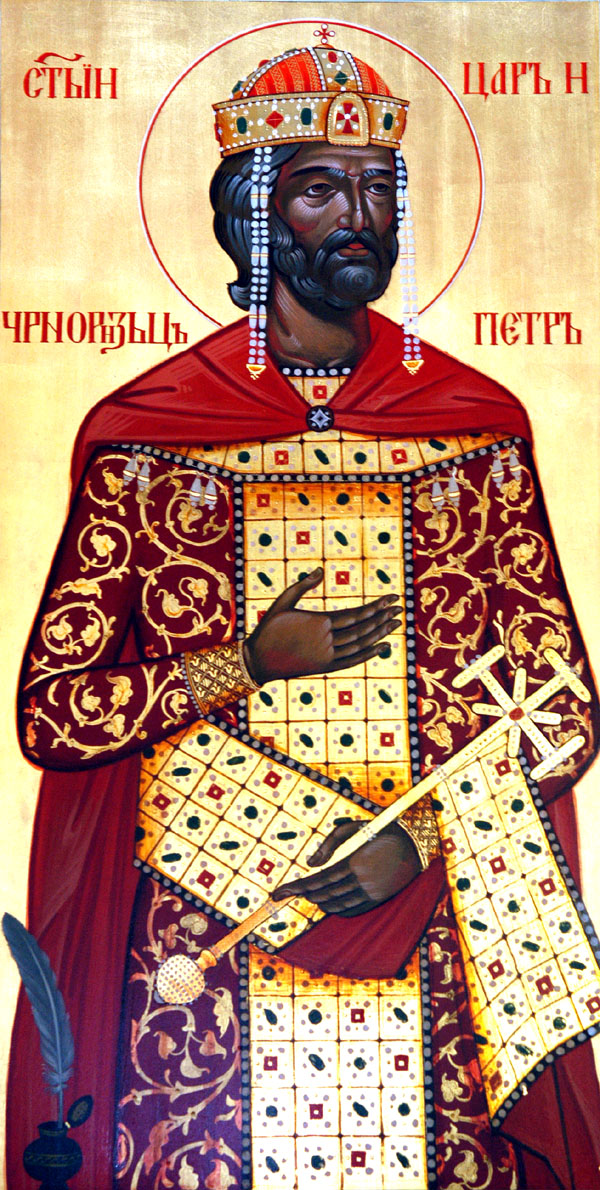


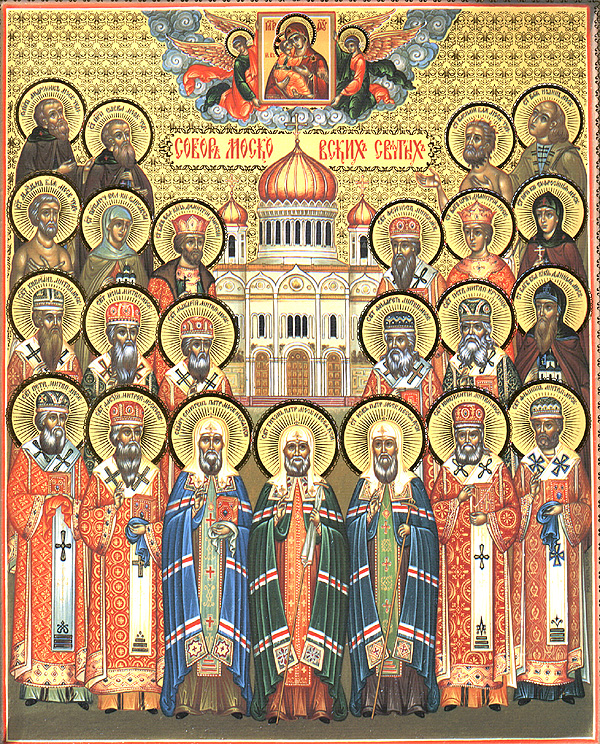




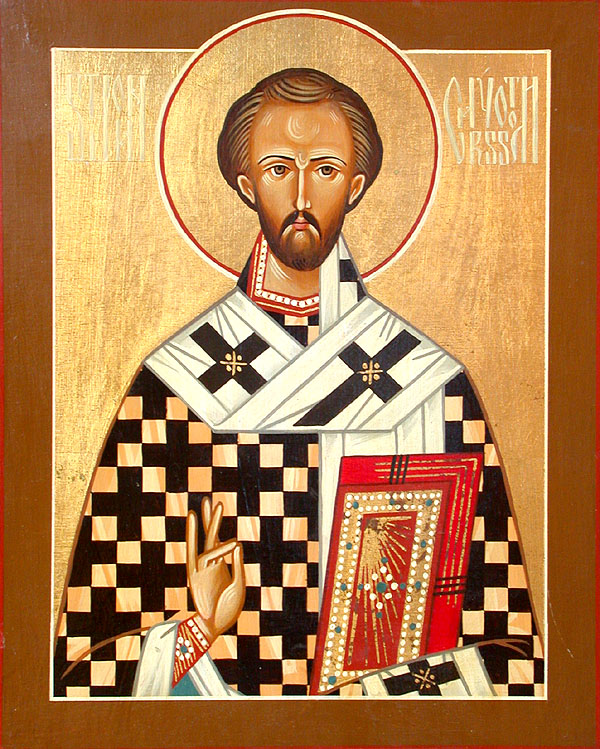


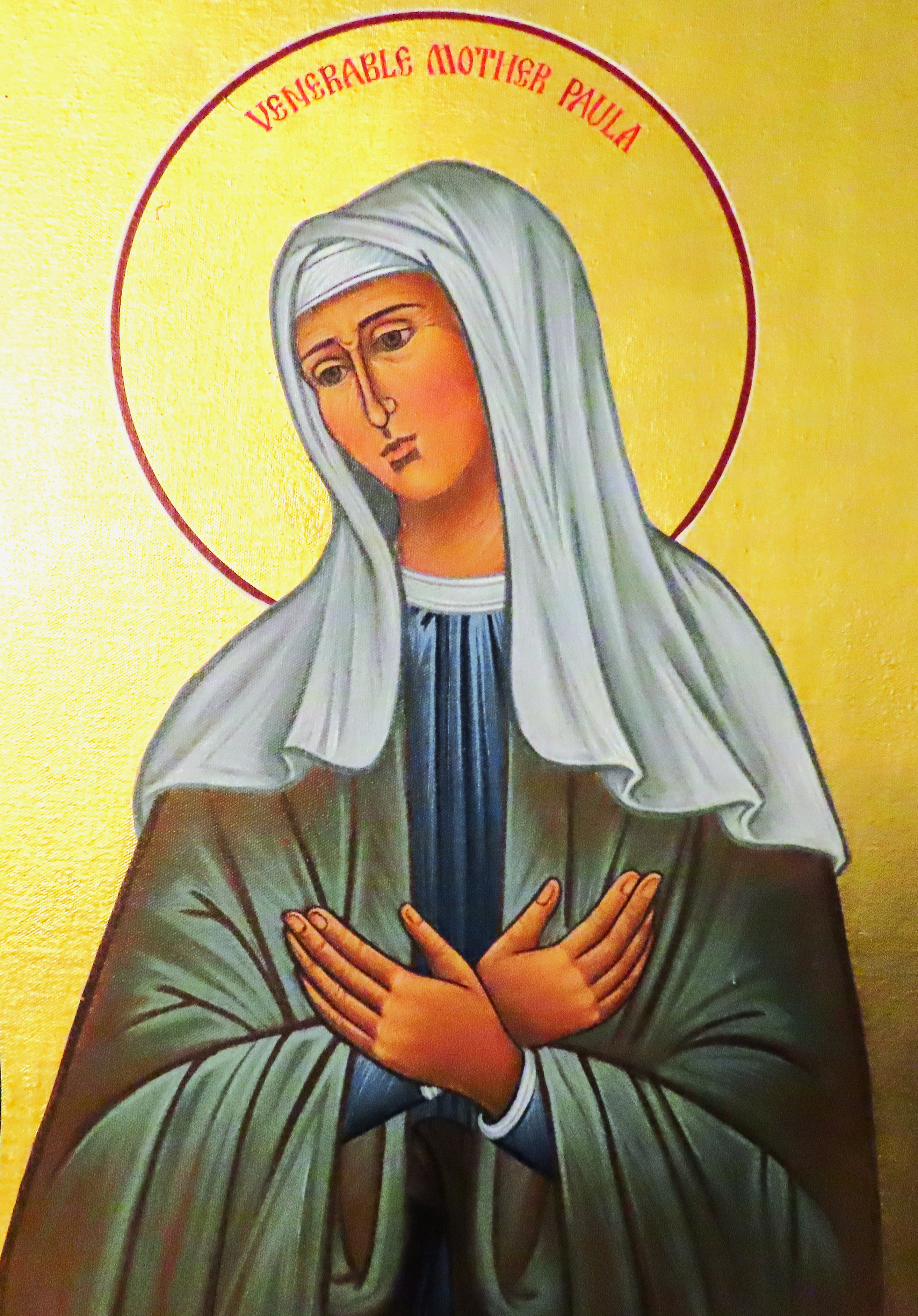
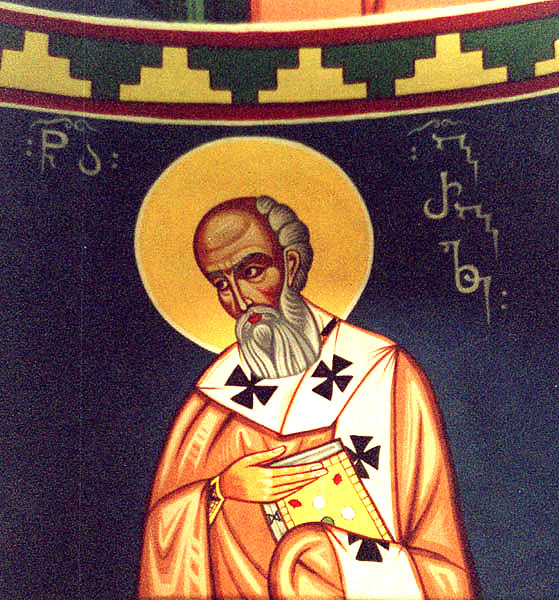

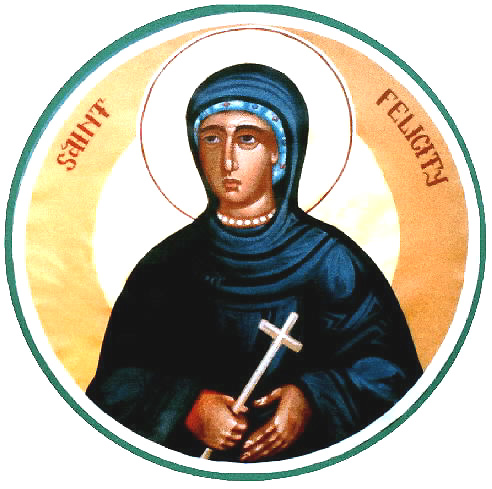
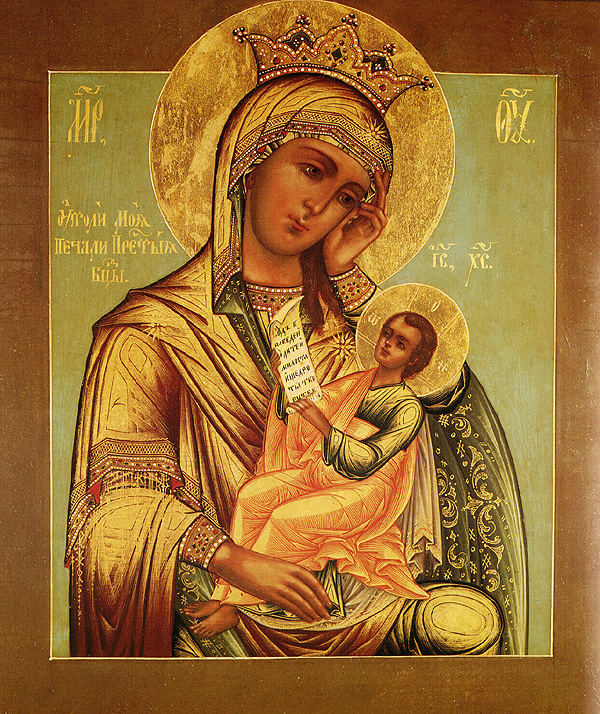
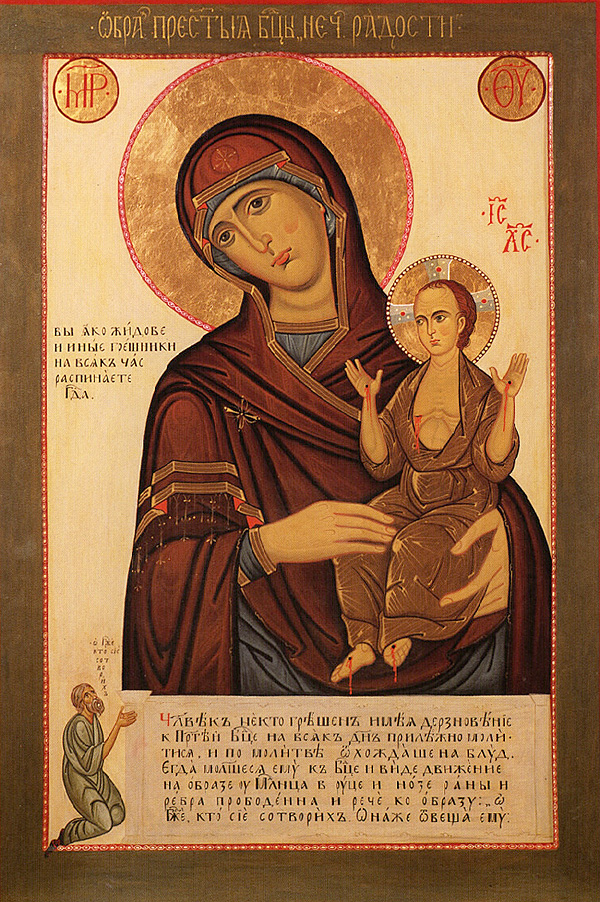
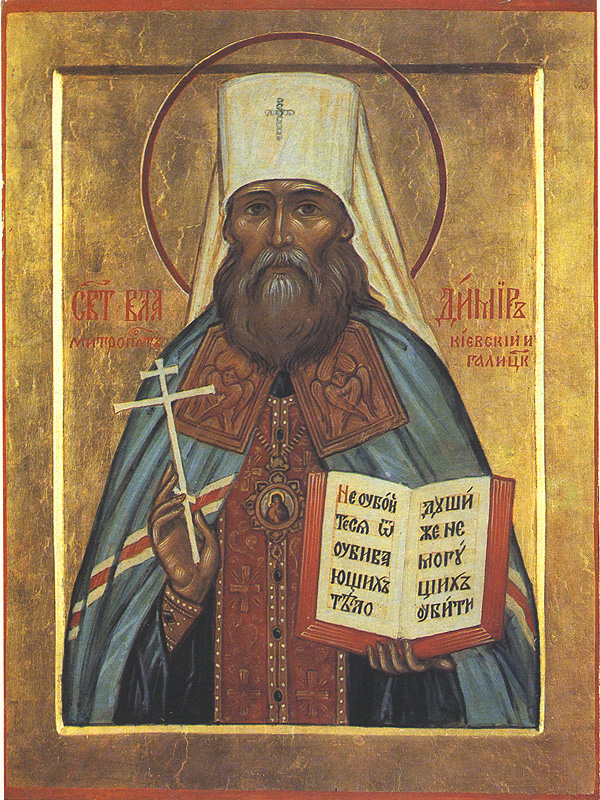
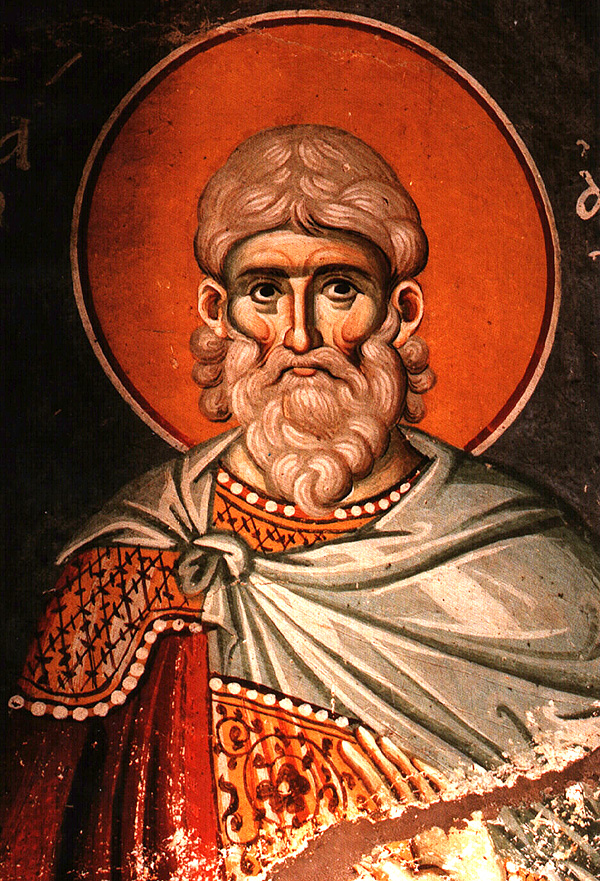


 Saint Peter Antiochian Orthodox Church
You must be logged in to post a comment.