ABSTAIN FROM MEAT, FISH, DAIRY, EGGS, WINE, OLIVE OIL
Holy Friday, Aristarchus, Pudens, Trophimus the Apostles of the 70, Thomais the Martyr of Alexandria, Ardalion the Actor and Martyr, Demetrios the New-Martyr of Arcadia
ST. PAUL’S FIRST LETTER TO THE CORINTHIANS 5:6-8
BRETHREN, a little leaven leavens the whole lump. Cleanse out the old leaven that you may be a new lump, as you really are unleavened. For Christ, our paschal lamb, has been sacrificed. Let us, therefore, celebrate the festival, not with the old leaven, the leaven of malice and evil, but with the unleavened bread of sincerity and truth. (Galatians 3.13-14) Christ redeemed us from the curse of the law, having become a curse for us – for it is written, "Cursed be everyone who hangs on a tree" – that in Christ Jesus the blessing of Abraham might come upon the Gentiles, that we might receive the promise of the Spirit through faith.
MATTHEW 27:62-66
On the next day, that is, after the day of Preparation, the chief priests and the Pharisees gathered before Pilate and said, “Sir, we remember how that impostor said, while he was still alive, ‘After three days I will rise again.’ Therefore order the sepulcher to be made secure until the third day, lest his disciples go and steal him away, and tell the people, ‘He has risen from the dead, ‘ and the last fraud will be worse than the first.” Pilate said to them, “You have a guard of soldiers; go, make it as secure as you can.” So they went and made the sepulcher secure by sealing the stone and setting a guard.
Great and Holy Friday
Great and Holy Friday
On Great and Holy Friday, Christ died on the Cross. He gave up His spirit with the words: “It is finished” (John 19:30). These words are better understood when rendered: “It is consummated.” He had accomplished the work for which His heavenly Father had sent Him into the world. He became a man in the fullest sense of the word. He accepted the baptism of repentance from John in the Jordan River. He assumed the whole human condition, experiencing all its alienation, agony, and suffering, concluding with the lowly death on the Cross. He perfectly fulfilled the prophecy of Isaiah:
“Therefore I will divide him a portion with the great, and he shall divide the spoil with the strong; because he has poured out his soul to death, and was numbered with the transgressors; yet he bore the sins of many, and made intercession for the transgressors.”
(Isaiah 53:12)
The Man of Sorrows
On the Cross Jesus thus became “the man of sorrows; acquainted with grief” whom the prophet Isaiah had foretold. He was “despised and forsaken by men” and “smitten by God, and afflicted” (Isaiah 53:3-4). He became the one with “no form or comeliness that we should look at him, and no beauty that we should desire him” (Isaiah 53:2). His appearance was “marred beyond human semblance, and his form beyond that of the sons of men” (Isaiah 52:14). All these Messianic prophecies were fulfilled in Jesus as he hung from the Cross.
As the end approached, He cried: “My God, my God, why hast Thou forsaken me?” (Matthew 27:46). This cry indicated His complete identification with the human condition. He had totally embraced the despised, forsaken and smitten condition of suffering and death—alienation from God. He was truly the man of sorrows.
Yet, it is important to note that Jesus’ cry of anguish from the Cross was not a sign of His loss of faith in His Father. The words which He exclaimed are the first verse of Psalm 22, a messianic Psalm. The first part of the Psalm foretells the anguish, suffering and death of the Messiah. The second part is a song of praise to God. It predicts the final victory of the Messiah.
The Formal Charges
The death of Christ had been sought by the religious leaders in Jerusalem from the earliest days of His public ministry. The formal charges made against Him usually fell into the following two categories:
1) violation of the Law of the Old Testament, e.g., breaking the Sabbath rest; 2) blasphemy: making Himself equal with God.
Matters were hastened (consummated) by the moment of truth which followed His entrance into Jerusalem on Palm Sunday. He had the people behind Him. He spoke plainly. He said that the Sabbath was made for man, and not man for the Sabbath. He chastised the scribes and Pharisees for reducing religion to a purely external affair;
“You are like whitewashed tombs, which outwardly appear beautiful, but within are full of dead men’s bones and all uncleanness. So you also outwardly appear righteous to men, but within you are full of hypocrisy and iniquity” (Matthew 23:27-28).
It was the second formal charge; however, that became the basis for His conviction.
The Religious Trial
Christ’s conviction and death sentence required two trials: religious and political. The religious trial was first and took place during the night immediately after His arrest. After considerable difficulty in finding witnesses for the prosecution who actually agreed in their testimony, Caiaphas, the high priest, asked Jesus the essential question: “Are you Christ, the Son of the Blessed?” Jesus, who had remained silent to this point, now responded directly:
“I am; and you will see the Son of man sitting at the right hand of power, and coming with the clouds of heaven” (Mark 14:61-62).
Jesus’ reply recalled the many other statements He had made beginning with the words, “I am.” “I am the bread of life . . . I am the light of the world. . . I am the way, the truth, and the life. . . before Abraham was, I am.” (John 6 through 15). The use of these words themselves was considered blasphemous by the religious leaders. The words were the Name of God. By using them as His own Name, Jesus positively identified Himself with God. From the burning bush the voice of God had disclosed these words to Moses as the Divine Name:
“Say this to the people of Israel, ‘I AM has sent me to you’” (Exodus 3:13-14).
Now Jesus, as He had done on many other occasions, used them as His own Name. The high priest immediately tore his mantle and “they all condemned Him as deserving death” (Mark 14:64). In their view He had violated the Law of the Old Testament:
“He who blasphemes the name of the Lord shall be put to death” (Leviticus 24:16).
The Political Trial
The Jewish religious leaders lacked the actual authority to carry out the above law: to put a man to death. Such authority belonged to the Roman civil administration. Jesus had carefully kept His activity free of political implications. He refused the temptation of Satan to rule the kingdoms of the world by the sword (Luke 4: 1-12). He often charged His disciples and others to tell no one that He was , the Christ, because of the political overtones that this title carried for many (Matthew 16: 13-20). He rebuked Peter, calling him Satan, when the disciple hinted at His swerving from the true nature of His mission (Matthew 16:23). To Pilate, the spineless and indifferent Roman Governor, He said plainly: “My kingdom is not of this world” (John 18:36). Jesus was not a political revolutionary who came to free the people from Roman control and establish a new kingdom based on worldly power.
Nevertheless, the religious leaders, acting in agreement with the masses, devised political charges against Him in order to get their way. They presented Christ to the Romans as a political , leader, the “King of the Jews” in a worldly sense, a threat to Roman rule and a challenge to Caesar. Pilate became fearful of his own position as he heard the charges and saw the seething mobs. Therefore, despite his avowed testimony to Jesus’ innocence, he passed formal sentence, “washed his hands” of the matter, and turned Jesus over to be crucified (John 19:16).
Crucifixion—The Triumph of Evil
Before succumbing to this cruel Roman method of executing political criminals, Jesus suffered still other injustices. He was stripped, mocked and beaten. He wore a “kingly” crown of thorns on His head. He carried His own cross. He was finally nailed to the cross between two thieves at a place called Golgotha (the place of the skull) outside Jerusalem. An inscription was placed above His head on the Cross to indicate the nature of His crime: “Jesus of Nazareth, the King of the Jews.” He yielded up His spirit at about the ninth hour (3 p.m.), after hanging on the Cross for about six hours.
On Holy Friday evil triumphed. “It was night” (John 13:30) when Judas departed from the Last Supper to complete his act of betrayal, and “there was darkness over all the land” (Matthew 27:45) when Jesus was hanging on the Cross. The evil forces of this world had been massed against Christ. Unjust trials convicted Him. A criminal was released to the people instead of Him. Nails and a spear pierced His body. Bitter vinegar was given to Him to quench His thirst. Only one disciple remained faithful to Him. Finally, the tomb of another man became His place of repose after death.
The innocent Jesus was put to death on the basis of both religious and political charges. Both Jews and Gentile Romans participated in His death sentence.
“The rulers of the people have assembled against the Lord and His Christ.” (Psalm 2—the Prokeimenon of the Holy Thursday Vesperal Liturgy)
We, also, in many ways continue to participate in the death sentence given to Christ. The formal charges outlined above do not exhaust the reasons for the crucifixion. Behind the formal charges lay a host of injustices brought, on by hidden and personal motivations. Jesus openly spoke the truth about God and man. He thereby exposed the false character of the righteousness and smug security, both religious and material, claimed by many especially those in high places. The constantly occurring expositions of such smugness in our own day teach us the truly illusory nature of much so-called righteousness and security. In the deepest sense, the death of Christ was brought about by hardened, personal sin—the refusal of people to change themselves in the light of reality, which is Christ.
“He came to His very own, and His own received Him not” (John 1:11).
Especially we, the Christian people, are Christ’s very own. He continues to come to us in His Church. Each time we attempt to make the Church into something other than the eternal coming of Christ into our midst, each time we refuse to repent for our wrongs; we, too, reject Christ and participate in His death sentence.
The Vespers
The Vespers, celebrated in the Church on Holy Friday afternoon, brings to mind all of the final events of the life of Christ as mentioned above: the trial, the sentence, the scourging and mocking, the crucifixion, the death, the taking down of His body from the Cross, and the burial. As the hymnography indicates, these events remain ever-present in the Church; they constitute the today of its life.
The service is replete with readings from Scripture: three from the Old Testament and two from the New. The first of the Old Testament readings, from Exodus, speaks of Moses beholding the “back” of the glory of God—for no man can see the glory of God face to face and live. The Church uses this reading to emphasize that now, in the crucifixion and death of Christ, God is making the ultimate condescension to reveal His glory to man—from within man himself.
The death of Christ was of a wholly voluntary character. He dies not because of some necessity in His being: as the Son of God He has life in Himself! Yet, He voluntarily gave up His life as the greatest sign of God’s love for man, as the ultimate revelation of the Divine glory:
“Greater love has no man than this, that a man lay down his life for his friends” (John 15:13).
The vesperal hymnography further develops the fact that God reveals His glory to us in this condescending love. The Crucifixion is the heart of such love, for the One being crucified is none other than He through whom all things have been created:
Today the Master of creation stands before Pilate. Today the Creator of all is condemned to die on the cross. . . The Redeemer of the world is slapped on the face. The Maker of all is mocked by His own servants. Glory to Thy condescension, 0 Lover of man! (Verse on “Lord I call”, and the Apostikha)
The verses also underscore the cosmic dimensions of the event taking place on the Cross. Just as God who revealed Himself to Moses is not a god, but the God of “heaven and earth, and of all things visible and invisible,” so the death of Jesus is not the culmination of a petty struggle in the domestic life of Palestine. Rather, it is the very center of the epic struggle between God and the Evil One, involving the whole universe:
All creation was changed by fear when it saw Thee hanging on the cross, 0 Christ! The sun was darkened, and the foundations of the earth were shaken. All things suffered with the Creator of all. 0 Lord, who didst willingly endure this for us, glory to Thee! (Verse I on “Lord, I Call”)
The second Reading from the Old Testament (Job 42:12 to the end) manifests Job as a prophetic figure of the Messiah Himself. The plight of Job is followed in the services throughout Holy Week, and is concluded with this reading. Job is the righteous servant who remains faithful to God despite trial, humiliation, and the loss of all his possessions and family. Because of his faithfulness, however, “The Lord blessed the latter days of Job more than his beginning” (Job 42: 12)
The third of the Old Testamental readings is by far the most substantial (Isaiah 52:13 to 54:1). It is a prototype of the Gospel itself. Read at this moment, it positively identifies Jesus of Nazareth as the Suffering Servant, the Man of Sorrows; the Messiah of Israel.
The Epistle Reading (I Corinthians 1:18 to 2:2) speaks of Jesus crucified, a folly for the world, as the real center of our Faith. The Gospel reading, a lengthy composite taken from Matthew, Luke and John, simply narrates all the events associated with the crucifixion and burial of Christ.
All the readings obviously focus on the theme of hope. As the Lord of Glory, the fulfillment of the righteous Job, and the Messiah Himself, humiliation and death will have no final hold over Jesus. Even the parental mourning of Mary is transformed in the light of this hope:
When she who bore Thee without seed saw Thee suspended upon the Tree, 0 Christ, the Creator and God of all, she cried bitterly: “Where is the beauty of Thy countenance, my Son? I cannot bear to see Thee unjustly crucified. Hasten and arise, that I too may see Thy resurrection from the dead on the third day! (Verse IV on “Lord I call.”)
Near the end of the Vespers, the priest vests fully in dark vestments. At the appointed time he lifts the Holy Shroud, a large icon depicting Christ lying in the tomb, from the altar table. Together with selected laymen and servers, a procession is formed and the Holy Shroud is carried to a specially prepared tomb in the center of the church. As the procession moves, the troparion is sung:
The Noble Joseph, when he had taken down Thy most pure body from the tree, wrapped it in fine linen and anointed it with spices, and placed it in a new tomb.
At this ultimate solemn moment of Vespers, the theme of hope once again occurs—this time more strongly and clearly than ever. As knees are bent and heads are bowed, and often tears are shed, another troparion is sung which penetrates through this triumph of evil, to the new day which is contained in its very midst:
The Angel came to the myrrh-bearing women at the tomb and said: “Myrrh is fitting for the dead, but Christ has shown Himself a stranger to corruption.
A new Age is dawning. Our salvation is taking place. The One who died is the same One who will rise on the third day, to “trample down death by death,” and to free us from corruption.
Therefore, at the conclusion of Holy Friday Vespers, at the end of this long day of darkness, when all things are apparently ended, our eternal hope for salvation springs forth. For Christ is indeed a stranger to corruption:
“As by a man came death, by a man has come also the resurrection of the dead. For as in Adam all die, so also in Christ shall all be made alive. But each in his own order: Christ the first fruits, then at his coming those who belong to Christ.” (I Cor. 15:21-32)
“If any man would come after me, let him deny himself and take up his cross and follow me. For whoever would save his life will lose it, and whoever loses his life for my sake and the gospel’s will save it.” (Mark 8:35)
– Father Paul Lazor
Saint Martin the Confessor, Pope of Rome
Saint Martin the Confessor, Pope of Rome, was a native of the Tuscany region of Italy. He received a fine education and entered into the clergy of the Roman Church. After the death of Pope Theodore I (642-649), Martin was chosen to succeed him.
At this time the peace of the Church was disturbed by the Monothelite heresy (the false doctrine that in Christ there is only one will, whereas in fact He has a divine, and a human will). The endless disputes of the Monothelites with the Orthodox took place in all levels of the population. Even the emperor Constans (641-668) and Patriarch Paul of Constantinople (641-654) were adherents of the Monothelite heresy. The emperor Constans II published the heretical “Pattern of Faith” (Typos), obligatory for all the population. In it all further disputes were forbidden.
The heretical “Pattern of Faith” was received at Rome in the year 649. Saint Martin, a firm supporter of Orthodoxy, convened the Lateran Council at Rome to condemn the Monothelite heresy. At the same time Saint Martin sent a letter to Patriarch Paul, persuading him to return to the Orthodox confession of faith. The enraged emperor ordered the military commander Olympius to bring Saint Martin to trial. But Olympius feared the clergy and the people of Rome who had descended upon the Council, and he sent a soldier to murder the holy hierarch. When the assassin approached Saint Martin, he was blinded. The terrified Olympius fled to Sicily and was soon killed in battle.
In 654 the emperor sent another military commander, Theodore, to Rome. He accused Saint Martin of being in secret correspondence with the enemies of the Empire, the Saracens, and of blaspheming the Most Holy Theotokos, and of uncanonically assuming the papal throne.
Despite the proofs offered by the Roman clergy and laity of Saint Martin’s innocence, the military commander Theodore with a detachment of soldiers seized Saint Martin by night and took him to Naxos, one of the Cyclades islands in the Aegean Sea. Saint Martin spent an entire year on this almost unpopulated island, suffering deprivation and abuse from the guards. Then they sent the exhausted confessor to Constantinople for trial.
They carried the sick man on a stretcher, but the judges callously ordered him to stand up and answer their questions. The soldiers propped up the saint, who was weakened by illness. False witnesses came forward slandering the saint and accusing him of treasonous relations with the Saracens. The biased judges did not even bother to hear the saint’s defense. In sorrow he said, “The Lord knows what a great kindness you would show me if you would deliver me quickly over to death.”
After such a trial they brought the saint out in tattered clothes to a jeering crowd. They shouted, “Anathema to Pope Martin!” But those who knew the holy Pope was suffering unjustly, withdrew in tears. Finally the sentence was announced: Saint Martin was to be deposed from his rank and executed. They bound the half-naked saint with chains and dragged him to prison, where they locked him up with thieves. These were more merciful to the saint than the heretics.
In the midst of all this the emperor went to the dying Patriarch Paul and told him of the trial of Saint Martin. He turned away from the emperor and said, “Woe is me! This is another reason for my judgment.” He asked that Saint Martin’s torments be stopped. The emperor again sent a notary and other persons to the saint in prison to interrogate him. The saint answered, “Even if they cripple me, I will not have relations with the Church of Constantinople while it remains in its evil doctrines.” The torturers were astonished at the confessor’s boldness, and they commuted his death sentence to exile at Cherson in the Crimea.
Saint Martin departed to the Lord, exhausted by sickness, hunger and deprivations on September 16, 655. Two other bishops, who were banished to Cherson, also died after many hardships. The Saint was buried just outside the city of Cherson, in the Blachernae church of the Most Holy Theotokos. Great crowds of people visited his tomb because of the many miracles which took place there. Later, his relics were transferred to Rome, and placed in a church dedicated to Martin of Tours (November 11). The transfer of his relics is commemorated on November 12.
The Monothelite heresy was condemned at the Sixth Ecumenical Council in 680.
In Greek usage, the holy Confessor Martin is commemorated on April 13 and on September 20, while the Slavic churches commemorate him on April 14.
Martyrs Anthony, John, and Eustathius of Vilnius
The Holy Martyrs Anthony, John, and Eustathius (Kumetis, Nizilas, and Krulis) were brothers who suffered for Christ under the Lithuanian Great Prince Algirdas (1345-1377). The prince was married to the Orthodox princess Maria Yaroslavna (+ 1346). He was baptized and during his wife’s lifetime he allowed the preaching of Christianity. Two brothers, Nizilas and Kumetis (Nezhilo and Kumets), received holy Baptism from the priest Nestor, and they received the names Anthony and John. And at the request of Maria Yaroslavna an Orthodox church was built at Vilnius (Vilna).
After the death of his spouse, Prince Algirdas began to support the pagan priests of the fire-worshippers, who started a persecution against Christians. Saints John and Anthony endeavored not to flaunt their Christianity, but they did not observe pagan customs. They did not cut their hair as the pagans did, and on fast days they did not eat forbidden foods.
The prince soon became suspicious of the brothers, so he interrogated them and they confessed themselves Christians. Then he demanded that they eat meat (it was a fast day). The holy brothers refused, and the prince locked them up in prison. The brothers spent an entire year behind bars. John took fright at the impending tortures and declared that he would obey all the demands of the Great Prince. The delighted Algirdas released the brothers and brought them to himself.
But Anthony did not betray Christ. When he refused to eat meat on a fast day, the prince again locked him up in prison and subjected him to brutal tortures. The other brother remained free, but both Christians and pagans regarded him as a traitor and would not associate with him.
Repenting of his sin, John went to the priest Nestor and entreated him to ask his brother to forgive him. “When he openly confesses Christ, we will be reconciled,” Anthony replied. Once, while serving the prince at the bath, Saint John spoke privately with him about his reconciliation with the Church. Algirdas did not display any anger and said that he could believe in Christ, but must conduct himself like all the pagans. Then Saint John confessed himself a Christian in the presence of numerous courtiers. They beat him fiercely with rods and sent him to his brother in prison. The martyrs met with joy, and received the Holy Mysteries that same day.
Many people went to the prison to see the new confessor. The brothers converted many to Christ by their preaching. The prison was transformed into a Christian school. The frightened pagan priests demanded the execution of the brothers, but they did not fear death.
On the morning of April 14, 1347 the Martyr Anthony was hanged on a tree after receiving the Holy Mysteries. This oak, which the pagans considered sacred, became truly sacred for Orthodox Christians.
The pagan priests who hoped that Christian preaching would stop with the death of Saint Anthony, were disappointed. A multitude of the people gathered before the walls of the prison where Saint John was being held. On April 24, 1347 they strangled him and hanged his dead body upon the same oak. The venerable bodies of both martyrs were buried by Christians in the church of Saint Nicholas the Wonderworker.
A third sufferer for Christ was their relative Krulis (Kruglets). At Baptism the priest Nestor named him Eustathius. Krulis stood out because of his comeliness, valor and bravery, but even more because of his mind and virtue of soul. A favorite of Algirdas, he could count on a very promising future. However, he also refused to eat meat at the festal table. Saint Eustathius openly declared that he was a Christian and would not eat meat because of the Nativity Fast.
They began to beat him with iron rods, but the youth did not make a sound. The prince tried refining the torture. Algirdas gave orders to strip the martyr naked, take him out on the street and to pour icy water in his mouth. But this did not break his spirit. Then they broke his ankle bones, and ripped the hair and skin from his head, and cut off his ears and nose. Saint Eustathius endured the torments with such gladness and courage, that the very torturers themselves were astounded by the divine power which strengthened him. The martyr Eustathius was sentenced to death and hanged on the same oak where Saints John and Anthony received a martyr’s death (December 13, 1347).
For three days no one was permitted to take down the body of the martyr, and a column of cloud protected it from birds and beasts of prey. A church was later built on the hill where the holy martyrs suffered. The trinity of venerable passion bearers glorified the true God worshiped in the Holy Trinity, Father and Son and Holy Spirit. The church was dedicated to the Most Holy Trinity. The altar table was built on the stump of the sacred oak on which the martyrs died.
Soon their relics were found to be incorrupt. In 1364 Patriarch Philotheus of Constantinople (1354-1355, 1364-1376) sent a cross with the relics of the holy martyrs to Saint Sergius of Radonezh (September 25). The Church established the celebration of all three martyrs on April 14.
The holy martyrs were of immense significance for all the Western frontier. Vilnius’s monastery of the Holy Trinity, where the holy relics are kept, became a stronghold of Orthodoxy on this frontier. In 1915 during the invasion of the Germans, these relics were taken to Moscow.
The relics of the holy passion-bearers were returned to the Vilnius Holy Spirit monastery in 1946. The commemoration of their return (July 13) is solemnly observed at the monastery each year.
Martyr Ardalion the Actor
The Holy Martyr Ardalion suffered for Christ under the emperor Maximian Galerius (305-311). Saint Ardalion was a talented actor.
Once, he played the role of a Christian. In the play, the actor at first refused to offer sacrifice to idols, but then consented to renounce Christ. Suddenly the saint ordered everyone to be quiet and declared that he actually was a Christian.
Saint Ardalion continued to confess his faith in Christ. Then the governor ordered the martyr to be thrown onto a red-hot iron grill. So Saint Ardalion attained a martyr’s crown.
Martyr Azades the Eunuch and 1,000 Martyrs of Persia
Saint Azades (Azat) was a wealthy man who served in the household of King Shapur II of Persia, and enjoyed his confidence. He was arrested for professing Christianity, and then suffered martyrdom with 1000 other Christians. After this, the king repented and ordered an end to the persecution of Christians.
Vil'na Icon of the Mother of God
The Vil'na Icon of the Mother of God is one of those attributed to the Holy Evangelist Luke. For a long time it was a sacred heirloom of the Byzantine Emperors in Constantinople.
In 1472, this Holy Icon was taken to Moscow by Sophia Palaiologos, the wife of Great Prince John III of Moscow (1462–1505). In 1495, the Great Prince gave the Icon as a blessing to his daughter Elena when she married the Lithuanian King Alexander. Later, the Holy Icon was placed in the church of the Most Pure (Theotokos), where Princess Elena was buried.
Tsar Ivan the Terrible, hoping to bring the wonderworking Icon back to Moscow, offered King Sigismund fifty noble Lithuanian captives in exchange for it, but he refused, because all the clergy, both the Orthodox and the Uniates, did not want to lose this treasure.
The Icon remained in the Cathedral of the Mother of God until the XVIII century, Later, it was moved to the church of Saint John the Forerunner. Afterward, the Icon was transferred to Vil'na's Holy Trinity Monastery, which was then in the possession of the Uniates, and the Cathedral of the Mother of God was also given to them.
Only in 1839 were Holy Trinity Monastery and the Vil'na Icon returned to the Orthodox. Since that time, the Icon of the Mother of God has remained there with other local icons, and is venerated by all Orthodox Christians. It replaced the lost Ostro Bram (Dawn Gates) Icon (commemorated on December 26 and April 14).
During the First World War, many sacred objects were evacuated from the frontline zones of Lithuania and Belarus, including the Vil'na Icon. In 1915, the Icon was brought to the Donskoy Monastery in Moscow, along with the relics of the Vil'na Martyrs. Its later fate is unknown.
The Vil'na Hodēgḗtria Icon is painted on four boards which have been joined together. Some are made of cypress wood, and the others of birch. It was restored in 1864.
The Vil'na Icon is commemorated on April 14, the day it was brought to Moscow in 1472, and also on February 15, the day it was brought from Moscow to Vil'na (the former capital of Lithuania) in 1495.
Holy Thursday, Martin the Confessor, Pope of Rome, Theodosios the Martyr, Zoilos the Martyr
ST. PAUL’S FIRST LETTER TO THE CORINTHIANS 11:23-32
BRETHREN, I received from the Lord what I also delivered to you, that the Lord Jesus on the night when he was betrayed took bread, and when he had given thanks, he broke it, and said, "This is my body which is for you. Do this in remembrance of me." In the same way also the cup, after supper, saying, "This cup is the new covenant in my blood. Do this, as often as you drink it, in remembrance of me." For as often as you eat this bread and drink the cup, you proclaim the Lord's death until he comes.
Whoever, therefore, eats the bread or drinks the cup of the Lord in an unworthy manner will be guilty of profaning the body and blood of the Lord. Let a man examine himself, and so eat of the bread and drink of the cup. For any one who eats and drinks without discerning the body eats and drinks judgment upon himself. That is why many of you are weak and ill, and some have died. But if we judged ourselves truly, we should not be judged. But when we are judged by the Lord, we are chastened so that we may not be condemned along with the world.
MATTHEW 26:1-20; JOHN 13:3-17; MATTHEW 26:21-39; LUKE 22:43-44; MATTHEW 26:40-75; 27:1-2
The Lord said to his disciples, "You know that after two days the Passover is coming, and the Son of man will be delivered up to be crucified.
Then the chief priests and the elders of the people gathered in the palace of the high priest, who was called Caiaphas, and took counsel together in order to arrest Jesus by stealth and kill him. But they said, "Not during the feast, lest there be a tumult among the people.
Now when Jesus was at Bethany in the house of Simon the leper, a woman came up to him with an alabaster flask of very expensive ointment, and she poured it on his head, as he sat at table. But when the disciples saw it, they were indignant, saying, "Why this waste? For this ointment might have been sold for a large sum, and given to the poor.
But Jesus, aware of this, said to them, "Why do you trouble the woman? For she has done a beautiful thing to me.
For you always have the poor with you, but you will not always have me.
In pouring this ointment on my body she has done it to prepare me for burial. Truly, I say to you, wherever this gospel is preached in the whole world, what she has done will be told in memory of her.
Then one of the twelve, who was called Judas Iscariot, went to the chief priests and said, "What will you give me if I deliver him to you?" And they paid him thirty pieces of silver. And from that moment he sought an opportunity to betray him.
Now on the first day of Unleavened Bread the disciples came to Jesus, saying, "Where will you have us prepare for you to eat the Passover?" He said, "Go into the city to a certain one, and say to him, 'The Teacher says, My time is at hand; I will keep the Passover at your house with my disciples.'" And the disciples did as Jesus had directed them, and they prepared the Passover. When it was evening, he sat at table with the twelve disciples.
Jesus, knowing that the Father had given all things into his hands, and that he had come from God and was going to God, rose from supper, laid aside his garments, and girded himself with a towel. Then he poured water into a basin, and began to wash the disciples' feet, and to wipe them with the towel with which he was girded.
He came to Simon Peter; and Peter said to him, "Lord, do you wash my feet?" Jesus answered him, "What I am doing you do not know now, but afterward you will understand." Peter said to him, "You shall never wash my feet." Jesus answered him, "If I do not wash you, you have no part in me." Simon Peter said to him, "Lord, not my feet only but also my hands and my head!" Jesus said to him, "He who has bathed does not need to wash, except for his feet, but he is clean all over; and you are clean, but not every one of you." For he knew who was to betray him; that was why he said, "You are not all clean.
When he had washed their feet, and taken his garments, and resumed his place, he said to them, "Do you know what I have done to you? You call me Teacher and Lord; and you are right, for so I am. If I then, your Lord and Teacher, have washed your feet, you also ought to wash one another's feet. For I have given you an example, that you also should do as I have done to you. Truly, truly, I say to you, a servant is not greater than his master; nor is he who is sent greater than he who sent him. If you know these things, blessed are you if you do them.
And as they were eating, he said, "Truly, I say to you, one of you will betray me." And they were very sorrowful, and began to say to him one after another, "Is it I, Lord?" He answered, "He who has dipped his hand in the dish with me, will betray me. The Son of man goes as it is written of him, but woe to that man by whom the Son of man is betrayed! It would have been better for that man if he had not been born." Judas, who betrayed him, said, "Is it I, Master?" He said to him, "You have said so.
Now as they were eating, Jesus took bread, and blessed, and broke it, and gave it to the disciples and said, "Take, eat; this is my body." And he took a cup, and when he had given thanks he gave it to them, saying, "Drink of it, all of you; for this is my blood of the new covenant, which is poured out for many for the forgiveness of sins. I tell you I shall not drink again of this fruit of the vine until that day when I drink it new with you in my Father's kingdom.
And when they had sung a hymn, they went out to the Mount of Olives. Then Jesus said to them, "You will all fall away because of me this night; for it is written, 'I will strike the shepherd, and the sheep of the flock will be scattered.' But after I am raised up, I will go before you to Galilee." Peter declared to him, "Though they all fall away because of you, I will never fall away." Jesus said to him, "Truly, I say to you, this very night, before the cock crows, you will deny me three times." Peter said to him, "Even if I must die with you, I will not deny you." And so said all the disciples.
Then Jesus went with them to a place called Gethsemane, and he said to his disciples, "Sit here, while I go yonder and pray." And taking with him Peter and the two sons of Zebedee, he began to be sorrowful and troubled. Then he said to them, "My soul is very sorrowful, even to death; remain here, and watch with me." And going a little farther he fell on his face and prayed, "My Father, if it be possible, let this cup pass from me; nevertheless, not as I will, but as you will.
And there appeared to him an angel from heaven, strengthening him. And being in an agony he prayed more earnestly; and his sweat became like great drops of blood falling down upon the ground.
And rising from prayer, he came to the disciples and found them sleeping; and he said to Peter, "So, could you not watch with me one hour? Watch and pray that you may not enter into temptation; the spirit indeed is willing, but the flesh is weak." Again, for the second time, he went away and prayed, "My Father, if this cannot pass unless I drink it, your will be done." And again he came and found them sleeping, for their eyes were heavy. So, leaving them again, he went away and prayed for the third time, saying the same words. Then he came to the disciples and said to them, "Are you still sleeping and taking your rest? Behold, the hour is at hand, and the Son of man is betrayed into the hands of sinners. Rise, let us be going; see, my betrayer is at hand.
While he was still speaking, Judas came, one of the twelve, and with him a great crowd with swords and clubs, from the chief priests and the elders of the people. Now the betrayer had given them a sign, saying, "The one I shall kiss is the man; seize him." And he came up to Jesus at once and said, "Hail, Rabbi!" And he kissed him. Jesus said to him, "Friend, why are you here?" Then they came up and laid hands on Jesus and seized him. And behold, one of those who were with Jesus stretched out his hand and drew his sword, and struck the slave of the high priest, and cut off his ear.
Then Jesus said to him, "Put your sword back into its place; for all who take the sword will perish by the sword. Do you think that I cannot appeal to my Father, and he will at once send me more than twelve legions of angels? But how then should the scriptures be fulfilled, that it must be so?
At that hour Jesus said to the crowds, "Have you come out as against a robber, with swords and clubs to capture me? Day after day I sat in the temple teaching, and you did not seize me. But all this has taken place, that the scriptures of the prophets might be fulfilled." Then all the disciples forsook him and fled.
Then those who had seized Jesus led him to Caiaphas the high priest, where the scribes and the elders had gathered. But Peter followed him at a distance, as far as the courtyard of the high priest, and going inside he sat with the guards to see the end. Now the chief priests and the whole council sought false testimony against Jesus that they might put him to death, but they found none, though many false witnesses came forward. At last two came forward and said, "This fellow said, 'I am able to destroy the temple of God, and to build it in three days.'
And the high priest stood up and said, "Have you no answer to make? What is it that these men testify against you?" But Jesus was silent. And the high priest said to him, "I adjure you by the living God, tell us if you are the Christ, the Son of God.
Jesus said to him, "You have said so. But I tell you, hereafter you will see the Son of man seated at the right hand of Power, and coming on the clouds of heaven." Then the high priest tore his robes, and said, "He has uttered blasphemy. Why do we still need witnesses? You have now heard his blasphemy. What is your judgment?" They answered, "He deserves death." Then they spat in his face, and struck him; and some slapped him, saying, "Prophesy to us, you Christ! Who is it that struck you?
Now Peter was sitting outside in the courtyard. And a maid came up to him, and said, "You also were with Jesus the Galilean." But he denied it before them all, saying, "I do not know what you mean." And when he went out to the porch, another maid saw him, and she said to the bystanders, "This man was with Jesus of Nazareth." And again he denied it with an oath, "I do not know the man." After a little while the bystanders came up and said to Peter, "Certainly you are also one of them, for your accent betrays you.
Then he began to invoke a curse on himself and to swear, "I do not know the man." And immediately the cock crowed. And Peter remembered the saying of Jesus, "Before the cock crows, you will deny me three times." And he went out and wept bitterly.
When morning came, all the chief priests and the elders of the people took counsel against Jesus to put him to death; and they bound him and led him away and delivered him to Pilate the governor.
TWELVE GOSPELS
The Lord said to his disciples, "Now is the Son of man glorified, and in him God is glorified; if God is glorified in him, God will also glorify him in himself, and glorify him at once. Little children, yet a little while I am with you. You will seek me; and as I said to the Jews so now I say to you, 'Where I am going you cannot come.' A new commandment I give to you, that you love one another; even as I have loved you, that you also love one another. By this all men will know that you are my disciples, if you have love for one another." Simon Peter said to him, "Lord, where are you going?" Jesus answered, "Where I am going you cannot follow me now; but you shall follow afterward." Peter said to him, "Lord, why cannot I follow you now? I will lay down my life for you." Jesus answered, "Will you lay down your life for me? Truly, truly, I say to you, the cock will not crow, till you have denied me three times.
Let not your hearts be troubled; believe in God, believe also in me. In my Father's house are many rooms; if it were not so, would I have told you that I go to prepare a place for you? And when I go and prepare a place for you, I will come again and will take you to myself, that where I am you may be also. And where I am going you know, and the way you know." Thomas said to him, "Lord, we do not know where you are going; how can we know the way?" Jesus said to him, "I am the way, and the truth, and the life; no one comes to the Father, but by me. If you had known me, you would have known my Father also; henceforth you know him and have seen him." Philip said to him, "Lord, show us the Father, and we shall be satisfied." Jesus said to him, "Have I been with you so long, and yet you do not know me, Philip? He who has seen me has seen the Father; how can you say, 'Show us the Father'? Do you not believe that I am in the Father and the Father in me? The words that I say to you I do not speak on my own authority; but the Father who dwells in me does his works. Believe me that I am in the Father and the Father in me; or else believe me for the sake of the works themselves. Truly, truly, I say to you, he who believes in me will also do the works that I do; and greater works than these will he do, because I go to the Father. Whatever you ask in my name, I will do it, that the Father may be glorified in the Son; if you ask anything in my name, I will do it. If you love me, you will keep my commandments. And I will ask the Father, and he will give you another Counselor, to be with you for ever, even the Spirit of truth, whom the world cannot receive, because it neither sees him nor knows him; you know him, for he dwells with you, and will be in you. I will not leave you desolate; I will come to you. Yet a little while, and the world will see me no more, but you will see me; because I live, you will live also. In that day you will know that I am in my Father, and you in me, and I in you. He who has my commandments and keeps them, he it is who loves me; and he who loves me will be loved by my Father, and I will love him and manifest myself to him." Judas (not Iscariot) said to him, "Lord, how is it that you will manifest yourself to us, and not to the world?" Jesus answered him, "If a man loves me, he will keep my word, and my Father will love him, and we will come to him and make our home with him. He who does not love me does not keep my words; and the word which you hear is not mine but the Father's who sent me. These things I have spoken to you, while I am still with you. But the Counselor, the Holy Spirit, whom the Father will send in my name, he will teach you all things, and bring to your remembrance all that I have said to you. Peace I leave with you; my peace I give to you; not as the world gives do I give to you. Let not your hearts be troubled, neither let them be afraid. You heard me say to you, 'I go away, and I will come to you.' If you loved me, you would have rejoiced, because I go to the Father; for the Father is greater than I. And now I have told you before it takes place, so that when it does take place, you may believe. I will no longer talk much with you, for the ruler of this world is coming. He has no power over me; but I do as the Father has commanded me, so that the world may know that I love the Father. Rise, let us go hence.
I am the true vine, and my Father is the vinedresser. Every branch of mine that bears no fruit, he takes away, and every branch that does bear fruit he prunes, that it may bear more fruit. You are already made clean by the word which I have spoken to you. Abide in me, and I in you. As the branch cannot bear fruit by itself, unless it abides in the vine, neither can you, unless you abide in me. I am the vine, you are the branches. He who abides in me, and I in him, he it is that bears much fruit, for apart from me you can do nothing. If a man does not abide in me, he is cast forth as a branch and withers; and the branches are gathered, thrown into the fire and burned. If you abide in me, and my words abide in you, ask whatever you will, and it shall be done for you. By this my Father is glorified, that you bear much fruit, and so prove to be my disciples. As the Father has loved me, so have I loved you; abide in my love. If you keep my commandments, you will abide in my love, just as I have kept my Father's commandments and abide in his love. These things I have spoken to you, that my joy may be in you, and that your joy may be full. This is my commandment, that you love one another as I have loved you. Greater love has no man than this, that a man lay down his life for his friends. You are my friends if you do what I command you. No longer do I call you servants, for the servant does not know what his master is doing; but I have called you friends, for all that I have heard from my Father I have made known to you. You did not choose me, but I chose you and appointed you that you should go and bear fruit and that your fruit should abide; so that whatever you ask the Father in my name, he may give it to you. This I command you, to love one another. If the world hates you, know that it has hated me before it hated you. If you were of the world, the world would love its own; but because you are not of the world, but I chose you out of the world, therefore the world hates you. Remember the word that I said to you, 'A servant is not greater than his master.' If they persecuted me, they will persecute you; if they kept my word, they will keep yours also. But all this they will do to you on my account, because they do not know him who sent me. If I had not come and spoken to them, they would not have sin; but now they have no excuse for their sin. He who hates me hates my Father also. If I had not done among them the works which no one else did, they would not have sin; but now they have seen and hated both me and my Father. It is to fulfill the word that is written in their law, 'They hated me without a cause.' But when the Counselor comes, whom I shall send to you from the Father, even the Spirit of truth, who proceeds from the Father, he will bear witness to me; and you also are witnesses, because you have been with me from the beginning.
I have said all this to you to keep you from falling away. They will put you out of the synagogues; indeed, the hour is coming when whoever kills you will think he is offering service to God. And they will do this because they have not known the Father, nor me. But I have said these things to you, that when their hour comes you may remember that I told you of them. I did not say these things to you from the beginning, because I was with you. But now I am going to him who sent me; yet none of you asks me, 'Where are you going?' But because I have said these things to you, sorrow has filled your hearts. Nevertheless I tell you the truth: it is to your advantage that I go away, for if I do not go away, the Counselor will not come to you; but if I go, I will send him to you. And when he comes, he will convince the world concerning sin and righteousness and judgment: concerning sin, because they do not believe in me; concerning righteousness, because I go to the Father, and you will see me no more; concerning judgment, because the ruler of this world is judged. I have yet many things to say to you, but you cannot bear them now. When the Spirit of truth comes, he will guide you into all the truth; for he will not speak on his own authority, but whatever he hears he will speak, and he will declare to you the things that are to come. He will glorify me, for he will take what is mine and declare it to you. All that the Father has is mine; therefore I said that he will take what is mine and declare it to you. A little while, and you will see me no more; again a little while, and you will see me." Some of his disciples said to one another, "What is this that he says to us, 'A little while, and you will not see me, and again a little while, and you will see me'; and, 'because I go to the Father'? " They said, "What does he mean by 'a little while"? We do not know what he means." Jesus knew that they wanted to ask him; so he said to them, "Is this what you are asking yourselves, what I meant by saying, 'A little while, and you will not see me, and again a little while, and you will see me'? Truly, truly, I say to you, you will weep and lament, but the world will rejoice; you will be sorrowful, but your sorrow will turn into joy. When a woman is in travail she has sorrow, because her hour has come; but when she is delivered of the child, she no longer remembers the anguish, for joy that a human being is born into the world. So you have sorrow now, but I will see you again and your hearts will rejoice, and no one will take your joy from you. In that day you will ask nothing of me. Truly, truly, I say to you, if you ask anything of the Father, he will give it to you in my name. Hitherto you have asked nothing in my name; ask, and you will receive, that your joy may be full. I have said this to you in figures; the hour is coming when I shall no longer speak to you in figures but tell you plainly of the Father. In that day you will ask in my name; and I do not say to you that I shall ask the Father for you; for the Father himself loves you, because you have loved me and have believed that I came from the Father. I came from the Father and have come into the world; again, I am leaving the world and going to the Father." His disciples said, "Ah, now you are speaking plainly, not in any figure! Now we know that you know all things, and need none to question you; by this we believe that you came from God." Jesus answered them, "Do you now believe? The hour is coming, indeed it has come, when you will be scattered, every man to his home, and will leave me alone; yet I am not alone, for the Father is with me. I have said this to you, that in me you may have peace. In the world you have tribulation; but be of good cheer, I have overcome the world.
When Jesus had spoken these words, he lifted up his eyes to heaven and said, "Father, the hour has come; glorify your Son that the Son may glorify you, since you have given him power over all flesh, to give eternal life to all whom you have given him. And this is eternal life, that they know you the only true God, and Jesus Christ whom you have sent. I glorified you on earth, having accomplished the work which you gave me to do; and now, Father, glorify me in your own presence with the glory which I had with you before the world was made. I have manifested your name to the men whom you gave me out of the world; yours they were, and you gave them to me, and they have kept your word. Now they know that everything that you have given me is from you; for I have given them the words which you gave me, and they have received them and know in truth that I came from you; and they have believed that you did send me. I am praying for them; I am not praying for the world but for those whom you have given me, for they are yours; all mine are yours, and yours are mine, and I am glorified in them. And now I am no more in the world, but they are in the world, and I am coming to you. Holy Father, keep them in your name, which you have given me, that they may be one, even as we are one. While I was with them, I kept them in your name, which you have given me; I have guarded them, and none of them is lost but the son of perdition, that the scripture might be fulfilled. But now I am coming to you; and these things I speak in the world, that they may have my joy fulfilled in themselves. I have given them your word; and the world has hated them because they are not of the world, even as I am not of the world. I do not pray that you should take them out of the world, but that you should keep them from the evil one. They are not of the world, even as I am not of the world. Sanctify them in the truth; your word is truth. As you did send me into the world, so I have sent them into the world. And for their sake I consecrate myself, that they also may be consecrated in truth. I do not pray for these only, but also for those who believe in me through their word, that they may all be one; even as you, Father, are in me, and I in you, that they also may be in us, so that the world may believe that you have sent me. The glory which you have given me I have given to them, that they may be one even as we are one, I in them and you in me, that they may become perfectly one, so that the world may know that you have sent me and have loved them even as you have loved me. Father, I desire that they also, whom you have given me, may be with me where I am, to behold my glory which you have given me in your love for me before the foundation of the world. O righteous Father, the world has not known you, but I have known you; and these know that you have sent me. I made known to them your name, and I will make it known, that the love with which you have loved me may be in them, and I in them." When Jesus had spoken these words, he went forth with his disciples across the Kidron valley, where there was a garden, which he and his disciples entered.
Great and Holy Thursday
THURSDAY: The Last Supper
Two events shape the liturgy of Great and Holy Thursday: the Last Supper of Christ with His disciples, and the betrayal of Judas. The meaning of both is in love. The Last Supper is the ultimate revelation of God’s redeeming love for man, of love as the very essence of salvation. And the betrayal of Judas reveals that sin, death and self-destruction are also due to love, but to deviated and distorted love, love directed at that which does not deserve love. Here is the mystery of this unique day, and its liturgy, where light and darkness, joy and sorrow are so strangely mixed, challenges us with the choice on which depends the eternal destiny of each one of us. “Now before the feast of the Passover, when Jesus knew that His hour was come… having loved His own which were in the world, He loved them unto the end…” (John 13:1). To understand the meaning of the Last Supper we must see it as the very end of the great movement of Divine Love which began with the creation of the world and is now to be consummated in the death and resurrection of Christ.
God is Love (1 John 4:8). And the first gift of Love was life. The meaning, the content of life was communion. To be alive man was to eat and to drink, to partake of the world. The world was thus Divine love made food, made Body of man. And being alive, i.e. partaking of the world, man was to be in communion with God, to have God as the meaning, the content and the end of his life. Communion with the God-given world was indeed communion with God. Man received his food from God and making it his body and his life, he offered the whole world to God, transformed it into life in God and with God. The love of God gave life to man, the love of man for God transformed this life into communion with God. This was paradise. Life in it was, indeed, eucharistic. Through man and his love for God the whole creation was to be sanctified and transformed into one all-embracing sacrament of Divine Presence and man was the priest of this sacrament.
But in sin man lost this eucharistic life. He lost it because he ceased to see the world as a means of Communion with God and his life as eucharist, as adoration and thanksgiving. . . He loves himself and the world for their own sake; he made himself the content and the end of his life. He thought that his hunger and thirst, i.e. his dependence of his life on the world—can be satisfied by the world as such, by food as such. But world and food, once they are deprived of their initial sacramental meaning—as means of communion with God, once they are not received for God’s sake and filled with hunger and thirst for God, once, in other words, God is no longer their real “content,” can give no life, satisfy no hunger, for they have no life in themselves… And thus by putting his love in them, man deviated his love from the only object of all love, of all hunger, of all desires. And he died. For death is the inescapable “decomposition” of life cut from its only source and content. Man thought to find life in the world and in food, but he found death. His life became communion with death, for instead of transforming the world by faith, love, and adoration into communion with God, he submitted himself entirely to the world, he ceased to be its priest and became its slave. And by his sin the whole world was made a cemetery, where people condemned to death partook of death and “sat in the region and shadow of death” (Matt. 4:16).
But if man betrayed, God remained faithful to man. He did not “turn Himself away forever from His creature whom He had made, neither did He forget the works of His hands, but He visited him in diverse manners, through the tender compassion of His mercy” (Liturgy of Saint Basil). A new Divine work began, that of redemption and salvation. And it was fulfilled in Christ, the Son of God Who in order to restore man to his pristine beauty and to restore life as communion with God, became Man, took upon Himself our nature, with its thirst and hunger, with its desire for and love of, life. And in Him life was revealed, given, accepted and fulfilled as total and perfect Eucharist, as total and perfect communion with God. He rejected the basic human temptation: to live “by bread alone”; He revealed that God and His kingdom are the real food, the real life of man. And this perfect eucharistic Life, filled with God, and, therefore Divine and immortal, He gave to all those who would believe in Him, i,e. find in Him the meaning and the content of their lives. Such is the wonderful meaning of the Last Supper. He offered Himself as the true food of man, because the Life revealed in Him is the true Life. And thus the movement of Divine Love which began in paradise with a Divine “take, eat. ..” (for eating is life for man) comes now “unto the end” with the Divine “take, eat, this is My Body…” (for God is life of man). The Last Supper is the restoration of the paradise of bliss, of life as Eucharist and Communion.
But this hour of ultimate love is also that of the ultimate betrayal. Judas leaves the light of the Upper Room and goes into darkness. “And it was night” (John 13:30). Why does he leave? Because he loves, answers the Gospel, and his fateful love is stressed again and again in the hymns of Holy Thursday. It does not matter indeed, that he loves the “silver.” Money stands here for all the deviated and distorted love which leads man into betraying God. It is, indeed, love stolen from God and Judas, therefore, is the Thief. When he does not love God and in God, man still loves and desires, for he was created to love and love is his nature, but it is then a dark and self-destroying passion and death is at its end. And each year, as we immerse ourselves into the unfathomable light and depth of Holy Thursday, the same decisive question is addressed to each one of us: do I respond to Christ’s love and accept it as my life, do I follow Judas into the darkness of his night?
The liturgy of Holy Thursday includes: a) Matins, b) Vespers and, following Vespers, the Liturgy of Saint Basil the Great. In the Cathedral Churches the special service of the Washing of Feet takes place after the Liturgy; while the deacon reads the Gospel, the Bishop washes the feet of twelve priests, reminding us that Christ’s love is the foundation of life in the Church and shapes all relations within it. It is also on Holy Thursday that Holy Chrism is consecrated by the primates of autocephalous Churches, and this also means that the new love of Christ is the gift we receive from the Holy Spirit on the day of our entrance into the Church.
At Matins the Troparion sets the theme of the day: the opposition between the love of Christ and the “insatiable desire” of Judas.
“When the glorious disciples were illumined by washing at the Supper, Then was the impious Judas darkened with the love of silver And to the unjust judges does he betray Thee, the just Judge. Consider, 0 Lover of money, him who hanged himself because of it. Do not follow the insatiable desire which dared this against the Master, 0 Lord, good to all, glory to Thee.”
After the Gospel reading (Luke 12:1-40) we are given the contemplation, the mystical and eternal meaning of the Last Supper in the beautiful canon of Saint Cosmas. Its last “irmos,” (Ninth Ode) invites us to share in the hospitality of the Lord’s banquet:
“Come, 0 ye faithful Let us enjoy the hospitality of the Lord and the banquet of immortality In the upper chamber with minds uplifted….”
At Vespers, the stichira on “Lord, I have cried” stress the spiritual anticlimax of Holy Thursday, the betrayal of Judas:
“Judas the slave and Knave, The disciple and traitor, The friend and fiend, Was proved by his deeds, For, as he followed the Master, Within himself he contemplated His betrayal….”
After the Entrance, three lessons from the Old Testament:
1) Exodus 19: 10-19. God’s descent from Mount Sinai to His people as the image of God’s coming in the Eucharist.
2) Job 38:1-23, 42:1-5, God’s conversation with Job and Job’s answer: “who will utter to me what I understand not? Things too great and wonderful for me, which I knew not…”—and these “great and wonderful things” are fulfilled in the gift of Christ’s Body and Blood.
3) Isaiah 50:4-11. The beginning of the prophecies on the suffering servant of God,
The Epistle reading is from I Corinthians 11:23-32: Saint Paul’s account of the Last Supper and the meaning of communion.
The Gospel reading (the longest of the year is taken from all four Gospels and is the full story of the Last Supper, the betrayal of Judas and Christ’s arrest in the garden.
The Cherubic hymn and the hymn of Communion are replaced by the words of the prayer before Communion:
“Of Thy Mystical Supper, O Son of God, accept me today as a communicant, For I will not speak of Thy Mystery to Thine enemies, Neither like Judas will I give Thee a kiss; But like the thief will I confess Thee: Remember me, O Lord, in Thy Kingdom.”
by The Very Rev. Alexander Schmemann, S.T.D. Professor of Liturgical Theology, Saint Vladimir’s Seminary
Hieromartyr Artemon of Laodikeia
The Hieromartyr Artemon (Artémon) was born of Christian parents in Laodikeia (Laodίkeia), Syria in the III century. From his youth, he devoted himself to the service of the Church, and was a Reader for sixteen years. For his zeal, Bishop Sisίnnius ordained him as a Deacon. Saint Artemon also carried out this service with fervor and diligence for twenty-eight years, then he was ordained to the priesthood. In that position, Saint Artemon served the Church of God for another thirty-three years, preaching Christianity among pagans. When Emperor Diocletian (reigned 284-305) began his fierce persecution of the Church, issuing an edict ordering Christians to offer sacrifice to the idols, Saint Artemon was already quite old.
Knowing of the impending arrival of the military commander Patricius at Laodikeia, Saint Sisίnnius went with the priest Artemon and some other Christians into the temple of the "goddess" Artemis. There they smashed and burned the idols, reducing them all to dust.
Afterward, Saint Sisίnnius and Saint Artemon gathered the flock into the church and fervently exhorted the Christians to remain firm in the Faith, and not to fear the threats of torturers.
When he arrived in Laodikeia, Patricius celebrated a five-day festival in honor of the pagan "gods," and then entered the temple of Artemis to offer sacrifice. When he was told who had destroyed the temple, he went with a detachment of soldiers to the church where the Christians were praying.
As he approached the church, Patricius suddenly felt a chill, and then developed a fever, which left him scarcely alive. He was carried him home and put to bed. “The Christians have put a curse on me, and their God torments me,” he said to those around him. Although Patricius prayed to the idols, they did not relieve his sufferings. He sent a messenger to Bishop Sisίnnius, asking for his help, and promised to set up a gold statue of that Hierarch in the middle of the city. The Saint replied, “Keep your gold, but if you believe in Christ, He will heal you.”
Patricius was afraid of death, so he declared that he believed in Christ, and the affliction left him. But even this miracle did not affect the obdurate pagan's soul. Although he did not raise a hand against Bishop Sisίnnius, he did enforce the imperial edict against other Christians in the city of Caesarea.
Along the way he encountered Saint Artemon, who was followed by six wild donkeys and two deer. When Patricius asked how he was able to control these wild beasts, Saint Artemon replied that he held them with the Word of Christ. Patricius learned from the idolaters that it was Artemon who had destroyed the pagan temple of Artemis, so he ordered that Artemon be arrested and taken to the city of Caesarea. The Saint went with the soldiers without fear, but he told the animals to go to Saint Sisίnnius. Seeing the animals, Bishop Sisίnnius asked, “Why have these animals come here?”
A doe received the gift of speech from God and said, “The servant of God Artemon is being held by the impious Patricius, and is being brought to Caesarea in chains. He commanded us to come here to give you this news.”
Do not be astonished that the Lord, Who opened the mouth of Balaam’s ass (Numbers 22:28), also permitted the doe to speak. The Bishop sent Deacon Phileas to Caesarea to verify what he had been told.
At Caesarea, Patricius brought Saint Artemon to trial and tried to force him to offer sacrifice in the temple of Asclepius. In that pagan temple there were many poisonous vipers. The pagan priest never opened the doors, nor did he place the sacrifice before the idol. But Saint Artemon, calling on the Name of Jesus Christ, went into the temple and drove the snakes out. The pagans fled, but the Saint stopped them and killed the snakes by his breath. Vitalius, one of the pagan priests, believed in Christ and asked Saint Artemon to baptize him.
Patricius thought that Saint Artemon killed the snakes by sorcery, and again he interrogated and tortured him. Then the doe which had spoken arrived at Caesarea. She lay down at the Martyr's feet, licking his wounds. By God’s command the doe spoke again, denouncing the impious pagans. Addressing Patricius, the doe predicted that he would be seized by two birds of prey, and dropped into a cauldron of burning pitch. Patricius was enraged because he had been censured by a wild beast. He commanded his soldiers to shoot the doe with arrows, but she escaped. Afraid that the miracles performed by Saint Artemon would attract more people to him, Patricius ordered his execution.
An enormous cauldron was filled with boiling pitch, and the soldiers intended to throw Saint Artemon into it. But when Patricius rode up to the cauldron on horseback to see if the pitch was indeed boiling, two Angels in the form of eagles seized him and dropped him into the cauldron. His body was consumed so that not a single bone remained, but Saint Artemon survived.
Seeing this miracle, everyone ran away except Saint Artemon, who blessed and glorified God. When the Saint finished his prayer, a spring of water gushed forth from the ground. Saint Artemon baptized the pagan priest Vitalius and many pagans, who had come to believe in Christ. On the following morning, Saint Artemon communed the newly-baptized with the Holy Mysteries. Many of the baptized were ordained to the diaconate and the priesthood, and Vitalius was made Bishop of Palestine.
The Bishop of Caesarea came to visit Saint Artemon, noting the place where he had suffered. Subsequently, a church was built on that site.
Instructed by God's voice, Saint Artemon preached the Gospel in Asia Minor. Then an Angel appeared and transported him to the place which had been revealed to him, and there he converted many to Christ. The pagans arrested the Saint and beheaded him († 303).
In the Roman Martyrology, Saint Artemon is listed under October 8, while in Greek usage he is commemorated on April 12.
Saint Artémon the Presbyter of Laodikeia should not be confused with Saint Artemon the Bishop of Seleukeia (March 24).
Martyr Crescens of Myra in Lycia
The Holy Martyr Crescens (Kreskes) was descended from an illustrious family and lived in Myra of Lycia. When a throng of city inhabitants were on the way to the pagan temple, he urged them to forsake paganism and come to Christ. This incident became known to the city prefect.
When the prefect asked the saint about his parentage, the saint, not wishing to bring unpleasantness to his parents, said nothing except that he was a Christian. The prefect knew Saint Crescens’ father and wanted to do him a favor. He suggested that Saint Crescens only appear to offer sacrifice to idols, while remaining a Christian.
The holy martyr replied, “It is impossible for the body not to do as the soul thinks, since the soul governs and moves the body.” They beat the holy martyr Crescens and raked him with iron claws, and then burned him in a fire.
Saint Andrew of Crete (July 4) mentions the Martyr Crescens in his Sermon on the Feast of Saint Nicholas the Wonderworker (December 6), who also came from Myra of Lycia.
Womanmartyr Thomais of Alexandria
The Holy martyr Thomais was born into a Christian family in the city of Alexandria. She was raised in piety, and loved to read spiritual books.
When she was fifteen, the girl married a fisherman, who was also a Christian. The young couple lived in the house of her husband’s family, where Saint Thomais was loved for her mild and gentle disposition, and for other good traits.
Saint Thomais’ father-in-law, at the prompting of the devil, was captivated by her beauty. One night, when his son went out fishing, he attempted to lead his daughter-in-law into sin. Horrified, Saint Thomais admonished the senseless old man, reminding him of the Last Judgment and the penalty for sin. Infuriated by her steadfastness, he seized a sword and threatened to cut off her head. Saint Thomais answered resolutely, “Even if you cut me to pieces, I shall not stray from the commandments of the Lord.” Overcome with passion, the old man cut Saint Thomais in two with the sword. The saint received the crown of martyrdom in the year 476.
Divine punishment overtook the murderer. He became blind and could not find the door in order to escape. In the morning, the companions of the saint’s husband came to the door. They saw the body of the saint, and the blind old man covered with blood. The murderer confessed his evil deed and asked to be taken to the judge for punishment. He was beheaded for his crime.
At this time, Saint Daniel of Skete (June 7) happened to be in Alexandria. He told the monks of the Oktodekadian monastery (at the eighteenth mile on the road leading west from Alexandria) to bring the body of the martyr to the monastery and bury her in the cemetery with the departed fathers. Some of the monks were scandalized because he wanted to bury a woman’s body with the monks. Saint Daniel replied, “She is a mother to me and to you, because she died for her chastity.”
After the funeral Saint Daniel returned to his own skete. Soon one of the young monks began to complain to him that he was tormented by fleshly passions. Saint Daniel ordered him to go and pray at the grave of the holy martyr Thomais. The monk did the bidding of the Elder. While he prayed at the grave, he fell into a light sleep. Saint Thomais appeared to him and said, “Father, accept my blessing and go in peace.”
When he awakened, the monk felt joy and peace in his soul. After this, he told Saint Daniel that he was no longer bothered by the temptations of the flesh. Abba Daniel exclaimed, “Great is the boldness of those who have struggled for chastity.”
Many found both spiritual joy and release from their passions at the grave of Saint Thomais. Her holy relics were transferred to Constantinople to one of the women’s monasteries. The Russian pilgrim Archdeacon Zosimas venerated them in 1420.
Saint Thomais is invoked by those seeking deliverance from sexual impurity. Other saints whose intercession we seek for this purpose are: Saint John the Much-Suffering (July 18) and Saint Moses the Hungarian (July 26).
“Unique and holy day, King and lord of days, feast of feasts, solemnity of solemnities. . . ” Thus we celebrate the Great Feast because of the resurrection of our Lord and begin the season of celebration which lasts through Pentecost. The paschal solemnities (of Maundy Thursday and Good Friday) are joined to the feast of the resurrection to endow the mystery of Christmas and the Incarnation with the fulness of its meaning and are the prerequisite condition for Pentecost. Easter, therefore, is the center, the heart of the Christian Year.
“Come, take light from the Light that has no evening, and glorify Christ, risen from the dead.” The Church again represents the Christian mystery in terms of light; this Light, whose birth was marked by the star of Bethlehem, is shining among us with growing intensity; the darkness of Golgotha could not extinguish it. The physical Resurrection of Jesus would be without value to us if the divine light did not shine at the same time among us, within us. But the good news of the Resurrection is that the light brought by the Saviour now completely overcomes the darkness of our sins!
“Christ is risen from the dead, trampling down Death by death, and to those in the tomb He has given life!”
Acts of the Apostles 1:1-8: In the first book, O Theophilus, I have dealt with all that Jesus began to do and teach, until the day when He was taken up, after He had given commandment through the Holy Spirit to the Apostles whom He had chosen. To them He presented Himself alive after His passion by many proofs, appearing to them during forty days, and speaking of the kingdom of God. And while staying with them He charged them not to depart from Jerusalem, but to wait for the promise of the Father, which, He said, “You heard from Me; for John baptized with water, but before many days you shall be baptized with the Holy Spirit.” So when they had come together, they asked Him, “Lord, will you at this time restore the kingdom to Israel?” He said to them, “It is not for you to know times or seasons which the Father has fixed by His own authority. But you shall receive power when the Holy Spirit has come upon you; and you shall be my witnesses in Jerusalem and in all Judea and Samaria and to the end of the earth.”
John 1:1-17: In the beginning was the Word, and the Word was with God, and the Word was God. He was in the beginning with God; all things were made through Him, and without Him was not anything made that was made. In Him was life, and the life was the light of men. The light shines in the darkness, and the darkness has not overcome it. There was a man sent from God, whose name was John. He came for testimony, to bear witness to the light, that all might believe through him. He was not the light, but came to bear witness to the light. The true light that enlightens every man was coming into the world. He was in the world, and the world was made through Him, yet the world knew Him not. He came to His own home, and His own people received Him not. But to all who received Him, who believed in His Name, He gave power to become children of God; who were born, not of blood, nor of the will of the flesh, nor of the will of man, but of God. And the Word became flesh and dwelt among us, full of grace and truth; we have beheld His glory, glory as of the only Son from the Father. (John bore witness to Him, and cried, “This was He of Whom I said, ‘He Who comes after me ranks before me, for He was before me.’”) And from His fullness have we all received, grace upon grace. For the law was given through Moses; grace and truth came through Jesus Christ.
Paschal Troparion: Christ is risen from the dead; by Death has he trodden death, and upon those in the tombs, hath he bestowed life.
Hypakoe of Easter: They who were with Mary came before the dawn, found the stone rolled away from the sepulchre, and heard the angels say unto them, Why seek ye him as man with the dead, who dwelleth in light eternal? Behold the grave wrappings; make haste and declare to the world that the Lord is risen, and hath caused death to die; for he is the Son of God, the Saviour of mankind.
Kontakion of Pascha: When Thou didst descend into the grave, O Immortal, Thou didst destroy the power of Hades. In victory didst Thou arise, O Christ God, proclaiming Rejoice! to the myrrh-bearing women, granting peace to Thine apostles and bestowing resurrection on the fallen.
CALENDAR
UNTIL FURTHER NOTICE: All services listed on the calendar will be available through streaming and webcast. (Instructions can be found on the parish website.)
Sunday, April 16 (Great and Holy PASCHA)
4:00 p.m. — Agape Vespers followed by meal at Holy Resurrection in Clinton
ABSTAIN FROM MEAT, FISH, DAIRY, EGGS, WINE, OLIVE OIL
Holy Wednesday, Basil the Confessor, Bishop of Parium, Sergius II, Patriarch of Constantinople, Anthousa the Righteous of Constantinople, Akakios of Kavsokalyvia
JOHN 12:17-50
At that time, the crowd that had been with Jesus when he called Lazarus out of the tomb and raised him from the dead bore witness. The reason why the crowd went to meet him was that they heard he had done this sign. The Pharisees then said to one another, "You see that you can do nothing; look, the world has gone after him.
Now among those who went up to worship at the feast were some Greeks. So these came to Philip, who was from Bethsaida in Galilee, and said to him, "Sir, we wish to see Jesus." Philip went and told Andrew; Andrew went with Philip and they told Jesus. And Jesus answered them, "The hour has come for the Son of man to be glorified. Truly, truly, I say to you, unless a grain of wheat falls into the earth and dies, it remains alone; but if it dies, it bears much fruit. He who loves his life loses it, and he who hates his life in this world will keep it for eternal life. If any one serves me, he must follow me; and where I am, there shall my servant be also; if any one serves me, the Father will honor him.
Now is my soul troubled. And what shall I say? 'Father, save me from this hour'? No, for this purpose I have come to this hour. Father, glorify your name." Then a voice came from heaven, "I have glorified it, and I will glorify it again." The crowd standing by heard it and said that it had thundered. Others said, "An angel has spoken to him." Jesus answered, "This voice has come for your sake, not for mine. Now is the judgment of this world, now shall the ruler of this world be cast out; and I, when I am lifted up from the earth, will draw all men to myself." He said this to show by what death he was to die. The crowd answered him, "We have heard from the law that the Christ remains for ever. How can you say that the Son of man must be lifted up? Who is this Son of man?" Jesus said to them, "The light is with you for a little longer. Walk while you have the light, lest the darkness overtake you; he who walks in the darkness does not know where he goes. While you have the light, believe in the light, that you may become sons of light.
When Jesus had said this, he departed and hid himself from them. Though he had done so many signs before them, yet they did not believe in him; it was that the word spoken by the prophet Isaiah might be fulfilled: "Lord, who has believed our report, and to whom has the arm of the Lord been revealed?" Therefore they could not believe. For Isaiah again said, "He has blinded their eyes and hardened their heart, lest they should see with their eyes and perceive with their heart, and turn for me to heal them." Isaiah said this because he saw his glory and spoke of him. Nevertheless many even of the authorities believed in him, but for fear of the Pharisees they did not confess it, lest they should be put out of the synagogue: for they loved the praise of men more than the praise of God.
And Jesus cried out and said, "He who believes in me, believes not in me but in him who sent me. And he who sees me sees him who sent me. I have come as light into the world, that whoever believes in me may not remain in darkness. If any one hears my sayings and does not keep them, I do not judge him; for I did not come to judge the world but to save the world. He who rejects me and does not receive my sayings has a judge; the word that I have spoken will be his judge on the last day. For I have not spoken on my own authority; the Father who sent me has himself given me commandment what to say and what to speak. And I know that his commandment is eternal life. What I say, therefore, I say as the Father has bidden me.
MATTHEW 26:6-16
When Jesus was at Bethany at the house of Simon the leper, a woman came up to him with an alabaster flask of very expensive ointment and she poured it on his head, as he sat at table. But when the disciples saw it, they were indignant, saying, "Why this waste? For this ointment might have been sold for a large sum, and given to the poor." But Jesus, aware of this, said to them, "Why do you trouble the woman? For she has done a beautiful thing to me. For you always have the poor with you, but you will not always have me. In pouring this ointment on my body she has done it to prepare me for burial. Truly, I say to you wherever this gospel is preached in the whole world, what she has done will be told in memory of her." Then one of the twelve, who was called Judas Iscariot, went to the chief priests and said, "What will you give me if I deliver him to you?" And they paid him thirty pieces of silver. And from that moment he sought an opportunity to betray him.
Great and Holy Wednesday
On Great and Holy Wednesday, the hymns of the Bridegroom Service remind us of the sinful woman who poured precious ointment on Christ’s head at Simon the leper’s house (Mt. 26:7).
The disciples complained about the wasteful extravagance, for the myrrh could have been sold and the money given to the poor. On this same day Judas agreed to betray the Lord for thirty pieces of silver. Because the betrayal took place on Wednesday, Orthodox Christians fast on most Wednesdays during the year.
On the other hand, the Savior declared that the woman’s actions would be remembered wherever the Gospel is preached (Mt. 26:13), for she had anointed Him in preparation for His burial (Mt. 26:12).
Saint Basil the Confessor, Bishop of Parium
Saint Basil the Confessor, Bishop of Parium, lived during the eighth century. He was elected as bishop by the inhabitants of Parium, who venerated the saint as a true pastor of the flock of Christ.
When the Iconoclast heresy broke out, Saint Basil resolutely came out on the side of icon veneration and refused to sign the orders for their abolition (the “Iniquitous Scroll”) of the Council of 754 which was convened under the emperor Constantine V Copronymos (741-775). The saint avoided any contact with the heretics and did not permit them into his diocese. For his zeal he suffered much persecution, hunger and deprivation.
Saint Basil remained faithful to the Orthodox Church until his death.
Hieromartyr Zeno, Bishop of Verona
Saint Zeno, Bishop of Verona, was born a Greek and came from Syria. In his youth he became a monk and devoted himself to the study of Holy Scripture. Visiting several monasteries, the saint came to the city of Verona and settled there. The people chose him as bishop of the city.
The emperors Constantius (353-361) and Valens (364-378), were advocates of the Arian heresy, which had been condemned at the First Ecumenical Council at Nicea in the year 325. Under their patronage the Arians began a persecution against the Orthodox. Saint Zeno bravely endured all the oppression from the heretics.
In his sermons and letters he firmly asserted the Orthodox teaching about the Lord Jesus Christ as the Only-Begotten Son of God, born of the Father before all ages. Saint Zeno wrote sixteen long and seventy-seven short discourses and directives. He died around the year 360.
Saint Gregory Dialogus (March 12) speaks of a miracle in the year 558 on Saint Zeno’s Feast day. There were spring floods in Italy. The River Tiber overflowed its banks and inundated the surrounding area. The River Atesis flowing past Verona also flooded. The water reached the church built in honor of the hieromartyr Zeno, and came up to the windows of the church. The doors of the temple were open, but the water did not rush inside. It stopped at the wall, and did not harm the church.
Saint Isaac the Syrian, Abbot of Spoleto
Saint Isaac the Syrian lived during the mid-sixth century. He came to the Italian city of Spoleto from Syria. The saint asked permission of the church wardens to remain in the temple, and he prayed in it for two and a half days. One of the church wardens began to reproach him with hypocrisy and struck him on the cheek. Then the punishment of God came upon the church warden. The devil threw him down at the feet of the saint and cried out, “Isaac, cast me out!” Just as the saint bent over the man, the unclean spirit fled.
News of this quickly spread throughout the city. People began to flock to the saint, offering him help and the means to build a monastery. The humble monk refused all this. He left the city and settled in a desolate place, where he built a small cell. Disciples gathered around the ascetic, and so a monastery was formed. When his disciples asked the Elder why he had declined the gifts, he replied, “A monk who acquires possessions is no longer a monk.”
Saint Isaac was endowed with the gift of clairvoyance. Saint Gregory Dialogus (March 12) speaks of this in his “Dialogues About the Lives and Miracles of the Italian Fathers.” Once, Saint Isaac bade the monks to leave their spades in the garden for the night, and in the morning he asked them to prepare food for the workers. Some robbers, equal to the number of spades, had come to rob the monastery, but the power of God forced them to abandon their evil intent. They took the spades and began to work. When the monks arrived in the garden, all the ground had been dug up. The saint greeted the toilers and invited them to refresh themselves with food. Then he admonished them to stop their thievery, and gave them permission to come openly and pick the fruits of the monastery garden.
Another time, two almost naked men came to the saint and asked him for clothing. He told them to wait a bit, and sent a monk into the forest. In the hollow of a tree he found the fine clothes the travelers had hidden in order to to deceive the holy igumen. The monk brought back the clothes, and Saint Isaac gave them to the wanderers. Seeing that their fraud was exposed, they fell into great distress and shame.
It happened that a certain man sent his servant to the saint with two beehives. The servant hid one of these hives along the way. The saint said to the servant, “I accept the gift, but be careful when you go back for the beehive that you hid. Poisonous snakes have entered into it. If you stretch forth your hand, they will bite you.” Thus the saint unmasked the sins of people wisely and without malice, desiring salvation for all.
Saint Isaac died in 550. This saint should not be confused with the other Saint Isaac the Syrian, Bishop of Ninevah, who lived during the seventh century (January 28).
Monastic Martyrs Menas, David, and John, of Palestine
The Monk Martyrs Menas, David and John lived in Palestine. They were martyred in the seventh century by Arabs, who shot them through with arrows (+ post 636, when Jerusalem was captured by the Arabs).
Venerable Anthusa of Constantinople
The holy princess Anthusa of Constantinople was the daughter of the Iconoclast emperor Constantine Copronymos (reigned 741-775) and his third wife Eudokia. She and her twin brother, the future emperor Leo the Khazar (775-780), were born on January 25, 750.
Constantine had tortured the holy Abbess Anthusa of Mantinea (July 27) because she venerated the holy icons. During a campaign in Paphlagonia, he had her brought before him again, promising her even harsher torments if she did not come around to his way of thinking. She remained steadfast in defending the icons, however. Constantine told her that his wife was having difficulty in her pregnancy, and he asked her to pray for the empress. She agreed to do so, and told him that the children would be born safely, and even spoke about their future life.
Empress Eudokia's daughter was given the name Anthusa, in thanksgiving for the safe delivery of the twins. When Saint Anthusa's prediction was fulfilled, she was allowed to return to her convent, where she died at a ripe old age.
When she grew up, the emperor began to urge his daughter to marry. But from her youth Saint Anthusa yearned for monasticism and refused to consider his suggestions. After the death of her father, she shared her possessions with the poor, and used her wealth to adorn many churches. She became a mother to orphans, and was also a protector of widows. She devoted herself entirely to a life of piety, constantly offering prayers to the Lord and reading the Holy Scriptures. The devout empress Irene (780-802), wife of Leo the Khazar, regarded Saint Anthusa with love and esteem and invited her to be a co-regent. Saint Anthusa, however, did not desire any worldly honors. Since she lived at the palace, she wore clothes befitting her position as an emperor's daughter, but underneath her finery she wore a hair-shirt.
Desiring a life of solitary asceticism, Anthusa entered the monastery of Saint Euthymia, and received the monastic tonsure from Saint Tarasius, the Patriarch of Constantinople (Feb. 25). She founded the Omonia (Concord, or Charity) monastery at Constantinople, which was known for its strict Rule. Saint Anthusa was an example of humility to the other nuns. She did hard work, she cleaned the church, and carried water. She never sat at the table during meals, but served the sisters instead. She made sure that no one left the monastery in need.
The humble and gentle ascetic lived until the age of fifty-two, and died peacefully in 801. Other sources say she reposed in 808 when she was fifty-seven.
Venerable Athanasia, Abbess of Aegina
Saint Athanasia was abbess of a monastery on the island of Aegina in the ninth century. She was born into a pious Christian family, and her parents were named Nicetas and Marina. Already at seven years of age the girl studied the Psalter, which she read constantly and with feeling. Once, while working at the weaver’s loom, Saint Athanasia saw a shining star coming down to her from above, which touched her bosom and lightened all her being, and then disappeared. From that moment, the maiden was illumined in soul and she firmly resolved to enter a monastery.
When Saint Athanasia reached the age of sixteen, her parents entreated her to marry. She consented, but after sixteen days her husband was killed by barbarians who invaded Aegina.
Saint Athanasia decided to take advantage of her unexpected freedom and dedicate herself to God. Then the emperor Michael the Stammerer (820-829) issued a decree ordering all young widows and virgins to take husbands. Therefore, Saint Athanasia was forced to marry again. It is said that her second husband was a Moslem, whom she converted by her holy way of life.
She led a pious and virtuous life. She did housework, helped the sick and those in need, and took in wanderers. On Sundays and feastdays she invited family and acquaintances to her home and read the Holy Scriptures to them. Under her influence, her husband entered a monastery, and progressed in virtue and holiness. Soon, he departed to the Lord.
The saint gave away her property, became a nun, and founded a women’s monastery in a remote place. After four years, the sisters asked Saint Athanasia to become the abbess of the small community. In spite of her position, the saint surpassed all the others in meekness and humility. She asked about the infractions of the sisters with love, not anger.
Although Saint Athanasia had the title of abbess, she regarded herself as the least of the sisters and always had in mind the commandment of the Savior: “Whoever would be first among you, let him be your servant” (Mt. 20:27). The saint never permitted the sisters to wait on her, not even to pour water over her hands.
Saint Athanasia wore a hair-shirt, and over it clothes of coarse sheep’s wool. She slept very little, and prayed most of the night. By day she labored together with the sisters. On most days she ate only bread and water, and that in moderation, and only after the ninth hour of the day. She never ate cheese or fish except on Pascha and on the twelve Great Feasts. During Lent, she did not eat bread or drink water. She would only eat some vegetables every other day.
On the island of Aegina lived a certain monk named Matthew, who had been an igumen. Each night he read the whole PSALTER, and also read prayers. The saint slept sitting up and only for a short time. He could not refrain from tears when the Psalms were chanted, while reading prayers, or offering the Bloodless Sacrifice.
He wore only a coarse hair-shirt, and through his temperance and struggles his body became completely withered. He had a special love for Saint John the Theologian. Once, during the the Divine Liturgy he saw the Apostle standing by the altar table.
The saint healed a paralytic with his mantle; by making the Sign of the Cross he corrected the face of a man distorted by the actions of the devil; he cast out demons and worked many other miracles. Saint Matthew blessed Saint Athanasia to go to a more isolated place with her sisters. She built a monastery on a desolate hill of the island near an ancient church of the Protomartyr Stephen.
Saint Athanasia was granted the gift of healing by God. After she healed a man afflicted with a malady of the eyes, a crowd of people began to flock to her in order to receive healing from their infirmities of soul and body. From the abundant gifts brought to the monastery, she built three churches at the monastery: one dedicated to the Most Holy Theotokos, another to the holy Prophet John the Forerunner, and the third to Saint Nicholas the Wonderworker.
Her increasing celebrity distressed the saint, and she took the two sisters closest to her in spirit (Maria and Eupraxia) and went secretly to Constantinople. There, as a simple nun, she entered one of the women’s monasteries, where she lived for seven years.
Again, her holy life attracted attention. The sisters of the Aegina monastery learned where their abbess had gone, and they went to her imploring her to return. Submitting to the will of God, she returned to the monastery she founded. Soon after this she had a vision of two radiant men, giving her a document which said: “Here is your freedom, take it and rejoice.”
Saint Athanasia spent the twelve days before her death in unceasing prayer. On the eve of the Dormition of the Most Holy Theotokos she summoned the sisters and said that she was able to read the PSALTER only as far as the twelfth Psalm. The saint asked them to continue reading the PSALTER for her in church. The sisters went to church and there fulfilled her request, and then they came to bid the saint farewell. She blessed them and asked them to celebrate the Feast of the Dormition of the Most Holy Theotokos solemnly and joyfully, and also to provide a meal for the poor and destitute. Then, after Divine Liturgy, they could bury her body. With these words, Saint Athanasia fell asleep in the Lord on August 14, 860.
The saint predicted that she would receive glory in Heaven forty days after her death. On the fortieth day, two devout sisters were granted to see Saint Athanasia and two radiant men standing before the royal doors of the iconostasis. They clothed her with a purple robe embroidered with gold, pearls, and precious stones. They set a crown on her head, handed her a gleaming staff, and led her through the royal doors into the altar.
Before her death, Saint Athanasia ordered the nuns to feed the poor for forty days. The sisters, however, did not fulfill her request and set out the memorial meal for only ten days. The saint appeared to some of the sisters and said, “Let everyone know that alms given for a departed soul for forty days after death, and food offered to the hungry, appease God. If the departed souls are sinful, they receive forgiveness from God. If they are righteous, then the good deeds bring God’s mercy on the souls of those who perform them.”
Then she thrust her staff into the ground and became invisible. The staff left behind sprouted the next day and became a live tree. A year after the saint’s death, they led a possessed woman to the grave. When they dug up the ground, they then noticed a fragrance and removed the coffin. After she touched it, the demoniac was immediately healed. Then they opened the lid of the coffin and saw the saint’s incorrupt body, from which myrrh flowed.
Saint Athanasia looked like she was asleep. Her face shone brightly, her body was preserved incorrupt and soft, and even her hands were supple. The priests decided to place her body in church. When they transferred the body into a new coffin, the nuns removed the hair-shirt from her holy relics and wanted to dress her in silken clothes, but the hands of Saint Athanasia were so firmly clasped to her bosom, that the nuns could not dress her in the silken garb. Even in death the saint displayed her love for poverty. Then one of the sisters knelt down and began to pray to the saint, saying, “O lady, hear us as you heard us when you lived with us. Now consent to be dressed in these clothes, our humble gift to you.” Saint Athanasia, as though alive, lifted and extended her hands into the clothing.
The holy relics of Saint Athanasia were put into a crypt and became a source of healings.
The Life of Saint Athanasia is found in Vatican codex 1660, which dates from the year 916.
Saint Athanasia of Aegina is commemorated on April 12 (Slavic usage), and on April 18 (Greek usage).
Venerable Acacius the Younger of Mount Athos
Saint Acacius the New was a monk at the Holy Trinity monastery of Saint Dionysius of Olympus (January 24) at Zagora. After visiting several monasteries on Mount Athos, the saint on the advice of his father-confessor, Father Galacteon, settled in the skete monastery of Saint Maximus the Hut-Burner (“Kavsokalyvites”, January 13), who repeatedly appeared to the ascetic.
The exploits of Saint Acacius were extremely severe: in place of bread he ate dry grass, which he crushed with a piece of marble. When asked how much a monk ought to sleep, he said that for a true monk half an hour even was sufficient. He said, “In order to conquer the flesh, a monk must practice two virtues: fasting and vigil.” In spite of his age and illness, he was an example of this.
Once, when Saint Acacius had come on a Sunday to the skete church, the igumen Neophytus handed him his own staff and said, “Father, take the staff, and be the Superior for all these brethren until your last breath.” Saint Acacius kissed the hand of the igumen, and accepted the staff with all humility. Although previously he had walked with a staff because of his age, from that time forward the righteous one no longer held a staff in his hand.
For his exalted exploits Saint Acacius was granted the gifts of unceasing mental prayer and divine revelations. He fell asleep in the Lord on April 12, 1730, being nearly a hundred years old.
Murom Icon of the Mother of God
This icon was brought from Kiev to Murom by the Holy Prince Constantine of Murom (May 21) early in the XII century. For a long time, but quite unsuccessfully, Saint Constantine tried to attract the pagan inhabitants of the Murom principality to Christianity. His counsels met with no sympathy; moreover, they filled the people with hatred and contempt.
The more fanatical pagans plotted and swore to kill the Prince, or drive him out of Murom. When Constantine discovered the plot he prayed fervently to God. Then taking with him the Icon of the Mother of God, which he brought from Kiev, he went to confront the conspirators, trusting in the intercession and the help of the Queen of Heaven. When the pagans saw the Icon, they were so overcome with astonishment that they begged the Prince to forgive them. Then they agreed to be baptized into the Christian Faith.
The Murom icon is renowned for many other miracles, the most remarkable of which is the following. At the end of the XII century, Saint Basil was the Bishop of Murom. The people, mistakenly suspecting him of living in a way which was not appropriate for his high episcopal rank, intended to kill him. When Saint Basil learned of this decision, he asked his enemies to postpone his death until morning. All night long he prayed in the Church of Saints Boris and Gleb. After serving the Divine Liturgy, he went to the temple of the Annunciation and there he served a Moleben before the Icon of the Most Holy Theotokos, which he brought from Kiev. Placing all his hope in the Queen of Heaven, Saint Basil took the miraculous Icon and went to the Oke River. Removing his mantya, he spread it upon the water and stood upon it holding the Icon of the Mother of God. Suddenly there was a strong wind and Saint Basil was carried upstream against the current. Six hours later, the Bishop sailed to a place called Old Ryazan. There the people and the Prince received the Saint with honor. However, since Old Ryazan was poorly protected from the invasion of the Tatars, under whose yoke Russia was at that time, Saint Basil decided to look for another, safer place.
In 1291 he moved to New Ryazan, taking with him the Icon of the Mother of God. Since then, all his successors have lived in New Ryazan. Thus, with the abolition of the Murom cathedra, a new episcopal cathedra was established – that of New Ryazan.
Originally, the commemoration of the Murom-Ryazan Icon of the Mother of God took place on the second Sunday of the Apostle's Fast, then in 1810 (1814?) the Holy Synod, at the request of the residents of Ryazan, changed the Feast Day to April 12, when Saint Basil is commemorated.
The Murom Icon bears a certain resemblance to the Yakhrom Icon (October 14), in which the Divine Child is cradled on His Mother's left arm; His right hand touches her chin, while His left hand hangs down holding a scroll representing the Scriptures. In the Murom Icon, however, the head of the Divine Child leans back against His Mother's shoulder, and the scroll is open to reveal the words, "The Spirit of the Lord is upon me" (Luke 4:18).
The original Icon has not been preserved (all traces of it were lost when it was transferred from Murom to Ryazan). Frequently, copies of the Murom Icon were made, many of which are now found in various churches and museum collections. One of the copies was kept in the Cathedral of the Nativity of the Theotokos in Murom until its destruction in the XX century.
Belynich Icon of the Mother of God
The Belynich Icon of the Mother of God initially was in one of the Orthodox churches of the Mogilev district. After the emergence of the Unia (1596) the icon passed into the hands of the Catholics and was placed in a church of the Belynich Catholic monastery, founded in 1622-1624 by the hetman of Great Lithuania, Lev Sapega, on the banks of the River Druta, 45 versts from Mogilev. The icon was venerated both by Catholics and by Orthodox. In 1832 the monastery was dissolved, and the Catholic church became a parish church.
In 1876 the icon was given to the Orthodox after the restoration of the monastery. On April 12 of that year the first Divine Liturgy was served in the church of the Nativity of the Most Holy Theotokos on the altar table consecrated by an Orthodox bishop.
The Belynich Icon of the Mother of God is venerated throughout the Christian world.
On this day we also remember the Transfer of the Venerable Belt of the Mother of God from Zila to Constantinople in the year 942.
Transfer of the Holy Zone of Theotokos to Constantinople
The journey was made from the diocese of Zḗla (in Cappadocia) to Constantinople in the year 942, when the Emperors were Constantine and Romanos, the Porphyrogénnētoi.1 The Zone (Sash) was then placed in the Holy Soros2 of Chalkopratia on April 12.
1 Born in the purple. This refers to a room in the Palace where the Empress gave birth to her children. The walls were hung with purple draperies, a color reserved for royalty.
2 The Holy Soros was a chest containing the Robe and the Sash (Zone) of the Theotokos.
ABSTAIN FROM MEAT, FISH, DAIRY, EGGS, WINE, OLIVE OIL
Holy Tuesday, Hieromartyr Antipas, Bishop of Pergamum, Pharmuthios the Anchorite, Guthlac the Hermit of Crowland
MATTHEW 22:15-46; 23:1-39
At that time, the Pharisees went and took counsel against Jesus, how to entangle him in his talk. And they sent their disciples to him, along with the Herodians, saying, "Teacher, we know that you are true, and teach the way of God truthfully, and care for no man; for you do not regard the position of men. Tell us, then, what you think. Is it lawful to pay taxes to Caesar, or not?" But Jesus, aware of their malice, said, "Why put me to the test, you hypocrites? Show me the money for the tax." And they brought him a coin. And Jesus said to them, "Whose likeness and inscription is this?" They said, "Caesar's." Then he said to them, "Render, therefore to Caesar the things that are Caesar's, and to God the things that are God's. " When they heard it, they marveled; and they left him and went away.
The same day the Sadducees came to him, who say that there is no resurrection; and they asked him a question saying, "Teacher, Moses said, 'If a man dies, having no children, his brother must marry the widow, and raise up children for his brother.' Now there were seven brothers among us; the first married, and died, and having no children left his wife to his brother. So too the second and third, down to the seventh. After them all, the woman died. In the resurrection, therefore, to which of the seven will she be wife? For they all had her.
But Jesus answered them, "You are wrong, because you know neither the scriptures nor the power of God. For in the resurrection they neither marry nor are given in marriage, but are like angels of God in heaven. And as for the resurrection of the dead, have you not read what was said to you by God, 'I am the God of Abraham, and the God of Isaac, and the God of Jacob'? He is not God of the dead, but of the living." And when the crowd heard it, they were astonished at his teaching.
But when the Pharisees heard that he had silenced the Sadducees, they came together. And one of them, a lawyer, asked him a question, to test him. "Teacher, which is the great commandment in the law?" And he said to him, "You shall love the Lord your God with all your heart, and with all your soul, and with all your mind. This is the great and first commandment. And a second is like it. You shall love your neighbor as yourself. On these two commandments depend all the law and the prophets.
Now while the Pharisees were gathered together, Jesus asked them a question, saying: "What do you think of the Christ? Whose son is he?" They said to him, "The son of David." He said to them, "How is it then that David, inspired by the Spirit, calls him Lord, saying, 'The Lord said to my Lord, sit at my right hand, till I put your enemies under your feet'? If David thus calls him Lord, how is he his son?" And no one was able to answer him a word, nor from that day did any one dare to ask him any more questions.
Then said Jesus to the crowds and to his disciples, "The scribes and the Pharisees sit on Moses' seat; so practice and observe whatever they tell you, but not what they do; for they preach but do not practice. They bind heavy burdens, hard to bear, and lay them on men's shoulders; but they themselves will not move them with their finger. They do all their deeds to be seen by men; for they make their phylacteries broad and their fringes long, and they love the place of honor at feasts and the best seats in the synagogues, and salutations in the market places, and being called rabbi by men, but you are not to be called rabbi, for you have one teacher, and you are all brethren. And call no man your father on earth, for you have one Father, who is in heaven. Neither be called masters, for you have one master, the Christ. He who is greatest among you shall be your servant; whoever exalts himself will be humbled, and whoever humbles himself will be exalted.
But woe to you, scribes and Pharisees, hypocrites! for you devour widows' houses and for a pretense you make long prayers; therefore you will receive the greater condemnation. Woe to you, scribes and Pharisees, hypocrites! because you shut the kingdom of heaven against men; for you neither enter yourselves, nor allow those who would enter to go in. Woe to you, scribes and Pharisees, hypocrites! for you traverse sea and land to make a single proselyte, and when he becomes a proselyte, you make him twice as much a child of Gehenna as yourselves.
Woe to you, blind guides, who say, 'If any one swears by the temple, it is nothing; but if any one swears by the gold of the temple, he is bound by his oath.' You blind fools! For which is greater, the gold or the temple that has made the gold sacred? And you say, 'If any one swears by the altar, it is nothing; but if any one swears by the gift that is on the altar, he is bound by his oath.' You blind men! For which is greater, the gift or the altar that makes the gift sacred? So he who swears by the altar, swears by it and by everything on it; and he who swears by the temple, swears by it and by him who dwells in it; and he who swears by heaven, swears by the throne of God and by him who sits upon it.
Woe to you, scribes and Pharisees, hypocrites! for you tithe mint and dill and cumin, and have neglected the weightier matters of the law, justice and mercy and faith; these you ought to have done without neglecting the others. You blind guides, straining out a gnat and swallowing a camel! "Woe to you, scribes and Pharisees, hypocrites! for you cleanse the outside of the cup and of the plate, but inside they are full of extortion and rapacity. You blind Pharisee! first cleanse the inside of the cup and of the plate, that the outside also may be clean. Woe to you, scribes and Pharisees, hypocrites! for you are like white-washed tombs, which outwardly appear beautiful, but within they are full of dead men's bones and all uncleanness. So you also outwardly appear to men, but within you are full of hypocrisy and iniquity. Woe to you, scribes and Pharisees, hypocrites! for you build the tombs of the prophets and adorn the monuments of the righteous, saying, 'If we had lived in the days of our fathers, we would not have taken part with them in shedding the blood of the prophets.' Thus you witness against yourselves, that you are sons of those who murdered the prophets. Fill up, then, the measure of your fathers. You serpents, you brood of vipers, how are you to escape being sentenced to Gehenna? Therefore I send you prophets and wise men and scribes, some of whom you will kill and crucify, and some you will scourge in your synagogues and persecute from town to town, that upon you may come all the righteous blood shed on earth, from the blood of innocent Abel to the blood of Zacharias the son of Barachiah, whom you murdered between the sanctuary and the altar. Truly, I say to you, all this will come upon this generation.
O Jerusalem, Jerusalem, killing the prophets and stoning those who are sent to you! How often would I have gathered your children together as a hen gathers her brood under her wings, and you would not! Behold, your house is forsaken and desolate. For I tell you, you will not see me again, until you say, 'Blessed is he who comes in the name of the Lord.'
MATTHEW 24:36-51; 25:1-46; 26:1-2
The Lord said to his disciples, "Of that day and hour no one knows, not even the angels of heaven, but the Father only. As were the days of Noah, so will be the coming of the Son of man. For as in those days before the flood they were eating and drinking, marrying and giving in marriage, until the day when Noah entered the ark, and they did not know until the flood came and swept them all away, so will be the coming of the Son of man. Then two men will be in the field; one is taken and one is left. Two women will be grinding at the mill; one is taken and one is left. Watch therefore, for you do not know on what day your Lord is coming. But know this, that if the householder had known in what part of the night the thief was coming, he would have watched and would not have let his house be broken into. Therefore you also must be ready; for the Son of man is coming at an hour you do not expect.
Who then is the faithful and wise servant, whom his master has set over his household, to give them their food at the proper time? Blessed is that servant whom his master when he comes will find so doing. Truly, I say to you, he will set him over all his possessions. But if that wicked servant says to himself, 'My master is delayed, ' and begins to beat his fellow servants, and eats and drinks with the drunken, the master of that servant will come on a day when he does not expect him and at an hour he does not know, and will cut him in pieces, and put him with the hypocrites; there men will weep and gnash their teeth.
Then the kingdom of heaven shall be compared to ten maidens who took their lamps and went to meet the bridegroom. Five of them were foolish, and five were wise. For when the foolish took their lamps, they took no oil with them; but the wise took flasks of oil with their lamps. As the bridegroom was delayed, they all slumbered and slept. But at midnight there was a cry, 'Behold, the bridegroom! Come out to meet him.' Then all those maidens rose and trimmed their lamps. And the foolish said to the wise, 'Give us some of your oil, for our lamps are going out.' But the wise replied, 'Perhaps there will not be enough for us and for you; go rather to the dealers and buy for yourselves.' And while they went to buy, the bridegroom came, and those who were ready went in with him to the marriage feast; and the door was shut. Afterward the other maidens came also, saying, 'Lord, Lord, open to us.' But he replied, 'Truly, I say to you, I do not know you.' Watch therefore, for you know neither the day nor the hour when the Son of man shall come.
For it will be as when a man going on a journey called his servants and entrusted to them his property; to one he gave five talents, to another two, to another one, to each according to his ability. Then he went away. He who had received the five talents went at once and traded with them; and he made five talents more. So also, he who had the two talents made two talents more. But he who had received the one talent went and dug in the ground and hid his master's money. Now after a long time the master of those servants came and settled accounts with them. And he who had received the five talents came forward, bringing five talents more, saying, 'Master, you delivered to me five talents; here I have made five talents more.' His master said to him, 'Well done, good and faithful servant; you have been faithful over a little, I will set you over much; enter into the joy of your master.' And he also who had the two talents came forward, saying, 'Master, you delivered to me two talents; here I have made two talents more.' His master said to him, 'Well done, good and faithful servant; you have been faithful over a little, I will set you over much; enter into the joy of your master.' He also who had received the one talent came forward, saying, 'Master, I knew you to be a hard man, reaping where you did not sow, and gathering where you did not winnow; so I was afraid, and I went and hid your talent in the ground. Here you have what is yours.' But his master answered him, 'You wicked and slothful servant! You knew that I reap where I have not sowed, and gather where I have not winnowed? Then you ought to have invested my money with the bankers, and at my coming I should have received what was my own with interest. So take the talent from him, and give it to him who has the ten talents. For to every one who has will more be given, and he will have abundance; but from him who has not, even what he has will be taken away. And cast the worthless servant into the outer darkness; there men will weep and gnash their teeth.'
When the Son of man comes in his glory, and all the angels with him, then he will sit on his glorious throne. Before him will be gathered all the nations, and he will separate them one from another as a shepherd separates the sheep from the goats, and he will place the sheep at his right hand, but the goats at the left. Then the King will say to those at his right hand, 'Come, O blessed of my Father, inherit the kingdom prepared for you from the foundation of the world; for I was hungry and you gave me food, I was thirsty and you gave me drink, I was a stranger and you welcomed me, I was naked and you clothed me, I was sick and you visited me, I was in prison and you came to me.' Then the righteous will answer him, 'Lord, when did we see you hungry and feed you, or thirsty and give you drink? And when did we see you a stranger and welcome you, or naked and clothe you? And when did we see you sick or in prison and visit you?' And the King will answer them, 'Truly, I say to you, as you did it to one of the least of these my brethren, you did it to me.' Then he will say to those at his left hand, 'Depart from me, you cursed, into the eternal fire prepared for the devil and his angels; for I was hungry and you gave me no food, I was thirsty and you gave me no drink, I was a stranger and you did not welcome me, naked and you did not clothe me, sick and in prison and you did not visit me.' Then they also will answer, 'Lord, when did we see you hungry or thirsty or a stranger or naked or sick or in prison, and did not minister to you?' Then he will answer them, 'Truly, I say to you, as you did it not to one of the least of these, you did it not to me.' And they will go away into eternal punishment, but the righteous into eternal life.
When Jesus had finished all these sayings, he said to his disciples, "You know that after two days the Passover is coming, and the Son of man will be delivered up to be crucified.
Great and Holy Tuesday
Holy Week: A Liturgical Explanation for the Days of Holy Week
3. MONDAY, TUESDAY, WEDNESDAY: THE END
These three days, which the Church calls Great and Holy have within the liturgical development of the Holy Week a very definite purpose. They place all its celebrations in the perspective of End Times; they remind us of the eschatological meaning of Pascha. So often Holy Week is considered one of the “beautiful traditions” or “customs,” a self-evident “part” of our calendar. We take it for granted and enjoy it as a cherished annual event which we have “observed” since childhood, we admire the beauty of its services, the pageantry of its rites and, last but not least, we like the fuss about the Paschal table. And then, when all this is done we resume our normal life. But do we understand that when the world rejected its Savior, when “Jesus began to be sorrowful and very heavy… and his soul was exceedingly sorrowful even unto death,” when He died on the Cross, “normal life” came to its end and is no longer possible. For there were “normal” men who shouted “Crucify Him” who spat at Him and nailed Him to the Cross. And they hated and killed Him precisely because He was troubling their normal life. It was indeed a perfectly “normal” world which preferred darkness and death to light and life…. By the death of Jesus the “normal” world, and “normal” life were irrevocably condemned. Or rather they revealed their true and abnormal inability to receive the Light, the terrible power of evil in them. “Now is the Judgment of this world” (John 12:31). The Pascha of Jesus signified its end to “this world” and it has been at its end since then. This end can last for hundreds of centuries, but this does not alter the nature of time in which we live as the “last time.” “The fashion of this world passeth away…” (I Cor. 7:31).
Pascha means passover, passage. The feast of Passover was for the Jews the annual commemoration of their whole history as salvation, and of salvation as passage from the slavery of Egypt into freedom, from exile into the promised land. It was also the anticipation of the ultimate passage—into the Kingdom of God. And Christ was the fulfillment of Pascha. He performed the ultimate passage: from death into life, from this “old world” into the new world into the new time of the Kingdom. And he opened the possibility of this passage to us. Living in “this world” we can already be “not of this world,” i.e. be free from slavery to death and sin, partakers of the “world to come.” But for this we must also perform our own passage, we must condemn the old Adam in us, we must put on Christ in the baptismal death and have our true life hidden in God with Christ, in the “world to come….”
And thus Easter is not an annual commemoration, solemn and beautiful, of a past event. It is this Event itself shown, given to us, as always efficient, always revealing our world, our time, our life as being at their end, and announcing the Beginning of the new life…. And the function of the three first days of Holy Week is precisely to challenge us with this ultimate meaning of Pascha and to prepare us to the understanding and acceptance of it.
1. This eschatological (which means ultimate, decisive, final) challenge is revealed, first, in the common troparion of these days:
Troparion—Tone 8
Behold the Bridegroom comes at midnight, And blessed is the servant whom He shall find watching, And again unworthy is the servant whom He shall find heedless. Beware, therefore, O my soul, do not be weighed down with sleep, Lest you be given up to death and lest you be shut out of the Kingdom. But rouse yourself crying: Holy, Holy, Holy, are You, O our God! Through the Theotokos have mercy on us!
Midnight is the moment when the old day comes to its end and a new day begins. It is thus the symbol of the time in which we live as Christians. For, on the one hand, the Church is still in this world, sharing in its weaknesses and tragedies. Yet, on the other hand, her true being is not of this world, for she is the Bride of Christ and her mission is to announce and to reveal the coming of the Kingdom and of the new day. Her life is a perpetual watching and expectation, a vigil pointed at the dawn of this new day. But we know how strong is still our attachment to the “old day,” to the world with its passions and sins. We know how deeply we still belong to “this world.” We have seen the light, we know Christ, we have heard about the peace and joy of the new life in Him, and yet the world holds us in its slavery. This weakness, this constant betrayal of Christ, this incapacity to give the totality of our love to the only true object of love are wonderfully expressed in the exapostilarion of these three days:
“Thy Bridal Chamber I see adorned, O my Savior And I have no wedding garment that I may enter, O Giver of life, enlighten the vesture of my soul And save me.”
2. The same theme develops further in the Gospel readings of these days. First of all, the entire text of the four Gospels (up to John 13: 31) is read at the Hours. This recapitulation shows that the Cross is the climax of the whole life and ministry of Jesus, the Key to their proper understanding. Everything in the Gospel leads to this ultimate hour of Jesus and everything is to be understood in its light. Then, each service has its special Gospel lesson.
On Tuesday:
At Matins: Matthew 22: 15-23, 39. Condemnation of Pharisees, i.e. of the blind and hypocritical religion, of those who think they are the leaders of man and the light of the world, but who in fact “shut up the Kingdom of heaven to men.”
At the Presanctified Liturgy: Matthew 24: 36-26, 2. The End again and the parables of the End: the ten wise virgins who had enough oil in their lamps and the ten foolish ones who were not admitted to the bridal banquet; the parable of ten talents “. . . Therefore be ye also ready, for in such an hour as ye think not the Son of Man cometh.” And, finally the Last Judgment.
3. These Gospel lessons are explained and elaborated in the hymnology of these days: the stichiras and the triodia (short canons of three odes each sung at Matins). One warning, one exhortation runs through all of them: the end and the judgment are approaching, let us prepare for them:
“Behold, O my soul, the Master has conferred on thee a talent Receive the gift with fear; Lend to him who gave; distribute to the poor And acquire for thyself thy Lord as thy Friend; That when He shall come in glory, Thou mayest stand on His right hand And hear His blessed voice: Enter, my servant, into the joy of thy Lord.” (Tuesday Matins)
4. Throughout the whole Lent the two books of the Old Testament read at Vespers were Genesis and Proverbs. With the beginning of Holy Week they are replaced by Exodus and Job. Exodus is the story of Israel’s liberation from Egyptian slavery, of their Passover. It prepares us for the understanding of Christ’s exodus to His Father, of His fulfillment of the whole history of salvation. Job, the Sufferer, is the Old Testament icon of Christ. This reading announces the great mystery of Christ’s sufferings, obedience and sacrifice.
5. The liturgical structure of these three days is still of the Lenten type. It includes, therefore, the prayer of Saint Ephrem the Syrian with prostrations, the augmented reading of the Psalter, the Liturgy of the Presanctified Gifts and the Lenten liturgical chant. We are still in the time of repentance, for repentance alone makes us partakers of the Pascha of Our Lord, opens to us the doors of the Paschal banquet. And then, on Great and Holy Wednesday, as the last Liturgy of the Presanctified Gifts is about to be completed, after the Holy Gifts have been removed from the altar, the priest reads for the last time the Prayer of Saint Ephrem. At this moment, the preparation comes to an end. The Lord summons us now to His Last Supper.
by THE VERY REV. ALEXANDER SCHMEMANN
Hieromartyr Antipas, Bishop of Pergamum and Disciple of Saint John the Theologian
The Hieromartyr Antipas, a disciple of the holy Apostle John the Theologian (September 26), was bishop of the Church of Pergamum during the reign of the emperor Nero (54-68).
During these times, everyone who would not offer sacrifice to the idols lived under threat of either exile or execution by order of the emperor. On the island of Patmos (in the Aegean Sea) the holy Apostle John the Theologian was imprisoned, he to whom the Lord revealed the future judgment of the world and of Holy Church.
“And to the angel of the Church of Pergamum write: the words of him who has the sharp two-edged sword. I know where you live, where the throne of Satan is, and you cleave unto My Name, and have not renounced My faith, even in those days when Antipas was My faithful martyr, who was slain among you, where Satan dwells” (Rev 2:12-13).
By his personal example, firm faith and constant preaching about Christ, Saint Antipas began to turn the people of Pergamum from offering sacrifice to idols. The pagan priests reproached the bishop for leading the people away from their ancestral gods, and they demanded that he stop preaching about Christ and offer sacrifice to the idols instead.
Saint Antipas calmly answered that he was not about to serve the demons that fled from him, a mere mortal. He said he worshiped the Lord Almighty, and he would continue to worship the Creator of all, with His Only-Begotten Son, and the Holy Spirit. The pagan priests retorted that their gods existed from of old, whereas Christ was not from of old but was crucified under Pontius Pilate as a criminal. The saint replied that the pagan gods were the work of human hands and that everything said about them was filled with iniquities and vices. He steadfastly confessed his faith in the Son of God, incarnate of the Most Holy Virgin.
The enraged pagan priests dragged the Hieromartyr Antipas to the temple of Artemis and threw him into a red-hot copper bull, where usually they put the sacrifices to the idols. In the red-hot furnace the martyr prayed loudly to God, imploring Him to receive his soul and to strengthen the faith of the Christians. He went to the Lord peacefully, as if he were going to sleep (+ ca. 68).
At night Christians took the body of the Hieromartyr Antipas, which was untouched by the fire. They buried him at Pergamum. The tomb of the hieromartyr became a font of miracles and of healings from various sicknesses.
We pray to the Hieromartyr Antipas for relief from toothache, and diseases of the teeth.
Venerable James, Abbot of Zheleznoborov
Saint James of Zheleznoborov was born in the second half of the XIV century, a son of the noble Anosov (or Amosov) line, which had their lands at Galich (Kostroma Province) As a young man he became the disciple of Saint Sergius of Radonezh, who tonsured him, and he remained at Holy Trinity Monastery for several years. In 1392, with his Elder's blessing, Saint James retreated into the forest, seeking solitude at a place on the banks of the Tebza River, which was known as Iron Pines (Железный Борок) because of the deposits of iron ore in the Kostroma region.
The sanctity of his life, worthy of admiration, was already known during his lifetime. In 1415 Sophia (Synklētikḗ in monasticism, + 1453), the wife of Great Prince Basil (1389-1425), became seriously ill before giving birth. The Prince sent a message to Saint James begging him to pray for his wife, and asking him if she would live. The Saint advised him to pray to the Holy Martyr Longinus, and predicted the birth of his son, Basil the Dark. In 1450, that child, Great Prince Basil the Dark (1425-1462), visited the Monastery of Saint James and prayed there to give thanks for his victory over Prince Dēmḗtrios Shemyaka.
The grateful Prince Basil the Dark rewarded Saint James and gave him money to build a Monastery dedicated to the Entry of the Theotokos into the Temple, with a church in honor of the Holy Prophet and Forerunner John. Then the Tatars lay waste to the area around Galich. Saint James went deep into the forest with his disciples. When they returned, they found the Monastery in ruins. Everything had to be rebuilt.
The Saint built a church dedicated to Saint Nicholas, and he dug out ponds with the brethren. Following the example of the Trinity-Saint Sergius Monastery a strict cenobitic Rule was introduced. Many of the hungry and destitute people, displaced by the Tatars, were fed at the Monastery.
After many years of common ascetical labors, the monks entreated Saint James to be their Igoumen. With great humility, he agreed to their request and journeyed to Moscow, where he was ordained as a priest. Soon after his return to the Monastery, he became severely ill. Sensing that his death was near, Saint James appointed his disciple Dosίtheos to succeed him as Igoumen of the Monastery.
After partaking of the Holy Mysteries and giving the monks his final blessing, Saint James reposed on April 11, 1442 and was buried in the church of Saint John the Forerunner at the Monastery he had founded. On his tomb the monks placed his stone cross, hair shirt, and chains – evidence of his ascetical labors.
The relics of Saint James were found to be incorrupt on May 5, 1613. Now he is buried behind the left choir of the Monastery's cathedral church.
Official Church approval for the local veneration of Saint James of Zheleznoborov was granted before 1628; and the first chapel dedicated to Saint James existed as early as 1635 (in Borisoglebsky church in the city of Galich). There have been about fifty cases of sick people being healed at the relics of Saint James, including the demoniac Néphon, and the monk Theodosios, who lay paralyzed for three years, and recovered only after vowing before the Saint's relics that he would not leave the Monastery. Following these events a special icon of Saint James, with fifteen scenes from his life, was commissioned. On the side panels of the Icon some of the most famous healings were depicted (this Icon disappeared after the closure of the Monastery during the Soviet period).
The last miracles were recorded in the early twenties of the XX century, when Hieromonk Joasaph (Sazonov) served a Moleben before the Saint's relics. These events served as an excuse for Hieromonk Joasaph's arrest in 1924, when he was accused of committing "deceptive acts using the religious prejudices of the believing masses."
Saint James is commemorated on April 11, the day of his repose, on May 5, the discovery of his relics in 1613, on July 6 (Synaxis of the Radonezh Saints), and on January 23 (Synaxis of Kostroma Saints).
Saint Barsanuphius, Bishop of Tver
Saint Barsanuphius of Tver was born in the year 1495, and was from Serpukhov. He was named John in Baptism, and he was taught to read and write. While still a youth, he was captured by the Crimean Tatars. Accepting this as the Lord’s will, he meekly submitted to his masters, and dutifully accomplished the work they assigned him to do. After three years, John’s father ransomed him. He then went to Moscow and became a monk in the Andronikov Monastery, where he received the monastic name Barsanuphius.
Devoting himself to the ascetical life, he became proficient in virtue and piety. In 1544, he was appointed as igumen of the Pesnosha Monastery. Later, he went to Kazan and founded a monastery dedicated to the Transfiguration of the Lord.
While in Kazan, Archimandrite Barsanuphius was able to help Saint Gurias (December 5) in spreading Christianity among the Moslems and pagans. His knowledge of the Tatar language proved to be very useful in this work.
In 1567, Saint Barsanuphius was consecrated Bishop of Tver. He healed many sick people with his knowledge of medicine, but he also healed those suffering from infirmities of the soul.
When the God-pleaser reached old age, he returned to Kazan and to the Transfiguration Monastery which he founded. There he received the Great Schema, and he died at the monastery in 1576.
The holy relics of Saints Gurias and Barsanuphius were uncovered on October 4, 1596. They were placed in shrines in a side chapel of the church at the orders of Patriarch Job. On June 20, 1630 their grace-filled relics were transferred from the Transfiguration Monastery to the Cathedral of the Annunciation.
Martyrs Processus and Martinian of Rome
The Holy Martyrs Processus and Martinian were pagans and they served as guards at the Mamertine prison in Rome.
State criminals were held in this prison, among them some Christians. Watching the Christian prisoners and listening to their preaching, Processus and Martinian gradually came to the knowledge of the Savior. When the holy Apostle Peter was locked up at the Mamertine prison, Processus and Martinian came to believe in Christ. They accepted holy Baptism from the apostle and released him from prison.
The jailer Paulinus learned about this, and he demanded that Saints Processus and Martinian renounce Christ. But they fearlessly confessed Christ, and they spat at the golden statue of Jupiter. Paulinus ordered that they be slapped on the face, and then seeing the resolute stance of the holy martyrs, he subjected them to torture. The martyrs were beaten with iron rods, scorched with fire, and finally, thrown into prison.
A certain illustrious and pious woman by the name of Lucina visited them in prison and gave them help and encouragement. The torturer Paulinus was soon punished by God. He fell blind and died three days later. The son of Paulinus went to the city ruler demanding that the martyrs be put to death. Saints Processus and Martinian were beheaded by the sword (+ ca. 67).
Lucina buried the bodies of the martyrs. Today their tomb is in the south transept of Saint Peter’s Basilica in Rome.
Venerable Pharmuthius the Anchorite of Egypt
Saint Pharmuphius lived during the fourth century at the same desert monastery where Saint John (March 29) lived in asceticism within a well, to whom Saint Pharmuphius gave food.
Venerable John, disciple of Venerable Gregory of Decapolis
Saint John was a disciple of Saint Gregory the Decapolite (November 20). See April 18.
Saint Callinicus of Cernica, Bishop of Rimnicului in Romania
Our holy Father Callinicus (Calinic) of Cernica, who served as bishop of Ramnicu Valcea in Romania was born in Bucharest on October 7, 1787, near the church of Saint Bessarion. His parents, Anthony and Flora (Floarea) Antonescu, were honest and pious people. In holy Baptism he received the name Constantine.
Constantine’s mother brought her son to church and taught him his prayers, instilling in him a deep love for the Most Holy Theotokos. When he was old enough, he was sent to school in Bucharest. In addition to the usual subjects taught at that time, he also learned Greek.
After raising her children, Flora became a nun in the monastery of Pasarea, and was given the new name Philothea. Her first son became a priest, and later he received the monastic tonsure, taking the name Acacius. It is not surprising that the younger son, Constantine, became attracted to the monastic life and wished to follow their example.
On Feast Days, Constantine loved to visit the monastery of Cernica. The igumen at that time was the most devout George, who was a disciple of Saint Paisius Velichkovsky (November 15). The Cernica monastery also followed the Rule of Saint Paisius.
In 1807, when he was twenty years old, Constantine left his home and entered the monastery. He was given into the care of Father Pimen, a master woodcarver, and one of the Spiritual Fathers of the monastery. In a short time, Constantine surprised the rest of the monks by the way he fulfilled his monastic obediences, by his prayer and fasting, and by his exceptional love and innate goodness.
The young monk continued to fulfill his obediences, and amazed the brethren with his purity, knowledge, long-suffering, kindness, and unfeigned love (2 Cor. 6:6-7). Therefore, Father Pimen decided not to wait for the full three years of monastic trial for Constantine. On November 9, 1808, with the blessing of Igumen Timothy, Brother Constantine was tonsured with the name Callinicus.
Father Callinicus prayed, fasted, fulfilled all the rules, and permitted himself only three hours of sleep each day. Because of the strictness of his life, and his good example to others, he was ordained to the diaconate on December 3, 1808. He remained under the supervision of Father Pimen, for no one may enter the Kingdom of Heaven without obedience.
Hierodeacon Callinicus, because of the strictness of his life, soon attracted the notice of Igumen Timothy. In 1813, after many of the priests at the monastery had died from cholera, Deacon Callinicus was found worthy of the holy priesthood. His ordination took place on February 4, 1813. Though at twenty-six he was younger than most of the other monks, they respected his wisdom and asked him to become their Confessor and Spiritual Father. So it was that on September 20, 1815 Metropolitan Nectarius himself made him the Spiritual Father of the monastery.
So great were his spiritual qualities that many people came to him for Confession, not only monks and laymen from various lands, but even the Metropolitan himself. They all found in him the consolation and tenderness of God. Since the humble Callinicus knew the monastery’s rules so well, Igumen Timothy also made him the Ecclesiarch.
Elder Timothy reposed on March 3, 1816, departing this life with his soul at peace. He had built a large church on the island of Saint Nicholas, and dedicated it to that saint. Although the work of painting icons in the church was only half finished, he knew that others would complete the work he had begun.
Saint Callinicus took part in this work himself. In 1812 he and his Spiritual Father Pimen went to Moldavia looking for help. Upon their return, Father Pimen went to the Holy Mountain for greater tranquility. Saint Callinicus found himself under obedience to Father Dorotheus, who was elected to replace Father Timothy as Igumen in 1816.
Since Father Dorotheus was quite old, most of the cares of the monastery rested on the shoulders of Saint Callinicus. These responsibilities did not interfere with his work of enlightening his own soul, however.
In 1817, Father Dorotheus, feeling that his end was near, sent Saint Callincus and the monk Dionysius (who spoke Turkish) to bring Father Pimen back from Mount Athos so that he could replace him as igumen. Saint Callinicus was happy to undertake this journey. Arriving on the Holy Mountain, Saint Callinicus and Father Pimen visited many of the monasteries there, observing the life of the monks. He learned many things which he later applied when he was the igumen of the monastery, and even as bishop. He listened to the counsels of the Athonite monks, both the learned and those who were humble.
After helping the monasteries with whatever they had, they celebrated the Feast of the Dormition of the Theotokos. Then Saint Callinicus and Father Pimen returned to Romania in 1818. When they got to Cernica, they found Father Dorotheus still alive, and he told Father Pimen to take his place. The Lord, however, decreed otherwise.
The ever-memorable Father Dorotheus fell asleep in the Lord on December 13, 1818. On the following day, the monks of Cernica elected Saint Callinicus as the next igumen. Father Pimen was not saddened by this at all. He remained as the Spiritual Father of Saint Callinicus, and until his death he continued to advise and to love his former disciple. Father Pimen was placed in charge of the monastery’s vestments, and of all the monastery’s business. He introduced some new rules to Cernica, which were similar to those he found on Mount Athos. The monks of Cernica found these rules very difficult to follow. Perhaps that is the reason why Saint Callinicus was chosen as igumen, rather than Father Pimen.
Eleven years had passed since the saint entered the monastery, and now he was thirty years old. In less than two years he had completed the iconography work in the church of Saint Nicholas on the island. He also finished the exterior of the church, and furnished it with everything needful. Seeing the zeal which Saint Callinicus had for God’s house, Metropolitan Dionysius Lupu raised him to the rank of Archimandrite.
Saint Callinicus was very patient and kind with people, but he could also be very strict when it was necessary. He counseled those who were lazy or disobedient, and he sent some of them away to other monasteries so that his monks would not be influenced by their bad example. He would not allow slander in the monastery, considering this vice to be “the death of the soul.” Abba Or says something similar. See SAYINGS OF THE DESERT FATHERS, transl. Benedicta Ward London, 1975, p. 207, # 15.
The saint fulfilled his responsibilities as igumen with great fervor, though he knew what a difficult task it was to govern men. He believed that the igumen should be “the heart of all hearts who seek him or ask him for instruction or consolation. He is the path to perfection for all the believing souls around him.”
Just as Saints Anthony the Great (January 17), Pachomius (May 15) and Macarius (Jan. 19) were responsible for many monasteries in the desert of Egypt, so was Saint Callinicus responsible for several monasteries and sketes in addition to his own: the monasteries of Pasarea, Tiganesti, Caldarusani, and the Sketes of Saint John of Tigia, Poiana Marului, Ratesti, and Ciorogirla.
The parish churches at Campina, Ghenoaia, and Tohani Buzaului were also under his authority. In the latter church, it was the prerogative of the Spiritual Father of Cernica to choose the chief priest.
Saint Callinicus was the igumen of Cernica during difficult times. In March of 1821 the uprising of Tudor Vladimirescu began. After this, the Turks attacked the country, and many of the citizens of Bucharest sought shelter in the monastery of Cernica.
Saint Callinicus received everyone with paternal love, hiding them in the cells of the church of Saint Nicholas. At this time he sent monks to the island of Saint George. On May 15 of the same year, the Turks came to the town of Catsela, which was close to the monastery. Someone informed the Turks that some rebels were hiding in the monastery. The Turks surrounded the buildings and placed cannons everywhere, intending to raze the monastery.
Learning of this danger, Saint Callinicus assembled the people and the monks in the church. After encouraging them, he prayed all night in the church with them, asking that they and the monastery might be spared. The next day he sent a monk to the Pasha at Catsela to assure him that there were only simple folk from Bucharest with women and children in the monastery. The Pasha changed his mind, and sent soldiers to protect the monastery from danger.
The supply of food for those staying in the monastery began to run low, but the monks had no more provisions. Deeply saddened, Saint Callinicus prostrated himself in front of an icon of the Most Holy Theotokos and Saint Nicholas, and prayed for assistance. When he finished praying, a miracle took place. Five carts loaded with bread and drawn by two bulls came through the monastery gates.
Another Pasha came to the monastery of Pasarea in the village of Panteleimon, and kidnapped one of the nuns. Saint Callinicus moved the rest of the nuns from Pasarea to the monastery of Snagov for their safety. He then wrote a letter of protest to the governor, who ordered the Pasha to release the nun. The Pasha swore that he would destroy the monastery of Cernica and take revenge upon Saint Callinicus. Once again, the saint learned of the Pasha’s intentions, and he prayed all night long with his clergy for the monastery to be spared.
At midnight, the Pasha was prepared to attack the monastery, but first he asked for a cup of coffee. A servant handed him the coffee, and as he did so, he shot the Pasha. The bullet struck the bag of gold coins which he wore under his shirt, and so he was not killed. In gratitude for his deliverance, he sent the gold to Saint Callinicus saying that it should be used to build a well for the monastery.
Fearing some sort of trickery, the saint told the Turks, “If you wish, and if you are telling the truth, then you yourselves should build the well next to the bridge.” Workmen built the well on the north shore of Saint George’s Island, and it is known as the Well of the Turk, to this very day.
On another occasion, the monastery cook told Saint Callinicus that they had no more flour. He replied, “Let us place our hope in the Mother of God and in Saint Nicholas, and we shall want for nothing.” The saint went to his cell to pray before the holy icons, asking Saint Nicholas to help them.
A miracle took place that evening after Vespers. A cart with two drivers came to the monastery with a load of flour. They asked Father Charalampus, the ecclesiarch, where to unload the flour which their master had sent as a gift. When the monk asked for the name of their master, they said that he wished to remain anonymous. Saint Callinicus served a Molieben of Thanksgiving to Saint Nicholas, and then went to bless the flour, which was used to bake bread for the consolation of the brethren.
In 1827, a certain man came to the monastery when Saint Callinicus was speaking to his Spiritual Father, Pimen. The man asked if he might borrow fifty lei (Romanian currency). An hour after this man had left; a young man came to Saint Callinicus and kissed his hand saying, “Holy Father, my father has died. Before his death he told me to give one thousand lei to the monastery. I do not have the full amount now, but here are five hundred lei, and later on I will bring you another five hundred lei.”
Saint Callinicus realized that the person who had requested the loan of fifty lei had been sent by God to test his mercy and his love, and so he received ten times that amount in return. Father Pimen asked him, “What were you thinking, Father Callinicus, when you gave alms to that man?”
The saint replied, “I wanted to give one hundred lei, but I did not have that much. I gave him fifty and received five hundred. As the Gospel says, ‘Blessed are the merciful, for they shall obtain mercy’ (Matt. 5:7).”
After Matins one morning in July of 1829, Saint Callinicus was in his cell reading the Life of Saint Nicholas. When he got to the sixth chapter, he fell asleep from weariness after the all-night Vigil. Suddenly, Saint George appeared in his armor and Saint Nicholas in the vestments of a bishop. Behind them was Father George, the late igumen of Cernica.
“Arise,” said Saint Nicholas, “and on this island build a church dedicated to the Holy Great Martyr George.” Saint George told him, “We will send you everything that you require.” Then Igumen George said, “Do not doubt in your heart.” They departed after saying these things.
When he woke up, Father Callinicus continued reading the Life of Saint Nicholas until he reached the end. Then he went out to visit his Spiritual Father Pimen on the small island of Saint George in order to ask him whether this vision might have been some sort of temptation from the Devil. “No, my child,” Father Pimen replied, “this is not demonic, but is really something from God. These same three individuals also appeared to me three times tonight, ordering the work to begin at once. I have just finished getting dressed so that I could pass on their instructions to you.”
At that time there were only a few cells on Saint George’s Island, among them was the cell of the late Igumen George, where Father Pimen had now taken up his residence. There was also a small church dedicated to Saint George, a gift from Bratovian. Next to this, Saint Callinicus built a large and beautiful church.
In time, the words of Saint George were fulfilled, and indeed all that was necessary was provided. Several years after the uprising of Tudor Vladimirescu, a certain Romanian noble made a secret agreement to banish the Phanariots from the country and to choose a Romanian king. They collected money and other necessities for this purpose. The funds were to be held by Bishop Ioannicius, who lived in Bucharest. The nobles told him that if their plan failed, and if they had to flee the country, that the money should be used to build a church. The holy bishop also contributed some of his own money to this sum.
In 1831, during an outbreak of cholera, Bishop Ioannicius came to Cernica and entrusted all the money to Saint Callinicus. The building of the church had already begun in 1823. It was completed in 1836 and consecrated that year on the Feast of the Transfiguration (Aug. 6).
In January of 1838, the church was destroyed by a great earthquake. The saint restored it and built cells nearby, surrounding the buildings with strong walls. This work was completed in 1842. In 1846, he began construction of a church at the Skete of Pasarea, which was consecrated the following year.
Saint Callinicus also built a church in Buesti on the Baragan River, and he built stone houses in the village for the overseers. He also built barns for Cernica Monastery’s animals. Many people were surprised when he tilled the land and planted willow trees in the middle of the field.
Several times when Alexander Ghica was governor, Saint Callinicus was selected to become Metropolitan, but he always declined. He had no wish to leave the monastery where he had labored for so many years.
About this time, someone in the monastery poisoned the saint. The brethren of the monastery were much saddened by this evil deed. Since he was near death, he advised the monks to select someone to replace him as Igumen. They chose the most devout Benjamin Katulos.
One night, as Saint Callinicus lay in bed waiting for the Lord to take him, he entreated, “O Lord my God, I did not think. I do not wish to die from poison.” At that moment he seemed to hear a voice say to him, “You will not die from poison. Arise and be well, for soon you shall become the Bishop of Ramnicu Valcea. There you will guide the church on a true course, for some have caused it to deviate from the right path.”
At once, he felt himself to be completely well. He got up and went into the church, where the monks were chanting the midnight service. They were amazed to see him fully recovered and standing in his usual place. They went to his cell after the service to ask him how he had become well all of a sudden. He shared with them everything that the voice had told him. They all rejoiced, giving glory to God.
The assigned governor of Romania, Barbu Demetrius Stirbei had just returned from the Sublime Porte (this was the official name of the gate leading to a block of buildings in Constantinople which housed government offices). He was an intelligent man and a good ruler. As such, he decided to put the Church’s affairs in order, as well. So he had bishops elected to fill sees which were vacant.
Saint Callinicus was elected Bishop of Ramnicu Valcea (a city located north and west of Bucharest) on September 14, 1850, and only with great reluctance did he accept the position. He accepted only because he did not wish to make the sovereign sad. Since he would have to leave his monastery in order to fulfill the responsibilities of a bishop, the monks elected Archimandrite Nikander to replace him.
The monks loved their Spiritual Father who had guided them on the path to salvation by his words and by his example. When he left Cernica, the great bell was rung until everyone had gathered in the church to bid the saint farewell. There were about 350 monks in the monastery at that time, and even those who were ill got up from their beds in order to receive his blessing one last time.
Saint Callinicus entered the church and read the Prayer of Forgiveness, asking them to maintain the rules of the Church and of the monastery. When the service had concluded, everyone left and went outside and walked to the waiting carriage, to the sound of the monastery’s bells. Many were weeping, and even the hardest hearts were softened. Saint Callinicus took several monks with him so that they might assist at the Divine Services in the diocese. In this manner the saint left the monastery of Cernica where he had lived for almost 43 years, serving as Igumen for 32 of those years. As the carriage bore him away, Saint Callinicus looked out the window at the domes of the monastery’s two churches. As he remembered his life in this place, his eyes filled with tears.
Ramnicu Valcea, the see of the diocese, was in Craiova, the capital of the province of Olteni. During the long journey, he would stop at several towns and villages, where the people greeted him with the traditional bread and salt. At Craiova the church bells rang, and many people sang songs written in his honor. So many people came to see him that the church of the holy Great Martyr Demetrius could not contain them all. Prayers were offered for the new bishop’s health, and official representatives of the city’s clergy and lay leaders congratulated him and wished him success in his archpastoral ministry.
Saint Callinicus began his work the next day, visiting churches and monasteries, and correcting those things that were not according to the proper order of the Church. His door was always open to the poor and downtrodden, and he taught his flock by word and by personal example.
Things continued in this way until 1854 when war broke out between Russia and the Turks. These were also difficult times for Romania, because the Turks entered the province of Olteni on July 18. Even though Saint Callinicus had been ordered to return to Bucharest with his clergy and staff, he went instead to Ramnicu Valcea, the former See of the diocese. The church and its surrounding buildings had been damaged when a fire broke out there on March 27, 1847. Saint Callinicus was able to restore everything in two years.
The holy bishop was also a writer. He composed a “Lamentation,” various poems, and an “Instruction” for monks, in addition to a Chronicle of the events of 1821. At the same time that the See was returned to Ramnicu Valcea from Craiova, Saint Callinicus set up a printing press so that he could print service books for the churches, and spiritual books for the benefit of the faithful.
The saint had the gift of working miracles, and many people were aware of this at the time. A young monk who was close to him and was able to observe his holy life said of him, “I was struck by his spiritual life, because I had read a great deal concerning the lives of other Holy Fathers. I understood then that I was serving a living saint.”
Saint Callinicus also knew the thoughts of others. The same young monk recalled that after evening prayers the bishop would call him and talk to him about faith and about his obligations as a monk. One time he was listening to the bishop and thought that His Grace might be glorified as a saint after his death. Saint Callinicus answered his unspoken thoughts, “Why do you think so highly of me? I ask God that after my death my sinful body might be returned to the earth, and not what you are thinking, my pious one.”
The monk asked his forgiveness because he had this thought about him. Then the bishop told him not to speak of his gift of discerning thoughts during his lifetime. “My son,” he said, “there are monks and laymen who are believers only in word. Their thoughts, however, are far from Christian righteousness; thus, they do not need to know what you know of me. After my death, you may tell those who are true Christians about me, through both the spoken and written word.”
Saint Callinicus once made the body of a person who was long dead turn to dust. In the summer of 1854 he went up the river Valea Jiului to the skete of Lainici. Many of the faithful from all the villages came out to receive his blessing. Among these were the sons of a certain wealthy man who had died some time before. They asked the bishop to stay in their home that night, because the next day was a Saturday and they wanted him to serve a Memorial Service for their father.
The saint agreed to stay at their home that night. With great sadness they told him that their father had reposed a long time before, but that his body had not yet turned to dust. They opened his grave three times, and had bishops and priests conduct Memorial Services for him. Since the body still had not decayed, they thought that some sort of curse had been placed on him.
The next day Saint Callinicus served the Divine Liturgy in the village church, then went to the man’s grave, which had been opened for the fourth time. The body was taken from the grave and placed by the church wall. All of his clothes looked as if they were new.
After the service the bishop read the prayer of forgiveness of all sins. As he was reading, the body began turning to dust, starting with the feet. When the prayer was finished, nothing was left of the body but a pile of dust and some white bones. Those present began to glorify God, Who had endowed Bishop Callinicus with such miraculous power.
After three days at the Skete of Lainici, Saint Callinicus set off along a mountain path for his metochion. At a certain hill, he suddenly stopped, sat down on the ground, and started to weep. One of his disciples asked if he felt ill. “No, my son,” he replied, “but I did not think that I would outlive the Elder of Cernica. Elder Nikander has fallen asleep.”
The disciple noted the exact day and time of this conversation. Later, when he went to Bucharest on business, he stopped at Cernica. There he was told that Elder Nikander had indeed reposed on the very day and at the very hour that he had spoken to Saint Callinicus in the mountains.
On another occasion, Saint Callinicus healed a woman who had been possessed by a demon. He performed this miracle in one of the churches of Ramnicu Valcea. This took place in the presence of Father Kostako, the Archpriest of that city, Archimandrite Anastasius Baldovin, and the land owner Kostako, who built the Skete of Frasinei and other sketes.
Saint Callinicus had just finished serving the Divine Liturgy when he was asked to read a prayer for a woman who was quite ill. Possessed by an evil spirit, she was restrained by four men. Her clothes were tattered and torn, and she screamed and foamed at the mouth. It was only with great difficulty that they brought her to the bishop and had her kneel.
The saint read the prayer, blessed her three times and said, “Arise, in the name of our Lord Jesus Christ.” At once the woman got up, completely healed in soul and in body. She bowed before the holy icons and gave thanks to God. She asked for some clothes, since she could not go out in the rags she was wearing.
Saint Callinicus also healed the son of the land owner Kostako, who showed signs of epilepsy. Each day he seemed to get worse. When the young man fell to the ground foaming at the mouth the land owner went to the bishop and told him about his son. “Go home,” the saint told him, “and pray to the Mother of God.”
When Kostako reached his home he found his son praying before an icon of the Theotokos. The young man told his father and his family, “You should pray to the Mother of God, as well. Do you not see how the bishop is praying? Now I shall not be sick any more.”
Kostako went back to the bishop to thank him for this miracle. At the gate to his home Kostako met Archimandrite Anastasius Baldovin, who carried a silver reliquary containing the head of the holy Martyr Mercurius (November 24). The monk asked him where he was going. “I am going to thank the bishop, because my son has become well,” he answered.
“His Grace has sent me here with the relic of Saint Mercurius so that your son may venerate it,” said Father Anastasius. From that hour the young man was completely well.
A certain peasant in the village of Muereasca-Valcea had a daughter who was ill. She could not be brought to the bishop at the nearby Skete of Frasinei because Saint Callinicus did not allow women there. He followed the example of Saint Athanasius of Athos (July 5), who did not permit women to set foot on Mount Athos, the Garden of the All-Holy Theotokos.
A tablet had been placed at the boundary between the Skete and Muioriaska-Vylcha. The inscription read: “Callinicus, by the mercy of God Bishop of Ramnicu Valcea and Noul Severin, orders that no woman should set foot beyond this place.”
No one disobeyed the order, because the people were afraid to do so. In the summer of 1862 or 1863 a girl from Muereasca unknowingly crossed the boundary line while chasing a cow. She became ill and had fits. Her parents asked the village priest to ask for Saint Callinicus to forgive and heal her. When the bishop heard of this he agreed to go and see the girl.
Upon entering the girl’s house, Saint Callinicus found her in bed and in great pain. He asked her, “Do you recognize me?” The afflicted one nodded her head. As he caressed her head the saint told her, “You will become well; yes, you will become well. I have forgiven you; now let us pray to the Lord that He may also forgive you.” He read the Prayer of Forgiveness, and told her again, “Yes, you will be well.” The girl, of course, was healed, and news of the miracle spread throughout the district.
Saint Callinicus performed similar miracles during the seventeen years he served as Bishop of Ramnicu Valcea. When he reached the age of 80, he began to feel the approach of death. He had served the Lord for sixty-two years, and he was much weakened by all his labors, and thought that he should retire from his Episcopal duties. He decided to return to the monastery of Cernica, where he wanted to be buried.
On May 24, 1867, the saint arrived at the monastery, where he saw some of the monks he had known in his younger days. As he looked around him, he saw many reminders of his earlier accomplishments. There was Saint George’s Island, and the church of Saint George which he had built, and surrounded with strong walls. Everything in this place was dear to him, and it was fitting that he should come here to rest, and also to die.
On the second day after his arrival, Saint Callinicus went into the church and prayed for a long time in front of the holy icons. After the service, he gave out prosphora to everyone and gave them his blessing. After this, he returned to his cell, and he never left it again until the end of his life.
For nearly a year, the saint remained in his cell. On Great and Holy Thursday in 1868, he called seven priests to come and administer to him the Mystery of Holy Unction. At the end of the service he said to them, “Fathers, pray to the Lord for me, for soon we will be parted.”
On the radiant day of Christ’s Resurrection, he asked one of the priests to bring him Holy Communion. After partaking of the Holy Mysteries, he received one of the monks who wanted to obtain his blessing to travel to Ramnicu Valcea, where he was being sent.
“You will go on April the eleventh,” he told the monk, “but until then, please read the Prayer Rule for me, since in my weakness I cannot read it for myself.”
At five o’clock on the morning of the date specified, the saint asked his disciple Germanus to give him a clean shirt, for several high-ranking individuals had come to bid him farewell. Saint Callinicus also asked that a cross be placed in his hand. He kissed it and said, “Holy Cross, help me.” Placing his head on the breast of Father Germanus, he sighed three times and gave his soul to God.
Saint Callinicus had lived almost eighty-one years. He had lived for forty-three years at Cernica, spent seventeen years as bishop, and returned to Cernica in the last year of his life. About two weeks before his repose, he told the pious Anastasius Baldovin, “I have fourteen days to live, and then I shall leave you. Do not forget to clothe me in the garments which I have shown you.”
Saint Callinicus fell asleep in the Lord on April 11, 1868. Not only did he know the time of his own death, but also foresaw the date of the repose of Metropolitan Niphon, his spiritual child. When the Metropolitan came to confess to him, the saint spoke with him for some time. When the Metropolitan left, Father Germanus entered the cell of Saint Callinicus. The saint told him that there was hope that Niphon would live for another seven years. “My son,” he continued, “seven years after they dig me up, Metropolitan Niphon himself will be placed in the grave.”
So it came to pass. Seven years later, on May 5, 1875, Metropolitan Niphon reposed.
Saint Callinicus also made predictions concerning the Romanian land. He prophesied that a foreign prince would be placed on the throne, that in 1877 the Russian Tsar would cross the Danube with his army and do battle with the Turks, and that there would be a great war, “such as there has never been upon the earth (World War I).”
News of the saint’s repose spread quickly to Bucharest, and to other cities and towns. Many people came to Cernica to see the holy bishop for the last time.
Saint Callinicus was dressed in the vestments he had received as a gift from Savva Brancoveanu when he was consecrated as bishop. He was brought to the church seated in a chair, holding the Gospel and a staff in his hands. He remained there for two days.
On Saturday, April 16, 1868, Metropolitan Niphon arrived at Cernica with four bishops, and chanted the service for the departure of a soul together with all the clergy of the monastery. Afterward, Saint Callinicus was buried in the narthex of the church of Saint George.
Saint Callinicus died in poverty, for he gave everything away to widows and orphans, donated funds for the building of churches, and also for other charitable purposes. Though he renounced worldly riches, he had acquired great spiritual treasures during the course of his holy and God-pleasing life. Through the prayers of Saint Callinicus, let us strive to lay up for ourselves similar spiritual treasures, holy and incorruptible, in the Kingdom of Heaven (Matthew 6:19-21). Amen.


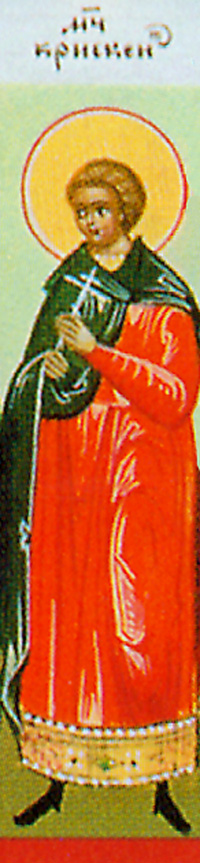
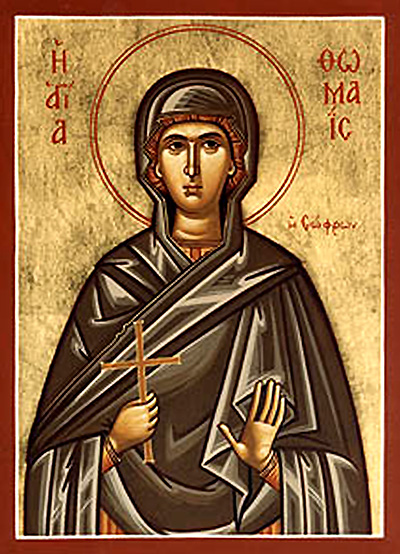
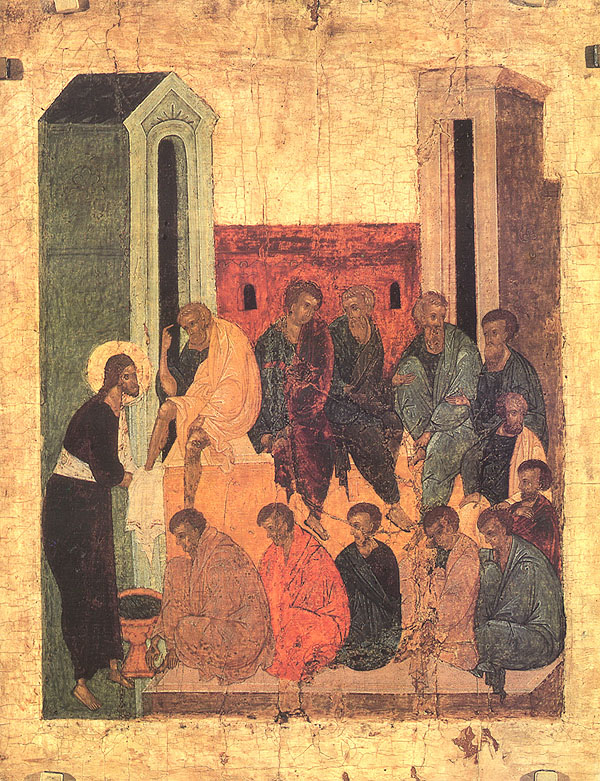

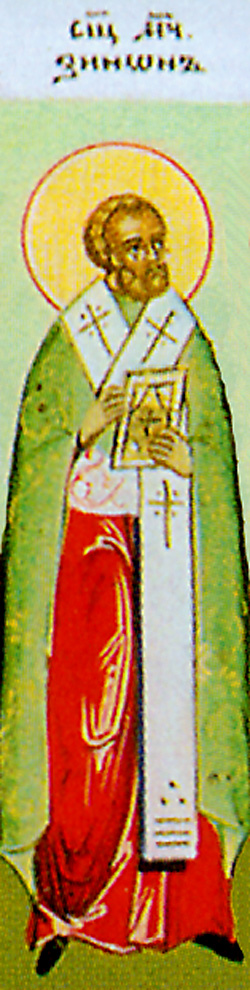


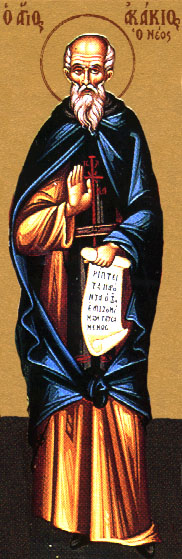
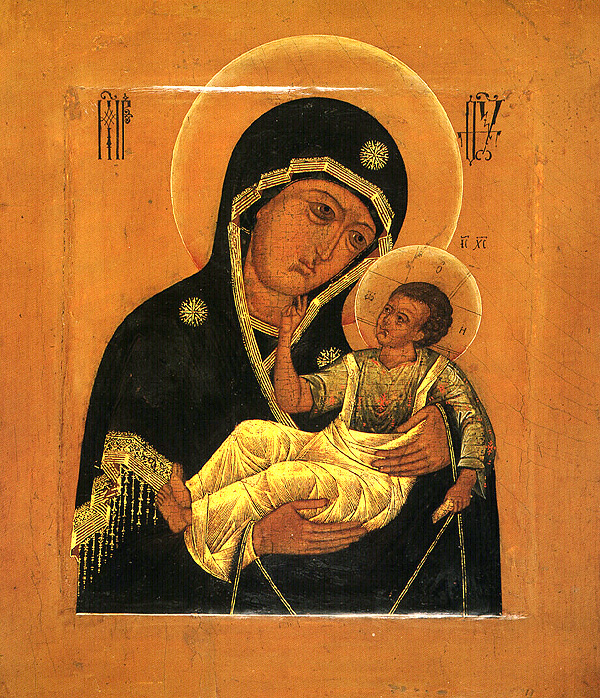

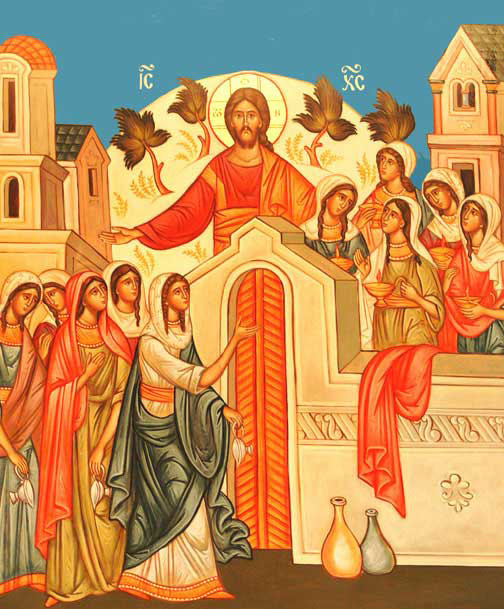


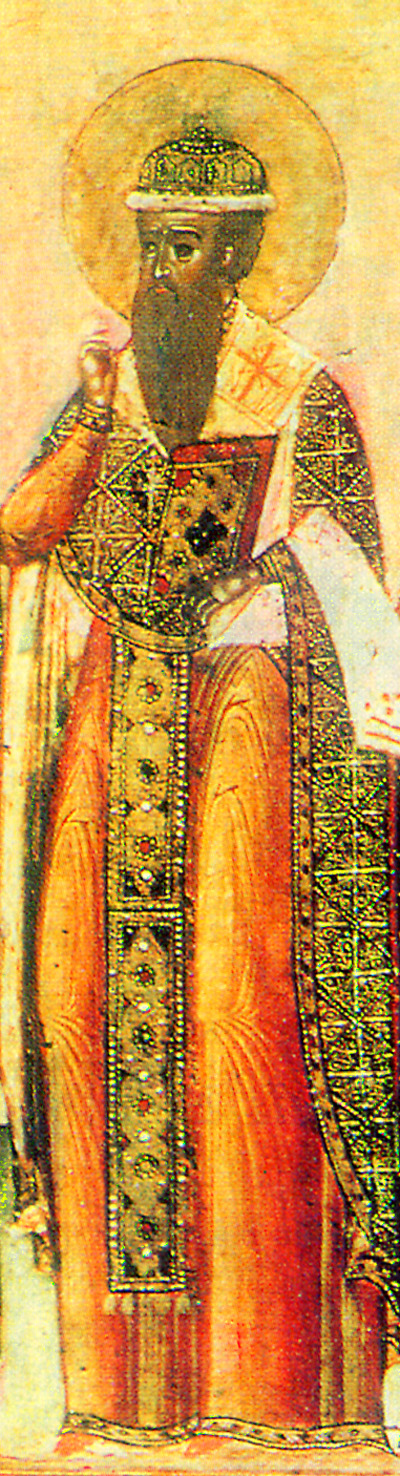
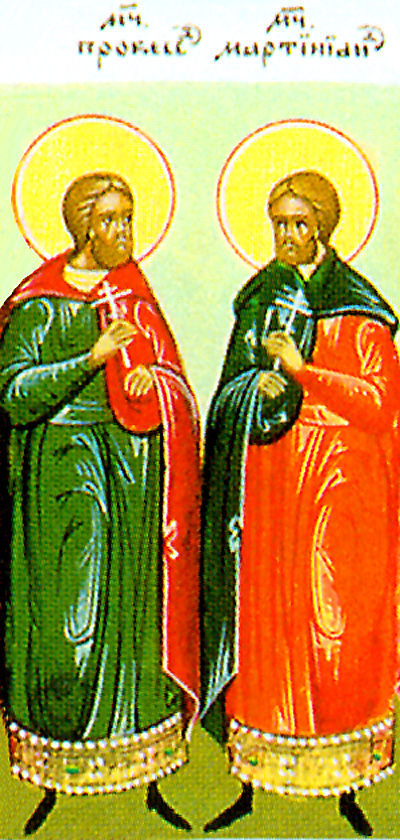

 Saint Peter Antiochian Orthodox Church
You must be logged in to post a comment.