Monthly Archives: March 2022

Daily Readings for Thursday, March 10, 2022

FIRST THURSDAY OF LENT

ABSTAIN FROM MEAT, FISH, DAIRY, EGGS, WINE, OLIVE OIL

Quadratus the Martyr & his Companions, Anastasia of Alexandria, Michael Mauroudes the New-Martyr

ISAIAH 2:11-21

The haughty looks of man shall be brought low, and the pride of men shall be humbled; and the Lord alone will be exalted in that day.
For the Lord of hosts has a day against all that is proud and lofty, against all that is lifted up and high; against all the cedars of Lebanon, lofty and lifted up; and against all the oaks of Bashan; against all the high mountains, and against all the lofty hills; against every high tower, and against every fortified wall; against all the ships of Tarshish, and against all the beautiful craft. And the haughtiness of man shall be humbled, and the pride of men shall be brought low; and the Lord alone will be exalted in that day. And the idols shall utterly pass away. And men shall enter the caves of the rocks and the holes of the ground, from before the terror of the Lord, and from the glory of his majesty, when he rises to terrify the earth.
In that day men will cast forth their idols of silver and their idols of gold, which they made for themselves to worship, to the moles and to the bats, to enter the caverns of the rocks and the clefts of the cliffs, from before the terror of the Lord, and from the glory of his majesty, when he rises to terrify the earth.

GENESIS 2:4-19

These are the generations of the heavens and the earth when they were created.
In the day that the Lord God made the earth and the heavens, when no plant of the field was yet in the earth and no herb of the field had yet sprung up — for the Lord God had not caused it to rain upon the earth, and there was no man to till the ground; but a mist went up from the earth and watered the whole face of the ground — then the Lord God formed man of dust from the ground, and breathed into his nostrils the breath of life; and man became a living being. And the Lord God planted a garden in Eden, in the east; and there he put the man whom he had formed. And out of the ground the Lord God made to grow every tree that is pleasant to the sight and good for food, the tree of life also in the midst of the garden, and the tree of the knowledge of good and evil.
A river flowed out of Eden to water the garden, and there it divided and became four rivers. The name of the first is Pishon; it is the one which flows around the whole land of Hav'ilah, where there is gold; and the gold of that land is good; bdellium and onyx stone are there. The name of the second river is Gihon; it is the one which flows around the whole land of Cush. And the name of the third river is Tigris, which flows east of Assyria. And the fourth river is the Euphra'tes.
The Lord God took the man and put him in the garden of Eden to till it and keep it. And the Lord God commanded the man, saying, "You may freely eat of every tree of the garden; but of the tree of the knowledge of good and evil you shall not eat, for in the day that you eat of it you shall die.
Then the Lord God said, "It is not good that the man should be alone; I will make him a helper fit for him." So out of the ground the Lord God formed every beast of the field and every bird of the air, and brought them to the man to see what he would call them; and whatever the man called every living creature, that was its name.

PROVERBS 3:1-18

My son, do not forget my teaching, but let your heart keep my commandments; for length of days and years of life and abundant welfare will they give you.
Let not loyalty and faithfulness forsake you; bind them about your neck, write them on the tablet of your heart. So you will find favor and good repute in the sight of God and man.
Trust in the Lord with all your heart, and do not rely on your own insight. In all your ways acknowledge him, and he will make straight your paths. Be not wise in your own eyes; fear the Lord, and turn away from evil. It will be healing to your flesh and refreshment to your bones.
Honor the Lord with your substance and with the first fruits of all your produce; then your barns will be filled with plenty, and your vats will be bursting with wine.
My son, do not despise the Lord's discipline or be weary of his reproof, for the Lord reproves him whom he loves, as a father the son in whom he delights.
Happy is the man who finds wisdom, and the man who gets understanding, for the gain from it is better than gain from silver and its profit better than gold. She is more precious than jewels, and nothing you desire can compare with her. Long life is in her right hand; in her left hand are riches and honor. Her ways are ways of pleasantness, and all her paths are peace. She is a tree of life to those who lay hold of her; those who hold her fast are called happy.

Martyr Quadratus and those with him at Corinth
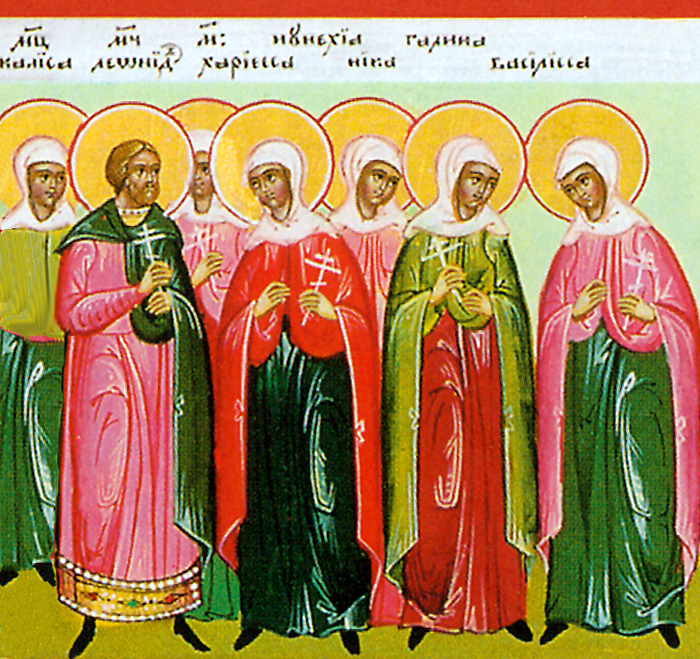
During a persecution against Christians (in the third century) a certain pious woman named Rufina fled from Corinth to a mountain, to escape from her pursuers. There she gave birth to a son Quadratus, and died soon afterward. By the Providence of God the infant remained alive and was nourished in miraculous manner: a cloud appeared over him, dropping a sweet dew into his mouth.

The childhood and youth of Saint Quadratus were spent in the wilderness. When he was a young man, he chanced upon Christians, who enlightened him with the light of the true Faith. Quadratus studied grammar, and later learned the physician’s art and attained great success in it. But most of all, Quadratus loved the wilderness solitude and he spent the greater part of his time in the hills, in prayer and meditation upon God. Many years passed, and his friends and followers frequently came to the saint to hear his instruction. Among them were Cyprian, Dionysius, Anectus, Paul, Crescens and many others.

By order of the impious emperor Decius (249-251), the military prefect Jason arrived at Corinth to torture and slay Christians. Since Quadratus was the eldest, he spoke for the rest. The saint bravely defended his faith in Christ the Savior, then they began the torture. Saint Quadratus, despite inhuman suffering, encouraged the others, urging them not to be afraid and to stand firmly for the Faith.

Unable to persuade any of them to deny Christ, Jason ordered the martyrs to be thrown to wild beasts to be torn apart. But the beasts did not touch them. They tied the saints to chariots by their feet and dragged them through the city, and many of the crowd threw stones at them. Finally, they condemned the martyrs to beheading by the sword. At the place of execution the martyrs requested for a certain time to pray, and then one after the other they bent their necks beneath the sword.

The remaining disciples of Saint Quadratus also suffered for Christ: Dionysius (another one) was stabbed in the night; Victorinus, Victor and Nikēphóros were crushed in a large stone press; Claudius’s hands and feet were cut off; Diodorus was thrown into a fire prepared for him; Serapion was decapitated; Papias and Leonidas were drowned in the sea. Many holy women also went voluntarily to suffer for Christ: Saints Chariessa, Nunechia, Basilissa, Nike, Galla, Galina, and Theodora were among them.

Martyr Quadratus and those with him at Nicomedia
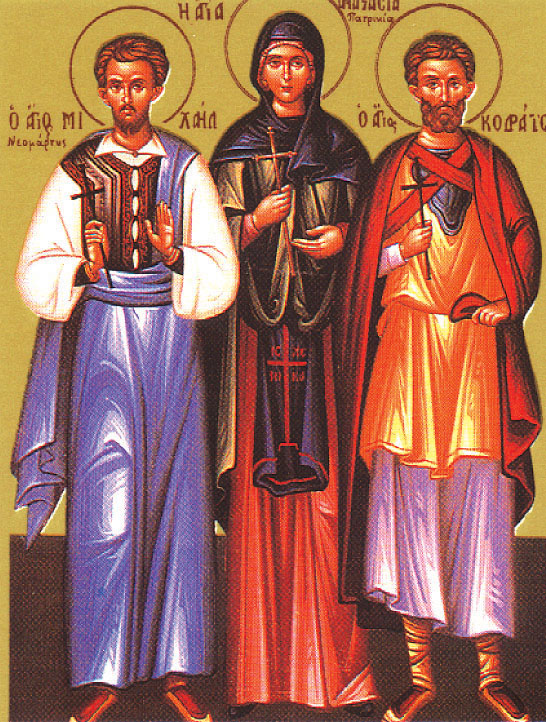
The Holy Martyrs Quadratus of Nicomedia, Saturinus, Rufinus and others suffered during the persecutions of the emperor Decius (249-251) and his successor Valerian (253-259).

Saint Quadratus was descended from an illustrious family. Possessing considerable wealth, the saint did not spare his means in helping fellow Christians, languishing in prison for the faith.

When the envoy of the impious Decius, the proconsul Perennius, arrived in Nicomedia, Saint Quadratus voluntarily appeared before him, in order to strengthen the courage of the imprisoned brethren by his self-sacrificing decision. At first Perennius attempted to lure Quadratus from Christ, promising him rewards and honors. Then, seeing the futility of his attempts, he cast the saint into prison and gave orders to lay him down on a bed of nails and to lay a large stone on him.

Setting out for Nicea, the proconsul commanded that all the imprisoned Christians be brought after him. In that number was Saint Quadratus. Upon arriving in the city, Saint Quadratus implored that they be led to the pagan temple. As soon as they untied his hands and feet, he began to overturn and destroy the idols. By order of the proconsul, they gave Quadratus over to torture. Enduring terrible torments, the saint held firm in spirit and by his act encouraged the other martyrs, whose wounds were seared with burning candles.

During the suffering of the martyrs, suddenly there shone a brilliant cloud, but the pagans found themselves in total darkness. In the ensuing silence was heard the singing of angels glorifying God. Many of those present confessed themselves Christians. Perennius ascribed the miracle to sorcery, and gave orders to take them to prison.

From Nicea the martyrs walked behind the proconsul to Apamea, then to Caesarea, Apollonia and the Hellespont, where they tortured them in all sorts of ways, hoping to make them deny Christ.

They tied Saint Quadratus into a sack filled with poisonous serpents, and threw it into a deep pit. On the following morning, everyone was astonished to see the martyr whole and unharmed. When they began to beat him mercilessly, two noblemen, Saturinus and Rufinus, were moved with pity for the martyr. This was observed, and Saturinus and Rufinus were beheaded.

Perennius subjected the martyr to even more fierce and refined tortures, but was not able to break his spirit. The saint lost his strength and was hardly able to move. For the last time the proconsul urged the martyr to abjure Christ. Marshalling his strength, the saint firmly replied, “Since childhood I have acknowledged Christ as the one and only God, and I know no other.”

The proconsul gave orders to light the fire, make the iron grate red-hot and throw the martyr on it. Having blessed himself with the Sign of the Cross, Saint Quadratus laid himself down upon the red-hot couch as upon a soft bed, emerging unharmed from the flames. In frustration, the proconsul gave orders to behead Saint Quadratus.

Saint Anastasia the Patrician of Alexandria

Saint Anastasia the Patrician of Alexandria lived in Constantinople and was descended from an aristocratic family. She was an image of virtue, and she enjoyed the great esteem of the emperor Justinian (527-565). Widowed at a young age, Anastasia decided to leave the world and save her soul far from the bustle of the capital. She secretly left Constantinople and went to Alexandria. She founded a small monastery not far from the city, and devoted herself entirely to God.

Several years later, the emperor Justinian was widowed and decided to search for Anastasia and marry her. As soon as she learned of this, Saint Anastasia journeyed to a remote skete to ask Abba Daniel (March 18) for help.

In order to safeguard Anastasia, the Elder dressed her in a man’s monastic garb and called her the eunuch Anastasius. Having settled her in one of the very remote caves, the Elder gave her a Rule of prayer and ordered her never to leave the cave and to receive no one. Only one monk knew of this place. His obedience was to bring a small portion of bread and a pitcher of water to the cave once a week, leaving it at the entrance. The nun Anastasia dwelt in seclusion for twenty-eight years. Everyone believed that it was the eunuch Anastasius who lived in the cave.

The Lord revealed to her the day of her death. Having learned of her approaching death, she wrote several words for Abba Daniel on a potsherd and placed it at the entrance to the cave. The Elder came quickly and brought everything necessary for her burial. He found the holy ascetic still alive, and he confessed and communed her with the Holy Mysteries. At Abba Daniel’s request, Saint Anastasia blessed him and the monk accompanying him. With the words: “Lord, into Thy hands I commend my spirit,” the saint died in peace (ca. 567-568).

When the grave was prepared, the Elder gave his disciple his outer garment and ordered him to dress the deceased “brother” in it. As he was putting on the rassa, the monk noticed that she was a woman, but he did not dare to say anything. However, when they returned to the monastery after they buried the nun, the disciple asked Abba Daniel whether he knew the “brother” was a woman, and the Elder related to the young monk the life of Saint Anastasia. Later, the abba’s narrative was written down and received wide acclaim.

The relics of Saint Anastasia were transferred to Constantinople in the year 1200, and put not far from the church of Hagia Sophia.

Saint John of Khakhuli the Oqropiri, also called Chrysostom
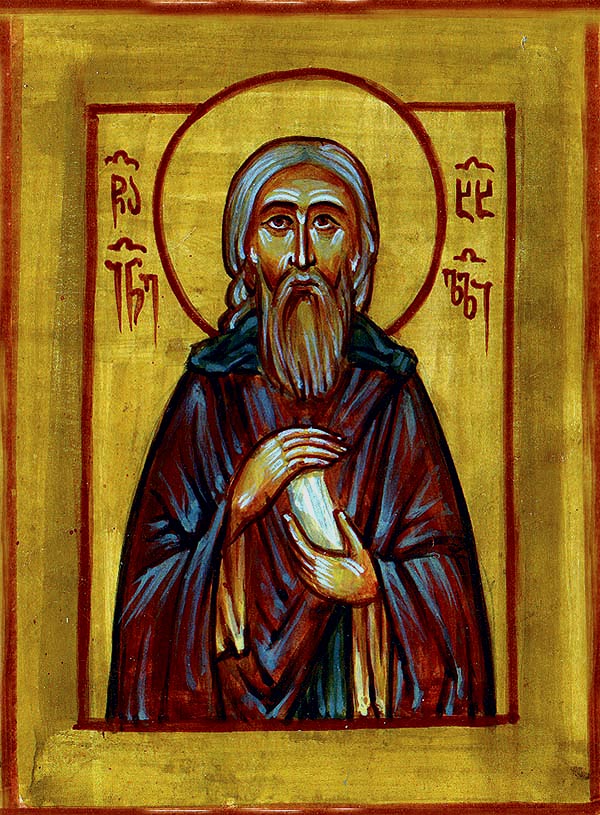
In the second half of the 10th century King Davit Kuropalates founded Khakhuli Monastery in the historical region of Tao, at the gorge of the Khakhuli River, where it joins the Tortumi River.

Once famed for its holiness and academic activity, today Khakhuli Monastery is a Turkish possession and has become a tourist site. Nevertheless, the Georgian nation continues to be illumined by its grace and the radiance of the Georgian faithful who labored there.

A contemporary of King Bagrat III (975-1014), Saint John of Khakhuli was a highly educated theologian, translator, and calligrapher. He has been called “Chrysostom” since he, like the beloved archbishop of Constantinople, delivered his sermons with extraordinary eloquence.

Some sources claim that Saint John was first consecrated bishop of Bolnisi and later transferred to the Khakhuli diocese. It is generally agreed, however, that he left Khakhuli around the year 1019 and traveled to Mt. Athos with Arsen of Ninotsminda and John Grdzelisdze.

One Georgian manuscript, however, suggests that Saint John was not a bishop at that time, and this has baffled Church historians to this day. In this manuscript it is written: “Pray for the blessed monk John Grdzelisdze and his spiritual son John Chrysostom, who labored to write this holy book.”

While laboring on Mt. Athos, Saint John faithfully assisted Saint Ekvtime of the Holy Mountain, and these spiritual brothers became close friends.

The countless good works he performed from the bishop’s throne, the title “Chrysostom,” and the many important writings accredited to him attest to the piety, wisdom, and patriotism of Saint John of Khakhuli. It is written in The Life of Giorgi of the Holy Mountain that Saint John reposed on Mt. Athos.

Saint Michael the New Martyr

No information available at this time.

Daily Readings for Wednesday, March 09, 2022

THE HOLY FORTY MARTYRS OF SEBASTIA

ABSTAIN FROM MEAT, FISH, DAIRY, EGGS

The Holy Forty Martyrs of Sebastia, Caesarios the Righteous

ST. PAUL’S LETTER TO THE HEBREWS 12:1-10

BRETHREN, since we are surrounded by so great a cloud of witnesses, let us also lay aside every weight, and sin which clings so closely, and let us run with perseverance the race that is set before us, looking to Jesus the pioneer and perfecter of our faith, who for the joy that was set before him endured the cross, despising the shame, and is seated at the right hand of the throne of God. Consider him who endured from sinners such hostility against himself, so that you may not grow weary or fainthearted. In your struggle against sin you have not yet resisted to the point of shedding your blood. And have you forgotten the exhortation which addresses you as sons? ‘My son, do not regard lightly the discipline of the Lord, nor lose courage when you are punished by him. For the Lord disciplines him whom he loves, and chastises every son whom he receives.’ It is for discipline that you have to endure. God is treating you as sons; for what son is there whom his father does not discipline? If you are left without discipline, in which all have participated, then you are illegitimate children and not sons. Besides this, we have had earthly fathers to discipline us and we respected them. Shall we not much more be subject to the Father.

MATTHEW 20:1-16

The Lord said this parable, “The kingdom of heaven is like a householder who went out early in the morning to hire laborers for his vineyard. After agreeing with the laborers for a denarius a day, he sent them into his vineyard. And going out about the third hour he saw others standing idle in the marketplace; and to them he said, ‘You go into the vineyard too, and whatever is right I will give you.’ So they went. Going out again about the sixth hour and the ninth hour, he did the same. And about the eleventh hour he went out and found others standing; and he said to them, ‘Why do you stand here idle all day?’ They said to him, ‘Because no one has hired us.’ He said to them, ‘You go into the vineyard too.’ And when evening came, the owner of the vineyard said to his steward, ‘Call the laborers and pay them their wages, beginning with the last, up to the first.’ And when those hired about the eleventh hour came, each of them received a denarius. Now when the first came, they thought they would receive more; but each of them also received a denarius. And on receiving it they grumbled at the householder, saying, ‘These last worked only one hour, and you have made them equal to us who have borne the burden of the day and the scorching heat.’ But he replied to one of them, ‘Friend, I am doing you no wrong; did you not agree with me for a denarius? Take what belongs to you, and go; I choose to give to this last as I give to you. Am I not allowed to do what I choose with what belongs to me? Or is your eye evil because I am good?’ So the last will be first, and the first last. For many are called, but few are chosen.”

40 Holy Martyrs of Sebaste

In the year 313 Saint Constantine the Great issued an edict granting Christians religious freedom, and officially recognizing Christianity as equal with paganism under the law. But his co-ruler Licinius was a pagan, and he decided to stamp out Christianity in his part of the Empire. As Licinius prepared his army to fight Constantine, he decided to remove Christians from his army, fearing mutiny.

One of the military commanders of that time in the Armenian city of Sebaste was Agricola, a zealous champion of idolatry. Under his command was a company of forty Cappadocians, brave soldiers who had distinguished themselves in many battles. When these Christian soldiers refused to offer sacrifice to the pagan gods, Agricola locked them up in prison. The soldiers occupied themselves with prayer and psalmody, and during the night they heard a voice saying, “Persevere until the end, then you shall be saved.”

On the following morning, the soldiers were again taken to Agricola. This time the pagan tried flattery. He began to praise their valor, their youth and strength, and once more he urged them to renounce Christ and thereby win themselves the respect and favor of their emperor.

Seven days later, the renowned judge Licius arrived at Sebaste and put the soldiers on trial. The saints steadfastly answered, “Take not only our military insignia, but also our lives, since nothing is more precious to us than Christ God.” Licius then ordered his servants to stone the holy martyrs. But the stones missed the saints and returned to strike those who had thrown them. One stone thrown by Licius hit Agricola in the face, smashing his teeth. The torturers realized that the saints were guarded by some invisible power. In prison, the soldiers spent the night in prayer and again they heard the voice of the Lord comforting them: “He who believes in me, though he die, yet shall he live (John 11:25). Be brave and fear not, for you shall obtain imperishable crowns.”

On the following day the judge repeated the interrogation in front of the torturer, but the soldiers remained unyielding.

It was winter, and there was a severe frost. They lined up the holy soldiers, threw them into a lake near the city, and set a guard to prevent them from coming out of the water. In order to break the will of the martyrs, a warm bath-house was set up on the shore. During the first hour of the night, when the cold had become unbearable, one of the soldiers made a dash for the bath-house, but no sooner had he stepped over the threshold, then he fell down dead.

During the third hour of the night, the Lord sent consolation to the martyrs. Suddenly there was light, the ice melted away, and the water in the lake became warm. All the guards were asleep, except for Aglaius, who was keeping watch. Looking at the lake he saw that a radiant crown had appeared over the head of each martyr. Aglaius counted thirty-nine crowns and realized that the soldier who fled had lost his crown.

Aggias then woke up the other guards, took off his uniform and said to them, “I too am a Christian,” and he joined the martyrs. Standing in the water he prayed, “Lord God, I believe in You, in Whom these soldiers believe. Add me to their number, and make me worthy to suffer with Your servants.” Then a fortieth crown appeared over his head.

In the morning, the torturers saw with surprise that the martyrs were still alive, and their guard Aggias was glorifying Christ together with them. They led the soldiers out of the water and broke their legs. During this horrible execution the mother of the youngest of the soldiers, Meliton, pleaded with her son to persevere until death.

They put the bodies of the martyrs on a cart and committed them to fire. Young Meliton was still breathing, and they left him on the ground. His mother then picked up her son, and on her own shoulders she carried him behind the cart. When Meliton drew his last breath, his mother put him on the cart with the bodies of his fellow sufferers. The bodies of the saints were tossed in the fire, and their charred bones were thrown into the water, so that Christians would not gather them up.

Three days later the martyrs appeared in a dream to Saint Peter, Bishop of Sebaste, and commanded him to bury their remains. The bishop together with several clergy gathered up the relics of the glorious martyrs by night and buried them with honor.

There is a pious custom of baking “skylarks” (pastries shaped like skylarks) on this day, because people believed that birds sing at this time to announce the arrival of spring. Forty “skylarks” are prepared in honor of the Forty Martyrs.

The names of the forty martyrs are: Cyrion (or Quirio), Candidus, Domnus, Hesychius, Heraclius, Smaragdus, Eunocius (Or Eunicus), Valens, Vivianus, Claudius, Priscus, Theodulus, Eutychius, John, Xanthius, Helianus, Sisinius, Aggias, Aetius, Flavius, Acacius, Ecdicius, Lysimachus, Alexander, Elias, Gorgonius, Theophilus, Dometian, Gaius, Leontuis, Athanasius, Cyril, Sacerdon, Nicholas, Valerius, Philoctimon, Severian, Chudion, Aglaius, and Meliton.

Martyr Urpasianus of Nicomedia

The Holy Martyr Urpasianus suffered in the city of Nicomedia. The emperor Maximian Gallerius (305-311) cruelly persecuted Christians serving in his army and at his court. Some of the timid of soul began to waver and worship the pagan gods, but the strong held out until the very end.

The dignitary Urpasianus threw down his cloak and belt at the feet of the ruler and said, “Henceforth I am a warrior of the Heavenly King, the Lord Jesus Christ. Take back the insignia that was given to me.” Maximian gave orders to tie Urpasianus to a tree and whip him with thongs.

Later, they bound the saint to an iron grate, and they built a fire beneath him. Saint Urpasianus endured the intolerable suffering with incessant prayer. The glorious martyr was burned alive, and his ashes thrown into the sea.

Saint Caesarius, brother of Saint Gregory the Theologian

Saint Caesarius was the son of Saint Gregory (January 1) and Saint Nonna (August 5), and the brother of Saint Gregory the Theologian (January 25). After studying oratory, philosophy, medicine and other subjects in Alexandria, he went to Constantinople, where he became one of the city's leading doctors. Such was his reputation that Emperor Constantius wanted to make him his personal physician. Saint Caesarius thanked him, but declined.

When his brother Saint Gregory completed his studies in Athens, he visited Constantinople (between 358 and 360), and there he met Caesarius. So the two brothers returned to Nazianzus together.

In 361, when Julian the Apostate became Emperor, Saint Caesarius was summoned to Constantinople to become his physician. Although the evil Emperor was a fierce persecutor of the Church and issued many edicts against Cheistians, he exempted Saint Caesarius from any punishment. Julian repeatedly tried to turn Saint Caesarius away from Christ, but he was unable to do so. Finally, at the urging of his father and his brother, Caesarius resigned his position and went back home to Nazianzus.

When Julian died in the year 363, Saint Caesarius returned to Constantinople once more. Under the Emperors Valentinian (364 – 374) and his brother Valens (364 – 378), he was appointed as treasurer of public funds at Nicaea in Bithynia.

On October 11, 368, Saint Caesarius was miraculously unharmed by an earthquake which struck Bithynia. He was baptized1 and then gave away all his belongings to the poor and began to live a quiet, prayerful life. His righteous repose occurred later that same year (or early in 369). Saint Gregory the Theologian delivered a funeral oration for Saint Caesarius. In his writings he also mentions his brother's wisdom, and how respected he was in his lifetime.


1 At that time it was not uncommon for people to postpone Baptism until reaching maturity.

Righteous Tarasius of Liconium

No information available at this time.

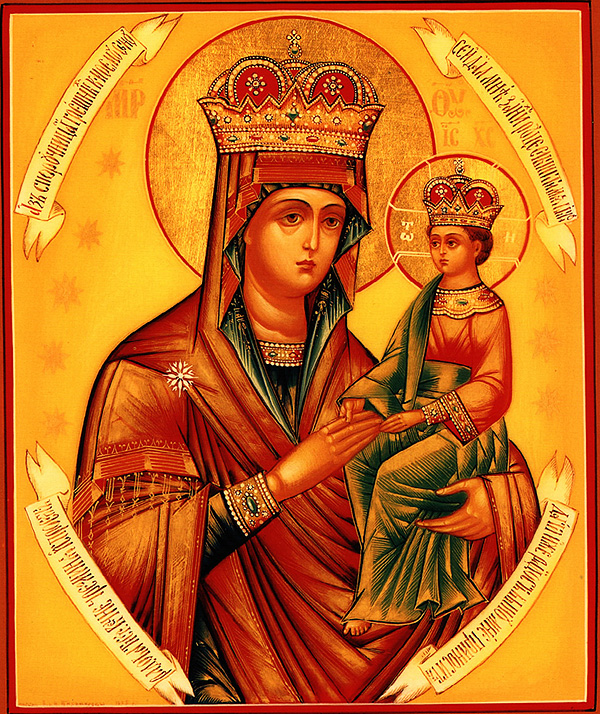
Icon of the Mother of God, “Albazin” or “The Word was made Flesh”

The Albazin Icon of the Mother of God “the Word made Flesh” is of great religious significance in the Amur River region. It received its name from the Russian fortress of Albazin (now the village of Albazino) along the Amur river, founded in the year 1650 by the famous Russian frontier ataman Hierotheus Khabarov on the site of a settlement of the Daurian prince Albaza.

The hue and cry over the Amur Albazinsk fortress became an object of enmity for the Chinese emperor and his generals, who then already dreamed of expanding their influence over all of Russian Siberia.

On the eve of the Feast of the Annunciation, on March 24, 1652, the first military clash of the Russians with the Chinese occurred at the Amur. Through the prayers of the Most Holy Theotokos the pagans were scattered and fled to their own territory. This victory seemed like a portent for the Russians. But the struggle had only just begun. Many sons of Holy Russia died in the struggle for the Amur, and for the triumph of Orthodoxy in the Far East.

In June of 1658 an Albazin military detachment, 270 Cossacks under the leadership of Onuphrius Stepanov, fell into an ambush and in a heroic fight they were completely annihilated by the Chinese.

The enemy burned Albazin, overran Russian lands, and carried off the local population into China. They wanted to turn the fertile cultivated area back into wilderness.

During these difficult years the Most Holy Theotokos showed signs of Her mercy to the land of Amur. In 1665, when Russians returned and rebuilt Albazin, together with a priest there came to the Amur the Elder Hermogenes from the Kirensk Holy Trinity monastery. He carried with him a wonderworking icon of the Mother of God “the Word made Flesh”, called the Albazinsk Icon since that time. In 1671 the holy Elder built a small monastery on the boundary mark of the Brusyan Stone (one and a half kilometers from Albazin near the Amur), where the holy icon was later kept.

Albazin was built up. At two churches in the city, the Ascension of the Lord and Saint Nicholas the Wonderworker, Albazin priests offered the Bloodless Sacrifice. Not far from the city (along the Amur) another monastery was built, the Spassky. The fertile soil produced bread for Eastern Siberia. The local populace adapted itself to Russian Orthodox culture, peacefully entering into the multi-national Russian state, and found Russian protection from the plundering raids of Chinese feudal war-lords.

At Moscow they did not forget the needs of the far-away Amur frontier. They strengthened military defenses and improved regional government. In 1682 the Albazin Military-Provincial Government was formed. They concerned themselves about the spiritual nourishment of the Amur region peoples. A local Council of the Russian Church in 1681 adopted a resolution to send “archimandrites, igumens, or priests, both learned and good, to enlighten unbelievers with the law of Christ.” The Daurian and Tungusian peoples as a whole accepted Holy Baptism. Of great significance was the conversion of the Daurian prince Hantimur (renamed Peter) and his eldest son Katana (renamed Paul) to Orthodoxy.

The servants of the Chinese emperor planned for a new attack. After several unsuccessful forays, on July 10, 1685, they marched against Albazin with an army of 15,000 and encircled the fortress. In it were 450 Russian soldiers and three cannon. The first assault was repulsed. The Chinese then from all sides piled up firewood and kindling against the wooden walls of the fortress and set it on fire. Further resistance proved impossible. With its military standards and holy things, among which was the wonderworking Albazin Icon, the soldiers abandoned the fortress.

The Mother of God did not withhold Her intercession from Her chosen city. Scouts soon reported that the Chinese suddenly began to withdraw from Albazin, ignoring the Chinese emperor’s command to destroy the crops in the Russian fields. The miraculous intervention of the Heavenly Protectress not only drove the enemy from Russian territories, but also preserved the grain which sustained the city for the winter months. On August 20, 1685 Russians were in Albazin again.

A year went by, and the fortress was again besieged by Chinese. There began a five-month defense of Albazin, which occupies a most honored place in Russian military history. Three times, in July, in September, and in October, the forces of the Chinese emperor made an assault on the wooden fortifications. A hail of fiery arrows and red-hot cannon balls fell on the town. Neither the city nor its defenders could be seen in the smoke and fire. And all three times, the Mother of God defended the inhabitants of Albazin from their fierce enemy.

Until December 1686, when the Chinese lifted the siege of Albazin, of the city’s 826 defenders only 150 men remained alive.

These forces were inadequate to continue the war against the Chinese emperor. In August 1690 the last of the Cossacks departed from Albazin under the leadership of Basil Smirenikov. Neither the fortress, nor its holy things, fell into the hands of the enemy. The fortifications were razed and leveled by the Cossacks, and the Albazin Icon of the Mother of God was taken to Sretensk, a city on the river Shilka, which flows into the Amur.

But even after the destruction of Albazin, God destined its inhabitants to do another service for the good of the Church. By divine Providence the end of the military campaign contributed to the increase of the influence of the grace of Orthodoxy among the peoples of the Far East. During the years of war, a company of about a hundred Russian cossacks and peasants from Albazin and its environs were taken captive and sent to Peking.

The Chinese emperor even gave orders to give one of the Buddhist temples in the Chinese capital for an Orthodox church dedicated to Sophia, the Wisdom of God. In 1695 Metropolitan Ignatius of Tobolsk sent an antimension, chrism, service books, and church vessels to the Sophia church. In a letter to the captive priest Maximus, “the Preacher of the Holy Gospel to the Chinese Empire,” Metropolitan Ignatius wrote: “Be not troubled, nor troubled in soul for yourself and the captives with you, for who is able to oppose the will of God? Your captivity is not without purpose for the Chinese people, so that you may reveal to them the light of Christ’s Orthodox Faith.”

The preaching of the Gospel in the Chinese Empire soon bore fruit and resulted in the first baptisms of Chinese. The Russian Church zealously looked after the new flock. In 1715 the Metropolitan of Tobolsk, Saint Philotheus “the Apostle to Siberia” (+ May 31, 1727), wrote a letter to the Peking clergy and the faithful living under the Peking Spiritual Mission, who continued with the Christian work of enlightening pagans.

The years went by, and the new epoch brought the Russian deliverance of the Amur. On August 1, 1850, the Procession of the Precious Wood of the Life-Giving Cross, Captain G. I. Nevelsky raised up the Russian Andreev flag at the mouth of the Amur River and founded the city of Nikolaevsk-on-Amur. Through the efforts of the Governor-General of Eastern Siberia, N. N. Muraviev-Amursky (+ 1881), and Saint Innocent, Archbishop of Kamchatka (March 31), and through the spiritual nourishment which obtained in the Amur and coastal regions, in several years the left bank of the Amur was built up with Russian cities, villages and Cossack settlements.

Each year brought important advances in the development of the liberated territory, its Christian enlightenment and welfare. In the year 1857 on the bank of the Amur fifteen way-stations and settlements were established (the Albazin on the site of the old fortress and the Innokentiev, named in honor of Saint Innocent). In a single year, 1858, there were more than thirty settlements, among which were three cities: Khabarovsk, Blagoveschensk and Sophiisk.

On May 9, 1858, on the Feast of Saint Nicholas, N. N. Muraviev-Amursky and Archbishop Innocent of Kamchatka arrived in the Cossack post at Ust’-Zeisk. Saint Innocent was there to dedicate a temple in honor of the Annunciation of the Mother of God (Blagoveschenie, in Slavonic), the first building in the new city. Because of the name of the temple, the city was also called Blagoveschensk, in memory of the first victory over the Chinese on the Feast of the Annunciation in 1652, and in memory of the Annunciation church at Irkutsk, in which Saint Innocent began his own priestly service. It was also a sign that “from that place proceeded the blessed news of the reintegration of the Amur region territory under Russian sovereignty.” New settlers on the way to the Amur, journeying through Sretensk, fervently offered up their prayers to the Holy Protectress of the Amur region before her Wonderworking Albazin Icon. Their prayers were heard: the Aigunsk (1858) and Peking (1860) treaties decisively secured the left bank of the Amur and coastal regions for Russia.

In 1868 the Bishop of Kamchatka, Benjamin Blagonravov, the successor to Saint Innocent, transferred the holy icon from Sretensk to Blagoveschensk, thereby returning the famous holy icon to the Amur territory. In 1885, a new period began in the veneration of the Albazin Icon of the Mother of God and is associated with the name of the Kamchatka bishop Gurias, who established an annual commemoration on March 9 and a weekly Akathist.

In the summer of 1900, during the “Boxer Rebellion” in China, the waves of insurrection reached all the way to the Russian border. Chinese troops suddenly appeared on the banks of the Amur before Blagoveschensk. For nineteen days the enemy stood before the undefended city, raining artillery fire down upon it, and menacing the Russian bank with invasion.

The shallows of the Amur afforded passage to the adversary. In the Annunciation church services were celebrated continuously, and Akathists were read before the Wonderworking Albazin Icon. The Protection of the Mother of God was again extended over the city, just as it had been in earlier times. Not daring to cross the Amur, the enemy departed from Blagoveschensk. According to the accounts of the Chinese themselves, they often saw a Radiant Woman over the bank of the Amur, inspiring them with fear and rendering their missiles ineffective.

For more than 300 years the Wonderworking Albazin Icon of the Mother of God watched over the Amur frontier of Russia. Orthodox people venerate it not only as Protectress of Russian soldiers, but also as a Patroness of mothers. Believers pray for mothers before the icon during their pregnancy and during childbirth, “so that the Mother of God might bestow the gift of abundant health from the Albazin Icon’s inexhaustible well-spring of holiness.”

This icon depicts Christ as a child standing in a mandorla before His Mother’s breast.

Venerable Vitalius of Castronovo

Saint Vitalius was born in the Sicilian town of Castronovo in the X century to wealthy and pious parents, Sergius and Chrysonίkḗ, who raised him according to God's Word, and saw that he received a good education.

From an early age, Vitalius loved Christ and the monastic state, which is why he fled to the monastery of Saint Philip at Agira (Ancient Agyrion). There he became a monk and received the Angelic Schema after living a life of asceticism, and by making progress in virtue for fifteen years. During this time, he made pilgrimages to Rome, Calabria and other holy places. Finally, he returned to Calabria and engaged in further ascetical struggles on the mountain of Liporachos. There he met the ascetic Anthony and lived with him for a short time. Then he moved from mountain to mountain, until at last he settled in the monastery of Saint Elias at Carbone.

After several years, he went to a cave between the mountains of Turri and Armento. The Saint struggled day and night, praying and ascending to great spiritual heights. Even the wild beasts of the mountain approached him docilely in order to receive his blessing.

There he was visited by Saint Luke of Demena, Sicily (October 13, February 5), with whom he prayed and discussed spiritual matters.1

Later the Saint went to Bari with his nephew Elias and settled on Mount Turri, where he built a small church. The final abode of Saint Vitalius was in the region of Rapolla,where he built a monastery. There he spent the rest of his life, gathering a multitude of monks around him.

Saint Vitalius reposed peacefully in the year 994.


1 San Luca d’Armento (October 13, February 5) was a monk in Lucania, Sicily. He founded the monastery of Saints Elias and Anastasios the Persian (January 22) at Carbone, Italy and served as its first Igoumen. Saint Luke based his Rule for the monastic life on the Greek Typika.

Corrected announcements for 3/13 (Sorry, I didn’t finish updated the info for next week)

March 13, 2022

First Sunday of Great Lent

Sunday of Orthodoxy

On the first Sunday of Great Lent, we celebrate the feast of the Triumph of Orthodoxy. This is an historical feast commemorating the restoration of the icons, which had been banned for several decades, to their rightful liturgical use in the year 843 A.D.

The major emphasis of this feast is the victory of the true faith, the victory which always ultimately triumphs. Having completed the first week of our lenten efforts, we are reminded that Christ, the perfect image of God the Father, calls us to personal victory by restoring within ourselves “the image and likeness of God” in which we were first created (Genesis 1:26).

The icons of Our Lord, the Theotokos, and all the saints are images of true humanity, signs of what our eternal calling and vocation really is. They tell us that we are all called to be living icons and imitators of Christ, bearing the likeness of God as gracious vessels of the Holy Spirit.

Hebrews 11:24-26, 32-40: Brethren, by faith Moses, when he was grown up, refused to be called the son of Pharaoh’s daughter; choosing rather to share ill-treatment with the people of God, than to enjoy the pleasures of sin for a season; esteeming the reproach of the Christ greater riches than the treasures of Egypt; for he looked to the recompense of reward. And what more shall I say? For the time would fail me if I tell of Gideon, Barak, Sampson, Jephthah, of David and Samuel and all the prophets, who through faith subdued kingdoms, worked righteousness, obtained promises, stopped the mouths of lions, quenched the power of fire, escaped the edge of the sword, from weakness were made strong, became mighty in war, and turned to flight armies of the aliens. Women received their dead by resurrection, and others were tortured, not accepting their deliverance, that they might obtain a better resurrection. And others suffered mocking and scourging, and even chains and imprisonment. They were stoned, they were sawn asunder, they were tempted, they were slain with the sword; they went about in skins of sheep and goats, being destitute, afflicted, tormented (of whom the world was not worthy), wandering in deserts and mountains, and in dens and caves of the earth. And all these, having obtained a witness through their faith, did not receive the promise, since God had foreseen something better for us, that apart from us they should not be made perfect.

John 1:43-51: At that time, Jesus decided to go to Galilee. And He found Philip and said to him, “Follow Me.” Now Philip was from Bethsaida, the city of Andrew and Peter. Philip found Nathanael, and said to him, “We have found Him of Whom Moses in the Law and also the Prophets wrote, Jesus of Nazareth, the son of Joseph.” Nathanael said to him, “Can anything good come out of Nazareth?” Philip said to him, “Come and see.” Jesus saw Nathanael coming to Him, and said of him, “Behold, an Israelite indeed, in whom is no guile!” Nathanael said to Jesus, “How do you know me?” Jesus answered him, “Before Philip called you, when you were under the fig tree, I saw you.” Nathanael answered Him, “Rabbi, Thou art the Son of God! Thou art the King of Israel!”

Troparion of the Resurrection: Let us believers praise and worship the Word, co-eternal with the Father and the Spirit, born of the Virgin for our salvation; for he took pleasure in ascending the Cross in the flesh, to suffer death, and to raise the dead by his glorious Resurrection.

Troparion of the Sunday of Orthodoxy: Thy pure image do we venerate, O good One, asking forgiveness of our sins, O Christ our God; for by thine own will thou didst ascend the Cross in thy body, to save thy creatures from the bondage of the enemy. Thou hast truly filled all with joy, since thou didst come, O our Saviour, to save the world.

Troparion of the Chains of St. Peter: O Holy Apostle, Peter, thou dost preside over the Apostles by the precious chains which thou didst bear. We venerate them with faith and beseech thee that by thine intercessions we be granted the great mercy.

Kontakion of the Sundays of Lent: To thee the champion leader, I thy servant offer thanks for victory, O Theotokos, thou who hast delivered me form terror. As thou hast power invincible, free me from every danger that I may cry unto thee: Rejoice, O bride without bridegroom.

CALENDAR

UNTIL FURTHER NOTICE: All services listed on the calendar will be available through streaming and webcast.

Please continue to follow the CDC Guidelines to limit contagion and the spread of the COVID virus.

Sunday, March 13 (Sunday of Orthodoxy)

8:50 a.m. — Orthros (webcast)

9:00 a.m. — Christian Education

10:00 a.m. — Divine Liturgy with procession of the icons (webcast)

Monday, March 14

Father Herman off

Tuesday, March 15

NO Services

Wednesday, March 16 (Christodoulos, Wonder-worker of Patmos)

6:30 p.m. — Pre-sanctified Liturgy followed by Soup Supper

Thursday, March 17

NO Services

Friday, March 18

6:30 p.m. — Akathist Hymn to the Theotokos

Saturday, March 19

4:45 p.m. — Choir Practice


6:00 p.m. — Great Vespers

Sunday, March 20 (Commemoration of Gregory Palamas)

8:50 a.m. — Orthros (webcast)

9:00 a.m. — Christian Education

10:00 a.m. — Divine Liturgy (webcast)

12:00 p.m. — Pot Luck Meal

SPECIAL ANNOUNCEMENTS

The Eucharist Bread …was offered by the Hendersons for the Divine Liturgy this morning.

Eucharist Bread Schedule:

Eucharist Bread Coffee Hour

March 13 Henderson D. Root/Baker

March 20 Algood POT LUCK MEAL

Henderson/Jones

March 24 (Thurs. p.m.) Katool Dansereau/Alaeetawi

(Feast of the Annunciation)

March 27 Schelver Meadows/Pigott

Schedule for Epistle Readers – Page numbers refer to the Apostolos (book of the Epistles) located on the Chanters’ stand at the front of the nave. Please be sure to use this book when you read.

Reader Reading Page#

March 6 Sh. Charlotte Algood Rom. 13:11-14:4 279

March 13 Kh. Sharon Meadows Heb. 11:24-26, 32-40 281

March 20 Kh. Sharon Meadows Heb. 1:10-2:3 283

March 24 (Thurs. p.m.) Brenda Baker Heb. 2:11-18 376

March 27 Kh. Be’Be’ Schelver Heb. 4:14-5:6 285

Also, please remember that we still need your tithes and offerings which may be placed in the tithe box at the back of the nave or be mailed to: St. Peter Orthodox Church, P.O. Box 2084, Madison, MS 39130-2084.

Continue to pray for Metropolitan Paul (who is also the brother of our Patriarch) and the Syriac Archbishop John of Aleppo who were abducted while on a humanitarian mission in Syria.

Please remember Fr. Joseph and Kh. Joanna Bittle, and their daughter Abigail, in your prayers.

Please remember the following in your prayers: Aidan Milnor, the Milnor family; Lamia Dabit and her family; Mary Greene (Lee and Kh. Sharon’s sister); Jay and Joanna; Fr. Leo and Kh. Be’Be’ and their family; Kathy Willingham; Marilyn (Kyriake) Snell; Jack and Jill Weatherly; Lottie Dabbs (Sh. Charlotte Algood’s mother), Sh. Charlotte and their family; Maria Costas (currently at St. Catherine’s Village); Fr. James and all their family.

A movie has been released about St. Nectarius of Aegina. It’s called Man of God. It is scheduled to play at the theaters in Pearl and Madison one showing only, March 21, 2022, at 7:00 p.m. Here is the link: https://www.imdb.com/showtimes/title/tt6060964/?date=2022-03-21

If you are not feeling well, PLEASE do not attempt to come to the services. This also includes anyone who may have been exposed to you during this time. Also, please let Fr. Herman know if you are not feeling well and have COVID like symptoms.

Calendar Items:

* The Ladies will meet at the church at 10:00 a.m. on the second Saturday of the month to pray the Akathist to the Mother of God, Nurturer of Children on behalf of our children. They will also enjoy a book study afterwards.

* The Ladies will meet for lunch on the last Tuesday of the month.

* As is our parish custom during Great Lent, we will celebrate the Pre-sanctified Liturgy on Wednesday evenings and pray the Akathist to the Theotokos on Friday evenings. Both services begin at 6:30 p.m.

* Please note that our Pot Luck Meal in March will be on Sunday, March 20th and NOT on March 13th as listed in our Quarterly Schedule.

* We will celebrate the Feast of the Annunciation with Orthros followed by Divine Liturgy on Thursday evening, March 24th, beginning at 6:00 p.m.

* The dates for Stewpot for 2022 are Saturday, May 7th and Saturday, September 3rd.

Camp St. Thekla dates: The dates for Camp St. Thekla are: Session 1 is June 26 – July 2 and Session 2 is July 3 – 9. If you have a child registered for Camp, please see Daniel for information on scholarships available from the Order of St. Ignatius. If there is still a financial need, some additional funds may be available.

Instructions for streaming our services can be found on the parish website.

Fasting Discipline for March

Beginning with Clean Monday on March 7th, the traditional fasting discipline (no meat, dairy, eggs, fish, wine or oil) is observed on all days of the week until Pascha (except for the Feast of the Annunciation on March 25th and Palm Sunday on April 17th, when fish, wine and oil are permitted).

Major Commemorations for March

March 13 1st Sunday of Lent; Sunday of Orthodoxy

March 20 2nd Sunday of Lent; Gregory Palamas

March 25 Feast of the Annunciation

March 26 Synaxis of the Archangel Gabriel

March 27 3rd Sunday of Lent; Adoration of the Holy Cross

Diocese of Miami and the Southeast Parish Life Conference: Registration is now open for the Parish Life Conference to be hosted June 15-18 by St. John Orthodox Church in Memphis. More information may be found on the Diocesan website at DOMSE.org.

Quotable: “An old man was asked, ‘How can I find God?’ He said, ‘In fasting, in watching, in labors, in devotion, and, above all, in discernment. I tell you, many have injured their bodies without discernment and have gone away from us having achieved nothing. Our mouths smell bad through fasting, we know the Scriptures by heart, we recite all the Psalms of David, but we have not that which God seeks: charity and humility.'”

The Desert Fathers

Worship: Sunday, March 20, 2022 (Second Sunday of Lent; Sunday of Orthodoxy)

Scripture: Hebrews 1:10-2:3; Mark 2:1-12

Celebrant: Father Herman

Epistle Reader: Kh. Sharon Meadows

Prosphora: Algood

Coffee Hour: POT LUCK MEAL

Henderson/Jones

3/13 announcements

March 13, 2022

First Sunday of Great Lent

Sunday of Orthodoxy

On the first Sunday of Great Lent, we celebrate the feast of the Triumph of Orthodoxy. This is an historical feast commemorating the restoration of the icons, which had been banned for several decades, to their rightful liturgical use in the year 843 A.D.

The major emphasis of this feast is the victory of the true faith, the victory which always ultimately triumphs. Having completed the first week of our lenten efforts, we are reminded that Christ, the perfect image of God the Father, calls us to personal victory by restoring within ourselves “the image and likeness of God” in which we were first created (Genesis 1:26).

The icons of Our Lord, the Theotokos, and all the saints are images of true humanity, signs of what our eternal calling and vocation really is. They tell us that we are all called to be living icons and imitators of Christ, bearing the likeness of God as gracious vessels of the Holy Spirit.

Hebrews 11:24-26, 32-40: Brethren, by faith Moses, when he was grown up, refused to be called the son of Pharaoh’s daughter; choosing rather to share ill-treatment with the people of God, than to enjoy the pleasures of sin for a season; esteeming the reproach of the Christ greater riches than the treasures of Egypt; for he looked to the recompense of reward. And what more shall I say? For the time would fail me if I tell of Gideon, Barak, Sampson, Jephthah, of David and Samuel and all the prophets, who through faith subdued kingdoms, worked righteousness, obtained promises, stopped the mouths of lions, quenched the power of fire, escaped the edge of the sword, from weakness were made strong, became mighty in war, and turned to flight armies of the aliens. Women received their dead by resurrection, and others were tortured, not accepting their deliverance, that they might obtain a better resurrection. And others suffered mocking and scourging, and even chains and imprisonment. They were stoned, they were sawn asunder, they were tempted, they were slain with the sword; they went about in skins of sheep and goats, being destitute, afflicted, tormented (of whom the world was not worthy), wandering in deserts and mountains, and in dens and caves of the earth. And all these, having obtained a witness through their faith, did not receive the promise, since God had foreseen something better for us, that apart from us they should not be made perfect.

John 1:43-51: At that time, Jesus decided to go to Galilee. And He found Philip and said to him, “Follow Me.” Now Philip was from Bethsaida, the city of Andrew and Peter. Philip found Nathanael, and said to him, “We have found Him of Whom Moses in the Law and also the Prophets wrote, Jesus of Nazareth, the son of Joseph.” Nathanael said to him, “Can anything good come out of Nazareth?” Philip said to him, “Come and see.” Jesus saw Nathanael coming to Him, and said of him, “Behold, an Israelite indeed, in whom is no guile!” Nathanael said to Jesus, “How do you know me?” Jesus answered him, “Before Philip called you, when you were under the fig tree, I saw you.” Nathanael answered Him, “Rabbi, Thou art the Son of God! Thou art the King of Israel!”

Troparion of the Resurrection: Let us believers praise and worship the Word, co-eternal with the Father and the Spirit, born of the Virgin for our salvation; for he took pleasure in ascending the Cross in the flesh, to suffer death, and to raise the dead by his glorious Resurrection.

Troparion of the Sunday of Orthodoxy: Thy pure image do we venerate, O good One, asking forgiveness of our sins, O Christ our God; for by thine own will thou didst ascend the Cross in thy body, to save thy creatures from the bondage of the enemy. Thou hast truly filled all with joy, since thou didst come, O our Saviour, to save the world.

Troparion of the Chains of St. Peter: O Holy Apostle, Peter, thou dost preside over the Apostles by the precious chains which thou didst bear. We venerate them with faith and beseech thee that by thine intercessions we be granted the great mercy.

Kontakion of the Sundays of Lent: To thee the champion leader, I thy servant offer thanks for victory, O Theotokos, thou who hast delivered me form terror. As thou hast power invincible, free me from every danger that I may cry unto thee: Rejoice, O bride without bridegroom.

CALENDAR

UNTIL FURTHER NOTICE: All services listed on the calendar will be available through streaming and webcast.

Please continue to follow the CDC Guidelines to limit contagion and the spread of the COVID virus.

Sunday, March 13 (Sunday of Orthodoxy)

8:50 a.m. — Orthros (webcast)

9:00 a.m. — Christian Education

10:00 a.m. — Divine Liturgy with procession of the icons (webcast)

Monday, March 14

Father Herman off

Tuesday, March 15

NO Services

Wednesday, March 16 (Christodoulos, Wonder-worker of Patmos)

6:30 p.m. — Pre-sanctified Liturgy followed by Soup Supper

Thursday, March 17

NO Services

Friday, March 18

6:30 p.m. — Akathist Hymn to the Theotokos

Saturday, March 19

4:45 p.m. — Choir Practice


6:00 p.m. — Great Vespers

Sunday, March 20 (Commemoration of Gregory Palamas)

8:50 a.m. — Orthros (webcast)

9:00 a.m. — Christian Education

10:00 a.m. — Divine Liturgy (webcast)

12:00 p.m. — Pot Luck Meal

SPECIAL ANNOUNCEMENTS

The Eucharist Bread …was offered by the Hendersons for the Divine Liturgy this morning.

Eucharist Bread Schedule:

Eucharist Bread Coffee Hour

March 13 Henderson D. Root/Baker

March 20 Algood POT LUCK MEAL

Henderson/Jones

March 24 (Thurs. p.m.) Katool Dansereau/Alaeetawi

(Feast of the Annunciation)

March 27 Schelver Meadows/Pigott

Schedule for Epistle Readers – Page numbers refer to the Apostolos (book of the Epistles) located on the Chanters’ stand at the front of the nave. Please be sure to use this book when you read.

Reader Reading Page#

March 6 Sh. Charlotte Algood Rom. 13:11-14:4 279

March 13 Kh. Sharon Meadows Heb. 11:24-26, 32-40 281

March 20 Kh. Sharon Meadows Heb. 1:10-2:3 283

March 24 (Thurs. p.m.) Brenda Baker Heb. 2:11-18 376

March 27 Kh. Be’Be’ Schelver Heb. 4:14-5:6 285

Also, please remember that we still need your tithes and offerings which may be placed in the tithe box at the back of the nave or be mailed to: St. Peter Orthodox Church, P.O. Box 2084, Madison, MS 39130-2084.

Continue to pray for Metropolitan Paul (who is also the brother of our Patriarch) and the Syriac Archbishop John of Aleppo who were abducted while on a humanitarian mission in Syria.

Please remember Fr. Joseph and Kh. Joanna Bittle, and their daughter Abigail, in your prayers.

Please remember the following in your prayers: Aidan Milnor, the Milnor family; Lamia Dabit and her family; Mary Greene (Lee and Kh. Sharon’s sister); Jay and Joanna; Fr. Leo and Kh. Be’Be’ and their family; Kathy Willingham; Marilyn (Kyriake) Snell; Jack and Jill Weatherly; Lottie Dabbs (Sh. Charlotte Algood’s mother), Sh. Charlotte and their family; Maria Costas (currently at St. Catherine’s Village); Fr. James and all their family.

A movie has been released about St. Nectarius of Aegina. It’s called Man of God. It is scheduled to play at the theaters in Pearl and Madison one showing only, March 21, 2022, at 7:00 p.m. Here is the link: https://www.imdb.com/showtimes/title/tt6060964/?date=2022-03-21

If you are not feeling well, PLEASE do not attempt to come to the services. This also includes anyone who may have been exposed to you during this time. Also, please let Fr. Herman know if you are not feeling well and have COVID like symptoms.

Calendar Items:

* The Ladies will meet at the church at 10:00 a.m. on the second Saturday of the month to pray the Akathist to the Mother of God, Nurturer of Children on behalf of our children. They will also enjoy a book study afterwards.

* The Ladies will meet for lunch on the last Tuesday of the month.

* As is our parish custom during Great Lent, we will celebrate the Pre-sanctified Liturgy on Wednesday evenings and pray the Akathist to the Theotokos on Friday evenings. Both services begin at 6:30 p.m.

* Please note that our Pot Luck Meal in March will be on Sunday, March 20th and NOT on March 13th as listed in our Quarterly Schedule.

* We will celebrate the Feast of the Annunciation with Orthros followed by Divine Liturgy on Thursday evening, March 24th, beginning at 6:00 p.m.

* The dates for Stewpot for 2022 are Saturday, May 7th and Saturday, September 3rd.

Camp St. Thekla dates: The dates for Camp St. Thekla are: Session 1 is June 26 – July 2 and Session 2 is July 3 – 9. If you have a child registered for Camp, please see Daniel for information on scholarships available from the Order of St. Ignatius. If there is still a financial need, some additional funds may be available.

Instructions for streaming our services can be found on the parish website.

Fasting Discipline for March

Beginning with Clean Monday on March 7th, the traditional fasting discipline (no meat, dairy, eggs, fish, wine or oil) is observed on all days of the week until Pascha (except for the Feast of the Annunciation on March 25th and Palm Sunday on April 17th, when fish, wine and oil are permitted).

Major Commemorations for March

March 13 1st Sunday of Lent; Sunday of Orthodoxy

March 20 2nd Sunday of Lent; Gregory Palamas

March 25 Feast of the Annunciation

March 26 Synaxis of the Archangel Gabriel

March 27 3rd Sunday of Lent; Adoration of the Holy Cross

Diocese of Miami and the Southeast Parish Life Conference: Registration is now open for the Parish Life Conference to be hosted June 15-18 by St. John Orthodox Church in Memphis. More information may be found on the Diocesan website at DOMSE.org.

Quotable: “An old man was asked, ‘How can I find God?’ He said, ‘In fasting, in watching, in labors, in devotion, and, above all, in discernment. I tell you, many have injured their bodies without discernment and have gone away from us having achieved nothing. Our mouths smell bad through fasting, we know the Scriptures by heart, we recite all the Psalms of David, but we have not that which God seeks: charity and humility.'”

The Desert Fathers

Worship: Sunday, March 20, 2022 (Second Sunday of Lent; Sunday of Orthodoxy)

Scripture: Hebrews 11:24-26, 32-40; John 1:43-51

Celebrant: Father Herman

Epistle Reader: Kh. Sharon Meadows

Prosphora: Henderson

Coffee Hour: D. Root/Baker

Daily Readings for Tuesday, March 08, 2022

FIRST TUESDAY OF LENT

ABSTAIN FROM MEAT, FISH, DAIRY, EGGS, WINE, OLIVE OIL

Theophylact the Confessor, Bishop of Nicomedia, Hermas the Apostle of the 70, Dometios the Righteous, Paul the Confessor, Felix of Burgundy, Enlightener of East Anglia

ISAIAH 1:19-2:3

If you are willing and obedient, you shall eat the good of the land; but if you refuse and rebel, you shall be devoured by the sword; for the mouth of the Lord has spoken.
How the faithful city has become a harlot, she that was full of justice! Righteousness lodged in her, but now murderers. Your silver has become dross, your wine mixed with water. Your princes are rebels and companions of thieves. Every one loves a bribe and runs after gifts. They do not defend the fatherless, and the widow's cause does not come to them.
Therefore the Lord says, the Lord of hosts, the Mighty One of Israel: "Ah, I will vent my wrath on my enemies, and avenge myself on my foes. I will turn my hand against you and will smelt away your dross as with lye and remove all your alloy. And I will restore your judges as at the first, and your counselors as at the beginning. Afterward you shall be called the city of righteousness, the faithful city.
Zion shall be redeemed by justice, and those in her who repent, by righteousness. But rebels and sinners shall be destroyed together, and those who forsake the Lord shall be consumed. For you shall be ashamed of the oaks in which you delighted; and you shall blush for the gardens which you have chosen. For you shall be like an oak whose leaf withers, and like a garden without water. And the strong shall become tow, and his work a spark, and both of them shall burn together, with none to quench them.
The word which Isaiah the son of Amoz saw concerning Judah and Jerusalem. It shall come to pass in the latter days that the mountain of the house of the Lord shall be established as the highest of the mountains, and shall be raised above the hills; and all the nations shall flow to it, and many peoples shall come, and say: "Come, let us go up to the mountain of the Lord, to the house of the God of Jacob; that he may teach us his ways and that we may walk in his paths." For out of Zion shall go forth the law, and the word of the Lord from Jerusalem.

GENESIS 1:14-23

And God said, "Let there be lights in the firmament of the heavens to separate the day from the night; and let them be for signs and for seasons and for days and years, and let them be lights in the firmament of the heavens to give light upon the earth." And it was so. And God made the two great lights, the greater light to rule the day, and the lesser light to rule the night; he made the stars also. And God set them in the firmament of the heavens to give light upon the earth, to rule over the day and over the night, and to separate the light from the darkness. And God saw that it was good. And there was evening and there was morning, a fourth day.
And God said, "Let the waters bring forth swarms of living creatures, and let birds fly above the earth across the firmament of the heavens." So God created the great sea monsters and every living creature that moves, with which the waters swarm, according to their kinds, and every winged bird according to its kind. And God saw that it was good. And God blessed them, saying, "Be fruitful and multiply and fill the waters in the seas, and let birds multiply on the earth." And there was evening and there was morning, a fifth day.

PROVERBS 1:20-33

Wisdom cries aloud in the street; in the markets she raises her voice; on the top of the walls she cries out; at the entrance of the city gates she speaks: "How long, O simple ones, will you love being simple? How long will scoffers delight in their scoffing and fools hate knowledge?
Give heed to my reproof; behold, I will pour out my thoughts to you; I will make my words known to you. Because I have called and you refused to listen, have stretched out my hand and no one has heeded, and you have ignored all my counsel and would have none of my reproof, I also will laugh at your calamity; I will mock when panic strikes you, when panic strikes you like a storm, and your calamity comes like a whirlwind, when distress and anguish come upon you.
Then they will call upon me, but I will not answer; they will seek me diligently but will not find me.
Because they hated knowledge and did not choose the fear of the Lord, would have none of my counsel, and despised all my reproof, therefore they shall eat the fruit of their way and be sated with their own devices.
For the simple are killed by their turning away, and the complacence of fools destroys them; but he who listens to me will dwell secure and will be at ease, without dread of evil.

Saint Theophylactus, Bishop of Nicomedia

Saint Theophylactus lived at Constantinople in the eighth century during the time of the Iconoclast heresy. After the death of the iconoclast emperor Leo IV the Khazar (775-780), Emperor Constantine VI (780-797) ascended the throne. At the same time, the holy Patriarch Paul (August 30), not having the strength to continue guiding the flock in the face of iconoclasm, voluntarily resigned his office (784). Saint Tarasius (February 25) was chosen in his place. At that time, he was an eminent imperial counselor. Under the supervision of the new Patriarch the Seventh Ecumenical Council (787) was convened to condemn the Iconoclast heresy. A relatively peaceful time began for the Church, and monasteries again began to fill with monks.

Saint Theophylactus, a gifted disciple of Saint Tarasius, with the blessing of the Patriarch, went to a monastery on the coast of the Black Sea with Saint Michael (May 23). The zealous ascetics by their God-pleasing labors and intense prayer were granted the gift of wonderworking by God. During a drought, when the workers in the field were weakened by thirst, the saints prayed and an empty vessel became filled with enough water to last the entire day.

After several years in the monastery, they were both consecrated as bishops by Patriarch Tarasius. Saint Michael was made Bishop of Synada, and Saint Theophylactus was made Bishop of Nicomedia.

Heading the Church of Nicomedia, Saint Theophylactus cared for the flock entrusted to him. He built churches, hospices, homes for wanderers, he generously distributed alms, was the guardian of orphans, widows and the sick, and personally attended those afflicted with leprosy, not hesitating to wash their wounds.

When the iconoclast Leo the Armenian (813-820) came to the imperial throne, the terrible heresy burst forth with renewed strength.

But the iconoclast emperor was not able to influence Saint Nikēphóros (June 2), the successor of Patriarch Tarasius, who with the other bishops vainly urged Leo not to destroy the peace of the Church. Saint Theophylactus was present at the negotiations of the emperor with the Patriarch. Denouncing the heretics, Saint Theophylactus predicted a speedy death for Leo the Armenian. For his bold prophecy the saint was sent into exile to the fortress Strobil (in Asia Minor). He languished for thirty years until his death, which took place around the year 845.

After the restoration of icon-veneration in the year 847 under the empress Saint Theodora (February 11) and her son Michael, the holy relics of Saint Theophylactus were returned to Nicomedia.

Venerable Lazarus of Murom

Saint Lazarus of Murom was a Greek, born at Constantinople. In his native city he became a monk at the High-Mount monastery under the Elder Athanasius Diskotes, builder of many monasteries. Eight years later, Lazarus was under the guidance of Bishop Basil of Caesarea. In the year 1343 Bishop Basil, wanting to encourage the Russian Church, sent Saint Lazarus as a noted iconographer together with monks and gifts to Saint Basil, Archbishop of Novgorod (February 10, October 4, June 3).

Saint Lazarus made a copy of Novgorod’s Icon of Sophia, the Wisdom of God (August 15) for the Caesarea diocese, and compiled an account of Novgorod churches and monasteries. Meeting the monk, the Novgorod hierarch bowed to the ground to his guest and blessed him to remain in a monastery he built. For ten years Saint Lazarus faithfully served Saint Basil, and in 1352 upon the death of the holy archpastor, he “dressed the holy body in the prepared clothing and shed many tears.”

Previously, Saint Lazarus had received letters informing him of the death of Bishop Basil of Caesarea. Grieved that he had been deprived of both his guides, the Saint considered returning to his native land. However, in a dream the Novgorod hierarch appeared to him and directed him “to go northward towards the sea, to Mucha Island in Lake Onega” (Murom Island in Lake Onega). In a short time his first guide, Bishop Basil of Caesarea, commanded him in a dream to go to that same place and found a monastery. The Chronicles say that at this time the Novgorodians were making their first attempts to convert the peoples of the White Sea coastal region to Christianity.

But Saint Lazarus was not able to get to this island at once. For a long time, the owner of the island, the Novgorod merchant Ivan, would not permit him. The monk prayed fervently to the Most Holy Theotokos and to Saint John the Forerunner, and he wept at the grave of Saint Basil; and the owner’s resistance was removed. Saint Basil once appeared to him in a dream and ordered him to bestow the island “to our friend Lazarus”, so that the Mother of God might be honored there.

Saint Lazarus arrived alone at the blessed spot. He set up a cross, a hut, and a chapel. Soon the Lopari and Chud natives living on the island heard about him, and he endured much suffering from them. They burned down his hut and did what damage they could. They beat him, chased him from the island, and pursued him in order to kill him. But God and the Queen of Heaven guarded the saint.

At the site of the burned hut the icon of the Dormition of the Most Holy Theotokos again appeared to Saint Lazarus, miraculously undamaged by the fire. It was with this icon that they had blessed him when he became a monk, and from it was heard a commanding Voice: “The faithless people shall become faithful, and there will be one Church and one flock of Christ. Establish upon this place a church of the Dormition of the Most Holy Theotokos.”

Another time the saint saw how this place was blessed by “a Woman of majesty, radiant with golden hue, and resplendent men who made reverence to Her.” Soon the eldest of the Lopari came to the monk and begged him to heal a child born blind: “… then we shall depart from the island, as your servants have been commanded.” Saint Lazarus perceived that this was an angel, and he gave thanks unto the Lord. He healed the blind child after praying and sprinkling him with holy water. Then those resisting the Saint quit the island. The father of the healed child later became a monk and all his sons were baptized.

From that time, people started coming to the saint from faraway places. He baptized them, and tonsured them into monasticism. Even his fellow countrymen came to him from Constantinople, the holy Monks Eleazar, Eumenius and Nazarius (June 4), future founders of the Monastery of the Forerunner in the Olonetsk region.

Visiting Novgorod, Saint Lazarus received from Bishop Moses (1352-1360) his blessing for the construction of a monastery, together with an antimension and some church vessels. A church was built in honor of the Dormition of the Most Holy Theotokos, the first in all the coastal region; also a church of the Resurrection of Lazarus, and even a wooden church of Saint John the Forerunner together with a trapeza.

The Murom Dormition monastery was built up and strengthened by its zealous head Saint Lazarus until his old age.

The time of his death was revealed to him in a vision by his faithful protector, Saint Basil of Novgorod. Having chosen a worthy successor, the Athonite Elder Theodosius, and after receiving the Holy Life-Creating Mysteries and blessing everyone, Saint Lazarus departed to the Lord on March 8, 1391 at the age of 105 years. They buried him in a chapel beside the church of the Dormition of the Most Holy Theotokos.

The Life of Saint Lazarus was written by the Elder Theodosius from the words of the monk himself.

Venerable Athanasius of Murom

Igumen Athanasius labored in the monastery of Saint Lazarus of Murom, or Murmansk, in the mid-fifteenth century. Unfortunately, there is no information about his godly life. After his repose, the body of Saint Athanasius was placed in a special chapel, and here his chains are kept as evidence of his exploits. The ascetic is revered locally in the monastery of Saint Lazarus along with the latter. The veneration of Saint Athanasius goes back a long time. In the second half of the seventeenth century Igumen Athanasius was described as a “venerable wonderworker.”

A troparion and a kontakion in honor of Saint Athanasius are known to exist.

In iconography Saint Athanasius is depicted with a prayer rope in his left hand, while in his right hand he holds a rolled-up scroll as a symbol of his teaching. If the scroll is open, the inscription reads: “Listen, my brother, and do not sin until the end of the age.” In an icon of Saints Lazarus and Athanasius from Murom’s Dormition Monastery, the Saints are depicted full length, praying to the Savior in heaven.

Sometimes Saint Athanasius is shown with his head uncovered, short hair, and a long dark beard, pointed at the tip. He is wearing a light green robe and a brown mantle with a blue Schema and a kukulion on his shoulders. Above is the inscription: “Saint Athanasius of Murom, Wonderworker.”

Apostle Hermḗs of the Seventy

Saint Hermḗs is mentioned by the Holy Apostle Paul in his Epistle to the Romans (16:14). According to Tradition, he was the Bishop of Dalmatia and reposed in peace. In the Synaxarion of Hippolyte Delehaye (1902) he is called Ermylos. In the Paris Codex 13 f. 296 he is listed on April 8 along with with Herodion, Asynkritos (Bishop of Hyrkania in Asia), Phlegon (Bishop of Marathon), Rufus and his mother (whom Saint Paul refers to as his mother, as well), Epaphras, and Agabos.

Hieromartyr Theodoritus of Antioch

Saint Theodoritus was a presbyter and keeper of sacred vessels at the cathedral church in Antioch. This church was built and richly adorned by the emperor Saint Constantine the Great (May 21) and his son Constantius, and the people called it “the Golden church.” Having occupied the throne after the death of the emperor Constantius (337-361), Julian the Apostate (361-363) decided to restore paganism throughout the Roman Empire.

The emperor appointed his uncle, also named Julian, as prefect of Antioch. He ordered him to close the Christian churches, and to send the valuables within them to the imperial treasury. Wanting to please the emperor, the prefect, also an apostate from Christianity, set about his impious task with zeal.

Arriving at Antioch with the dignitary Felix, he gave orders to lock up the priest Theodoritus under guard, and he began his plundering, defiling the altar and the holy altar table. One of those present, Euzoios, tried to admonish him for his impiety, and for this he was killed. Julian accused Theodoritus of hiding the church valuables, but the venerable keeper of vessels denied the accusation and openly denounced Julian for his apostasy.

Despite beastly tortures, the holy martyr maintained his faith in Christ the Savior, and predicted a speedy death for Julian and the emperor for their sacrilege.

The soldiers torturing the faithful presbyter were struck by his firmness and endurance, and by the power of the Word of God. They were converted to Christ, for which they were drowned in the sea.

The holy confessor was beheaded. The mockery and sacrilege of the pagans did not go unpunished, and the predictions of Saint Theodoritus were soon fulfilled. The prefect Julian died in agony from a grievous illness, and the emperor Julian perished in a campaign against the Persians.

Venerable Dometius

It is possible that this Saint Dometius is the same as Saint Dometius the Persian who is commemorated on August 7 with his two disciples.

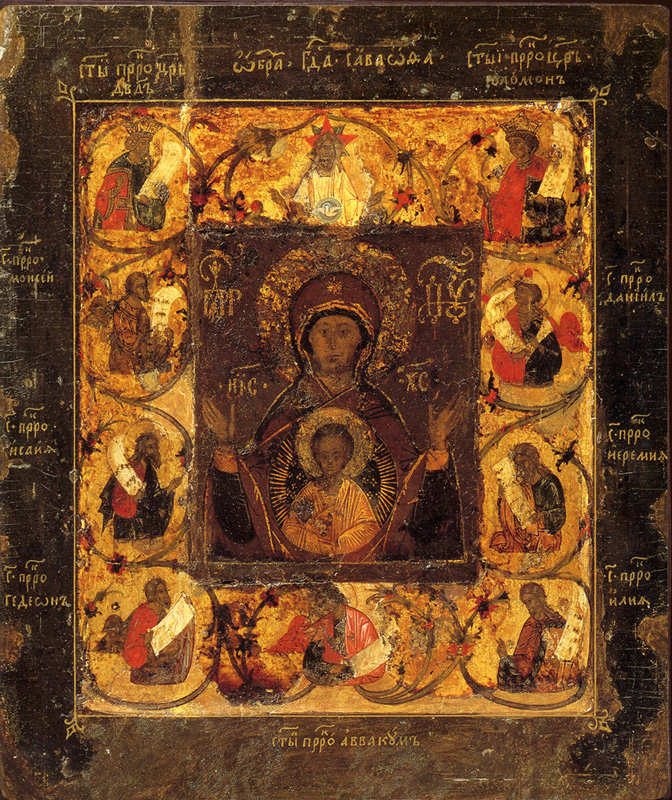
Kursk Root Icon of the Mother of God “of the Sign”

This is a copy of the famous “Kursk Root” Icon of the Most Holy Theotokos commemorated on November 27.

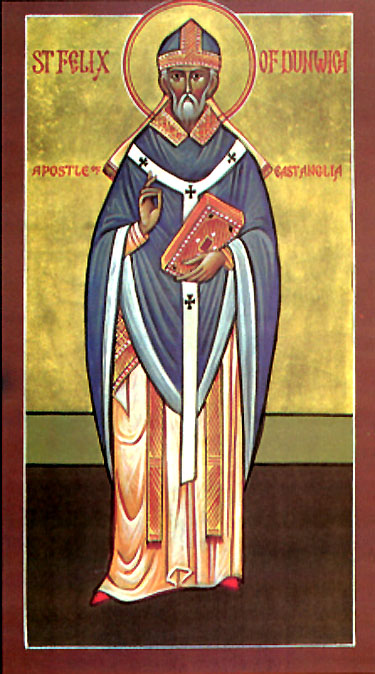
Saint Felix of Burgundy, Bishop of Dunwich, Enlightener of East Anglia

Saint Felix, the Apostle of East Anglia, was born in the Burgundy region of Gaul (now France). It was he who converted Sigebert (September 27), King of East Anglia, while he was in exile in Gaul. He was forced to flee there, in order to save himself from the intrigues of his kinsmen.

When Saint Sigebert (or Sigerberht, which means "bright victory") was summoned home to claim his ancestral crown, he invited his Spiritual Father, Saint Felix, to leave Gaul to assist him in converting his idolatrous subjects to Christianity. Saint Felix was consecrated as a bishop in 631 by Archbishop Honorius of Canterbury (September 30), who sent him to preach in East Anglia.

The new Bishop was quite successful in his ministry. After seventeen years he had converted almost the entire region. He established churches, monasteries, and a school for boys with the help of King Siegbert, and Saint Felix provided him with teachers from Canterbury. Because of this, some regard him as the founder of the university of Cambridge. Saint Felix also established schools at Felixstoe and at Flixton, or Felixton.

After after two years, King Sigebert abdicated in favor of his cousin Egric, and entered the monastery at Cnobersburgh, now Burgh Castle in Suffolk, the monastery he had founded for Saint Fursey, or Fursa (January 16), who had lived there for about ten years. In 642, after Saint Sigebert was killed in battle against King Penda of Mercia, Saint Fursey made a pilgrimage to Rome. Then he travelled to Gaul, where he established a monastery at Lagny-sur-Marne, near Paris, around the year 644.

Saint Felix reposed in 648 and was buried at Dunwich, but his relics were transferred to Ramsey Abbey in Huntingdonshire in 971. Saint Felix has given his name to Felixstowe in Suffolk, and to Felixkirk in Yorkshire. He is mentioned by Saint Bede (History of the English Church and People, Book 3, chapters 18 and 20).

Dunwich was once a large city, with fifty-two religious establishments, but was gradually swallowed up by the sea. The remains of the steeples may still be seen, underwater, about five miles from shore.

Icon of the Mother of God of “the Sign”

On March 8, 1898, a group of anarchists who hoped to undermine the people’s faith in the Kursk-Root Icon’s wonderworking power, decided to destroy it. They placed a time bomb in the Cathedral of the Sign in the city of Kursk, and at 2 o’clock in the morning there was a devastating explosion that shook the monastery's walls.

The frightened monks ran immediately to the cathedral, where they saw horrible devastation. The force of the blast shattered the gilded canopy above the Icon. The heavy marble base, with several massive steps, had been jolted out of position and had split into several pieces. A huge metal candlestick which had stood in front of the Icon was blown to the opposite side of the cathedral. A cast iron door near the Icon of the Mother of God was torn from its hinges and was thrown outward where it smashed against a wall and made a deep crack. All the windows in the cathedral, including those in the dome overhead, were shattered. Amid the general devastation, the holy Icon remained in one piece and even the glass within the frame was intact. Instead of destroying the Kursk-Root Icon, the anarchists had, on the contrary, become the cause of its greater glorification.

The principal Feast Day of the Kursk-Root Icon is on November 27. It is also commemorated on September 8, the day of its appearance in 1259.

Daily Readings for Monday, March 07, 2022

FIRST MONDAY OF LENT – CLEAN MONDAY

ABSTAIN FROM MEAT, FISH, DAIRY, EGGS, WINE, OLIVE OIL

The Holy Martyred Bishops of Cherson: Basileus, Ephraim, Eugene, Capito, Aetherius, Agathodorus, and Elpidius, Lavrentios of Megara, the Righteous, Paul the Simple

ISAIAH 1:1-20

The vision of Isaiah the son of Amoz, which he saw concerning Judah and Jerusalem in the days of Uzzi'ah, Jotham, Ahaz, and Hezeki'ah, kings of Judah. Hear, O heavens, and give ear, O earth; for the Lord has spoken: "Sons have I reared and brought up, but they have rebelled against me. The ox knows its owner, and the ass its master's crib; but Israel does not know, my people does not understand.
Ah, sinful nation, a people laden with iniquity, offspring of evildoers, sons who deal corruptly! They have forsaken the Lord, they have despised the Holy One of Israel, they are utterly estranged.
Why will you still be smitten, that you continue to rebel? The whole head is sick, and the whole heart faint. From the sole of the foot even to the head, there is no soundness in it, but bruises and sores and bleeding wounds; they are not pressed out, or bound up, or softened with oil.
Your country lies desolate, your cities are burned with fire; in your very presence aliens devour your land; it is desolate, as overthrown by aliens. And the daughter of Zion is left like a booth in a vineyard, like a lodge in a cucumber field, like a besieged city.
If the Lord of hosts had not left us a few survivors, we should have been like Sodom, and become like Gomor'rah.
Hear the word of the Lord, you rulers of Sodom! Give ear to the teaching of our God, you people of Gomor'rah! "What to me is the multitude of your sacrifices? says the Lord; I have had enough of burnt offerings of rams and the fat of fed beasts; I do not delight in the blood of bulls, or of lambs, or of he-goats.
When you come to appear before me, who requires of you this trampling of my courts? Bring no more vain offerings; incense is an abomination to me. New moon and sabbath and the calling of assemblies — I cannot endure iniquity and solemn assembly. Your new moons and your appointed feasts my soul hates; they have become a burden to me, I am weary of bearing them. When you spread forth your hands, I will hide my eyes from you; even though you make many prayers, I will not listen; your hands are full of blood. Wash yourselves; make yourselves clean; remove the evil of your doings from before my eyes; cease to do evil, learn to do good; seek justice, correct oppression; defend the fatherless, plead for the widow.
Come now, let us reason together, says the Lord: though your sins are like scarlet, they shall be as white as snow; though they are red like crimson, they shall become like wool. If you are willing and obedient, you shall eat the good of the land; But if you refuse and rebel, you shall be devoured by the sword; for the mouth of the Lord has spoken.

GENESIS 1:1-13

In the beginning God created the heavens and the earth. The earth was without form and void, and darkness was upon the face of the deep; and the Spirit of God was moving over the face of the waters.
And God said, "Let there be light"; and there was light. And God saw that the light was good; and God separated the light from the darkness. God called the light Day, and the darkness he called Night. And there was evening and there was morning, one day.
And God said, "Let there be a firmament in the midst of the waters, and let it separate the waters from the waters." And God made the firmament and separated the waters which were under the firmament from the waters which were above the firmament. And it was so. And God called the firmament Heaven. And there was evening and there was morning, a second day.
And God said, "Let the waters under the heavens be gathered together into one place, and let the dry land appear." And it was so. God called the dry land Earth, and the waters that were gathered together he called Seas. And God saw that it was good. And God said, "Let the earth put forth vegetation, plants yielding seed, and fruit trees bearing fruit in which is their seed, each according to its kind, upon the earth." And it was so. The earth brought forth vegetation, plants yielding seed according to their own kinds, and trees bearing fruit in which is their seed, each according to its kind. And God saw that it was good. And there was evening and there was morning, a third day.

PROVERBS 1:1-20

The proverbs of Solomon, son of David, king of Israel:
That men may know wisdom and instruction, understand words of insight, receive instruction in wise dealing, righteousness, justice, and equity; that prudence may be given to the simple, knowledge and discretion to the youth — the wise man also may hear and increase in learning, and the man of understanding acquire skill, to understand a proverb and a figure, the words of the wise and their riddles. The fear of the Lord is the beginning of knowledge; fools despise wisdom and instruction.
Hear, my son, your father's instruction, and reject not your mother's teaching; for they are a fair garland for your head, and pendants for your neck. My son, if sinners entice you, do not consent. If they say, "Come with us, let us lie in wait for blood, let us wantonly ambush the innocent; like Sheol let us swallow them alive and whole, like those who go down to the Pit; we shall find all precious goods, we shall fill our houses with spoil; throw in your lot among us, we will all have one purse" — my son, do not walk in the way with them, hold back your foot from their paths; for their feet run to evil, and they make haste to shed blood. For in vain is a net spread in the sight of any bird; but these men lie in wait for their own blood, they set an ambush for their own lives. Such are the ways of all who get gain by violence; it takes away the life of its possessors.
Wisdom cries aloud in the street; in the markets she raises her voice.

Beginning of Great Lent

In the Orthodox Church, the last Sunday before Great Lent—the day on which, at Vespers, Lent is liturgically announced and inaugurated—is called Forgiveness Sunday. On the morning of that Sunday, at the Divine Liturgy, we hear the words of Christ:

“If you forgive men their trespasses, your heavenly Father will also forgive you, but if you forgive not men their trespasses, neither will your Father forgive your trespasses…” (Mark 6:14-15).

Then after Vespers—after hearing the announcement of Lent in the Great Prokeimenon: “Turn not away Thy face from Thy child, for I am afflicted! Hear me speedily! Draw near unto my soul and deliver it!”, after making our entrance into Lenten worship, with its special melodies, with the prayer of Saint Ephraim the Syrian, with its prostrations—we ask forgiveness from each other, we perform the rite of forgiveness and reconciliation. And as we approach each other with words of reconciliation, the choir intones the Paschal hymns, filling the church with the anticipation of Paschal joy.

What is the meaning of this rite? Why is it that the Church wants us to begin the Lenten season with forgiveness and reconciliation? These questions are in order because for too many people Lent means primarily, and almost exclusively, a change of diet, the compliance with ecclesiastical regulations concerning fasting. They understand fasting as an end in itself, as a “good deed” required by God and carrying in itself its merit and its reward. But the Church spares no effort in revealing to us that fasting is but a means, one among many, towards a higher goal: the spiritual renewal of man, his return to God, true repentance and, therefore, true reconciliation. The Church spares no effort in warning us against a hypocritical and pharisaic fasting, against the reduction of religion to mere external obligations. As a Lenten hymn says:

“In vain do you rejoice in not eating, O soul!
For you abstain from food,
But from passions you are not purified.
If you persevere in sin, you will perform a useless fast!”

Now, forgiveness stands at the very center of Christian faith and of Christian life because Christianity itself is, above all, the religion of forgiveness. God forgives us, and His forgiveness is in Christ, His Son, whom He sends to us so that by sharing in His humanity we may share in His love and be truly reconciled with God. Indeed, Christianity has no other content but love. And it is primarily the renewal of that love, a growth in it, that we seek in Great Lent, in fasting and prayer, in the entire spirit and the entire effort of that season. Thus, truly forgiveness is both the beginning of, and the proper condition for, the Lenten season.

One may ask, however: Why should I perform this rite when I have no “enemies?” Why should I ask forgiveness from people who have done nothing to me, and whom I hardly know? To ask these questions is to misunderstand the Orthodox teaching concerning forgiveness. It is true that open enmity, personal hatred, real animosity may be absent from our life, though if we experience them, it may be easier for us to repent, for these feelings openly contradict Divine commandments. But the Church reveals to us that there are much subtler ways of offending Divine Love. These are indifference, selfishness, lack of interest in other people, of any real concern for them—in short, that wall which we usually erect around ourselves, thinking that by being “polite” and “friendly” we fulfill God’s commandments. The rite of forgiveness is so important precisely because it makes us realize—be it only for one minute—that our entire relationship to other men is wrong, makes us experience that encounter of one child of God with another, of one person created by God with another, makes us feel that mutual “recognition” which is so terribly lacking in our cold and dehumanized world.

On that unique evening, listening to the joyful Paschal hymns we are called to make a spiritual discovery: to taste of another mode of life and relationship with people, of life whose essence is love. We can discover that always and everywhere Christ, the Divine Love Himself, stands in the midst of us, transforming our mutual alienation into brotherhood. As I advance towards the other, as the other comes to me—we begin to realize that it is Christ who brings us together by His love for both of us.

And because we make this discovery—and because this discovery is that of the Kingdom of God itself: the Kingdom of Peace and Love, of reconciliation with God and, in Him, with all that exists—we hear the hymns of that Feast, which once a year “opens to us the doors of Paradise.” We know why we shall fast and pray, what we shall seek during the long Lenten pilgrimage.

Forgiveness Sunday: the day on which we acquire the power to make our fasting—true fasting; our effort—true effort; our reconciliation with God—true reconciliation.

—Father Alexander Schmemann

The Holy Hieromartyrs of Cherson: Basil, Ephraim, Capito, Eugene, Aetherius, Elpidius, and Agathodorus

The Hieromartyrs Basil, Ephraim, Eugene, Elpidius, Agathodorus, Aetherius, and Capiton carried the Gospel of Christ into the North Black Sea region from the Danube to the Dniper, including the Crimea. They were bishops of Cherson at different times during the fourth century, and they sealed their apostolic activity with martyrdom. Only Aetherius died in peace.

Long before the Baptism of Rus under Saint Vladimir, the Christian Faith had already spread into the Crimea, which in antiquity was called Tauridia and was ruled by the Roman Emperor. The beginning of the enlightenment of Tauridia is attributed to the holy Apostle Andrew the First-Called (November 30).

The Church’s enemies unwillingly contributed to the further spread of Christianity. The Roman emperors often banished traitors to this area. During the first three centuries, Christians were regarded as traitors because they would not follow the state religion. In the reign of Trajan (98-117), Saint Clement, Bishop of Rome (November 25), was sent to work in a stone quarry near Cherson. There he continued his preaching, and suffered martyrdom.

The pagans inhabiting the Crimea stubbornly resisted the spread of Christianity. But the faith of Christ, through its self-sacrificing preachers, grew strong and was affirmed. Many missionaries gave their lives in this struggle.

At the beginning of the fourth century a bishop’s See was established at Cherson. This was a critical period when Cherson served as a base for the Roman armies which constantly passed through the area. During the reign of Diocletian (284-305), the Patriarch of Jerusalem sent many bishops to preach the Gospel in various lands. Two of them, Ephraim and Basil, arrived in Cherson and planted the Word of God there.

Later on, Saint Ephraim went to the peoples living along the Danube, where he underwent many tribulations and sorrows. He was beheaded at the start of the persecution. The preaching at Cherson was continued by Saint Basil, Saint Ephraim’s companion. He set many idol-worshippers on the path of truth. Other wayward inhabitants of the city, enraged at his activity, rose up against him. The saint was arrested, mercilessly beaten and expelled from the city.

He went to a mountain and settled in a cave, where he unceasingly prayed to God for those who had driven him out, asking that He might illumine them with the light of true knowledge. And the Lord provided the unbelievers with a miracle. The only son of an important citizen of Cherson died. The dead child appeared to his parents in a dream and said that a certain man named Basil could resurrect him from the dead by his prayers.

When the parents had found the saint and entreated him to work the miracle, Saint Basil replied that he himself was a sinful man and had not the power to raise the dead, but the Lord Almighty could fulfill their request if they were to believe in Him. For a long time the saint prayed, invoking the Name of the Holy Trinity. Then he blessed water, and sprinkled it on the dead one, who was restored to life. The saint returned to the city with honor, and many believed and were baptized.

Soon, by order of the emperor Maximian Galerius (305-311), the persecution against Christians spread with renewed force. The Christ-haters rose up also against Saint Basil. On March 7, 309 he was dragged from his house during the night. They tied him up, dragged him along the streets and beat him to death with stones and rods. The body of the saint was thrown out of the city to be eaten by dogs and birds, and for many days it was left unburied, but remained untouched. Then Christians secretly buried the body of the holy martyr in a cave.

A year after the martyrdom of Saint Basil, three of his companions, Bishops Eugene, Elpidius and Agathodorus, ceased their preaching in the Hellespont, and arrived at Cherson to continue his holy work. They endured many hardships for the salvation of human souls. All three bishops shared the fate of their predecessor: they were stoned to death by the pagans on March 7, 311.

When Constantine the Great (May 21) took the throne, Bishop Aetherius was sent by emperor Constantine to Cherson from Jerusalem. At first he also encountered hostility on the part of the pagans, but the holy emperor would not tolerate acts of violence against the preacher. He issued a decree permitting the Christians of Cherson to have church services without hindrance. Through the efforts of Saint Aetherius a church was built in the city, where the saint peacefully governed his flock.

Saint Aetherius journeyed to Constantinople to thank the emperor for protecting the Christians. He fell ill and died on the return trip.

The holy emperor Constantine then sent Bishop Capiton to Cherson to replace Saint Aetherius. The Christians met him with joy, but the pagans demanded a sign from the new bishop, so they might believe in the God Whom he preached. Placing all his hope on the Lord, Saint Capiton put on his omophorion and went into a burning furnace. He prayed in the fire for about an hour, and emerged from it unharmed. “Shall anyone bind fire in his bosom, and not burn his garments?” Solomon asks (Prov. 6:27). Saint Capiton carried red-hot coals in his phelonion, yet neither his body nor his garments were scorched. Many of the unbelievers were then persuaded in the power of the Christian God.

This miracle and the great faith of Saint Capiton were reported to Saint Constantine and the holy Fathers of the First Ecumenical Council (325), and they all glorified God.

After several years Saint Capiton journeyed to Constantinople on business, but the ship encountered a storm at the mouth of the Dniepr River. The local people (pagans) seized the ship and drowned all those on board, including Saint Capiton. Although this occurred on December 21, Saint Capiton is commemorated with the other hieromartyrs of Cherson on March 7.

Venerable Paul the Simple, disciple of Venerable Anthony the Great

Saint Paul the Simple of Egypt also lived in the fourth century and was called the Simple for his simplicity of heart and gentleness. He had been married, but when he discovered his wife’s infidelity, he left her and went into the desert to Saint Anthony the Great (January 17). Paul was already 60 years old, and at first Saint Anthony would not accept Paul, saying that he was unfit for the harshness of the hermit’s life. Paul stood outside the cell of the ascetic for three days, saying that he would sooner die than go from there. Then Saint Anthony took Paul into his cell, and tested his endurance and humility by hard work, severe fasting, with nightly vigils, constant singing of Psalms and prostrations. Finally, Saint Anthony decided to settle Paul into a separate cell.

During the many years of ascetic exploits the Lord granted Saint Paul both discernment, and the power to cast out demons. When they brought a possessed youth to Saint Anthony, he guided the afflicted one to Saint Paul saying, “I cannot help the boy, for I have not received power over the Prince of the demons. Paul the Simple, however, does have this gift.” Saint Paul expelled the demon by his simplicity and humility.

After living for many years, performing numerous miracles, he departed to the Lord. He is mentioned by Saint John, the Abbot of Sinai (Ladder 24:30): “The thrice-blessed Paul the Simple was a clear example for us, for he was the rule and type of blessed simplicity….”

Saint Paul is also commemorated on October 4.

Saint Paul the Confessor, Bishop of Plousias in Bithynia

Saint Paul the Confessor was bishop of the city of Plousias (in the province of Bithynia in Asia Minor) at a time when the iconoclasts raged against the Church of Christ. His zealous defense of the holy icons was based on Holy Scripture. Saint Paul was subjected to harassment and persecution together with Saint Theophylactus (March 8). The holy confessor was sent into exile, and reposed around the year 850.

Saint Emilian of Rome

Saint Emilian of Italy (in the world Victorinus) was a Roman by birth, and until he was an old man, he led a sinful life. He finally repented, withdrew to a monastery, and became a monk with the name of Emilian. For the remainder of his days he humbly served God, astounding the brethren by his uncomplaining obedience and strict fasting. The monks noticed that at night Emilian secretly visited a cave near the monastery. Once, the igumen followed him and found Saint Emilian in the cave, praying with tears of contrition, and illumined by an unearthly light. He heard a Voice saying, “Emilian, your sins are forgiven.”

Deeply moved by all that had happened, the igumen after morning services asked the Elder to tell the brethren his secret, and the saint told everyone of God’s great mercy toward him. Then the igumen said to the brethren, “The Lord could have forgiven him his sin in secret, but for our sake He revealed His mercy with light and a voice, so that we might behold His grace and mercy toward sinners who repent.”

Saint Emilian spent the remainder of his days in spiritual joy, and peacefully departed to the Lord.

Icon of the Mother of God “the Surety of sinners” of Odrino, Orlov

The Icon of the Mother of God “Surety of Sinners” is known by this name because of the inscription on the icon: “I am the Surety of sinners for My Son Who has entrusted Me to hear them, and those who bring Me the joy of hearing them will receive eternal joy through Me.” The Mother of God embraces Her Child, Who holds Her right hand with both His hands so that Her thumb is in His right hand, and Her small finger in His left hand. This is the gesture of one who gives surety for another.

Although we do not know when or by whom the icon was originally painted, it is believed that the basis of the icon is to be found in the Akathist to the Protection of the Most Holy Theotokos: “Rejoice, You Who offer Your hands in surety for us to God.”

This icon was first glorified by miracles at the Saint Nicholas Odrino men’s monastery of the former Orlov gubernia in the mid-nineteenth century (the “Assuage My Sorrows Icon” commemorated on October 9 is also from this monastery). The “Surety of Sinners” icon of the Mother of God was in an old chapel beyond the monastery gates, and stood between two other ancient icons. Because it was so faded and covered with dust, it was impossible to read the inscription.

In 1843 it was revealed to many of the people in dreams that the icon was endowed with miraculous power. They solemnly brought the icon into the church. Believers began to flock to it to pray for the healing of their sorrows and sicknesses. The first to receive healing was a crippled child, whose mother prayed fervently before the icon in 1844. The icon was glorified during a cholera epidemic, when many people fell deathly ill, and were restored to health after praying before the icon.

A large stone church with three altars was built at the monastery in honor of the wonderworking icon.

In 1848, through the zeal of Lt. Col. Demetrius Boncheskul, a copy of the wonderworking “Surety of Sinners” Icon was made and placed in his home. Soon it began to exude a healing myrrh, which was given to many so they might recover their health after grievous illnesses. Boncheskul donated this wonderworking copy to the church of Saint Nicholas at Khamovniki in Moscow, where a chapel was built in honor of the icon.

The “Surety of Sinners” Icon is also commemorated on May 29 and on Thursday of the week of All Saints.

Icon of the Mother of God “the Surety of Sinners” in Koretsk

The ancient Koretsk "Surety of Sinners" Icon of the Mother of God of had been kept in a castle for a long time, and was called "blessed."

After the death of Samuel, the last Orthodox Prince of Koretsk, his brother John offered to let his sister Igoumeness Serapima take the Icon from the Prince's chapel to Holy Resurrection Koretsk Maidens' Monastery. The ceremonial transfer of the holy image took place in 1622, on Thursday of Pentecost week. The annual commemoration in honor of the "Surety of Sinners" Icon of Koretsk was appointed for that day.

On August 12, 1880, the icon was transferred and returned to the Holy Trinity monastery church and placed in a carved wooden kiot near the left front column.

More than once, the wonderworking Icon was a blessed help to the suffering – in 1923, on the Feast of the Holy Trinity, a young man who was possessed by an unclean spirit, received healing before the Icon. The following year, between the Feast of the Ascension of the Lord and Thursday of Pentecost week, there were incessant downpours at Volhynia. Miraculously, after a procession around the church with the Icon, the rain began to subside.

Many believers who turn to the Queen of Heaven for her help and intercession when they experience disturbances, family troubles, and especially anguish of the soul, indicate that after praying before the Icon they receive spiritual relief and solace, for she is truly the "Surety of Sinners."

In the Icon the Mother of God is depicted with the Divine Child on her left hand, Who holds her right hand with both His hands, so that her thumb is in His right hand, and her small finger in His left hand. This is the gesture of one who gives surety for another.

The inscription reads: “I am the Surety of sinners for my Son Who has entrusted me to hear them, and through me, those who bring me the joy of hearing them shall receive everlasting joy."

On August 17, 1998, the Superior of Holy Trinity Koretsk women's monastery, Igoumeness Natalia (Ilchuk) petitioned Patriarch Alexei II of Moscow and All Russia to add the Koretsk Icon to the list of wonderworking Icons of the Mother of God on the Patriarchal Church Calendar. With the Patriarch's blessing, the celebration in honor of the Koretsk Icon was approved.

In November 2001, an attempt was made to steal the Icon, but the attackers only managed to carry off its valuable frame. People donated money for a new riza to be made, a copy of the the one which was lost.

The Koretsk "Surety of Sinners" Icon is also commemorated on the Thursday of Pentecost week.