ABSTAIN FROM MEAT, FISH, DAIRY, EGGS, WINE, OLIVE OIL
Agapius the Martyr & His Companions, Manuel the New Martyr of Crete, Holy Apostle Aristobulos of the Seventy, Bishop of Britain
ISAIAH 5:7-16
Thus says the Lord: For the vineyard of the LORD of hosts is the house of Israel, and the men of Judah are his pleasant planting; and he looked for justice, but behold, bloodshed; for righteousness, but behold, a cry! Woe to those who join house to house, who add field to field, until there is no more room, and you are made to dwell alone in the midst of the land. The LORD of hosts has sworn in my hearing: “Surely many houses shall be desolate, large and beautiful houses, without inhabitant. For ten acres of vineyard shall yield but one bath, and a homer of seed shall yield but an ephah.” Woe to those who rise early in the morning, that they may run after strong drink, who tarry late into the evening till wine inflames them! They have lyre and harp, timbrel and flute and wine at their feasts; but they do not regard the deeds of the LORD, or see the work of his hands. Therefore my people go into exile for want of knowledge; their honored men are dying of hunger, and their multitude is parched with thirst. Therefore Sheol has enlarged its appetite and opened its mouth beyond measure, and the nobility of Jerusalem and her multitude go down, her throng and he who exults in her. Man is bowed down, and men are brought low, and the eyes of the haughty are humbled. But the LORD of hosts is exalted in justice, and the Holy God shows himself holy in righteousness.
GENESIS 4:8-15
Cain said to Abel his brother, "Let us go out to the field." And when they were in the field, Cain rose up against his brother Abel, and killed him. Then the LORD said to Cain, "Where is Abel your brother?" He said, "I do not know; am I my brother's keeper?" And the LORD said, "What have you done? The voice of your brother's blood is crying to me from the ground. And now you are cursed from the ground, which has opened its mouth to receive your brother's blood from your hand. When you till the ground, it shall no longer yield to you its strength; you shall be a fugitive and a wanderer on the earth." Cain said to the LORD, "My punishment is greater than I can bear. Behold, thou hast driven me this day away from the ground; and from thy face I shall be hidden; and I shall be a fugitive and a wanderer on the earth, and whoever finds me will slay me." Then the LORD said to him, "Not so! If any one slays Cain, vengeance shall be taken on him sevenfold." And the LORD put a mark on Cain, lest any who came upon him should kill him.
PROVERBS 5:1-15
My son, be attentive to my wisdom, incline your ear to my understanding; that you may keep discretion, and your lips may guard knowledge. For the lips of a loose woman drip honey, and her speech is smoother than oil; but in the end she is bitter as wormwood, sharp as a two-edged sword. Her feet go down to death; her steps follow the path to Sheol; she does not take heed to the path of life; her ways wander, and she does not know it.
And now, O sons, listen to me, and do not depart from the words of my mouth. Keep your way far from her, and do not go near the door of her house; lest you give your honor to others and your years to the merciless; lest strangers take their fill of your strength, and your labors go to the house of an alien; and at the end of your life you groan, when your flesh and body are consumed, and you say, "How I hated discipline, and my heart despised reproof! I did not listen to the voice of my teachers or incline my ear to my instructors. I was at the point of utter ruin in the assembled congregation." Drink water from your own cistern, flowing water from your own well.
Martyrs Agapius, Publius, Timolaus, Romulus, two named Dionysius, and two named Alexander, at Caesarea in Palestine
The Holy Martyrs Agapius, Publius (Pausis), Timolaus, Romulus, Alexander, Alexander, Dionysius and Dionysius suffered under the emperor Diocletian (284-305) in the city of Palestinian Caesarea. During one of the pagan festivals they began to torture and execute Christians who refused to offer sacrifice to idols.
The Martyr Timolaus (August 19) was sentenced to burning, and the Martyrs Agapius and Thekla (August 19) were sentenced to be torn apart by wild beasts. A group of young Christians: Publius, Timolaus, Alexander, another Alexander, Dionysius, and Romulus, the subdeacon of the Diospolis church decided to confess their faith and suffer for Christ.
As a sign of their voluntary deed they tied their own hands behind their backs and appeared before the governor Urbanus. Seeing their youth, the governor tried to persuade them to reconsider their decision, but in vain. He then threw them in prison, where there were already two Christians, Agapius and his servant Dionysius. All these saints were subjected to terrible tortures and beheaded.
Hieromartyr Alexander of Sίdē, in Pamphylia
The Hieromartyr Alexander was a priest from Sίdē in Pamphylia. He suffered for Christ during a time of persecution in the reign of Emperor Aurelian (270-275). When the ruler Antoninus arrived at Sίdē he ordered Father Alexander to be brought before him for interrogation. He began by asking him, "Who are you?"
The Saint replied, "I am a Christian, a priest, a shepherd of Christ's rational flock."
Antoninus continued, "Where is this flock of Christ?"
The Saint replied, "Christ God created all the people who live in the world; those who believe in Him are the sheep of His flock. Those who have fallen away from their Creator, those such as yourself, who worship idols, which are fashioned by human hands, may not belong to His holy flock. At the Last Judgment, they will be placed on His left side, along with the goats."
The ruler said to him, "Now I am going to torture you for two reasons; first, so that you will show me where to find those who believe in Christ and secondly, so that you can offer sacrifices to our gods."
Again, Antoninus asked Father Alexander, "Who was Christ?"
The Saint replied, "Christ is the Savior of the world, He is Life and Light for those who believe in Him."
Antoninus said: "How can this man who died on a cross be a Savior?"
Saint Alexander declared, "It is indeed marvelous and surprising that He took upon Himself the Cross and death in the flesh of His own will, His Divinity shattered the power of Hades, and released those who were held captive there. He put Death to death, and rose from the dead. Not only did He arise from the dead Himself, He also raised many of the dead with Himself: 'the tombs were opened, and many bodies of the saints who had fallen asleep were raised, and coming out of the tombs after His Resurrection, they went into the holy city and appeared to many' (Matthew 27:52-53). With Himself, Christ has resurrected the entire human race."
Antoninus exclaimed, "Are you mad? How could a tormented Jew, who was unable to help Himself, possibly help others?"
The Saint replied, "It is not I, but you yourself who are mad. You are spiritually blind, therefore you do not understand the mystery of our salvation, accomplished by Christ the Lord."
Then the ruler ordered that Saint Alexander be tortured. He was beaten, tormented on a wheel, and plunged into a vessel of boiling resin and oil, then he was placed in a fiery furnace. By the grace of God, the Saint was preserved unharmed. When he was thrown into the furnace, the wicked tormentors saw in the flames two young men with handsome faces, praising God along with the Holy Martyr. These were Angels, who cooled the flames of the furnace. The people marveled, for they knew that only one man had entered the furnace, and now there were three.
Antoninus, and those who were with him, regarded all these glorious miracles as magic, because they did not believe in the omnipotent power of Christ God. One of the ruler's servants believed in Christ and fell to the ground before the Saint, begging him to take him along with him to be with Christ. Immediately, the tyrant killed his servant with his sword.
When Saint Alexander emerged from the furnace unscathed, Antoninus ordered that he be hanged, and stabbed with sharp iron needles. The Saint was tortured until his body became one large wound. Those who tortured the Saint marveled at his steadfastness, saying, "How can this man endure such torment? His bones have already been exposed."
Afterward, the Saint was tormented in the fire for a second time, but did not suffer any harm from it. Then his body was stabbed with iron needles and his intestines fell out. Then Saint Alexander was thrown to the wild animals to be devoured, but the beasts did not touch him. This sufferer for Christ endured many other bitter torments, but he remained firm and courageous through all of them. Those who witnessed his suffering were astonished by the power of his patience, which surpassed all human understanding. Finally, the Hieromartyr Alexander was beheaded with a sword.
Just as Antoninus left his judgment seat, he was attacked by the demons he had served. His servants carried him to his home, weeping and sobbing all the way. They did not have time to bring him into the house, however, for he had breathed forth his vile soul.
Saint Alexander was taken to the heavenly abodes to dwell with Christ, His Saints, and His Holy Angels. As for Antoninus, he was cast "into the eternal fire prepared for the devil and his angels" (Matthew 25:41).
After the beheading of Saint Alexander, Eustáthios, an honest man, and a Christian, took the much-suffering body of the Holy Martyr and buried him with honor, glorifyng and praising Christ God.
Martyr Nicander of Egypt
The Holy Martyr Nicander suffered in Egypt under the emperor Diocletian (284-305). He was a physician and during a time of persecution he visited Christians in prison. He assisted them, brought them food, and buried the dead.
Once, he came to the place where the bodies of the martyrs were thrown to be eaten by wild beasts. Fearing to bury them by day, he waited for night and buried the bodies under cover of darkness. They discovered Saint Nicander and subjected him to terrible tortures: they skinned him alive and then beheaded him in 302.
ABSTAIN FROM MEAT, FISH, DAIRY, EGGS, WINE, OLIVE OIL
Benedict the Righteous of Nursia, Euschemon the Confessor, Bishop of Lampasakos
ISAIAH 4:2-5:7
In that day the branch of the LORD shall be beautiful and glorious, and the fruit of the land shall be the pride and glory of the survivors of Israel. And he who is left in Zion and remains in Jerusalem will be called holy, every one who has been recorded for life in Jerusalem, when the Lord shall have washed away the filth of the daughters of Zion and cleansed the bloodstains of Jerusalem from its midst by a spirit of judgment and by a spirit of burning. Then the LORD will create over the whole site of Mount Zion and over her assemblies a cloud by day, and smoke and the shining of a flaming fire by night; for over all the glory there will be a canopy and a pavilion. It will be for a shade by day from the heat, and for a refuge and a shelter from the storm and rain. Let me sing for my beloved a love song concerning his vineyard: My beloved had a vineyard on a very fertile hill. He digged it and cleared it of stones, and planted it with choice vines; he built a watchtower in the midst of it, and hewed out a wine vat in it; and he looked for it to yield grapes, but it yielded wild grapes. And now, O inhabitants of Jerusalem and men of Judah, judge, I pray you, between me and my vineyard. What more was there to do for my vineyard, that I have not done in it? When I looked for it to yield grapes, why did it yield wild grapes? And now I will tell you what I will do to my vineyard. I will remove its hedge, and it shall be devoured; I will break down its wall, and it shall be trampled down. I will make it a waste; it shall not be pruned or hoed, and briers and thorns shall grow up; I will also command the clouds that they rain no rain upon it. For the vineyard of the LORD of hosts is the house of Israel, and the men of Judah are his pleasant planting; and he looked for justice, but behold, bloodshed; for righteousness, but behold, a cry!
GENESIS 3:21-4:7
And the LORD God made for Adam and for his wife garments of skins, and clothed them. Then the LORD God said, “Behold, the man has become like one of us, knowing good and evil; and now, lest he put forth his hand and take also of the tree of life, and eat, and live for ever”- therefore the LORD God sent him forth from the garden of Eden, to till the ground from which he was taken. He drove out the man; and at the east of the garden of Eden he placed the cherubim, and a flaming sword which turned every way, to guard the way to the tree of life. Now Adam knew Eve his wife, and she conceived and bore Cain, saying, “I have gotten a man with the help of the LORD.” And again, she bore his brother Abel. Now Abel was a keeper of sheep, and Cain a tiller of the ground. In the course of time Cain brought to the LORD an offering of the fruit of the ground, and Abel brought of the firstlings of his flock and of their fat portions. And the LORD had regard for Abel and his offering, but for Cain and his offering he had no regard. So Cain was very angry, and his countenance fell. The LORD said to Cain, “Why are you angry, and why has your countenance fallen? If you do well, will you not be accepted? And if you do not do well, sin is couching at the door; its desire is for you, but you must master it.”
PROVERBS 3:34-4:22
Toward the scorners he is scornful, but to the humble he shows favor. The wise will inherit honor, but fools get disgrace.
Hear, O sons, a father's instruction, and be attentive, that you may gain insight; for I give you good precepts: do not forsake my teaching. When I was a son with my father, tender, the only one in the sight of my mother, he taught me, and said to me, "Let your heart hold fast my words; keep my commandments, and live; do not forget, and do not turn away from the words of my mouth. Get wisdom; get insight. Do not forsake her, and she will keep you; love her, and she will guard you. The beginning of wisdom is this: Get wisdom, and whatever you get, get insight. Prize her highly, and she will exalt you; she will honor you if you embrace her. She will place on your head a fair garland; she will bestow on you a beautiful crown." Hear, my son, and accept my words, that the years of your life may be many. I have taught you the way of wisdom; I have led you in the paths of uprightness. When you walk, your step will not be hampered; and if you run, you will not stumble. Keep hold of instruction, do not let go; guard her, for she is your life. Do not enter the path of the wicked, and do not walk in the way of evil men. Avoid it; do not go on it; turn away from it and pass on. For they cannot sleep unless they have done wrong; they are robbed of sleep unless they have made some one stumble. For they eat the bread of wickedness and drink the wine of violence. But the path of the righteous is like the light of dawn, which shines brighter and brighter until full day. The way of the wicked is like deep darkness; they do not know over what they stumble.
My son, be attentive to my words; incline your ear to my sayings. Let them not escape from your sight; keep them within your heart.
Venerable Benedict of Nursia
Saint Benedict, founder of Western monasticism, was born in the Italian city of Nursia in the year 480. When he was fourteen years of age, the saint’s parents sent him to Rome to study. Unsettled by the immorality around him, he decided to devote himself to a different sort of life.
At first Saint Benedict settled near the church of the holy Apostle Peter in the village of Effedum, but news of his ascetic life compelled him to go farther into the mountains. There he encountered the hermit Romanus, who tonsured him into monasticism and directed him to live in a remote cave at Subiaco. From time to time, the hermit would bring him food.
For three years the saint waged a harsh struggle with temptations and conquered them. People soon began to gather to him, thirsting to live under his guidance. The number of disciples grew so much, that the saint divided them into twelve communities. Each community was comprised of twelve monks and was a separate skete. The saint gave each skete an igumen from among his experienced disciples, and only the novice monks remained with Saint Benedict for instruction.
The strict monastic Rule Saint Benedict established for the monks was not accepted by everyone, and more than once he was criticized and abused by dissenters.
Finally he settled in Campagna and on Mount Cassino he founded the Monte Cassino monastery, which for a long time was a center of theological education for the Western Church. The monastery possessed a remarkable library. Saint Benedict wrote his Rule, based on the experience of life of the Eastern desert-dwellers and the precepts of Saint John Cassian the Roman (February 29).
The Rule of Saint Benedict dominated Western monasticism for centuries (by the year 1595 it had appeared in more than 100 editions). The Rule prescribed the renunciation of personal possessions, as well as unconditional obedience, and constant work. It was considered the duty of older monks to teach the younger and to copy ancient manuscripts. This helped to preserve many memorable writings from the first centuries of Christianity.
Every new monk was required to live as a novice for a year, to learn the monastic Rule and to become acclimated to monastic life. Every deed required a blessing. The head of this cenobitic monastery is the igumen. He discerns, teaches, and explains. The igumen solicits the advice of the older, experienced brethren, but he makes the final decisions. Keeping the monastic Rule was strictly binding for everyone and was regarded as an important step on the way to perfection.
Saint Benedict was granted by the Lord the gift of foresight and wonderworking. He healed many by his prayers. The monk foretold the day of his death in 547. The main source for his Life is the second Dialogue of Saint Gregory.
Saint Benedict’s sister, Saint Scholastica (February 10), also became famous for her strict ascetic life and was numbered among the saints.
Saint Theognostus, Metropolitan of Kiev and All Russia
Saint Theognostus the Greek succeeded Saint Peter (August 25 and December 21) as Metropolitan of Moscow and All Russia, holding this office from 1327 until 1353. It was through his influence that the Grand Prince Simeon sent money to the Byzantine Emperor John Cantacuzene for repairs to the Great Church of Hagia Sophia.
Right-believing Great Prince Rostislav-Michael, Prince of Kiev
Saint Rostislav-Michael, Great Prince of Kiev, was the son of the Kievan Great Prince Saint Mstislav the Great (June 14), and the brother of holy Prince Vsevolod-Gabriel (February 11, April 22, and November 27). He was one of the great civil and churchly figures of the mid-twelfth century.
His name is connected with the fortification and rise of Smolensk, and both the Smolensk principality and the Smolensk diocese.
Up until the twelfth century the Smolensk land was part of the Kievan realm. The beginning of its political separation took place in the year 1125, when holy Prince Mstislav the Great, gave Smolensk to his son Rostislav (in Baptism Michael) as an inheritance from his father, the Kievan Great Prince Vladimir Monomakh. Thanks to the work and efforts of Saint Rostislav, the Smolensk principality, which he ruled for more than forty years, expanded and was built up with cities and villages, adorned with churches and monasteries, and became influential in Russian affairs.
Saint Rostislav founded the cities of Rostislavl, Mstislavl, Krichev, Propoisk, and Vasiliev among others. He was the forefather of the Smolensk princely dynasty.
In 1136 Saint Rostislav succeeded in establishing a separate Smolensk diocese. Its first bishop was Manuel, installed between March-May of 1136 by Metropolitan Michael of Kiev. Prince Rostislav issued an edict in the city of Smolensk assuring Bishop Manuel that he would provide him with whatever he needed. On September 30, 1150 Saint Rostislav also ceded Cathedral Hill at Smolensk to the Smolensk diocese, where the Dormition cathedral and other diocesan buildings stood.
Contemporaries thought highly of the church construction of Prince Rostislav. Even the sources that are inclined to report nothing more about it note that “this prince built the church of the Theotokos at Smolensk.” The Dormition cathedral, originally built by his grandfather, Vladimir Monomakh, in the year 1101 was rebuilt and expanded under Prince Rostislav. The rebuilt cathedral was consecrated by Bishop Manuel on the Feast of the Dormition, August 15, 1150. Prince Rostislav was a “builder of the Church” in a far wider sense: he endowed the Smolensk Dormition church of the Mother of God, and transformed it from a city cathedral into the ecclesiastical center of the vast Smolensk diocese.
Holy Prince Rostislav was the builder of the Smolensk Kremlin, and of the Savior cathedral at the Smyadynsk Boris and Gleb monastery, founded on the place of the murder of holy Prince Gleb (September 5). Later his son David, possibly fulfilling the wishes of his father, transferred the old wooden coffins of Saints Boris and Gleb from Kievan Vyshgorod to Smyadyn.
In the decade of the fifties of the twelfth century, Saint Rostislav was drawn into a prolonged struggle for Kiev, which involved representatives of the two strongest princely lines: the Olgovichi and the Monomakhovichi.
On the Monomakhovichi side the major contender to be Great Prince was Rostislav’s uncle, Yurii Dolgoruky. Rostislav, as Prince of Smolensk, was one of the most powerful rulers of the Russian land and had a decisive voice in military and diplomatic negotiations.
For everyone involved in the dispute, Rostislav was both a dangerous opponent and a desired ally, and he was at the center of events. This had a providential significance, since Saint Rostislav distinguished himself by his wisdom regarding the civil realm, by his strict sense of justice and unconditional obedience to elders, and by his deep respect for the Church and its hierarchy. For several generations he was the bearer of the “Russkaya Pravda” (“Russian Truth”) and of Russian propriety.
After the death of his brother Izyaslav (November 13, 1154), Saint Rostislav became Great Prince of Kiev, but he ruled Kiev at the same time with his uncle Vyacheslav Vladimirovich. After the latter’s death, Rostislav returned to Smolensk, ceding the Kiev princedom to his other uncle, Yurii Dolgoruky, and he removed himself from the bloodshed of the princely disputes. He occupied Kiev a second time on April 12, 1159 and he then remained Great Prince until his death (+ 1167). More than once, he had to defend his paternal inheritance with sword in hand.
The years of Saint Rostislav’s rule occurred during one of the most complicated periods in the history of the Russian Church. The elder brother of Rostislav, Izyaslav Mstislavich, a proponent of the autocephaly of the Russian Church, favored the erudite Russian monk Clement Smolyatich for Metropolitan, and wanted him to be made Metropolitan by a council of Russian bishops, without seeking the usual approval from the Patriarch of Constantinople. This occurred in the year 1147.
The Russian hierarchy basically supported Metropolitan Clement and Prince Izyaslav in their struggle for ecclesiastical independence from Constantinople, but several bishops headed by Saint Niphon of Novgorod (April 8), did not recognize the autocephaly of the Russian metropolitanate and shunned communion with it, having transformed their dioceses into independent ecclesial districts, pending the resolution of this question. Bishop Manuel of Smolensk also followed this course. Saint Rostislav understood the danger which lay hidden beneath the idea of Russian autocephaly for these times, which threatened the break-up of Rus. The constant fighting over Kiev among the princes might also lead to a similar fight over the Kievan See among numerous contenders, put forth by one princely group or another.
The premonitions of Saint Rostislav were fully justified. Yurii Dolgoruky, who remained loyal to Constantinople, occupied Kiev in the year 1154. He immediately banished Metropolitan Clement and petitioned Constantinople for a new Metropolitan. This was to be Saint Constantine (June 5), but he arrived in Rus only in the year 1156, six months before the death of Yurii Dolgoruky (+ May 15, 1157). Six months later, when Saint Rostislav’s nephew Mstislav Izyaslavich entered the city on December 22, 1157, Saint Constanine was obliged to flee Kiev, while the deposed Clement Smolyatich returned as Metropolitan. Then a time of disorder began in Russia, for there were two Metropolitans.
All the hierarchy and the clergy came under interdict: the Greek Metropolitan suspended the Russian supporters of Clement, and Clement suspended all the supporters of Constantine. To halt the scandal, Saint Rostislav and Mstislav decided to remove both Metropolitans and petition the Patriarch of Constantinople to appoint a new archpastor for the Russian metropolitan See.
But this compromise did not end the matter. Arriving in Kiev in the autumn of 1161, Metropolitan Theodore died in spring of the following year. Following the example of Saint Andrew Bogoliubsky (July 4), who supported his own fellow ascetic Bishop Theodore to be Metropolitan, Saint Rostislav put forth his own candidate, who turned out to be the much-suffering Clement Smolyatich.
The fact that the Great Prince had changed his attitude toward Metropolitan Clement, shows the influence of the Kiev Caves monastery, and in particular of Archimandrite Polycarp. Archimandrite Polycarp, who followed the traditions of the Caves (in 1165 he became head of the monastery), was personally very close to Saint Rostislav.
Saint Rostislav had the pious custom of inviting the igumen and twelve monks to his own table on the Saturdays and Sundays of Great Lent, and he served them himself. The prince more than once expressed the wish to be tonsured a monk at the monastery of Saints Anthony and Theodosius, and he even gave orders to build a cell for him.
The monks of the Caves, a tremendous spiritual influence in ancient Rus, encouraged the prince to think about the independence of the Russian Church. Moreover, during those years in Rus, there was suspicion regarding the Orthodoxy of the bishops which came from among the Greeks, because of the notorious “Dispute about the Fasts” (the “Leontian Heresy”). Saint Rostislav’s pious intent to obtain the blessing of the Patriarch of Constantinople for Metropolitan Clement came to naught. The Greeks believed that appointing a Metropolitan to the Kiev cathedra was one of their most important prerogatives. This served not only the ecclesiastical, but also the political interests of the Byzantine Empire.
In 1165 a new Greek Metropolitan arrived at Kiev, John IV, and Saint Rostislav accepted him out of humility and churchly obedience. The new Metropolitan, like his predecessor, governed the Russian Church for less than a year (+ 1166). The See of Kiev was again left vacant, and the Great Prince was deprived of the fatherly counsel and spiritual wisdom of a Metropolitan. His sole spiritual solace was the igumen Polycarp and the holy Elders of the Kiev Caves monastery and the Theodorov monastery at Kiev, which had been founded under his father.
Returning from a campaign against Novgorod in the spring of 1167, Saint Rostislav fell ill. When he reached Smolensk, where his son Roman was prince, relatives urged him to remain at Smolensk. But the Great Prince gave orders to take him to Kiev. “If I die along the way,” he declared, “put me in my father’s monastery of Saint Theodore. If God should heal me, through the prayers of His All-Pure Mother and Saint Theodosius, I shall take vows at the monastery of the Caves.”
God did not fulfill Saint Rostislav’s last wish to end his life as a monk of the holy monastery. The holy prince died on the way to Kiev on March 14, 1167. (In other historical sources the year is given as 1168). His body, in accord with his last wishes, was brought to the Kiev Theodosiev monastery.
Saint Euschemon the Confessor, Bishop of Lampsacus
Saint Euschemon the Confessor, Bishop of Lampsacus, lived in Asia Minor on the coastal region of the Dardanelles peninsula, and was known for his virtuous and ascetic life. He suffered for the holy icons under the iconoclast emperor Theophilus (829-842), and having been imprisoned, he was sent into exile and died.
Icon of the Mother of God of Saint Theodore
The Theodore—Kostroma Icon of the Mother of God was painted by the Evangelist Luke and resembles the Vladimir Icon of the Mother of God.
This icon received its name from Great Prince Yaroslav Vsevolodovich (+ 1246), the father of Saint Alexander Nevsky, and who in holy Baptism was named Theodore in honor of Saint Theodore Stratelates (February 8).
According to Tradition, the icon was found by his elder brother, Saint George (February 4), in an old wooden chapel near the city of Gorodets. Later, the Gorodetsk Theodorov monastery was built on this spot. Prince Yaroslav-Theodore became the Great Prince of Vladimir after his brother Saint George perished in battle with the Mongols at the Sita River. In the year 1239, he solemnly transferred the relics of his brother from Rostov to the Vladimir Dormition cathedral. He gave the icon which he inherited from his brother to his own son, Saint Alexander Nevsky.
Yaroslav-Theodore is renowned in Russian history. He continued with the glorious traditions of his uncle Saint Andrew Bogoliubsky (July 4), and of his father Vsevolod III Big-Nest, and he was connected to almost all of the significant events in the history of Rus in the first half of the thirteenth century.
Russia was burned and torn apart by the Mongols in 1237-1238. He raised it up from the ashes, rebuilt and embellished the cities, the holy monasteries and the churches. He restored cities along the Volga devastated by the enemy: Kashin, Uglich, Yaroslavl’, Kostroma, Gorodets.
He founded he church of Theodore Stratelates at Kostroma and the Theodorov monastery near Gorodets in honor of his patron saint. For eight years he ruled as Great Prince, but he had to guide the land through a singularly difficult path, maintaining a military-political balance with the Golden Horde to the East, while mounting an active opposition to Catholic Europe in the West. His closest companion was his son, Saint Alexander Nevsky, who also continued his policies.
The wonderworking Theodore Icon of the Mother of God was constantly with Saint Alexander, and he prayed before it. After Saint Alexander Nevsky died on November 14, 1263 at the monastery founded by his father, the icon was taken by his younger brother Basil.
Basil Yaroslavich was the youngest (eighth) son of Yaroslav Vsevolodovich. In 1246 after the death of his father (Prince Yaroslav was poisoned in the capital city of Mongolia, Karakorum when he was only five years old) Basil became prince of the Kostroma appanage-holding, the least important of his father’s domains. In the year 1272, he became Great Prince of Vladimir.
His four years as Great Prince (1272-1276) were filled with fratricidal princely quarrels. For several years he waged war against Novgorod with an unruly nephew Demetrius. In becoming Great Prince, however, Basil did not journey to Vladimir, but remained under the protection of the wonderworking icon at Kostroma, regarding this place as safer in case of new outbreaks of strife.
He had occasion also to defend Rus against external enemies. In 1272, during a Tatar incursion, a Russian army came forth from Kostroma to engage them. Following the example of his grandfather, Saint Andrew Bogoliubsky (who took the wonderworking Vladimir Icon of the Mother of God with him on military campaigns), Prince Basil went into battle with the wonderworking Theodore Icon. A blinding light came forth from the holy image, and the Tatars dispersed and fled from the Russian land.
The Chronicles say that the Great Prince Basil had a special love for the Church and the clergy. After the martyric death of Bishop Metrophanes of Vladimir during the storming of Vladimir by Tatars on February 4, 1238, the Vladimir diocese had remained widowed for many years. This grieved Great Prince Basil. With his help, a large cathedral was constructed in Vladimir in 1274. This was apparently in connection with the consecration of Saint Serapion (July 12) as Bishop of Vladimir. He was an igumen from the Monastery of the Caves.
Metropolitan Cyril III (+ 1282) presided over a council of Russian hierarchs. This was the first council in the Russian Church since the time of the Mongol invasion. Many problems and disorders had arisen in Church life, but the Russian Church was just barely beginning to recover from the woe that had befallen it. One of its main tasks was to recover a Russian churchly literacy, and the restoration of the tradition of the ancient Russian “princely order.”
Without books the Church’s salvific activity would be almost impossible. Books were needed for church services, and for preaching, for the monastic cell rule, and for believers to read at home. Through the efforts of Metropolitan Cyril and the Russian bishops and monastic scholars, this important task was begun. The council approved new editions of essential books which formed the canonical basis of Orthodox church life.
In 1276, Prince Basil completed his life’s journey. Most of the important events in his life occured with the blessing of the Theodore Icon of the Mother of God. He died at Kostroma, and there he also found his final resting place. Since that time, the holy icon has been in the Kostroma cathedral of Saint Theodore Stratelates.
Renewed interest in the Theodore Icon of the Mother of God and the spread of its veneration throughout all Russia is connected with events of the beginning of the seventeenth century, and the end of the Time of Troubles. In the year 1613, the wonderworking Theodore Icon from the Kostroma cathedral was used at the proclamation of Michael Romanov as the new Tsar. In memory of this historic event, March 14 was designated for the commemoration of the Theodore Icon of the Mother of God.
Numerous copies were made from the Kostroma Theodore Icon, and one of the first was commissioned and brought to Moscow by Tsar Michael’s mother, the nun Martha. From the second half of the seventeenth century, various copies of the Theodore Icon were enlarged with scenes depicting events from the history of the wonderworking icon.
In the year 1670 the hierodeacon Longinus from the Kostroma Hypatiev monastery wrote the “Narrative concerning the Manifestations and Miracles of the Theodore Icon of the Mother of God in Kostroma.” Not all the things contained in it agree with things previously stated.
The Theodore Icon is two-sided. On the reverse side is the image of the holy Great Martyr Paraskevḗ, depicted in the splendid attire of a princess. It is believed that the image of Paraskevḗ on the reverse of the icon is connected with the wife of Saint Alexander Nevsky.
The Icon of the Most Holy Theotokos of Saint Theodore is also commemorated on August 16.
Sunday of Orthodoxy, Removal of the relics of Nicephorus, Patriarch of Constantinople, Pouplios the Martyr, Bishop of Athens, Christina the Martyr of Persia, Gerald, Bishop of Mayo
ST. PAUL’S LETTER TO THE HEBREWS 11:24-26, 32-40
Brethren, by faith Moses, when he was grown up, refused to be called the son of Pharaoh's daughter, choosing rather to share ill-treatment with the people of God than to enjoy the fleeting pleasures of sin.
And what more shall I say? For time would fail me to tell of Gideon, Barak, Samson, Jephthah, of David and Samuel and the prophets — who through faith conquered kingdoms, enforced justice, received promises, stopped the mouths of lions, quenched raging fire, escaped the edge of the sword, won strength out of weakness, became mighty in war, put foreign enemies to flight. Women received their dead by resurrection. Some were tortured, refusing to accept release, that they might rise again to a better life. Others suffered mocking and scourging, and even chains and imprisonment. They were stoned, they were sawn in two, they were killed with the sword; they went about in skins of sheep and goats, destitute, afflicted, ill-treated — of whom the world was not worthy — wandering over deserts and mountains, and in dens and caves of the earth.
And all these, though well attested by their faith, did not receive what was promised, since God had foreseen something better for us, that apart from us they should not be made perfect.
JOHN 1:43-51
At that time, Jesus decided to go to Galilee. And he found Philip and said to him, “Follow me.” Now Philip was from Bethsaida, the city of Andrew and Peter. Philip found Nathanael, and he said to him, “We have found him of whom Moses in the law and also the prophets wrote, Jesus of Nazareth, the son of Joseph.” Nathanael said to him, “Can anything good come out of Nazareth?” Philip said to him, “Come and see.” Jesus saw Nathanael coming to him, and said of him, “Behold, an Israelite indeed, in whom is no guile!” Nathanael said to him, “How do you know me?” Jesus answered him, “Before Philip called you, when you were under the fig tree, I saw you.” Nathanael answered him, “Rabbi, you are the Son of God! You are the King of Israel!” Jesus answered him, “Because I said to you, I saw you under the fig tree, do you believe? You shall see greater things than these.” And he said to him, “Truly, truly, I say to you, you will see heaven opened, and the angels of God ascending and descending upon the Son of man.”
1st Sunday of Great Lent: Sunday of Orthodoxy
The first Sunday of Great Lent is called the Sunday of Orthodoxy because it commemorates the restoration of the Holy Icons and the triumph of the Orthodox Faith against the terrible heresy of the Iconoclasts, i.e. those heretics who refused to honor the Holy Icons. For more than a hundred years the Church was disturbed by the evil doctrine of iconoclasm.
The first Emperor to persecute the Church was Leo the Isaurian, and the last was Theophilos, the spouse of Saint Theodora (February 11), who reigned after her husband's death and re-established Orthodoxy in the time of Patriarch Methodios (June 14). Empress Theodora proclaimed publicly that we do not kiss the Icons as a sign of worship, nor do we honor them as "gods," but as images of their prototypes.
In the year 843, on the first Sunday of the Fast, Saint Theodora and her son, Emperor Michael, venerated the Holy Icons together with the clergy and the people. Since that time this event has been commemorated every year, because it was definitively determined that we do not worship the Icons, but we honor and glorify all the Saints who are depicted on them. We worship only the Triune God: the Father, the Son and the Holy Spirit, and no one else, neither a Saint, nor an Angel.
Originally, the Holy Prophets Moses, Aaron, and Samuel were commemorated on this Sunday. The Alleluia verses appointed for today’s Liturgy reflect this older usage.
Translation of the relics of Saint Nikēphóros, Patriarch of Constantinople
Saint Nikēphóros was a dignitary at the court of the empress Irene (797-802), and then after receiving monastic tonsure, he became known for his piety. In the year 806 he was elevated to the patriarchal throne. The saint was a zealous defender of the holy Icons. When the Iconoclast emperor Leo the Armenian (813-820) came to rule, the saint in 815 was exiled to Prokonnis, where he died in the year 828.
In the year 846 the holy relics of Patriarch Nikēphóros were opened, and were found incorrupt and fragrant. They transferred them from Prokonnis to Constantinople and placed them for one day in Hagia Sophia, and then transferred them to the Church of the Holy Apostles. The saint’s hands are preserved in the Hilandar monastery on Mount Athos.
The saint left behind three writings against Iconoclasm. The main Feast of Saint Nikēphóros is celebrated on June 2, but today we commemorate the finding and transfer of his holy relics.
Martyr Sabinus (Abibus) of Egypt
The Holy Martyr Sabinus suffered in Egypt in the year 287.
Martyrs Africanus, Publius, and Terence, of Carthage
The Holy Martyrs Africanus, Publius, and Terence suffered in the third century at Petrium. Their memory is celebrated also on April 10.
Hieromartyr Publius, Bishop of Athens
Saint Puplius was Bishop of Athens (after Saint Narcissus) during the second century. He was one of the Seventy Apostles (January 4), and a disciple of Saint Dionysios the Aereopagite (October 3). The God-pleasing hierarch ruled his flock as a good shepherd, and he gave his life for his rational sheep, after he had perfected it by a martyric death during the persecution of Emperor Marcus Aurelius (161-180).
Martyr Alexander of Macedonia
The Holy Martyr Alexander was a presbyter in the city of Pidna, not far from Thessalonica. The saint converted many pagans to Christianity by his preaching. During the persecution against Christians under the emperor Maximian Galerius (305-311), Saint Alexander was subjected to fierce tortures, and then beheaded.
Martyr Christina of Persia
The Holy Martyr Christina of Persia was scourged to death for confessing her faith in Christ, during the fourth century.
FIRST SATURDAY OF LENT: THE COMMEMORATION OF THE MIRACLE OF KOLLYVA WROUGHT BY SAINT THEODORE THE TYRO
ABSTAIN FROM MEAT, FISH, DAIRY, EGGS
First Saturday of Lent: The Commemoration of the Miracle of Kollyva wrought by Saint Theodore the Tyro, Theophanes the Confessor, Symeon the New Theologian, Gregory Dialogos, Bishop of Rome, Phineas, grandson of Prophet Aaron, Paul Aurelian, Bishop of Brittany
ST. PAUL’S SECOND LETTER TO TIMOTHY 2:1-10
Timothy, my son, be strong in the grace that is in Christ Jesus, and what you have heard from me before many witnesses entrust to faithful men who will be able to teach others also. Share in suffering as a good soldier of Christ Jesus. No soldier on service gets entangled in civilian pursuits, since his aim is to satisfy the one who enlisted him. An athlete is not crowned unless he competes according to the rules. It is the hardworking farmer who ought to have the first share of the crops. Think over what I say, for the Lord will grant you understanding in everything.
Remember Jesus Christ, risen from the dead, descended from David, as preached in my gospel, the gospel for which I am suffering and wearing fetters like a criminal. But the word of God is not fettered. Therefore I endure everything for the sake of the elect, that they also may obtain salvation in Christ Jesus with its eternal glory.
MARK 2:23-28; 3:1-5
At that time, Jesus was going through the grainfields; and as they made their way his disciples began to pluck heads of grain. And the Pharisees said to him, "Look, why are they doing what is not lawful on the sabbath?" And he said to them, "Have you never read what David did, when he was in need and was hungry, he and those who were with him: how he entered the house of God, when Abiathar was high priest, and ate the bread of the Presence, which it is not lawful for any but the priests to eat, and also gave it to those who were with him?" And he said to them, "The sabbath was made for man, not man for the sabbath; so the Son of man is lord even of the sabbath.
Again he entered the synagogue, and a man was there who had a withered hand. And they watched him, to see whether he would heal him on the sabbath, so that they might accuse him. And he said to the man who had the withered hand, "Come here." And he said to them, "Is it lawful on the sabbath to do good or to do harm, to save life or to kill?" But they were silent. And he looked around at them with anger, grieved at their hardness of heart, and said to the man, "Stretch it out, " and his hand was restored.
1st Saturday of Great Lent: The Miracle of the Boiled Wheat
Today we remember the miracle of Saint Theodore the Recruit and the boiled wheat. Fifty years after Saint Theodore’s martyrdom, Emperor Julian the Apostate (361-363), devised a plan to corrupt the Christians during the first week of Great Lent. He knew that Christians purify themselves through fasting, especially during this week (which is why it is known as Clean Week). Therefore, he ordered the Polemarch (military leader) of Constantinople to go secretly and sprinkle all the food in the marketplace with the blood of animals which had been offered in sacrifice to idols. Saint Theodore appeared to Archbishop Eudoxios in a dream, telling him to assemble all the Christians on Monday morning and tell them that they must not buy any food from the marketplace; instead they were to boil some kollyva and to eat it with some honey during that week. The hierarch asked Saint Theodore what he meant by kollyva. He replied, “Kollyva is what we call boiled wheat in Euchaita.” Thus the scheme of the idol-worshipping emperor was thwarted and the pious people were preserved undefiled during Clean Week.
Ever since the middle of the fifth century, the Orthodox Church has honored the holy Great Martyr Theodore the Recruit on the first Saturday of Great Lent. On Friday evening, at the Divine Liturgy of the Presanctified Gifts following the prayer at the Ambo, the Canon to the holy Great Martyr Theodore, composed by Saint John of Damascus, is sung. Afterward, kollyva is blessed and distributed to the faithful. The commemoration of the Great Martyr Theodore on the first Saturday of Great Lent was established by Patriarch Nektarios of Constantinople (381-397).
The Troparion to Saint Theodore is quite similar to the Troparion for the Prophet Daniel and the Three Holy Youths (December 17 and Sunday Before the Nativity).1 The Kontakion for Saint Theodore, who suffered martyrdom by fire, reminds us that he also had faith as his breastplate (see 1 Thessalonians 5:8).2
Saint Theodore the Recruit is also commemorated on February 17.
1 The term “water of rest” comes from Psalm 22:2 (LXX). It is also found in the Troparion for the Prophet Daniel (perhaps from Daniel 1:12). The Hypakoe (in Tone 2) for December 17 mentions that an angel “turned the furnace into a place of rest” for the Three Holy Children. In today’s troparion (and that of Feb. 17), we should not say sweet bread, because of the term “sweetbread,” which is made from unappetizing parts of animals.
2 The term “breastplate” is an exact translation from the Greek. It is not a “shield,” or any other thing.
Venerable Theophanes the Confessor of Sigriane
Saint Theophanes the Confessor was born in 759 at Constantinople into a pious and renowned family. His father was a relative of the Byzantine emperor Leo the Isaurian (717-741). Three years after Theophanes was born, his father died, leaving his family under the care of the emperor himself.
Theophanes grew up at the court and became a dignitary under the emperor Leo IV the Khazar (775-780). His position obliged him to enter into marriage, but he persuaded his bride to live with him in virginity.
After the death of his parents, Theophanes and his wife visited monasteries in the Sygrian district (Asia Minor). Theophanes met the Elder Gregory Stratitios, who predicted to Theophanes’ wife that her husband would earn the crown of martyrdom.
Later the wife of Theophanes was tonsured a nun in one of the monasteries in Bithynia, and Theophanes went to a monastery in the Cyzicus region. With the blessing of his Elder, Theophanes founded the Kalonymon monastery on an island in the Sea of Marmara and secluded himself in his cell, transcribing books. Theophanes attained a high degree of skill in this occupation.
Later, Saint Theophanes founded another monastery in Sygria, at a place called the “Big Settlement”, and became its igumen. He participated in all the work of the monastery, and was an example to all in his love for work and ascetical effort. He received from the Lord the gift of wonderworking, healing the sick, and casting out demons.
The Seventh Ecumenical Council met in Nicea in 787, which condemned the heresy of Iconoclasm. Saint Theophanes was also invited to the Council. He arrived dressed in his tattered garments, but he revealed his wisdom in affirming the veneration of the holy icons.
At the age of fifty, Saint Theophanes fell grievously ill and he suffered terribly until the day he died. Even on his deathbed, the saint continued to work. He wrote his CHRONOGRAPHIA, a history of the Christian Church covering the years 285-813. This work has remained an invaluable source for the history of the Church.
During the reign of the emperor Leo the Armenian (813-820), when the saint was advanced in age, the Iconoclast heresy returned. They demanded that Saint Theophanes accept the heresy, but he firmly refused and was locked up in prison. His “Big Settlement” monastery was put to the torch. The holy confessor died in 818 after twenty-three days in prison.
After the death of the impious emperor Leo the Armenian, the “Big Settlement” monastery was restored and the relics of the holy confessor were transferred there.
Righteous Phineas the grandson of Aaron
The Righteous Phineas, grandson of the High Priest Aaron (also commemorated today) and son of the High Priest Eleazar, was also a priest and zealous in his service.
When the Israelites, after the holy Prophet Moses (September 4) led them out of Egypt, were already near the Promised Land, their neighbors the Moabites and Midianites were overcome by fear and envy. Not trusting in their own strength, they summoned the magician Balaam to put a curse on the Israelites. The Lord revealed His will to Balaam, and Balaam refused to curse the People of God, seeing that God was pleased to bless them (Num. 24:1).
Then the Moabites drew the Israelites into the worship of Baal-Peor. God punished the Jews for their apostasy, and they died by the thousands from a plague. Many, beholding the wrath of God, came to their senses and repented.
At this time a certain man named Zimri, of the tribe of the Simeon, “brought to his brethren a Midianite woman in the sight of Moses and in the sight of all the congregation of the children of Israel, and they wept at the door of the tabernacle of witness” (Num. 25:6). Phineas, filled with wrath, went into Zimri’s tent and killed both him and the Midianite woman with a spear.
“And the Lord said to Moses, ‘Phineas… has caused My wrath against the children of Israel to cease, when I was exceedingly jealous among them…. Behold, I give him a covenant of peace, and he and his descendants shall have a perpetual covenant of priesthood, because he was zealous for his God, and made atonement for the children of Israel’” (Num. 25:10-13).
After this, at the command of God, Phineas went at the head of the Israelite army against the Moabites and brought chastisement upon them for their impiety and treachery. After the death of the High Priest Eleazar, Saint Phineas was unanimously chosen as High Priest. The high priesthood, in accord with God’s promise, continued also with his posterity. Saint Phineas died at an advanced age around 1500 B.C.
Saint Gregory Dialogus, Pope of Rome
Saint Gregory Dialogus, Pope of Rome, was born in Rome around the year 540. His grandfather was Pope Felix, and his mother Sylvia (November 4) and aunts Tarsilla and Emiliana were also numbered among the saints by the Roman Church. Having received a most excellent secular education, he attained high government positions.
Leading a God-pleasing life, he yearned for monasticism with all his soul. After the death of his father, Saint Gregory used his inheritance to establish six monasteries. At Rome he founded a monastery dedicated to the holy Apostle Andrew the First-Called, where he received monastic tonsure. Later, on a commission of Pope Pelagius II, Saint Gregory lived for a while in Constantinople. There he wrote his Commentary on the Book of Job.
After the death of Pope Pelagius, Saint Gregory was chosen to the Roman See. For seven months he would not consent to accept this service, considering himself unworthy. He finally accepted consecration only after the persistent entreaties of the clergy and flock.
Wisely leading the Church, Saint Gregory worked tirelessly in propagating the Word of God. Saint Gregory compiled the Liturgy of the Presanctified Gifts in the Latin language, which before him was known only in the verbal tradition. Affirmed by the Sixth Ecumenical Council, this liturgical service was accepted by all the Orthodox Church.
He zealously struggled against the Donatist heresy; he also converted the inhabitants of Brittany, pagans and Goths, who had been adhering to the Arian heresy, to the True Faith.
Saint Gregory has left behind numerous written works. After the appearance of his book, DIALOGUES CONCERNING THE LIFE AND MIRACLES OF THE ITALIAN FATHERS (DIALOGI DE VITA ET MIRACULIS PATRUM ITALIORUM), the saint was called “Dialogus.” His PASTORAL RULE (or LIBER REGULAE PASTORALIS) was well-known. In this work, Saint Gregory describes the model of the true pastor. His letters (848), dealing with moral guidance, have also survived.
Saint Gregory headed the Church for thirteen years, ministering to all the needs of his flock. He was characterized by an extraordinary love of poverty, for which he was granted a vision of the Lord Himself.
Pope Saint Gregory the Great, as he is known, died in the year 604, and his relics rest in the cathedral of the holy Apostle Peter in the Vatican.
Venerable Simeon the New Theologian
Saint Simeon the New Theologian was born in the year 949 in the city of Galatea (Paphlagonia), and he was educated at Constantinople. His father prepared him for a career at court, and for a certain while the youth occupied a high position at the imperial court. When he was fourteen, he met the renowned Elder Simeon the Pious at the Studion Monastery, who would be a major influence in his spiritual development. He remained in the world for several years preparing himself for the monastic life under the Elder’s guidance, and finally entered the monastery at the age of twenty-seven.
Saint Simeon the Pious recommended to the young man the writings of Saint Mark the Ascetic (March 5) and other spiritual writers. He read these books attentively and tried to put into practice what he read. Three points made by Saint Mark in his work “On the Spiritual Law” (see Vol. I of the English Philokalia) particularly impressed him. First, you should listen to your conscience and do what it tells you if you wish your soul to be healed (Philokalia, p. 115). Second, only by fulfilling the commandments can one obtain the activity of the Holy Spirit. Thirdly, one who prays only with the body and without spiritual knowledge is like the blind man who cried out, “Son of David, have mercy upon me” (Luke 18:38) (Philokalia, p. 111). When the blind man received his sight, however, he called Christ the Son of God (John 9:38).
Saint Simeon was wounded with a love for spiritual beauty, and tried to acquire it. In addition to the Rule given him by his Elder, his conscience told him to add a few more Psalms and prostrations, and to repeat constantly, “Lord Jesus Christ, have mercy upon me.” Naturally, he heeded his conscience.
During the day, he cared for the needs of people living in the palace of Patricius. At night, his prayers grew longer and he remained praying until midnight. Once, as he was praying in this way, a most brilliant divine radiance descended upon him and filled the room. He saw nothing but light all around him, and he was not even aware of the ground beneath his feet.
It seemed to him that he himself became light. Then his mind rose upward to the heavens, and he saw a second light brighter than the light which surrounded him. Then, on the edge of this second light, he seemed to see Saint Simeon the Pious, who had given him Saint Mark the Ascetic to read.
Seven years after this vision, Saint Simeon entered the monastery. There he increased his fasting and vigilance, and learned to renounce his own will.
The Enemy of our salvation stirred up the brethren of the monastery against Saint Simeon, who was indifferent to the praises or reproaches of others. Because of the increased discontent in the monastery, Saint Simeon was sent to the Monastery of Saint Mamas in Constantinople.
There he was tonsured into the monastic schema, and increased his spiritual struggles. He attained to a high spiritual level, and increased his knowledge of spiritual things through reading the Holy Scriptures and the writings of the Fathers, as well as in conversation with holy Elders.
Around the year 980, Saint Simeon was made igumen of the monastery of Saint Mamas and continued in this office for twenty-five years. He repaired and restored the monastery, which had suffered from neglect, and also brought order to the life of the monks.
The strict monastic discipline, for which Saint Simeon strove, led to great dissatisfaction among the brethren. Once, after Liturgy, some of the monks attacked him and nearly killed him. When the Patriarch of Constantinople expelled them from the monastery and wanted to hand them over to the civil authorities, Saint Simeon asked that they be treated with leniency and be permitted to live in the world.
About the year 1005, Saint Simeon resigned his position as igumen in favor of Arsenius, while he himself settled near the monastery in peace. There he composed his theological works, portions of which appear in the Philokalia.
The chief theme of his works is the hidden activity of spiritual perfection, and the struggle against the passions and sinful thoughts. He wrote instructions for monks: “Theological and Practical Chapters,” “A Treatise on the Three Methods of Prayer,” (in Vol. IV of the English Philokalia) and “A Treatise on Faith.” Moreover, Saint Simeon was an outstanding church poet. He also wrote “Hymns of Divine Love,” about seventy poems filled with profound prayerful meditations.
The sublime teachings of Saint Simeon about the mysteries of mental prayer and spiritual struggle have earned him the title “the New Theologian.” These teachings were not the invention of Saint Simeon, but they had merely been forgotten over time.
Some of these teachings seemed unacceptable and strange to his contemporaries. This led to conflict with Constantinople’s church authorities, and Saint Simeon was banished from the city. He withdrew across the Bosphorus and settled in the ancient monastery of Saint Makrina.
The saint peacefully fell asleep in the Lord in the year 1021. During his life he received the gift of working miracles. Numerous miracles also took place after his death; one of them was the miraculous discovery of his icon.
His Life was written by his cell-attendant and disciple, Saint Nicetas Stethatos.
Since March 12 falls during Great Lent, Saint Simeon’s Feast is transferred to October 12.
Icon of the Mother of God Icon “Not Made by Hands” from Lydda
The wonderworking Lydda Icon is mentioned in the service for the Kazan Icon (July 8 & October 22) in the third Ode of the Canon.
According to Tradition, the Apostles Peter and John were preaching in Lydda (later called Diospolis) near Jerusalem. There they built a church dedicated to the Most Holy Theotokos, then went to Jerusalem and asked her to come and sanctify the church by her presence. She sent them back to Lydda and said, “Go in peace, and I shall be there with you.”
Arriving at Lydda, they found an icon of the Virgin imprinted in color on the wall of the church (some sources say the image was on a pillar). Then the Mother of God appeared and rejoiced at the number of people who had gathered there. She blessed the icon and gave it the power to work miracles. This icon was not made by the hand of man, but by a divine power.
Julian the Apostate (reigned 361-363) heard about the icon and tried to eradicate it. Masons with sharp tools chipped away at the image, but the paint and lines just seemed to penetrate deeper into the stone. Those whom the emperor had sent were unable to destroy the icon. As word of this miracle spread, millions of people came to venerate the icon.
In the eighth century, Saint Germanus, the future Patriarch of Constantinople (May 12) passed through Lydda. He had a copy of the icon made, and sent it to Rome during the iconoclastic controversy. It was placed in the church of Saint Peter, and was the source of many healings. In 842, the reproduction was returned to Constantinople and was known as the Roman Icon (June 26).
The oldest sources of information for the Lydda Icon are a document attributed to Saint Andrew of Crete in 726, a letter written by three eastern Patriarchs to the iconoclast emperor Theophilus in 839, and a work of George the Monk in 886.
The icon still existed as late as the ninth century.
Righteous King Demetrius Tavdadebuli of Georgia
No information on the life of this saint is available at this time.
Hieromartyr Kirion II, Catholicos-Patriarch of All Georgia
The holy Hieromartyr Kirion II (known in the world as George Sadzaglishvili) was born in 1855 in the village of Nikozi in the Gori district. His father was a priest.
He enrolled at the parochial school in Ananuri, then at the theological school in Gori, and finally at Tbilisi Seminary.
In 1880 he graduated from the Kiev Theological Academy and was appointed assistant dean of the Odessa Theological Seminary. From 1883 to 1886 Saint Kirion was active in the educational life of Gori, Telavi, Kutaisi, and Tbilisi. In 1886 he was appointed supervisor of the Georgian monasteries and dean of the schools of the Society for the Renewal of Christianity in the Caucasus. He directed the parochial schools, established libraries and rare book collections within them, and published articles on the history of the Georgian Church, folklore and literature under the pseudonyms Iverieli, Sadzagelov, and Liakhveli (the Liakhvi River flows through his native region of Shida [Inner] Kartli, the central part of eastern Georgia).
In 1886 God’s chosen, George, was tonsured a monk with the name Kirion, and he was enthroned as abbot of Kvabtakhevi Monastery. Kirion continued his scholarly pursuits and intensified his spiritual labors. He collected folklore and ethnographic materials and studied artifacts from ancient Georgian churches. He generously donated the reliquaries and rare manuscripts he found to the antiquities collections at the Church Museum of Tbilisi and the Society for the Propagation of Literacy among the Georgians.
In 1898 Kirion published a description of the historical monuments of Liakhvi Gorge. His publication is an important resource for scholars and historians, since most of the monuments he describes were toppled by Georgia’s ideological and national enemies in subsequent years. (Kirion would later join the Moscow Archaeological Society.)
In August of 1898 Archimandrite Kirion was consecrated bishop of Alaverdi.
Saint Kirion began at once to rebuild Alaverdi Church, and he offered his own resources for this momentous task. At the same time, he began to study the ancient artifacts of Kakheti and Hereti in eastern Georgia. Among the manuscripts he turned over to the Church Museum of Tbilisi was a Holy Gospel from the year 1098, unknown to scholars until that time.
Bishop Kirion was a tireless researcher, with a broad range of scholarly interests. To his pen belong more than forty monographs on various themes relating to the history of the Georgian Church and Christian culture in Georgia. He compiled a short terminological dictionary of the ancient Georgian language and, with the linguist Grigol Qipshidze, a History of Georgian Philology.
Kirion fought the appropriation of Georgian churches by the Armenian Monophysites. He sent a detailed memorandum to the Russian exarch in Georgia demanding that the confiscated Orthodox churches be returned.
In 1901 Kirion was installed as bishop of Gori. By that time it had become clear to the Georgian exarchate that the educated and progressive clergymen were endorsing the holy hierarch Kirion and contesting the abolition of the autocephaly of the Georgian Church. But the government found a way out of this “dangerous situation” by frequently reassigning Saint Kirion to serve in different parts of the Russian Empire: in 1903 he was reassigned to Cherson, in 1904 to Orel, and in 1906 to Sokhumi. In Sokhumi Saint Kirion exerted every effort to restore and revive the historical Georgian churches and monasteries, though he would soon be reassigned to the Kovno diocese.
In 1905, at the demand of Georgia’s intelligentsia (under the leadership of Saint Ilia the Righteous), the regime formed an extraordinary commission to formally consider the question of the autocephaly of the Georgian Church. Saint Kirion delivered two lectures to the commission: one on the reasons behind Georgia’s struggle for the restoration of an autocephalous Church, and the other on the role of nationality in the life of the Church. The commission rejected the Georgian claims to autocephaly and subjected the leaders of the movement to harsh repression.
In 1907 Saint Ilia the Righteous was killed, and the government forbade Saint Kirion to travel to Georgia to pay his last respects. Saint Kirion managed only to send a letter of condolence to Saint Ilia’s loved ones. In the months that followed, the regime tightened down even more severely on Saint Kirion. In 1908 he was accused of conspiring in the murder of Exarch Nikon, deprived of the rank of bishop, and arrested. This treacherous deed roused the indignation not only of the Georgian people but of the faithful of Russia as well. Even the democratic forces in Europe founded a society for the protection of the rights of Bishop Kirion and gathered signatures to demand his release from prison. The bishop himself humbly carried the cross of his persecution and consoled his sympathizers with the words of the great Georgian poet Shota Rustaveli: “‘Not a single rose is plucked from this world without thorns.’ We must bear our suffering with love, since suffering is the fruit of love and in suffering we will find our strength!”
By the year 1915 the regime had ceased to persecute Saint Kirion. They restored him to the bishopric and elevated him as archbishop of Polotsk and Vitebsk in western Russia. He was not, however, permitted to return to his motherland.
In March of 1917 the Georgian Apostolic Orthodox Church declared its autocephaly restored. At the incessant demands of the Georgian people, Saint Kirion finally returned to his motherland. One hundred and twenty cavalrymen met him in Aragvi Gorge (along the Georgian Military Highway) and reverently escorted him to the capital. In Tbilisi Saint Kirion was met with great honor.
In September of 1917 the Holy Synod of the Georgian Orthodox Church enthroned Bishop Kirion as Catholicos-Patriarch of All Georgia. During the enthronement ceremony at Svetitskhoveli Cathedral, Saint Kirion addressed the faithful: “My beloved motherland, the nation protected by the Most Holy Theotokos, purified in the furnace by tribulations and suffering, washed in its own tears: I turn to you, having been separated from you, having sought after you, having grieved over you, having sought for you and now having returned not as a prodigal son, but as your confidant and the conscience of your Church.
“I know that in your minds you are all inquiring, ‘What has he brought back with him? With what ointment will he heal his wounds? How will he comfort himself in his sadness?’ Consider my words: He came not to be ministered unto, but to minister, and to give His life a ransom for many (Matt. 20:28). I, likewise, have come not as a hired servant, but as a faithful and obedient son!”
Soon after he was enthroned, Saint Kirion sent an appeal to all the Orthodox patriarchs of the world in which he described in detail the history of the Georgian Church and requested an official recognition of her autocephaly.
On May 26, 1918, Georgia declared its independence. The next day Catholicos-Patriarch Kirion II presided during a service of thanksgiving. The chief shepherd and his flock rejoiced at the restoration of the autocephaly of the Georgian Church and the independence of the Georgian state, though from the beginning they perceived the imminence of the Bolshevik danger. The socialist revolution, now showing its true face, posed an enormous threat to the young republic and her Church.
On June 27, 1918, Catholicos-Patriarch Kirion II was found murdered in the patriarchal residence at Martqopi Monastery. The investigation was a mere formality and the guilty were never found.
Rumors were even spread that Saint Kirion had shot himself. When the Holy Synod of the Georgian Apostolic Orthodox Church convened on October 17, 2002, it canonized Holy Hieromartyr Kirion and numbered him among the saints.
ABSTAIN FROM MEAT, FISH, DAIRY, EGGS, WINE, OLIVE OIL
Sophronius, Patriarch of Jerusalem, Theodora the Righteous, Pionios the Presbyter, George the New Wonderworker of Constantinople, Trophimos and Thallos the Martyrs
ISAIAH 3:1-14
For, behold, the Lord, the Lord of hosts, is taking away from Jerusalem and from Judah stay and staff, the whole stay of bread, and the whole stay of water; the mighty man and the soldier, the judge and the prophet, the diviner and the elder, the captain of fifty and the man of rank, the counselor and the skillful magician and the expert in charms. And I will make boys their princes, and babes shall rule over them. And the people will oppress one another, every man his fellow and every man his neighbor; the youth will be insolent to the elder, and the base fellow to the honorable.
When a man takes hold of his brother in the house of his father, saying: "You have a mantle; you shall be our leader, and this heap of ruins shall be under your rule"; in that day he will speak out, saying: "I will not be a healer; in my house there is neither bread nor mantle; you shall not make me leader of the people." For Jerusalem has stumbled, and Judah has fallen; because their speech and their deeds are against the Lord, defying his glorious presence.
Their partiality witnesses against them; they proclaim their sin like Sodom, they do not hide it. Woe to them! For they have brought evil upon themselves. Tell the righteous that it shall be well with them, for they shall eat the fruit of their deeds. Woe to the wicked! It shall be ill with him, for what his hands have done shall be done to him. My people — children are their oppressors, and women rule over them. O my people, your leaders mislead you, and confuse the course of your paths.
The Lord has taken his place to contend, he stands to judge his people. The Lord enters into judgment with the elders and princes of his people: "It is you who have devoured the vineyard, the spoil of the poor is in your houses.
GENESIS 2:20-3:20
The man gave names to all cattle, and to the birds of the air, and to every beast of the field; but for the man there was not found a helper fit for him. So the Lord God caused a deep sleep to fall upon the man, and while he slept took one of his ribs and closed up its place with flesh; and the rib which the Lord God had taken from the man he made into a woman and brought her to the man. Then the man said, "This at last is bone of my bones and flesh of my flesh; she shall be called Woman, because she was taken out of Man." Therefore a man leaves his father and his mother and cleaves to his wife, and they become one flesh. And the man and his wife were both naked, and were not ashamed.
Now the serpent was more subtle than any other wild creature that the Lord God had made. He said to the woman, "Did God say, 'You shall not eat of any tree of the garden'?" And the woman said to the serpent, "We may eat of the fruit of the trees of the garden; but God said, 'You shall not eat of the fruit of the tree which is in the midst of the garden, neither shall you touch it, lest you die.'" But the serpent said to the woman, "You will not die. For God knows that when you eat of it your eyes will be opened, and you will be like God, knowing good and evil." So when the woman saw that the tree was good for food, and that it was a delight to the eyes, and that the tree was to be desired to make one wise, she took of its fruit and ate; and she also gave some to her husband, and he ate. Then the eyes of both were opened, and they knew that they were naked; and they sewed fig leaves together and made themselves aprons.
And they heard the sound of the Lord God walking in the garden in the cool of the day, and the man and his wife hid themselves from the presence of the Lord God among the trees of the garden. But the Lord God called to the man, and said to him, "Where are you?" And he said, "I heard the sound of thee in the garden, and I was afraid, because I was naked; and I hid myself." He said, "Who told you that you were naked? Have you eaten of the tree of which I commanded you not to eat?" The man said, "The woman whom thou gavest to be with me, she gave me fruit of the tree, and I ate." Then the Lord God said to the woman, "What is this that you have done?" The woman said, "The serpent beguiled me, and I ate." The Lord God said to the serpent, "Because you have done this, cursed are you above all cattle, and above all wild animals; upon your belly you shall go, and dust you shall eat all the days of your life. I will put enmity between you and the woman, and between your seed and her seed; he shall bruise your head, and you shall bruise his heel." To the woman he said, "I will greatly multiply your pain in childbearing; in pain you shall bring forth children, yet your desire shall be for your husband, and he shall rule over you." And to Adam he said, "Because you have listened to the voice of your wife, and have eaten of the tree of which I commanded you, 'You shall not eat of it, ' cursed is the ground because of you; in toil you shall eat of it all the days of your life; thorns and thistles it shall bring forth to you; and you shall eat the plants of the field. In the sweat of your face you shall eat bread till you return to the ground, for out of it you were taken; you are dust, and to dust you shall return.
The man called his wife's name Eve, because she was the mother of all living.
PROVERBS 3:19-34
The Lord by wisdom founded the earth; by understanding he established the heavens; by his knowledge the deeps broke forth, and the clouds drop down the dew.
My son, keep sound wisdom and discretion; let them not escape from your sight, and they will be life for your soul and adornment for your neck. Then you will walk on your way securely and your foot will not stumble. If you sit down, you will not be afraid; when you lie down, your sleep will be sweet. Do not be afraid of sudden panic, or of the ruin of the wicked, when it comes; for the Lord will be your confidence and will keep your foot from being caught. Do not withhold good from those to whom it is due, when it is in your power to do it.
Do not say to your neighbor, "Go, and come again, tomorrow I will give it" — when you have it with you. Do not plan evil against your neighbor who dwells trustingly beside you. Do not contend with a man for no reason, when he has done you no harm. Do not envy a man of violence and do not choose any of his ways; for the perverse man is an abomination to the Lord, but the upright are in his confidence. The Lord's curse is on the house of the wicked, but he blesses the abode of the righteous. Toward the scorners he is scornful, but to the humble he shows favor.
Saint Sophronius, Patriarch of Jerusalem
Saint Sophronius, Patriarch of Jerusalem, was born in Damascus around 560. From his youth he was distinguished for his piety and his love for classical studies. He was especially proficient in philosophy, and so he was known as Sophronius the Wise. The future hierarch, however, sought the true philosophy of monasticism, and conversations with the desert-dwellers.
He arrived in Jerusalem at the monastery of Saint Theodosius, and there he became close with the hieromonk John Moschus, becoming his spiritual son and submitting himself to him in obedience. They visited several monasteries, writing down the lives and spiritual wisdom of the ascetics they met. From these notes emerged their renowned book, the LEIMONARION or SPIRITUAL MEADOW, which was highly esteemed at the Seventh Ecumenical Council.
To save themselves from the devastating incursions of the Persians, Saints John and Sophronius left Palestine and went to Antioch, and from there they went to Egypt. In Egypt, Saint Sophronius became seriously ill. During this time he decided to become a monk and was tonsured by Saint John Moschus.
After Saint Sophronius recovered his health, they both decided to remain in Alexandria. There they were received by the holy Patriarch John the Merciful (November 12), to whom they rendered great aid in the struggle against the Monophysite heresy. At Alexandria Saint Sophronius had an affliction of the eyes, and he turned with prayer and faith to the holy Unmercenaries Cyrus and John (January 31), and he received healing in a church named for them. In gratitude, Saint Sophronius then wrote the Lives of these holy Unmercenaries.
When the barbarians began to threaten Alexandria, Patriarch John, accompanied by Saints Sophronius and John Moschus, set out for Constantinople, but he died along the way. Saints John Moschus and Sophronius then set out for Rome with eighteen other monks. Saint John Moschus died at Rome. His body was taken to Jerusalem by Saint Sophronius and buried at the monastery of Saint Theodosius.
In the year 628, Patriarch Zacharias of Jerusalem (609-633) returned from his captivity in Persia. After his death, the patriarchal throne was occupied for two years by Saint Modestus (December 18). After the death of Saint Modestus, Saint Sophronius was chosen Patriarch. Saint Sophronius toiled much for the welfare of the Jerusalem Church as its primate (634-644).
Toward the end of his life, Saint Sophronius and his flock lived through a two year siege of Jerusalem by the Moslems. Worn down by hunger, the Christians finally agreed to open the city gates, on the condition that the enemy spare the holy places. But this condition was not fulfilled, and Saint Sophronius died in grief over the desecration of the Christian holy places.
Written works by Patriarch Sophronius have come down to us in the area of dogmatics, and likewise his “Excursus on the Liturgy,” the Life of Saint Mary of Egypt (April 1), and also about 950 troparia and stikheras from Pascha to the Ascension.
While still a hieromonk, Saint Sophronius reviewed and made corrections to the Rule of the monastery of Saint Savva the Sanctified (December 5). The saint’s three Canons for the Holy Forty Day Great Fast are included in the contemporary Lenten Triodion.
Saint Euthymius, Bishop of Novgorod
Saint Euthymius, in Baptism John, was born in answer to the fervent prayers of the presbyter Micah and his wife Anna. For many years they had been childless, and they vowed that if they had a son, they would dedicate him to God. The boy read priestly books and frequently attended church services, often helping his father in the small church of Saint Theodore. All this sanctified young John’s soul. In the year 1411, he left his parental home for a monastery at the age of fifteen.
Twelve versts from Novgorod, in a wilderness spot named Vyazhisch, three monks, Euphrosynus, Ignatius and Galacteon, settled in the forests and the swamps. They were soon joined by the priest Pimen, who was tonsured with the name Pachomius. Here they lived in complete solitude at a wooden chapel they built in honor of Saint Nicholas. They lived in unceasing prayer and struggled with the severe conditions of nature in the northern regions.
The young John also came to these ascetics seeking salvation. The igumen Pachomius accepted him fondly and tonsured him into monasticism with the name Euthymius. His tonsure at such a young age is an indication of the young ascetic’s outstanding spiritual traits.
During this time the See of Novgorod was occupied by Archbishop Simeon, a simple monk who became a hierarch. The virtuous life of Saint Euthymius became known to the archbishop. Saint Euthymius was summoned to Novgorod and after a long talk with Archbishop Simeon, he was appointed as the archbishop’s steward.
At that time the Archbishops of Novgorod occupied a unique position. Independent of princely authority, they were elected directly by the assembly and they assumed a large role in secular matters. Moreover, they administered vast land-holdings. Under these conditions, an archbishop’s steward had to combine administrative talent with the utmost non-covetousness and deep Christian humility. Saint Euthymius fervently entreated the archpastor to send him back to Vyazhisch, but then he agreed to stay.
Saint Euthymius evoked general astonishment and esteem, occupying such an important position, and being at the center of business life in a large city. As a monk he devoted himself to asceticism as fervently as he would have done in the deep forest.
Archbishop Simeon died in 1421. Under the new hierarch, Euthymius I, Saint Euthymius again withdrew to his monastery. Soon, however, the monks of a monastery on Lisich Hill chose the saint as their igumen. With the death of Archbishop Euthymius I in 1429, Saint Euthymius was then chosen as archbishop. On November 29, he entered into the temple of Saint Sophia. For four years the saint administered the Novgorod diocese, while putting off being installed as archbishop. Only on May 24, 1434 was he consecrated at Smolensk by Metropolitan Gerasimus.
Saint Euthymius wisely governed his diocese for twenty-nine years, zealous in fulfilling his archpastoral duty. Saint Euthymius labored in constructing and restoring churches, especially after the devastating fires of the years 1431 and 1442.
The Sophia cathedral was richly embellished by the saint, and several new churches were built in the Novgorod Kremlin. “If you wish to see a few of his great works,” writes Pachomius the Logothete, “go to the temple of Saint Sophia. There you will see the churches he built, standing like hillocks. They speak of their varied charm, not with words, but in deed. ‘This was given me by Archbishop Euthymius,’ proclaims one church. Another says, ‘He has adorned me so magnificently.’ A third exclaims, ‘He built me up from the very foundations.’
The church of Saint John Chrysostom, tall and beautiful, blesses with the hand of Chrysostom, and proclaims: “Since you have built me a temple, I in turn shall entreat the Creator to prepare a habitation in Heaven for you.”
The cathedral of the Wisdom of God, speaking across the years of its restoration by him, proclaims: “He has restored me to my original grandeur, he has adorned me with holy icons. He is my praise and beauty.”
Saint Euthymius built also a church in honor of his Guardian Angel [i.e. Russian idiom for “patron saint”], and in 1438 he built a stone church at Vyazhitsk monastery in honor of Saint Nicholas. The following year he built a stone church in honor of Saint John the Theologian with a trapeza and consistory.
Zealous for the glory of God, Saint Euthymius had more spiritual books printed. Many service books survive from this period, transcribed “under the authority of Archbishop Euthymius.” Despite his abundant works, the saint always promptly fulfilled the monastic Rule. Whatever he could not do by day he accomplished by night. An hour before Matins the saint rose up for his cell rule. He often spent the whole night without sleep, and he wore chains, but no one knew about them until his death. The saint spent the first week of Great Lent at Vyazhitsk monastery in silent prayer, eating nothing.
In 1446 the great-princely throne was usurped by Shemyaka, who established relations with Novgorod. The political situation in Novgorod was often quite strained. In 1451, Saint Jonah (March 31) in a special letter urged the people of Novgorod to cease their rowdiness and to heed their archpastor. “Heed our son and brother, your father and teacher, the God-beloved Archbishop Euthymius, in all things.”
Saint Euthymius, advanced in age, was troubled in soul that the actions of Shemyaka might cast a pall over his relations with the revered primate, and he sent a letter to Saint Jonah. Sensing the nearness of his death, Saint Euthymius asked his prayers and pardon.
In his reply, a letter of pardon, Saint Jonah wrote: “We remind you, my son, that you comported yourself too simply: you accepted one who was excommunicated for his transgressions by Our Humility, and found him worthy of your blessing. My son, offer repentance to God for this.”
Saint Jonah ordered that if the letter of pardon should arrive after the blessed end of Novgorod’s archpastor, then it should be read over his grave. Saint Euthymius reposed on March 10, 1458. The priest Eumenius, sent by Saint Jonah with the grammota of pardon, arrived in Novgorod sixteen days after the death of Saint Euthymius, whose grave was at the church of the Vyazhitsk monastery.
When they opened the grave in order to read the letter of pardon, they then saw that the body of the saint showed no sign of decay. Saint Euthymius lay there as though asleep, and his fingers were positioned for a blessing. “God preserve Novgorod, for which Saint Euthymius prays,” exclaimed Eumenius. Reading the letter of Saint Jonah, he placed it into the hand of the deceased hierarch.
Soon after the death of the saint, the Lord glorified him by working miracles for those who sought his prayerful intercession. Greatly revering the saint, the monks of the Vyazhitsk monastery built a church in honor of Saint Euthymius, which was noted in the census of 1500.
The commemoration of Saint Euthymius was established at the Moscow Council of 1549. The Life of Saint Euthymius was written by Pachomius the Logothete, having been commissioned by Saint Jonah, Archbishop of Novgorod (November 5)
Hieromartyrs Pionius and Limnus of Smyrna and those with them: Asclepiades, Macedonia, and Sabina
The Hieromartyrs Pionius and Limnus, and the martyrs Sabina, Macedonia, and Asclepiades suffered during the persecution of Christians in the reign of Decius (249-251). They suffered at Smyrna, a mercantile city on the eastern shores of the Aegean Sea. The Church in Smyrna was founded by the holy Apostle John the Theologian (May 8 and September 26), and was made glorious by its martyrs and confessors.
Saint Pionius knew that he and his companions would be arrested on February 23, the anniversary of Saint Polycarp’s martyrdom, and a feastday for the Christians of Smyrna. The day before they were arrested, Saint Pionius entertained Asclepiades and Sabina in his house. Taking three lengths of woven chains, Saint Pionius placed them around his neck, and around the necks of the other two. He did this to show that they were all determined to be led off to prison rather than eat food sacrificed to idols.
The holy confessors were indeed arrested on February 23. After a brief interrogation they were dragged off by Polemon the verger in order to sacrifice to the idols and eat forbidden foods. They were brought to the forum, where a great crowd had gathered.
Saint Pionius addressed the people, chiding them for laughing and rejoicing at those Christians who had agreed to offer sacrifice. He quoted Homer to the pagans (Odyssey 22, 412) and said that it was shameful to gloat over those who were about to die. He reminded the Jews in the audience of the words of Solomon: “If your enemy falls, do not rejoice over him, and do not be glad when he stumbles” (Proverbs 24:17).
Polemon attempted once again to persuade Pionius to obey the law and offer sacrifice to the idols.
“If only I could persuade you to become Christians,” he replied.
The men laughed at him, saying that he did not have the power to do that, because they knew they would be burned alive if they converted.
Saint Pionius said, “It is far worse to burn after death.”
Saint Sabina laughed when she heard this. Then Polemon threatened to put her in a brothel, but she said she believed that God would protect her.
Under questioning, Saint Pionius stated repeatedly that he was a Christian, and could not sacrifice to the emperor or to the idols.
Before Polemon came to Sabina to question her, Saint Pionus told her to say that her name was Theodote. This he did so that she would not be returned to her former mistress Politta, an immoral woman. In an effort to turn her from Christ, Politta had bound Saint Sabina and cast her out on the mountains. She was secretly helped by the brethren, and hid in Saint Pionus’s house most of the time. That is how she came to be arrested.
Saints Sabina and Asclepiades were questioned, and they said they were Christians who worshiped Jesus Christ. Then they were thrown into jail.
In prison Saint Pionius and his companions met Limnus, a priest of the Church of Smyrna, and his wife Macedonia from the village of Karine. They had also been imprisoned for confessing Christ.
Many believers visited the holy confessors in prison, offering them whatever they could, but the saints did not accept it. The jailers were angry, because they used to keep a portion of the gifts given to prisoners for themselves.
The holy martyrs were brought to the marketplace, and were urged to offer sacrifice. When they refused, they were taken back to prison. On the way, they were beaten and mocked by the crowd. Someone said to Saint Sabina, “Why couldn’t you have died in your own city?”
Saint Sabina retorted, “What is my native city?”
Terentius, who was in charge of the gladiatorial games, said to Asclepiades, “After you are condemned, I shall ask that you compete in the games given by my son.”
“That does not scare me,” he said.
After many torments, the holy martyr was brought to the amphitheatre on March 11, 250. Since he still refused to offer sacrifice to the idols, Saint Pionius was sentenced to be burned alive. He was nailed to a cross, then they stacked wood around him and lit the fire. When the fire subsided, everyone saw the body of the saint was unharmed. Not even the hairs of his head had been singed. His face was radiant, and shone with divine grace. After his victory in the contest, Saint Pionius received an incorruptible crown of glory from the Savior Christ.
Saint Pionius transcribed the Martyrdom of Saint Polycarp of Smyrna (February 23) from an older copy made by Isocrates (or Socrates) in Corinth. This document in turn was transcribed from an earlier manuscript written by Gaius, and was based on the recollections of Saint Irenaeus of Lyons (August 23), who knew Saint Polycarp. Saint Polycarp appeared to Pionius in a vision, telling him to search for the text of Isocrates. Saint Pionius collected the material which was nearly worn out with age, thus preserving the account for later generations. Now Saint Pionius rejoices in the heavenly Kingdom, glorifying the Life-Creating Trinity, the Father, the Son, and the Holy Spirit, throughout all ages.
Translation of the relics of the Martyr Epimachus of Pelusium
The Holy Martyr Epimachus of Alexandria was a native of Egypt. For a long time he lived in seclusion on Mount Peleusium. During a persecution against Christians at Alexandria (about the year 250), Saint Epimachus in his fervent zeal came into the city, destroyed pagan idols, and fearlessly confessed Christ. For this the saint was put to torture. Among the people watching the torture was a woman who was blind in one eye. A drop of blood from the martyr healed her infirmity.
After fierce tortures, the saint was beheaded by the sword.
Today we commemorate the translation of the relics of Saint Epimachus.
Saint Sophronius, Bishop of Vratcha, Bulgaria
No information on the life of this saint is available at this time.
Venerable Sophronius the Recluse of the Kiev Caves
Saint Sophronius the Hermit of the Caves was an ascetic of the Far Caves (the Theodosiev Caves), during the thirteenth century. The saint wore a hairshirt and a heavy iron belt, and read through the entire Psalter every day.


.jpg)

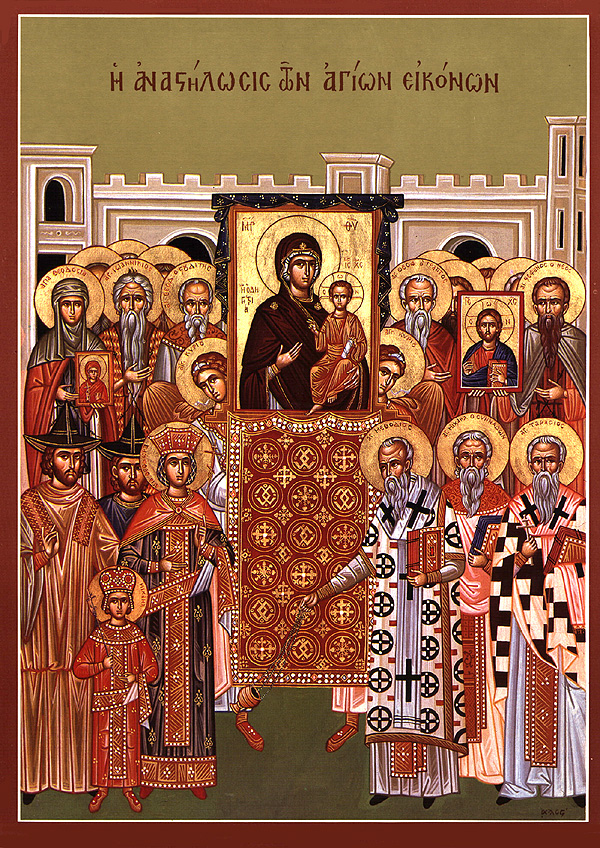


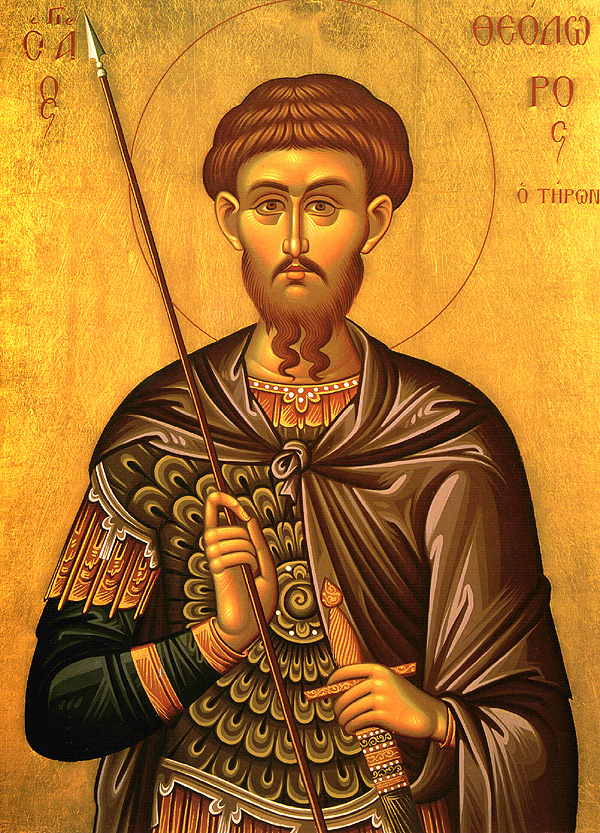
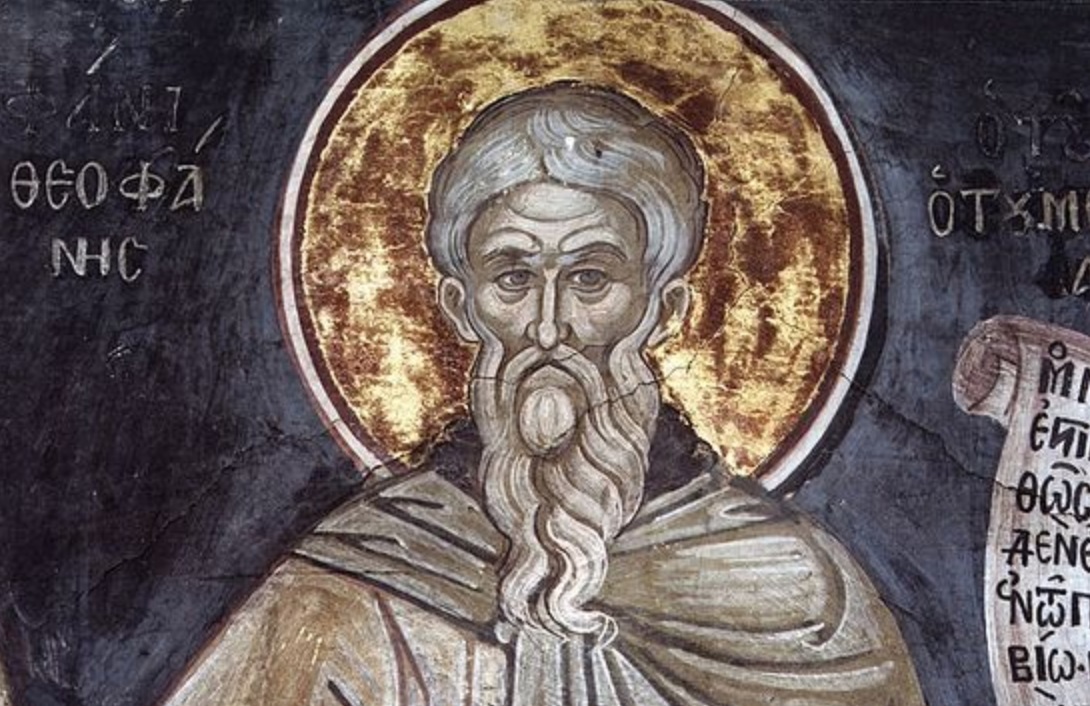

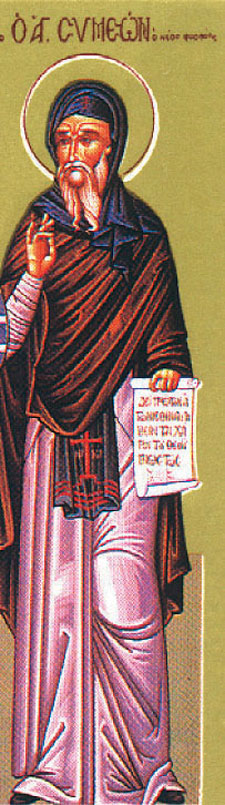


 Saint Peter Antiochian Orthodox Church
You must be logged in to post a comment.