Monthly Archives: January 2022

Daily Readings for Sunday, January 09, 2022

SUNDAY AFTER THEOPHANY

NO FAST

Sunday after Epiphany, Polyeuctus the Martyr of Melitene in Armenia, Eustratios the Wonderworker, Peter, Bishop of Sebaste, brother of Basil the Great and Gregory of Nyssa, Afterfeast of the Theophany of Our Lord and Saviour Jesus Christ, Philip, Metropolitan of Moscow

ST. PAUL’S LETTER TO THE EPHESIANS 4:7-13

BRETHREN, grace was given to each of us according to the measure of Christ’s gift. Therefore it is said, “When he ascended on high he led a host of captives, and he gave gifts to men.” (in saying, “He ascended, ” what does it mean but that he had also descended into the lower parts of the earth? He who descended is he who also ascended far above all the heavens, that he might fill all things.) And his gifts were that some should be apostles, some prophets, some evangelists, some pastors and teachers, to equip the saints for the work of ministry, for building up the body of Christ, until we all attain to the unity of the faith and of the knowledge of the Son of God, to mature manhood, to the measure of the stature of the fullness of Christ.

MATTHEW 4:12-17

At that time, when Jesus heard that John had been arrested, he withdrew into Galilee; and leaving Nazareth he went and dwelt in Capernaum by the sea, in the territory of Zebulun and Naphtali, that what was spoken by the prophet Isaiah might be fulfilled: “The land of Zebulun and the land of Naphtali, toward the sea, across the Jordan, Galilee of the Gentiles, the people who sat in darkness have seen a great light, and for those who sat in the region and shadow of death light has dawned.” From that time Jesus began to preach, saying, “Repent, for the kingdom of heaven is at hand.”

Afterfeast of the Theophany of our Lord and Savior Jesus Christ
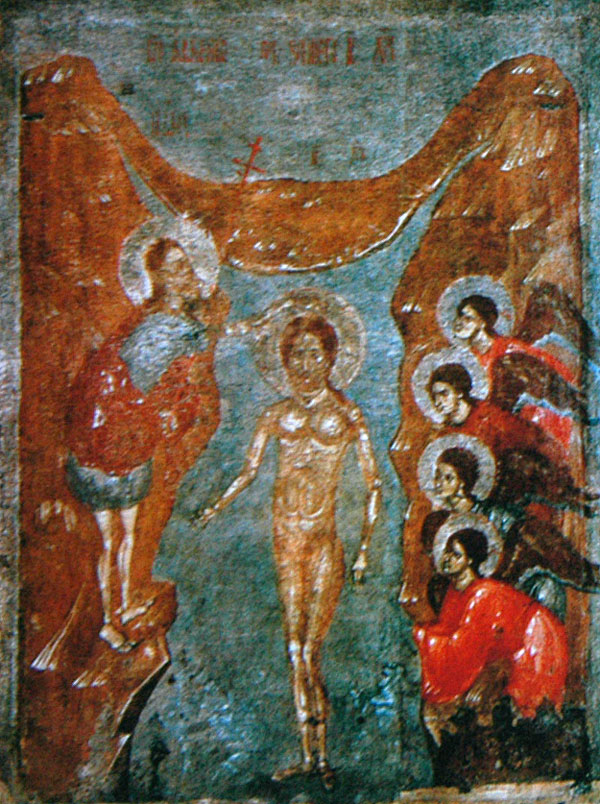
The third day of the Afterfeast of Theophany falls on January 9. The hymns of this period invite us to purify our minds in order to see Christ.

Martyr Polyeuctus of Melitene, in Armenia
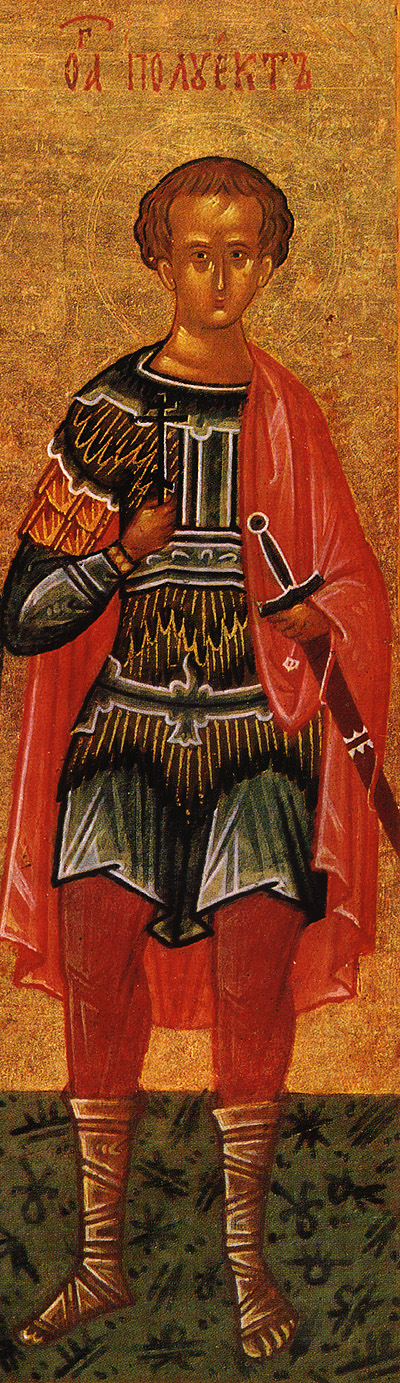
Saint Polyeuctus was the first martyr in the Armenian city of Melitene. He was a soldier under the emperor Decius (249-251) and he later suffered for Christ under the emperor Valerian (253-259). The saint was friend also of Nearchos, a fellow-soldier and firm Christian, but Polyeuctus, though he led a virtuous life, remained a pagan.

When the persecution against Christians began, Nearchos said to Polyeuctus, “Friend, we shall soon be separated, for they will take me to torture, and you alas, will renounce your friendship with me.” Polyeuctus told him that he had seen Christ in a dream, Who took his soiled military cloak from him and dressed him in a radiant garment. “Now,” he said, “I am prepared to serve the Lord Jesus Christ.”

Enflamed with zeal, Saint Polyeuctus went to the city square, and tore up the edict of Decius which required everyone to worship idols. A few moments later, he met a procession carrying twelve idols through the streets of the city. He dashed the idols to the ground and trampled them underfoot.

His father-in-law, the magistrate Felix, who was responsible for enforcing the imperial edict, was horrified at what Saint Polyeuctus had done and declared that he had to die for this. “Go, bid farewell to your wife and children,” said Felix. Paulina came and tearfully entreated her husband to renounce Christ. His father-in-law Felix also wept, but Saint Polyeuctus remained steadfast in his resolve to suffer for Christ.

With joy he bent his head beneath the sword of the executioner and was baptized in his own blood. Soon, when the Church of Christ in the reign of Saint Constantine had triumphed throughout all the Roman Empire, a church was built at Melitene in honor of the holy Martyr Polyeuctus. Many miracles were worked through the intercession of Saint Polyeuctus. In this very church the parents of Saint Euthymius the Great (January 20) prayed fervently for a son. The birth of this great luminary of Orthodoxy in the year 376 occurred through the help of the holy Martyr Polyeuctus.

Saint Polyeuctus was also venerated by Saint Acacius, Bishop of Melitene (March 31), a participant in the Third Ecumenical Council, and a great proponent of Orthodoxy. In the East, and also in the West, the holy Martyr Polyeuctus is venerated as a patron saint of vows and treaty agreements.

The Polyeucte Overture of French composer Paul Dukas is only one of many pieces of classical music inspired by the saints. It premiered in January of 1892. French dramatist Pierre Corneille has also written a play, Polyeucte (1642), based on the martyr’s life.

Hieromartyr Philip, Metropolitan of Moscow and All Russia

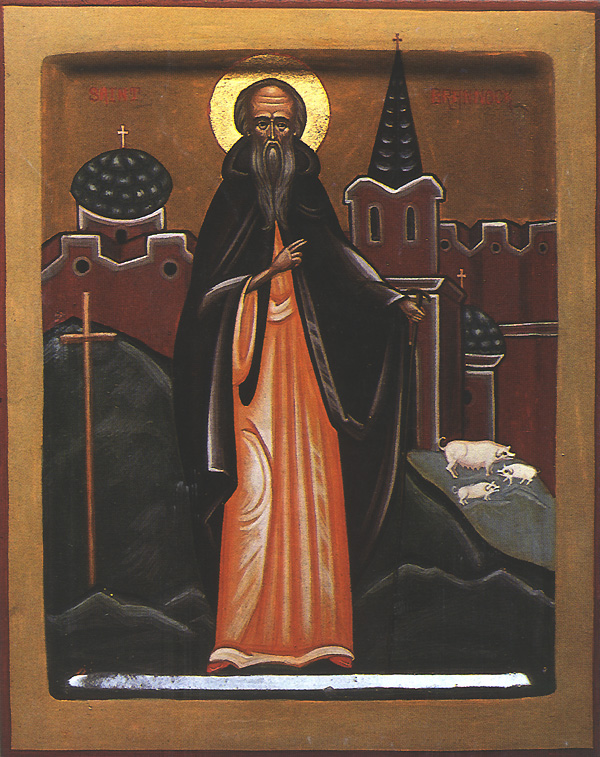
Saint Philip, Metropolitan of Moscow, in the world Theodore, was descended from the illustrious noble lineage of the Kolichevi, occupying a prominent place in the Boyar duma at the court of the Moscow sovereigns. He was born in the year 1507. His father, Stephen Ivanovich, “a man enlightened and filled with military spirit,” attentively prepared his son for government service. Theodore’s pious mother Barbara, who ended her days as a nun with the name Barsanouphia, implanted in the soul of her son a sincere faith and deep piety. Young Theodore Kolichev applied himself diligently to the Holy Scripture and to the writings of the holy Fathers. The Moscow Great Prince Basil III, the father of Ivan the Terrible, brought young Theodore into the court, but he was not attracted to court life. Conscious of its vanity and sinfulness, Theodore all the more deeply immersed himself in the reading of books and visiting the churches of God. Life in Moscow repelled the young ascetic. The young Prince Ivan’s sincere devotion to him, promising him a great future in government service, could not deter him from seeking the Heavenly City.

On Sunday, June 5, 1537, in church for Divine Liturgy, Theodore felt intensely in his soul the words of the Savior: “No man can serve two masters” (Mt.6:24), which determined his ultimate destiny. Praying fervently to the Moscow wonderworkers, and without bidding farewell to his relatives, he secretly left Moscow in the attire of a peasant, and for a while he hid himself away from the world in the village of Khizna, near Lake Onega, earning his livelihood as a shepherd.

His thirst for ascetic deeds led him to the renowned Solovki monastery on the White Sea. There he fulfilled very difficult obediences: he chopped firewood, dug the ground, and worked in the mill. After a year and a half of testing, the igumen Alexis tonsured him, giving him the monastic name Philip and entrusting him in obedience to the Elder Jonah Shamina, a converser with Saint Alexander of Svir (August 30).

Under the guidance of experienced elders Philip grew spiritually, and progressed in fasting and prayer. Igumen Alexis sent him to work at the monastery forge, where Saint Philip combined the activity of unceasing prayer with his work with a heavy hammer.

He was always the first one in church for the services, and was the last to leave. He toiled also in the bakery, where the humble ascetic was comforted with a heavenly sign. In the monastery afterwards they displayed the “Bakery” image of the Mother of God, through which the heavenly Mediatrix bestowed Her blessing upon the humble baker Philip. With the blessing of the igumen, Saint Philip spent a certain while in wilderness solitude, attending to himself and to God.

In 1546 at Novgorod the Great, Archbishop Theodosius made Philip igumen of the Solovki monastery. The new igumen strove with all his might to exalt the spiritual significance of the monastery and its founders, Saints Sabbatius and Zosimus of Solovki (September 27, April 17). He searched for the Hodēgḗtria icon of the Mother of God brought to the island by the first head of Solovki, Saint Sabbatius. He located the stone cross which once stood before the saint’s cell. The Psalter belonging to Saint Zosimus (+1478), the first igumen of Solovki, was also found. His robe, in which igumens would vest during the service on the days when Saint Zosimus was commemorated, was also discovered.

The monastery experienced a spiritual revival. A new monastic Rule was adopted to regulate life at the monastery. Saint Philip built majestic temples: a church of the Dormition of the Mother of God, consecrated in the year 1557, and a church of the Transfiguration of the Lord. The igumen himself worked as a simple laborer, helping to build the walls of the Transfiguration church. Beneath the north portico he dug himself a grave beside that of his guide, the Elder Jonah. Spiritual life in these years flourished at the monastery: struggling with the brethren with the disciples of Igumen Philip were Saints John and Longinus of Yarenga (July 3) and Bassian and Jonah of Pertominsk (July 12).

Saint Philip often withdrew to a desolate wilderness spot for quiet prayer, two versts from the monastery, which was later known as the Philippov wilderness.

But the Lord was preparing the saint for other work. In Moscow, Tsar Ivan the Terrible fondly remembered the Solovki hermit from his childhood. The Tsar hoped to find in Saint Philip a true companion, confessor and counsellor, who in his exalted monastic life had nothing in common with the sedition of the nobles. The Metropolitan of Moscow, in Ivan’s opinion, ought to have a certain spiritual meekness to quell the treachery and malice within the Boyar soul. The choice of Saint Philip as archpastor of the Russian Church seemed to him the best possible.

For a long time the saint refused to assume the great burden of the primacy of the Russian Church. He did not sense any spiritual affinity with Ivan. He attempted to get the Tsar to abolish the Oprichniki [secret police]. Ivan the Terrible attempted to argue its civil necessity. Finally, the dread Tsar and the holy Metropolitan came to an agreement: Saint Philip would not meddle in the affairs of the Oprichniki and the running of the government, he would resign as Metropolitan in case the Tsar could not fulfill his wishes, and that he would be a support and counsellor of the Tsar, just as former Metropolitans supported the Moscow sovereigns. On July 25, 1566 Saint Philip was consecrated for the cathedra of Moscow’s hierarch saints, whose number he was soon to join.

Ivan the Terrible, one of the greatest and most contradictory figures in Russian history, lived an intensely busy life. He was a talented writer and bibliophile , he was involved in compiling the Chronicles (and himself suddenly cut the thread of the Moscow chronicle writing), he examined the intricacies of the monastic Rule, and more than once he thought about abdicating the throne for the monastic life.

Every aspect of governmental service, all the measures undertaken to restructure civil and social life, Ivan the Terrible tried to rationalize as a manifestation of Divine Providence, as God acting in history. His beloved spiritual heroes were Saint Michael of Chernigov (September 20) and Saint Theodore the Black (September 19), military men active with complex contradictory destinies, moving toward their ends through whatever the obstacles before them, and fulfilling their duties to the nation and to the Church.

The more the darkness thickened around Ivan, the more resolutely he demanded cleansing and redemption of his soul. Journeying on pilgrimage to the Saint Cyril of White Lake monastery, he declared his wish to become a monk to the igumen and the brethren. The haughty autocrat fell on his knees before the igumen, who blessed his intent. Ivan wrote, “it seems to me, an accursed sinner, that I am already robed in black.”

Ivan imagined the Oprichnina in the form of a monastic brotherhood, serving God with weapons and military deeds. The Oprichniki were required to dress in monastic garb and attend long and tiring church services, lasting from 4 to 10 o’clock in the morning. “Brethren” not in church at 4 o’clock in the morning, were given a penance by the Tsar. Ivan and his sons fervently wished to pray and sing in the church choir. From church they went to the trapeza, and while the Oprichniki ate, the Tsar stood beside them. The Oprichniki gathered leftover food from the table and distributed it to the poor at the doorway of the trapeza.

Ivan, with tears of repentance and wanting to be an esteemer of the holy ascetics, the teachers of repentance, wanted to wash and burn away his own sins and those of his companions, cherishing the assurance that even his terribly cruel actions would prove to be for the welfare of Russia and the triumph of Orthodoxy. The most clearly spiritual action and monastic sobriety of Ivan the Terrible is revealed in his “Synodikon.” Shortly before his death, he ordered full lists compiled of the people murdered by him and his Oprichniki. These were then distributed to all the Russian monasteries. Ivan acknowledged all his sins against the nation, and besought the holy monks to pray to God for the forgiveness of his tormented soul.

The pseudo-monasticism of Ivan the Terrible, a dark most grievous oppression over Russia, tormented Saint Philip, who considered it impossible to mix the earthly and the heavenly, serving the Cross and serving the sword. Saint Philip saw how much unrepentant malice and envy was concealed beneath the black cowls of the Oprichniki. There were outright murderers among them, hardened in lawless bloodletting, and profiteers seeking gain, rooted in sin and transgressions. By the sufferance of God, history is often made by the hands of the impious, and Ivan the Terrible wanted to whiten his black brotherhood before God. The blood spilled by its thugs and fanatics cried out to Heaven.

Saint Philip decided to oppose Ivan. This was prompted by a new wave of executions in the years 1567-1568. In the autumn of 1567, just as the Tsar was setting out on a campaign against Livonia, he learned about a boyar conspiracy. The plotters intended to seize the Tsar and deliver him to the Polish king, who already was on the move with an army towards Russian territory.

Ivan dealt severely with the conspirators, and again he shed much blood. It was bitter for Saint Philip, and the conscience of the saint compelled him boldly to enter into defense of the executed. The final rift occurred in the spring of 1568. On the Sunday of the Veneration of the Cross, March 2, 1568, when the Tsar with his Oprichniki entered the Dormition cathedral in monastic garb, as was their custom, Saint Philip refused to bless him, and began openly to denounce the lawless acts committed by the Oprichniki. The accusations of the hierarch shattered the harmony of the church service. In a rage Ivan retorted, “Would you oppose us? We shall see your firmness! I have been too soft on you.”

The Tsar began to show ever greater cruelty in persecuting all those who opposed him. Executions followed one after the other. The fate of the saintly confessor was sealed. But Ivan wanted to preserve a semblance of canonical propriety. The Boyar Duma obediently carried out his decision to place the Primate of the Russian Church on trial. A cathedral court was set up to try Metropolitan Philip in the presence of a diminished Boyar Duma, and false witnesses were found. To the deep sorrow of the saint, these were monks of the Solovki monastery, his former disciples and novices whom he loved. They accused Saint Philip of a multitude of transgressions, including sorcery.

“Like all my ancestors,” the saint declared, “I came into this world prepared to suffer for truth.” Having refuted all the accusations, the holy sufferer attempted to halt the trial by volunteering to resign his office. His resignation was not accepted, however, and new abuse awaited the martyr.

Even after a sentence of life imprisonment had been handed down, they compelled Saint Philip to serve Liturgy in the Dormition cathedral. This was on November 8, 1568. In the middle of the service, the Oprichniki burst into the temple, they publicly read the council’s sentence of condemnation, and then abused the saint. Tearing his vestments off, they dressed him in rags, dragged him out of the church and drove him off to the Theophany monastery on a simple peasant’s sledge.

For a long while they held the martyr in the cellars of the Moscow monasteries. They placed his feet into stocks, they held him in chains, and put a heavy chain around his neck. Finally, they drove him off to the Tver Otroch monastery. And there a year later, on December 23,1569, the saint was put to death at the hands of Maliuta Skuratov. Only three days before this the saint foresaw the end of his earthly life and received the Holy Mysteries. At first, his relics were committed to earth there at the monastery, beyond the church altar. Later, they were transferred to the Solovki monastery (August 11, 1591) and from there to Moscow (July 3, 1652).

Initially, the memory of Saint Philip was celebrated by the Russian Church on December 23, the day of his martyric death. In 1660, the celebration was transferred to January 9.

Prophet Shemaiah (Samaia or Semeias)

The Prophet Shemaiah (Samaia) lived under King Solomon and his son Rehoboam. At that time, the kingdom of Israel in the north was divided from the southern kingdom of Juda. Israel was comprised of ten loosely united tribes, and Juda of two tribes. The prophet ordered Rehoboam not to make war against the ten tribes of Israel, who had separated themselves from the offspring of David (3/1 Kings 12:22, 2 Chron. 11:2). His name means “God hears.”

Saint Peter, Bishop of Sebaste, in Armenia

Saint Peter, Bishop of Sebaste, was a brother of Saint Basil the Great and Saint Gregory of Nyssa (January 1 and January 10). His older sister, Saint Macrina (July 19) played a large role in his upbringing.

Saint Basil the Great ordained Saint Peter as presbyter, and later he was made Bishop of Sebaste (in Armenia). Saint Peter was present at the Second Ecumenical Council in the year 381, convened at Constantinople against the heresy of Macedonius.

Saint Eustratius the Wonderworker

Saint Eustratius came from the city of Tarsus. At twenty years of age he secretly left his parents’ home and settled in the Abgar monastery (on Olympos in Asia Minor). There he lived a strict ascetic life, eating only bread and water, and spending his nights at prayer. After a certain while he was chosen as igumen of the monastery.

During the reign of the Iconoclast Leo the Armenian (813-820), Saint Eustratius hid from pursuit by roaming the hills and the wilds. After the death of the emperor he returned to the monastery. Prayer was always on his lips, and he constantly repeated the words: “Lord, have mercy!”

Before his death he gave instructions to the monks not to be attracted towards earthly blessings, and constantly to think about the future life. Signing himself with the Sign of the Cross, he said, “Into Thy hands, O Lord, I commend my spirit” and he died in peace at age 95.
Daily Readings for Saturday, January 08, 2022

SATURDAY AFTER THEOPHANY

NO FAST

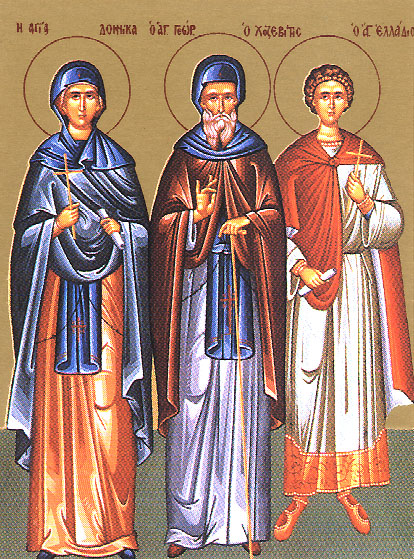
George of Hozeva, Domnica the Righteous of Constantinople, Atticus and Cyrus, Holy Patriarchs of Constantinople, Afterfeast of the Theophany of Our Lord and Saviour Jesus Christ, Gregory of the Kiev Caves, Emilianos the Confessor, Bishop of Cyzikos, Pega the Virgin, Hermitess of Peakirk

ST. PAUL’S LETTER TO THE EPHESIANS 6:10-17

Brethren, be strong in the Lord and in the strength of his might. Put on the whole armor of God, that you may be able to stand against the wiles of the devil. For we are not contending against flesh and blood, but against the principalities, against the powers, against the world rulers of this present darkness, against the spiritual hosts of wickedness in the heavenly places. Therefore take the whole armor of God, that you may be able to withstand in the evil day, and having done all, to stand. Stand, therefore, having girded your loins with truth, and having put on the breastplate of righteousness, and having shod your feet with the equipment of the gospel of peace; besides all these, taking the shield of faith, with which you can quench all the flaming darts of the evil one. And take the helmet of salvation, and the sword of the Spirit, which is the word of God.

MATTHEW 4:1-11

At that time, Jesus was led up by the Spirit into the wilderness to be tempted by the devil. And he fasted forty days and forty nights, and afterward he was hungry. And the tempter came and said to him, “If you are the Son of God, command these stones to become loaves of bread.” But he answered, “It is written, ‘Man shall not live by bread alone, but by every word that proceeds from the mouth of God.'” Then the devil took him to the holy city, and set him on the pinnacle of the temple, and said to him, “If you are the Son of God, throw yourself down; for it is written, ‘He will give his angels charge of you, ‘ and ‘On their hands they will bear you up, lest you strike your foot against a stone.'” Jesus said to him, “Again, it is written, ‘You shall not tempt the Lord your God.'” Again, the devil took him to a very high mountain, and showed him all the kingdoms of the world and the glory of them; and he said to him, “All these I will give you, if you will fall down and worship me.” Then Jesus said to him, “Be gone, Satan! for it is written, ‘You shall worship the Lord your God and him only shall you serve.'” Then the devil left him, and behold, angels came and ministered to him.

Afterfeast of the Theophany of our Lord and Savior Jesus Christ

The second day of the Afterfeast of Theophany falls on January 8. At Vespers we repeat a hymn which has already been sung at Compline for Theophany. In the hymn Saint John wonders in whose name he should baptize Christ. Should he baptize Him in the name of the Father? The Lord Jesus Christ already bears Him in Himself. Of the Son? He Himself is the incarnate Son of God. Of the Holy Spirit? Christ Himself sends the Spirit.

Venerable George the Chozebite, Abbot

Saint George the Chozebite was born on the island of Cyprus toward the end of the sixth century. After the death of his parents, he went to Palestine to worship at the holy places. Here he entered into the monastic community of Chozeba between the River Jordan and Jerusalem, and he later became head of this monastery. Saint George presented the monks example in fasting, vigil and physical efforts. Having lived as an angel upon the earth, he died in peace.

Venerable Domnica of Constantinople

Saint Domnica came from Carthage to Constantinople in the time of the holy Emperor Theodosius the Great. Here she was baptized by Patriarch Nectarius and entered a women’s monastery.

Through strict and prolonged ascetic effort she attained to high spiritual perfection. The saint healed the sick, demonstrated power over the natural elements, and predicted the future. By her miracles the saint moved inhabitants of the capital towards concerns about life eternal and the soul. Adorned by virtues, the saint departed this life a spotless virgin in her old age.

Saint Emilian the Confessor, Bishop of Cyzicus

Saint Emilian was a zealous defender of the holy icons during the reign of Emperor Leo the Armenian. He suffered torture and martyrdom in the year 820. His main feast is August 8.

Venerable Gregory, Wonderworker of the Kiev Near Caves

Saint Gregory was tonsured at the Kiev Caves monastery in the time of Saint Theodosius (May 3). The saint devoted much time to reading books, which were his sole possession. He had the ability to bring thieves to their senses. Several times robbers broke in on him in his cell or in the garden, but the saint reasoned with them, the thieves repented, and began to lead honest lives.

Once, when the monk went to the Dnieper River for water, some servants of Prince Rostislav caught sight of the Elder and rudely began making fun of him. The saint answered them, “Children, when you should be asking for everyone’s prayers, you are displeasing God. Weep, for disaster approaches. Repent and ask God to be merciful to you on the Day of Judgment. All you will find death in the water with your prince.” By orders of the enraged Prince Rostislav, the monk was bound hand and foot, and he was drowned in the Dnieper with a stone around his neck. Still, his prediction came true. Rostislav did not return from the campaign. In that same year of 1093 the twenty-year-old prince drowned in sight of his brother, Vladimir Monomakh, trying to save himself as he fled from the Polovetsians.

Several sources identify Saint Gregory with Saint Gregory, a composer of Canons in honor of the holy Prince Vladimir, Saint Theodosius, and the holy Martyrs Boris and Gleb. But Saint Gregory, compiler of canons, lived later and died in about the year 1120. Saint Gregory the Wonderworker died in 1093 and was buried in the Near Caves. His memory is celebrated also on September 28 and on the second Sunday of Great Lent.

Venerable Gregory the Recluse, of the Kiev Caves

Saint Gregory, Hermit of the Caves, lived during the fourteenth century. In the “Lives of the Saints Whose Relics lie in the Cave of Saint Theodosius,” it says that uncooked grass served as Saint Gregory’s food all his life. He gave this grass to those coming to him, and the sick were healed. He is also commemorated on August 28 and on the second Sunday of Great Lent.

Hieromartyr Isidore and 72 others at Yuriev, Estonia

Saint Isidore was priest of Saint Nicholas church in the city of Yuriev (Derpto, at present Taru in Estonia). According to the terms of a treaty concluded in 1463 between the Moscow Great Prince Ivan III and the Livonian knights, the latter were obligated to extend every protection to the Orthodox at Derpto. But the Livonian knights (who were German Catholics) broke the treaty and tried to force the Orthodox to become Roman Catholics.

The priest Isidore bravely stood forth in defense of Orthodoxy, preferring to accept a martyr’s crown rather than submit to the Catholics. The Latin bishop and the Roman Catholic nobles of Yuriev had been told that Saint Isidore and the Orthodox population of the city had spoken against the faith and customs of the Germans.

When Saint Isidore and seventy-two of his parishioners went to bless the waters of the River Omovzha (or Emaiyga, now Emajogi) for the Feast of Theophany, they were arrested and brought before the Latin bishop Andrew and the civil judges of the city. Pressure was brought on them to convert to Catholicism, but the saint and his flock refused to renounce Christ or the Orthodox Faith. Enraged by this, the authorities had them thrown into prison.

Saint Isidore encouraged his flock to prepare themselves for death, and not to fear torture. He partook of the reserved Gifts he carried with him, then communed all the men, women, and children with the Holy and Life-Giving Mysteries of Christ.

Then the bishop and the judges summoned the Orthodox to appear before them once more, demanding that they convert to Catholicism. When they refused to do so, they were dragged back to the river and pushed through the hole in the ice that they had cut to bless the water. So they all suffered and died for Christ, Who bestowed on them crowns of unfading glory.

During the spring floods, the incorrupt bodies of the holy martyrs, including the fully-vested body of the hieromartyr Isidore, were found by Russian merchants journeying along the river bank. They buried the saints around the church of Saint Nicholas.

Although people began to venerate these saints shortly after their death, they were not officially glorified by the Church until 1897.

Saint Paisius of Uglich

Saint Paisius of Uglich was igumen of the Protection monastery, near Uglich. He was born in the Tver district near the city of Kashin, and he was a nephew of Saint Macarius of Kalyazin (March 17).

Saint Paisius entered his uncle’s monastery after the death of his parents, when he was just an eleven-year-old child. Under his uncle’s guidance, Saint Paisius led a monastic life of obedience, fasting and prayer, and he was put to work copying soul-saving books.

“A man wondrous of spirit, famed teacher of holiness and most astounding wonderworker, he founded (in 1464) the cenobitic Protection monastery three versts from Uglich at the wish of Prince Andrew, and he was chosen igumen.” Saint Paisius was also “founder and organizer of the holy Nikolsky Grekhozaruchnya monastery in 1489.”

Struggling at the Protection monastery, Saint Paisius lived into old age and died on June 6, 1504. His relics, glorified by miracles, rest beneath a crypt in the Protection monastery.

Saint Carterius of Caesarea in Cappadocia

Saint Carterius lived during the reign of Diocletian, and was a teacher in Caesarea of Cappadocia. He stood before a statue of Serapis and prayed to Christ, and the idol shattered to pieces. The procurator Urbanus ordered Saint Carterius to be tortured and then beheaded. Some, however, say he was killed with a spear.

Martyrs Theophilus the Deacon, and Helladius, in Libya

Saint Theophilus the deacon suffered with Saint Helladius. After confessing Christ before the governor of Libya, they were tortured and slain.

Martyrs Julian and his wife, Basilissa, and those with them in Egypt

The Holy Martyr Julian was born in the Egyptian city of Antinoe, and to satisfy his parents he entered into marriage with the noble and rich maiden, Basilissa. Though married, the spouses remained virginal. Upon the death of their parents they built two monasteries: one for men, and one for women. They themselves became monastics and headed these monasteries.

In the year 313, during the reign of Diocletian, Saint Julian suffered cruelly for his faith in Christ. By his bravery he converted Celsius, the son of his torturer the hegemon Marcian, and his wife, Marionilla. Having resurrected a dead pagan, the saint also converted him. The converts received Baptism from the priest Anthony. In Baptism the pagan was named Anastasius (i.e. “Resurrected”). After being locked in prison, they all received the crown of martyrdom, won through beheading by the sword. Also with them were twenty soldiers and seven youths.

Venerable Elias the Hermit, of Egypt

Saint Elias the Egyptian became a monk and pursued asceticism for seventy-five years on a desolate mountain in a cave. He died in the fourth century at the age of 110.

Martyr Abo the Perfumer, of Tbilisi, Georgia

In the 8th century a Saracen army tyrannized Kartli as a first step towards overturning the Georgian nation. The invaders were certain that the best way to conquer Georgia was to uproot the Christian Faith. The Georgian people were alarmed, and the clergy and the best sons of Kartli sought desperately for a resolution to this calamity. Much blood was shed in 766 when the Muslim invaders crushed an uprising in the eastern region of Kakheti.

In 772, Caliph Al Mansur (754-775), dissatisfied with the provincial governor of Kartli, Duke Nerse, summoned him to Baghdad. Nerse spent the following three years in captivity. During that time he became acquainted with a seventeen-year-old perfumer named Abo, and when he was released he brought Abo back with him to Georgia. Abo was amazed at the great piety of the Georgian people, and he began to learn the Georgian language, attend the divine services, and speak with local priests. Abo sought with all his heart to become a Christian, and he was eventually baptized in Khazaria, while in the company of Duke Nerse.

Later, Abo accompanied the duke to Abkhazeti, to escape the Saracen raids. Discovering an entire population of Christians praising Jesus Christ with one heart and mouth, Abo gave great thanks to God for the opportunity to visit this area. Nerse later returned to Kartli, but Abo remained at the request of the Abkhaz king, who feared that the Saracens would torture Abo for his devout faith in Christ. Soon, however, Abo became restless and told the king, “Let me go, and I will freely declare my Christian Faith to those who hate Christ!”

Abo labored in Tbilisi for three years, preaching the Christian Faith. Then his own former countrymen betrayed and captured him, but he was released soon after at the request of the duke Stepanoz.

A new emir was appointed to rule in Tbilisi, and when the Christians heard that he was plotting to capture Abo, they begged him to conceal his identity. But Abo simply rejoiced and told them, “I am prepared not only to be tortured for Christ, but to die for His sake as well.” As predicted, the emir’s servants captured Abo and brought him before a judge. The judge tried in vain to entice Abo to return to the faith of his ancestors. Then, in a rage, he ordered that Abo be cast into prison and that his hands and feet be fettered in chains. But his suffering for Christ filled the blessed Abo with even greater love, and he asked his Christian brothers and sisters to sell his clothes and use the money earned to buy candles and incense for local churches.

On the day of his execution Abo washed his face, anointed it with holy oil, partook of the Holy Gifts, and prepared for his death as though preparing for a feast. “Weep not, but rejoice, for I am going to my Lord. Pray for me, and may the peace of God protect you,” he cheerfully told the faithful Christians who surrounded him in his last hours.

When his time had come, Saint Abo placed his arms on his breast in the form of a cross and joyously bowed his head beneath the sword. The executioners swung their swords three times in hopes of frightening Abo into denying Christ, but the blessed Abo stood unyielding until his last breath. Finally, convinced that all their efforts and cunning were in vain, the executioners were given a sign and they beheaded the holy Abo. Defeated and ashamed, Abo’s godless executioners tossed his body, his garments, and the earth that had been soaked with his blood into a sack, dragged it outside the city, and burned it near the Mtkvari River. Then they wrapped his ashes in sheepskin and cast them into the river.

In the evening a sign was given from above. Next to the Metekhi Cliff, by the bridge, a shining star hung over the river with its bright light reflecting in the water where the remains of the saint rested. Later, a chapel was built in honor of Saint Abo on the left bank of the Mtkvari.

Venerable Gregory of Ochrid

Saint Gregory was a faithful teacher and shepherd of Christ’s flock. An inscription in the church of Holy Wisdom (Hagia Sophia) in Ochrid refers to him as “Gregory the Wise.”

Daily Readings for Friday, January 07, 2022

SYNAXIS OF JOHN THE HOLY GLORIOUS PROPHET, BAPTIST, & FORERUNNER

ABSTAIN FROM MEAT, DAIRY, EGGS

Synaxis of John the Holy Glorious Prophet, Baptist, & Forerunner, Afterfeast of the Theophany of Our Lord and Saviour Jesus Christ, Cedd, Bishop of Scotland, Fursey, Abbot of Lagny

ACTS OF THE APOSTLES 19:1-8

In those days, while Apollos was at Corinth, Paul passed through the upper country and came to Ephesus. There he found some disciples. And he said to them, "Did you receive the Holy Spirit when you believed?" And they said, "No, we have never even heard that there is a Holy Spirit." And he said, "Into what then were you baptized?" They said, "Into John's baptism." And Paul said, "John baptized with the baptism of repentance, telling the people to believe in the one who was to come after him, that is, Jesus." On hearing this, they were baptized in the name of the Lord Jesus. And when Paul had laid his hands upon them, the Holy Spirit came on them; and they spoke with tongues and prophesied. There were about twelve of them in all. And he entered the synagogue and for three months spoke boldly, arguing and pleading about the kingdom of God.

JOHN 1:29-34

At that time, John saw Jesus coming toward him, and said, 'Behold, the Lamb of God, who takes away the sin of the world! This is he of whom I said, 'After me comes a man who ranks before me, for he was before me.' I myself did not know him; but for this I came baptizing with water, that he might be revealed to Israel.' And John bore witness, 'I saw the Spirit descend as a dove from heaven, and it remained on him. I myself did not know him; but he who sent me to baptize with water said to me, 'He on whom you see the Spirit descend and remain, this is he who baptizes with the Holy Spirit.' And I have seen and have borne witness that this is the Son of God.'

Afterfeast of the Theophany of our Lord and Savior Jesus Christ

On the first day of the Afterfeast of Theophany, the Church extols Saint John the Baptist as the greatest man born of a woman. He surpasses all the ancient prophets because he baptized the Messiah, Whose coming he foretold.

Synaxis of the Holy Glorious Prophet, Forerunner and Baptist John

In the Orthodox Church it is customary, on the day following the Great Feasts of the Lord and the Mother of God, to remember those saints who participated directly in the sacred event. So, on the day following the Theophany of the Lord, the Church honors the one who participated directly in the Baptism of Christ, placing his own hand upon the head of the Savior.

Saint John, the holy Forerunner and Baptist of the Lord, whom the Lord called the greatest of the prophets, concludes the history of the Old Testament and opens the era of the New Testament. The holy Prophet John bore witness to the Only-Begotten Son of God, incarnate in the flesh. Saint John was accounted worthy to baptize Him in the waters of the Jordan, and he was a witness of the Theophany of the Most Holy Trinity on the day of the Savior’s Baptism.

The holy Prophet John, the son of the Priest Zachariah and Righteous Elizabeth, was related to the Lord on His mother’s side. The holy Forerunner, John, was born six months before Christ. The Archangel Gabriel announced his birth in the Temple at Jerusalem, revealing to Zachariah that a son was to be born to him.

Through the prayers offered beforehand, the child was filled with the Holy Spirit. Saint John prepared himself in the wilds of the desert for his great service by a strict life, by fasting, prayer and sympathy for the fate of God’s people.

At the age of thirty, he came forth preaching repentance. He appeared on the banks of the Jordan, to prepare the people by his preaching to accept the Savior of the world. In church hymnology, Saint John is called a “bright morning star,” whose gleaming outshone the brilliance of all the other stars, announcing the coming dawn of the day of grace, illumined with the light of the spiritual Sun, our Lord Jesus Christ.

Having baptized the sinless Lamb of God, Saint John soon died a martyr’s death, beheaded by the sword on orders of King Herod at the request of his daughter Salome. (On Saint John the Baptist, see Mt.3:1-16, 11:1-19, 14:1-12; Mark 1:2-8, 6:14-29; Luke 1:5-25, 39-80, 3:1-20, 7:18-35, 9:7-9; John 1:19-34, 3:22-26).

The Transfer of the Right Hand of the holy Forerunner from Antioch to Constantinople (956) and the Miracle of Saint John the Forerunner against the Hagarenes (Moslems) at Chios:

The body of Saint John the Baptist was buried in the Samaritan city of Sebaste. The holy Evangelist Luke, who went preaching Christ in various cities and towns, came to Sebaste, where they gave him the right hand of the holy Prophet John, the very hand with which he had baptized the Savior. The Evangelist Luke took it with him to his native city of Antioch.

When the Moslems seized Antioch centuries later, a deacon named Job brought the holy hand of the Forerunner from Antioch to Chalcedon. From there, on the eve of the Theophany of the Lord, it was transferred to Constantinople (956) and kept thereafter.

In the year 1200, the Russian pilgrim Dobrynya, who later became Saint Anthony, Archbishop of Novgorod (February 10), saw the right hand of the Forerunner in the imperial palace. From the Lives of the Saints we learn that in the year 1263, during the capture of Constantinople by the Crusaders, the emperor Baldwin gave one bone from the wrist of Saint John the Baptist to Ottonus de Cichon, who then gave it to a Cistercian abbey in France.

The right hand continued to be kept in Constantinople. And at the end of the fourteenth to the beginning of the fifteenth centuries, the holy relic was seen at Constantinople in the Peribleptos monastery by the Russian pilgrims Stephen of Novgorod, the deacon Ignatius, the cantor Alexander and the deacon Zosimus. When Constantinople fell to the Turks in 1453, sacred objects were gathered up at the the conqueror’s orders and kept under lock in the imperial treasury.

In the Lives of the Saints is clear testimony that in the year 1484 the right hand of the holy Forerunner was given away by the son of the Moslem sultan Bayazet to the knights of Rhodes to gain their good will, since a dangerous rival for Bayazet, his own brother, had allied himself with them. A contemporary participant, the vice-chancellor of Rhodes, Wilhelm Gaorsan Gallo, also speaks of this event. The knights of Rhodes, having established their base on the island of Malta (in the Mediterranean Sea), then transferred the sacred relic they had received to Malta.

When the Russian Tsar Paul I (1796-1801) became Grand Master of the Maltese Order in honor of the holy Prophet John, the right hand of the Baptist, part of the Life-Creating Cross and the Philermos Icon (October 12) of the Mother of God (from Mt Philermos on the island of Rhodes) were transferred in 1799 from the island of Malta to Russia [because of the Napoleonic threat], to the chapel at Gatchina (October 12). In the same year these sacred items were transferred into the church dedicated to the Icon of the Savior Not Made by Hands at the Winter Palace. A special service was composed for this Feast.

Besides the Synaxis of the honorable, glorious Prophet, Forerunner and Baptist John, the Russian Orthodox Church celebrates his memory on the following days: September 23, his Conception; June 24, his Nativity; August 29, his Beheading; February 24, the First and Second Finding of his Head; May 25, the Third Finding of his Head; October 12, the Transfer of his Right Hand from Malta to Gatchina (1799).

Saint Pachomius of Keno Lake

Saint Pachomius is commemorated on the Saturday after Theophany. He founded a monastery dedicated to the Transfiguration of the Lord near Lake Keno, and tonsured Saint Anthony of Siya (December 7) as a monk in 1508. He did not entrust Saint Anthony to one of the other monks, but he himself took him under his wing and trained him in asceticism and in the spiritual life. Saint Anthony possessed every virtue and resisted every temptation, purified his mind and soul from the passions, and freed himself from worldly attachments.

When the time came for Saint Anthony to leave the monastery and live in solitude, Saint Pachomius blessed him to follow this path saying, “May the Lord bless you, my child. May the Lord’s will be done.”

Saint Pachomius was a great ascetic and a clairvoyant Elder, a good and faithful servant who entered into the joy of his Lord in 1515.

Saint Brannock of Braunton

Saint Brannock lived in the sixth century, and tutored the children of the Welsh ruler Brychan. He went with King Brychan on a pilgrimage to venerate the tombs of the Apostles. On the way home, he stopped in Brittany and remained there several years.

Eventually, the saint returned to Wales and settled at Braunton, where he built a church. His holy relics are said to rest beneath the altar of the Braunton church.

Saint Cedd of Lastingham

Saint Cedd was a missionary and bishop who spread the faith throughout England during the seventh century.

The eldest of four brothers, all of whom became priests, he was born in 620 AD into a noble Northumbrian family. At an early age, he began studies at the Lindisfarne Priory, where he became familiar with Irish monasticism. After pursuing further studies in Ireland, he was sent by Bishop Finan of Lindisfarne to evangelize the people of Essex. He baptized many of the locals, built several churches, and founded monasteries in Bradwell-on-Sea and East Tilbury.

After his consecration to the episcopacy as Bishop of Essex, he reinstated Saint Paul's in London as the main seat of his diocese. He remained fond of his northern homeland and made regular visits there. On one such occasion in 658, he was approached by King Aethelwald of Deira who, finding Saint Cedd to be a good and wise man, pressed him to accept a parcel of land at Lastingham in Yorkshire on which to build a monastery. Saint Cedd eventually agreed, laying the foundation stones after the parcel had been cleansed through prayer and fasting. He became the first Abbot of Lastingham and remained so while still ministering to his flock in Essex.

Saint Cedd died in Lastingham during a great plague that also claimed the life of his brother Cynebil. Eventually, he was buried under the altar of a little stone church built at Lastingham in honor of the Mother of God. His relics were later transferred to the Litchfield Cathedral, which had been built by his brother Chad.

Daily Readings for Thursday, January 06, 2022

THE THEOPHANY OF OUR LORD AND SAVIOUR JESUS CHRIST

NO FAST

The Theophany of Our Lord and Saviour Jesus Christ, Theophan the Recluse

ST. PAUL’S LETTER TO TITUS 2:11-14; 3:4-7

TITUS, my son, the grace of God has appeared for the salvation of all men, training us to renounce irreligion and worldly passions, and to live sober, upright, and godly lives in this world, awaiting our blessed hope, the appearing of the glory of the great God and Savior Jesus Christ, who gave himself for us to redeem us from all iniquity and to purify for himself a people of his own who are zealous for good deeds.
But when the goodness and loving kindness of God our Savior appeared, he saved us, not because of deeds done by us in righteousness, but in virtue of his own mercy, by the washing of regeneration and renewal in the Holy Spirit, which he poured out upon us richly through Jesus Christ our Savior, so that we might be justified by his grace and become heirs in hope of eternal life.

MATTHEW 3:13-17

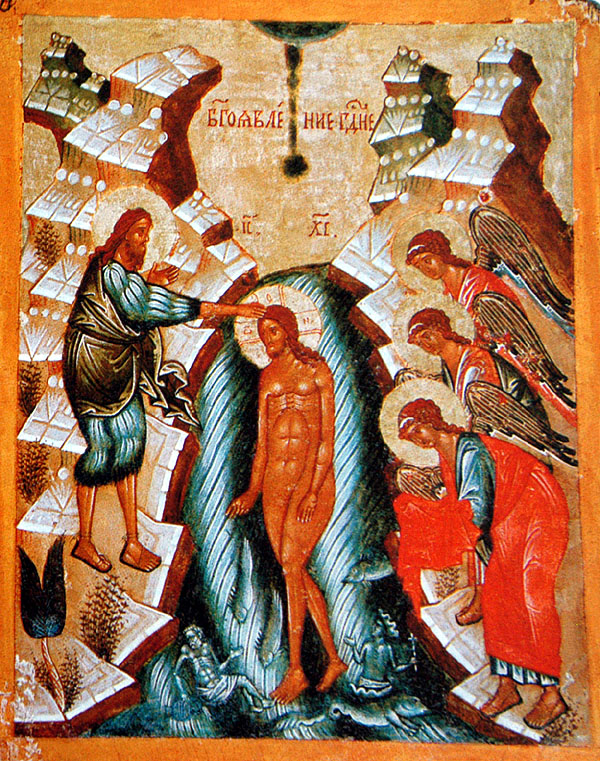
At that time, Jesus came from Galilee to the Jordan to John, to be baptized by him. John would have prevented him, saying, "I need to be baptized by you, and do you come to me?" But Jesus answered him, "Let it be so now; for thus it is fitting for us to fulfill all righteousness." Then he consented. And when Jesus was baptized, he went up immediately from the water, and behold, the heavens were opened and he saw the Spirit of God descending like a dove, and alighting on him; and lo, a voice from heaven, saying, "This is my beloved Son, with whom I am well pleased.

Feast of the Theophany of our Lord and Savior Jesus Christ

Theophany is the Feast which reveals the Most Holy Trinity to the world through the Baptism of the Lord (Mt.3:13-17; Mark 1:9-11; Luke 3:21-22). God the Father spoke from Heaven about the Son, the Son was baptized by Saint John the Forerunner, and the Holy Spirit descended upon the Son in the form of a dove. From ancient times this Feast was called the Day of Illumination and the Feast of Lights, since God is Light and has appeared to illumine “those who sat in darkness,” and “in the region of the shadow of death” (Mt.4:16), and to save the fallen race of mankind by grace.

In the ancient Church it was the custom to baptize catechumens at the Vespers of Theophany, so that Baptism also is revealed as the spiritual illumination of mankind.

The origin of the Feast of Theophany goes back to Apostolic times, and it is mentioned in The Apostolic Constitutions (Book V:13). From the second century we have the testimony of Saint Clement of Alexandria concerning the celebration of the Baptism of the Lord, and the night vigil before this Feast.

There is a third century dialogue about the services for Theophany between the holy martyr Hippolytus and Saint Gregory the Wonderworker. In the following centuries, from the fourth to ninth century, all the great Fathers of the Church: Gregory the Theologian, John Chrysostom, Ambrose of Milan, John of Damascus, commented on the Feast of Theophany.

The monks Joseph the Studite, Theophanes and Byzantios composed much liturgical music for this Feast, which is sung at Orthodox services even today. Saint John of Damascus said that the Lord was baptized, not because He Himself had need for cleansing, but “to bury human sin by water,” to fulfill the Law, to reveal the mystery of the Holy Trinity, and finally, to sanctify “the nature of water” and to offer us the form and example of Baptism.

On the Feast of the Baptism of Christ, the Holy Church proclaims our faith in the most sublime mystery, incomprehensible to human intellect, of one God in three Persons. It teaches us to confess and glorify the Holy Trinity, one in Essence and Undivided. It exposes and overthrows the errors of ancient teachings which attempted to explain the Creator of the world by reason, and in human terms.

The Church shows the necessity of Baptism for believers in Christ, and it inspires us with a sense of deep gratitude for the illumination and purification of our sinful nature. The Church teaches that our salvation and cleansing from sin is possible only by the power of the grace of the Holy Spirit, therefore it is necessary to preserve worthily these gifts of the grace of holy Baptism, keeping clean this priceless garb, for “As many as have been baptized into Christ, have put on Christ” (Gal 3:27).

On the day of Theophany, all foods are permitted, even if the Feast falls on a Wednesday or Friday.

Venerable Macarius of Mount Athos

Saint Macarius was born in Thessalonica during the reign of Emperor Manuel II Paleologos, and went to Vatopedi Monastery on Mt. Athos when he was young. Later, he went to Constantinople and became igumen of the Monastery of the Pantocrator, and chaplain to the Emperor.

He died in 1431 during an epidemic in Chalke.

Memory Eternal Tom Willingham

Beloved St Peter’s member Tom Willingham fell asleep in the Lord Sunday Jan 2, 2022.

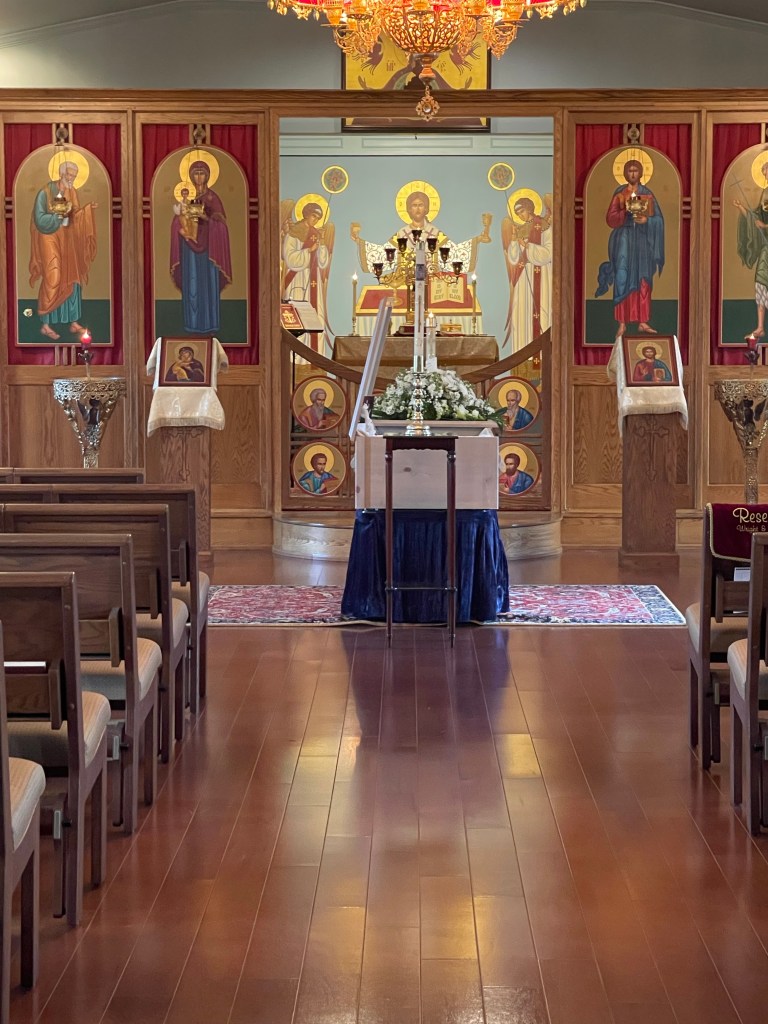
The funeral service for Tom will take place Wednesday, January 5 beginning at 11:00 AM at the church. Tom’s body will be received into the church at 10:00 AM and there will be an hour visitation time from this time until the beginning of the funeral service.

After the funeral service has concluded, Tom’s body will be taken to Lakeland Place Garden Park Cemetery (on Lakeland Drive) for burial and the Trisagion Prayers of Mercy to be prayed. There will be no Mercy Meal afterwards.


Wright and Ferguson Funeral home in Flowood are handling the arrangements of the funeral.
In lieu of flowers the family has requested that special offerings be made to the church in Tom’s memory.

Daily Readings for Wednesday, January 05, 2022

EVE OF THE THEOPHANY OF OUR LORD AND SAVIOUR JESUS CHRIST

ABSTAIN FROM MEAT, FISH, DAIRY, EGGS, WINE, OLIVE OIL

Eve of the Theophany of Our Lord and Saviour Jesus Christ, The Holy Martyrs Theopemptus and Theonas, Righteous Syncletike of Alexandria, Gregory of Akrita, Apollinaria of Egypt

ST. PAUL’S FIRST LETTER TO THE CORINTHIANS 9:19-27

BRETHREN, though I am free from all men, I have made myself a slave to all, that I might win the more. To the Jews I became as a Jew, in order to win Jews; to those under the law I became as one under the law – though not being myself under the law – that I might win those under the law. To those outside the law I became as one outside the law – not being without law toward God but under the law of Christ – that I might win those outside the law. To the weak I became weak, that I might win the weak. I have become all things to all men, that I might by all means save some. I do it all for the sake of the gospel, that I may share in its blessings. Do you not know that in a race all the runners compete, but only one receives the prize? So run that you may obtain it. Every athlete exercises self-control in all things. They do it to receive a perishable wreath, but we an imperishable. Well, I do not run aimlessly, I do not box as one beating the air; but I pommel my body and subdue it, lest after preaching to others I myself should be disqualified.

LUKE 3:1-18

In the fifteenth year of the reign of Tiberius Caesar, Pontius Pilate being governor of Judea, and Herod being tetrarch of Galilee, and his brother Philip tetrarch of the region of Ituraea and Trachonitis, and Lysanias tetrarch of Abilene, in the high-priesthood of Annas and Caiaphas, the word of God came to John the son of Zacharias in the wilderness; and he went into all the region about the Jordan, preaching a baptism of repentance for the forgiveness of sins. As it is written in the book of the words of Isaiah the prophet, "The voice of one crying in the wilderness: Prepare the way of the Lord, make his paths straight. Every valley shall be filled, and every mountain and hill shall be brought low, and the crooked shall be made straight, and the rough ways shall be made smooth; and all flesh shall see the salvation of God." He said therefore to the multitudes that came out to be baptized by him, "You brood of vipers! Who warned you to flee from the wrath to come? Bear fruits that befit repentance, and do not begin to say to yourselves, 'We have Abraham as our father"; for I tell you, God is able from these stones to raise up children to Abraham. Even now the axe is laid to the root of the trees; every tree therefore that does not bear good fruit is cut down and thrown into the fire." And the multitudes asked him, "What then shall we do?" And he answered them, "He who has two coats, let him share with him who has none; and he who has food, let him do likewise." Tax collectors also came to be baptized, and said to him, "Teacher, what shall we do?" And he said to them, "Collect no more than is appointed you." Soldiers also asked him, "And we, what shall we do?" And he said to them, "Rob no one by violence or by false accusation, and be content with your wages." As the people were in expectation, and all men questioned in their hearts concerning John, whether perhaps he were the Christ, John answered them all, "I baptize you with water; but he who is mightier than I is coming, the thong of whose sandals I am not worthy to untie; he will baptize you with the Holy Spirit and with fire. His winnowing fork is in his hand, to clear his threshing floor, and to gather the wheat into his granary, but the chaff he will burn with unquenchable fire." So, with many other exhortations, he preached good news to the people.

Eve of the Theophany of our Lord and Savior Jesus Christ

The fourth day of the Forefeast of Theophany falls on January 5. If January 5th falls on a weekday, the following order is observed:

Vespers on the evening of the 4th, then Matins. The First Hour is not read after Matins.

On the 5th we read the Royal Hours, followed by Vespers and the Liturgy of Saint Basil the Great.

If the Eve of Theophany falls on Saturday:

The Royal Hours are read on Friday, but there is no Liturgy. Vespers on the evening of the 4th, followed by Matins. The Liturgy of Saint John Chrysostom is celebrated on Saturday morning.

If the Eve of Theophany falls on a Sunday:

The Royal Hours are read on Friday, but there is no Liturgy. Vigil is served on Saturday evening, and the Liturgy of Saint John Chrysostom is celebrated on Sunday.

There are thirteen readings at Vespers on the Eve of Theophany, and the entrance is made with the Gospel. There is fasting today, whatever day of the week it may be.

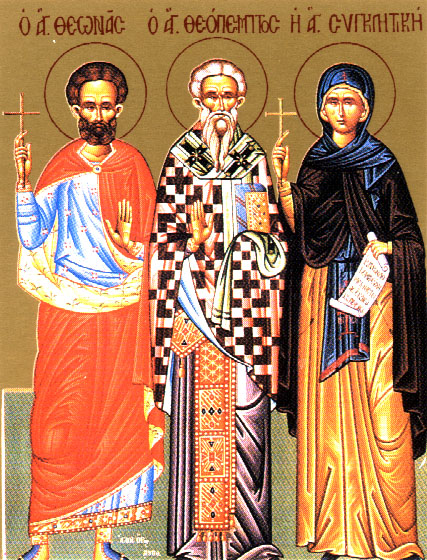
Hieromartyr Theopemptus, Bishop of Nicomedia, and Martyr Theonas

The Holy Martyrs Theopemptus and Theonas suffered in Nicomedia in the year 303. Saint Theopemptus was bishop in Nicomedia in the time of Diocletian. Speaking out against idolatry, he defended the faith in Christ. Because of this, he became one of the first victims of the Diocletian persecution.

The saint refused to obey the emperor’s order to worship an idol of Apollo. Saint Theopemptus was thrown into a red-hot furnace, but by the power of God he remained alive. The emperor came to the furnace by night with a detachment of soldiers, and there he saw the saint alive and praying to God. Ascribing the miracle to magic, Diocletian thought to exhaust Saint Theopemptus by depriving him of food and drink for twenty-two days, but the martyr was preserved by the will of God.

The emperor brought the famous sorcerer Theonas to overcome Bishop Theopemptus’ supposed magical power. Theonas prepared a poison for Saint Theopemptus, put it into a little cake, and offered it to him to eat. The poison did no harm at all to Saint Theopemptus. Then Theonas tried an even stronger poison on the martyr. Seeing that Saint Theopemptus remained unharmed, he came to believe in Christ. They threw him into prison together with the holy bishop, who taught and baptized him, giving him the name Synesios (which means “full of understanding”).

At dawn Diocletian summoned Saint Theopemptus, and again tried to turn him to pagan impiety. Seeing that the bishop remained firm in his faith, he subjected him to many grievous tortures, after which the saint was beheaded. The holy martyr Theonas refused to offer sacrifice to idols, so he was buried alive in a deep ditch. This occurred at Nicomedia in the year 303.

Venerable Syncletica of Alexandria

Saint Syncletica was a native of Alexandria, the daughter of rich parents. She was very beautiful, but from a young age she thought only about things pleasing to God. Loving the purity of virginity, she refused to marry anyone, and spent all her time in fasting and prayer.

After the death of her parents, she distributed her inheritance to the poor. She left the city together with her younger sister, and lived in a crypt for the rest of her life.

News of her ascetic deeds quickly spread throughout the vicinity, and many devout women and girls came to live under her guidance. During the course of her ascetic life the saint zealously instructed the sisters by word and by deed.

In her eightieth year she was struck by an intense and grievous illness. The nun bore her ordeal with true Christian endurance, and the time of her death was revealed to her in a vision. After giving final instructions to her nuns, she surrendered her soul to God around the year 350.

Prophet Micah

The Holy Prophet Micah was a companion of the holy prophet Elias. He prophesied the ruin of King Ahab in a war with the Assyrians, for which he was cast into prison. Set free after the downfall of Ahab (3 Kings 22: 8-22), the holy prophet Micah died as a martyr in the ninth century B.C.

Saint Apollinaria of Egypt

The renowned Apollinaria (Απολλιναρία) lived during the reign of Leo the Great (‎457–474), and was the daughter of Anthemius, a former proconsul of Rome during the minority of Theodosius the Younger (408-450). Saint Apollinaria was renowned for her beauty and wisdom, as well as for her fervent faith and whole-hearted devotion to Christ. From a young age she was inclined to live a life of virginity, and she prayed to God night and day that she might achieve her desire, which was to remain a virgin until death. For this reason she entreated her parents to let her go to Jerusalem. When they granted her permission, the blessed one took some male and female servants with her, as well as gold, silver and expensive clothes, and left for Jerusalem. There she distributed everything to the poor. After she venerated the Holy Places, she freed her servants, keeping just one old servant and a eunuch with her. With them, she went to Alexandria. Arriving there at a level and even place, she decided to rest a little from her weary journey. Slipping away from her servants, she changed into monastic garb and hid in a marsh, where she lived a life of asceticism for several years in strict fasting and prayer. One day, an angel appeared to her in a dream and instructed her to go to the monastery of Sketis, which was under the spiritual direction of Saint Macarius of Egypt (January 19), and to call herself Dorotheus. Saint Macarius accepted her as one of the brethren, and she quickly distinguished herself by her ascetical life.

Saint Apollinaria’s parents had another daughter who was possessed by an unclean spirit. They sent her to Saint Macarius at Sketis, who brought the afflicted girl to "Father Dorotheus." Through her prayers, and by divine grace, her sister was healed. Everyone wanted her to remain with them, but she bade all of them farewell and returned to her monastic cell. Soon, her sister was attacked by a violent demon, who made her appear to be pregnant. The demon spoke through the girl’s lips, saying that Dorotheus had forced himself on her. Her outraged parents sent soldiers to the monastery to find the monk who had defiled their daughter. Saint Apollinaria took the blame and accompanied the envoys to the home of her parents in Rome. There she revealed her secret to them, healed her sister, and returned to Sketis. She reposed in the year 470, and was found worthy to dwell in the heavenly abodes (John 14:2). Only after her death, as the monks were preparing her body for burial, was it discovered that “he” was actually a woman. The Saint was buried in a cave in the monastery church of Saint Macarius of Egypt.

Saint Apollinaria is commemorated on January 4 in Greek usage, while the Slavic churches honor her on January 5.

Venerable Phosterius the Hermit

Saint Phosterius the Hermit led an ascetical life on a lofty mountain, where he was fed by an angel. He brought many back to the Church from the heresy of Iconoclasm by his miracles and saintly life.

Venerable Menas of Sinai

Saint Menas lived in asceticism for more than fifty years in the monastery of Sinai, where he died peacefully in the second half of the sixth century. Myrrh flowed from his holy relics. Saint John Climacus speaks of this wonderful man in The Ladder of Divine Ascent (Step 4:34).

Venerable Gregory of Crete

Saint Gregory of Akrita was born on the island of Crete in the year 760, and was raised by pious parents. At this time the iconoclast heretics persecuted the Orthodox. The youth Gregory, wanting to preserve his Orthodox Faith, went to Seleukia and led a life of piety.

At the age of twenty, Saint Gregory went to Jerusalem and lived there for twelve years, enduring fierce persecution from the Jews. From there Saint Gregory journeyed to Rome, where he entered a monastery. He became acquainted with Saint Michael, Bishop of Synnada (May 23), who took him along and settled in a monastery on the Cape of Akrita (Sea of Marmora). The saint accomplished great ascetic deeds and died there around the year 820.

Venerable Romanus the Martyr

New Martyr Romanus of Karpenisi was born in Karpenisi in central Greece. He was a monk on Mt. Athos for a time, and suffered for Christ at Constantinople, beheaded by the Turks in the year 1694. His relics were taken by ship to England.

1/9 announcements

January 9, 2022

Sunday after Theophany

Ephesians 4:7-13: Brethren, grace was given to each of us according to the measure of Christ’s gift. Therefore, it is said, “When He ascended on high He led a host of captives, and He gave gifts to men.” (In saying, “He ascended,” what does it mean but that He had also descended into the lower parts of the earth? He who descended is He who also ascended far above all the heavens, that He might fill all things.) And His gifts were that some should be apostles, some prophets, some evangelists, some pastors and teachers, to equip the saints for the work of ministry, for building up the body of Christ, until we all attain to the unity of the faith and of the knowledge of the Son of God, to mature manhood, to the measure of the stature of the fullness of Christ.

Matthew 4:12-17: At that time, when Jesus heard that John had been arrested, he withdrew into Galilee; and leaving Nazareth he went and dwelt in Capernaum by the sea, in the territory of Zebulon and Naphtali, so that what was spoken by the prophet Isaiah might be fulfilled: “The land of Zebulon and the land of Naphtali, toward the sea, across the Jordan, Galilee of the Gentiles—the people who sat in darkness have seen a great light, and for those who sat in the region and shadow of death light has dawned.” From that time Jesus began to preach, saying, “Repent, for the kingdom of Heaven is at hand.”

Troparion of the Resurrection: Having learned the joyful message of the Resurrection from the angel, the women Disciples cast from them their parental condemnation, and proudly broke the news to the Disciples, saying, Death has been spoiled. Christ God is risen, granting the world Great Mercy.

Troparion of Theophany: By thy baptism, O Lord, in the River Jordan, worship to the Trinity has made its appearance; for the voice of the Lord didst come forth to thee with the testimony, naming thee beloved Son; and the Spirit in the likeness of a dove, confirming the truth of the word. Wherefore, O thou who didst appear and light the world, glory to thee.

Troparion of the Chains of St. Peter: O Holy Apostle, Peter, thou dost preside over the Apostles by the precious chains which thou didst bear. We venerate them with faith and beseech thee that by thine intercessions we be granted the great mercy.

Kontakion of Theophany: Today thou hast appeared to the universe, O Lord, and thy light hast been shed upon us, who praise thee with knowledge, saying, Thou hast come and appeared, O unapproachable Light.

CALENDAR

UNTIL FURTHER NOTICE: All services listed on the calendar will be available through streaming and webcast.

Please continue to follow the CDC Guidelines to limit contagion and the spread of the COVID virus.

Sunday, January 9 (Sunday after Theophany)

8:50 a.m. — Orthros (webcast)

9:00 a.m. — Christian Education

10:00 a.m. — Divine Liturgy (webcast)

4:00 p.m. — Blessing of the Waters at the Ross Barnett Reservoir (At Crab Shack)

(Meal afterwards at Crab Shack for those who wish to remain)

Monday, January 10

Father Herman off

Tuesday, January 11

NO Services

Wednesday, January 12

6:30 p.m. — Daily Vespers

Thursday, January 13

NO Services

Friday, January 14

NO Services

Saturday, January 15

4:45 p.m. — Choir Practice


6:00 p.m. — Great Vespers

Sunday, January 16 (Veneration of the Chains of St. Peter)

8:50 a.m. — Orthros (webcast)

9:00 a.m. — Christian Education

10:00 a.m. — Divine Liturgy (webcast)

12:00 p.m. — Pot Luck Meal

SPECIAL ANNOUNCEMENTS

Please be reminded that it is common Antiochian practice to tilt your head back and open your mouth to receive the Body and Blood. Please be aware of this when you approach the Chalice.

The Eucharist Bread …was offered by the Katools for the Feast of Theophany this past Wednesday evening and by the Algoods for the Divine Liturgy this morning.

Eucharist Bread Schedule (MODIFIED Coffee Hour — Coffee, pre-packaged food**):

Eucharist Bread Coffee Hour

January 9 Algood Dansereau/Alaeetawi

January 16 Schelver Meadows/Pigott

January 23 Morris Algood/Schelver

January 30 Jones Lasseter/Pacurari/Miller

We will continue to serve coffee (and juice for the children), and pre-packaged snacks, following the Divine Liturgy on Sunday mornings. We will also continue to use the disposable cups and individual sweeteners and creamers. Please use the available hand sanitizer before using the air-pots to get your coffee. Coffee will be served inside the fellowship hall and people will be free to go outside or to sit inside. For those sitting inside, we ask that you spread out and provide some space for each other. Please DO NOT congregate in front of the coffee table or in the entrance to the Fellowship Hall.

Schedule for Epistle Readers – Page numbers refer to the Apostolos (book of the Epistles) located on the Chanters’ stand at the front of the nave. Please be sure to use this book when you read.

Reader Reading Page#

January 9 Sh. Charlotte Algood Eph. 4:7-13 364

January 16 Kh. Sharon Meadows Col. 3:4-11 233

January 23 Ian Jones I Tim. 1:15-17 245

January 30 Brenda Baker Heb. 13:7-16 365

Also, please remember that we still need your tithes and offerings which may be placed in the tithe box at the back of the nave or be mailed to: St. Peter Orthodox Church, P.O. Box 2084, Madison, MS 39130-2084.

Continue to pray for Metropolitan Paul (who is also the brother of our Patriarch) and the Syriac Archbishop John of Aleppo who were abducted while on a humanitarian mission in Syria.

Please remember Fr. Joseph and Kh. Joanna Bittle, and their daughter Abigail, in your prayers.

Please remember the following in your prayers: Aidan Milnor, the Milnor family; Saliba and Lamia Dabit; Mary Greene (Lee and Kh. Sharon’s sister); Jay and Joanna; Fr. Leo and Kh. Be’Be’ and their family; Tom and Kathy Willingham; Marilyn (Kyriake) Snell; Jack and Jill Weatherly; Lottie Dabbs (Sh. Charlotte Algood’s mother), Sh. Charlotte and their family; Maria Costas (currently at St. Catherine’s Village).

Memory Eternal! Tom Willingham fell asleep in the Lord at home this past Sunday morning. Please remember him, his wife Kathy and their family in your prayers.

Calendar Items:

* The Ladies will meet at the church at 10:00 a.m. on the second Saturday of the month to pray the Akathist to the Mother of God, Nurturer of Children on behalf of our children. They will also enjoy a book study afterwards.

* The Ladies will meet for lunch on the last Tuesday of the month.

* We will once again hold the Blessing of the Waters at the Ross Barnett Reservoir with the other Orthodox Churches in our area on this afternoon, beginning at 4:00 p.m. at Crab Shack (next door to Cock of the Walk). Those who wish will remain for a meal there afterwards.

* The Feast of the Veneration of the Chains of St. Peter (our patronal feast) will be celebrated on Sunday, January 16th. We will have a Pot Luck Meal that day and will resume our monthly Pot Luck Meals after that.

* His Grace, Bishop NICHOLAS will be at St. Peter the weekend of March 5-6, 2022 to help us celebrate Fr. John’s retirement and our 35th anniversary as a parish. Please mark your calendars now.

House Blessings: Fr. Herman will be blessing homes January 7 – February 25 (except for January 25-30 when he will be out for the Winter Retreat). A sign-up sheet is located on the bureau in the hallway. Please indicate 3 dates that would work for your family and he will get back with you to schedule your house blessing. Everyone should their house blessed, but the responsibility for scheduling this lies with individuals and not Fr. Herman.

Pledge Letters have been mailed. Please return them to the church as soon as possible.

If you are not feeling well, PLEASE do not attempt to come to the services. This also includes anyone who may have been exposed to you during this time. Also, please let Fr. Herman know if you are not feeling well and have COVID like symptoms.

Save the Date! The Diocese of Miami and the Southeast will hold their annual Winter Retreat January 28-30, at St. Elias Orthodox Church in Atlanta. Registration is now open. Please go to the Diocesan website, DOMSE.org for information on registration, hotels, etc.

Dn. Richard is in charge of showing photos from St. Peter’s last 35 years for the celebration on March 5th. Please look through your photos and submit good selections to him within the next couple of weeks. They may be physical prints or digital clips. Be sure to put your name on them if you want them returned. The deadline for submitting your photos to Dn. Richard is the end of January. Suggested Categories:

Weddings, Baptisms, Chrismations Bible Studies

Fishing Trips Men’s and Women’s lunches

Retreats Angel Tree

Fall Festival Sunday School and Garden work

Stew Pot Work Days

Any other things involving the life of our parish

Instructions for streaming our services can be found on the parish website.

Fasting Discipline for January

Following January 6th, the traditional fasting discipline (no meat, dairy, eggs, fish, wine or oil) is observed on the remaining Wednesdays and Fridays of the month.

Major Commemorations for January

January 11 Theodosios the Head of Monasteries

January 16 Veneration of the Chains of St. Peter

January 17 Anthony the Great

January 18 Athanasios and Cyril of Alexandria

January 20 Euthymios the Great

January 25 Gregory the Theologian

January 27 John Chrysostom

January 30 The Three Hierarchs

January 31 Cyros and John the Unmercenary Healers

Quotable: “The Comforter, the Holy Spirit, who fills the whole universe, passes through all believing, meek, humble, good, and simple human souls, dwelling in them, vivifying and strengthening them. He becomes one spirit with them and everything to them – light, strength, peace, joy, success in their undertakings, especially in a pious life, and everything good – ‘going through all understanding, pure and most subtle spirits’. ‘We have been all made to drink into one Spirit’. All pious people are filled with the Spirit of God similarly as a sponge is filled with water.”

St. John of Kronstadt, My Life in Christ

Worship: Sunday, January 16, 2022 (Twenty-ninth Sunday after Pentecost; Veneration of the Chains of St. Peter)

Scripture: Colossians 3:4-11 ; Luke 17:12-19

Celebrant: Father Herman

Epistle Reader: Kh. Sharon Meadows

Prosphora: Schelver

Coffee Hour: Meadows/Pigott

Daily Readings for Tuesday, January 04, 2022

FOREFEAST OF THE THEOPHANY OF OUR LORD AND SAVIOUR JESUS CHRIST

NO FAST

Forefeast of the Theophany of Our Lord and Saviour Jesus Christ, Synaxis of the 70 Holy Apostles, Our Righteous Father Theoctistus, Abbot of Cucomo in Sicily, Nikephoros the Leper, Zosimos the Monk and Athanasios the Notary, Righteous Apollinaria the Senator, Martyrs Chrysanthos and Euphemia, Righteous Euthymios the Younger, New Martyr Onuphrios, Righteous Euthymios of Vatopedi, Righteous John Scholarios, Eustathios Archbishop of Serbia

ST. PAUL’S FIRST LETTER TO THE CORINTHIANS 4:9-16

Brethren, God has exhibited us apostles as last of all, like men sentenced to death; because we have become a spectacle to the world, to angels and to men. We are fools for Christ’s sake, but you are wise in Christ. We are weak, but you are strong. You are held in honor, but we in disrepute. To the present hour we hunger and thirst, we are ill-clad and buffeted and homeless, and we labor, working with our own hands. When reviled, we bless; when persecuted, we endure; when slandered, we try to conciliate; we have become, and are now, as the refuse of the world, the off-scouring of all things. I do not write this to make you ashamed, but to admonish you as my beloved children. For though you have countless guides in Christ, you do not have many fathers. For I became your father in Christ Jesus through the gospel. I urge you, then, be imitators of me.

JOHN 1:18-28

No one has ever seen God; the only-begotten Son, who is in the bosom of the Father, he has made him known.
And this is the testimony of John, when the Jews sent priests and Levites from Jerusalem to ask him, "Who are you?" He confessed, he did not deny, but confessed, "I am not the Christ." And they asked him, "What then? Are you Elijah?" He said, "I am not." "Are you the prophet?" And he answered, "No." They said to him then, "Who are you? let us have an answer for those who sent us. What do you say about yourself?" He said, "I am the voice of one crying in the wilderness, 'Make straight the way of the Lord, ' as the prophet Isaiah said.
Now they had been sent from the Pharisees. They asked him, "Then why are you baptizing, if you are neither the Christ, nor Elijah, nor the prophet?" John answered them, "I baptize with water; but among you stands one whom you do not know, even he who comes after me, the thong of whose sandal I am not worthy to untie." This took place in Bethany beyond the Jordan, where John was baptizing.

Forefeast of the Theophany of our Lord and Savior Jesus Christ

The third day of the Forefeast of Theophany falls on January 4. The hymns compare the Feast of the Nativity with the coming Feast. “There shepherds saw the Child and were amazed; here the voice of the Father proclaims the only-begotten Son.”

Synaxis of the Seventy Apostles

The Synaxis of the Seventy Apostles was established by the Orthodox Church to indicate the equal honor of each of the Seventy. They were sent two by two by the Lord Jesus Christ to go before Him into the cities He would visit (Luke 10:1).

Besides the celebration of the Synaxis of the Holy Disciples, the Church celebrates the memory of each of them during the course of the year:

Saint James the Brother of the Lord (October 23); Mark the Evangelist (April 25); Luke the Evangelist (October 18); Cleopas (October 30), brother of Saint Joseph the Betrothed, and Simeon his son (April 27); Barnabas (June 11); Joses, or Joseph, named Barsabas or Justus (October 30); Thaddeus (August 21); Ananias (October 1); Protomartyr Stephen the Archdeacon (December 27); Philip the Deacon (October 11); Prochorus the Deacon (28 July); Nicanor the Deacon (July 28 and December 28); Timon the Deacon (July 28 and December 30); Parmenas the Deacon (July 28); Timothy (January 22); Titus (August 25); Philemon (November 22 and February 19); Onesimus (February 15); Epaphras and Archippus (November 22 and February 19); Silas, Silvanus, Crescens or Criscus (July 30); Crispus and Epaenetos (July 30); Andronicus (May 17 and July 30); Stachys, Amplias, Urban, Narcissus, Apelles (October 31); Aristobulus (October 31 and March 16); Herodion or Rodion (April 8 and November 10); Agabus, Rufus, Asyncritus, Phlegon (April 8); Hermas (November 5, November 30 and May 31); Patrobas (November 5); Hermes (April 8); Linus, Gaius, Philologus (November 5); Lucius (September 10); Jason (April 28); Sosipater (April 28 and November 10); Olympas or Olympanus (November 10 ); Tertius (October 30 and November 10); Erastos (November 30), Quartus (November 10); Euodius (September 7); Onesiphorus (September 7 and December 8); Clement (November 25); Sosthenes (December 8); Apollos (March 30 and December 8); Tychicus, Epaphroditus (December 8); Carpus (May 26); Quadratus (September 21); Mark (September 27), called John, Zeno (September 27); Aristarchus (April 15 and September 27); Pudens and Trophimus (April 15); Mark nephew of Barnabas, Artemas (October 30); Aquila (July 14); Fortunatus (June 15) and Achaicus (January 4).

With the Descent of the Holy Spirit the Seventy Apostles preached in various lands. Some accompanied the Twelve Apostles, like the holy Evangelists Mark and Luke, or Saint Paul’s companion Timothy, or Prochorus,the disciple of the holy Evangelist John the Theologian, and others. Many of them were thrown into prison for Christ, and many received the crown of martyrdom.

There are two more Apostles of the Seventy: Saint Cephas, to whom the Lord appeared after the Resurrection (1 Cor. 15:5-6), and Simeon, called Niger (Acts 13:1). They also were glorified by apostolic preaching.

There are discrepancies and errors in some lists of the Seventy Apostles. In a list attributed to Saint Dorotheus of Tyre (June 5) some names are repeated (Rodion, or Herodion, Apollos, Tychicus, Aristarchus), while others are omitted (Timothy, Titus, Epaphras, Archippus, Aquila, Olympas). Saint Demetrius of Rostov consulted the Holy Scripture, the traditions passed down by the Fathers, and the accounts of trustworthy historians when he attempted to correct the mistakes and uncertainties in the list in compiling his collection of Lives of the Saints.

The Church in particular venerates and praises the Seventy Apostles because they taught us to honor the Trinity One in Essence and Undivided.

In the ninth century Saint Joseph the Hymnographer composed the Canon for the Synaxis of the Seventy Apostles of Christ.

Venerable Theoctistus, Abbot at Cucomo, in Sicily

Saint Theoktistos lived in the second half of the eighth century, during a period of widespread iconoclastic heresy. The Venerable one was the founder and Igoumen of Cucomo Monastery on the island of Sicily. During that difficult time for the Church, the Orthodox were persecuted by iconoclastic Emperors. Orthodox churches were closed, and the Holy Icons were desecrated and destroyed. The monks, in particular, were affected by the iconoclastic persecution because they protected the Holy Icons. The monks were expelled from their monasteries, which were destroyed, and they were forced to flee their homeland. Saint Theoktistos sheltered these Greek monks in his monastery.

The Seventh Ecumenical Council, which was convened in 787, condemned the iconoclast heresy, but even after that, the heresy, supported by iconoclastic Emperors, continued to disturb the peace of the Church. Only in the reign of the Holy Empress Theodora, at the Council of 842, was iconoclasm finally condemned. The Triumph of Orthodoxy was appointed to be celebrated every year on the first Sunday of Great Lent.

Saint Theoktistos did not live to see that Triumph, for he fell asleep in the Lord in the year 800.

Saint Theoktistos of Sicily should not be confused with Saint Theoktistos of Palestine (September 3), the companion of Saint Euthymios (January 20) in the ascetic life.

Repose of Saint Eustathius I, Archbishop of Serbia

Saint Eustathius, Archbishop of Serbia, lived in the second half of the thirteenth century, during the reign of the Serbian king Stephen Urosh (1262-1320).

He was born in the diocese of Budim into a pious Christian family, where he received a spiritual upbringing. Distinguished by remarkable talents, Eustathius was given a tutor by his parents to train him in spiritual wisdom. He studied Holy Scripture with particular diligence, perfecting himself in piety and good deeds. Having finished his education, the youth entered the Monastery of the Archangel Michael in the Zeta district (Montenegro) and led a strict monastic life. Soon he became known as a great ascetic. From thence he undertook a journey to Jerusalem, to venerate the Holy Sepulchre of the Lord. On the return journey he visited Mount Athos and settled there in the Serbian Hilandar monastery.

Saint Eustathius gained general renown and love as a strict ascetic and good teacher, and many came to him for spiritual advice. Later, he became igumen of the monastery.

After several years he was consecrated as Bishop of Zeta, and the saint returned to his native land. Experienced in spiritual life and in churchly matters, he won the love of his fellow countrymen, and continued to set an example for his flock.

Saint Eustathius was chosen as Archbishop of Serbia after the death of Archbishop Joannicius. Saint Eustathius guided the Serbian Church for seven years, and died about the year 1285. His body was buried in the Zhicha monastery, and later it was transferred to Pech and placed in the cathedral church of the Holy Apostles Peter and Paul.

Saint Aquila, Deacon, of the Kiev Caves

Saint Aquila the Deacon of the Kiev Caves (14th Century), became famous as a great faster, having spent a long while as a hermit. He ate neither vareny (pirogi) nor sweet food, he ate vegetables seldom and only in small quantities. During fasting periods, he ate only a single prosphoron.

Those thirsting for deliverance from “the enslavement of the passions of the stomach,” and those wishing to learn temperance turn to Saint Aquila entreating his help (Third Ode of the Canon to the monks venerated in the Far Caves).

Saint Aquila the Deacon is also commemorated on August 28 and on the second Sunday of Great Lent.

Confessors Zosimus the Hermit and Athanasius the Commentarisius (Superintendent of Prisoners), Anchorites, of Cilicia

The Monk Confessor Zosimus came from Cilicia and was an inhabitant of the wilderness. During a time of persecution against Christians under the emperor Diocletian (284-305) Saint Zosimus was seized and subjected to fierce torture for the Faith, but by the power of God he was preserved unharmed.

Having beheld such a miracle of God, the prison warden named Athanasius believed in Christ and was baptized. Saints Zosimus and Athanasius were released and went into the wilderness where they lived in the crevice of a mountain until their death.

Saint Nikephoros the Leper

Father Nikephoros (Nicholas Tzanakakis in the world) was born in 1890 in a mountainous village in Khania, in Sikari, Kastanohori to the west of the prefecture with a healthy climate, with beautiful forests, rich waters, gorges and caves. This village has a peculiarity that we do not often encounter: it is divided into eleven neighborhoods, which have also been named after the families who first settled there. So Saint Nikephoros was born in the neighborhood of Kostoyianides.

His parents were simple and pious villagers, who died when he was still a young child, leaving him as an orphan. So, at the age of thirteen, he left his home. His grandfather, who had undertaken to raise him, went to Khania to work there in a barber shop in order to learn the job. Then he showed the first signs of Hansen’s disease, i.e. leprosy. The lepers were isolated on the island of Spinalonga because leprosy was a contagious disease and it was treated with fear and dismay.

Nicholas was sixteen years old when signs of the disease began to become more conspicuous, so he left on a boat to Egypt in order to avoid being confined to Spinalonga. He remained in Alexandria, working in a barber shop again, but the signs of the disease became more and more apparent, especially on his hands and face. That is why, through the intervention of a cleric, he went to Chios, where there was a church for lepers at that time, and the priest was Father Anthimos Vagianos, later Saint Anthimos (February 15).

Nicholas arrived in Chios in 1914 at the age of twenty-four. In the leper hospital of Chios, which was a complex with many homesteads, there was a chapel of Saint Lazarus, where the wonderworking icon of Panagia Ypakoe1 (Feb. 2) was kept. In this space, the course of virtues was opened for Nicholas. Within two years Saint Anthimos considered him ready for the angelic Schema and tonsured him with the name Nikephoros. The disease progressed and evolved in the absence of suitable drugs, causing many large lesions (a drug was found in 1947).

Father Nikephoros lived with unquestioning, genuine obedience to his Spiritual Father, and with austere fasting, working in the gardens. He also recorded the miracles of Saint Anthimos, which he had witnessed with his own eyes (many of these were related to the deliverance of those possessed by demons).

There was a special spiritual relationship between Saint Anthimos and the monk Nikephoros, who always remained close to him, as Father Theoklitos Dionysiatis writes in his book Saint Anthimos of Chios. Father Nikephoros prayed at night for hours on end making countless metanias, he did not quarrel with anyone, nor injure anyone's heart, and he was the master chanter of the temple. Because of his illness, however, he slowly lost his sight, and so he chanted the troparia and the Epistles from memory.

The Chios leprosarium was closed in 1957 and the remaining patients, together with Father Nikephoros, were sent to Saint Barbara’s home for lepers in Athens, in Aigaleo. At that time, Father Nikephoros was about 67 years old. His members and his eyes were completely altered and distorted by the disease.

There, Father Eumenios also lived there at the home for lepers. He also suffered from Hansen’s disease, but with the medication he received, he was completely cured. However, he decided to remain in the home for lepers for the rest of his life near his fellow sufferers, caring for them with much love. Thus he submitted to Father Nikephoros, to whom the Lord had given many gifts as a reward for his patience. A crowd of people gathered in the humble cell of the leper Nikephoros, in Saint Barbara in Aigaleo to obtain his prayers. Here are some testimonies of those who met him:

“While he was prostrate with wounds and pains, he did not complain, but he showed great patience.”

“He had the charisma of consoling those who were sad. His eyes were permanently irritated, and he had limited sight. He also had stiffness in his hands and paralysis in his lower limbs. Nonetheless, he endured all of this in the sweetest, meek, smiling, delightful way, and he was also pleasant and lovable.”

“His face, which was eaten away by the marks of his illness, and his wounds, shone. It was a joy for those who saw this destitute and seemingly feeble man saying, May His holy name be glorified.”

Father Nikephoros reposed on January 4, 1964 at the age of 74. After three years, his holy relics were exhumed and found to be fragrant. Father Eumenios and other believers reported many cases where miracles occurred by calling on Saint Nikephoros to intercede with God.

The life of Saint Nikephoros was a brilliant example and model for everyone. He was pleasing to God because he had endured so much. For this reason, we have many testimonies that our saint received from the Holy Spirit the gift of discernment as and a host of other charisms. We should note that most of the miracles are recorded, and today the saint gives generous help to anyone in need. Surely there will be many more miracles which not have not yet been made manifest.


1 The name of the icon honors the obedience of the Theotokos to God’s will for her to give birth to His Son, so by her obedience people would also obey His will. The Greek word Υπακοή means “obedience.“

Venerable Euthymius and twelve other Monks, martyred at Vatopedi

The Monk Martyr Euthymius, Igumen of the Vatopedi Monastery on Mount Athos, and twelve other monks suffered martyrdom for denouncing the Latinizing Patriarchs Michael Paleologos (1261-1281) and John Bekkos (1275-1282) as heretics. Saint Euthymius was drowned in the sea, and the monks were hanged.

Venerable New Martyr Onuphrius of Hilandar (Mount Athos)

The New Martyr Onuphrius, in the world Matthew, was born in Bulgaria in Gabrovo in the Trnovo diocese. Matthew became angry with his parents one day, and said he wished to become a Moslem. Unfortunately, he was overheard by the Hagarenes, who wished to take him away. He regretted these words as soon as he uttered them, and he went to Athos to the Hilandar monastery as soon as he came of age. There he became a monk with the name Manassas.

Tormented by his conscience, Manassas decided to suffer for Christ. Therefore, he asked the blessing of his Elder Nikēphóros to pursue the path of martyrdom. The Elder tonsured him a schemamonk with the name Onuphrius. After four months of intense prayer, fasting, and spiritual struggle, he went with Gregory of the Peloponnesos to the island of Chios. There the Monk Martyr Onuphrius openly confessed the Christian Faith, for which he was seized and subjected to cruel tortures.

After the torture they beheaded him and threw him into the sea. He died in 1818 at the age of thirty-two.

Holy Fathers of the Shio-Mgvime Monastery

The Thirteen Syrian fathers arrived in Georgia in the 6th century, having received a blessing for their journey from the Most Holy Theotokos. They settled on Zedazeni Mountain, living an ascetic life of prayer and fasting. Their spiritual leader, Ioane, then sent them to perform good works throughout various regions of Georgia. The founding of many monasteries and the revival of monastic life in Georgia today are linked to the names of the Thirteen Syrian Fathers.

Saint Ioane sent one of his disciples, Shio, the son of a God-fearing Antiochian nobleman, to take up his abode in the nearby Sarkineti Mountains. By the grace of God, a dove brought food to Saint Shio in the deserted highlands where he labored.

A certain ruler, Evagre of Tsikhedidi, would often go hunting in the area where Saint Shio lived. On one of his excursions he happened upon venerable Shio and was so awed by his wondrous way of life that he decided to remain there with him. Saint Evagre gave up all his possessions and was found worthy to be appointed abbot at the time of Saint Shio’s death.

Saint Ioane remained on Zedazeni Mountain with only one disciple, the holy deacon Ilia. Fr. Ilia was a great consolation to Saint Ioane in his infirmities. Saint Ilia was also a great ascetic in his own right, laboring in prayer, fasting, and mortification of the flesh.

The mountain on which they lived was completely lacking water. Saint Ilia labored in the sweat of his brow carrying water from the Aragvi River, which flows around the foot of Zedazeni Mountain. Seeing the great ascetic labors of his disciple, Saint Ioane besought God with tears that He would supply them with a spring of water on top of this high mountain. God heard the prayer of His servant and a spring of delicious water began to flow.

Saint Ilia the Deacon often accompanied Saint Ioane on his travels. Fr. Ioane once took him to the monastery of Saint Shio, and Ilia the Deacon, as requested, presented Saint Ioane with a cup of wine in the refectory. The blessed Ioane made the sign of the Cross over the cup, raised it aloft, prayed to God, and left the cup suspended in the air. It remained where he had placed it, as if supported by an invisible hand.

One day Saint Ilia went to the spring to draw water. Glancing up he saw opposite him a bear of enormous size approaching the spring. Ilia was terrified and, leaving his bucket, turned and fled to the great schemamonk Ioane to tell him about the bear. Saint Ioane followed his disciple to the well and saw the bear drinking water. Saint Ioane meekly said, “Drink if you are thirsty and go away from here. But I tell you that henceforth, you and your kind shall never dare to cause any harm to anyone on this mountain.” Hearing the words of the saint and inclining its head like an obedient servant, the bear immediately left the spring. And to this day the animals continue to obey Saint Ioane’s command.

The holy deacon Ilia remained with Saint Ioane the rest of his life. The Georgian Apostolic Church beseeches the protection of the venerable Evagre, Ilia the Deacon, and all the blessed and pious elders who dwelt with the Thirteen Syrian Fathers and continued laboring in holiness to the end of their lives.